





22 Primitive Decor Ideas for a Warm, Collected Home
Primitive decor gets much of its appeal from things that look useful, familiar, and a little timeworn: a dark cupboard filled with crocks, a quilt folded over a wood rail, or a cloth animal with a wonderfully uneven face.
- What Is Primitive Decor?
- Make the Living Room Feel Warm and Collected
- 1. Layer a Plaid Sofa Beside a Stone Hearth
- 2. Pair Black Rockers with Red Checks and Cream Throws
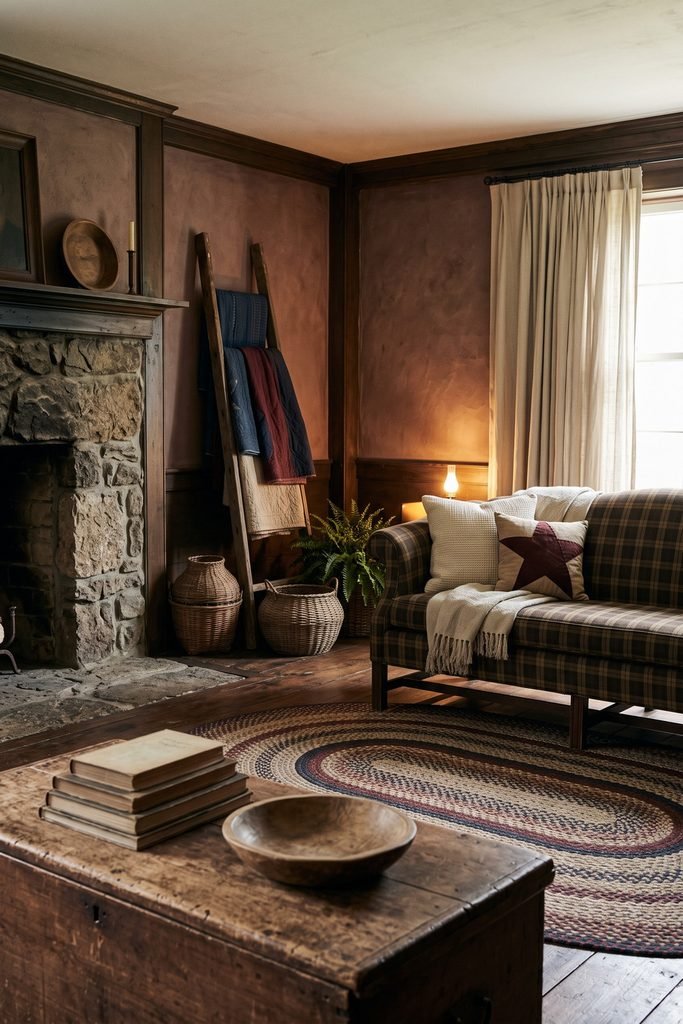
- 3. Lean a Patchwork Quilt Ladder Above Woven Baskets
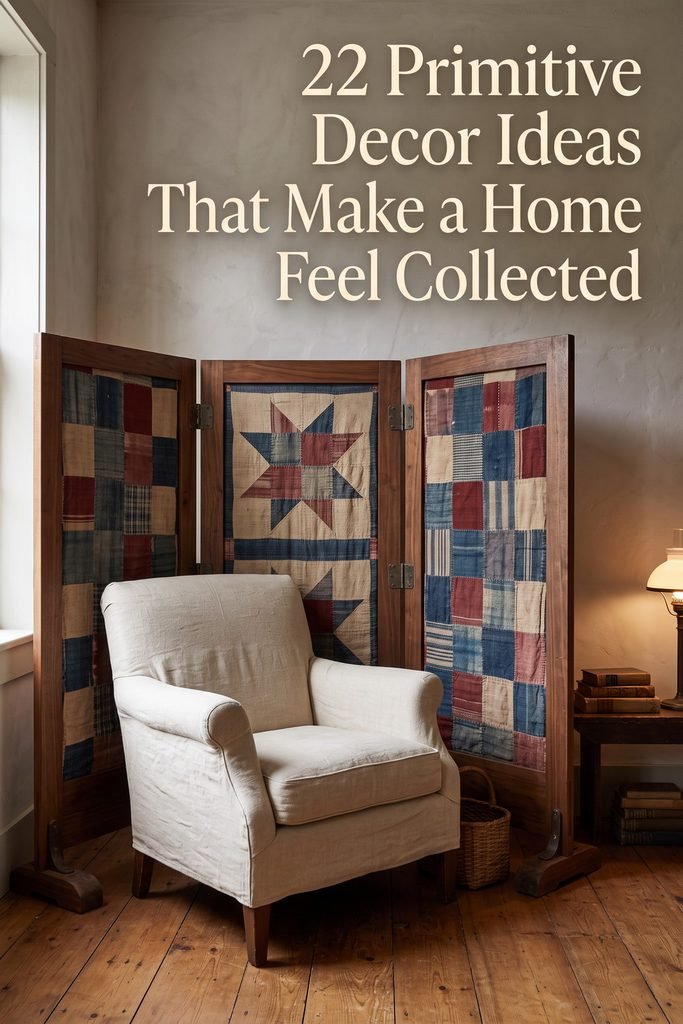
- 4. Wrap a Reading Chair in a Hinged Patchwork Screen
- Bring Primitive Character into Kitchens and Dining Rooms
- 5. Set a Chippy Cream Dining Room Against Barn-Red Walls
- 6. Fill a Dark Kitchen Hutch with Crocks and Wooden Bowls
- 7. Warm a Round Breakfast Nook with Small Wall Shelves
- 8. Frame a Kitchen Pass-Through with a Two-Sided Plate Rack
- Give Walls and Corners a Useful Focal Point
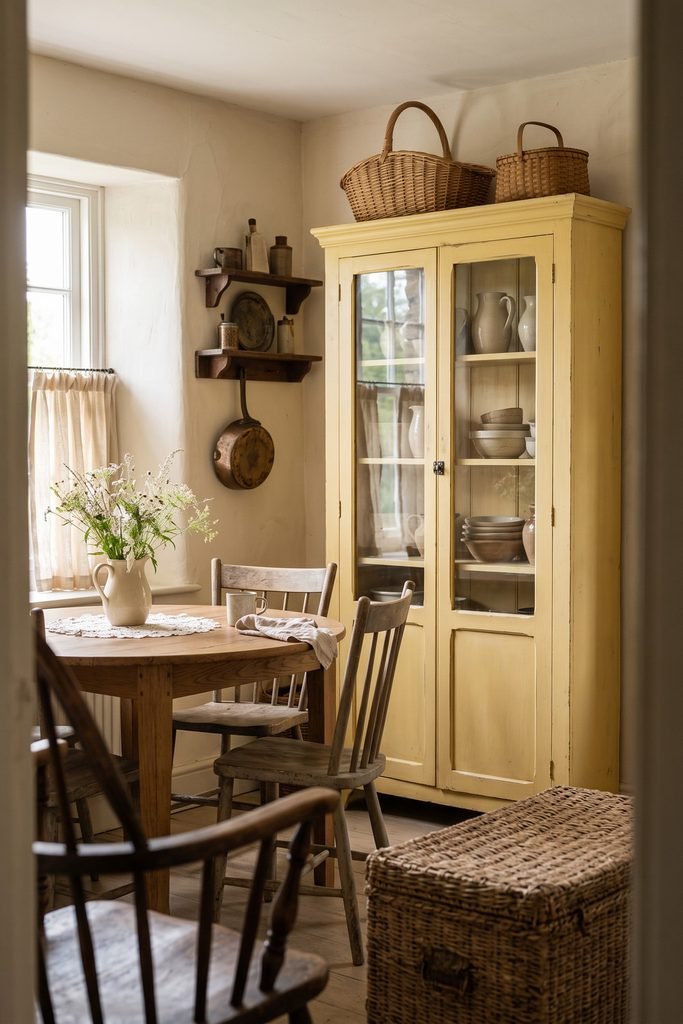
- 9. Display Pale Crockery in a Butter-Yellow Cupboard
- 10. Use a Weathered Door-Back Bench for Flowers and Garden Pieces
- 11. Frame Family Photographs Inside an Old Headboard Silhouette
- 12. Give Kitchen Towels a Folk-Art Rooster Wall
- 13. Anchor a Star-and-Wreath Wall with a Small Dark Cabinet
- Style Folk-Art Animals and Warm Lighting
- 14. Give One Folk-Art Animal a Quiet Place on a Wood Console
- 15. Layer a Cloth Goose with Baskets and a Copper-Toned Tray
- 16. Make Punched-Tin Light the Center of a Small Display
- 17. Give Cloth Woodland Animals a Birch-and-Greenery Backdrop
- Layer in Primitive Fall and Winter Decor
- 18. Gather Autumn Pieces in a Low Wooden Trencher
- 19. Carry Autumn Color from a Stair Garland to a Console
- 20. Group a Scarecrow Family Beside a Harvest Basket
- 21. Nestle a Rag Doll into a Twig Wreath
- 22. Line Up Three Stitched Pumpkins for Primitive Halloween
- Choose the Pieces That Make Your Home Feel Collected
These 22 ideas show how to bring that collected feeling into living rooms, kitchens, dining spaces, and smaller displays. Along the way, you’ll find ways to balance dark furniture with pale textiles, give folk art room to stand out, and introduce seasonal details that still feel connected to the rest of your home.
Quick Takeaways
- Let a substantial furniture piece or clear silhouette anchor the room before adding small accents.
- Repeat a few earthy colors across wood, textiles, and pottery rather than matching every object.
- Combine rough and soft surfaces, such as wicker with glass or patchwork with plain timber.
- Give collections a boundary: a tray, cupboard, frame, or shelf grouping can help.
- Bring in seasonal figures selectively so everyday furniture continues to carry the style.
What Is Primitive Decor?
In today’s decorating language, primitive decor often combines simple country furniture, worn-looking surfaces, earthy colors, and expressive folk-art details. Think of a spindle chair beside a wood chest, checked cotton against dark paint, or a stoneware crock holding a few branches.
Primitive and rustic decor overlap, but the emphasis can differ. Rustic rooms may lean heavily on raw stone, large timbers, and natural materials. A primitive home often adds the smaller details of domestic life: quilts, bowls, baskets, humble furniture shapes, and handmade-looking figures. Country primitive style can be richly layered or comparatively spare; the objects don’t all need to crowd into one corner.
The decorating look also isn’t the same thing as authenticated age. A contemporary folk-art figure can suit the room, while an older piece may contribute actual wear and history. Appearance alone doesn’t establish when something was made or who made it.
A useful starting palette is brown wood, warm cream, and softened black, with faded red, olive, or mustard introduced where you want more color. Texture provides another layer of variety without requiring another strong hue.
For reused painted doors or architectural panels, choose sound pieces with finishes you know are suitable. The EPA’s guidance on lead exposure at home explains why disturbing old painted surfaces can release hazardous dust. Creating extra wear by sanding unknown paint is a separate task from arranging a room.
Make the Living Room Feel Warm and Collected
The larger pieces establish the room’s character. A sofa, a pair of chairs, or a textile display gives smaller accents something to belong to, so the result feels furnished rather than covered in decorations.
1. Layer a Plaid Sofa Beside a Stone Hearth
A broad plaid sofa can carry a surprisingly rich palette: tobacco, olive, faded black, and a little oxblood. Beside a rough stone hearth, those woven squares give the room a softer kind of structure. One surface is irregular and weighty; the other repeats a pattern you can settle into.
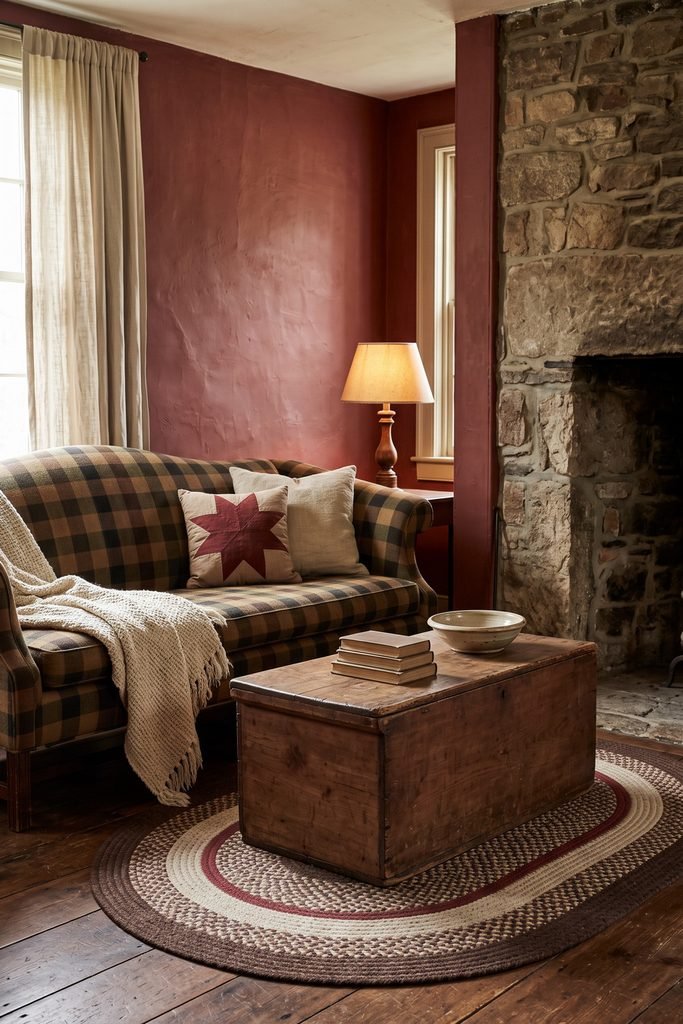
The coffee table is a useful place to pause that pattern. A plain, worn wood trunk has enough presence to sit between the sofa and fireplace without competing with either. Its broad top also makes a short book stack or shallow bowl look more deliberate than several scattered ornaments.
Cream belongs where it can interrupt the darker fabric. A folded throw and one lighter pillow may be enough. A small star motif can provide a focal detail, while an oval braided rug carries a few sofa colors down to the floor.
Let the hearth and seating share attention. Filling the mantel with equally prominent objects can upset that relationship. Keep furnishings and textiles clear of the fireplace as required for the particular appliance, and allow the stone itself to remain part of the display.
2. Pair Black Rockers with Red Checks and Cream Throws
Two rocking chairs make this corner feel ready for company. Their dark spindles create a strong outline, so the furnishings around them can stay modest: one small wood table, a lamp, and an oval rug beneath the pair.
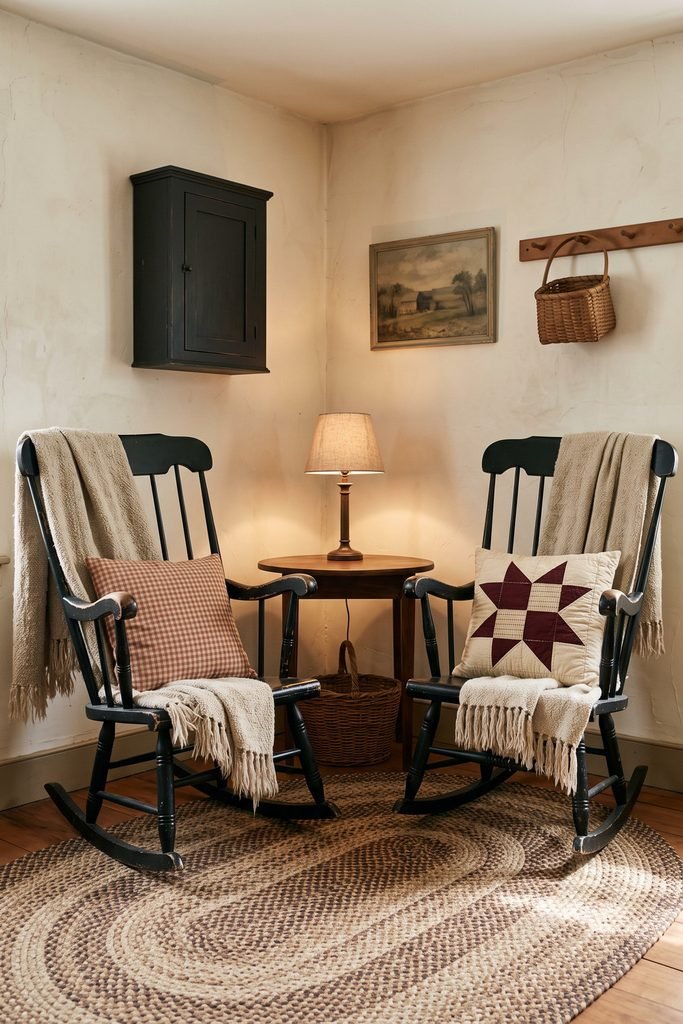
The textiles need a shared color story rather than identical patterns. A red checked pillow on one chair can sit comfortably opposite a pieced star in faded red and cream. Loose cream throws reveal the shape of the black arms and backs, especially in a room with darker wood walls.
Angle the chairs slightly toward the table instead of pressing them into a straight row. The lamp becomes a shared center, and a basket beneath it keeps the lower part of the arrangement occupied without adding another tabletop object.
Check the chairs’ actual movement before settling the layout. A rocker needs room to rock, and the path into this sitting area should remain open. The invitation comes from usable seats as much as from the pillows.
Echo the Red-and-Cream Textiles
Red checks and a cream woven throw echo the contrast around the black rocking chairs.
3. Lean a Patchwork Quilt Ladder Above Woven Baskets
Quilts give a narrow stretch of wall pattern, color, and a sense of care. On a wood display ladder, their folded edges form a tall column that can stand beside a low chest without requiring a large furniture grouping.
Stagger the folds enough to reveal different patches. Indigo, faded burgundy, flax, and brown work well together when one quilt carries the largest motif and the others offer quieter supporting patterns. Covering every rail completely would hide the ladder that gives the display its structure.
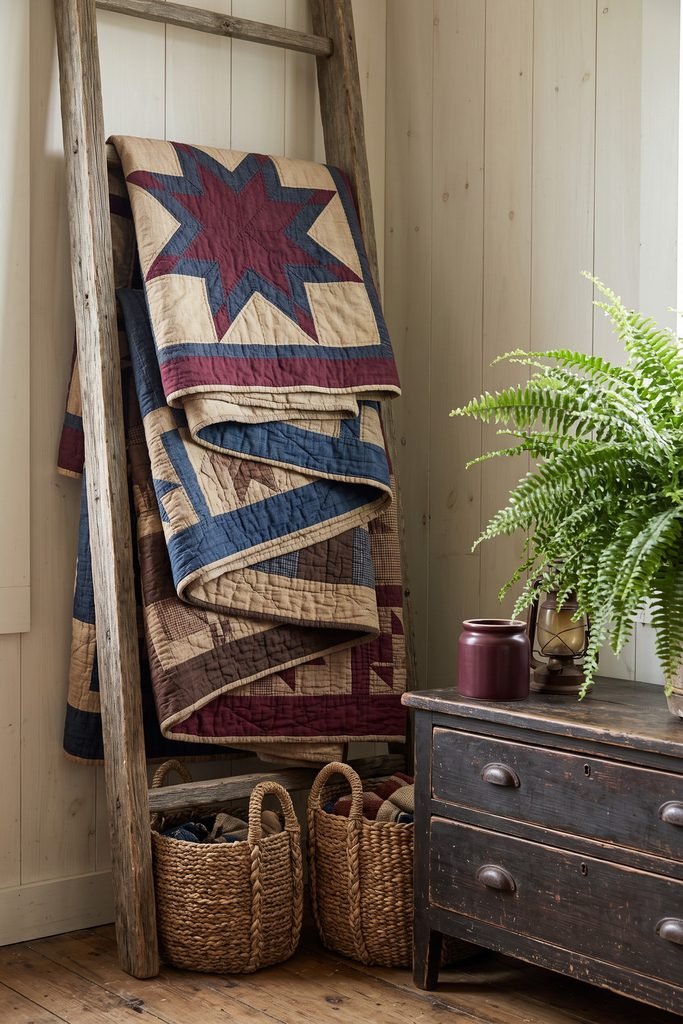
Below, a pair of woven baskets adds width and useful storage. Their rounded handles contrast with the straight rails, while a fern softens the side of the arrangement. A small crock can repeat one quilt color; it doesn’t need its own elaborate display.
Use a ladder intended for display and secure it appropriately for its location. Keep the baskets accessible so the corner remains part of daily life.
Gather Quilts and Woven Storage
Faded patchwork, a wood display ladder, and woven baskets carry the quilt corner’s tall-and-low arrangement.
4. Wrap a Reading Chair in a Hinged Patchwork Screen
A quilt can do more than decorate the edge of a room. Picture three hinged timber frames with fitted quilted panels, angled around a single reading chair. One wing returns beside the seat, while the other side remains open. The textiles become the boundaries of a small alcove.
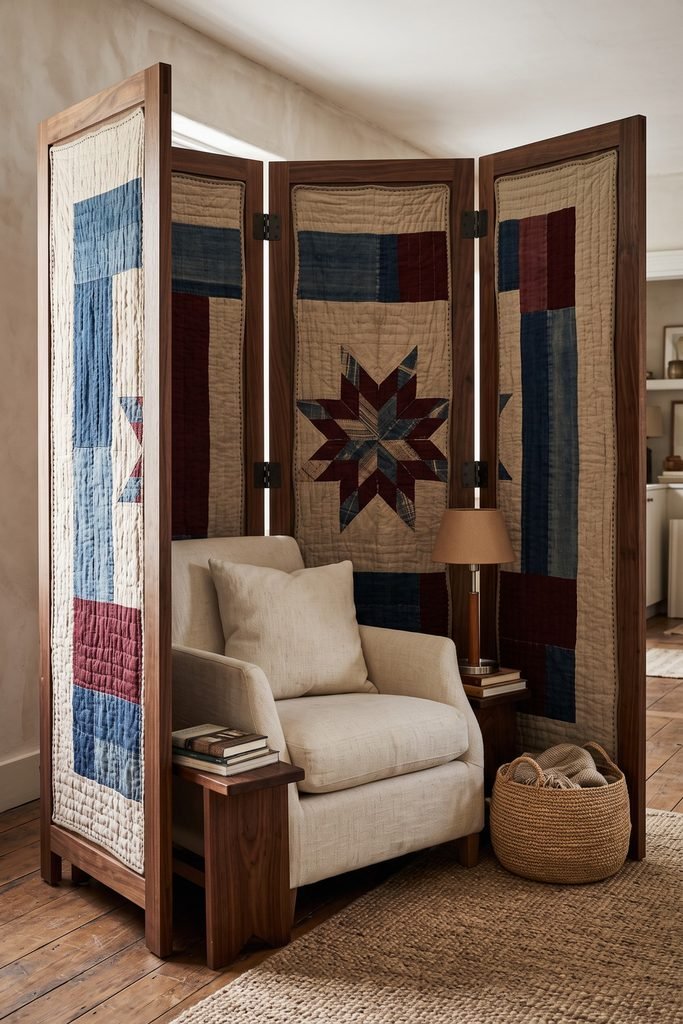
This is a furnishing concept to develop with a suitable maker, rather than a suggestion to drape loose quilts over unsupported frames. The frame, hinges, panel attachments, and base all need to work together. The finished screen should be stable in the arrangement in which you intend to use it.
Visually, broad patchwork motifs are especially effective here. Faded indigo and oxblood patches can repeat across flax-colored grounds, with walnut frames separating the panels. That repeated wood outline lets different quilt patterns feel related without requiring the same block everywhere.
A plain cream chair gives the eye somewhere quieter to rest. Keep a basket or little book table at the open side, where it won’t interrupt the approach. The screen should partially wrap the seat, not hide it behind a flat wall of fabric.
For a tighter corner, a purpose-made two-panel version can retain the same relationship. The important feature is the angled textile boundary. Suitable contemporary quilted inserts also let you explore the look without cutting treasured family quilts. Keep the screen clear of heaters, and compare other room divider ideas if your space needs a different degree of separation.
Bring Primitive Character into Kitchens and Dining Rooms
Useful objects have a natural place in these rooms. Crocks, bowls, chairs, and small shelves can establish the style while remaining connected to meals, storage, and the way people move around the table.
5. Set a Chippy Cream Dining Room Against Barn-Red Walls
Barn-red walls give pale dining furniture a strong backdrop. Cream chair backs become clearly defined against the color, while worn gray details can bridge the lighter paint and a brown wood table.
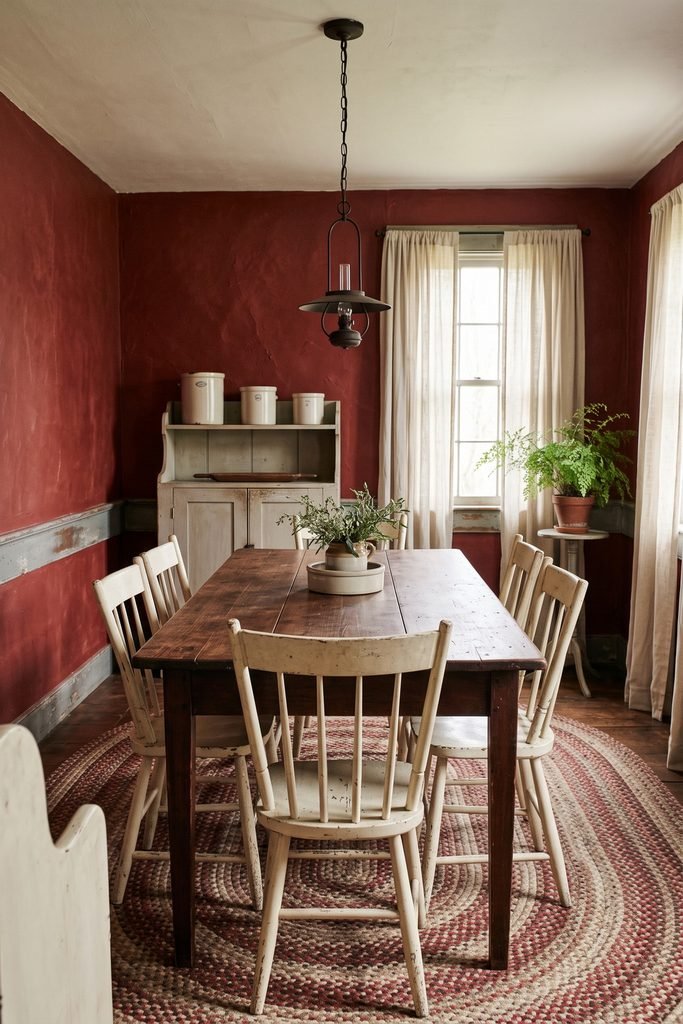
Because the contrast is already substantial, the table doesn’t need an equally forceful centerpiece. A low crock with a small arrangement of greenery leaves the furniture and wall color visible. Linen curtains soften the window, and a fern introduces a different shape from the repeated chair spindles.
A braided rug is particularly useful beneath this combination. Its rings can gather cream, brown, and a little red at floor level, spreading the palette beyond the walls. The furniture doesn’t have to show identical wear, either. Slight differences help it read as a collected room rather than a matched suite.
Keep the hutch’s crockery quieter than the room’s biggest color contrast. A few pale vessels are enough to connect it to the chairs. Leave comfortable space to pull out a seat; the room should welcome an actual meal.
6. Fill a Dark Kitchen Hutch with Crocks and Wooden Bowls
Pale stoneware rims become much easier to notice against black shelves. That contrast lets a dark hutch hold a generous collection while keeping individual bowls and crocks readable.
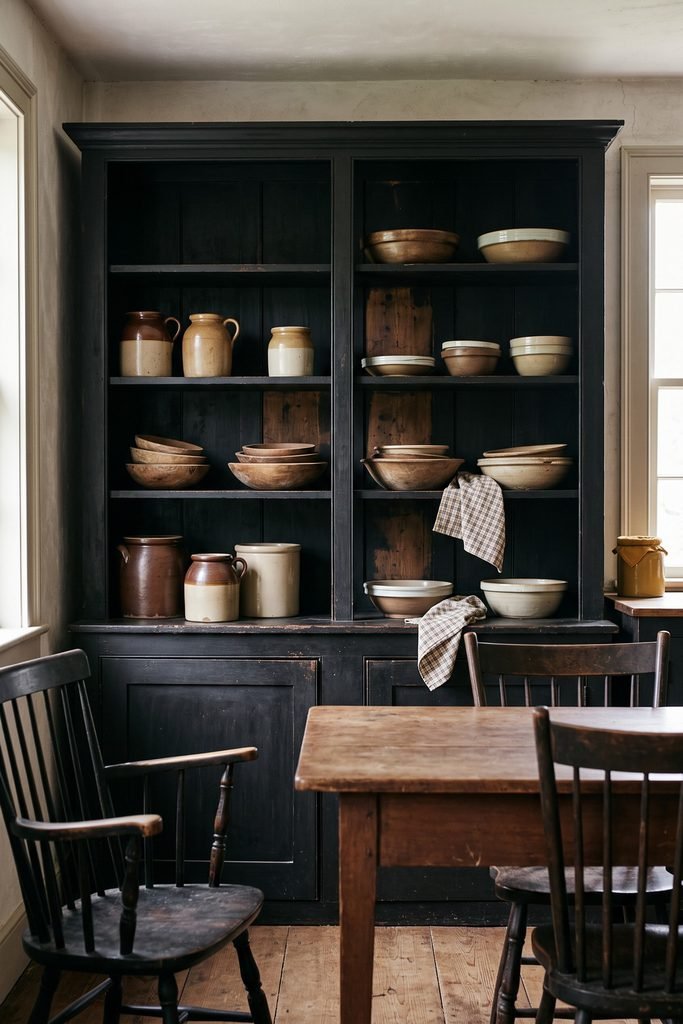
Arrange the pieces around their shapes and use. A tall crock can give one shelf a vertical anchor; a low stack of bowls beside it introduces a rounded line. Visible handles and exposed bowl rims make the arrangement feel connected to everyday kitchen tasks. A checked cloth can soften one edge without hanging across the entire cabinet.
The hutch’s broad outline matters more than filling every shelf. Some exposed wood helps distinguish one group from the next, especially when several vessels share similar brown or cream tones. A modest wood table in front provides another plain surface against all those smaller curves.
Separate display pieces from items used for food. The FDA’s guidance on traditional pottery explains why some pottery can release lead into food or drink. Use pieces established as suitable for food use when serving or storing meals; an appealing old surface doesn’t establish that suitability.
Find Shapes for the Dark Hutch
Pale decorative crocks and low wooden bowls offer the contrasting shapes used on the dark display shelves.
7. Warm a Round Breakfast Nook with Small Wall Shelves
A round table leaves room for the chairs to become part of the composition. Warm wood spindles, a pale window curtain, and one pitcher of flowers can carry the nook before anything goes on the wall.
Short shelves add another level without demanding a large hutch. Group them on one wall, where a few crocks and a copper-toned pan can be seen together. The shelves’ straight lines make a gentle contrast with the circular tabletop and rounded chair backs.
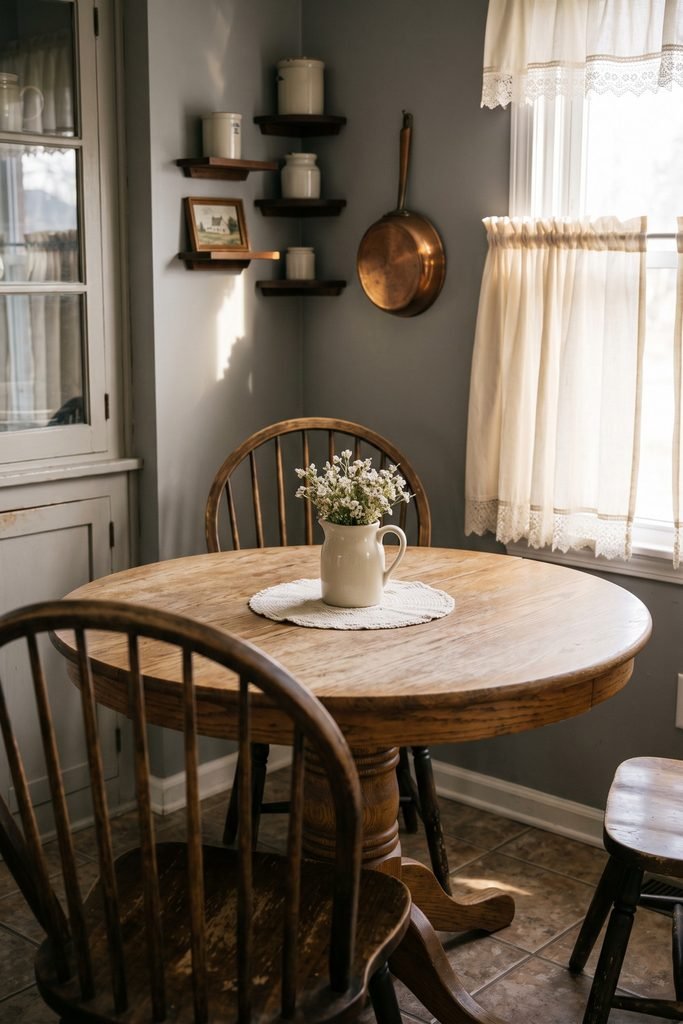
Keep the center arrangement compact. A simple textile circle beneath the pitcher gives it a boundary while leaving useful tabletop around it. Lace or a delicate curtain edge can supply fine detail, so the pottery doesn’t need heavy decoration too.
For actual utensil storage, hang only suitable tools in a position that doesn’t interfere with seating or movement. Decorative pieces can stay on the shelves. That distinction helps this primitive kitchen corner remain useful rather than becoming a display you have to rearrange for breakfast.
8. Frame a Kitchen Pass-Through with a Two-Sided Plate Rack
An existing kitchen pass-through offers an interesting place to combine display and service. Imagine shallow wood rack sections around its perimeter, with upright plates retained at the sides and a few crocks on an upper ledge. The center stays open, and the serving sill remains clear.
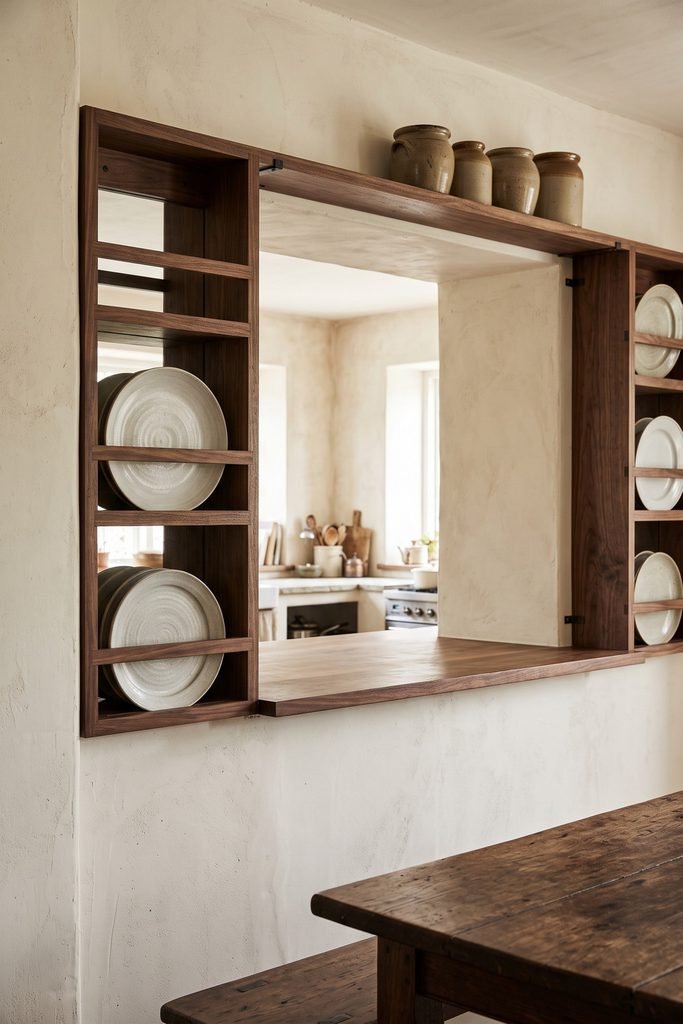
Unlike a wall-backed hutch, this proposed arrangement belongs to both rooms. Access planned from the kitchen and dining sides would keep selected serving pieces close to where they’re used. The opening still does its original job: allowing a view and a useful connection through the wall.
Walnut or softly blackened-looking timber can outline warm cream plaster, with pale stoneware providing lighter marks along the edges. The dishes should frame the aperture rather than spread across it. Too many objects along the sill would turn a working connection into another shelf.
This is custom joinery that needs to suit the actual opening. Rack depth, plate retention, access, loading, and support require professional assessment; no single arrangement will fit every home. An existing opening also avoids treating a wall alteration as a decorating step.
A smaller adaptation could use one shallow plate-rack section beside a jamb while preserving the clear serving area. The relationship remains the same: useful storage around the edge, open space in the middle. Keep decorative collected plates distinct from dishes confirmed suitable for food use, and resist adding a centerpiece where a dish needs to pass through.
Give Walls and Corners a Useful Focal Point
A tall cupboard, a familiar furniture outline, or one grouped wall display can organize a room’s smaller details. These ideas give collections a visible home, with enough surrounding space for their shapes to remain distinct.
9. Display Pale Crockery in a Butter-Yellow Cupboard
Primitive decorating doesn’t have to mean dark furniture throughout the house. A butter-yellow cupboard can provide a lighter focal point while retaining the substance of a large, simple wood piece.
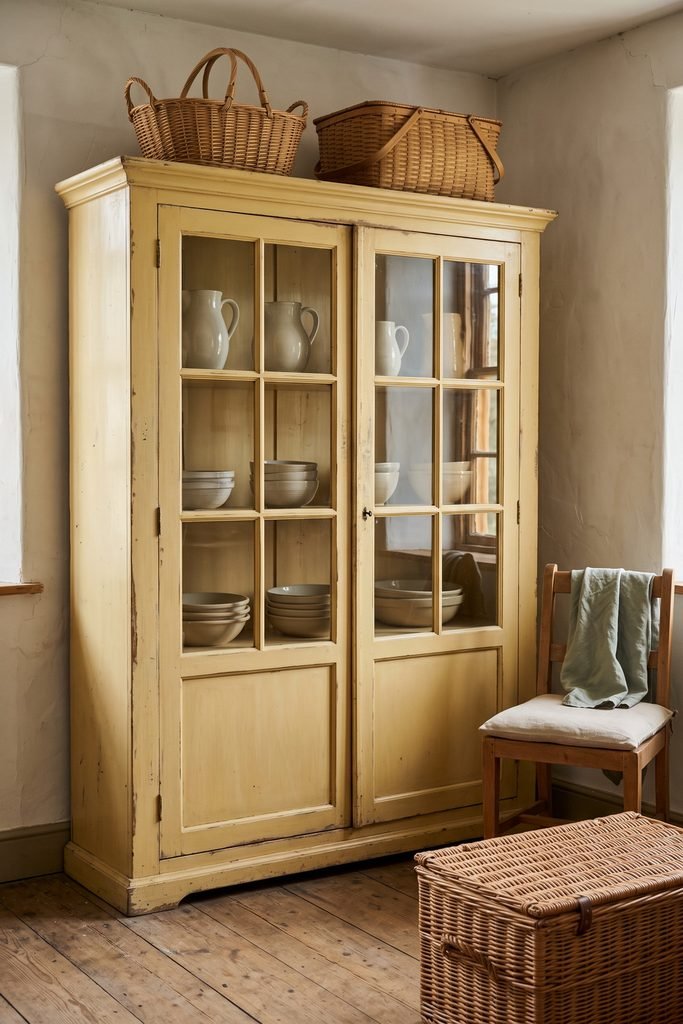
Behind its glazed grid, pale crockery repeats a limited set of curved shapes. A rounded pitcher beside a short stack of bowls is easier to read than a different tiny ornament in every pane. Let the cabinet color remain the largest statement.
Woven baskets on top soften the square divisions, and a low wicker trunk can bring that texture down toward the floor. A plain chair nearby keeps the setting from drifting into a more ornate cottage arrangement.
Tall furniture also needs attention beyond its styling. Follow the appropriate securing instructions; the CPSC’s Anchor It guidance explains the importance of securing top-heavy furniture. The cupboard’s appeal should come from its color and proportions, not a precarious pile above it.
10. Use a Weathered Door-Back Bench for Flowers and Garden Pieces
The tall back is what makes this small garden station memorable. A paneled, door-like shape rises above a shallow bench, framing watering cans and flowers in much the same way a picture frame gathers an image.
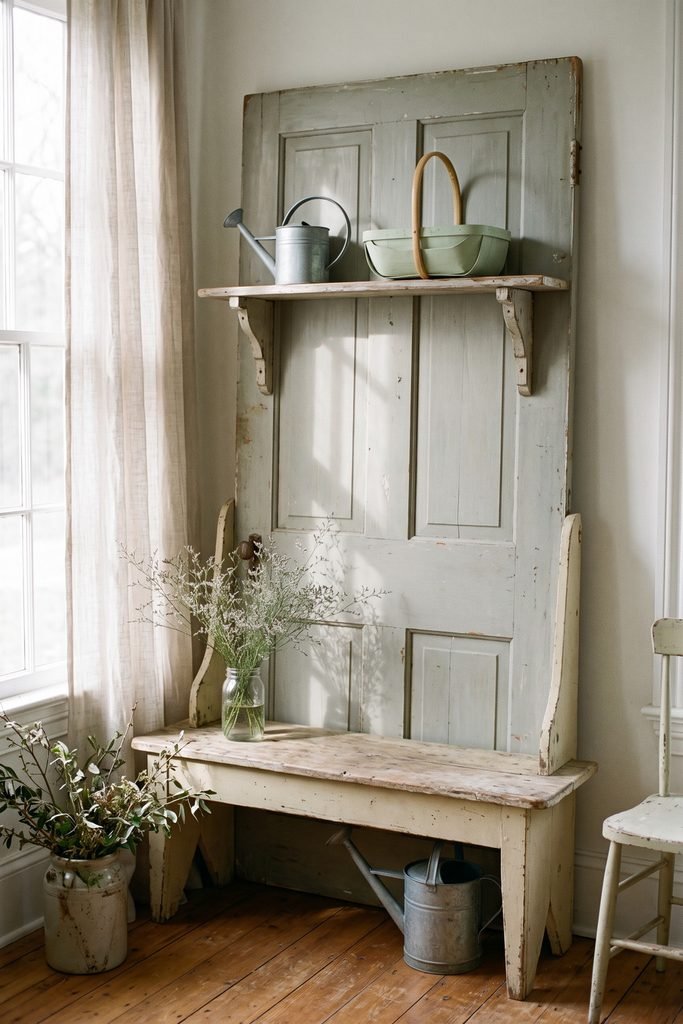
Chalk white and faded gray-green paint keep the furniture light enough for metal vessels to show their outlines. A glass jar with a few stems adds a finer texture, while a cane-handled basket introduces a curve across the panel divisions.
Leave a usable patch of the bench surface. A watering can beneath it continues the garden theme without occupying the worktop, and a larger flower vessel can sit to one side rather than in the middle of everything.
Choose a sound finished piece or have an adapted one assessed appropriately. Protect the wood beneath water-filled vessels. The arrangement is an indoor flower-and-garden display; it doesn’t need to become a potting project to feel useful.
Choose the Garden Display Pieces
Metal watering cans and small glass vases echo the bench’s mix of practical garden shapes and delicate stems.
11. Frame Family Photographs Inside an Old Headboard Silhouette
A gallery of small photographs can feel scattered across a long hallway. A headboard-shaped wood surround gives them one larger outline, so the collection reads as a single feature before you notice each picture.
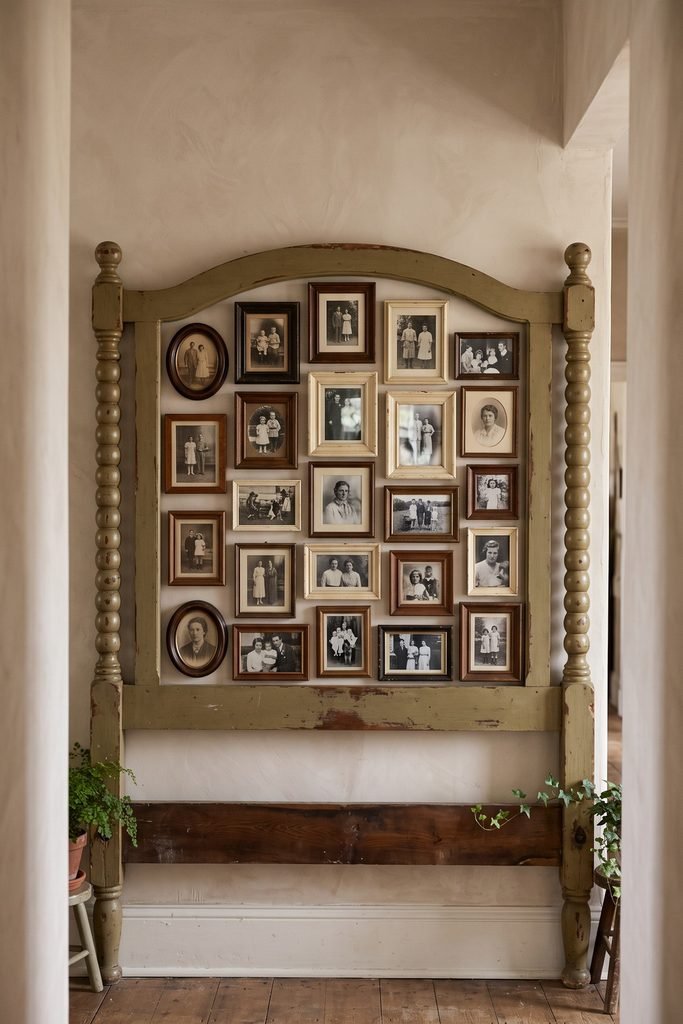
The arched top and turned posts provide the structure. Within that boundary, oval portraits can interrupt rows of rectangular frames, and a lower rail gives the group a clear finish. A few narrow gaps keep the individual photographs from disappearing into one dense patch.
Faded olive, brown, cream, and sepia work well here because they let the frame shapes vary without introducing a separate color story for every portrait. The photographs can remain personal and different; a matching print treatment isn’t required.
Keep the floor and nearby wall comparatively quiet. A second large collection beside the headboard would weaken the enclosing effect. Any adapted piece needs fixings suited to its complete weight and the wall itself, so treat the finished assembly as a substantial wall object rather than an ordinary small picture.
12. Give Kitchen Towels a Folk-Art Rooster Wall
Cream rooster bodies, red combs, and bold black tails give this kitchen wall a cheerful rhythm. Different-sized birds make the grouping more expressive, particularly when one larger silhouette carries a shelf and a smaller form holds a towel.
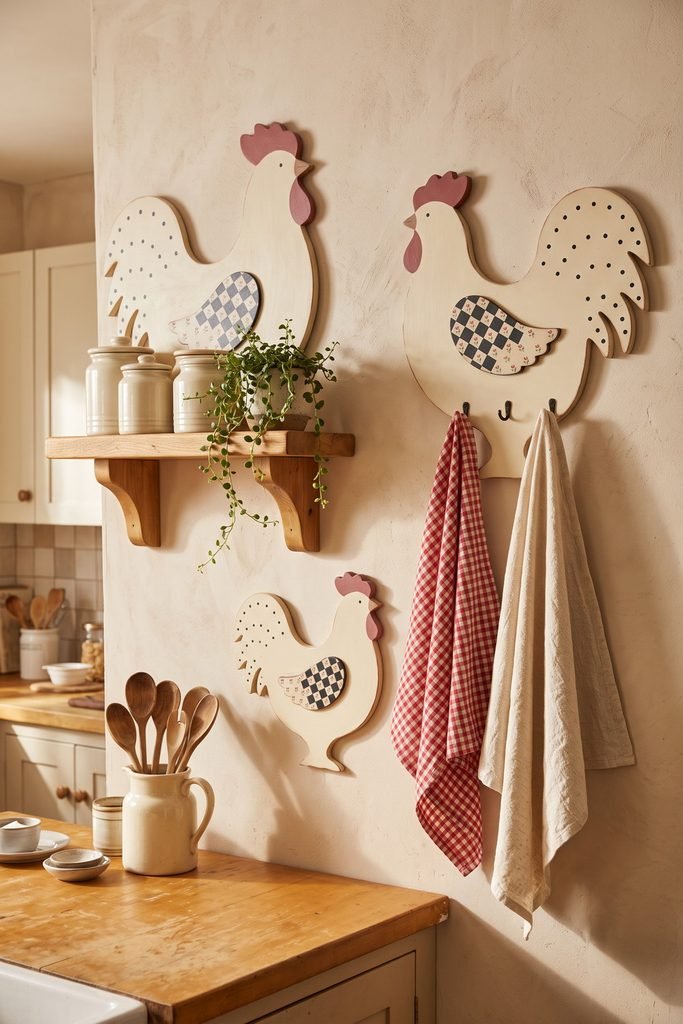
The checked details connect the objects to their job. A checker-patterned wing can echo a red gingham towel, while a plain cream towel offers a quieter stretch of fabric. Small red marks on nearby canisters repeat the accent without introducing another large pattern.
Keep the birds’ outlines visible. Trailing greenery can soften one shelf edge, but it shouldn’t cover the tails or faces. A modest utensil jug on the counter helps the display feel part of a working kitchen.
Properly supported hooks and practical towel placement matter here. Keep the hanging fabric away from heat sources, and allow enough space to reach a towel without disturbing the little shelf arrangement above it.
Repeat the Rooster Wall’s Checks
Red gingham kitchen towels carry the rooster grouping’s check pattern into a useful textile.
13. Anchor a Star-and-Wreath Wall with a Small Dark Cabinet
The cabinet gives this collected wall its center of gravity. Above it, a twig wreath in a plain frame introduces a circle, while one star adds a sharper outline to the side.
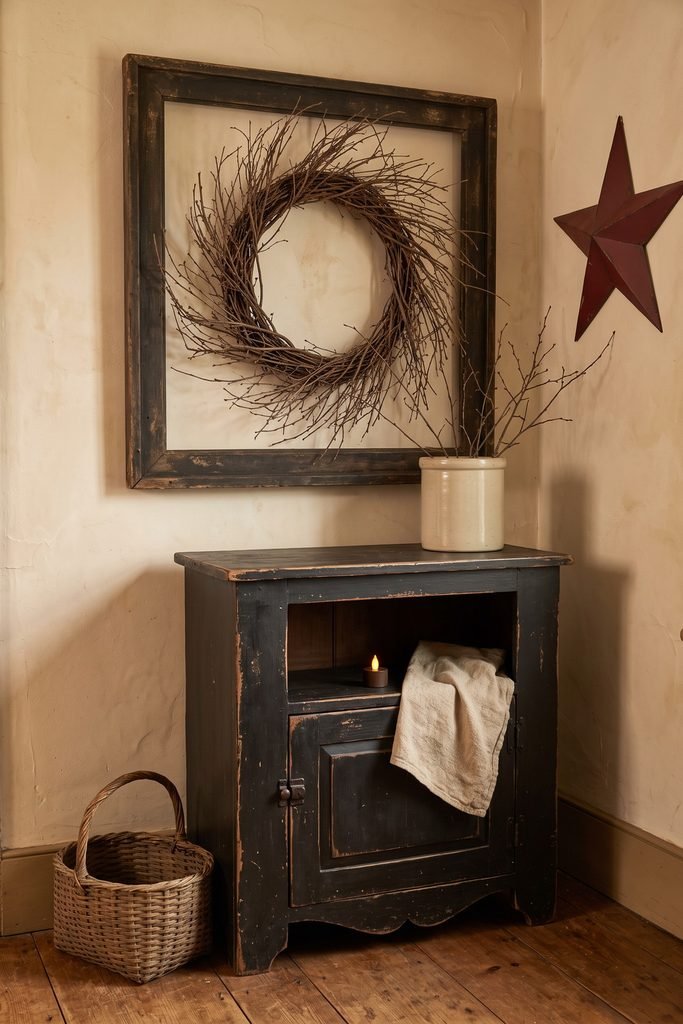
That small difference in shapes does more than a collection of equally prominent signs. The wreath’s curve softens the cabinet’s rectangle, and repeating dark wood in the upper frame connects the two levels. A basket or small primitive wall cabinet can occupy a secondary position, provided it doesn’t compete with the central arrangement.
Edit the smaller pieces by role. One crock can hold the stems; one basket can supply weave; one low LED accent on an actual cabinet shelf can give the group an evening glow. Each object contributes something different.
There is no need to fill every gap between the frame and furniture. Some visible wall makes the wreath easier to recognize and gives the star its own outline. Keep vents unobstructed and choose suitable support for the wall pieces and cabinet.
Style Folk-Art Animals and Warm Lighting
Smaller displays succeed when their main shape is easy to recognize. A long neck, oversized ears, a round metal backdrop, or a pattern of light can be enough to make an otherwise quiet surface memorable.
14. Give One Folk-Art Animal a Quiet Place on a Wood Console
Sometimes the ears do all the work. A little donkey with long, uneven ears has enough character to hold attention on a wood console, especially when the wall behind it is quiet.
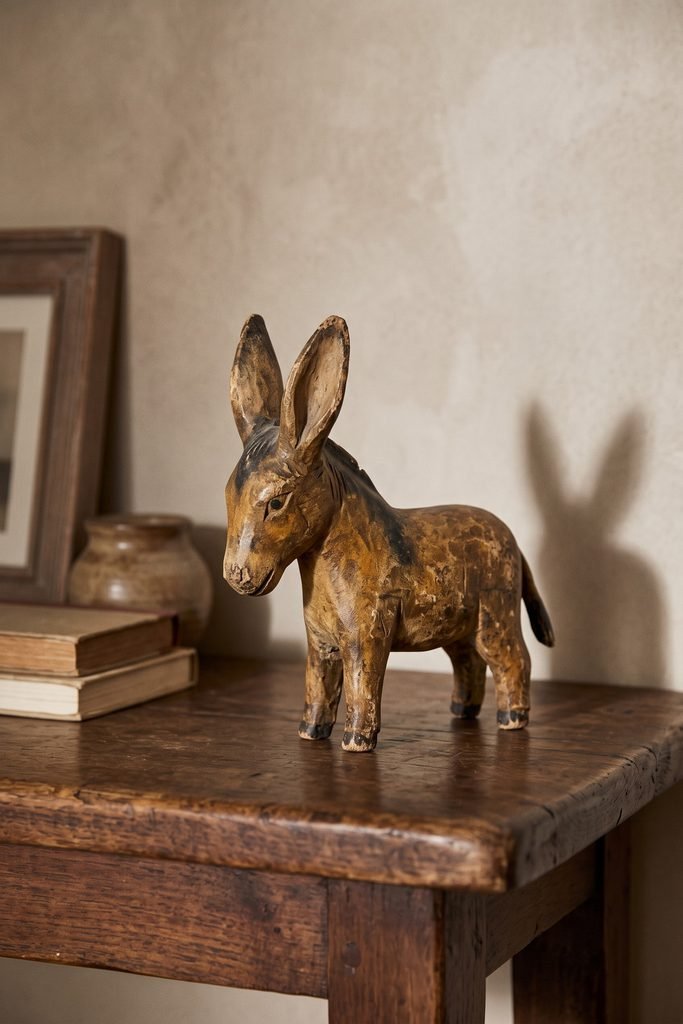
A short stack of books can provide a lower companion without interrupting the animal’s profile. Brown and cream surfaces let its worn-looking finish show, while a small pottery piece can stay farther back.
A graphic black cat with a striped tail is another way to use this same arrangement. Choose the figure whose silhouette you enjoy most, rather than grouping both simply because they belong to folk-art decor.
View the display from the room’s usual approach. The important outline should be visible from there, not only when you stand directly in front of the table.
Find an Expressive Folk-Art Figure
Look for a wooden animal figure whose silhouette can hold the console display on its own.
15. Layer a Cloth Goose with Baskets and a Copper-Toned Tray
A long cloth goose brings a different rhythm to a cabinet top. Its low body stretches across the wood, while its raised neck creates a small vertical counterpoint.
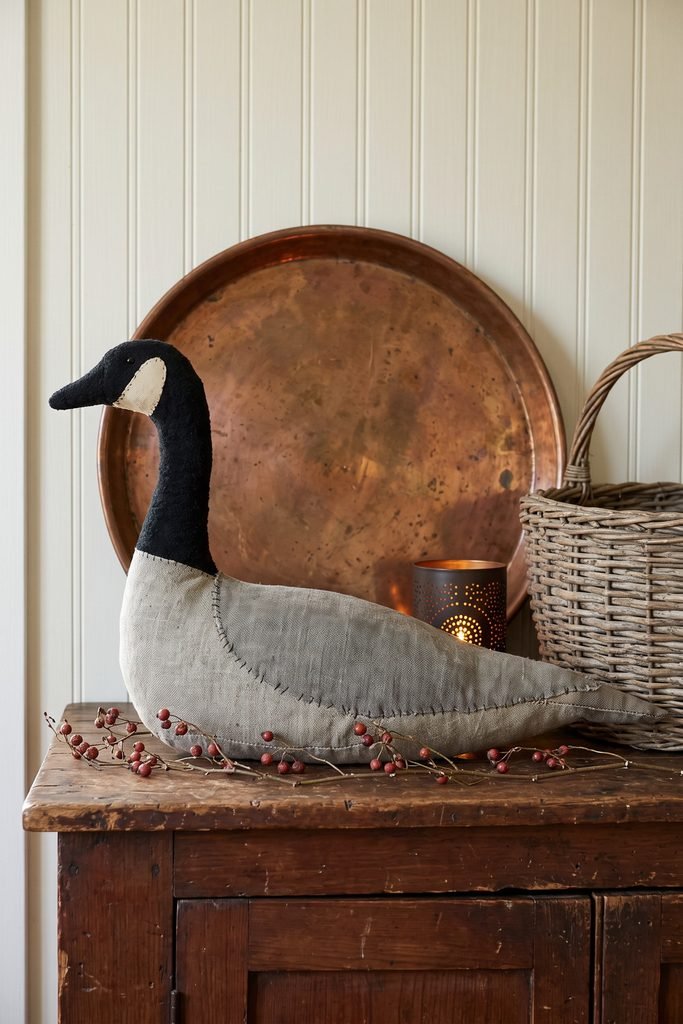
Behind it, a round copper-toned tray makes the soft bird easier to distinguish. A wicker basket at one end supplies a larger, rougher mass, so the goose doesn’t have to share the surface with several other figures. The contrast between circle, long body, and basket is the main attraction.
Sparse berry stems can draw a thin red line through the flax, gray, and brown palette. Keep them below the face and away from the neck’s clearest edge. A battery lantern can provide the warm background glow without placing an open flame beside cloth.
Let the goose remain fully visible. If a smaller cabinet can’t accommodate all three major pieces, reduce the basket or tray before hiding the bird behind them.
16. Make Punched-Tin Light the Center of a Small Display
At dusk, the little openings in a dark metal shade become the pattern. That gives a pierced-metal lamp enough presence to lead a small display even when the objects beside it are simple.
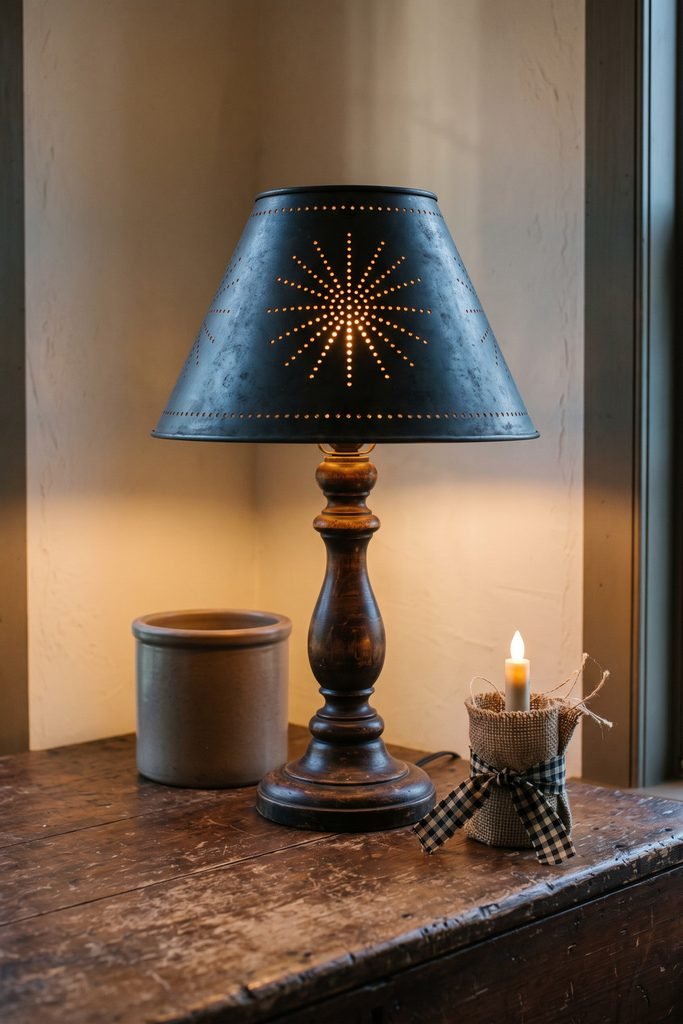
A plain crock and a coarse textile accent allow the light to stay dominant. Burlap catches the nearby glow differently from a smooth vessel, while a short strip of checked cotton can introduce pattern at a smaller scale. Too much patterned fabric around the base would compete with the perforations above it.
Choose a finished electric lamp or an LED lantern appropriate for its intended use. A small fabric-wrapped LED candle can echo the larger light, but it should remain secondary rather than creating a row of equally bright points.
The U.S. Fire Administration recommends considering battery-operated flameless candles. They are a fitting choice for these cloth-and-twig displays; fabric around a holder isn’t a reason to place a real flame inside it.
Bring in Pierced Metal and Flameless Light
An electric punched-tin lamp and a small battery-operated taper reflect the section’s layered lighting direction.
17. Give Cloth Woodland Animals a Birch-and-Greenery Backdrop
A small fawn partly overlapping a larger doe gives this display its gentle character. The relationship is more important than adding a large collection of woodland figures around them.
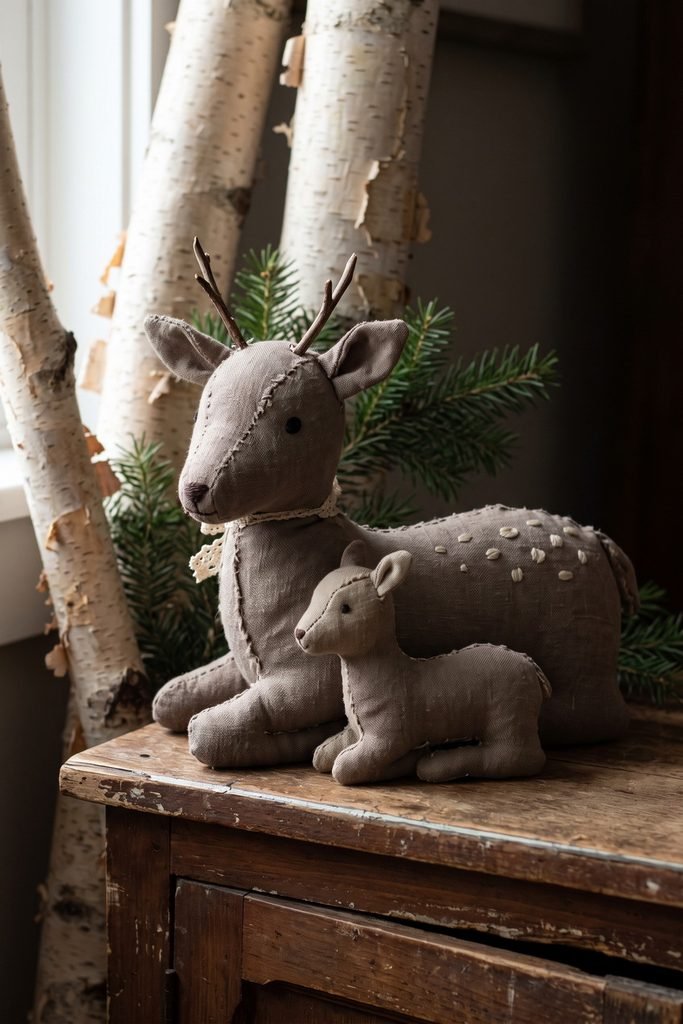
Taupe and brown cloth benefit from a backdrop with different surfaces. Pale birch pieces separate the animals from dark evergreen sprigs, while the bark’s roughness makes their stitched bodies feel softer. Light spots or worn seams provide enough detail to reward a closer look.
Keep decorative lace restrained. A little neck detail or small textile patch can add delicacy, but a large floral crown would shift attention away from the doe-and-fawn pairing. The strongest version leaves both faces and the overlapping bodies readable.
Arrange the group on a low cabinet with stable wood props behind it. A few evergreen stems can suggest winter, but the brown cloth and bark remain quiet enough for the animals to stay after more obvious holiday decorations are put away.
Layer in Primitive Fall and Winter Decor
Seasonal accents work best when everyday furniture still provides the setting. These arrangements introduce harvest figures, autumn foliage, winter greenery, and Halloween faces while keeping the wood, textiles, and collected shapes already established in the room.
18. Gather Autumn Pieces in a Low Wooden Trencher
A shallow wood trencher gives unlike harvest objects one place to belong. Small pumpkins, a dark crow, and a little basket can feel related once the tray’s oval edge gathers them together.
The crow provides a darker anchor among the orange shapes. Varying the pumpkins’ sizes keeps the group from looking like a line of identical objects, while a braided runner extends texture beneath the wood without adding more figures.
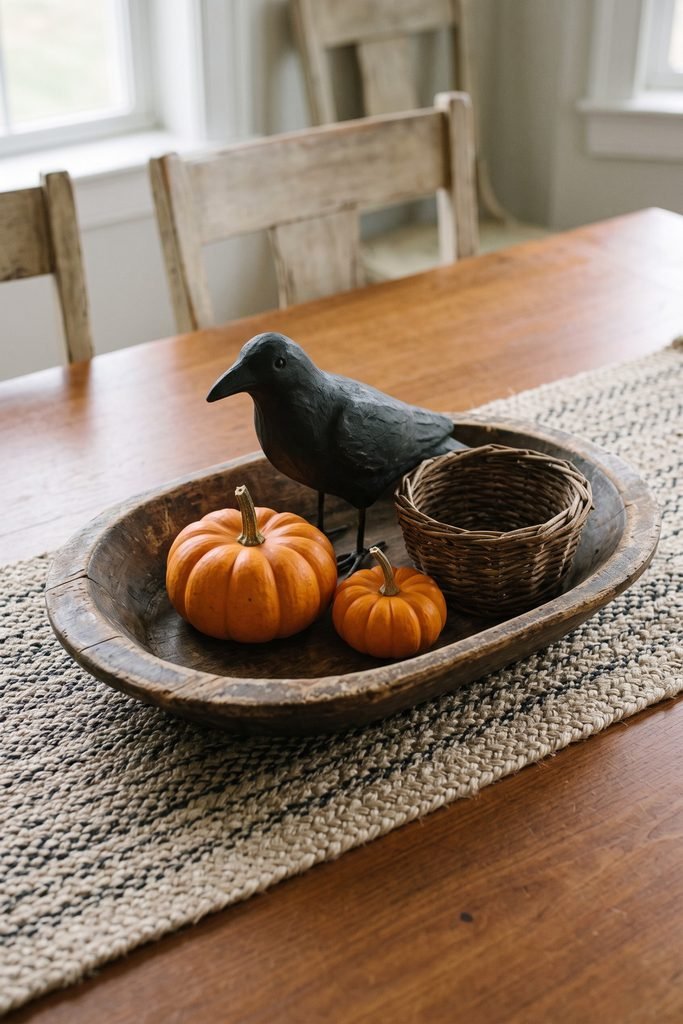
Leave part of the tray rim exposed. That visible boundary is what makes the display feel contained. The table around it should still show, particularly at the edges where people sit or set down a cup.
For primitive autumn decor, this is a useful place to concentrate the season. The tray can move as one arrangement, and the rest of the dining room can retain its everyday crocks, chairs, and textiles. Use a decorative trencher for display rather than assuming it is suitable for serving food.
Gather the Trencher and Crow
A shallow wood display bowl and a dark crow figure provide the two main anchors for the harvest grouping.
19. Carry Autumn Color from a Stair Garland to a Console
An autumn garland can feel disconnected when all the seasonal color stops at the stair rail. Repeating a little of that foliage on a console below connects the upper and lower parts of the entry.
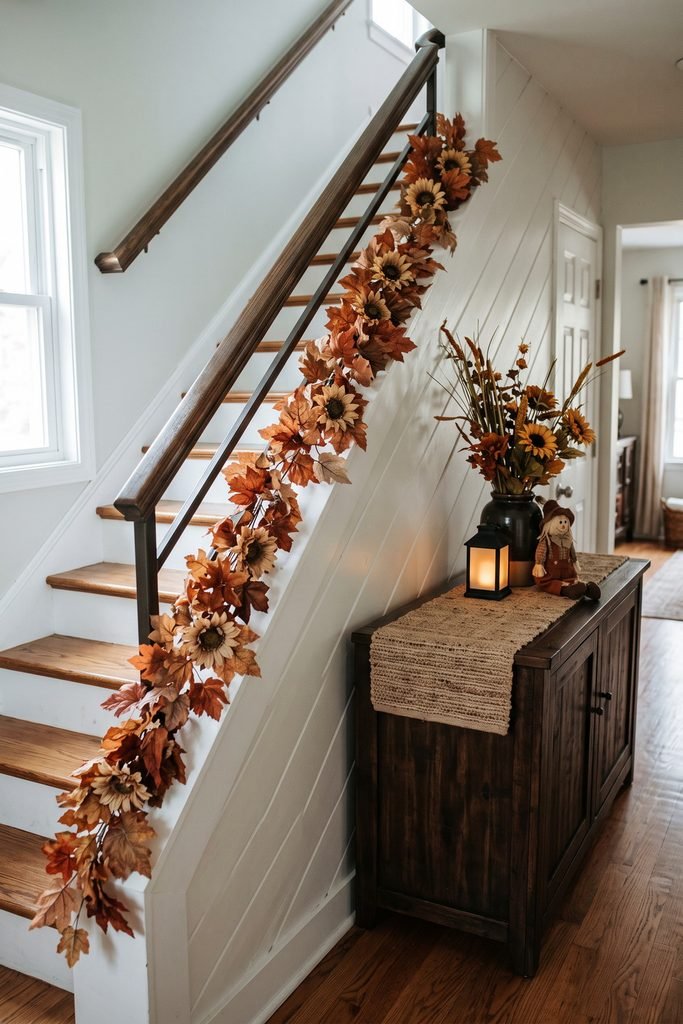
Follow the stair’s diagonal with the leafy line, then let the tabletop arrangement be more grounded. A dark vessel of rust-colored stems, a low lantern, and one small seasonal figure are enough to answer the fuller garland above.
The repetition can be a color rather than the exact same object. One sunflower tone in both places makes the connection clear; several matching sunflower signs would be a different effect. Dark wood and metal give the lighter leaves something substantial to sit against.
Keep the route through the entry visible. Leaves should not interfere with steps or the usable handrail, and the console display needs to stay within the furniture’s footprint. Battery lanterns provide a small glow without introducing flame into the foliage. The most useful fall decor inspiration fits around the way you enter the home.
20. Group a Scarecrow Family Beside a Harvest Basket
Two taller scarecrows with a smaller figure between them create a recognizable group before you notice their faces. Their different heights give the display a gentle rise and fall, which works well beside a sheltered porch wall.
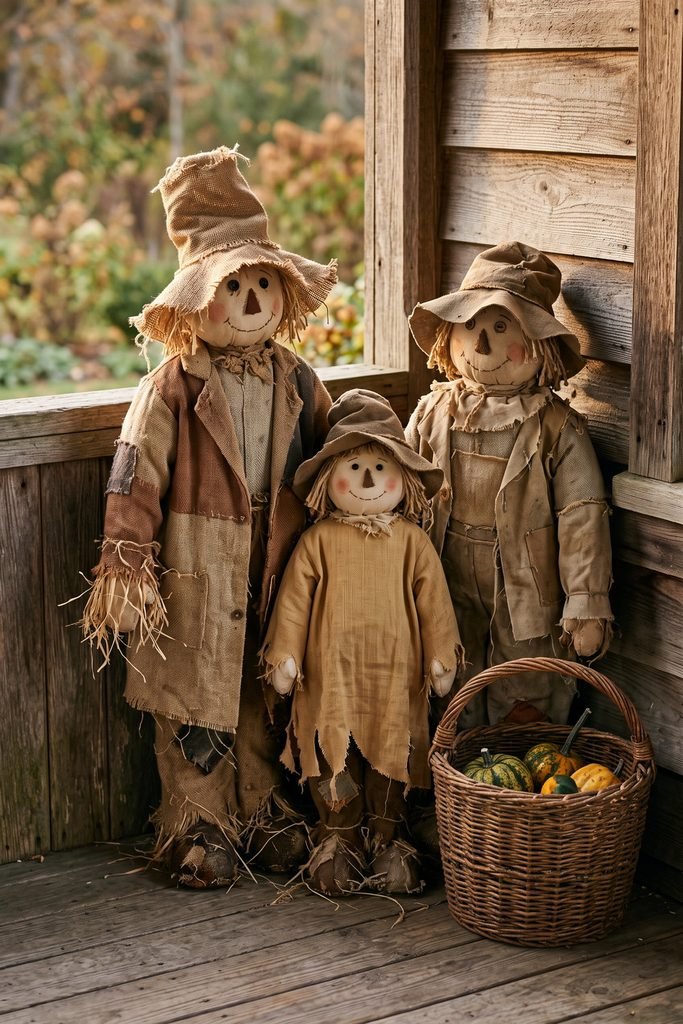
Flax, faded brown, and wheat-colored fibers allow the clothing textures to do most of the decorating. Frayed cuffs, floppy hats, and irregular hems are more effective here than adding several bright signs around the figures.
A single basket of little gourds gives the group a base. Keep the background quieter so the straw-like hands and hat brims don’t disappear into a mass of branches.
Choose figures suited to the actual exposure. A covered spot can still receive wind or moisture, so indoor cloth collectibles shouldn’t be assumed appropriate simply because they look rustic.
21. Nestle a Rag Doll into a Twig Wreath
The curve of a twig wreath gives a long-limbed rag doll a place to settle. Its legs can extend below the circle while the wreath frames the face and upper body.
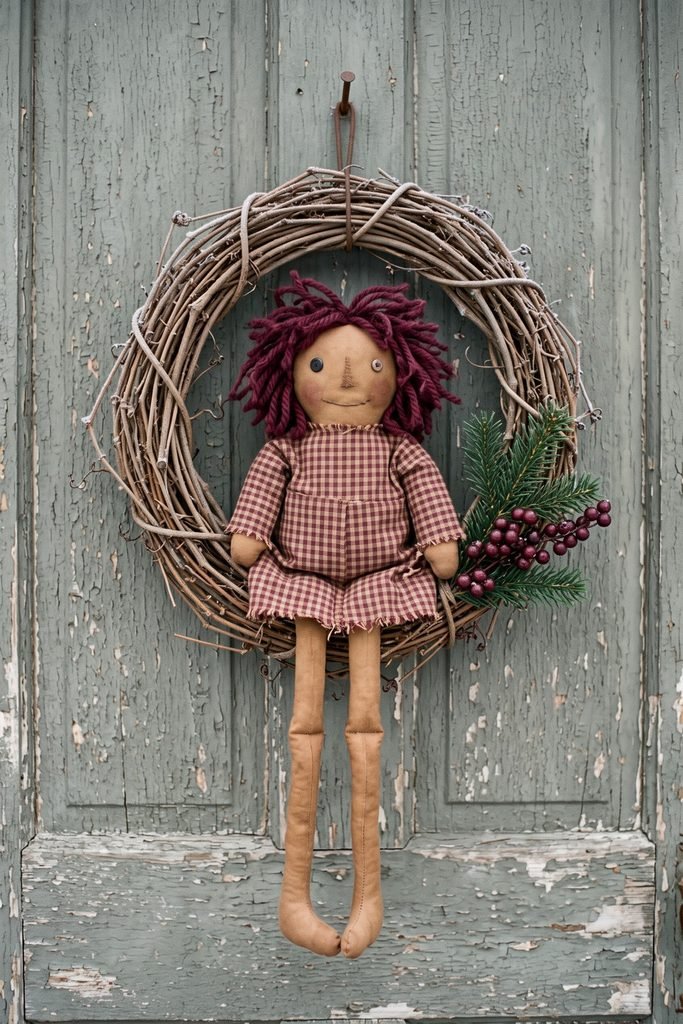
Burgundy yarn hair and a few red berries stand out against weathered green boards. The rough twigs contrast with the doll’s soft clothing, so only a small evergreen sprig is needed to suggest winter. Heavy flocking and many ornaments can hide that appealing difference in materials.
Keep the face visible and support the figure securely rather than relying on a loose branch to hold it. A sheltered door or indoor wall lets the textile details remain part of the arrangement.
For more holiday-focused combinations, explore these primitive Christmas decorating ideas. This wreath can remain a single sentimental accent instead of setting a theme for every surface nearby.
22. Line Up Three Stitched Pumpkins for Primitive Halloween
Faded orange, aged-looking cream, and charcoal give three pumpkin figures enough contrast to stand apart. Repeated gauze, simple bases, and wiry stems make them feel like one collection despite their different faces.

Let uneven eyes and stitched mouths provide the expression. Clear gaps between the heads keep each silhouette readable, and small differences in height make the row less rigid. Extra labels or large signs would distract from the faces.
This primitive Halloween arrangement works on a deep console where the full bases remain visible. Keep nearby accessories low or remove them for the season. The three figures already supply the story.
Use finished decorative pieces and stable supports. Their muted palette gives rustic Halloween decor a playful character without needing bright plastic accents or a larger display around them.
Find Stitched-Look Halloween Pumpkins
Fabric pumpkin decorations with muted colors and expressive faces echo the small Halloween collection.
Choose the Pieces That Make Your Home Feel Collected
Primitive decor becomes more personal when you choose the relationships you enjoy most. That might be cream throws over black chairs, pale crocks inside a dark hutch, or one cloth animal against rough bark.
Begin with a substantial piece, give its supporting details a clear place, and leave room for daily use. You don’t need every motif in the same room. A quilt, a useful bowl, or a memorable silhouette can carry the feeling while the rest of your home develops around it.