





18 French Inspired Bathroom Ideas With Beautiful Details
A French inspired bathroom can begin with a graceful washstand, a painted mirror, or the way a tub sits against the wall. The strongest rooms give those details a setting: plain surfaces beside intricate patterns, soft fabric against stone, and storage that belongs with the furniture.
- French Washstands With Character
- 1. A Hand-Painted Floral Mirror Above a Simple Marble Sink
- 2. A Curved Sink With a Gathered Rose-Stripe Skirt
- 3. A Sage-Striped Attic Washstand With a Scalloped Stone Top
- 4. A Black-Tiled Mirror Arch Above a Brass Console Sink
- 5. Charcoal Wall Panels With a Marble Washstand and Silver Mirror
- Vanities That Make Room for Everyday Life
- 6. A Powder-Blue Furniture Vanity Beside a Clear Glass Shower
- 7. An Oak Double Vanity With Two Sculpted Marble Bowls
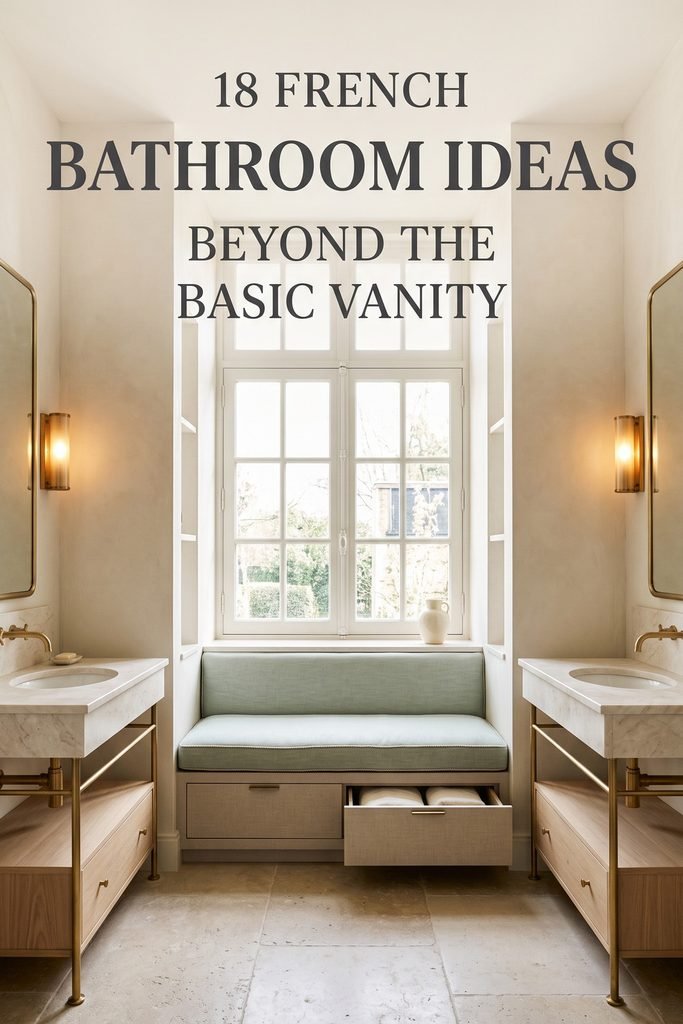
- 8. Two Marble Washstands Framing a Linen Window Seat
- Patterned Walls With a Clear Focal Point
- 9. Blue Toile Walls With a Scalloped Basin and Silver Mirror
- 10. A Scenic Mural Powder Room With a Marble Pedestal Sink
- 11. A Rose-Tiled Bath Alcove With Gilded Details and Soft Light
- Bathing Spaces That Feel Furnished
- 12. A Brass Clawfoot Tub With a Cream Dresser Vanity
- 13. A Copper Tub Against Limewashed Walls and Sage Shutters
- 14. A Picture Ledge That Turns the Bath Into a Small Gallery
- 15. A Marble Tub Beside a Decorative Fireplace and Green Chair
- 16. A Painted Folding Screen Behind a Freestanding Tub
- Calm Layouts for Bathing and Storage
- 17. A Sage-Tiled Shower With an Oak Vanity and Arched Window
- 18. A Double-Sided Linen Cabinet That Shapes a Private Bath Nook
These 18 ideas range from compact vanity corners to spacious bathing rooms. Some lean Parisian, others feel more provincial, and several pair traditional shapes with modern fixtures. Look for the arrangement that suits your room, then notice what supports it. A beautiful mirror has more impact when the basin, lighting, and surrounding wall give it room to stand out.
Quick Takeaways
- Give one feature the lead, whether it is a mirror, a patterned wall, or the tub itself.
- Balance detailed prints and carved shapes with quieter surfaces nearby.
- Bring fabric, wood, or woven texture into the places where stone and metal need a softer companion.
- Let storage and clear walking routes shape the arrangement, especially when several people use the room.
French Washstands With Character
The sink area offers a clear place to establish French style through shape, pattern, and proportion.
1. A Hand-Painted Floral Mirror Above a Simple Marble Sink
Fine pink flowers, winding green stems, and tiny birds can turn a broad cream mirror frame into the most expressive piece in the room. A plain marble sink below gives that painted border a quiet setting.
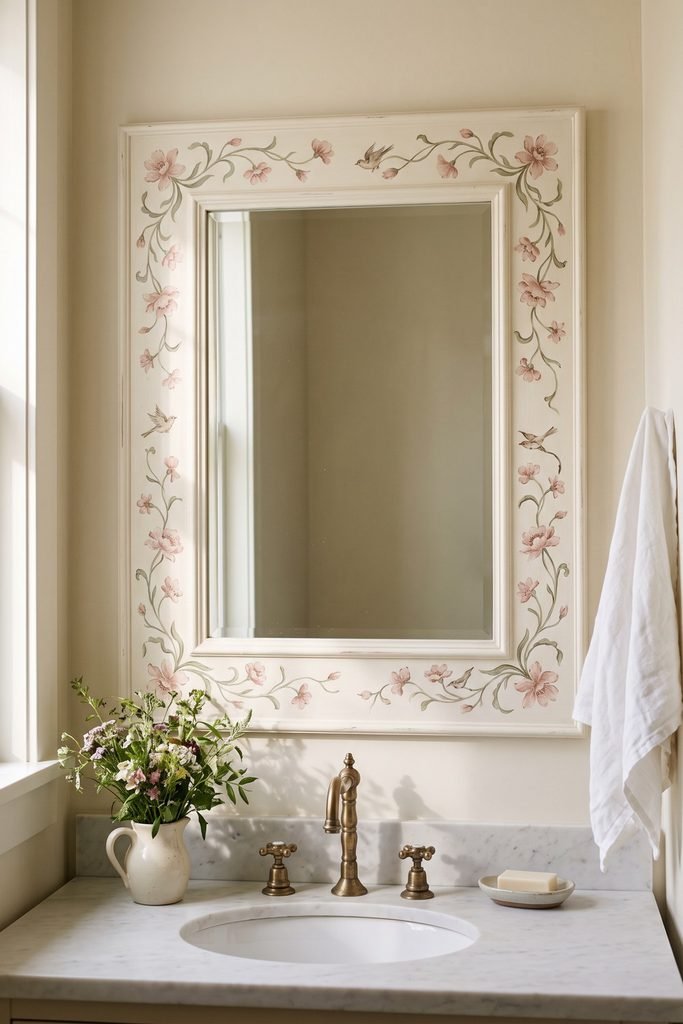
The frame needs enough width for the decoration to read. A very narrow floral edge may disappear beside a large basin, while a broader border gives the vanity a finished outline. Keeping the countertop pale also lets the faded colors feel delicate rather than lost.
A small jug of flowers can echo the painted stems without matching them exactly. Set it toward one side so the mirror remains visible, and keep the rest of the counter simple. Warm brass at the faucet supplies a little depth against the ivory. Check that the frame finish suits its position near the sink; a painted appearance alone says nothing about its age or suitability for splashes.
Find a Floral Mirror
Explore floral mirror frames and plain cream vases for a similar balance of detail and open space.
2. A Curved Sink With a Gathered Rose-Stripe Skirt
Fabric changes the whole outline of a sink. Beneath a rounded white basin, a gathered rose-and-cream skirt turns an exposed lower area into a soft, continuous curve.
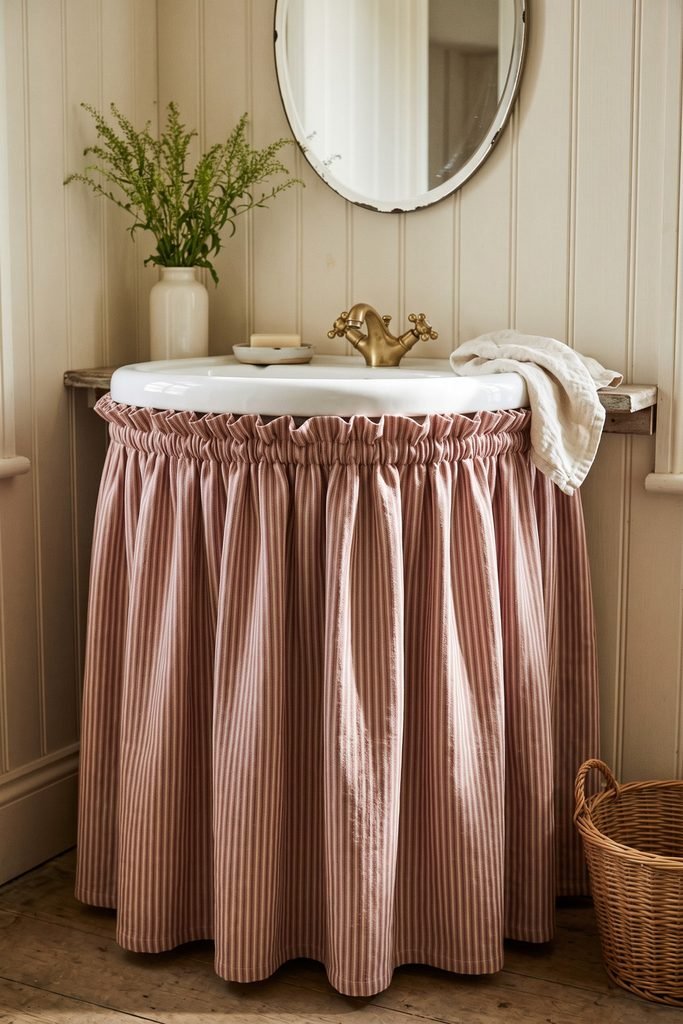
Fine stripes give the fabric some structure, so it feels connected to the fixture above. The gathering adds fullness, while the pale background keeps the rose from becoming a heavy block of color. A simple oval mirror repeats the curve at a larger scale. Keep the surrounding wall fairly quiet. A brass faucet, one cream vase, and a small soap tray leave the fabric as the main detail. For more accessory-focused combinations, explore these French vintage bathroom decor ideas.
The skirt can screen supplies, but access still matters. Look for removable, washable fabric and a hem that stays clear of damp flooring. The softness should make daily use more pleasant, with plumbing and stored items still within reach.
3. A Sage-Striped Attic Washstand With a Scalloped Stone Top
Under a sloped ceiling, a small washstand benefits from a strong shape of its own. Sage-and-cream vertical tile gives the lower walls rhythm, while a scalloped stone edge interrupts the straight lines.
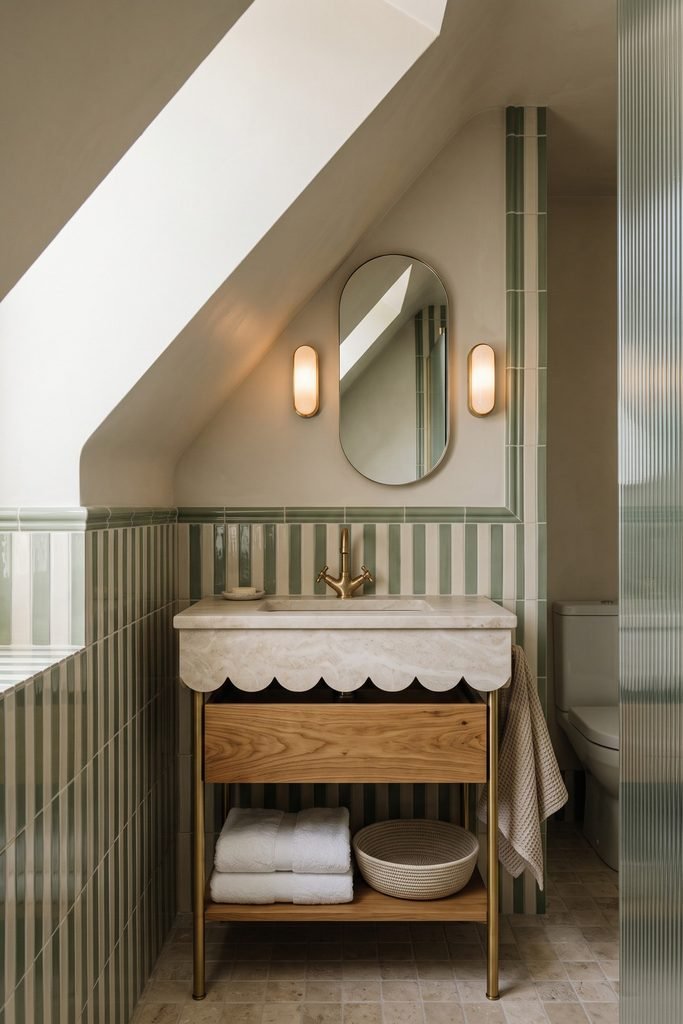
That contrast carries the design. The stripes feel orderly; the curved front makes the basin less severe. Wrapping the tile onto the side wall helps the sink corner read as one setting instead of a fixture squeezed into leftover space.
A slender brass frame keeps the lower half visually open. Within it, a honey-colored wood drawer gives small everyday items a home, with folded towels or a shallow basket below. The drawer also introduces a solid horizontal element beneath all those vertical stripes.
A narrow mirror and small wall lights suit the modest scale. Before adapting the arrangement, check the actual headroom and access around the basin. The decorative rhythm can help organize an awkward room, but it cannot change the available space.
4. A Black-Tiled Mirror Arch Above a Brass Console Sink
Black tile makes a mirror arch feel like part of the architecture. Paired with a black stone countertop, it creates a dark outline around the entire washing area. White subway tile on the surrounding walls gives the arch a clear boundary. Below, slender brass legs and an open towel rail keep the console from looking as solid as the dark upper section. The eye moves from the arch to the counter, then follows the finer metal lines toward the floor.
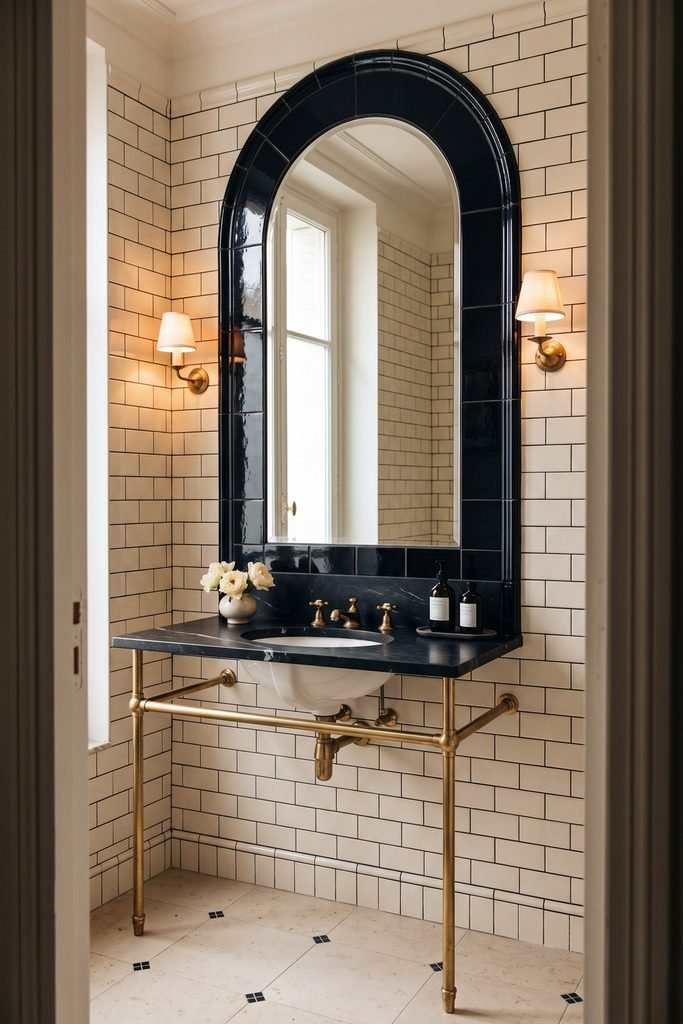
Two shaded sconces can frame the mirror within that larger outline. A small ivory flower arrangement is enough softness for this graphic Parisian bathroom idea; several decorative jars would compete with the clean shape.
Choose lights with a location rating suited to their actual exposure, and have their placement checked for the room. Since an open console offers little concealed storage, plan a separate dry spot for the less decorative essentials.
5. Charcoal Wall Panels With a Marble Washstand and Silver Mirror
An ornate silver-toned mirror looks especially distinct against a room built from straight, tailored lines. Charcoal lower panels provide that structure, with creamy walls above and a pale marble washstand between them.
Carry the panel rail around the corner so the dark color feels like a continuous base. The light stone then bridges the charcoal and ivory, rather than leaving the sink floating against two unrelated wall treatments.
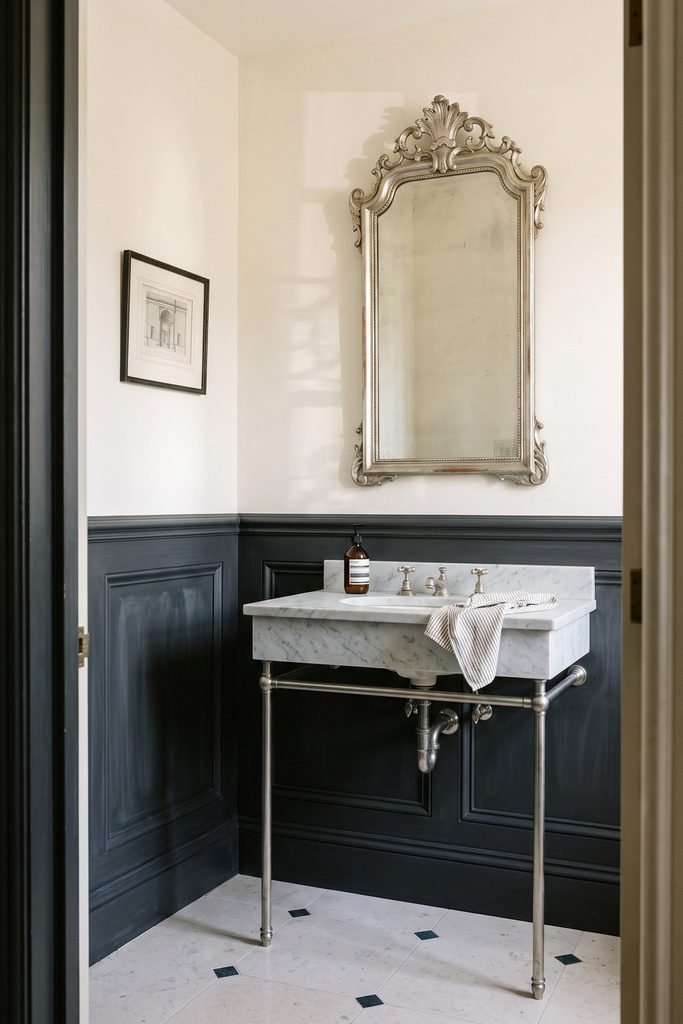
This is a place to concentrate carving in one piece. A tall mirror with a detailed crest can hold its own above thin console legs; matching ornate shelves and elaborate lighting could make the small wall feel crowded. One architectural drawing on the return wall adds a quieter rectangular shape. A striped hand towel and small dark accents in the floor repeat the tailored character. The room can feel formal while leaving the countertop almost bare.
Echo the Silver-and-Charcoal Palette
Silver-toned mirror frames and monochrome architectural prints can echo the section’s restrained contrast.
Vanities That Make Room for Everyday Life
Furniture details become more useful when they work with drawers, shared routines, and the room’s existing openings.
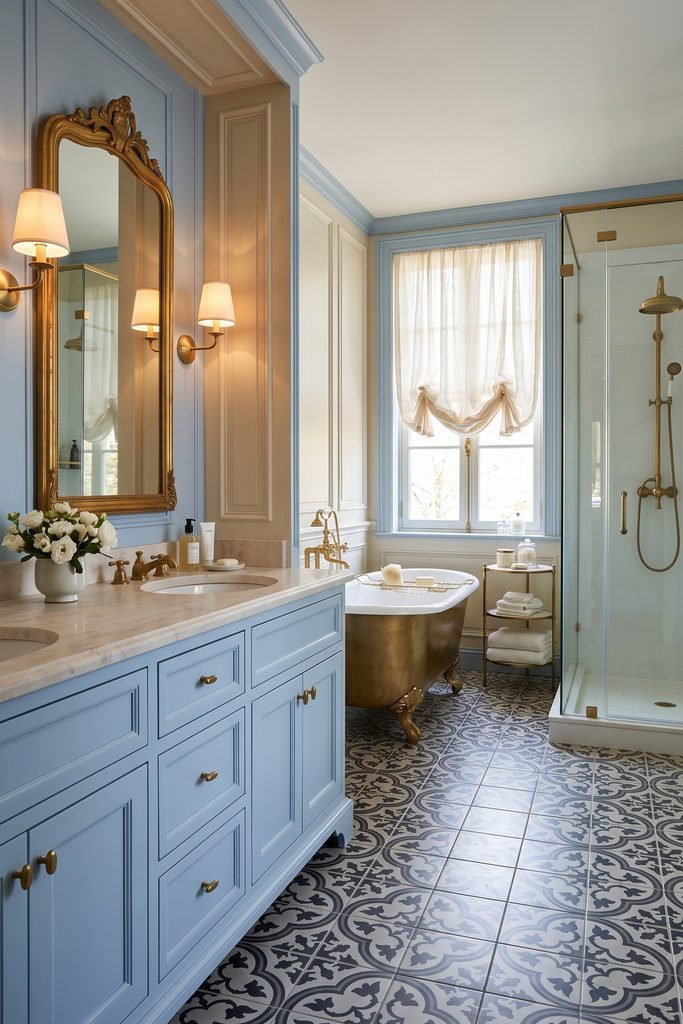
6. A Powder-Blue Furniture Vanity Beside a Clear Glass Shower
Powder blue gives a bathroom cabinet presence without turning it into a dark block. Paneled drawer fronts, a shaped apron, and small brass pulls make the vanity feel related to a chest of drawers.
Beside it, a clear glass shower enclosure allows that furniture shape to remain visible. The glass creates a different kind of edge from the painted cabinet, helping a traditional vanity sit comfortably with a modern shower.
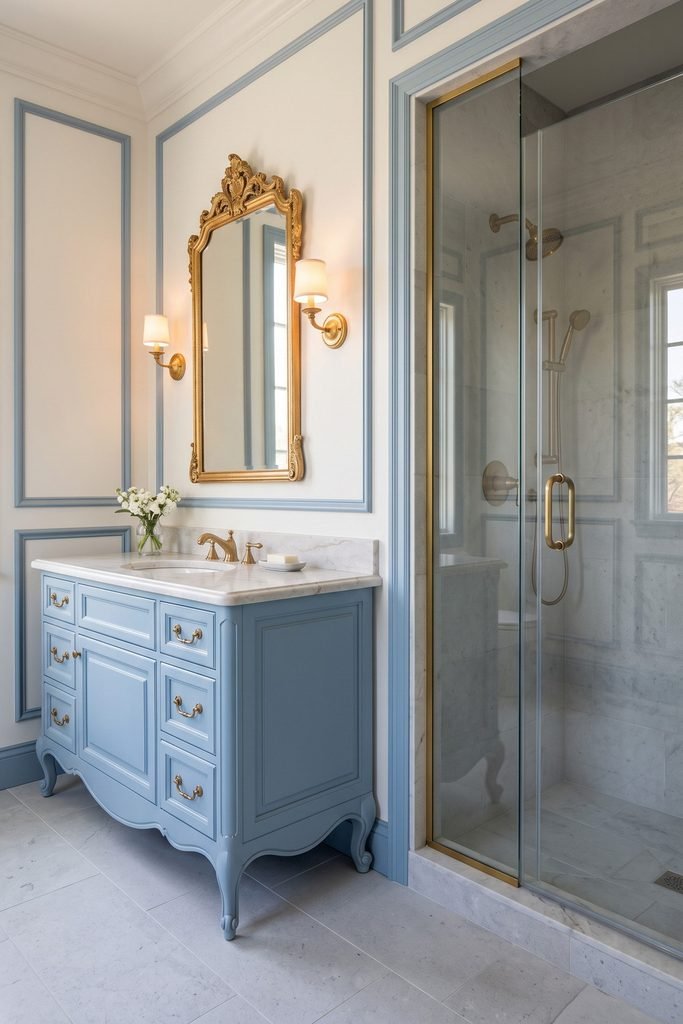
Let the gilt mirror supply most of the ornament above the counter. Pale stone, a small vase of white flowers, and restrained sconces leave the drawers and shaped base easy to appreciate. Repeating blue in nearby wall detailing can connect the vanity to the room without requiring every surface to match.
Reserve the counter for the things used each morning, and place backups inside the cabinet. The appeal comes from the combination of decorative form and genuine closed storage, with a clear route into the shower beside it.
7. An Oak Double Vanity With Two Sculpted Marble Bowls
Two thick-rimmed marble bowls give a wood double vanity a stronger silhouette than a long, uninterrupted sink top. Each bowl becomes its own washing place, especially when paired with a separate arched mirror and wall-mounted tap.
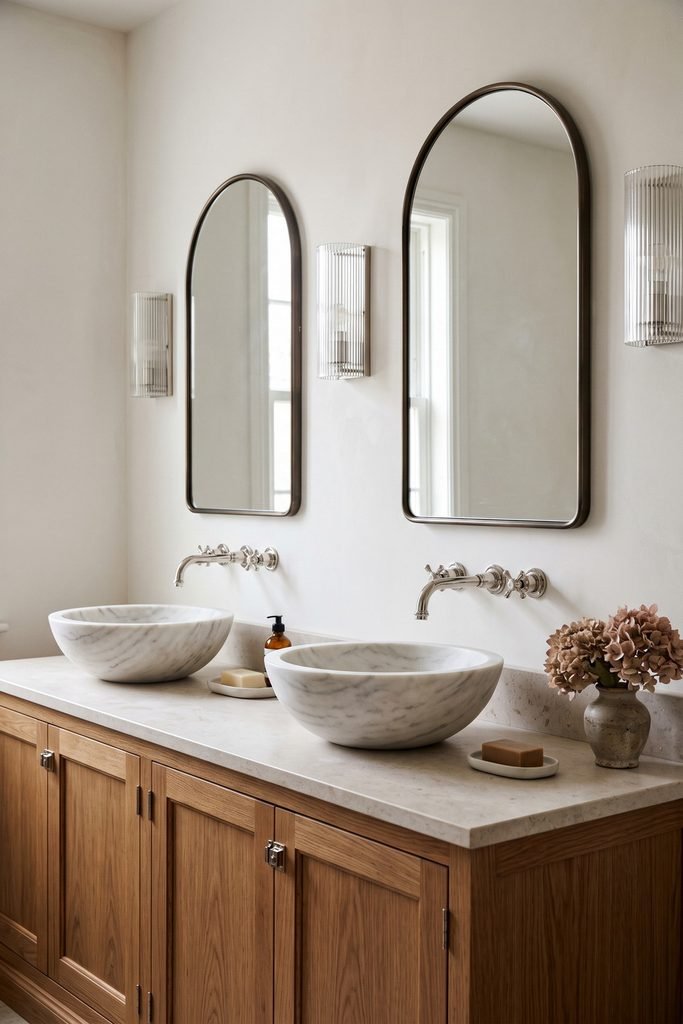
Oak grain adds a broad, quieter surface beneath the veining. With silver-toned fixtures and fluted-glass sconces, the cabinet keeps the arrangement from feeling entirely cool and reflective. A small faded-pink bouquet at one end is enough color. Leave useful countertop between the bowls. That space matters for setting down everyday items, and it gives the sculpted forms room to be seen. Separate small trays can distinguish each person’s belongings without filling the shared middle.
Before choosing the pieces, check the final basin height, faucet reach, and support requirements together. For the marble itself, follow natural stone care guidance, including appropriate non-acidic cleaners. The bowls should be selected with daily care in mind as well as their shape.
Explore Sculpted Stone and Fluted Glass
Compare sculpted basin shapes and fluted-glass lights, checking dimensions and location ratings against your bathroom plan.
8. Two Marble Washstands Framing a Linen Window Seat
A window does not have to sit behind a sink. In a suitably wide bay, two washstands could occupy the perpendicular side walls, leaving the center for a real window seat. Each person faces a solid side wall while using the basin, with a mirror directly above it. Between the stations, a linen-cushioned bench sits under the window. This creates a U-shaped arrangement with an open area in the middle, rather than one long counter running across the glass.
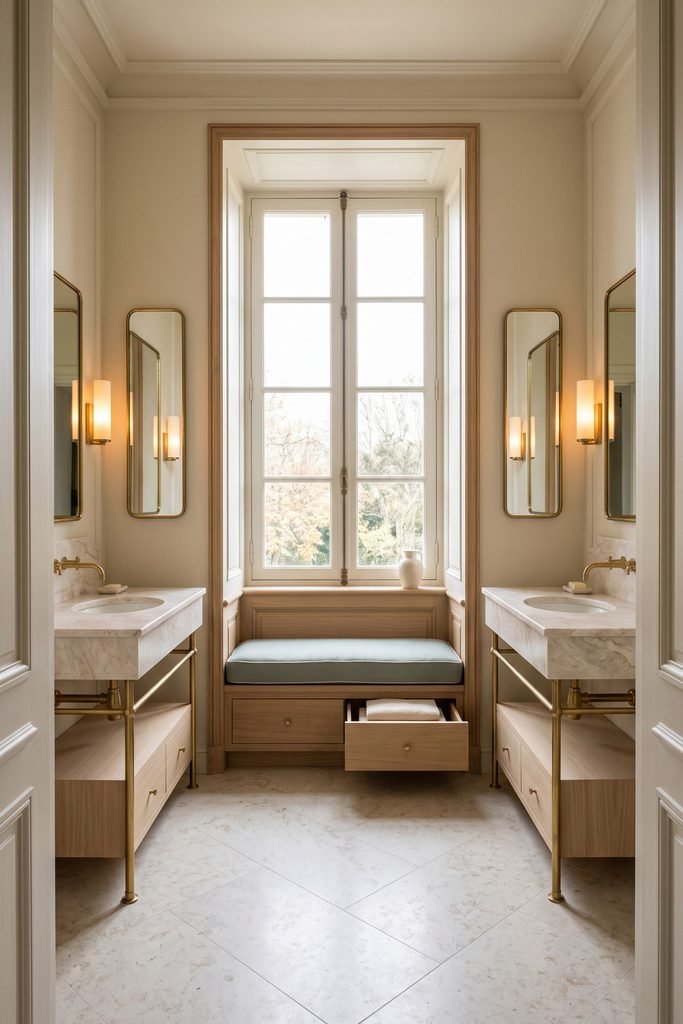
Repeat pale marble at both washstands and use slender brass supports to relate them. A muted celadon cushion introduces softness at the center. Shallow drawers beneath the bench can hold towels, connecting the two washing places through useful lower storage.
The seat needs to remain usable. It should offer somewhere to pause or set out clothing, with drawers that open into clear floor space. Separate wall lights serve the mirrors, while daylight remains the central feature of the bay.
This is a proposed custom layout, so its success depends on measured space, plumbing, and access. The side walls must accommodate mirrors, and the bench should stay outside direct splash. In a narrower room, one side washstand beside the same window seat can preserve the relationship with less capacity. It offers a single washing station and a place to sit, rather than promising two users a layout the room cannot hold.
Patterned Walls With a Clear Focal Point
Pattern becomes easier to enjoy when a plain surface or a strong fixture gives it a boundary.
9. Blue Toile Walls With a Scalloped Basin and Silver Mirror
Blue toile can carry much of a bathroom’s decoration. Its fine illustrated lines are strongest when the lower walls and vanity stay white, giving the pattern a distinct upper zone.
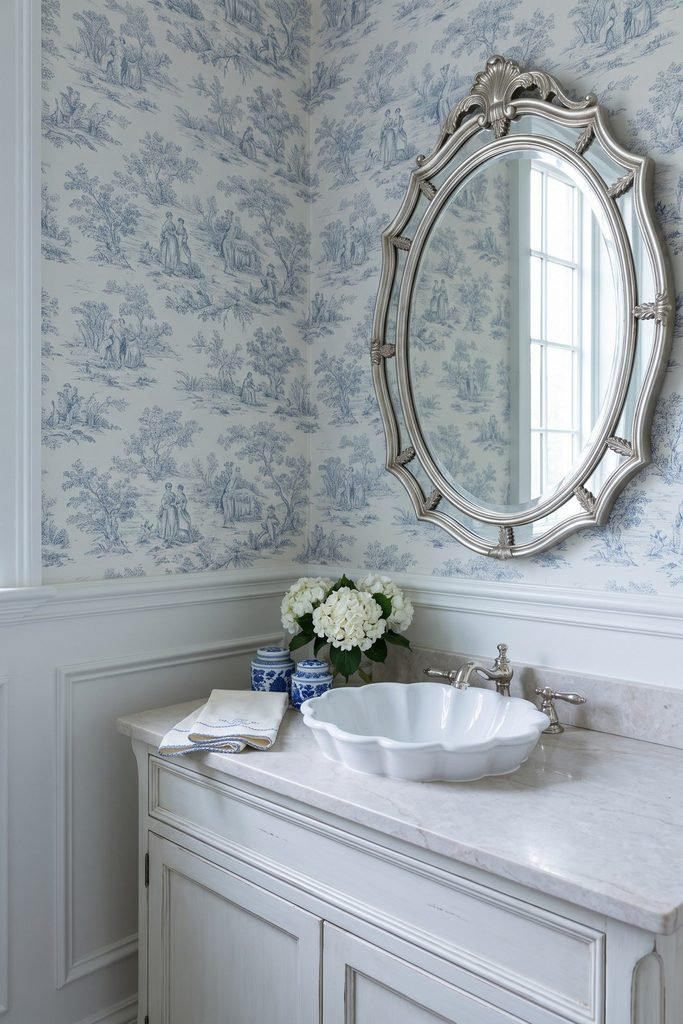
A scalloped white basin adds another kind of detail. Its outline is soft and sculptural, so it complements the toile without repeating the picture-like pattern. A large silver-toned mirror introduces reflection and a cooler finish than the brass used in several other French bathroom settings.
Repeat blue selectively: a porcelain jar, the border of a towel, or one flower vessel. White hydrangeas can add fullness without bringing in another strong color. Leave enough clear stone around the basin for the scalloped rim to remain visible.
Choose the wallcovering for its actual bathroom position, not just its print. Wallpaper care guidance distinguishes materials with different moisture and cleaning tolerances. A beautiful toile pattern does not establish how its backing will perform.
Repeat the Blue-and-White Details
Carry the wallpaper’s blue into a small porcelain accent and towel borders, keeping the larger surfaces white.
10. A Scenic Mural Powder Room With a Marble Pedestal Sink
A landscape mural can give a small French bathroom a whole setting: distant trees, pale sky, and a softened horizon continuing around the corner.
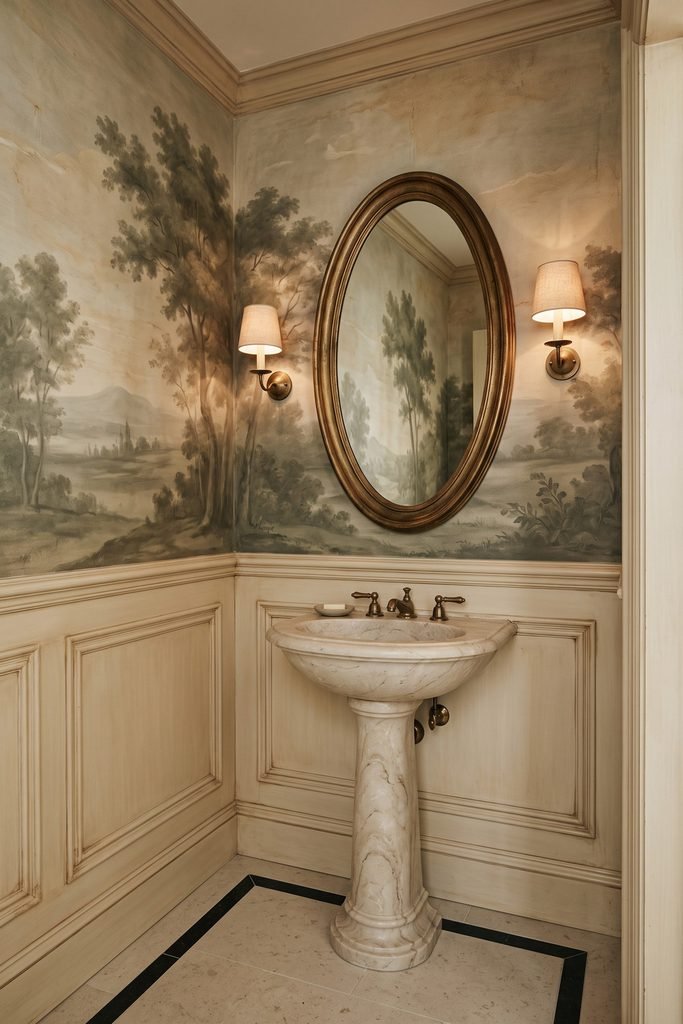
Cream paneling below keeps the scenery from reaching every surface. Above a marble pedestal sink, a tall oval mirror provides a clear center within the picture. Paired shaded sconces reinforce that axis, so the room has a focal point even when the wall imagery is intricate.
Keep loose decoration modest. A small soap dish is more useful here than a large bouquet that hides the mural or crowds the basin. The pedestal supplies its own sculptural shape, with a little open floor around it. This arrangement suits an elegant powder room where substantial vanity storage is less important. In a main bathroom, the same choice would need a separate place for everyday supplies; the decorative effect does not replace that practical decision.
11. A Rose-Tiled Bath Alcove With Gilded Details and Soft Light
Pale rose and cream can support a richly decorated bath without needing many separate accent colors. Floral tile panels supply the picture-like detail, while the plainer tiles around them establish a quieter background.
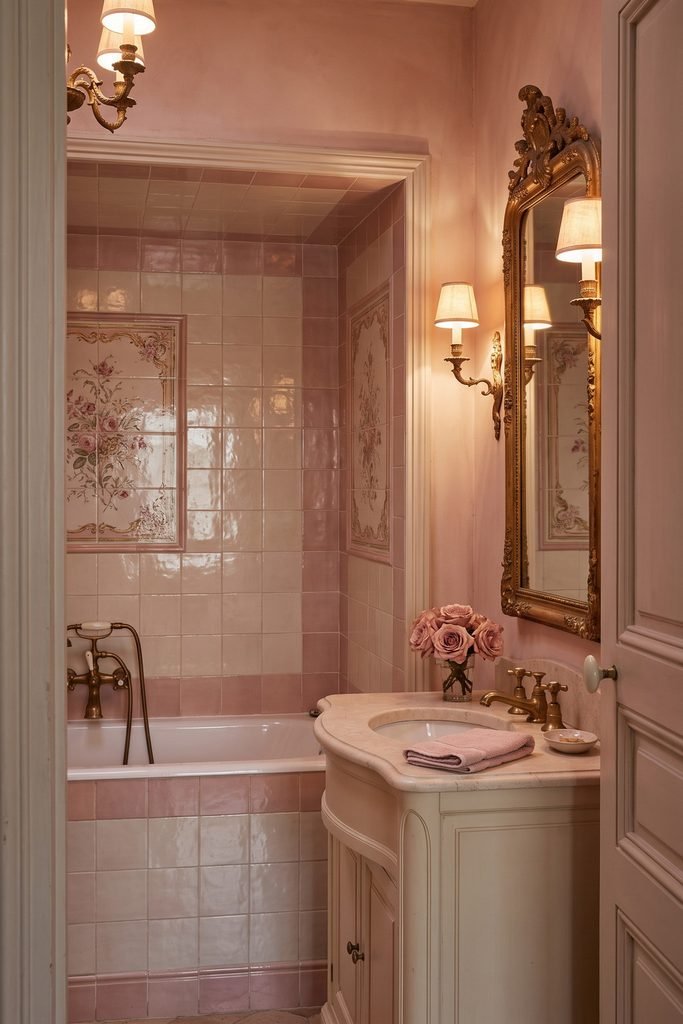
Let that tiled treatment wrap the built-in tub so the bathing area feels complete. Beside it, a small vanity with a shaped apron and a tall gilt mirror repeats the softer furniture lines. Thin gold highlights at the faucet and frame are enough to connect the two areas.
The flowers in the tile can find a modest echo in a low arrangement of roses and a faded-pink towel. Keeping those accents within the same color family lets texture do more of the work: glazed tile, plush fabric, smooth stone, and the irregular outline of the flowers.
Warm wall lights can provide the evening glow. A candle-lined tub edge is unnecessary when the surfaces already offer so much reflection and detail.
Bathing Spaces That Feel Furnished
Tubs gain a different presence when the surrounding room includes furniture, art, and a considered backdrop.
12. A Brass Clawfoot Tub With a Cream Dresser Vanity
The warm shine of a brass-toned tub sits comfortably beside the quieter painted drawers of a cream vanity. One piece feels like a bathing vessel, the other like familiar bedroom furniture. A patterned black-and-white floor can connect them. Keep the walls pale and lightly paneled so the floor becomes the main repeating pattern, rather than competing with printed curtains or wallpaper above.
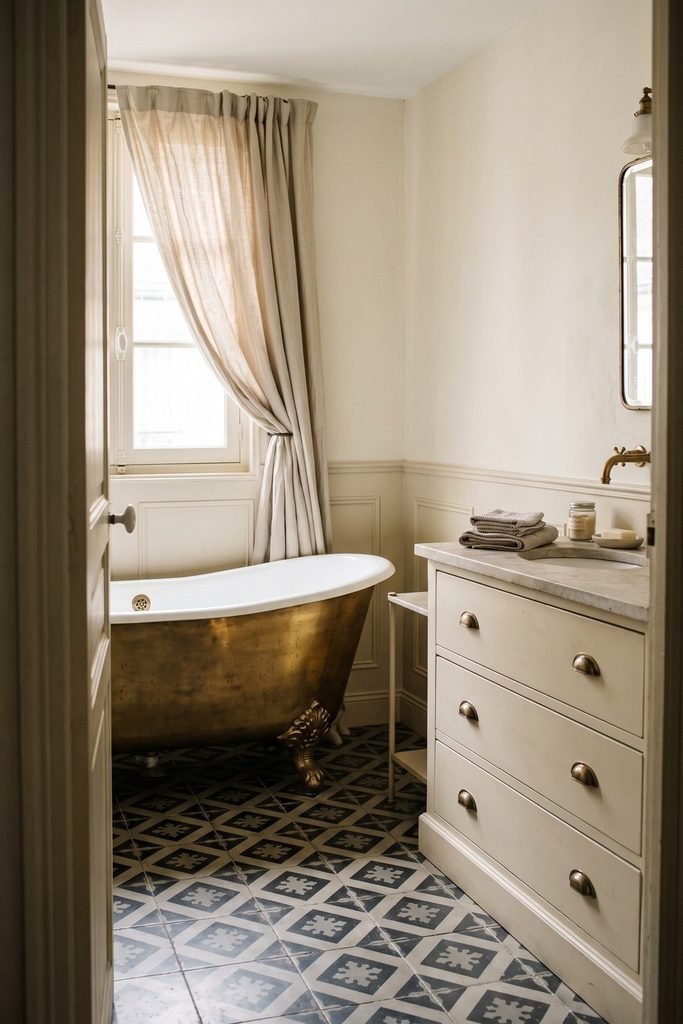
The tub’s full profile matters here, including its feet and the space around it. Beside that curved shape, a dresser front gives the room a steadier rectangle. Decorative pulls offer small points of detail across the drawers, with a neutral curtain softening the window.
Use a small bath-side stand only where it leaves a comfortable route. Actual tub material, floor support, and installation requirements need checking for the chosen model. A brass-colored exterior may describe the appearance without identifying what the whole bath is made from.
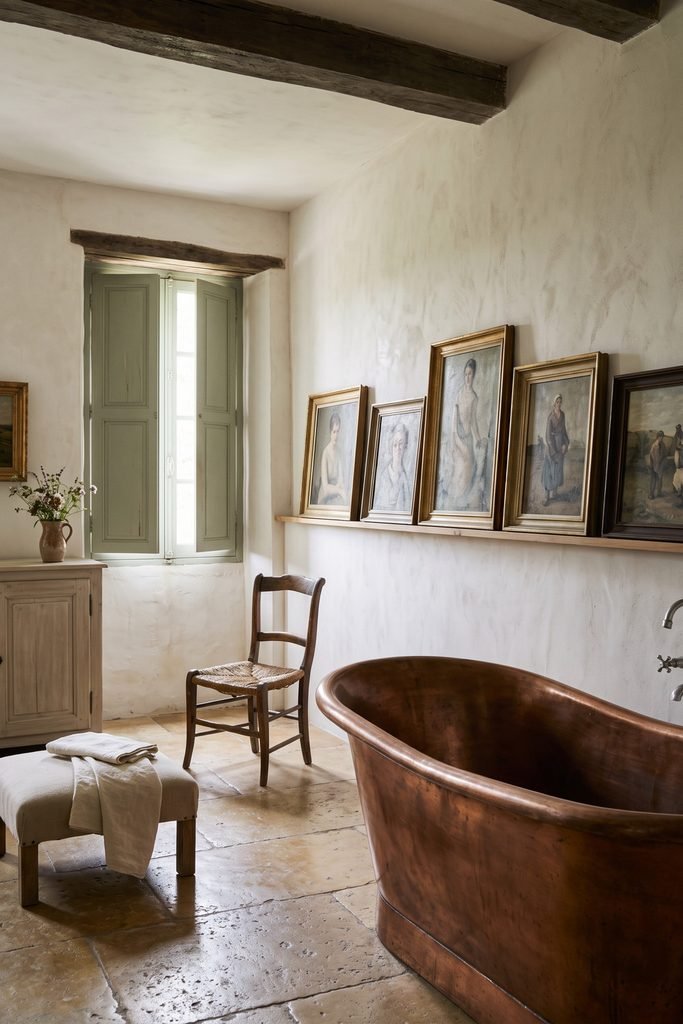
13. A Copper Tub Against Limewashed Walls and Sage Shutters
Copper and faded sage make a gentle contrast: one catches the light, while the other looks quiet and weathered. Warm ivory walls give both colors enough space to be noticed.
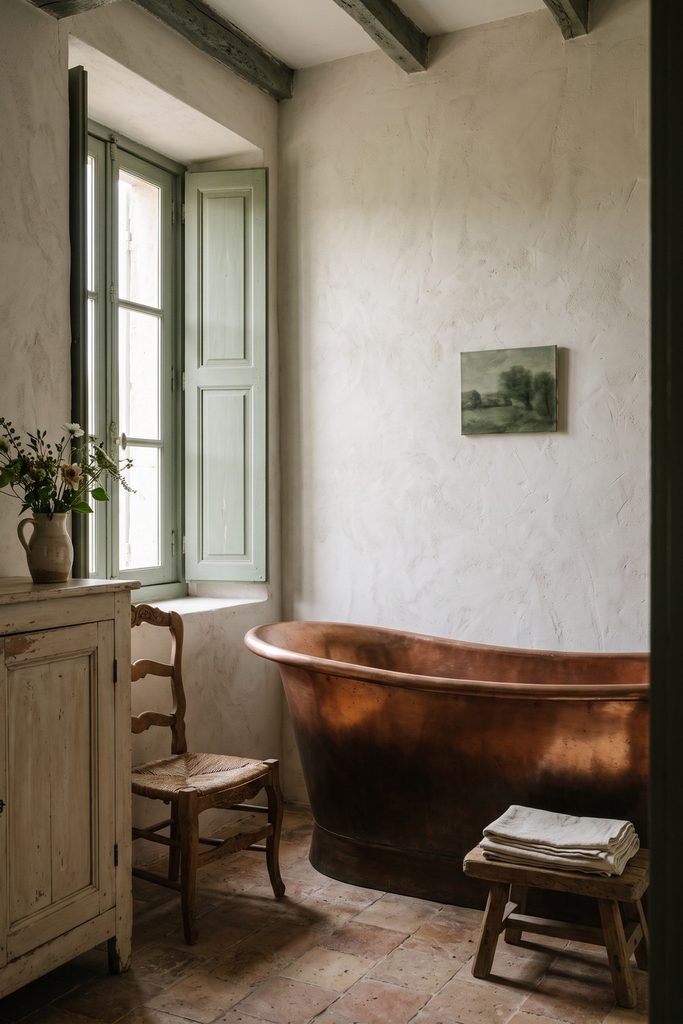
The limewashed look is valuable for its softly uneven appearance. Against that matte background, the tub can remain the room’s main reflective surface. A terracotta-toned or warm stone floor extends the earthy palette below it. Furniture should reinforce the relaxed French country bathroom direction. A woven-seat chair and one pale cabinet can be enough. Repeating distressed finishes on every piece risks making the scene feel more theatrical than comfortable.
Keep the shutters muted and the textiles simple, perhaps a folded cream towel over a small stool. When selecting the real finishes, check the tub’s coating and care instructions as well as the wall treatment’s intended exposure. Copper-colored surfaces and pale plaster effects can vary considerably between products.
14. A Picture Ledge That Turns the Bath Into a Small Gallery
Art feels more connected to a bathtub when the arrangement follows the bathing area. A continuous picture ledge above plain lower walls gives several portraits or landscapes one shared line.
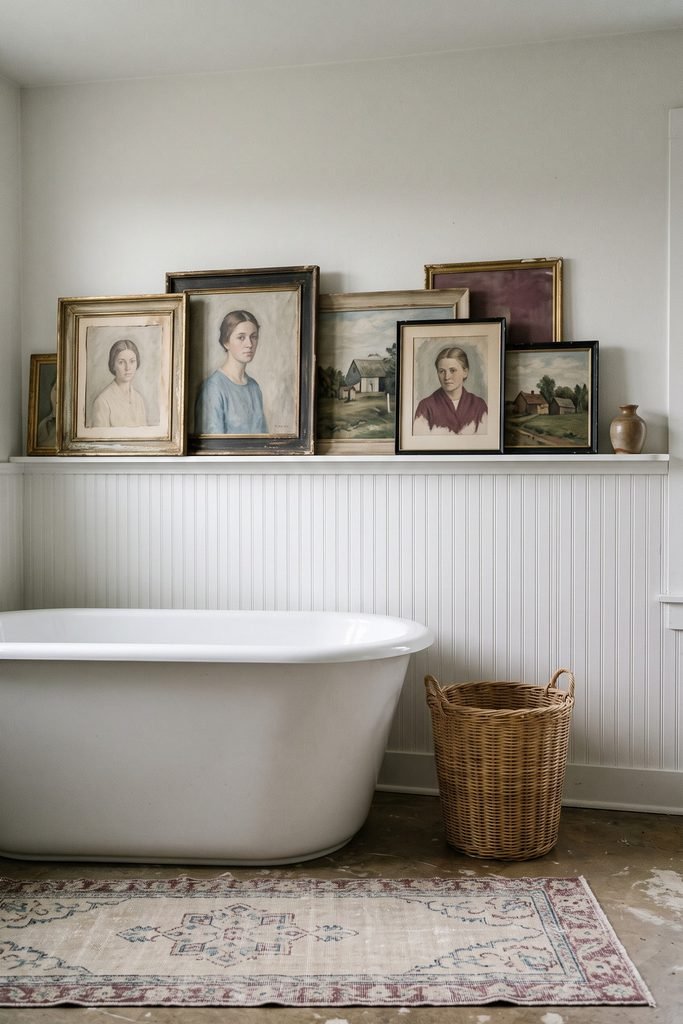
Vary the frame heights, but let a few finishes repeat. Weathered gold, dark wood, and a narrow black edge can look collected when the pictures share a limited palette. The white tub and simple paneling provide a calm base beneath them.
The ledge also allows a small vase to sit among the frames. Keep it in a dry position, with the artwork outside direct spray. The goal is a personal display that belongs in the room, rather than treating valuable pictures as automatically suited to bathroom conditions.
A woven laundry basket and muted patterned floor textile bring the gallery down to everyday scale. Leave the tub edge clear so the art remains something to enjoy from the bath, with daily access kept straightforward.
Find Pieces for the Bath Gallery
Look for a simple ledge and slim frames that let varied artwork share one clear line.
15. A Marble Tub Beside a Decorative Fireplace and Green Chair
A green upholstered chair brings a different texture to a room dominated by pale stone. Beside a substantial marble tub, its fabric and curved wood frame make the bathing space feel more like a small salon.
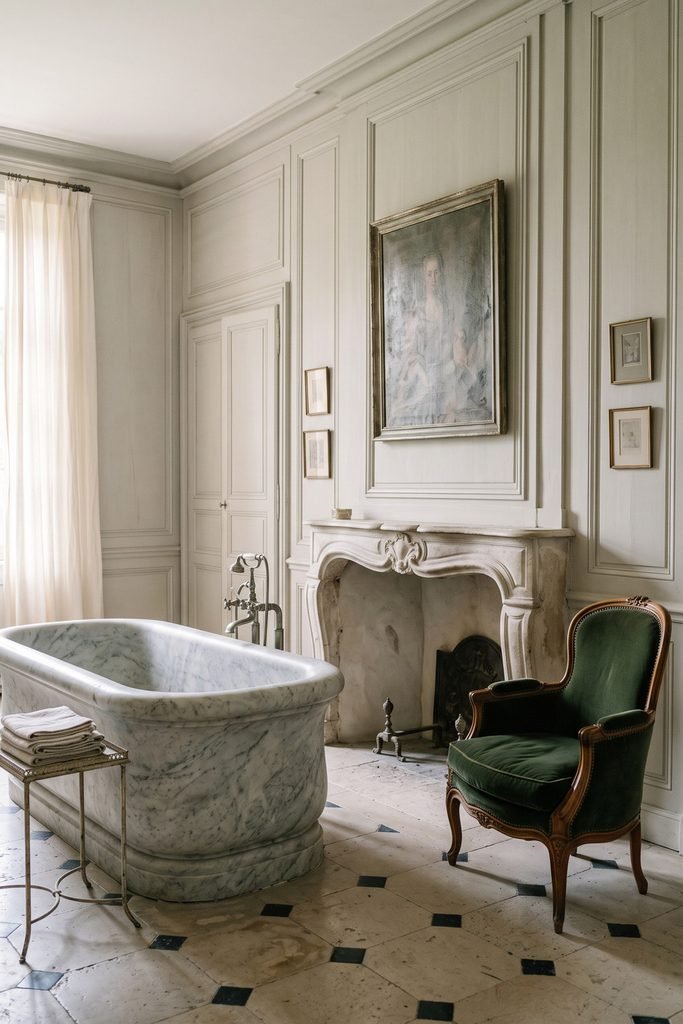
An unlit decorative mantel gives the arrangement a shared backdrop. The tub and chair can occupy opposite sides of the room, while a picture above the mantel draws attention upward. Pale wall molding adds structure around those larger pieces.
Dark green works as a concentrated accent against gray-white veining. Repeat it sparingly, if at all; the chair has more presence when it is the main colored object. Sheer curtains let daylight soften the stone and carved details. This is a larger-room idea that needs generous circulation. The tub’s support requirements and the condition of any existing fireplace belong in the project planning. The proposed setting uses the mantel as decoration, with no active fire needed for the atmosphere.
16. A Painted Folding Screen Behind a Freestanding Tub
Folds are what make a screen different from a patterned wall. They introduce shallow changes of direction behind the tub, giving the painted panels depth and a slightly sheltered feeling.
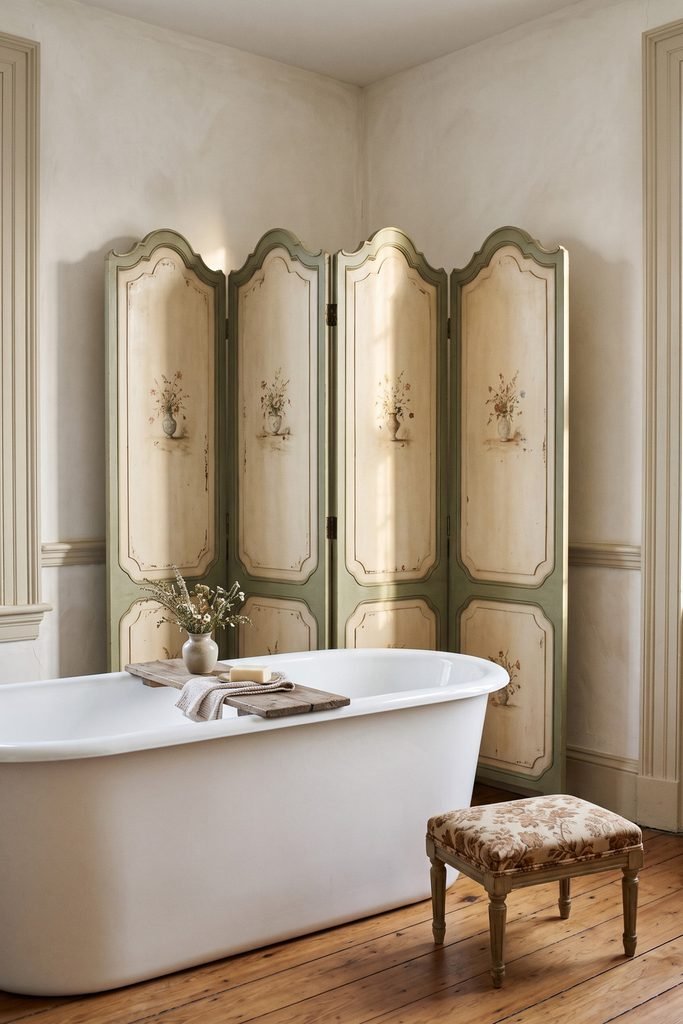
A faded sage frame with cream floral panels works well behind a simple white bath. The tub’s plain outline lets the screen carry the detail, especially if its top has a gentle curve. One low upholstered stool can soften the open area beside the bath.
Keep the stool’s pattern quieter than the screen’s painting. A small flower arrangement or simple bath tray is enough additional decoration; the tall backdrop already occupies a large part of the room’s attention. The screen provides visual privacy, so it should remain separate from the wet enclosure. Check its stability, keep it outside direct spray, and leave the route around the tub clear. A folding piece needs a deliberate place in the room, not just a spot where it looks attractive.
Calm Layouts for Bathing and Storage
The final arrangements bring furniture and bathing zones together, with storage helping define how the room works.
17. A Sage-Tiled Shower With an Oak Vanity and Arched Window
Sage tile gives a shower a defined color zone, while a light oak vanity introduces a different surface beside it. Clear glass allows both to remain part of the same room.
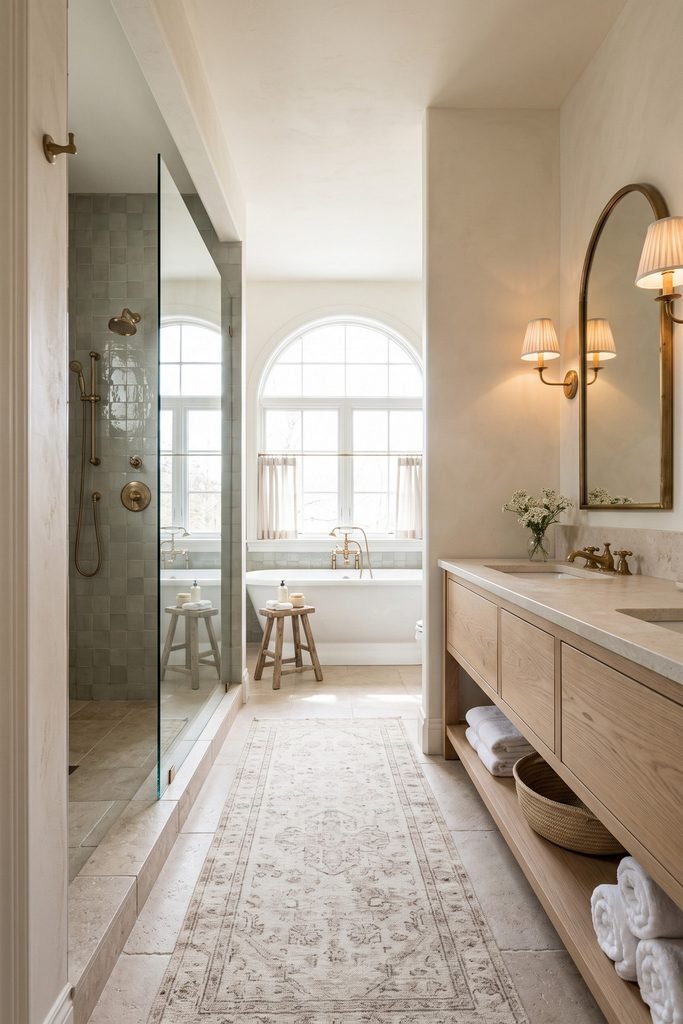
The arched window can establish a separate place for the white tub. With those three areas visible, the floor between them needs to stay clear enough for the layout to make sense. A muted rug can mark the open route without becoming another large decorative feature.
Divide the vanity storage by use. Closed drawers can hold daily supplies, while an open lower shelf displays folded towels and one basket. That smaller amount of exposed storage keeps the oak grain and pale countertop visible.
White flowers, a small stool, and a restrained brass finish are enough to support the setting. Good ventilation remains part of caring for any bathroom: the EPA’s moisture guidance recommends running the bathroom fan or opening the window when showering. The shower enclosure and the surrounding finishes still need appropriate detailing for the actual room.
Organize the Open Towel Shelf
A woven basket and plain white towels can keep the open shelf useful while leaving the oak grain visible.
18. A Double-Sided Linen Cabinet That Shapes a Private Bath Nook
Storage could form the boundary of a bathing area instead of sitting only against the perimeter wall. Picture a fixed, furniture-like linen cabinet between a dry dressing aisle and a freestanding tub, with a different useful face on each side.
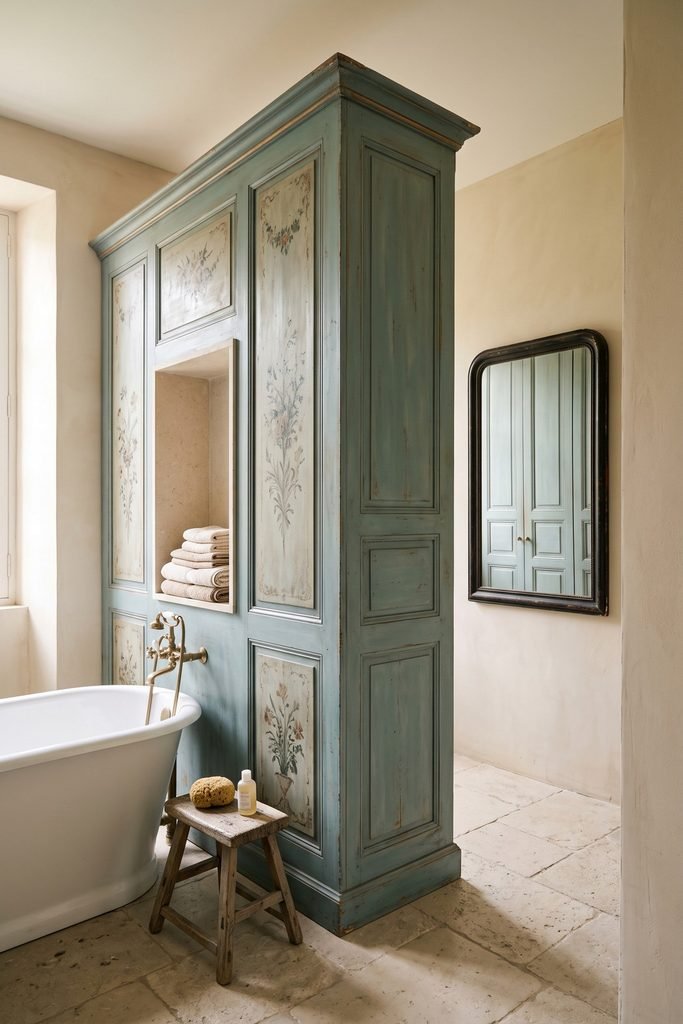
Full-height doors open toward the dressing aisle. On the tub side, shallow framed floral panels and a stone-lined towel recess create a more decorative elevation. The result gives supplies a dry-side home while the bath looks toward a composed piece of furniture.
A faded blue-green finish can connect the cabinet to an ivory tub and pale stone floor. Small brass pulls belong on the working side; the bathing side needs very little added decoration. The towel recess should be reachable from the open area beside the tub and remain outside shower spray.
Access around the cabinet’s end is essential to the concept. The tub cannot block the linen doors, and the dry aisle must allow those doors to open. Both faces need to work in daily use, with a clear walking route between the zones.
This proposed arrangement calls for measured planning, designed anchoring, and finishes suited to the location. A shorter fixed return cabinet could offer the same two-sided relationship in a smaller room, provided one open end remains clear. Its value comes from the combination of storage and spatial separation, so reducing its size should preserve both.
A French-inspired bathroom feels most convincing when its details belong to the room around them. Choose the mirror, washstand, wall treatment, or bathing arrangement that suits your space, then let the surrounding finishes support it. A few repeated colors and a clear focal point can carry a great deal of character. Leave room for the things you use every day, and the decorative choices become part of a bathroom you can enjoy living with.