




16 Christmas Vase Arrangements for a Festive Home
The best spot for a Christmas vase might be the coffee table you clear every evening or the kitchen island you see from two rooms. Both spots can use evergreen and red berries, but each calls for a different shape. A small tray keeps a coffee-table bouquet easy to move. An island arrangement has room for flowers that face in two directions.
- Quick Takeaways
- Christmas Vase Centerpieces for Dining and Coffee Tables
- 1. Red Berry Branches in a Ribbed Glass Vase
- 2. An Ivory Vase on a Candlelit Coffee-Table Tray
- 3. A Low Christmas Flower Vase for a Small Dining Table
- 4. Red Poinsettia in a White Pedestal Urn
- Christmas Arrangements With Ornament Fillers and Natural Textures
- 5. A Glass Cylinder Filled With Red Ornaments and Pine
- 6. Dried Orange Wheels in a Round Glass Vase
- 7. Red and Ivory Roses in a Birch-Bark Vase
- 8. A Wood-Slice Vase With Seed Pods and Pinecones
- Playful Christmas Vases for Kitchens and Entries
- 9. A Peppermint Bouquet in a Ceramic Christmas Tree Vase
- 10. Christmas Flowers in a Gingerbread House Vase
- 11. A Snowman Vase With a Candy-Stripe Bow
- Christmas Vase Arrangements for Windows and Sideboards
- 12. A Smoky Window Vase With Black and Champagne Ornaments
- 13. A Charcoal Urn With Scarlet Berries and Cedar
- 14. White Hobnail Vases With Burgundy Bows
- Christmas Bouquets That Work With the Room
- 15. A Two-Sided Christmas Bouquet for an Open-Plan Island
- 16. A Vintage Santa Vase With Candy-Cane Sprays
- Final Thoughts
These 16 Christmas vase arrangements take you from low dining centerpieces to a smoky window display that looks its best at dusk. Some use the vase for color or texture. Others let you see right through the glass to the ornaments or dried oranges inside. Start with the surface you want to decorate and how you use it.
Quick Takeaways
- Choose the height for the spot. A low bouquet keeps faces visible across a dining table, while an entry console can handle a taller spray.
- Give the vase one clear job. Ribbed ceramic adds texture, clear glass shows the filler, and a novelty vase can supply the whole theme.
- Repeat one Christmas color in a nearby accent. A berry-red stripe in a pillow or a small brass detail can tie the display to the room.
- Keep dry filler separate from vase water. A watertight insert leaves the decorative outer chamber dry when the stems are fresh.
Christmas Vase Centerpieces for Dining and Coffee Tables
A coffee-table tray can move when you need the space. At a dining table, the arrangement has to leave room for plates, serving dishes, and the people across from you.
1. Red Berry Branches in a Ribbed Glass Vase
Red berry branches have a loose outline that shows up well against a pale sofa. Give the tallest sprays room to rise on one side of a ribbed glass vase, then use round eucalyptus leaves to soften the lower half. The muted blue-green leaves give your eye a break between the brighter berry clusters. Light from a window catches the ribs and makes the glass part of the display, even with only a few stems inside.
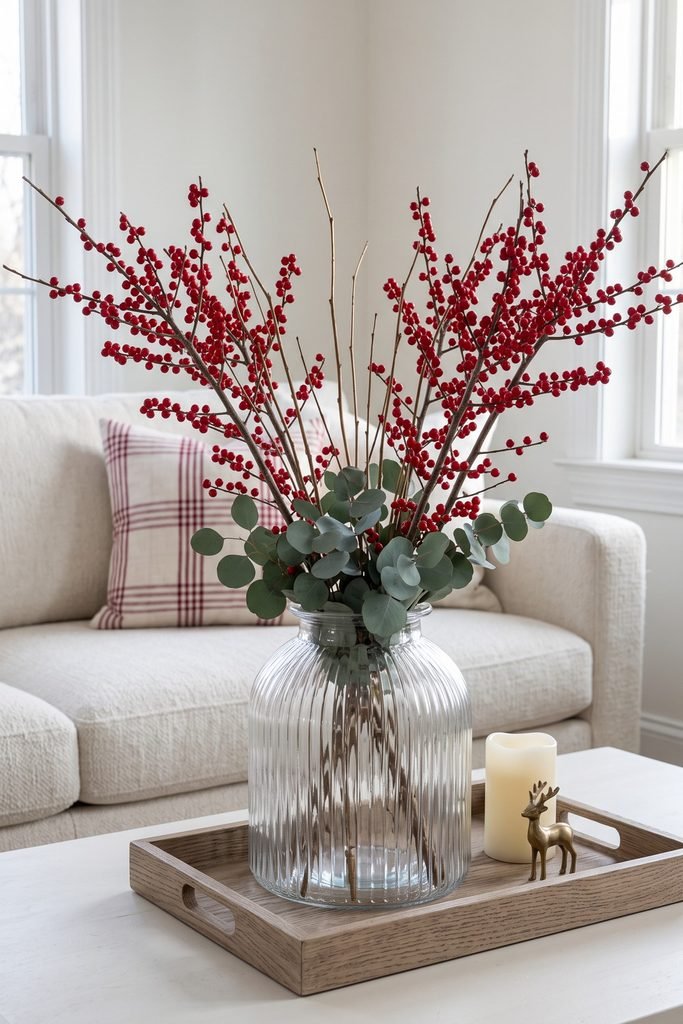
A shallow oak tray gives the tall vase a clear footprint on the coffee table. A little brass deer adds a warm gold note near the base, where it can catch the light without crowding the berries. If your sofa has a plaid pillow with a narrow red stripe, the two reds will pick up on each other across the room. A broad-based vase makes sense here, especially if the tray moves when you set out drinks.
Find the Red Berry Stems
Look for open berry sprays with visible gaps between the clusters so the round eucalyptus leaves can show through.
2. An Ivory Vase on a Candlelit Coffee-Table Tray
An ivory arrangement can feel Christmassy with very little color. The trick is to give each pale piece a different finish. In a ribbed ivory vase, matte ceramic catches soft bands of light. A textured glass votive scatters a brighter glow, and a small ivory tree adds a solid shape at tray level. A round oak tray gives the light pieces an edge you can see against a cream sofa or rug.
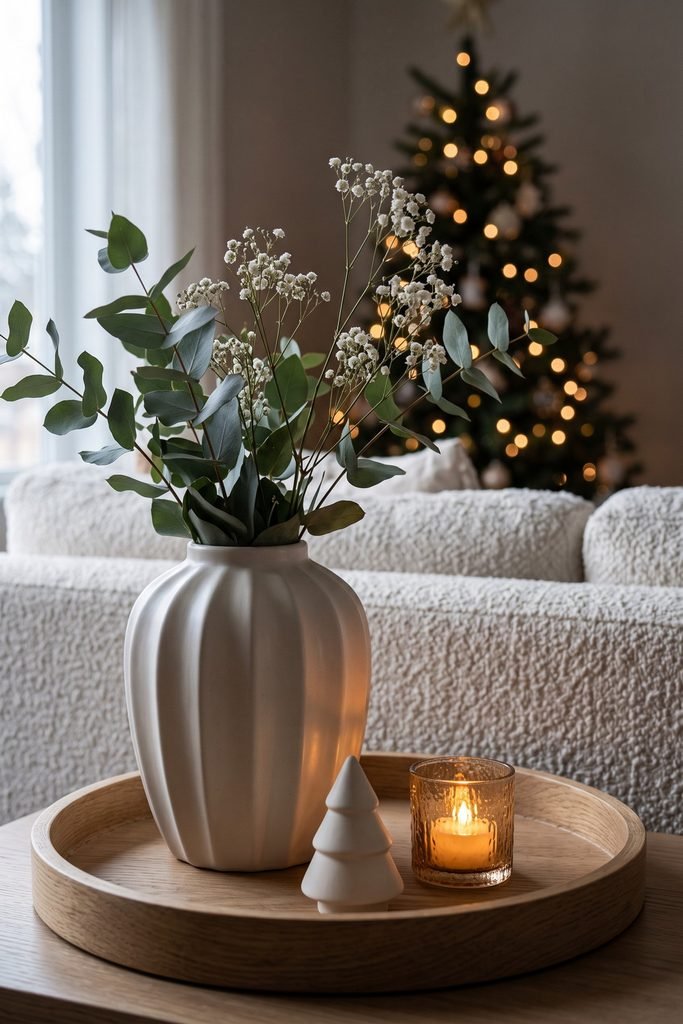
Eucalyptus brings a dusty green into the bouquet. A few tiny white flowers sit lightly among the round leaves and repeat the ivory without hiding the stems. If you already have a lit tree nearby, let those lights fill the background and keep the tray simple. A battery-operated votive supplies the candlelight effect beside the foliage, in keeping with guidance from the U.S. Fire Administration.
3. A Low Christmas Flower Vase for a Small Dining Table
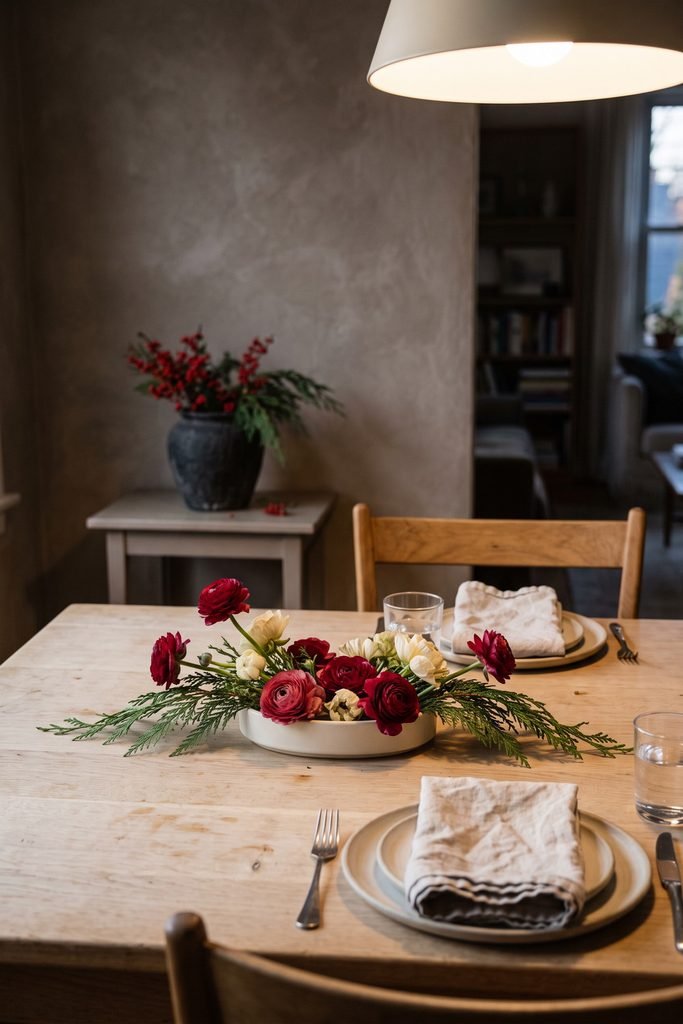
A shallow oval vase makes a good starting point for a Christmas centerpiece on a small table. Its long shape follows the tabletop, so the display has presence even when the flowers sit low. Cranberry ranunculus can form a loose line across the vase, with a cluster of small ivory flowers breaking up the red. Flat cedar tips continue the line at either end. Keep the tips within the space you’ve set aside for the centerpiece so they leave the place settings clear.
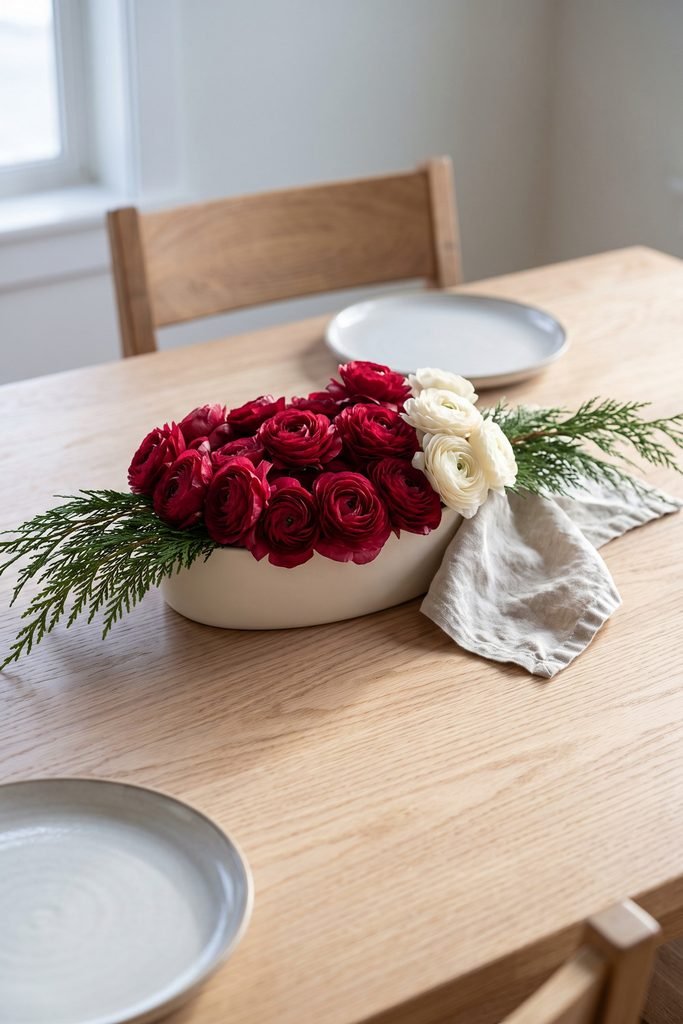
Set out two plates and sit down on each side before deciding how tall the arrangement should be. The eye-level view tells you more than standing over the table does. You should still see the face of the person across from you and have room to pass a serving dish. A low, stable vase with support suited to the flowers helps keep that horizontal shape. Iowa State University Extension’s floral arrangement guide pairs low, oblong containers with short, wide centerpieces. Here, the oval also gives the flowers enough length to read as one display.
Choose a Low Oval Vase
A shallow oval vase gives the ranunculus room to spread along the table while keeping the view open across it.
4. Red Poinsettia in a White Pedestal Urn
A white pedestal urn gives a red poinsettia enough height to stand out against a pale kitchen or dining room. Let the red bracts stay together near the center. A little fir at the shoulders and a couple of muted gold leaves bring in the rest of the palette without breaking that broad patch of red. On a tartan runner, the exposed white foot leaves a visual gap between the busy pattern and the bouquet.
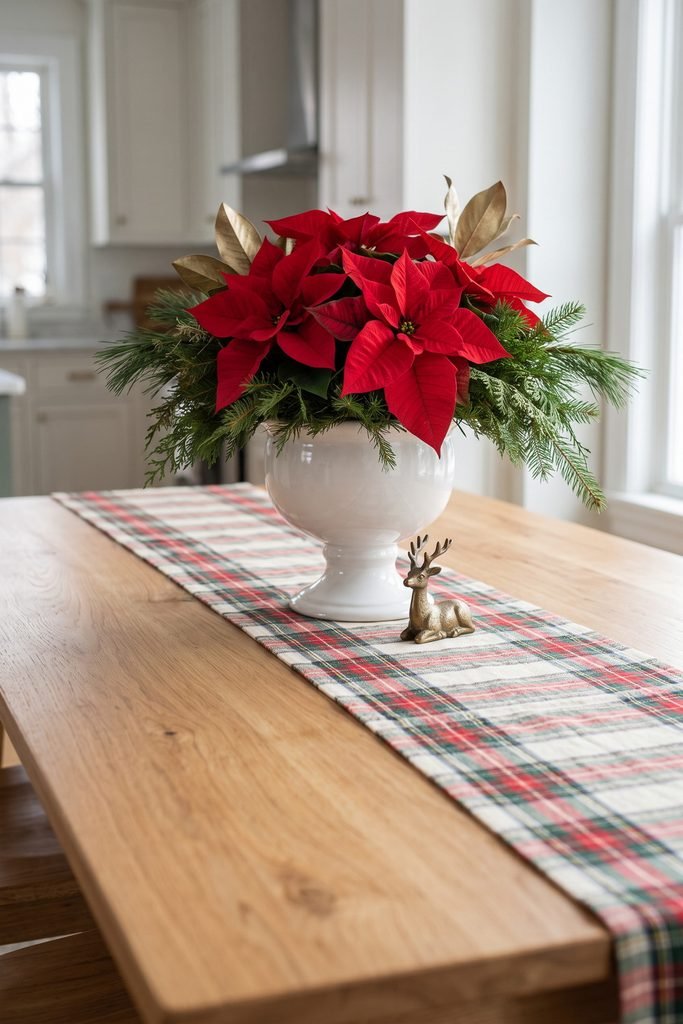
This is a good arrangement for the far end of a table when that spot is free. The taller profile makes sense against the back wall, while the center can stay open for food and conversation. A small brass deer near the foot can echo the gold leaves if the runner needs a little light. For a live poinsettia, a nursery pot that fits securely inside the urn makes it easy to lift the plant out. Faux stems give you the same concentrated red shape in a decorative urn.
Christmas Arrangements With Ornament Fillers and Natural Textures
Here the vessel carries as much of the design as the stems. Clear glass gives ornaments and citrus a place to show, while bark and cut wood bring texture down to the tabletop.
5. A Glass Cylinder Filled With Red Ornaments and Pine
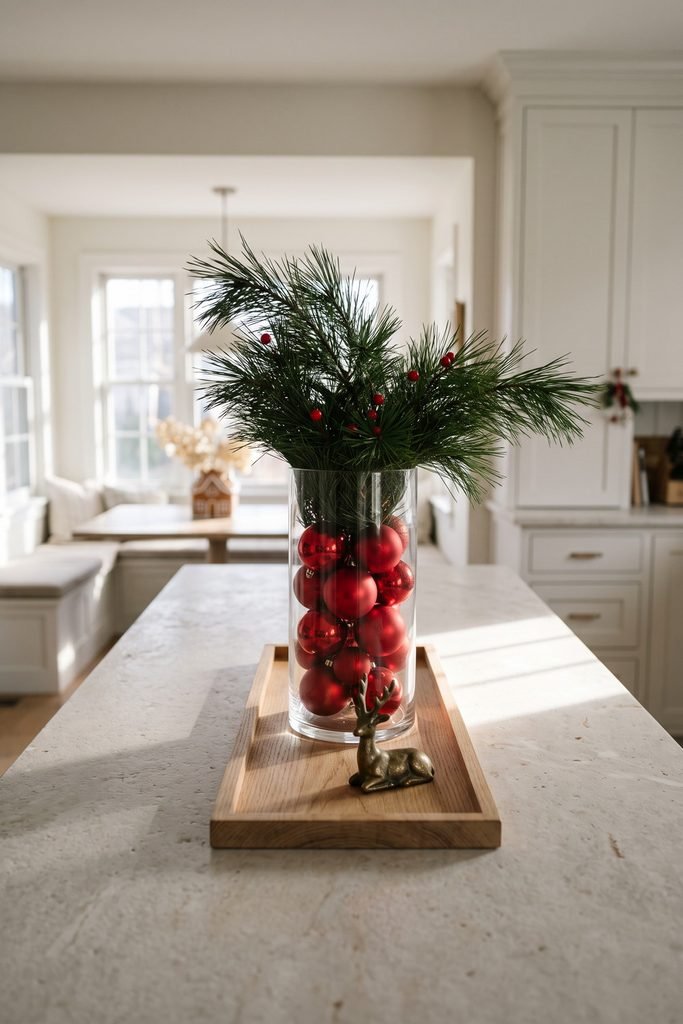
A tall glass cylinder turns a handful of ornaments into a column of color you can see from across the kitchen. Red spheres with a mix of matte and shiny finishes give the glass some depth. The pine fan above the rim moves in the opposite direction, spreading out while the red below stays in a tight vertical line. A few berry tips bring that red up into the green, and a single low brass accent gives the bottom of the display a warm glint.
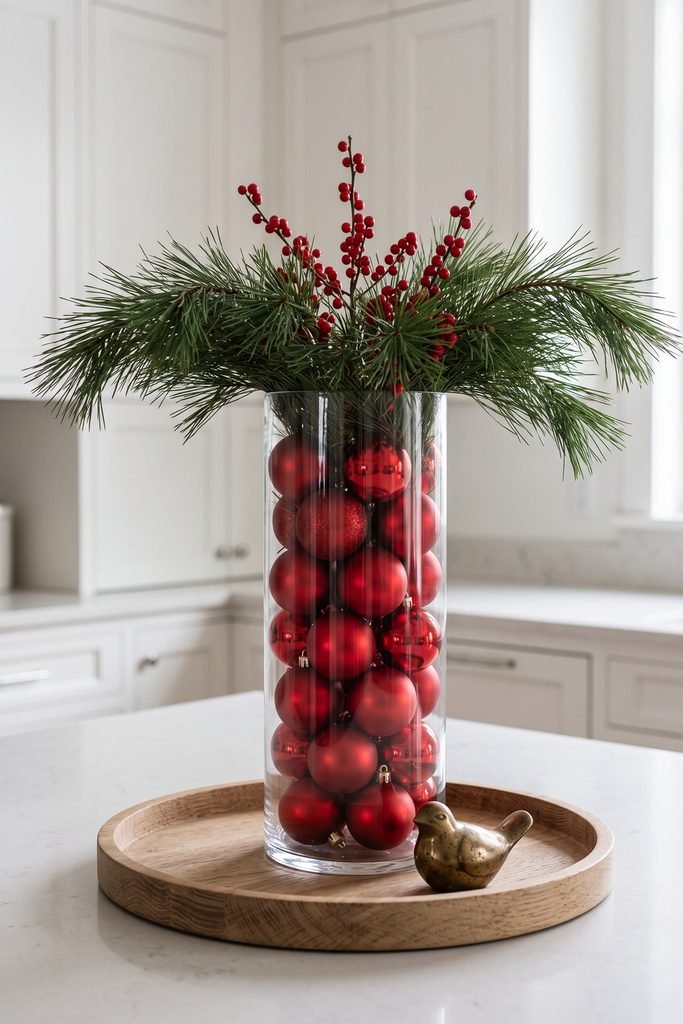
Champagne and mixed-metal baubles work in the same shape if you want a quieter version. Either way, one tray can hold the vase and its accent together on an island, leaving usable counter space around it. Faux pine works for a dry display. If you prefer fresh stems, choose a cylinder with room for a separate watertight insert, with the ornaments visible around it in the dry outer space. Check that the filled vessel is stable where you plan to leave it.
6. Dried Orange Wheels in a Round Glass Vase
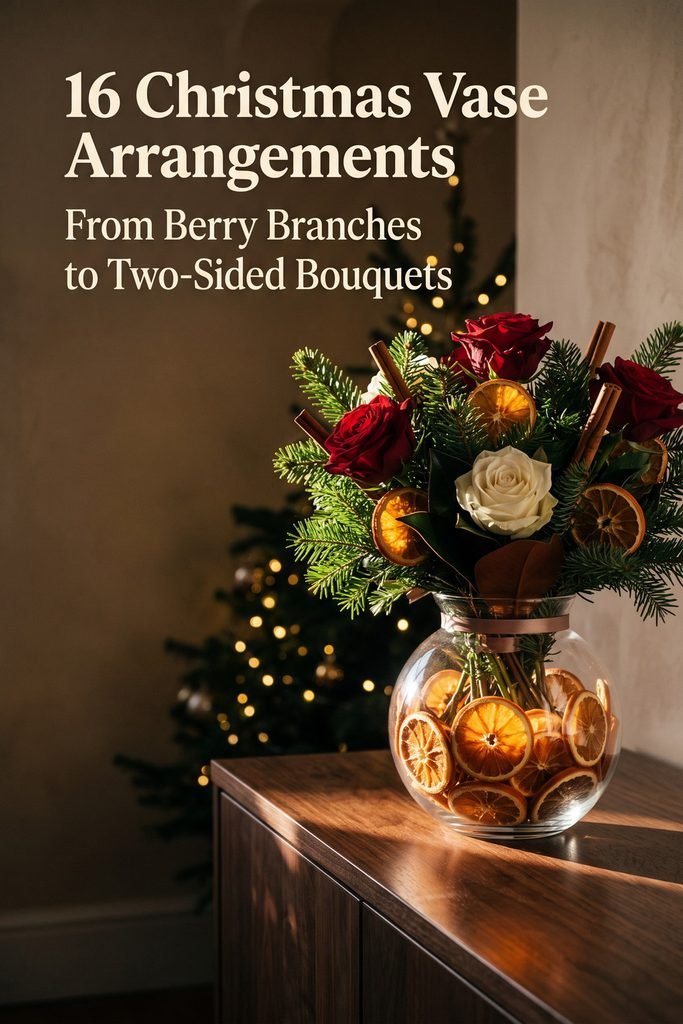
Dried orange wheels make the connection between a rounded vase and the bouquet above it. A few slices visible through the lower glass introduce the shape. More circles tucked between the roses and fir bring it back at eye level. That repetition makes the filler feel like part of the arrangement. Cinnamon bark adds a darker note, and an ivory bloom between the red roses gives the orange room to stand out.
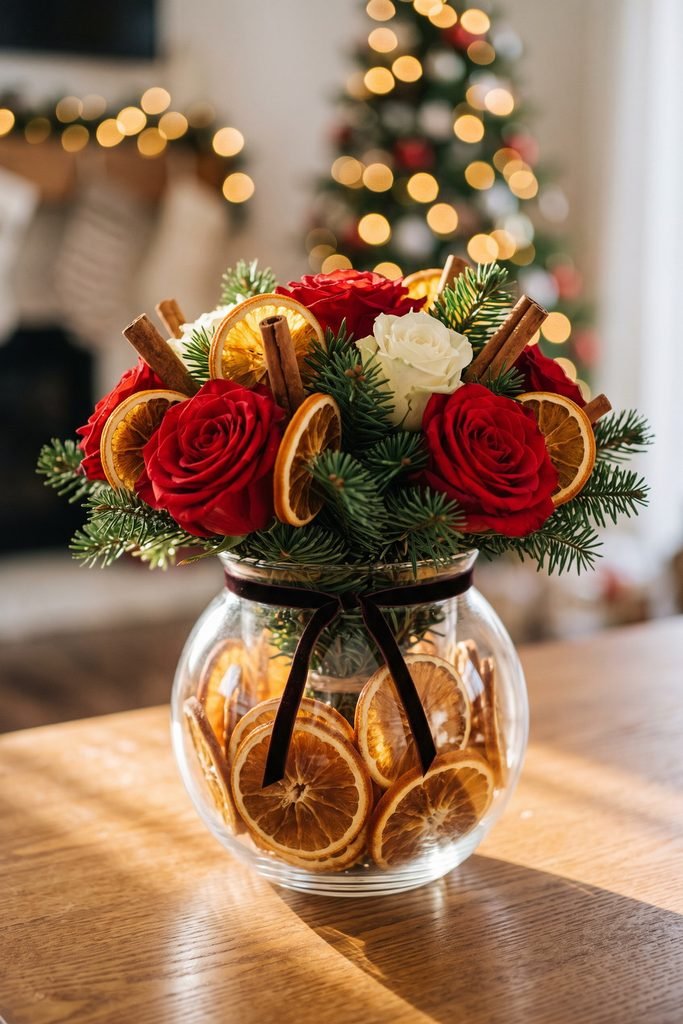
A slim ribbon at the neck is enough to finish the glass. A broad bow would hide some of the area where the orange rounds start to reappear. Turn the vase so at least one slice near the base and one among the stems are visible from your usual seat. For fresh roses, keep the dried citrus in a dry outer chamber around a watertight insert. Dried or faux stems let you use the whole vase dry. Either version looks especially good where side light comes through the slices and warms the glass.
Find the Citrus Accent
Dried orange slices with a clear wheel shape repeat the rounded outline of the glass and carry that shape up into the bouquet.
7. Red and Ivory Roses in a Birch-Bark Vase
Birch bark changes the feel of a red and ivory rose arrangement before you add a single ribbon. The pale bark has dark marks and a rough surface, while the roses are smooth and rounded. Pinecones make a useful transition between them. Their rough edges relate to the bark, but their compact shapes tuck easily into the floral dome.
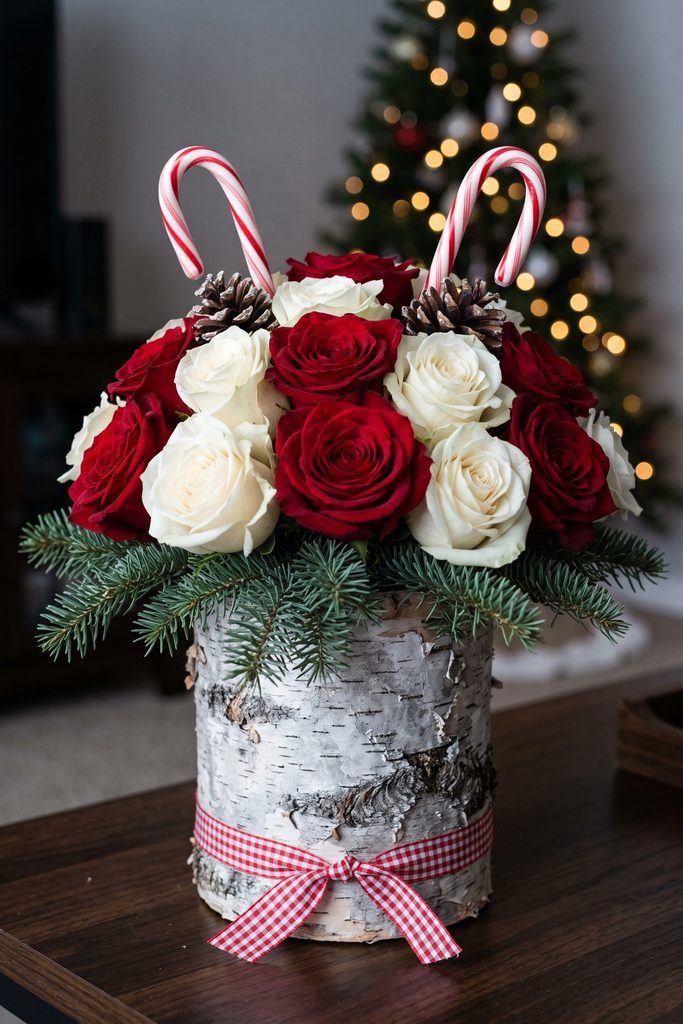
Two decorative candy canes can rise just above the roses and repeat the curve of the bouquet. A short red gingham knot at the base brings the candy stripe down to the vase without covering much of the bark. Let the cream roses sit between deeper red blooms so each group has a distinct edge. The result suits a wood table with a little tree glow behind it, even with nothing else on the surface. A watertight inner vase holds the fresh stems inside the decorative bark sleeve.
Bring Birch Texture to the Bouquet
A birch-bark vase gives the smooth roses a rough, pale backdrop right at the base of the arrangement.
8. A Wood-Slice Vase With Seed Pods and Pinecones
Round wood slices are easiest to appreciate when the bouquet above them has an open shape. The disks make a solid base with pale end grain you can see from across a room. Evergreen tips, a raised seed pod, and a few wispy grasses loosen the outline as it rises. Pinecones help carry the brown tones into the stems, while small cream wood-petal flowers keep the middle from becoming one dark patch.
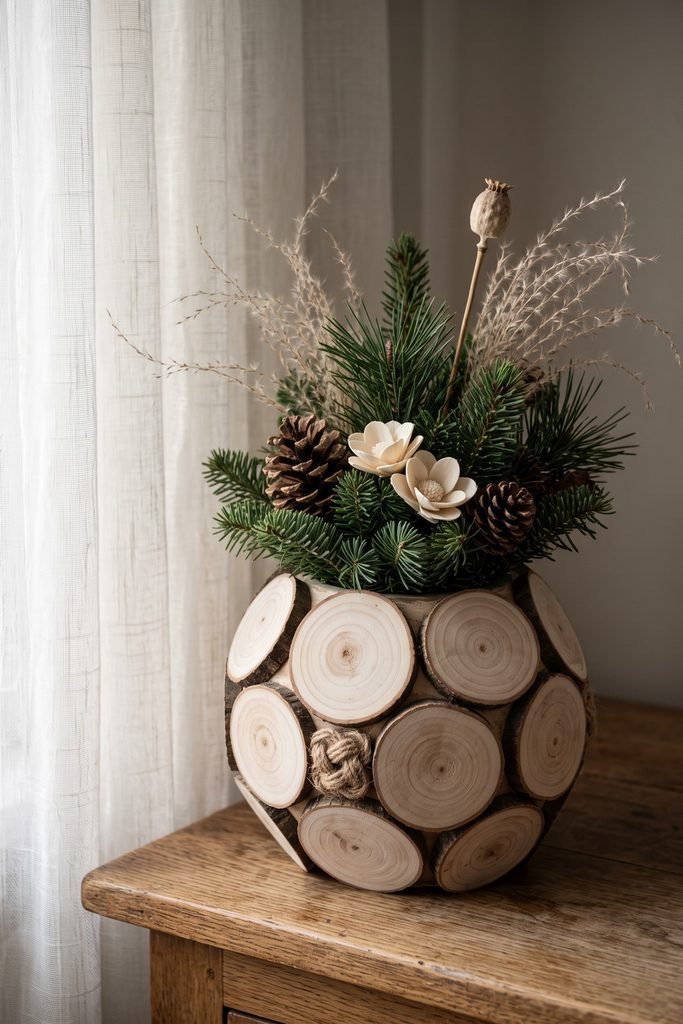
A sideboard next to a window is a good home for this winter vase arrangement. Light from the side picks out the rings and uneven edges of the wood rounds. Leave the largest disks exposed and give the raised seed pod some space around it. A finished vase with a stable base lets you enjoy the rough texture as part of the display. Keep the exterior dry. If you want a light beside the dried stems, use a flameless one. For more ways to use worn wood and natural greens together, see these primitive Christmas decorating ideas.
Playful Christmas Vases for Kitchens and Entries
Peppermint stripes, an icing-trimmed roof, and a snowman face each give a vase a recognizable Christmas shape. A little space around that detail helps it come through.
9. A Peppermint Bouquet in a Ceramic Christmas Tree Vase
In a kitchen, a ceramic vase with a raised Christmas tree and bow can carry the whole peppermint theme. One large peppermint disk and one candy cane rise above the holly and fir, where their stripes are easy to see. Some greenery between the red and white shapes gives each one a clear edge. A few red berries fill smaller gaps without competing with the broad swirl of the peppermint.
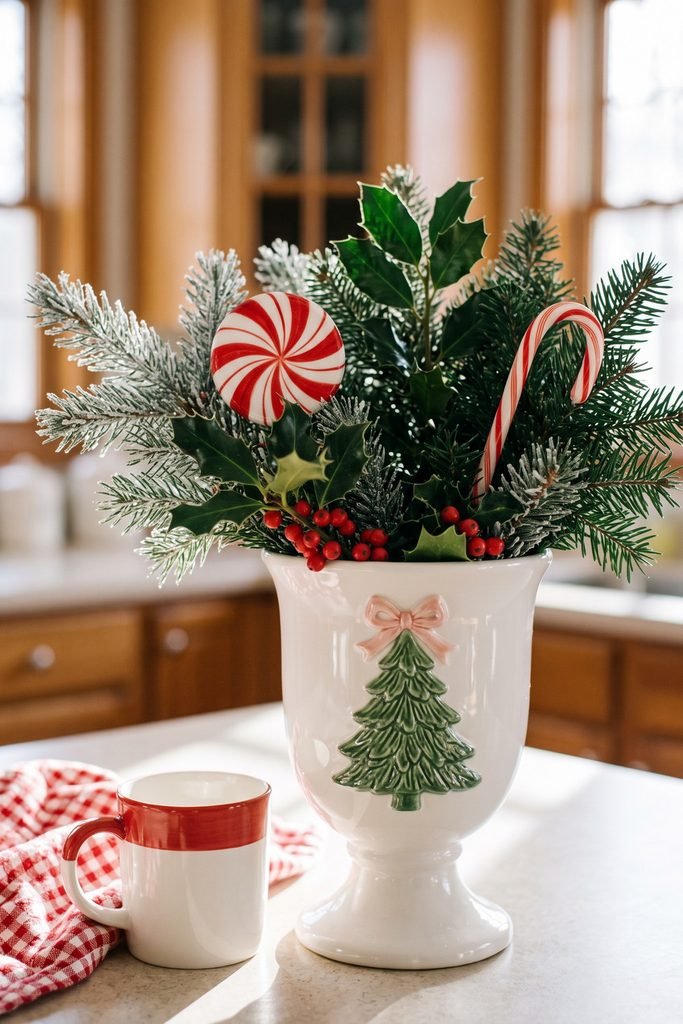
Keep the front of the vase open so the molded tree stays visible. If there’s a checked cloth or a matching mug nearby, either can repeat the red and white once at counter level. A busy group of jars and mugs around the vase would make the little tree relief harder to pick out. Give the pedestal a level spot on the counter and use decorative picks made for display. Keeping them separate from any edible candy makes it clear which pieces are there for looks.
Find the Peppermint Shapes
A bold red-and-white peppermint pick gives the greenery a clear focal point above the ceramic tree.
10. Christmas Flowers in a Gingerbread House Vase
The flowers can look like a roof garden when they rise out of a ceramic gingerbread cottage. White trumpet blooms echo the piped trim, while red roses draw attention to the top of the house. Fir and a few frosted cones sit close to the opening, giving the flowers a dark edge where they meet the lighter roofline. The brown ceramic makes the white details easy to spot, especially near a bright window.
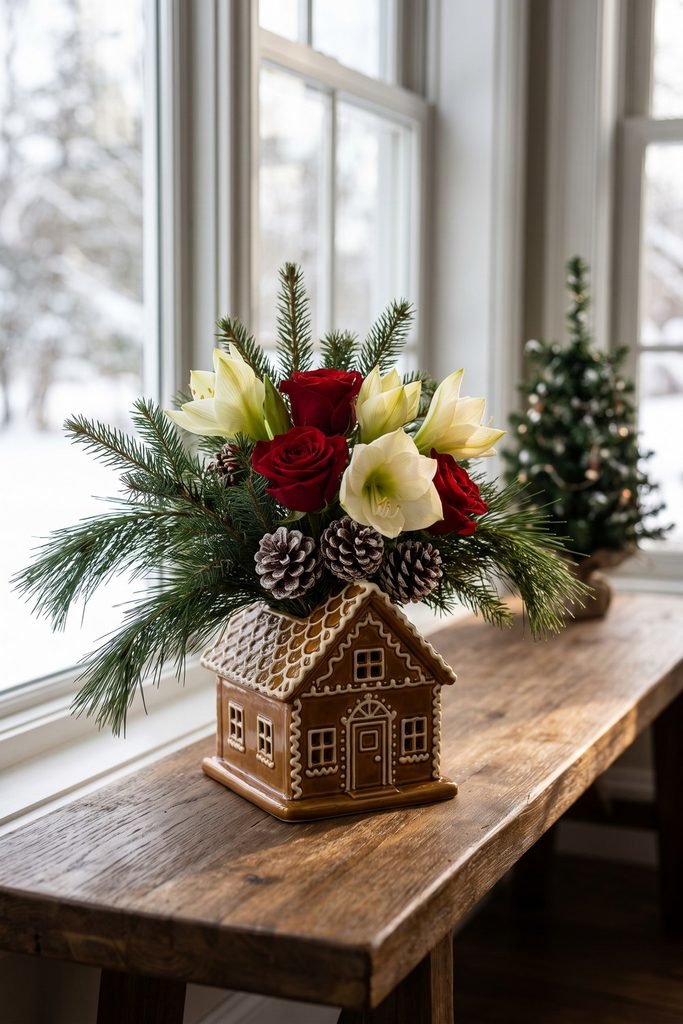
A front-facing spot on a deep window bench or sideboard lets you see the door and the outline of the roof together. Let the longest greenery fall toward one side to keep those details clear. One little tabletop tree nearby can establish the scale of the cottage. With a cluster of extra houses around it, the vase itself would become harder to pick out. Check whether the ceramic is meant to hold water before using fresh flowers. A fitted liner or faux stems work with a decorative vessel.
11. A Snowman Vase With a Candy-Stripe Bow
A snowman vase looks liveliest when the greenery has a little movement and the face stays clear. Let flocked evergreen spread farther to one side and use upright berry tips to give the other side some height. A single bow above the face can mix a candy stripe with a little black check. Keeping those patterns together gives the bouquet one graphic detail to notice as you come through the door.
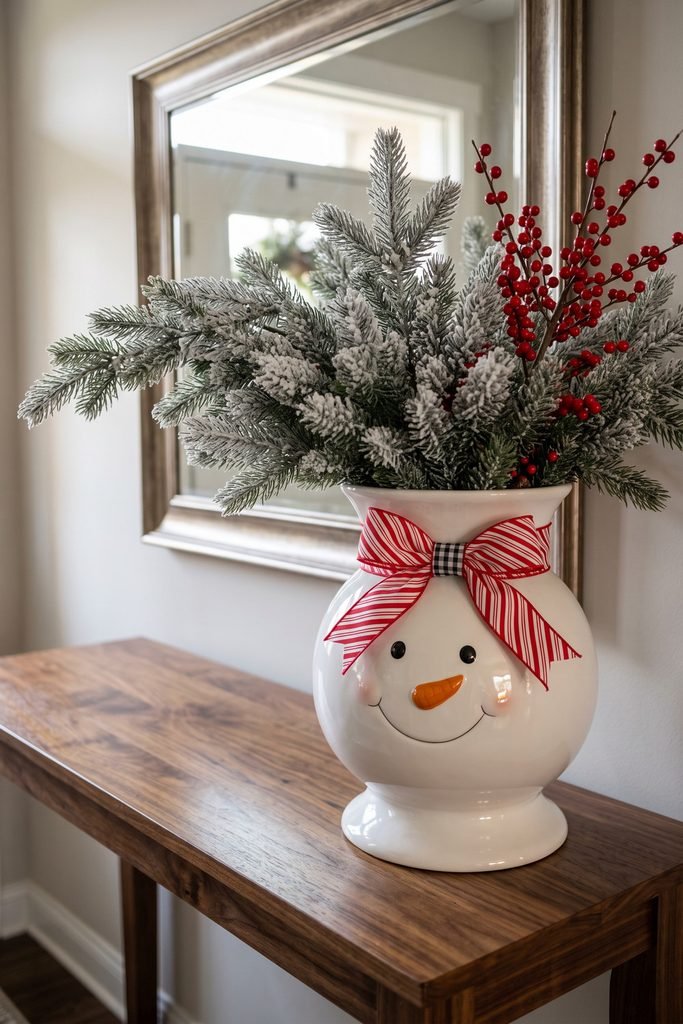
Walnut or another darker console finish helps the white ceramic stand out. Leave some bare surface around the foot, and let the ribbon tails stop before they cover the snowman’s expression. If a mirror sits behind the console, the reflection can give the foliage depth in the background. A broad-footed vase and a well-balanced spray are useful on a surface people pass often. From the doorway, the face and bow should still be visible as two separate shapes.
Christmas Vase Arrangements for Windows and Sideboards
A winter vase can look different as the room gets darker. Smoky glass suits the window at dusk, while charcoal and white pottery make strong shapes against a quieter wall.
12. A Smoky Window Vase With Black and Champagne Ornaments
A smoky blue vase looks especially good at dusk, when the window turns cool and the champagne ornaments pick up warm points of light. Keep the ornament cluster close to the neck. A black matte ball and one with a small star pattern give the brighter spheres some company without making the whole group sparkle at once. Thin bare twigs above them stay visible against the window and create a second, much airier layer.
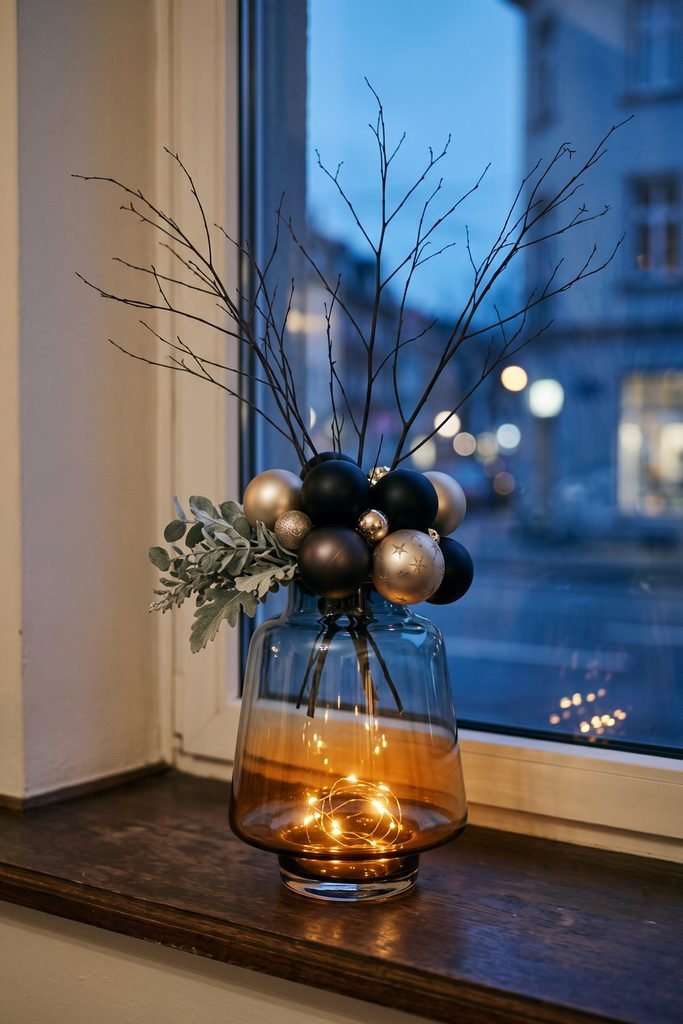
Silvery foliage can soften the edge where glass meets ornament. If the sill is deep and level enough for the vase to sit securely, turn it so the longest twig is easy to see against the glass from inside the room. An optional battery light can give a dry arrangement a soft glow low in the vessel. Check the light’s instructions for where it can be used. The pale gold ornaments can carry the look on their own when there’s already a lamp or Christmas tree in view.
13. A Charcoal Urn With Scarlet Berries and Cedar
A rough charcoal urn lets scarlet berries feel bright in a room with quiet colors. Loose cedar keeps the bouquet from looking too formal. A single seed pod adds a round brown shape where the fine cedar tips meet the berry stems. Against a warm gray wall, that small bit of brown helps connect the bouquet to a shallow wood tray without pulling attention away from the red.
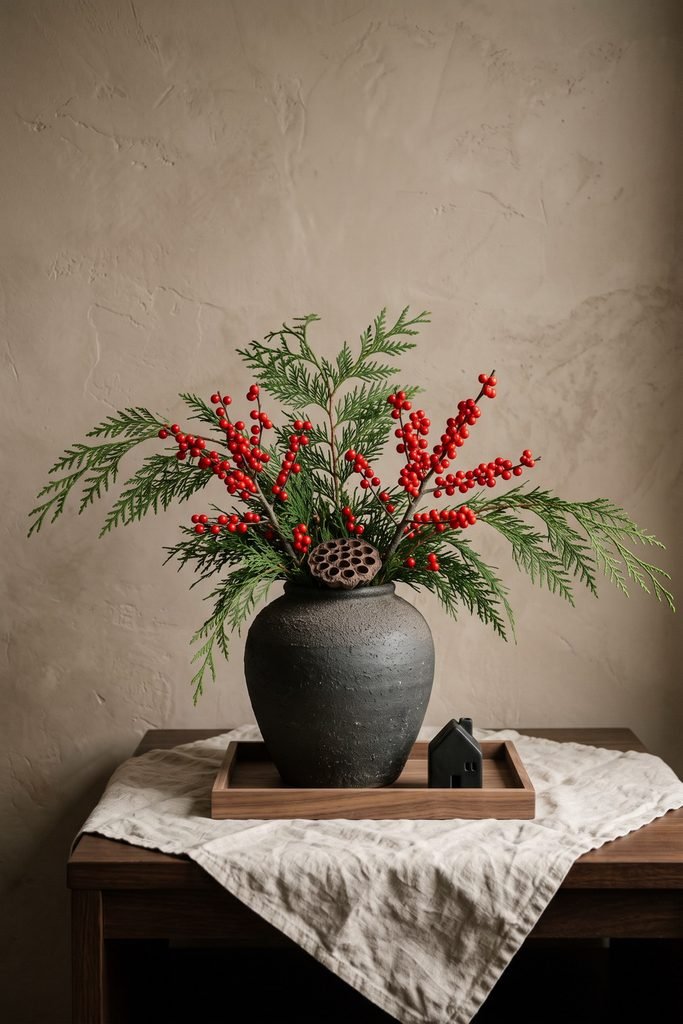
The dark pot has enough visual weight to stand alone. If the surface feels empty beside it, a little black house can repeat the color on a much smaller scale. A bit of pale linen around the tray makes the urn’s edge easier to see and leaves a calm border around the display. Check that the vessel sits steadily before letting the cedar spread. Faux berry stems make sense if you’re unsure what kind of berries you have or whether they suit your household.
14. White Hobnail Vases With Burgundy Bows
Two white hobnail vases can fill a long sideboard while leaving enough room to see each shape. Give the taller vase a loose evergreen spray with ivory berry stems and let the shorter one hold a denser cluster of burgundy blooms. The staggered heights draw the eye along the surface. The little raised dots connect the two vessels even when the stems above them look quite different.
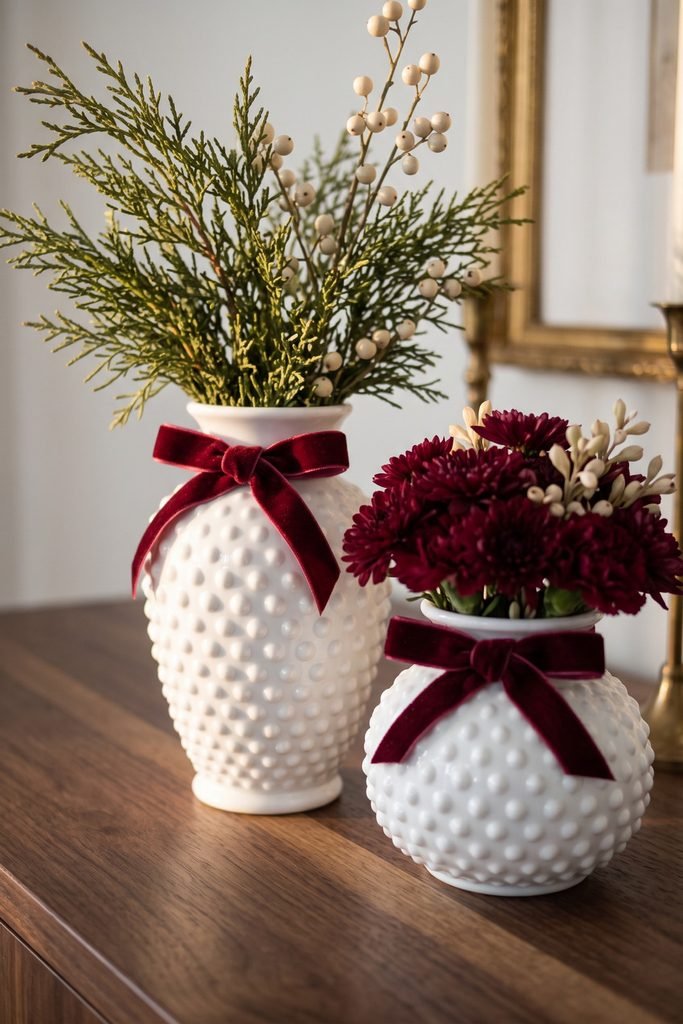
Short velvet bows at both necks carry the burgundy across the gap. Set the taller vase a little farther back if there’s enough depth and leave a strip of visible sideboard between the bases. A warm dining light can pick up the hobnail texture on both fronts, so the arrangement can feel finished with few extra pieces. If you want more ideas for pairing muted greenery with dark ribbon, see these French country cottage Christmas decorating ideas.
Look for Raised-Dot Ceramics
Hobnail vases in two heights carry the same raised-dot texture across the sideboard while giving each bouquet its own shape.
Christmas Bouquets That Work With the Room
The last two arrangements depend on where you stand. One has a flower face for each room. The other uses a mirror to extend the line of a branch.
15. A Two-Sided Christmas Bouquet for an Open-Plan Island
An island between a kitchen and a living room is visible from both directions. In one wide vase, ivory amaryllis can face the kitchen while a lower cluster of burgundy roses opens toward the living area. The amaryllis suits white cabinets and winter daylight, and the roses give the warmer room a richer color to pick up from across the space. A low line of cedar runs through the middle and a few red berry tips at the meeting point bring the colors together.
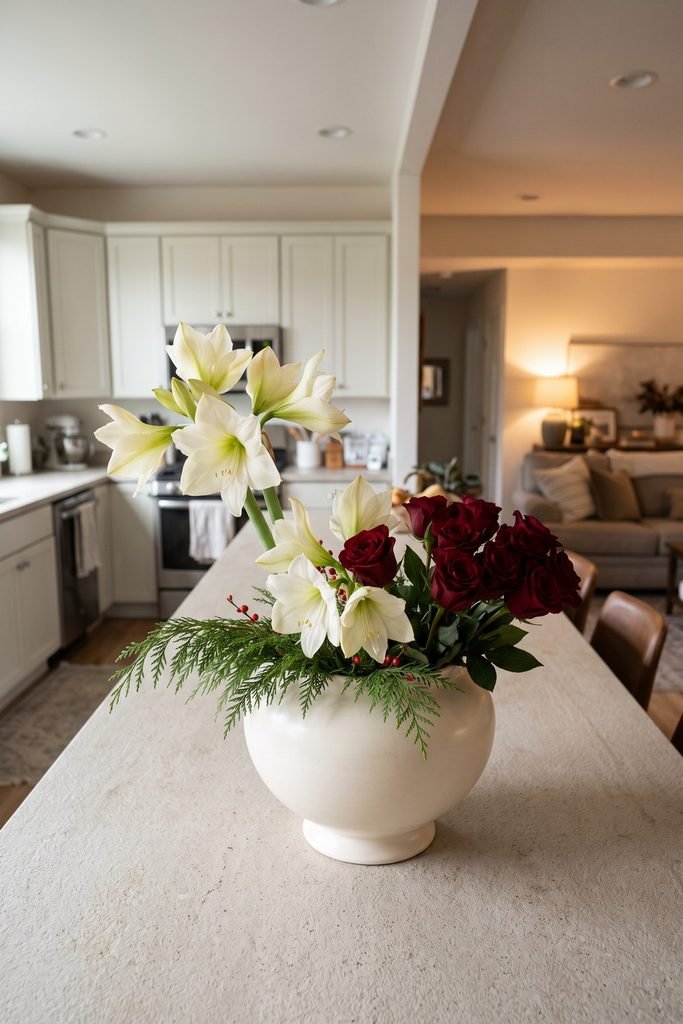
Look at the arrangement from both approaches. From the kitchen, the ivory flowers should have room to open toward you, with a little evergreen around their edges. From the living room, the red roses should look like a complete bouquet. The end of the island is where the two flower groups and the cedar are visible together. That view is also a good way to spot a gap where the two sides meet.
A broad, stable vase gives the stems space to face different ways. Faux amaryllis is an option if you want to adjust the flowers repeatedly while finding the right angle. On a small island, use fewer stems per side and keep the directional shape. You can still get two distinct views from one arrangement and leave counter space where you use it most.
16. A Vintage Santa Vase With Candy-Cane Sprays
A vintage-style Santa vase makes a playful centerpiece for a living room side table. Look for a ceramic face with rosy cheeks and a sculpted white beard, then let a low collar of fir and cedar spill gently over the rim. Keep the greenery clear of Santa’s eyes and cheeks so the face is easy to spot from the sofa.
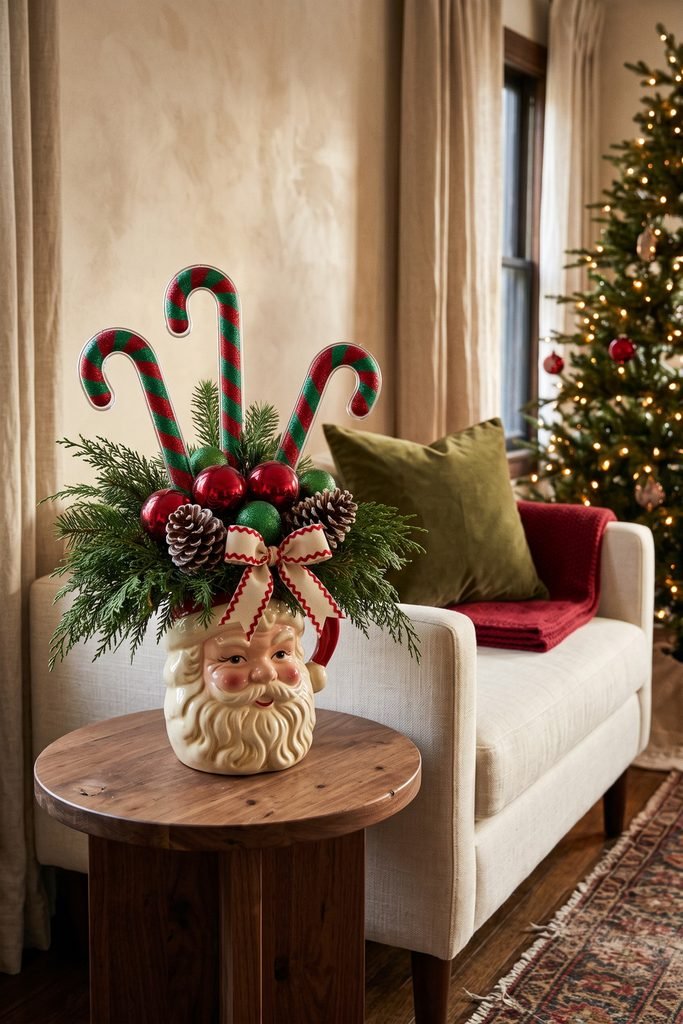
Above the greenery, three red-and-green candy-cane picks at different heights give the arrangement its shape. A few ruby ornaments, smaller green glitter balls, and one white ribbon bow with red zigzag trim fill out the middle. Leave a little space between the tallest hooks so each curve stands out. Glossy ornaments catch the light from the tree, while the dark fir and a couple of pinecones give the sparkle some contrast.
Set the vase on a warm wood side table beside a cream sofa. An olive velvet pillow and a cranberry throw can echo the arrangement, especially if the nearby Christmas tree carries the same red and green. The table brings Santa’s face up to a comfortable viewing height and leaves the coffee table clear.
Final Thoughts
Pick the surface first, then decide what you’d like to notice from your usual seat or as you walk into the room. It might be a streak of red in the branches, the grain of the vase, or a line of greenery that draws your eye toward the window. Once that detail reads clearly, you’ll have a better sense of which accents belong beside it and how much room to leave around the display.