





16 Woodland Christmas Tree Ideas That Bring the Forest Indoors
A little fox peeking through the branches can change how you see a Christmas tree. Suddenly the pinecones look like they belong there, and the bare spots between the ornaments feel like places where another creature might be hiding. That’s the appeal of a woodland Christmas tree theme. A few familiar shapes and textures can make the branches feel like a place of their own.
- Woodsy Christmas Trees With Natural Textures
- 1. Perch Deer and Foxes on Branches of a Timber-Lodge Tree
- 2. Weave Wood Beads and Eucalyptus Between Felt Foxes
- 3. Hang a Cast of Sweater-Clad Forest Animals
- 4. Tuck Toadstools and Forest Animals Into Mossy Boughs
- Snowy Woodland Christmas Trees
- 5. Set a Snowy Copper Tree in a Weathered Wooden Bucket
- 6. Layer Sage, Champagne Glass, and Linen on a Frosted Fir
- 7. Nestle a Snow-Covered Cottage Village Into the Branches
- Woodland Christmas Trees for Different Spaces
- 8. Dress a Slim Staircase Tree With Rust-Breasted Robins
- 9. Light a Bare Twig Tree With Acorns and Dried Oranges
- 10. Turn Three Wood Tiers Into a Tabletop Forest Tree
- 11. Give One Woodland Tree a Snowy Side and a Warm Lodge Side
- Woodland Tree Toppers and Ribbon Focal Points
- 12. Crown a Frosted Fir With a Snowy Owl and Bare Twigs
- 13. Top a Traditional Woodland Tree With a Gilded Stag Medallion
- 14. Wind a Ribbon Creek Through a Woodland Christmas Tree
- Woodland Decor for Under the Christmas Tree
- 15. Let an Illustrated Woodland Tree Skirt Tell the Story
- 16. Gather Forest Animals on a Snowbank Beneath the Tree
- Final thoughts
These 16 ideas range from a deep green lodge tree to a snowy fir full of tiny cottages. There are options for a narrow stair corner and a tabletop, plus ways to bring the forest theme all the way down to the tree skirt.
Quick Takeaways
- Start with the space. A full tree has room for big figures and long garlands. A pencil tree gives small ornaments a clear outline, while a tabletop tree can make a whole scene out of a few branches or tiers.
- Pick one forest motif to repeat. Felt foxes, pinecones or spotted mushrooms are easy to recognize. A common color or texture can tie them to the ornaments you already have.
- Choose where you want the eye to land. A showy topper, a cluster of snowy cottages or a patterned tree skirt each works best with some quieter space around it.
Woodsy Christmas Trees With Natural Textures
1. Perch Deer and Foxes on Branches of a Timber-Lodge Tree
On a full green fir, a few large woodland animals can hold their own against a stone fireplace or dark ceiling beams. Picture a standing deer on a pale, bark-textured perch halfway up the tree and a russet fox tucked on a lower bough. A third figure higher up draws your eye back through the branches. The pale perches give the animals a visible footing, and the green space around their heads lets you recognize them from the sofa.
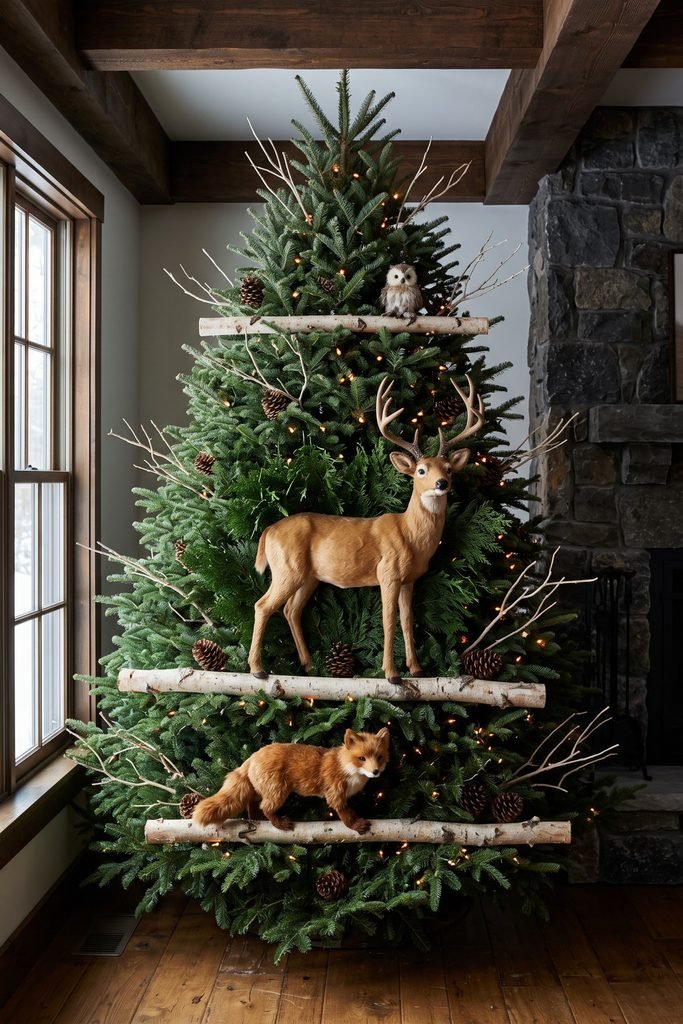
Pinecones fit neatly into the smaller gaps between the figures. Their rough scales repeat the browns of bark and fur without introducing another strong shape. Warm white lights behind the branches pick out the pale wood and the deer’s antlers in the evening. Choose lightweight figures and perches proportionate to the tree. On a narrower fir, one deer and one fox at different heights can create the same sense of depth. Stand back before filling the gaps. If you can still trace the fox’s back and the deer’s legs against the green, the larger pieces have room to do their job.
2. Weave Wood Beads and Eucalyptus Between Felt Foxes
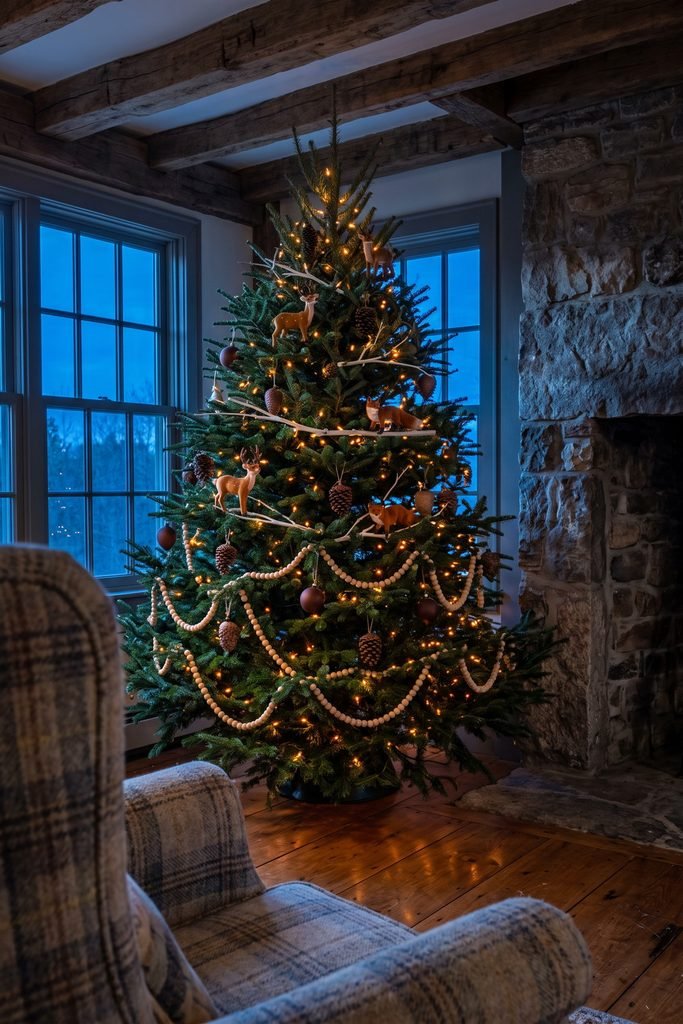
Blond wood beads and soft gray-green eucalyptus give a dark evergreen a quieter kind of woodland Christmas decor. Let the beads fall in broad, shallow curves so you can see the round shapes from a few feet away. The flat eucalyptus leaves break up the fine fir needles and make the honey tones in the wood a little more noticeable. A few cinnamon-colored felt foxes bring warmth back into the palette.
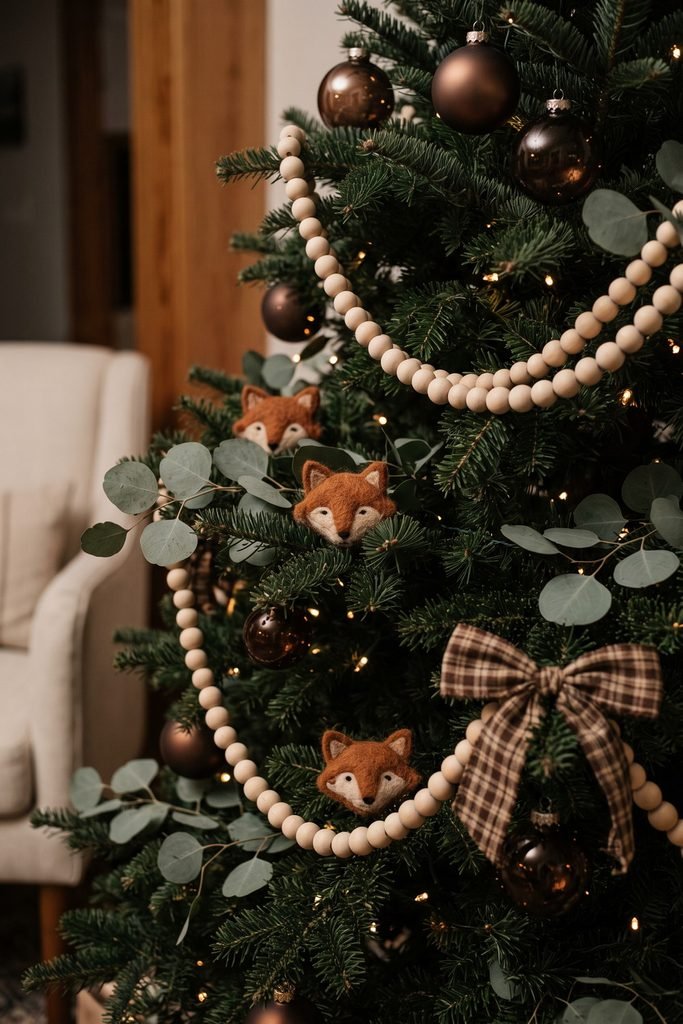
Try to keep a whole bead loop visible between two fox faces. If the garland hides behind every cluster, it loses the rhythm that ties the branches together. Small cocoa-colored baubles can fill the darker spaces, and a flax or brown plaid bow makes a soft accent where two textures meet. Two or three bows are enough for the plaid to register. Let a few eucalyptus tips extend into open space so the branches keep their shape. By evening, warm lights bring out the round beads and soft felt. The same formula works with one animal motif repeated in different poses.
Wood Beads for the Fox Tree
Blond wood beads stand out against gray-green eucalyptus and pick up the warm tones in the felt foxes.
3. Hang a Cast of Sweater-Clad Forest Animals
A fox, an owl and a raccoon can share a tree without looking like three different collections. Give each animal the same cream sweater pattern or the same cranberry-red loop. The animal shapes supply the variety. A common stitch or color makes them feel like they all showed up for the same winter gathering.
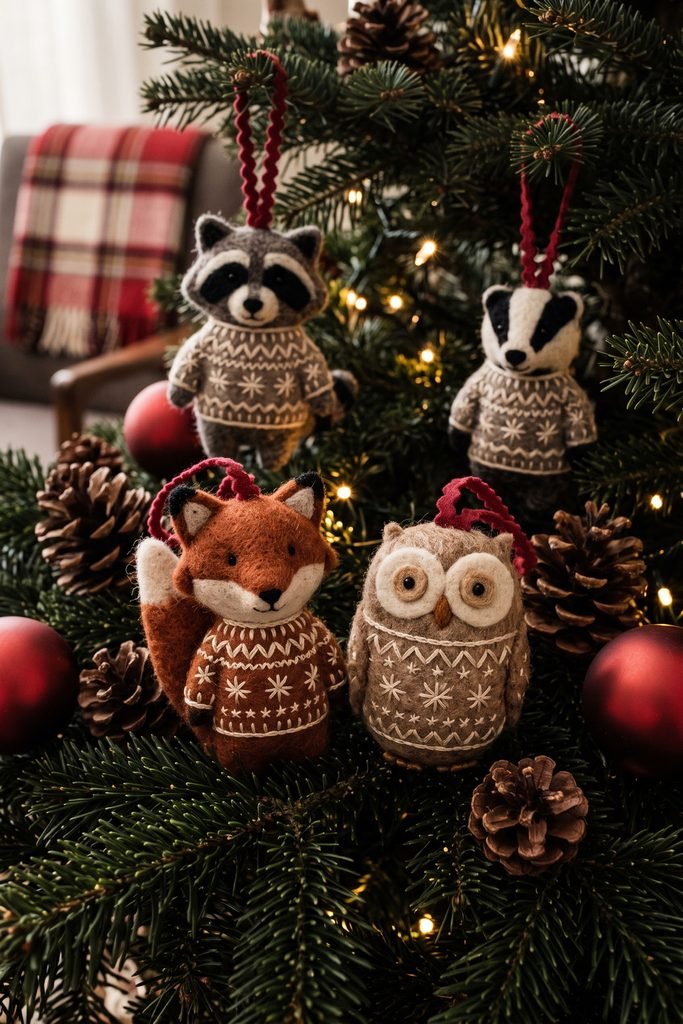
Spread the felt ornaments between loose pinecone clusters and put a favorite pair at eye level. From across the room, you’ll notice the red loops first. Up close, details like a raccoon’s dark mask, an owl’s round eyes and a fox’s pointed ears give each branch its own bit of character. Choose simple red or brown baubles if the sweaters already have plenty of pattern. A little dark green space between the figures makes the stitched details easier to see.
This is an easy look to build around just a few favorite woodland creatures. If your ornaments have different outfits, look for one small detail they share, like cream trim. Repeat that color in a few plain ornaments so the collection still feels related.
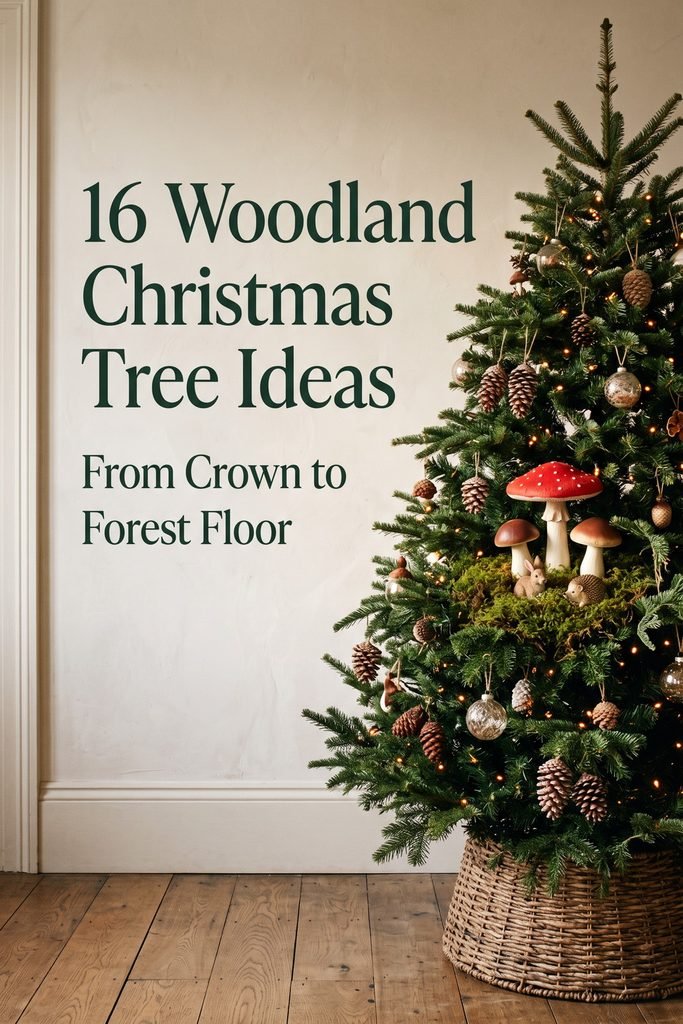
4. Tuck Toadstools and Forest Animals Into Mossy Boughs
For a storybook take on a woodland animal Christmas tree, let the mushrooms set the scale. A large red cap can sit above two smaller brown caps, with a hedgehog or rabbit peeking out below. A soft moss-look accent around the group gives it a clear outline against the longer fir needles. It also makes the figures look as if they’re standing on a bit of forest floor instead of hanging in midair.
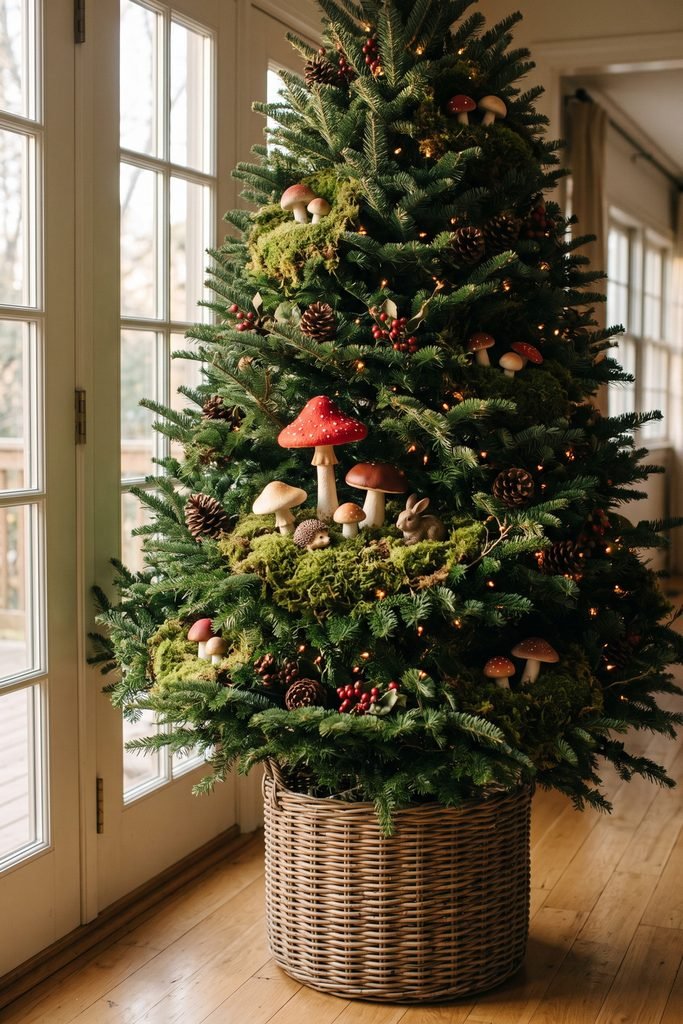
Put the largest group near eye level and repeat a smaller version higher or lower on the opposite side. The shape of the cap matters as much as its color. An ocher or chestnut mushroom still feels at home beside the bright red ones when it shares their rounded silhouette. A few pinecones and berries can fill the spaces between groups. Keep the animals small enough that you can see the cap line above them.
On a compact tree, one mossy pocket can carry the whole scene. Give it an open patch of dark green around the edges and repeat the mushroom color in a single ornament farther up. Side daylight brings out the spots, stems and small faces, while warm pin lights add a little glow after dark.
Toadstools for the Mossy Branches
Mix one bold spotted cap with a few smaller ones so the little forest scene has a shape you can see across the room.
Snowy Woodland Christmas Trees
5. Set a Snowy Copper Tree in a Weathered Wooden Bucket
A narrow flocked tree feels more substantial when its base is a tall wooden bucket with a visible rim and dark bands. The white branches lighten the upper half of the display. Copper balls echo the reddish tones in the weathered wood and give your eye a reason to travel back up the tree. A few bare twigs at the top carry the bucket’s rough texture into the crown.
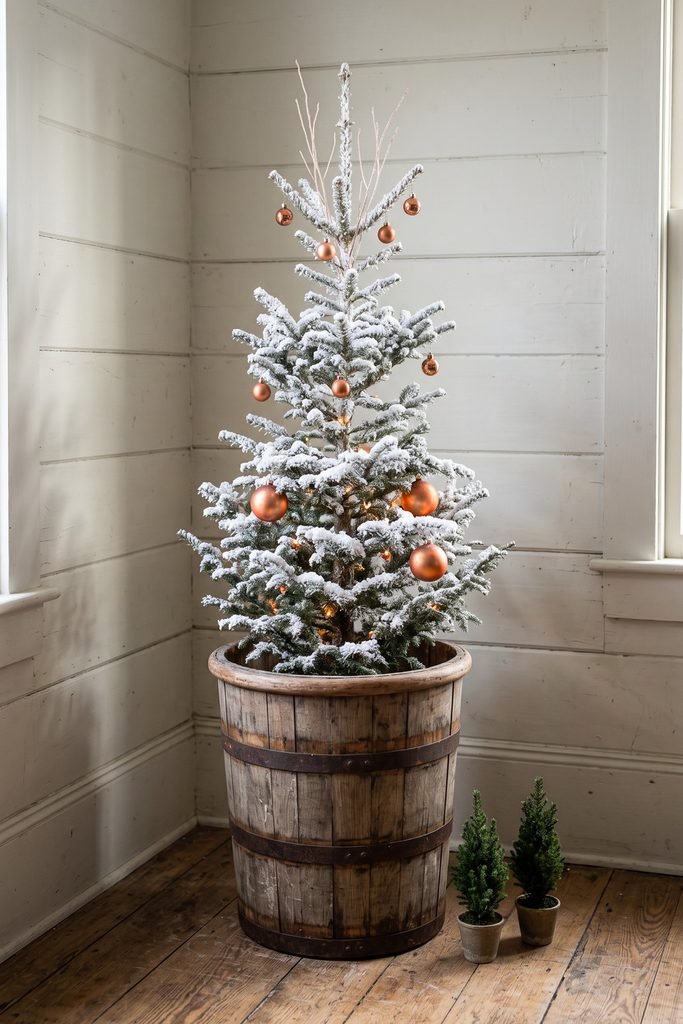
Keep the copper sparse enough that you can still see the frosted tips. Small ornaments near the upper branches and a few larger balls around the middle give the tree an even sense of weight. A pair of miniature evergreens beside the bucket can repeat its narrow outline at floor level. Leave the front of the bucket exposed so the bands remain part of the display.
Use the bucket as a decorative surround for the tree’s stand, with the rim and stand accessible. A white wall or window behind the tree makes the copper feel especially warm. For more ways to carry worn wood and natural trimmings into the room, see these primitive Christmas decorating ideas.
6. Layer Sage, Champagne Glass, and Linen on a Frosted Fir
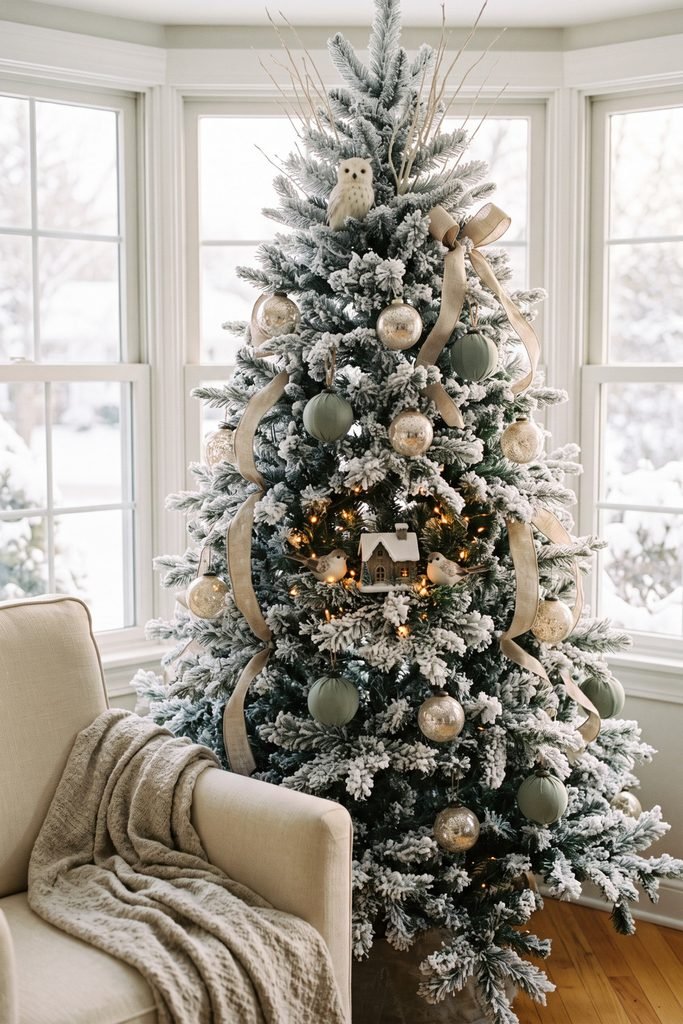
Frosted branches make pale ornaments feel right at home, but a tree dressed entirely in soft colors can lose its shape. Sage and olive globes bring some green back into the white branches. Mix a plain fabric globe with a striped one nearby so the two share a color while catching light in different ways. Champagne glass adds warm glints among the matte fabrics.
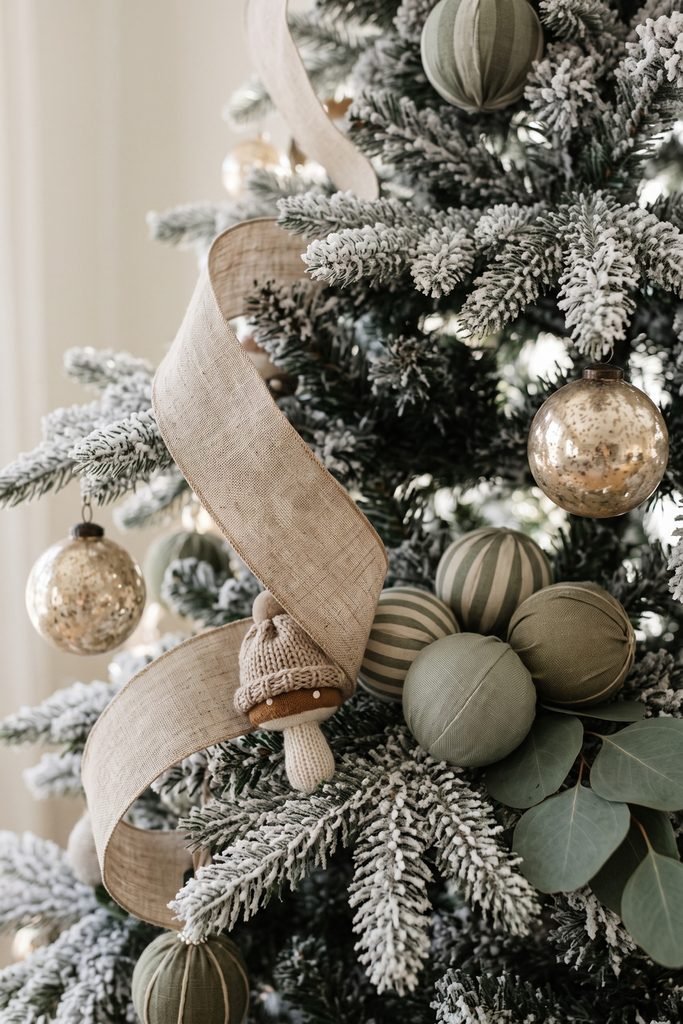
Let a broad linen ribbon show in a few open arcs. Its soft folds look especially good beside round ornaments and flat eucalyptus leaves. A little knit-cap mushroom can sit beneath one arc, where it becomes a small discovery among the bigger shapes. Repeat the mushroom sparingly and give the glass pieces enough room to hang clear of one another.
This is a quieter winter woodland look for a room that already has pale upholstery or warm wood. Daylight brings out the fabric texture, while the same glass balls pick up the glow of the tree lights after dusk. A deeper olive ornament here and there gives the whole palette a little definition without taking it in a brighter direction.
7. Nestle a Snow-Covered Cottage Village Into the Branches
A miniature cottage village looks surprisingly at home on a snowy tree. A little gable above a green bough can feel like a house at the edge of a clearing. Add a white bird near the roof and let warm light show through a window. The small amber glow gives your eye somewhere to land among the pale branches.
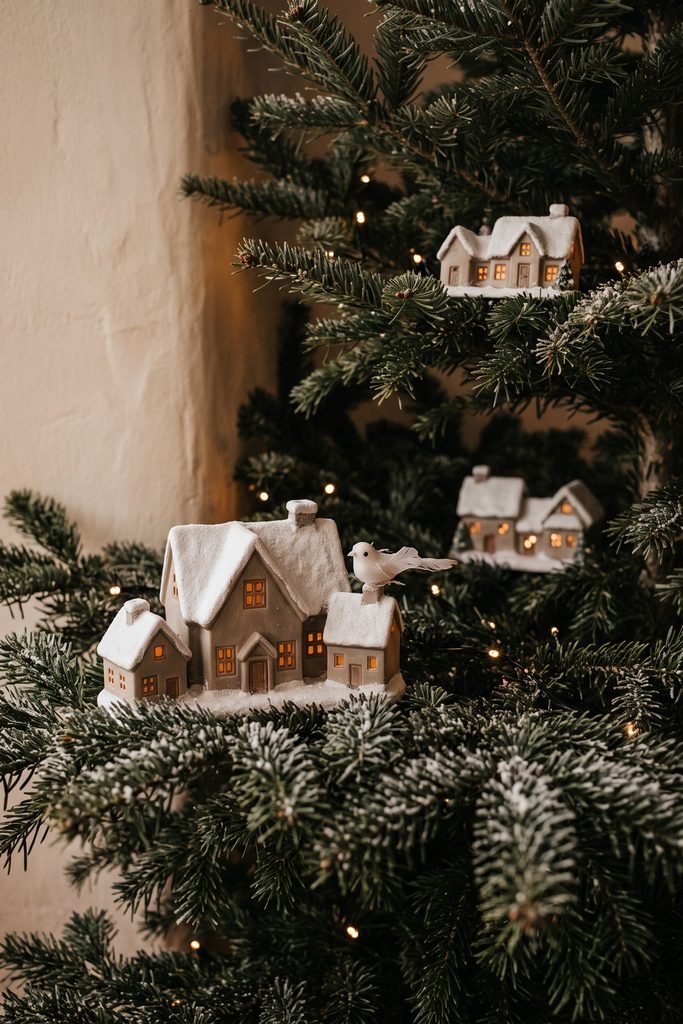
Group two small cottages near one larger house, then give the next group a stretch of evergreen to itself. Vary the heights so the rooflines remain distinct. A bird perched a little above the houses can draw your eye to the next level, especially if the cottage fronts are all a similar color. Leave some of the darker branch tips visible around the white roofs so the little buildings keep their outlines.
If you have only a few houses, put the most detailed one near eye level and let the others sit farther back or higher up. Lightweight hollow cottages are easier to place among the boughs. The look works best when you can see the trees and birds around the houses. For an extension into the room, a little of the same white Christmas decor can echo the snowy roofs.
Tiny Cottages for the Branches
Look for miniature cottage ornaments with distinct rooflines so each house shows up against the snowy branches.
Woodland Christmas Trees for Different Spaces
8. Dress a Slim Staircase Tree With Rust-Breasted Robins
A pencil tree can fit a stair corner while still giving you the height of a full Christmas display. Small robins suit its narrow shape. Their rusty breasts are easy to see against the green, even when the birds themselves are light and modest in size. Pair two on one branch and let single birds appear higher and lower down. It gives the impression that they’ve landed at different heights along the tree.
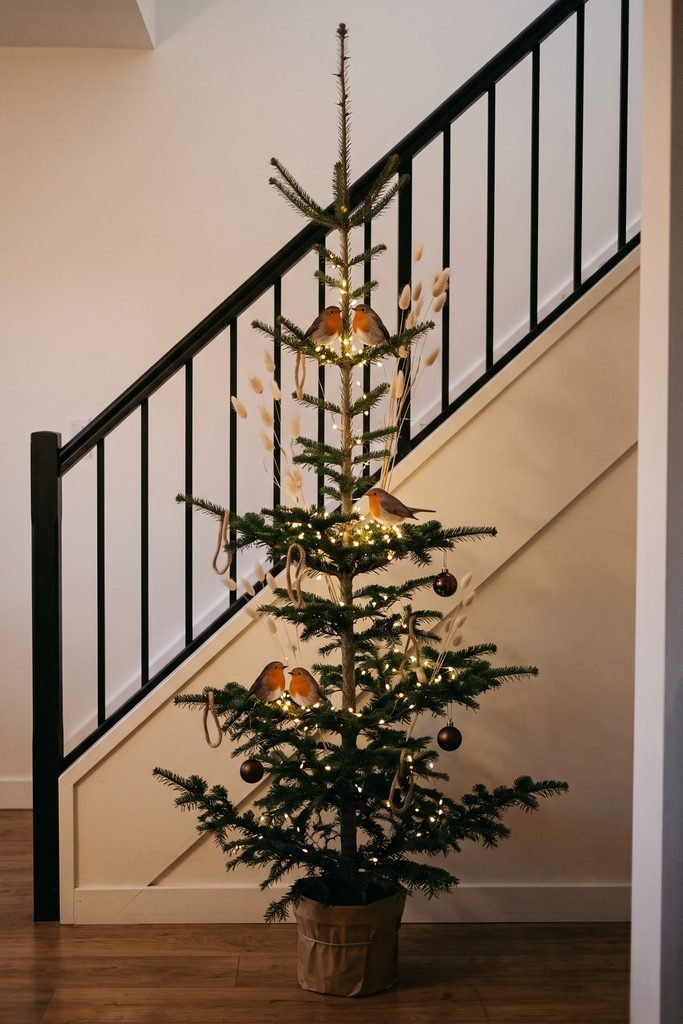
Pale seed heads can sit a little behind the birds to bring out the darker feather shapes. Jute hangers and a few matte bronze accents keep the warm orange from feeling too bright. If there’s a dark stair rail behind the branches, leave some open space at the sides so you can still follow the shape of the tree.
Pick a corner that leaves the stairs and walking path clear. Viewed from the hall in the evening, the tree’s warm lights and repeated orange shapes can give the entry a woodland feel without requiring room for a broad spread of branches.
9. Light a Bare Twig Tree With Acorns and Dried Oranges
Bare twigs make a pretty tabletop tree because every small ornament has a patch of open space around it. Dried orange slices catch the light at the edges and bring an amber glow to the gray-brown wood. Acorns and a few small bronze ornaments give the thinner branches some definition. Keep the outermost tips fairly open so you can still see the forks that give the tree its shape.
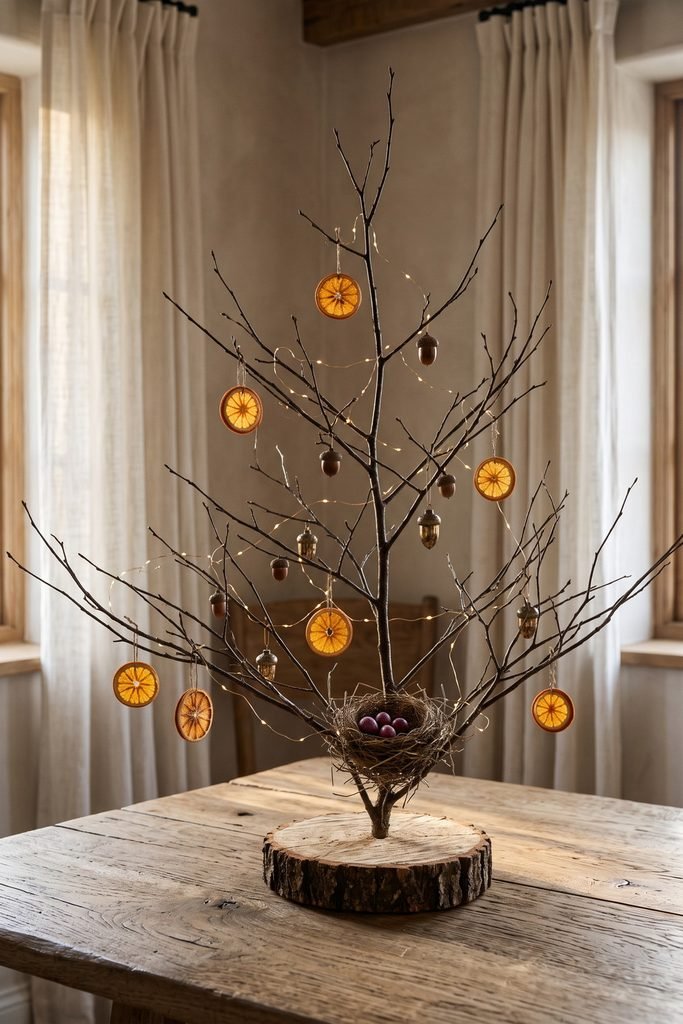
A little nest near the lowest fork adds a heavier shape where the branches come together. A bark-edged base repeats that rough texture down on the table. If you use fine warm lights, let the glow follow the branches and give the orange slices space to show through. The contrast between a sparse crown and the small nest below makes the arrangement feel balanced from across the room.
Choose a stable tabletop display and ornaments that suit the size of the twigs. A plain wall, soft curtain or quiet corner of a dining room makes a good backdrop. The more clearly you can see the branch tips, the more the little tree feels like it has a silhouette of its own.
10. Turn Three Wood Tiers Into a Tabletop Forest Tree
Three wood tiers can suggest a Christmas tree even with just a few evergreen sprigs. Start with the wide circle at the bottom, a smaller circle above it and a small crown at the top. A bark-covered center gives the levels a trunk-like shape, while moss-colored accents make each tier feel like its own little clearing. Space between the levels lets you see the arrangement as a whole.
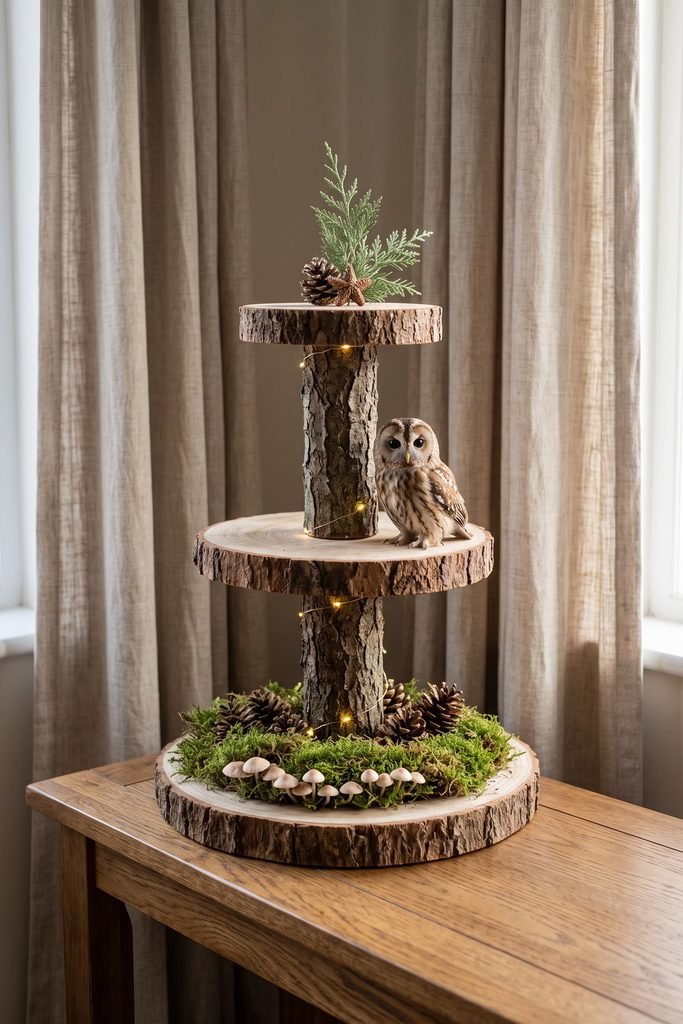
Give the middle tier one clear focal figure, like a little owl, with room around its face. On the bottom tier, pale mushroom caps can follow part of the rim while pinecones sit farther in. Keep the top light with a sprig and a single small ornament so the outline tapers cleanly. A few warm points of light can show off the bark and needles when the room gets darker.
Use a sturdy tabletop display with shelves wide enough for the figures. This tree works particularly well on a console where you can see each level from the front. If you have a lot of miniatures, select the ones with the most recognizable shapes and leave space around them.
11. Give One Woodland Tree a Snowy Side and a Warm Lodge Side
When a tree sits between a dining room and a living room, you can give each room a view that feels at home there. Dress the face toward a pale dining room with ivory felt, sage ornaments and snowy details. On the side facing warmer wood or a darker sofa, use brown wood ornaments, cranberry accents and bark textures. A shared evergreen crown and warm white lights let both rooms enjoy the same tree.
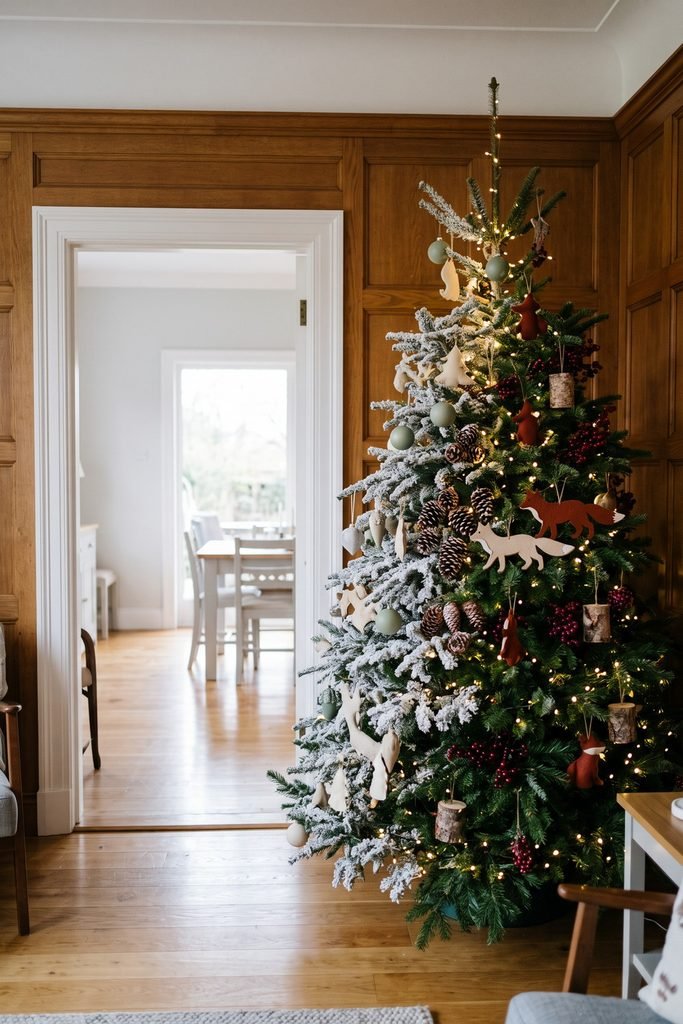
The most important area is the strip you see from the doorway between the rooms. Let the two palettes meet across several branches. A cream fox near the edge of the snowy side can echo a russet fox just into the warmer side. Pinecones repeat through both, so the change in color feels gradual. Stand at the doorway and look at the middle of the tree. You should be able to see where one palette fades into the other and still recognize two distinct views.
This idea makes especially good use of two ornament sets you already love. In a corner with two visible angles, you can give each angle a smaller section of branches. Let the rooms help you decide where the color changes.
Woodland Tree Toppers and Ribbon Focal Points
12. Crown a Frosted Fir With a Snowy Owl and Bare Twigs
A snowy owl is easiest to spot when a few pale twigs fan out around its face. Give the bird a little clear space between the twigs and the tallest needles. The wide lines of the branches make the round face easy to pick out, especially in front of a light window. The frosted fir and pale feathers share a color, while gray and brown markings give the owl enough contrast to stand out.
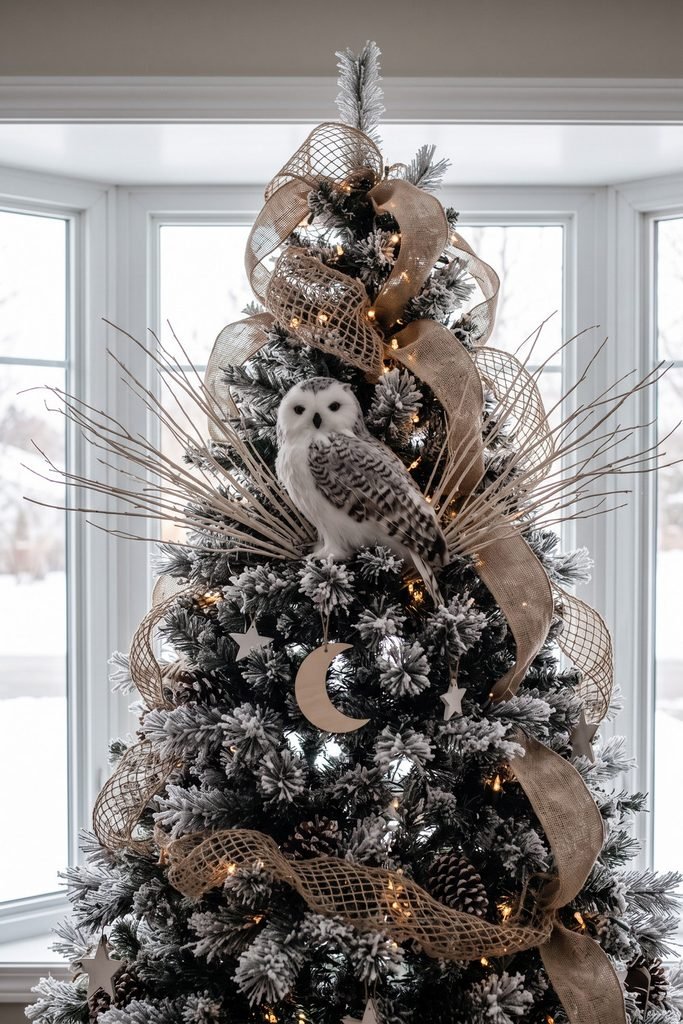
Carry some of that soft texture down the tree with open-weave mesh and small folds of burlap. A pale wood crescent or a few tiny white stars can repeat the winter shapes below the crown. Keep those accents small so the owl remains the first thing you see when you enter the room. A few warm points of light deeper in the tree add a soft glow through the mesh at night.
Choose a lightweight topper suited to the top of your tree. On a narrower fir, short twig sprays can frame the face while keeping the crown in proportion.
A Snowy Owl for the Crown
A white owl with visible gray or brown markings keeps its face easy to see among pale twigs and frosted needles.
13. Top a Traditional Woodland Tree With a Gilded Stag Medallion
An open gold ring with a stag inside makes an elegant woodland Christmas tree topper. The opening around the figure lets you see its legs and antlers, even against dark fir. A clear patch of wall behind the crown makes that silhouette stronger. Put a small amount of greenery or a cranberry bow around the frame to tie the metal finish to the branches.
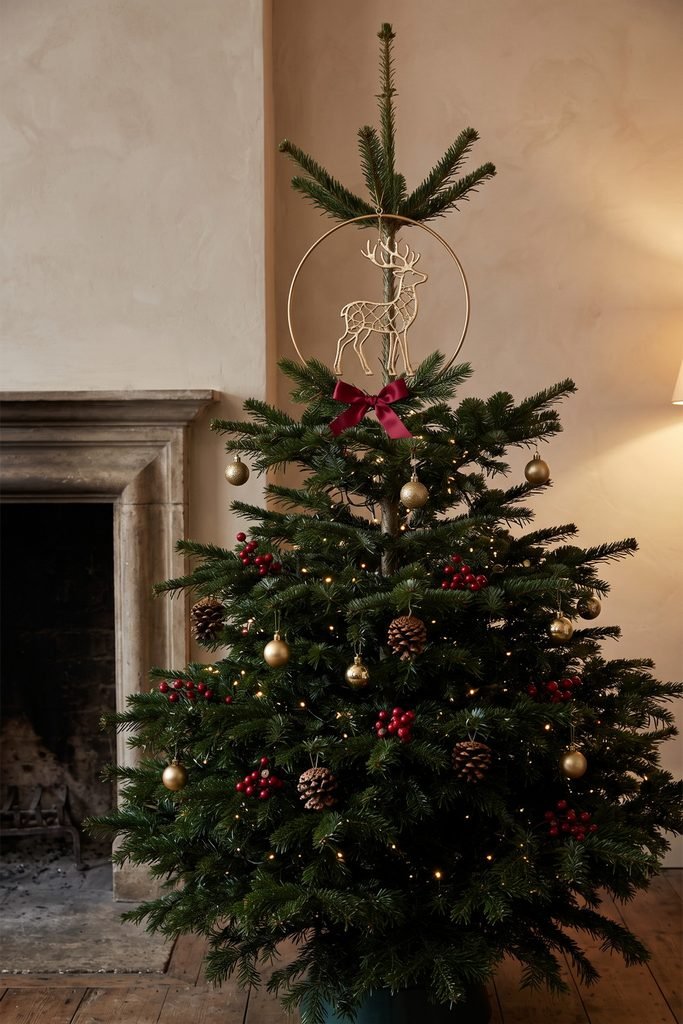
A handful of small gold baubles farther down pick up the finish without competing with the ring. Keep the berries and pinecones in loose groups so the evergreen remains visible. If you already have traditional red and gold ornaments, this topper gives them a forest theme through one recognizable figure. A satin ribbon in a similar red can connect the bow with the lowest branches.
Choose a light medallion proportionate to the tree and use the mounting support intended for it. Give the top a little room around the edges. That open space is what makes the stag easy to see from a chair across the room.
14. Wind a Ribbon Creek Through a Woodland Christmas Tree
A sheer blue-gray ribbon can look like a creek winding down through the fir. Give it a single, easy-to-follow curve from the upper branches toward the base. Leave a narrow strip of visible greenery on either side so the eye can trace the whole path. That space is what gives the ribbon banks and makes the rest of the tree feel like a little landscape.
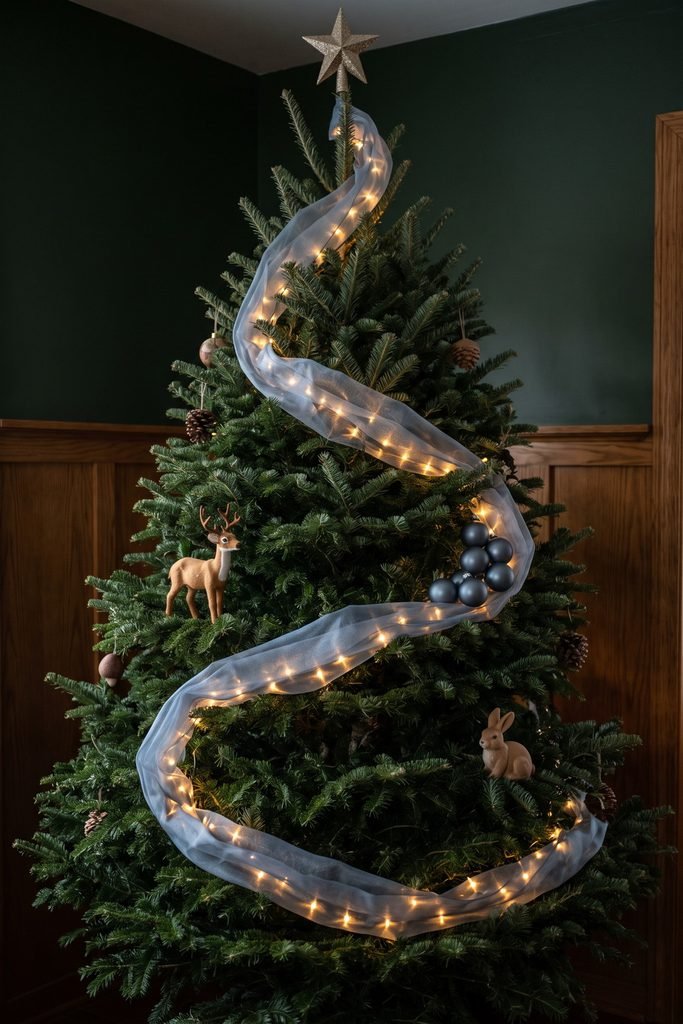
Put a few smooth, slate-colored globes beside one bend, where they can suggest pebbles. Set a small deer and a rabbit on different banks and turn them inward, toward the ribbon. Their orientation helps the curve read as a stream. A few warm lights behind the sheer fabric pick out its edge, while the dark needles keep the soft blue-gray color from fading into the branches.
You can use the same idea with different ornaments on a narrower tree. One broad bend is enough if it stays easy to follow from the front. Save the most prominent animals for the turns, where the viewer’s eye is likely to pause. If the line gets lost at a bend, move a nearby ornament and give the ribbon more room to show through.
Woodland Decor for Under the Christmas Tree
15. Let an Illustrated Woodland Tree Skirt Tell the Story
A cream tree skirt printed with deer, foxes, owls and little firs can be the most detailed part of a woodland tree. The light circle stands out against a wood floor and gives each animal a clear outline. Above it, an evergreen with warm lights and a few satin gold ornaments lets the eye travel down to the illustration. You can keep familiar ornaments higher in the branches and let the skirt introduce the theme.
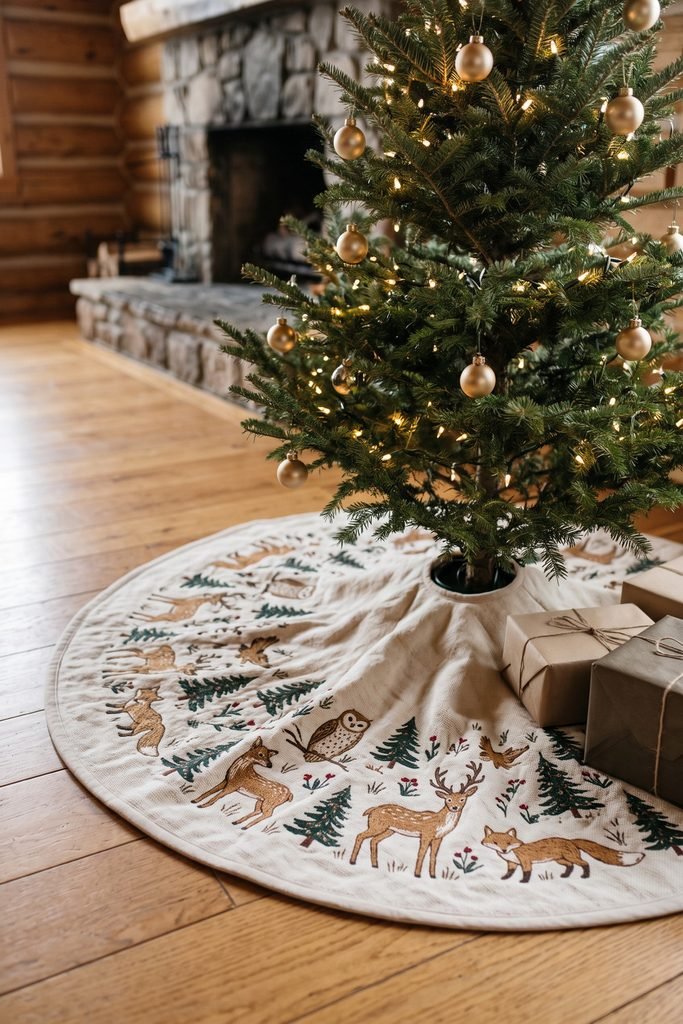
Look for one color in the textile to echo near the lower branches. A cranberry detail in the print might pair with a small red ornament, or a gold globe could pick up the color of a tawny deer. Keep the wrap on nearby gifts fairly simple. If you set the presents off to one side, the foreground stays open and the printed figures remain visible from the room’s usual seats.
Choose a skirt that fits the space you have around the stand. An illustration with a few large shapes can read well even when the base is small. Leave the clearest part of the pattern facing the room.
A Skirt With a Woodland Scene
Look for a cream skirt with large woodland animals you can see from across the room.
16. Gather Forest Animals on a Snowbank Beneath the Tree
A resting fawn beneath the lower branches can give the whole tree a little story. A soft ivory cloth works as the snowbank, especially when a shallow fold curves around the fawn and shows where the forest floor meets the wood. Set a taller woodland figure slightly behind it. A pair of small pinecones near the outside edge adds a rough patch of texture and gives the scene a visible boundary.
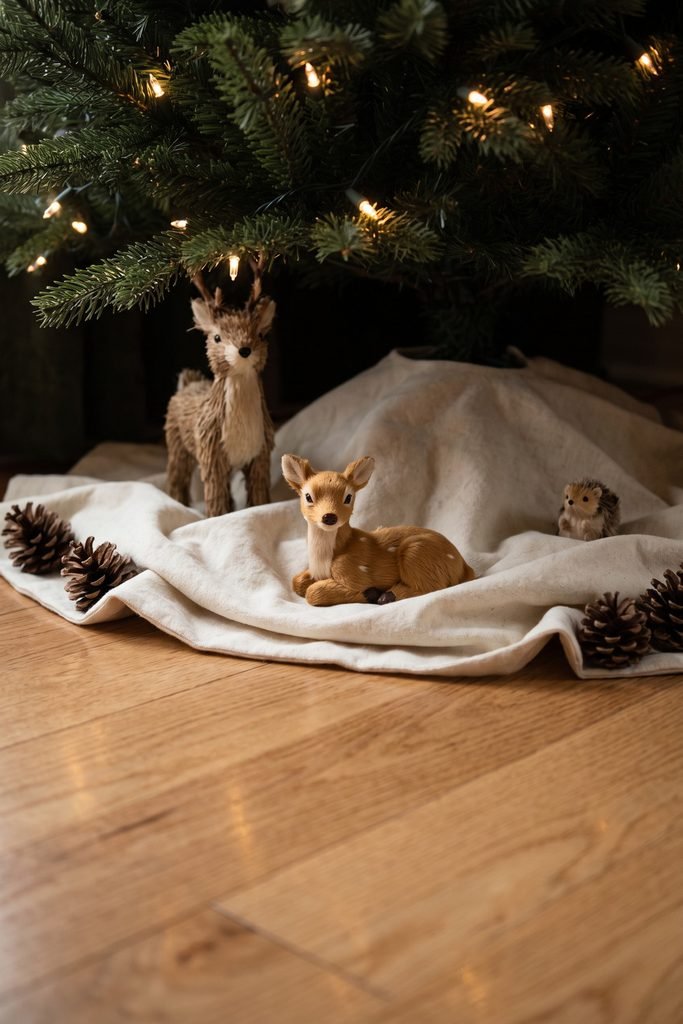
Let the tree’s lower branches hang above the animals like a roof. A few warm lights in the greenery draw your eye into the scene, and a plain patch of floor in front makes the snowbank feel contained. Keep the small objects away from the fawn’s face so it remains the first thing you notice. On a narrow base, one resting figure, one smaller companion and a low cloth fold can suggest the same depth.
Keep the scene inside the tree’s footprint or along the side with more floor space. Leave the walking route and stand access clear. This approach gives you a way to bring forest animals into the room even if you prefer a simpler arrangement of ornaments on the branches.
Final thoughts
Start with the detail you most want to see when you walk into the room. It might be a snowy owl framed by twigs, the warm edge of a wooden bucket or one fox tucked among the needles. Let that detail guide the rest of the tree. Repeat its color or texture once or twice, then leave enough room around it to see what makes it special. A few well-placed ornaments can make even a small tree feel like a winter woodland.