





18 Wrought Iron Decor Ideas for a Warm, Collected Home
Wrought iron decor can give a room a clear outline: a curling mirror above a wood console, a leafy table beside a linen sofa, or a dark bed frame surrounded by faded florals. The surrounding materials shape how that outline feels. Rough pottery, creamy fabrics, and natural wood give intricate metalwork a softer setting.
- Quick Takeaways
- Wrought Iron Wall Decor With Shape and Softness
- 1. Anchor a Rustic Entry With a Round Iron Scrollwork Mirror
- 2. Frame a Reading Nook With an Arched Iron Wall Panel
- 3. Dress an Open Iron Wall Frame With Off-Center Flowers
- 4. Display Botanical Plates on a Narrow Iron Wall Rack
- Iron Furniture That Feels Warm and Collected
- 5. Slide a Leaf-Pattern Iron Table Beside a Linen Sofa
- 6. Nest Two Leaf-Top Iron Tables Into One Branching Silhouette
- 7. Soften a Black Iron Bed With Florals and Sage
- 8. Make a Face-Back Iron Chair the Star of a Sunroom
- 9. Pair a Pale Stone Console With Gilded Iron Scrolls
- Open Ironwork for Room Dividers and Greenery
- 10. Separate a Living Area With an Open Iron Vine Screen
- 11. Hang an Iron Flower Box Beneath a Sunroom Window
- 12. Divide a Room With a Double-Sided Iron Plant Screen
- Decorative Storage With an Airy Frame
- 13. Turn a Bare Corner Into an Iron-and-Glass Display
- 14. Organize a Bathroom With an Openwork Iron Caddy
- 15. Make a Sculptural Iron Key Rack Part of the Entry Display
- Candlelight and Sculptural Finishing Touches
- 16. Give a Sideboard Height With a Branching Iron Candelabrum
- 17. Style Figurative Iron Candleholders as a Small Collection
- 18. Warm a Reading Corner With a Cascading Iron Candle Wall
- Choose the Finish and Placement for Your Room
- Bring the Look Together
These 18 ideas explore those relationships across walls, furniture, greenery, storage, and candlelight. Some center on a single expressive object; others use open ironwork to define a whole corner. Look for the silhouette you love, then build its surroundings around the details that deserve to stand out.
Quick Takeaways
- Give your main iron piece a clear background so its shape and openwork remain visible.
- Pair dark metal with tactile materials such as linen, weathered wood, pottery, or a woven rug.
- Repeat a curve, finish, or accent color selectively; each surface can have a different amount of ornament.
- Match the piece to its real use, checking the finish, support, and placement before bringing it into the room.
Wrought Iron Wall Decor With Shape and Softness
On a wall, the spaces between the metal become part of the design. Pale plaster, patterned ceramics, and flowers each bring out a different quality in the linework.
1. Anchor a Rustic Entry With a Round Iron Scrollwork Mirror
A round mirror surrounded by generous scrollwork gives a long wood console a strong center. Keep enough pale wall visible around the outer ring to reveal its lace-like edge. The mirror’s circle provides a gentle contrast to the console’s straight, substantial top.
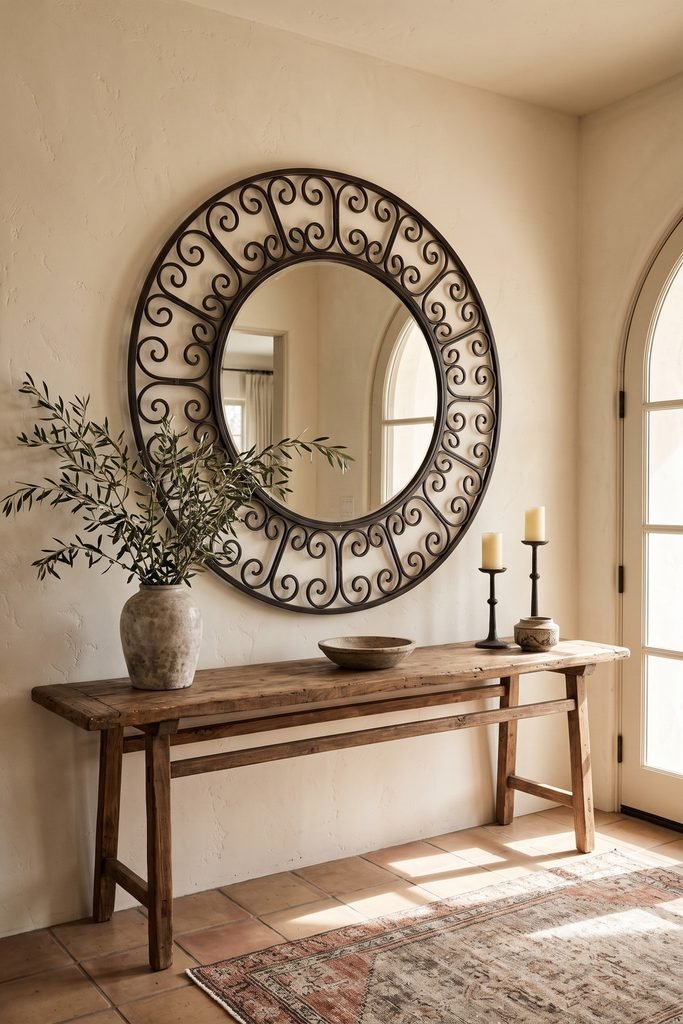
Rough pottery is a useful partner here. A large vase filled with olive branches brings an uneven, leafy shape beside the precise metal curves. Across the console, two candleholders at different heights can balance that height with a smaller grouping. A shallow bowl leaves a useful stretch of tabletop between them.
Let the reflected view contribute to the arrangement, too. A doorway or softly furnished room gives the mirror depth; a branch crossing its entire center makes the composition harder to read. Below, a faded patterned rug can repeat the warm browns of the console and give the dark iron a softer landing.
Pair Scrollwork With Rough Pottery
A round scrollwork mirror and a textured ceramic vase echo the contrast between delicate metalwork and the substantial wood console.
2. Frame a Reading Nook With an Arched Iron Wall Panel
An arched iron panel can make a plain seating wall feel like a defined little room. Its upper curve gathers two chairs and a shared table into one arrangement, especially when the wall and upholstery stay within a close cream-and-oatmeal palette.
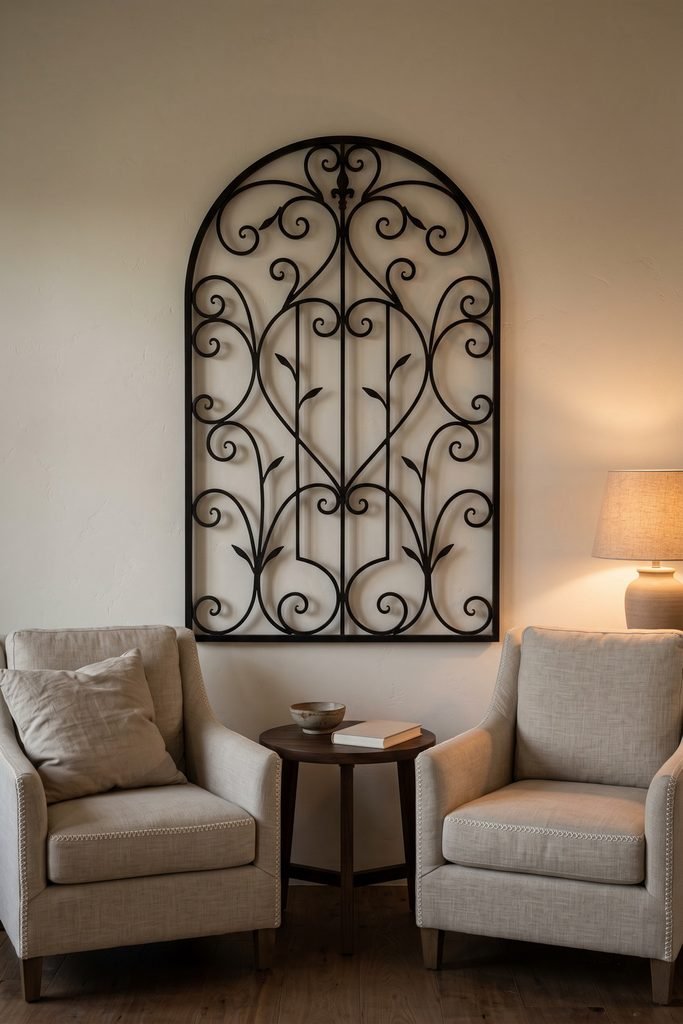
The chairs should leave the panel’s most expressive curves visible above their backs. A vine pattern with clear spaces between its stems gives the eye a path through the design. Closely packed curls call for quieter cushions; a more open panel can sit comfortably behind a small embroidered border or faded floral textile.
A dark walnut table between the chairs repeats the iron’s depth near floor level. Add a shaded lamp nearby so the nook has a reason to be used after sunset. This is decorative wallwork: its appeal comes from the arch, the soft seating beneath it, and the feeling of a place set apart for reading.
3. Dress an Open Iron Wall Frame With Off-Center Flowers
Fine black circles and rectangles can carry a surprisingly romantic arrangement. Group burgundy, dusty blush, and ivory flowers at three points on an open iron frame, giving one cluster more weight than the others. That unequal distribution lets the metal remain part of the composition.
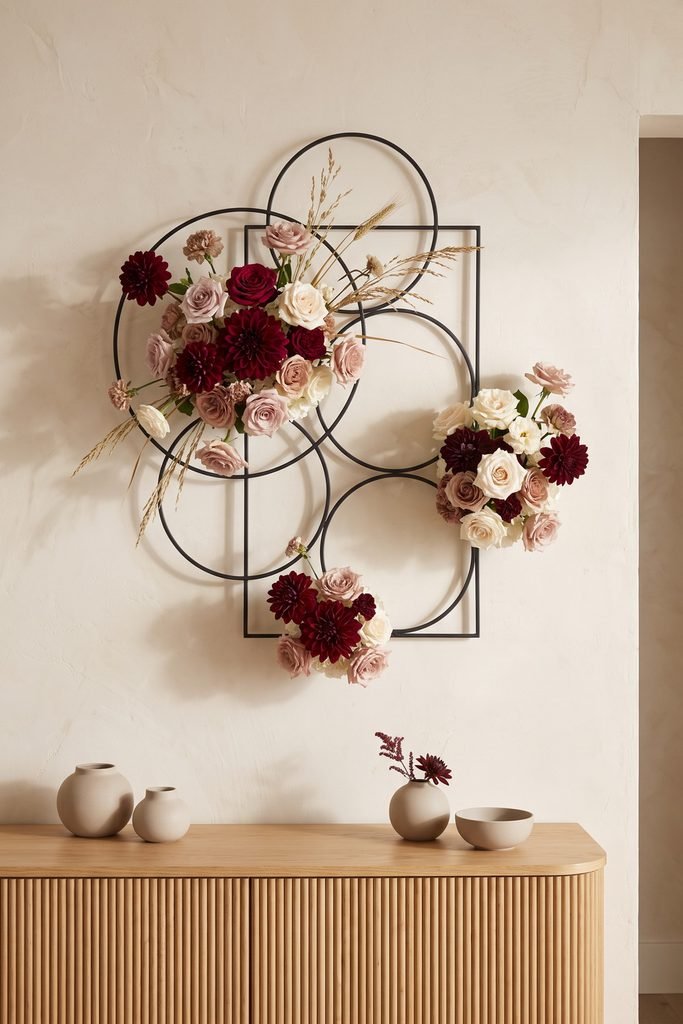
Leave generous portions of the framework bare. The uncovered outlines connect the bouquets, while their dark edges keep pale petals from disappearing against a cream wall. A few wheat-colored stems can reach past a circle or corner, softening the geometry. Dried or faux flowers both suit this kind of display.
Below, a ribbed wood console and rounded ceramic vase repeat the contrast between lines and soft masses. Carry one flower color into a small object on the surface if the arrangement feels disconnected. The largest bouquet already supplies the drama, so the tabletop can stay restrained.
Find the Frame and Floral Accents
Look for open black geometry and burgundy floral stems to echo the frame’s outline and its concentrated clusters of color.
4. Display Botanical Plates on a Narrow Iron Wall Rack
A slender iron rack gives two decorative plates a shared outline. Against a cream wall, the dark scrolls read first as a vertical shape; the pale ceramic circles break that line into softer, patterned sections.
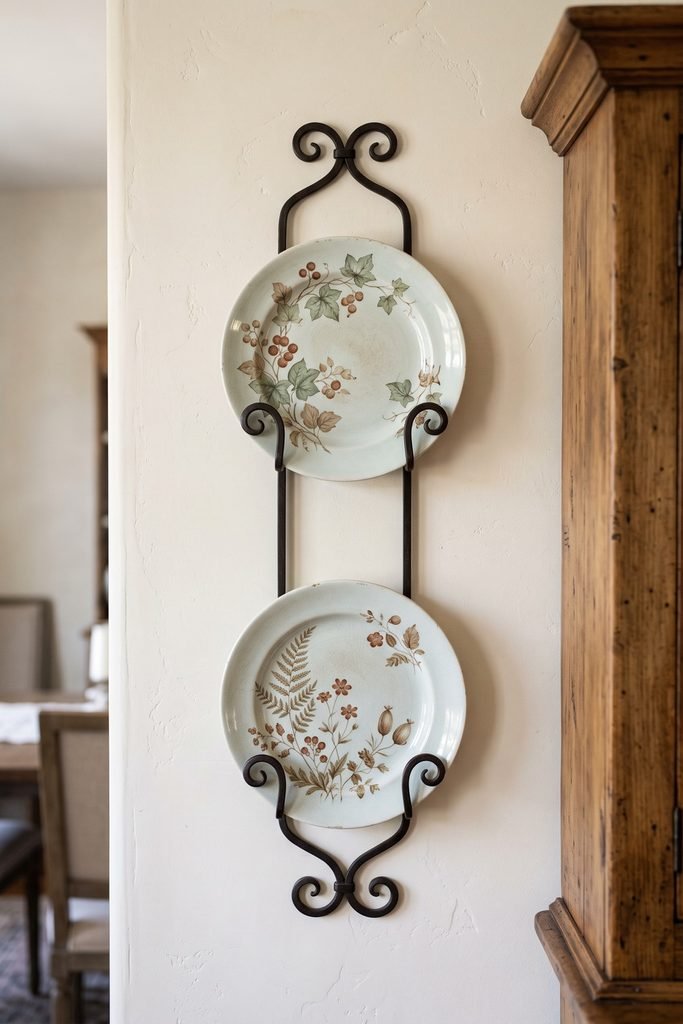
Choose plates that share a few colors while offering different botanical details. Faded green leaves and muted rust flowers can relate naturally to a nearby wood hutch. A visible gap between the plates helps each pattern remain readable. Keep the rack’s upper and lower curls exposed so the arrangement has a beginning and an end. This treatment suits a narrow dining-room wall where a small collection can be appreciated at close range. Check that the supports fit the actual plates before displaying them.
Iron Furniture That Feels Warm and Collected
Furniture brings ironwork into daily use. The most useful styling decisions often happen where the metal meets another material: a wood top, a quilt, or the cushion on a sculptural chair.
5. Slide a Leaf-Pattern Iron Table Beside a Linen Sofa
Beside a broad linen sofa arm, a slim iron table introduces a finer scale of detail. Its leaf-pattern side becomes easier to appreciate when the base is visible against a pale rug. A walnut top gives the drink or book resting above it a solid visual platform.
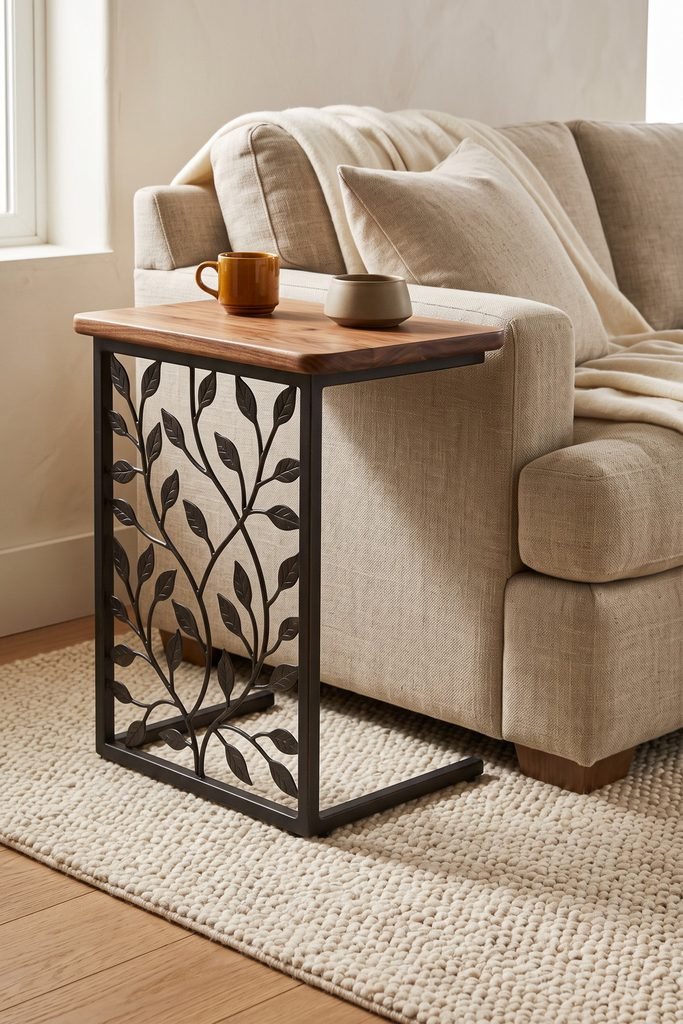
Keep the tabletop arrangement small enough to preserve that purpose. A cup and a low ceramic piece may be plenty. If the design includes a magazine cradle, a few neatly gathered issues can give the lower frame a useful role while leaving its curves visible.
Notice how the table meets the sofa. The top needs to feel convenient from the seat, and the base should fit around the furniture’s actual feet. Leaving the decorative side exposed gives the botanical pattern a clear place beside the upholstery. Its fine stems can be appreciated from the adjoining chair, too.
Look for a Slim Wood-and-Iron Table
A narrow table with an iron leaf-pattern base and a wood top follows the scale and material contrast of this sofa-side arrangement.
6. Nest Two Leaf-Top Iron Tables Into One Branching Silhouette
For a custom furniture concept, imagine two side tables whose iron stems align into a branching shape when the pieces nest together. Two offset walnut tops, each shaped like a broad leaf, make the upper outline. Each table has its own stable base and remains usable on its own.
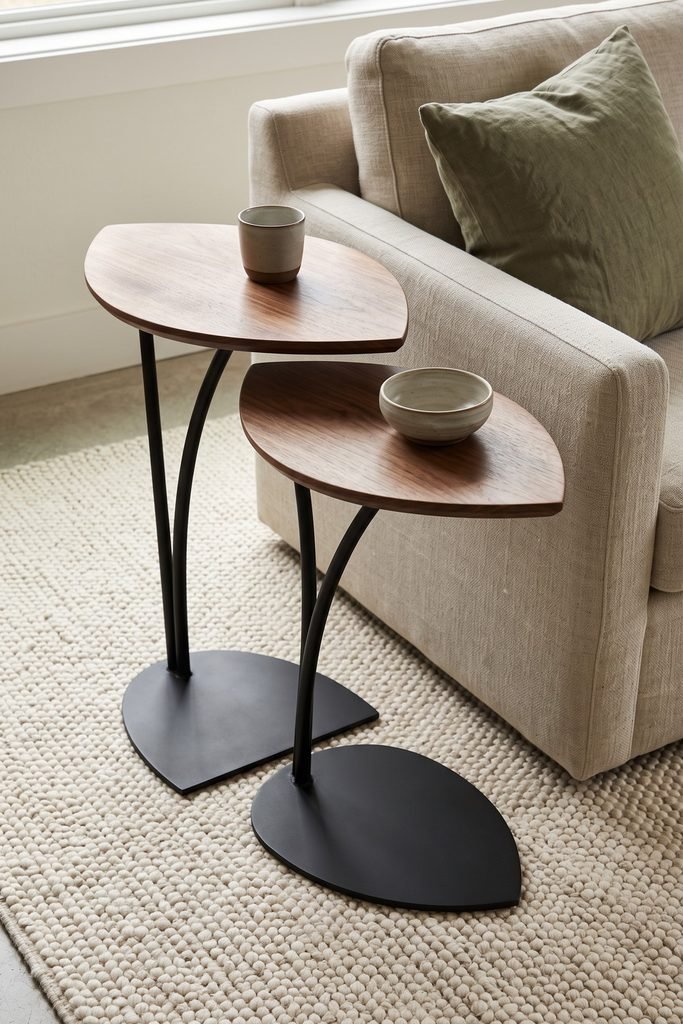
The defining detail is the relationship between the pieces. In their nested position, the stems appear to grow from one shared composition. When separated, the tables provide a surface beside two different seats. A small visible gap between the tops helps you understand that there are two pieces, even when their outlines align.
Keep their surroundings quiet: a linen sofa, an ivory rug, and perhaps one muted olive cushion. A cup on one top and a shallow bowl on the other make both surfaces legible.
This calls for a furniture maker to resolve the bases, clearances, and usable top sizes. Simpler rounded tops can preserve the idea if leaf shapes become impractical. What matters is the combination of independent support, smooth separation, and a branching silhouette that comes together when the tables return to their nested position.
7. Soften a Black Iron Bed With Florals and Sage
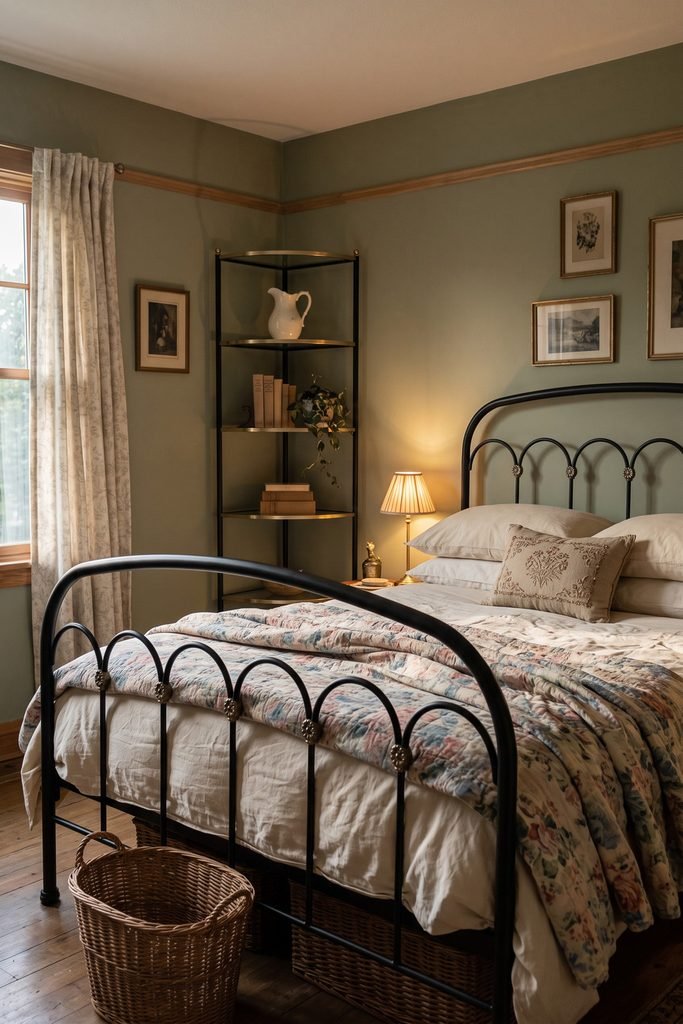
Sage walls give a black iron bed a gentle backdrop, particularly when the headboard and footboard repeat broad arches. Cream bedding brightens the space between those curves. A faded floral quilt introduces smaller movement, carrying muted rose and blue across the larger dark outline.
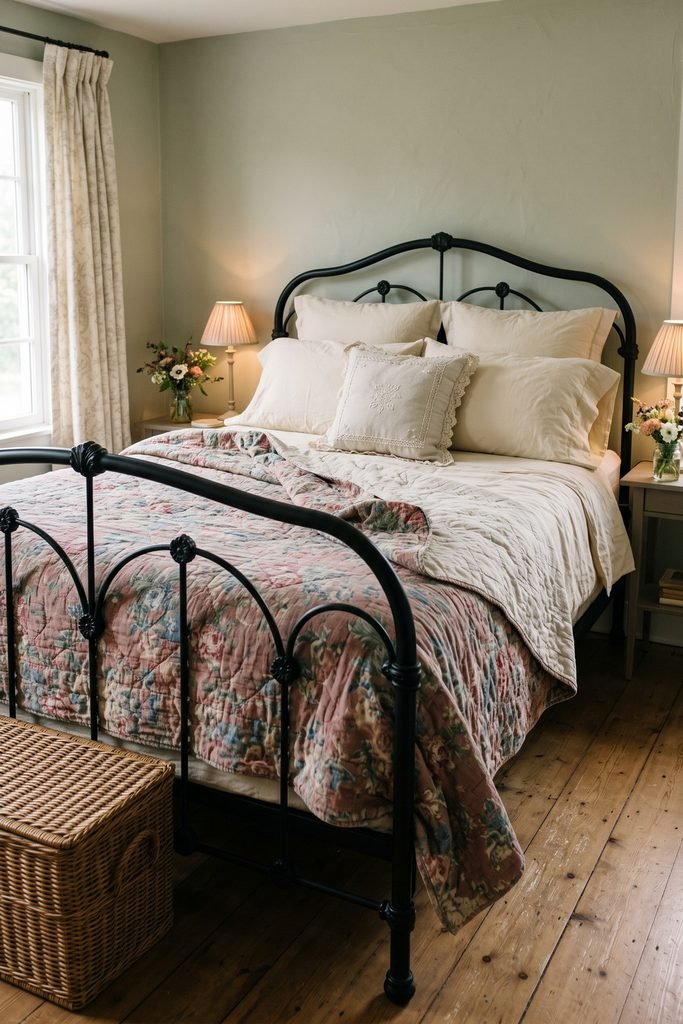
Pillow height makes a real difference to the finished bed. Leave the headboard’s crest visible above the tallest pillows so the metalwork still frames the textiles. An embroidered linen cushion can sit in front, bringing a finer pattern closer to the quilt. The floral prints can share colors even when their scale differs.
Pleated bedside lampshades and a woven basket extend the room’s softer textures beyond the mattress. Flowers can stay modest beside such a patterned bed. With the quilt, the iron arches, and the wall color already doing substantial work, small bedside arrangements give your eye somewhere calmer to rest.
Bring in Faded Floral Textiles
Cream floral bedding and an embroidered linen cushion carry the softer pattern around the bed’s dark arches.
8. Make a Face-Back Iron Chair the Star of a Sunroom
An outlined face gives a chair an expressive presence before anyone sits down. Large looping eyes, curved ears, and a continuous dark profile are enough to make it the focal point of a sunroom corner. Pale sage walls or lightly painted brick give those lines a clear background.
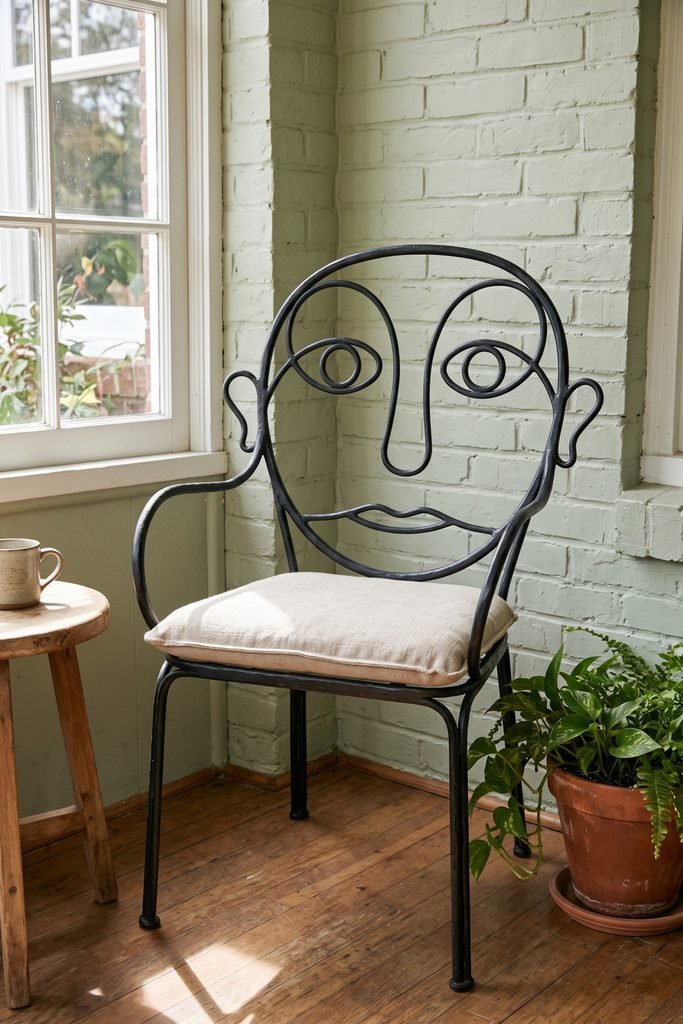
A plain flax-colored seat pad lets the face remain the most detailed part of the chair. Pair it with a simple round table; its familiar shape gives the unusual back some room. Nearby greenery can soften the setting without crossing the eyes or ears. Angle the chair where its face remains readable from the doorway and its seat is useful beside the table. Choose an actual seating piece with appropriate support and finished edges for everyday use.
9. Pair a Pale Stone Console With Gilded Iron Scrolls
Gilded iron offers a warmer expression of the same curling forms. On a slim console, the pale stone top creates a quiet horizontal surface above the decorative legs. Cream walls and nearby molding give the gold outline enough definition to be seen.
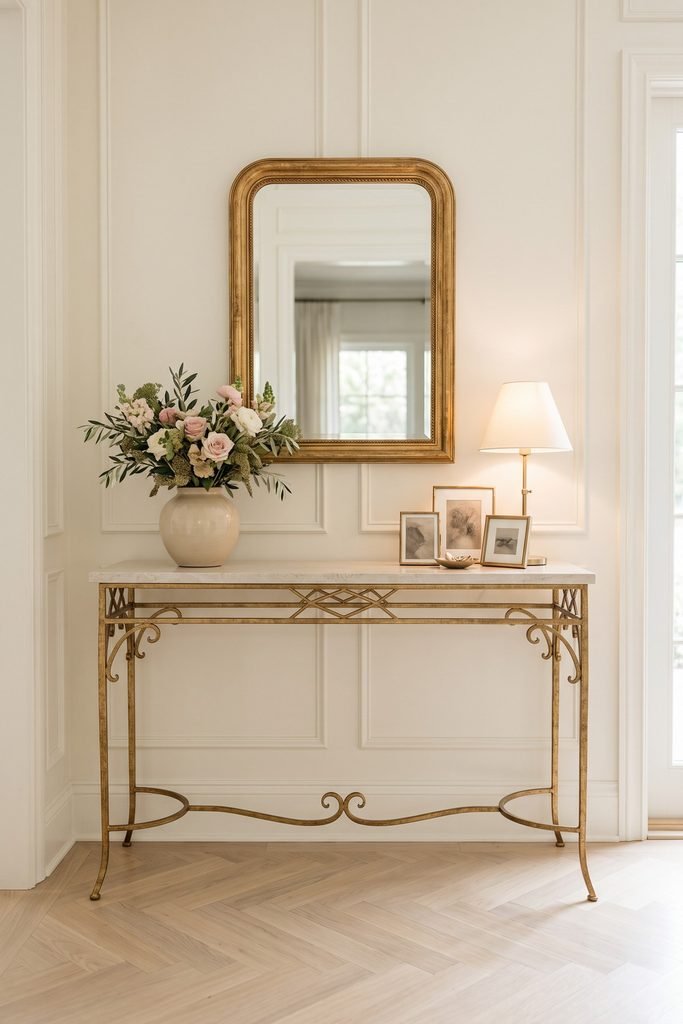
Keep the legs exposed. A basket or dense plant placed directly in front of them would cover the feature that makes this console distinctive. Above, a classic framed mirror can echo the warm finish while keeping its own border relatively calm.
One rounded flower vase, a small group of frames, and a shaded lamp give the surface a lived-in rhythm. Soft pink flowers and olive foliage sit comfortably within the ivory-and-gold palette. When choosing the piece, confirm the base material and its suitability for the particular stone top; the gilded color alone tells you about the appearance of the finish.
Open Ironwork for Room Dividers and Greenery
Botanical ironwork can connect the shape of a plant with the shape of a room. Here, openness, depth, and the direction of the foliage matter as much as the metal pattern.
10. Separate a Living Area With an Open Iron Vine Screen
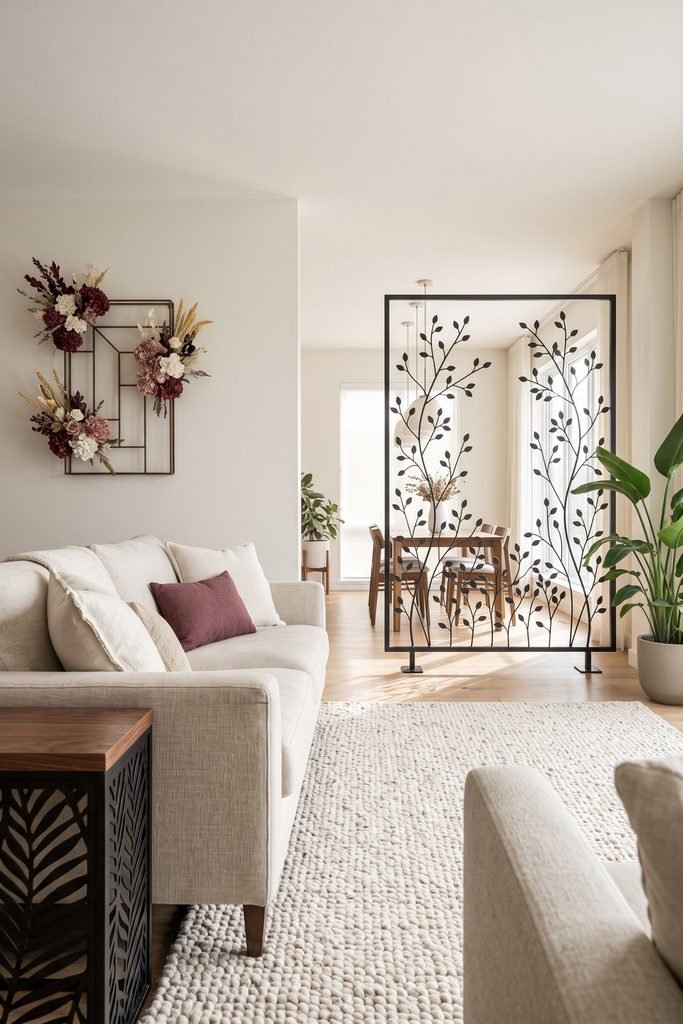
A vine-pattern screen gives a seating area a visible edge while allowing the adjoining room to remain part of the view. Dark stems and leaves can feel like a large drawing in space, especially beside ivory upholstery and a walnut table.
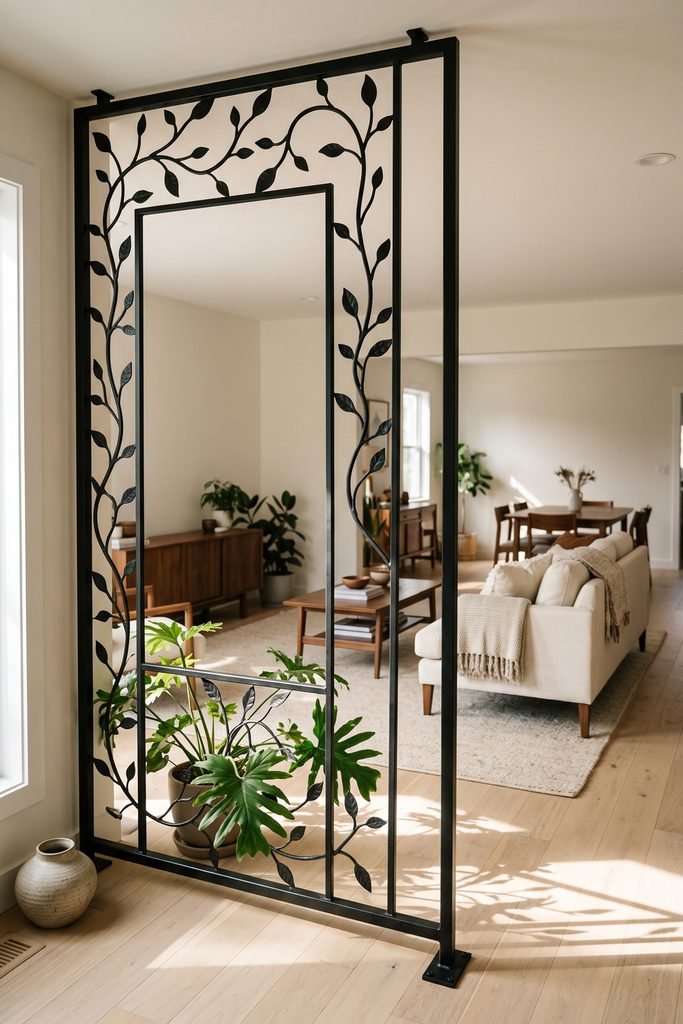
Keep the screen’s center open enough to reveal what sits beyond it. A complicated border and thick planting around every edge can make the same piece feel much denser. One leafy plant nearby is often enough to connect the metal’s botanical shapes with living greenery. A plain ceramic vessel provides a quieter companion below.
The screen should also look considered from the room’s usual approach. Check how its pattern overlaps the sofa back, doorway, or furniture on the far side. That layered view influences how airy the boundary feels. Plan a secured installation or a purpose-made stable freestanding design. For a broader comparison of materials and degrees of separation, explore these room divider ideas.
11. Hang an Iron Flower Box Beneath a Sunroom Window
A wrought iron window box brings the outline of garden ironwork into a sunroom. Picture a shallow black frame directly beneath the sill, with a removable watertight container concealed inside. Pale blush flowers sit above the rim, and a little greenery trails down the wall.
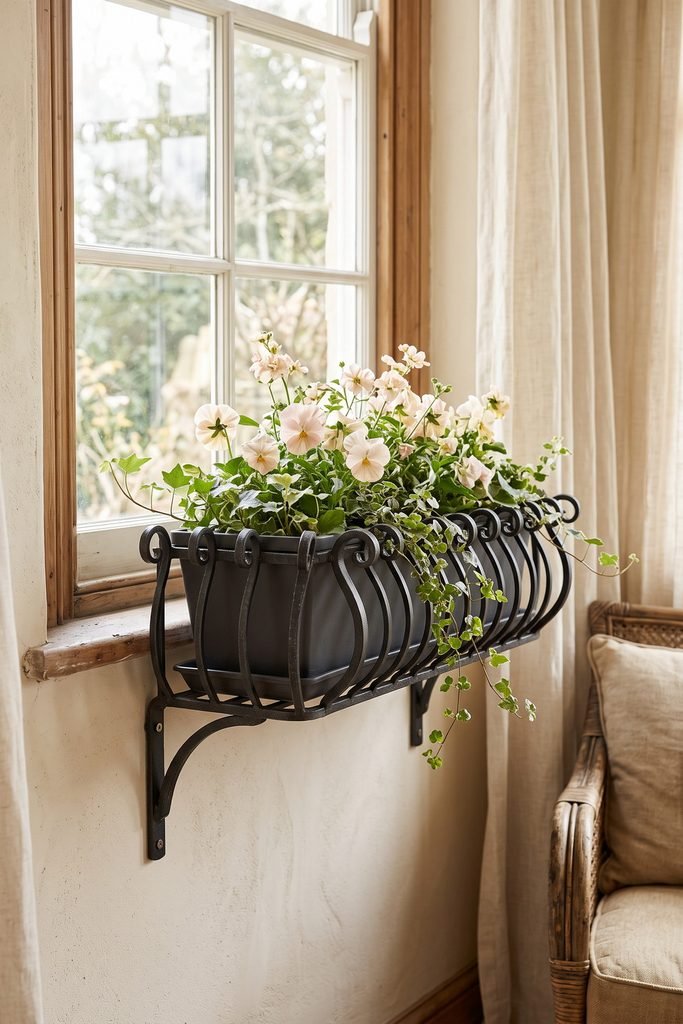
The direction of that growth is important. Keeping most of the foliage below the sill preserves the window’s view and makes the box feel attached to the architecture. A restrained flower palette also helps the iron’s rim scrolls remain visible. Cream plaster or pale masonry gives both the dark frame and the green leaves a clear setting.
Plan around the filled container’s weight and protection from leaks. Removable containers make it possible to tend the arrangement separately. Live plants need conditions suited to them; a faux botanical display can preserve the same silhouette when those conditions have not been established.
Find a Window Box and Soft Blush Flowers
A black openwork window box and pale blush flowers reflect the outlined container and restrained planting palette described above.
12. Divide a Room With a Double-Sided Iron Plant Screen
A planted divider can give both sides of a shared room an attractive view. This custom concept uses two offset iron vine frames, with removable plant cradles facing alternately toward the living area and the dining space. The planting occupies two shallow layers, giving the boundary depth.
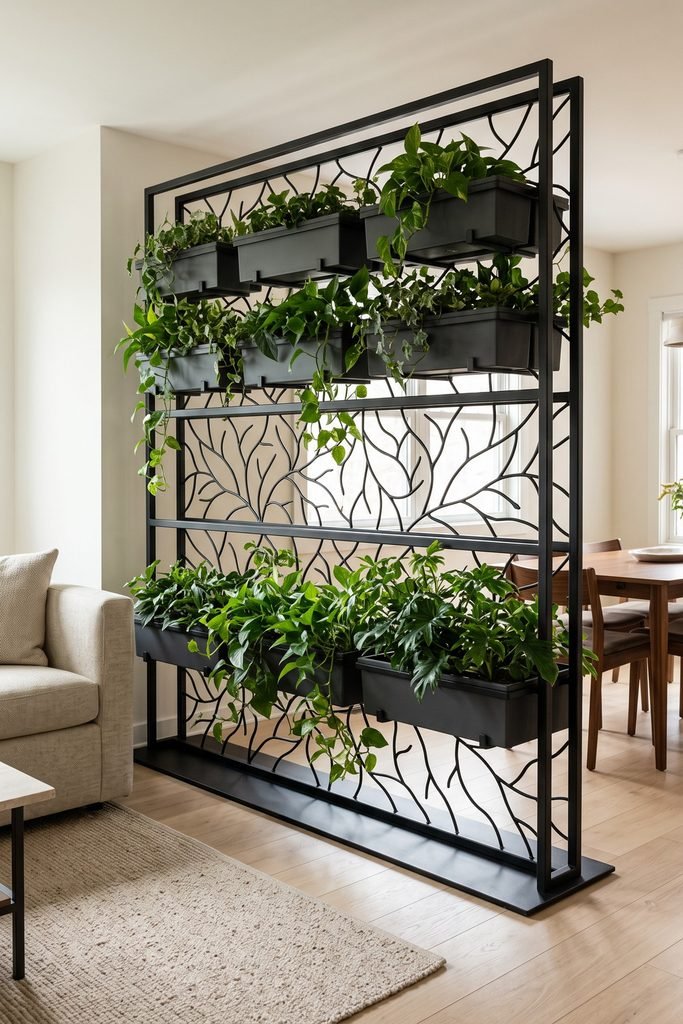
From either side, some containers face you while others sit farther back within the linework. That arrangement makes the foliage part of the divider’s structure. A deliberately open band around seated eye level allows glimpses into the neighboring zone. Leaves and containers can gather above and below that opening, where they frame the view.
Use the same black finish across both frames and a consistent container shape. The plants can vary in outline while the supporting pieces remain visually related. A cream sofa on one side and natural wood dining furniture on the other give the greenery a shared setting.
The frame, bases, and filled-container loads need a qualified custom specification. Removable watertight containers and access from both sides belong in that plan. Where a tall screen would be unsuitable, a console-height version can keep the alternating container directions and two finished faces. Preserve those relationships so the lower adaptation still works as a planted boundary.
Decorative Storage With an Airy Frame
Open iron frames can make everyday objects part of the room’s decoration. Clear shelf intervals and visible supports help the storage feel considered even when the contents are ordinary.
13. Turn a Bare Corner Into an Iron-and-Glass Display
Quarter-circle glass shelves give a corner etagere a light footprint against two pale walls. The black scrollwork outlines each level, while warm metal rims create a fine edge beneath pale ceramics. Because you can see the wall through the shelves, the frame stays prominent.
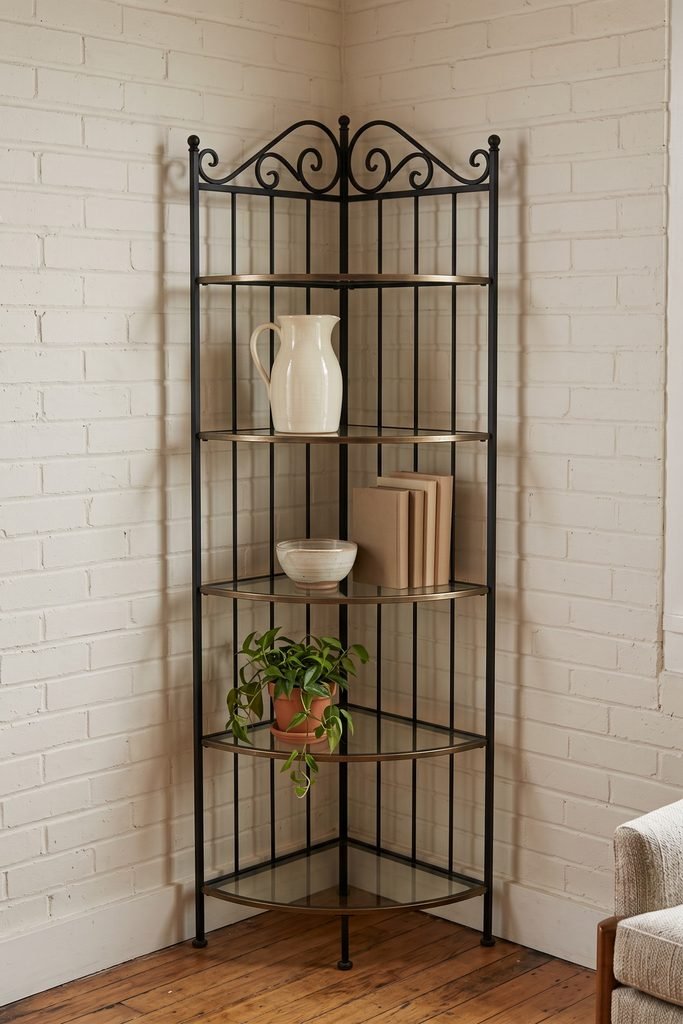
Vary the display from level to level. A tall ivory pitcher may occupy one shelf; a short book stack and low bowl can share another. Leave an interval of empty space around the small plant so its leaves remain distinct from the scrolling uprights. Filling every gap would make the delicate framework harder to appreciate.
Keep the actual shelf and glass limits in mind when choosing objects. For tall or top-heavy furniture, follow its securing instructions; the CPSC’s Anchor It guidance emphasizes proper anchoring and following manufacturer directions. The display should leave its structure and supports accessible.
Build a Light Corner Display
A black corner frame with glass shelves gives pale ceramics a defined outline while keeping the wall behind them visible.
14. Organize a Bathroom With an Openwork Iron Caddy
White towels and paper rolls give a black iron caddy a softer appearance. Their simple shapes also make the stand’s three levels easy to read: a small display above, rolls within reach in the middle, and folded supplies in the lower basket.
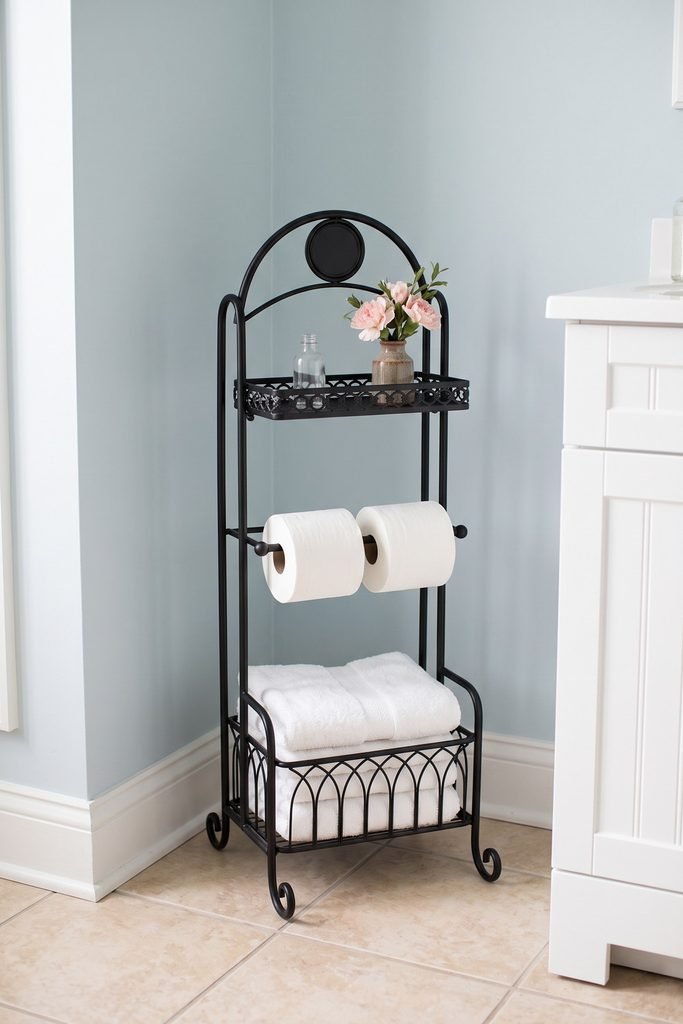
Keep the top arrangement modest enough to use comfortably. A small flower vase and one necessary bottle can bring a little blush and glass into a pale blue bathroom. Below, neatly folded towels let the curled feet and basket edges remain visible. Choose a finish suited to the bathroom’s actual conditions and position the stand away from direct splashes. Its decorative frame works best when the supplies can be reached without shifting the whole arrangement.
15. Make a Sculptural Iron Key Rack Part of the Entry Display
A row of useful hooks can also carry a small sculpture. Two animal figures facing one another above a rail create a broad horizontal shape; keys hanging below give the piece a clear everyday purpose. Muted red and green details can stand out against cream plaster without requiring a colorful entryway.
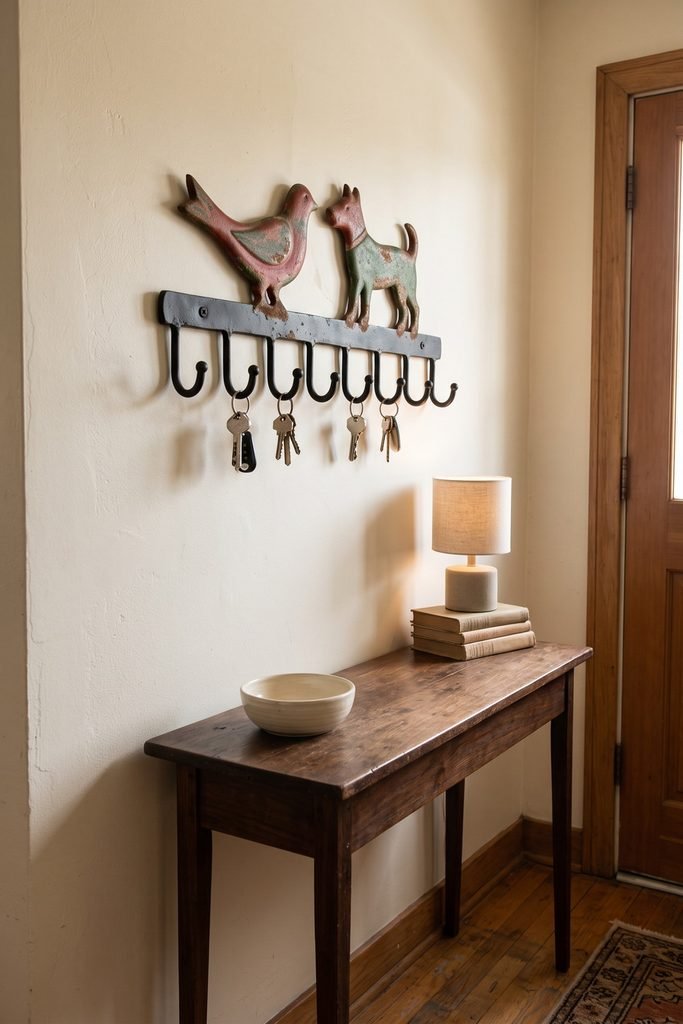
Give the hooks some breathing room by using a few alternate positions. A wood console beneath them can hold a low catchall bowl, with books or a shaded lamp farther to one side. This black metal entryway organizer then belongs to a larger landing area, with each item easy to see and reach. Keep the rack at a usable height and select it for the light objects it is intended to hold. The painted figures provide plenty of detail above the quieter console surface.
Candlelight and Sculptural Finishing Touches
Smaller iron pieces can set the rhythm of a shelf or evening corner. Their gestures, curves, and pools of light give you several ways to finish a room.
16. Give a Sideboard Height With a Branching Iron Candelabrum
A branching candelabrum draws the eye upward through a sequence of ivory candles. Its dark arms need a calm patch of wall behind them so the rising shape remains clear. On a wood sideboard, a substantial base gives the flowing upper branches a visual anchor.
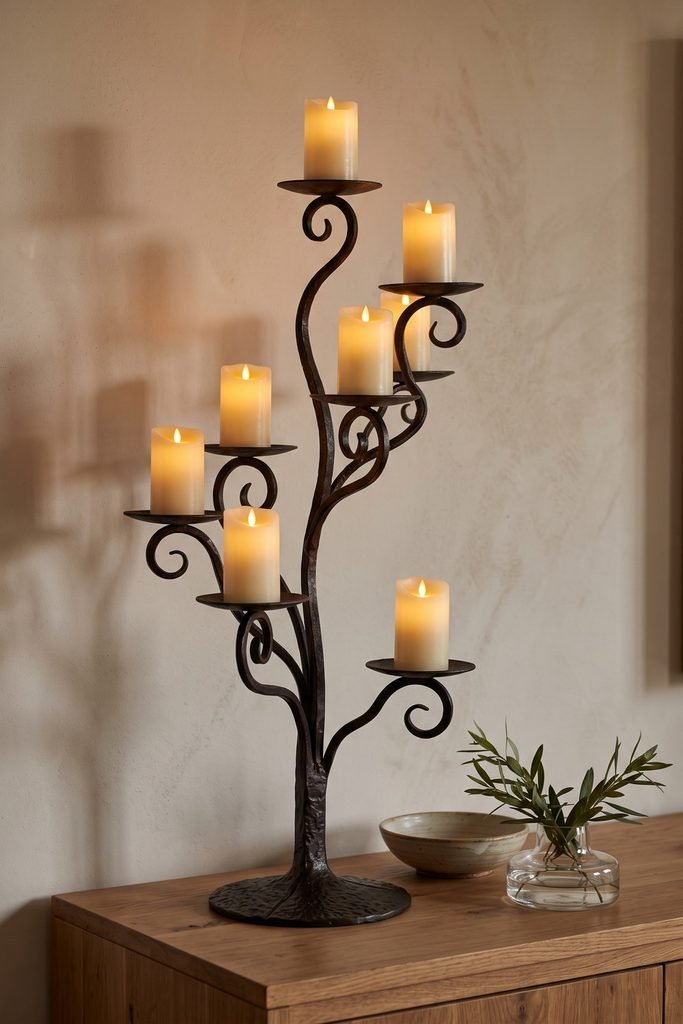
Balance that height with something low nearby, such as a shallow bowl or restrained green arrangement. Keep foliage separate from the candle plates so both shapes can be appreciated. Several similar-height decorative objects around the base would compete with the sculpture’s upward movement.
Flameless pillars suit this textile-and-greenery setting. The National Fire Protection Association recommends flameless candles for the home. Their soft glow lets the iron branches become part of an evening arrangement while the candleholders’ silhouette remains the main attraction. Choose candle sizes that fit the actual plates.
Find the Branching Candle Silhouette
A branching iron candleholder and ivory flameless pillars repeat the rising silhouette and small points of light above the sideboard.
17. Style Figurative Iron Candleholders as a Small Collection
Two gestural figures can make a shelf feel personal through shape alone. Bent arms, tilted hats, or a small candle dish held outward give each object a readable pose. Keep the pair within one motif family so their gestures seem to belong in the same conversation.
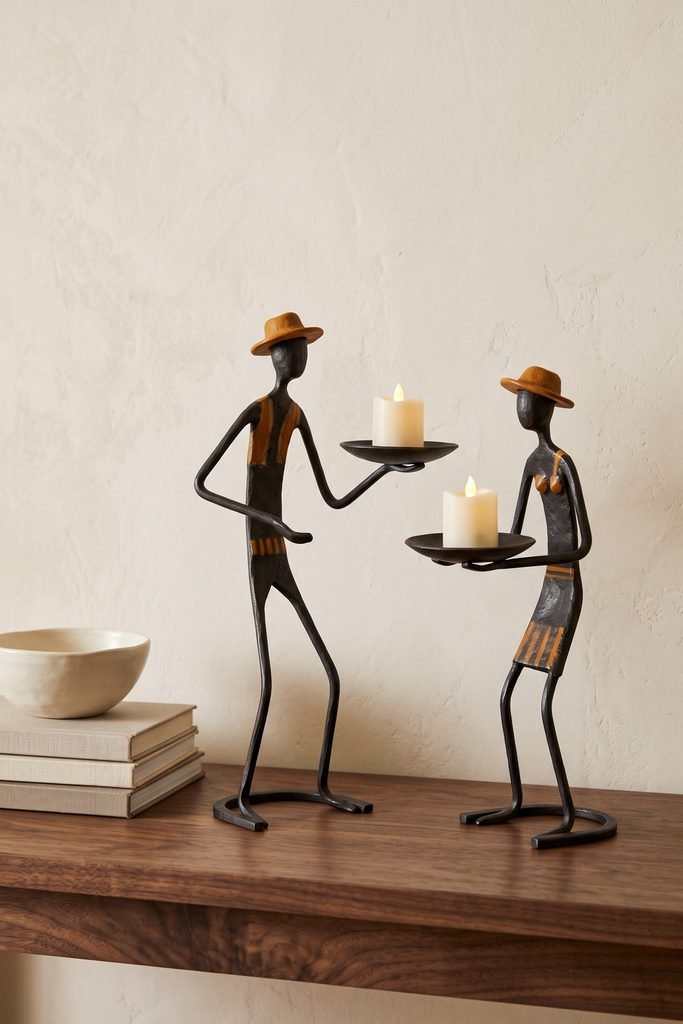
Ochre details can connect black iron figures with a walnut surface below them. A low cream bowl and a short book stack give the display a grounded edge while leaving the figures’ upper outlines clear. Slightly unequal heights can make the group feel relaxed. Flameless votives keep the candle element visually small; the expressive bodies should still be what you notice first. A plain wall gives artistic wrought iron of this scale enough room to be appreciated.
18. Warm a Reading Corner With a Cascading Iron Candle Wall
Staggered glass votives along curving iron strands create a descending pattern of amber light. Over an oatmeal reading chair, that pattern can echo the loose folds of a knit throw. The dark lines remain visible during the day; battery votives bring another layer to the arrangement in the evening.
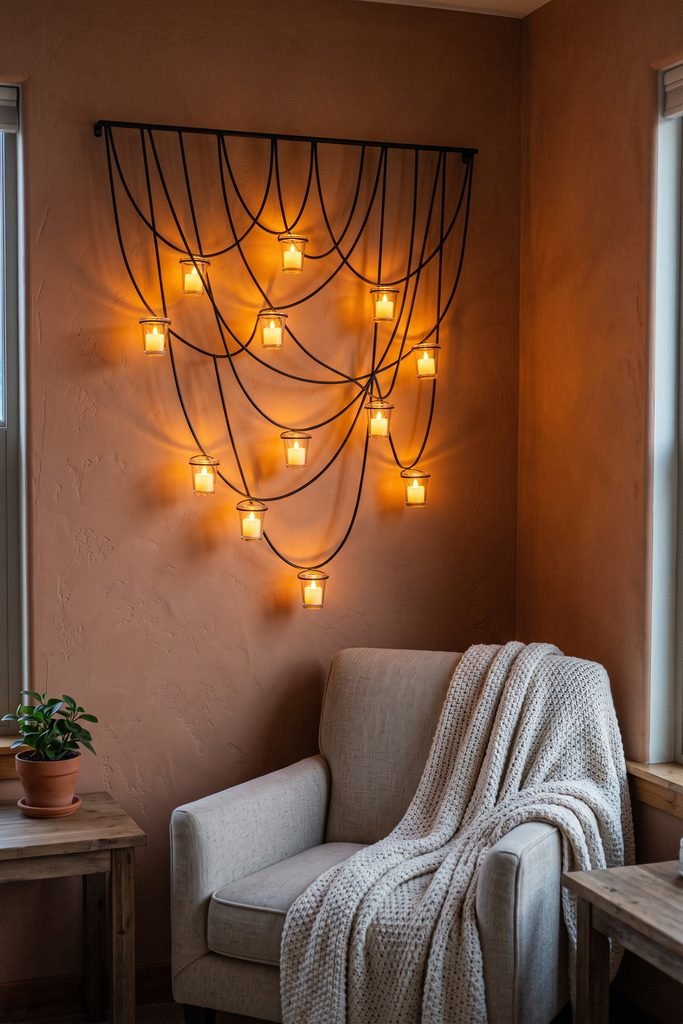
Position the piece so its lower curves remain clear of the chair back. A plain stretch of wall helps you follow the strands from the upper rail down through the different candle heights. With so much movement above, a simple wood side table and one terra-cotta pot can give the lower part of the corner a calmer outline.
Keep the glass cups and their lights consistent enough to read as one arrangement. Any removable seasonal accent should leave the flowing strands visible. Secure the wall piece according to its actual construction, and use votives that fit its cups.
Choose the Finish and Placement for Your Room
Check the material and finish in the individual piece’s description. An ornate shape or gilded surface alone cannot establish how an object was made, how old it is, or which care method suits it.
Moisture deserves attention around bathroom storage and planted containers. The Canadian Conservation Institute explains that iron corrodes when exposed to water and oxygen. Protect surrounding surfaces from leaks and follow the maker’s care directions for the actual finish. Conservation treatments for old artifacts are not a general cleaning routine for coated furniture.
For mirrors, wallwork, shelving, and custom screens, the piece’s weight, fixing points, intended use, and your wall or floor conditions should guide the installation plan. Confirm those details with the supplier or appropriate installer before choosing the final position.
Bring the Look Together
Choose the iron silhouette that gives you the strongest starting point: a circle, a vine, a curved bed frame, or a small expressive figure. Then give that shape a setting where it can be seen. Linen, wood, pale walls, and selected greenery offer different ways to soften and frame it. A few considered relationships can carry the look from one object into the surrounding room.