





18 Beautiful Jewelry Storage Ideas for Every Collection
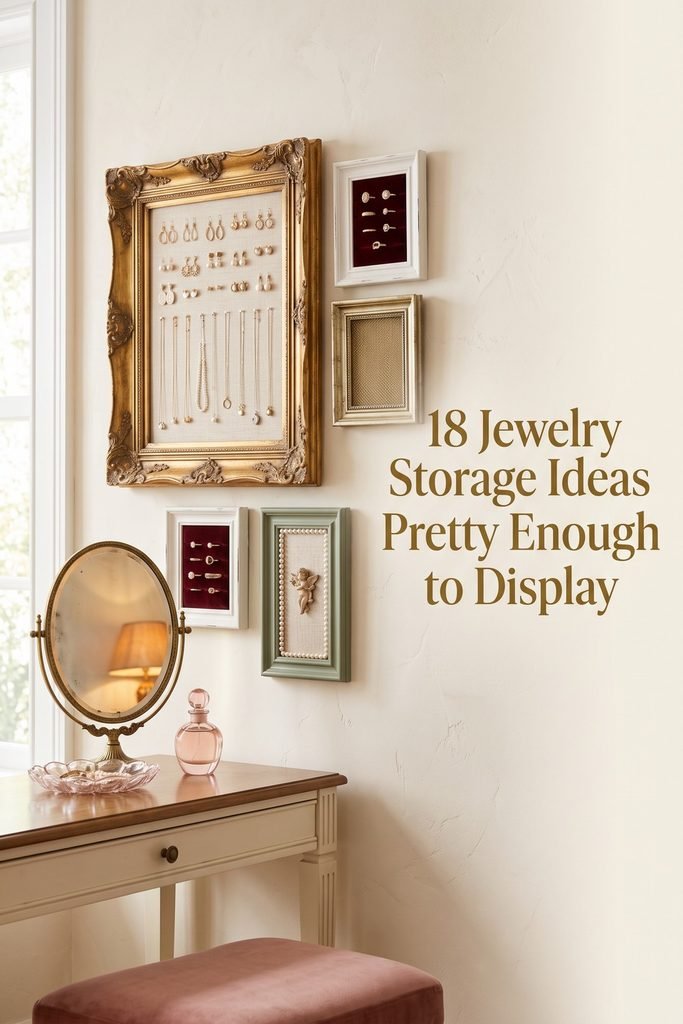
The best jewelry storage ideas do more than give every piece a place. They let you see what you own, keep delicate chains from becoming a knot, and make the collection feel like part of the room instead of one more thing to hide. The right setup may be a shallow wall display beside your vanity, a divided drawer, a mirror-front cabinet, or a small sculptural stand on the dresser.
- Quick Takeaways
- How to Choose Jewelry Storage That Actually Works
- Wall-Mounted Jewelry Storage That Doubles as Decor
- Build an Antique-Frame Jewelry Gallery
- Turn a Vintage Window into an Earring Screen
- Create a Linen Jewelry Mood Board Above the Vanity
- Add a Slim Shelf-and-Rail Necklace Station
- Hang Necklaces from a Backlit Driftwood Branch
- Gild Natural Branches into a Jewelry Wall Sculpture
- Closet and Drawer Jewelry Organization
- Hide a Full Jewelry Closet Behind a Mirror
- Turn the Closet Door into a Color-Sorted Bangle Wall
- Style an Open Boutique Jewelry Station
- Line a Drawer with Vintage Teacup Compartments
- Decorative Displays for Rings and Necklaces
- Display Rings in a Baroque Velvet Frame
- Keep Fine Pieces in an Ornate Velvet-Lined Jewelry Chest
- Layer Statement Necklaces on a Classical Bust
- Use Sculptural Hands as a Jewelry Focal Point
- Tabletop and Upcycled Jewelry Organizers
- Build a Freestanding Natural-Branch Jewelry Tree
- Style a Tiered Glass-and-Porcelain Vanity Station
- Stack Bangles on Bottles and Boutique-Style Dowels
- Turn a Vintage Grater into an Earring Tower
- Jewelry Storage Questions
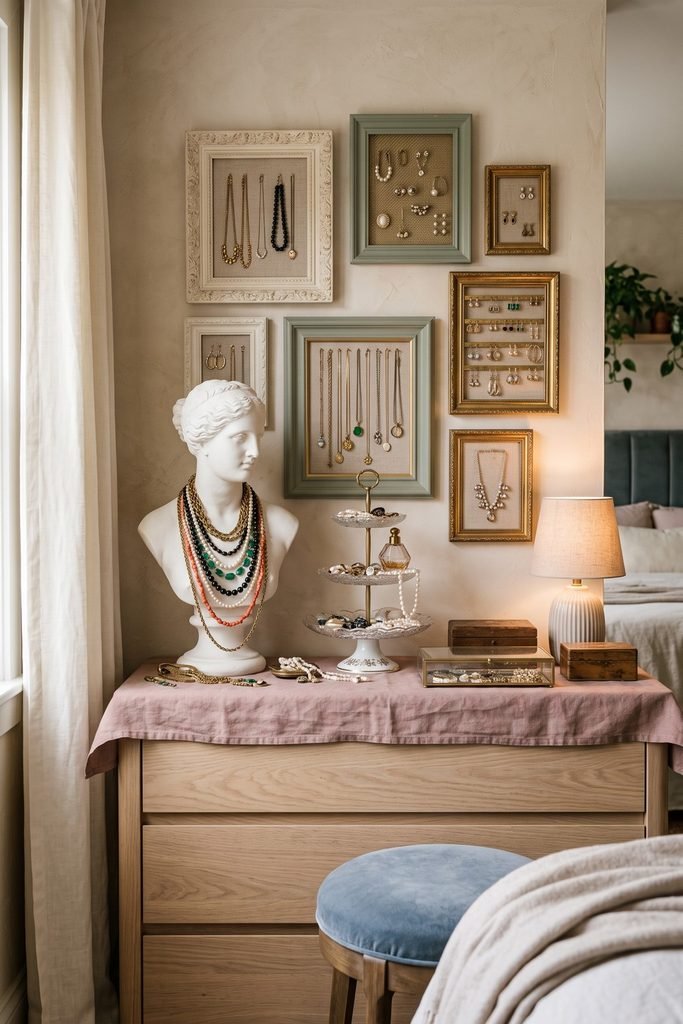
This guide brings together 18 jewelry organization ideas for necklaces, rings, earrings, bracelets, and watches. Some are designed for open display, while others protect special pieces behind a door or inside a lined compartment. Each one explains not only what to use, but how spacing, materials, color, and placement make the finished arrangement easier to live with.
Quick Takeaways
- Sort jewelry by type and how often you wear it before choosing an organizer.
- Give fine chains their own hooks, slots, or pouches instead of layering them in a loose pile.
- Keep delicate, pearl, plated, or special-occasion pieces in separate lined compartments when open display is not suitable.
- In a small bedroom, use shallow wall space, the inside of a closet door, or a divided drawer before adding freestanding furniture.
- Secure tall cabinets and heavy wall displays, and smooth every surface that will touch the jewelry.
How to Choose Jewelry Storage That Actually Works
The best way to decide how to organize jewelry is to begin with the collection, not the container. Separate necklaces, rings, earrings, bracelets, watches, and occasional pieces, then identify what you reach for most. Daily jewelry belongs at a comfortable height and should be simple to return. Long necklaces need enough vertical clearance to hang without crossing, while rings and studs are easier to manage in small, divided spaces.
Balancing jewelry storage and display starts with how often each piece is worn. A rail, bust, or tiered stand can turn frequently worn costume jewelry into decor. Closed storage is usually the more protective choice for delicate finishes, fine pieces, and items worn only occasionally. Pandora’s jewelry storage guidance recommends separating pieces to reduce rubbing, hanging suitable necklaces to limit knotting, and keeping jewelry away from natural sunlight and heat. Pearls need particular care and should not rest against other jewelry.
Finally, match the organizer to the room. A shallow frame or rail can solve a tight wall, while a fitted mirror cabinet suits a larger collection. Any tall cabinet or substantial display needs secure installation; the U.S. Consumer Product Safety Commission advises anchoring furniture to a wall or floor to reduce tip-over risk.
Wall-Mounted Jewelry Storage That Doubles as Decor
Wall storage keeps a dresser clear and puts the collection where it can be seen. The most successful DIY wall jewelry organizer is not simply a board covered in hooks. Its frame, spacing, and backing should relate to the room, while each jewelry type gets a zone that fits its scale.
Build an Antique-Frame Jewelry Gallery
A group of ornate frames can turn earrings, necklaces, and rings into a small salon wall. Use one larger rectangular frame as the anchor, then arrange four smaller shapes around it. Repeating warm white, antique gold, or pale sage helps mismatched finds read as one installation.
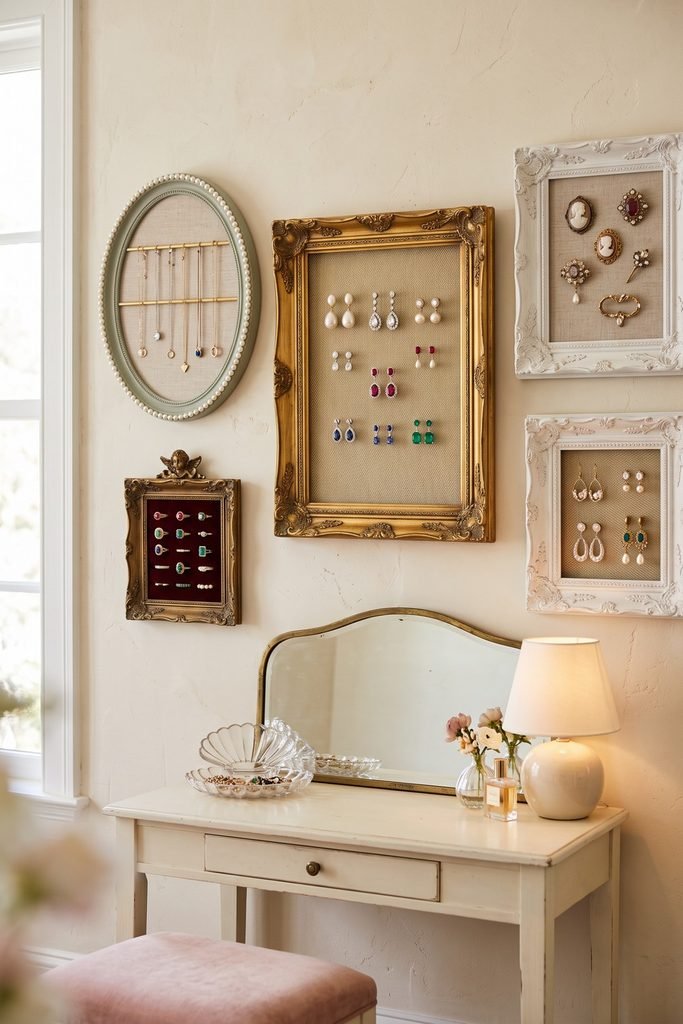
Give each frame a clear purpose. Fine mesh or closely spaced rails work for earrings, a taller frame provides the drop needed for necklaces, and a padded panel can hold rings or brooches. Keeping categories separate is what allows a richly decorated frame jewelry organizer to remain calm even when the collection is colorful.
Back the frames with linen, felt, or another smooth material so chains are not resting against rough wood. Cap exposed mesh edges and choose mounting hardware for the wall type and combined weight. Above a slim vanity, the gallery becomes the main focal point without taking up useful surface space.
Build the Framed Display
To recreate the gallery without making every frame identical, look for related warm finishes, a calm fabric backing, and small hooks that let the jewelry supply the color.
- Antique Gold Picture Frames
- Natural Linen Fabric for Display Backing
- Small Brass Jewelry Display Hooks
Turn a Vintage Window into an Earring Screen
An old window frame has enough architectural presence to fill a blank wall, while coated mesh inside the openings creates generous earring storage. Place earrings across the upper panels and install a neat row of hooks along the bottom for longer necklaces. This top-to-bottom order keeps chains clear of smaller pieces and makes the transparent center feel organized rather than crowded.
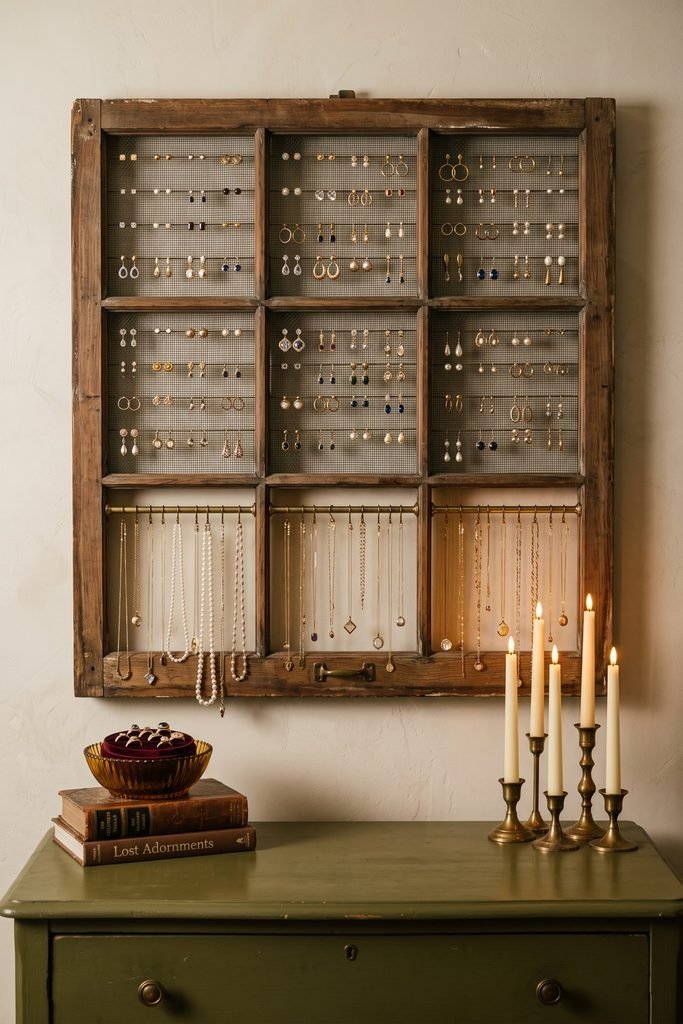
The contrast does much of the decorating work: weathered walnut or distressed cream gives the frame history, while polished metal and gemstones catch the light. A narrow dresser below can hold one velvet ring cup, a few old books, and flameless ivory tapers.
Before turning reclaimed material into a vintage wood frame jewelry organizer, inspect it, clean it, and smooth any splinters. Fold or cover every wire edge, secure the frame properly, and use LED candles instead of an open flame near hanging jewelry, wood, and fabric.
Create a Linen Jewelry Mood Board Above the Vanity
A linen-covered board offers a softer alternative to metal mesh and hard rails. Oatmeal fabric creates a quiet field for gold, pearl, blush, and sage accents, so even a mixed collection feels connected. Arrange earrings in tidy rows across the upper section, reserve the middle for studs and small pockets, and let necklaces fall freely from hooks in the lower half.
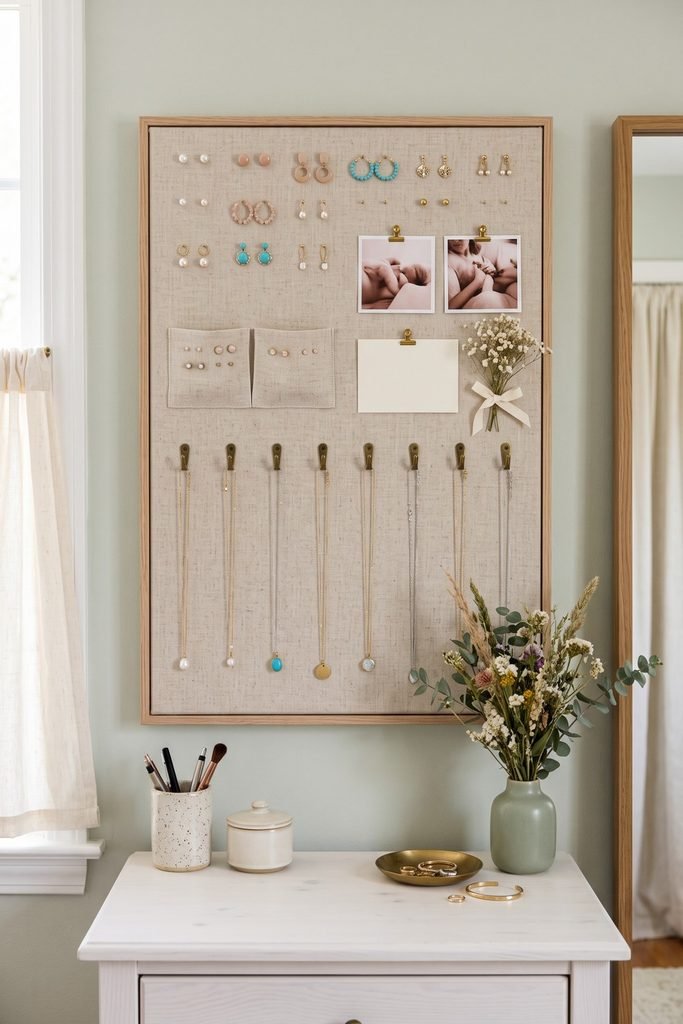
Two photographs, one note, and a few dried stems are enough to give the board personal character. Leave visible linen between them so the jewelry and keepsakes remain easy to appreciate.
This aesthetic DIY jewelry organizer is especially useful when the vanity needs both storage and bedroom decor in one compact zone. Choose padded pins or smooth hooks, mount the board for its actual loaded weight, and keep it away from strong sun or humid areas that are unsuitable for the jewelry.
Add a Slim Shelf-and-Rail Necklace Station
A narrow shelf with hooks beneath it can fit beside a dresser, behind a door, or along a short stretch of wall. The shelf supplies one strong horizontal line, while hanging chains create a lighter vertical rhythm underneath. Warm white paint, pale wood, and brass hardware keep the structure visually quiet enough for the jewelry to remain the focus.
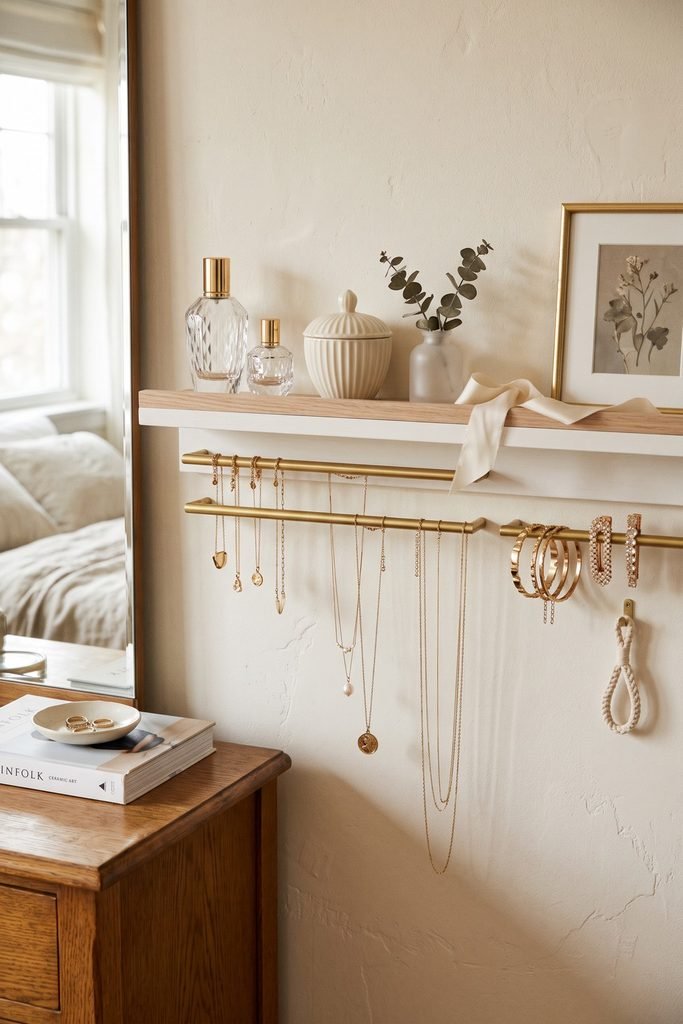
When deciding how to organize necklaces, measure the longest one before placing the lowest rail. Put shorter chains to one side, medium lengths through the center, and the longest pieces where they have a clear drop. This makes pendants easier to see and reduces overlap. Group bracelets and clips separately.
Keep the top styling spare—perhaps two perfume bottles and a lidded jar—and set every bottle well back from the edge. For a secure white wooden jewelry rack, fasten both shelf and rails according to the wall type and hardware instructions, and avoid hooks with sharp or snag-prone ends.
Find the Slim Wall Components
A narrow shelf and a consistent row of brass hooks can reproduce the light, orderly structure while leaving the necklaces as the main decorative layer.
Hang Necklaces from a Backlit Driftwood Branch
A driftwood branch beside a round illuminated mirror creates an organic counterpoint to the mirror’s clean geometry. The branch should cross only a small part of the mirror so the reflection remains useful. Its irregular silhouette then reads clearly against the soft halo of light, and fine chains gain enough contrast to be seen individually.
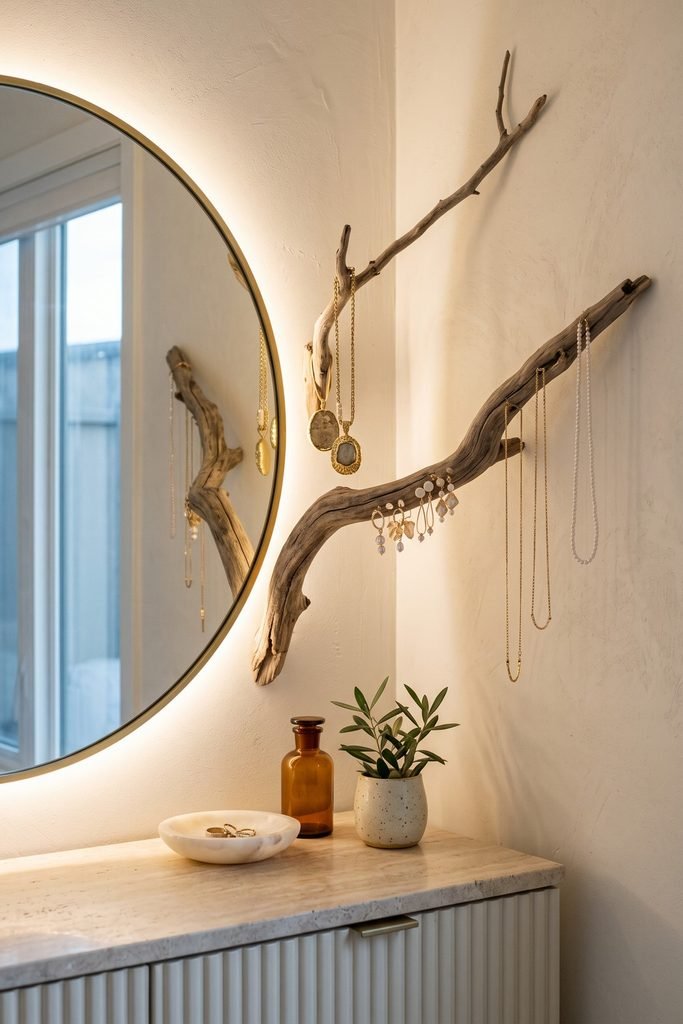
Two branch levels often work better than one heavy piece. Use stronger lower sections for substantial necklaces and finer upper twigs for light chains or earrings. Equal hook spacing brings order to the natural shape and prevents a dense curtain.
Select wood that is fully dry and structurally sound, then clean, sand, and seal it before adding smooth hooks. Hidden brackets should support the branch at strong points, with heavier jewelry kept near those supports. The result is both necklace storage and sculptural wall art, without asking the vanity surface to carry another organizer.
Gild Natural Branches into a Jewelry Wall Sculpture
Where driftwood feels quiet and coastal, an antique-gold finish turns the same natural form into a statement. Mount one broad sweeping branch above a smaller companion so the pair fills the wall without becoming a single heavy mass. The larger branch carries the longest necklaces; earrings and lighter pieces can sit near the finer twigs below.
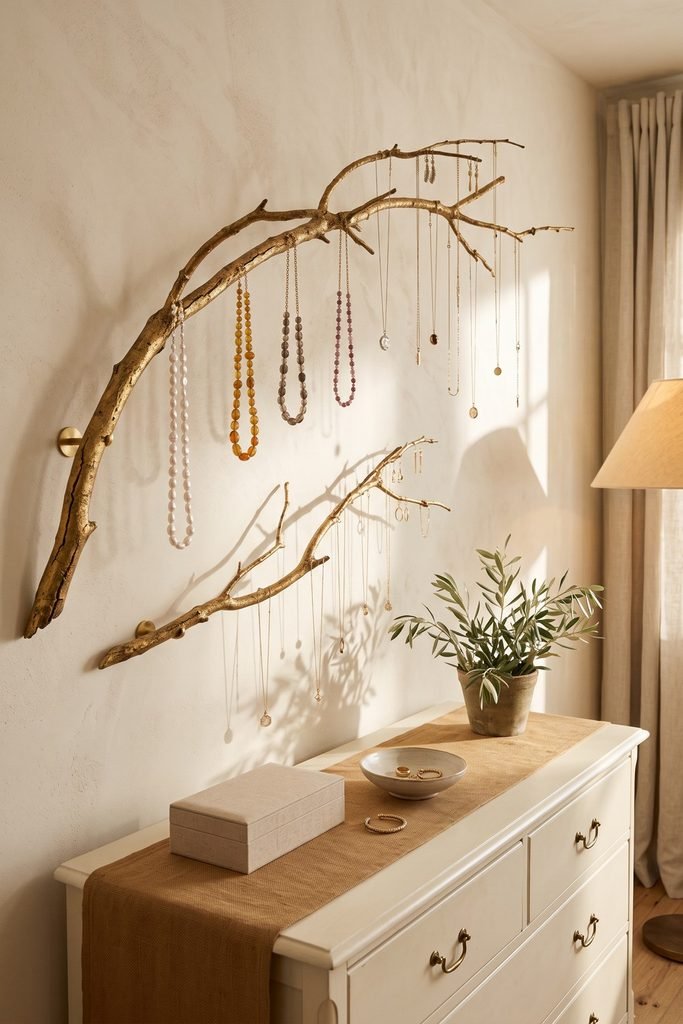
A cream wall and ivory dresser give metallic branches breathing room. Because the limbs are irregular, disciplined intervals between colorful chains make the composition look deliberate.
Prepare every contact point until it is smooth, and choose a finish suitable for the branch material. Plan the arrangement on the floor before mounting it, then attach it to appropriate structural support and keep heavier pieces near the brackets. Place this jewelry wall sculpture over a dresser rather than above a bed or chair, where a failed fixing would pose a greater risk.
Closet and Drawer Jewelry Organization
Closets and drawers are better suited to collections that need more capacity, less dust, or a calmer bedroom. These jewelry closet ideas move from a concealed full-height system to compact uses of doors and drawers, with each layout organized by jewelry type and frequency of use.
Hide a Full Jewelry Closet Behind a Mirror
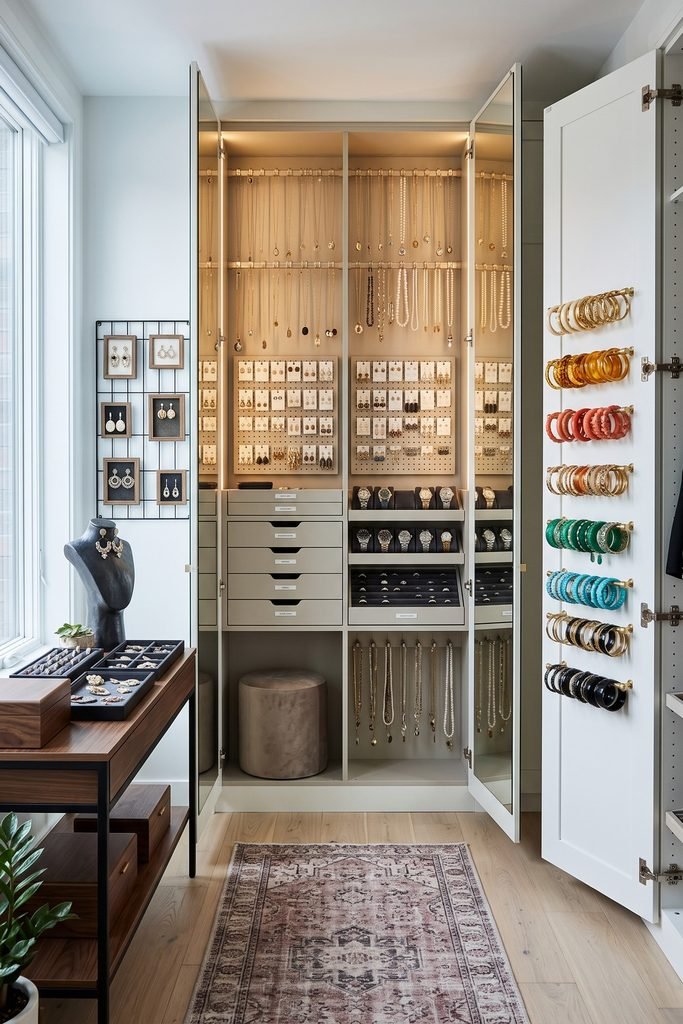
A full-length mirror can conceal a shallow cabinet without making the room look storage-heavy. When closed, the exterior remains simple. Open the door and the inside becomes a complete jewelry zone: necklace rails along the tall side sections, earring panels above, watch cushions and ring drawers near waist height, and a small lockable compartment for selected pieces.
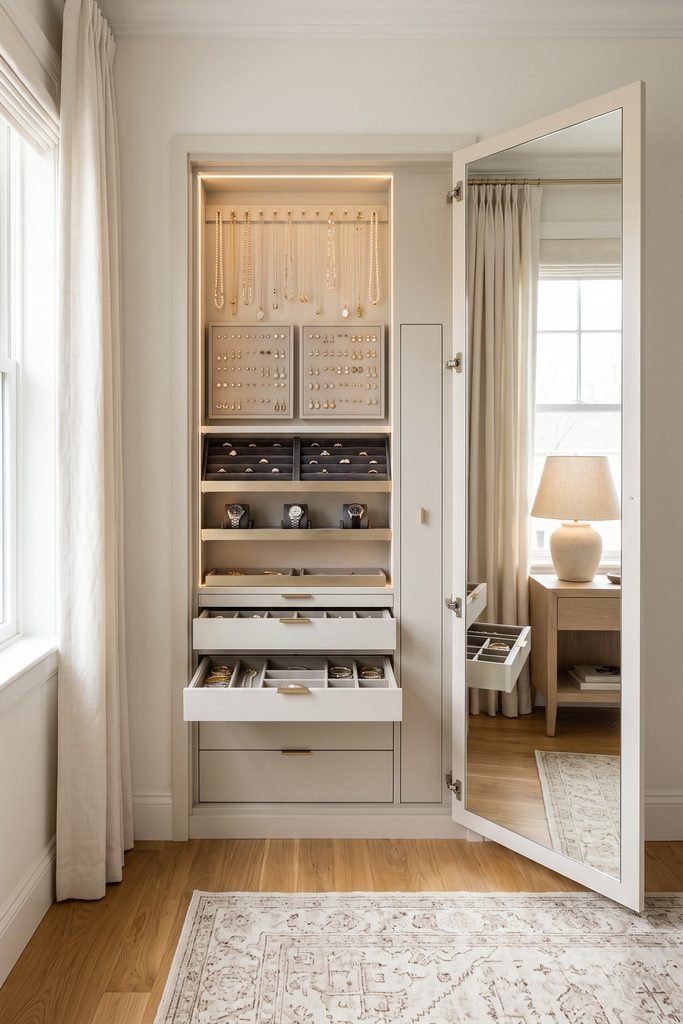
Symmetry helps a full cabinet feel calm. Repeat rail lengths on both sides, keep long chains at the perimeter, and use shallow lined drawers through the center. Put frequently worn pieces within easy reach and special-occasion jewelry higher or behind an interior door.
Before installation, check wall depth, door swing, hinge capacity, and access to nearby outlets. The cabinet must be anchored to suitable wall structure and installed according to its hardware instructions. This is also one of the few systems that can answer how to store watches properly within the article’s scope: give each watch its own cushion or divided lined space instead of mixing it with loose bracelets.
Explore Concealed Jewelry Storage
For a ready-made version of this high-capacity idea, focus on a mirror-front cabinet with dedicated interior zones rather than a general storage mirror.
Turn the Closet Door into a Color-Sorted Bangle Wall
The inside of a closet door can hold a surprisingly large bracelet collection when rods are arranged in parallel rows. A white background makes jewel tones easy to scan, and sorting bangles from warm colors through cool colors turns dense storage into a strong repeated pattern. Black, pearl, and metallic pieces can punctuate the sequence rather than forming a separate visual block.
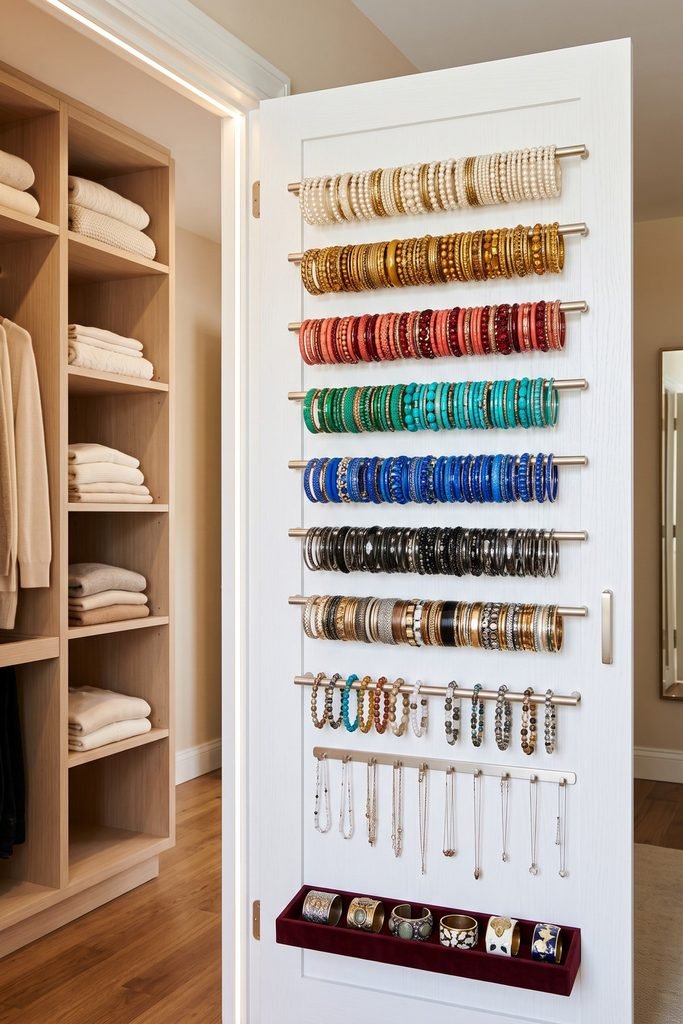
Open-ended rods make bangles easier to remove, but each still needs a secure stop. Keep rigid bangles together, flexible bracelets on another rail, and only short necklaces on lower hooks. A shallow tray can collect wide cuffs.
Measure the door’s clearance before choosing hardware, and confirm that the hinges and door construction can support the proposed load. A DIY bangle organizer should remain stable through normal opening and closing; if the loaded door drags, twists, or strikes the frame, reduce the collection or choose a fixed wall system.
Style an Open Boutique Jewelry Station
An open station suits a collector who wants to see most pieces at once. Combine a warm walnut or blackened-metal frame with a pale wall, then organize the contents in layers: a bust or sculptural stand at the top, earring grids at eye level, a necklace rail below, and shallow trays for rings and watches. Two lidded boxes can hold overflow without leaving every object exposed.
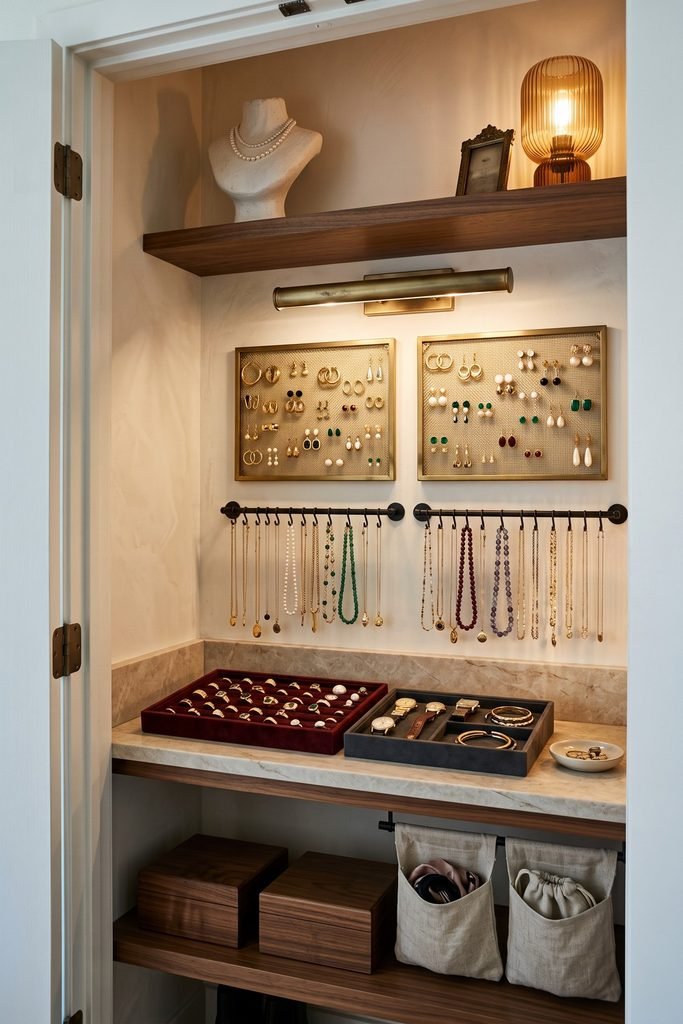
Separate the display, work surface, and backup storage so the station does not resemble shop inventory. This kind of costume jewelry organizer remains readable when space surrounds the central feature and the same wood and metal finishes repeat across its modules. Use brighter task lighting over trays than over the upper shelf, and keep fine pieces in smooth, lined storage.
Anchor any tall shelving or rail system and keep heavier boxes low. Favorites should be visible and easy to return, while delicate or rarely worn jewelry stays protected. That hierarchy makes a large collection faster to use and easier to maintain.
Line a Drawer with Vintage Teacup Compartments
Vintage teacups divide a shallow dresser drawer into small, visible homes for rings, studs, brooches, and bracelets. Their circular shapes soften the rectangular drawer grid, while a limited mix of white, pale blue, and aqua china prevents mismatched cups from looking random. A felt liner beneath them protects the drawer and helps keep the arrangement in place.
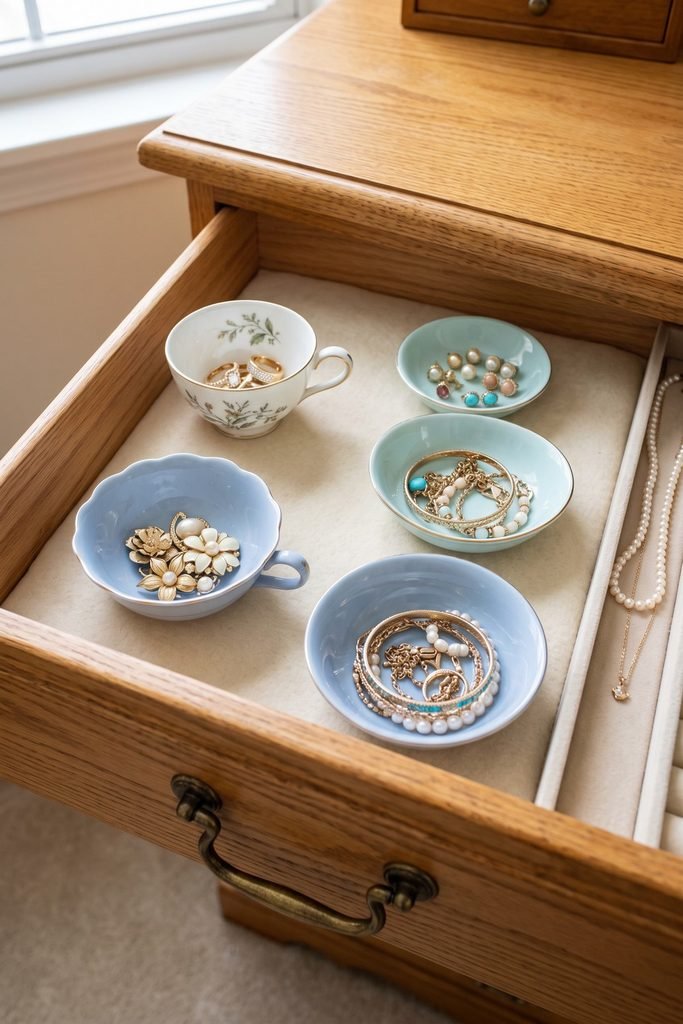
Assign one jewelry type to each cup. Rings and studs fit the smallest cups; wider forms can hold bracelets or brooches. Add a padded channel for a necklace or pearl strand that should not rub against harder pieces.
Measure both cup height and drawer clearance before committing to the layout. Use intact porcelain without chips, and stabilize the bases with a non-slip liner or an appropriate removable method. The finished drawer is a charming answer to small-space jewelry organization because it uses storage the dresser already provides.
Assemble the Drawer Compartments
Mix pale floral cups with a soft liner and one padded ring insert to keep the drawer charming while giving smaller pieces clearer separation.
Decorative Displays for Rings and Necklaces
Some jewelry earns a more theatrical setting. Frames, boxes, busts, and sculptural hands can make rings or statement necklaces part of the dresser composition, provided the display still separates fragile pieces and leaves enough room to use them comfortably.
Display Rings in a Baroque Velvet Frame
A carved frame filled with velvet rolls gives a ring collection the presence of a miniature gallery. Deep oxblood fabric absorbs light around the jewelry, so gold, silver, and gemstones appear brighter without needing a crowded arrangement. Antique gold suits a romantic vanity, while dark carved wood produces a moodier version of the same idea.
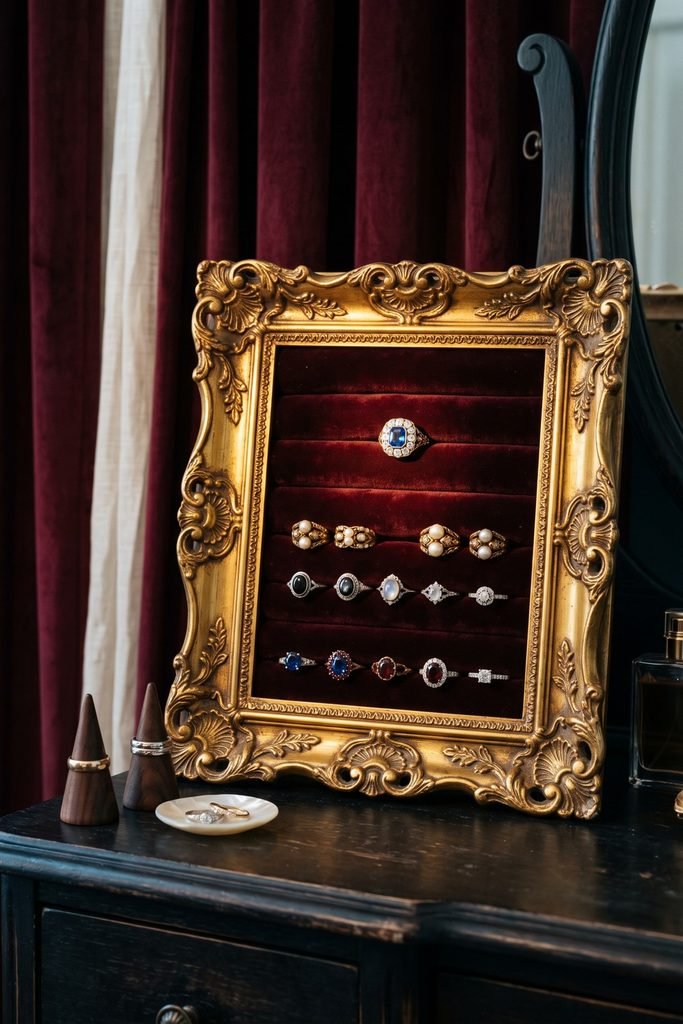
Repeated rows bring order to the sparkle. Sort rings by metal, color, or wear frequency, then reserve one upper niche for an heirloom or statement ring. Nearby cones can hold the daily rotation without competing with the frame.
For ring storage ideas that protect as well as present, use soft, colorfast lining and slots sized for the actual bands. Thick rings should slide in without pressure, and any foam or fabric should be checked for rough seams or dye transfer. Keep the frame away from direct sun so the display is not relying on a harsh, exposed location for its effect.
Keep Fine Pieces in an Ornate Velvet-Lined Jewelry Chest
An ornate chest is most successful when its exterior is expressive and its interior is calm. Carved gold details, a celestial motif, or muted lavender paint can give the box personality; inside, ivory velvet rolls and shallow divided drawers should make every piece easy to identify without digging.
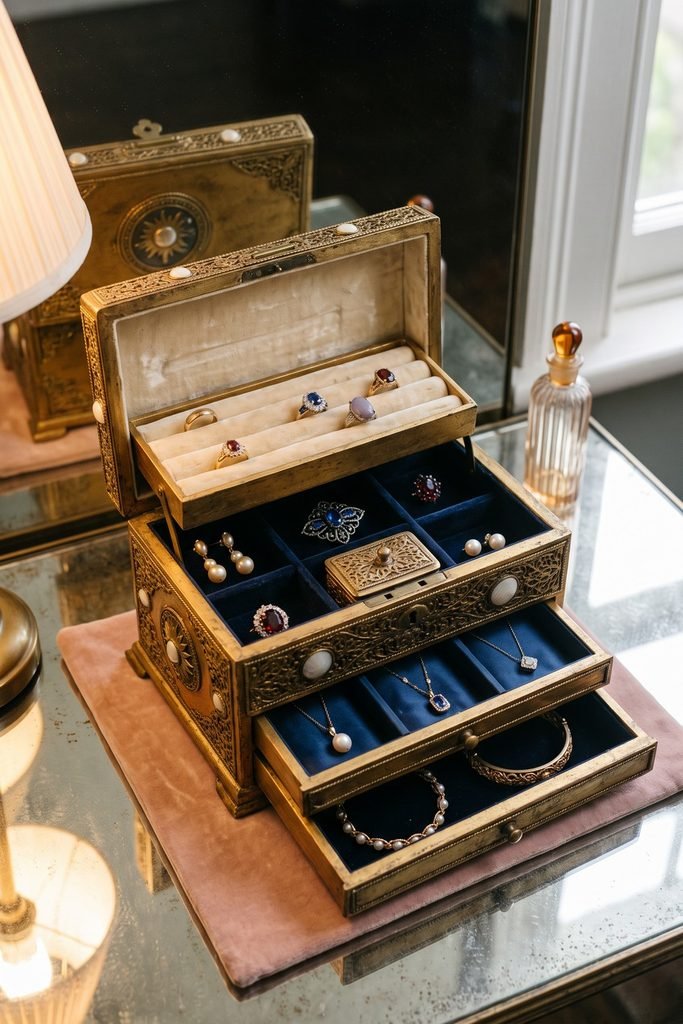
Use the upper level for rings and studs, a shallow drawer for necklaces, and a deeper section for bracelets. A lidded well can protect one sentimental piece. Keep most lining light so small jewelry is easy to find.
This is the strongest option among the unusual jewelry boxes for fine or occasional pieces because it combines separation with covered storage. Do not overfill the compartments or let harder pieces rub against pearls and delicate finishes. Keep the chest away from direct sunlight and heat, and treat anti-tarnish inserts as product-specific accessories rather than a guarantee that jewelry will never tarnish.
Choose Protective Statement Storage
Look for a decorative chest with real divided storage inside, then add smaller soft holders only where the collection needs more separation.
Layer Statement Necklaces on a Classical Bust
A chalk-white bust gives dark chains, pearls, antique gold, and colored stones a clear background. Layer the necklaces by length: a short collar near the top, medium pendants across the center, and the longest strands below. The descending arrangement lets each shape remain visible and keeps the display from becoming a knot of competing focal points.
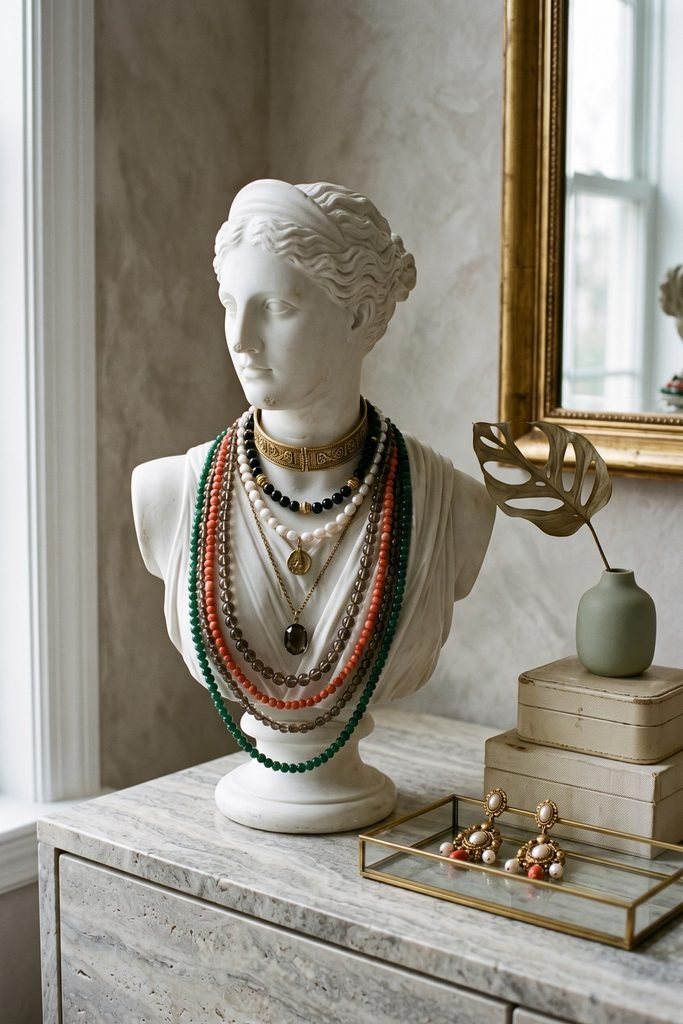
Set the bust slightly off-center on a marble or pale wood dresser. A glass-and-brass tray can hold one earring pair, while a restrained box stack balances the opposite side. Empty surface keeps the sculptural outline legible.
Use a weighted, stable form and limit the number of strands it carries. This type of open necklace storage is most practical for frequently worn statement or costume pieces; delicate chains still need separation, and valuable jewelry may be better protected in a lined compartment when it is not being worn.
Use Sculptural Hands as a Jewelry Focal Point
Sculptural hands create movement that an ordinary stand cannot. One raised hand can carry rings and a slim bracelet stack, while two lower hands support a single necklace draped between them. Keeping parts of the fingers and wrists visible is what preserves the gesture; covering every surface would reduce the forms to crowded hooks.
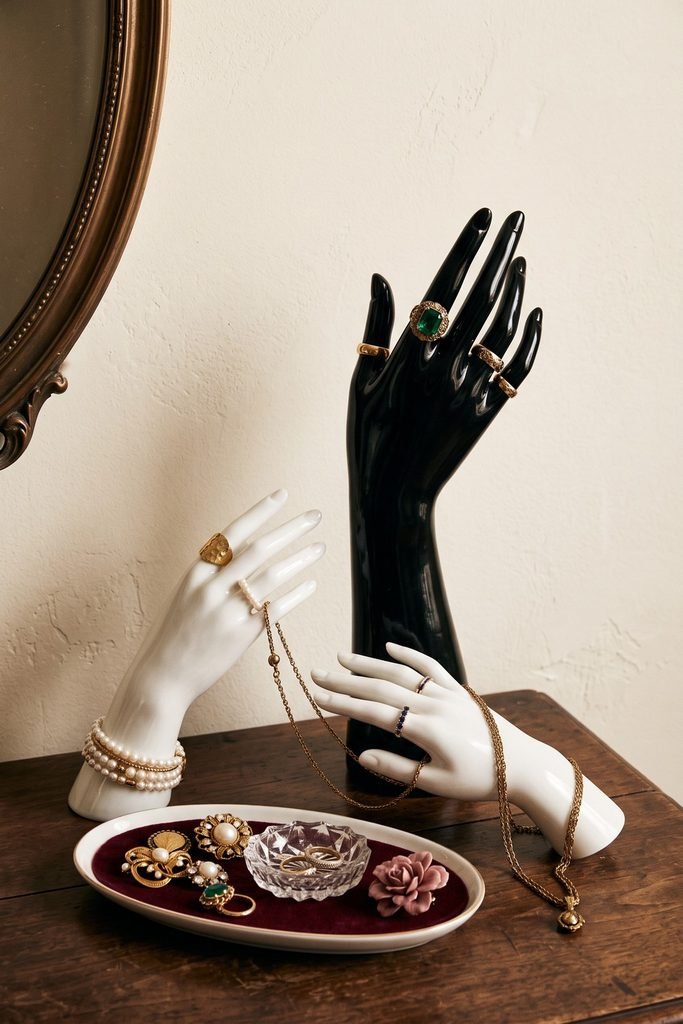
Glossy black and porcelain white create contrast without many colors. Gold chains and pearls bridge the finishes, while an oxblood or floral tray contains small pieces. Arrange three hands as a loose triangle rather than one dense cluster.
Wall-mounted forms need secure brackets, and tabletop versions need weighted bases. Smooth every place that touches jewelry, avoid loading individual fingers with heavy chains, and keep breakable ceramic hands back from the dresser edge. The result works best as a focused daily display, not storage for the entire collection.
Recreate the Sculptural Display
One expressive hand form and a contrasting tray are enough to build the composition without covering the dresser in multiple small organizers.
Tabletop and Upcycled Jewelry Organizers
Tabletop storage is easy to move and can bring character to a dresser without drilling into the wall. Natural branches, vintage glass, bottles, and even a carefully prepared kitchen object can become useful organizers. If transforming secondhand finds is your favorite part, these apartment DIY projects offer more small-space inspiration.
Build a Freestanding Natural-Branch Jewelry Tree
A freestanding branch tree brings vertical storage to a dresser while preserving the irregular beauty of natural wood. Set a fully dried branch into a heavy metal or stone base, then assign the stronger upper limbs to long necklaces, a smooth lower rod to bangles, and smaller twigs to lightweight earrings. Two shell or stone dishes at the base can hold rings.
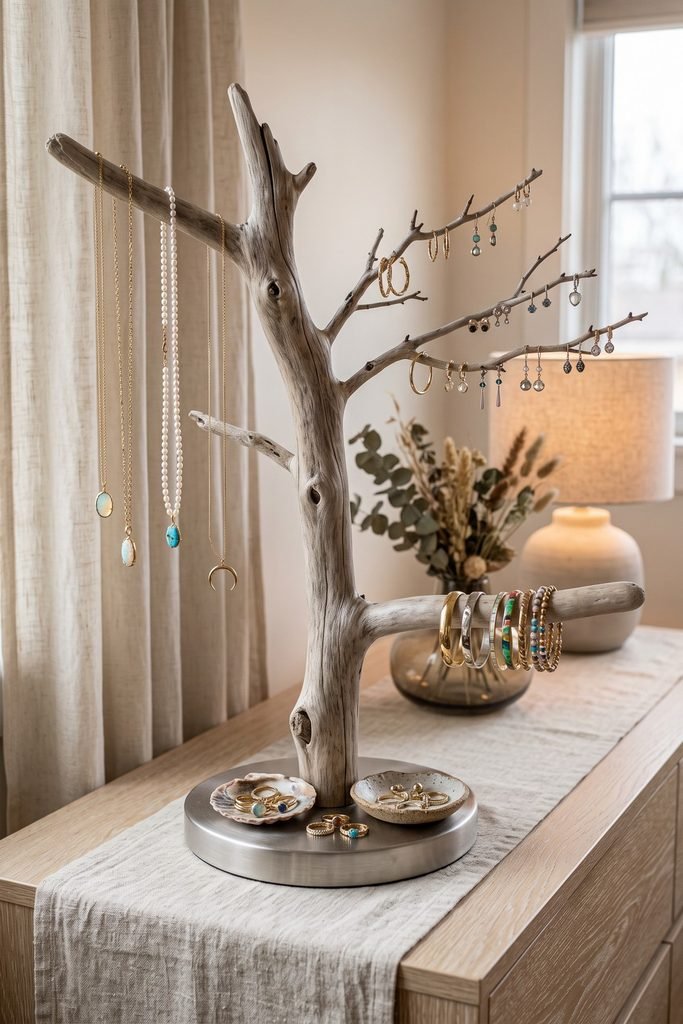
Contrast the base with the wood: weathered gray over brushed silver feels airy, while warmer driftwood with brass creates a vintage mood. Keep the wall behind it clear so the outline and chains remain readable.
Clean, sand, and seal the wood, remove sharp twigs, and add smooth hooks only where the branch can support them. Apply felt beneath the base and test the organizer with the intended jewelry before placing it near an edge. Balanced weight matters as much as the styling, especially when long pieces are removed from only one side.
Style a Tiered Glass-and-Porcelain Vanity Station
A tiered stand can organize the pieces you wear most without turning the dresser into a row of small dishes. Start with the broadest, heaviest tier at the bottom, then let each level become visually lighter. Cut glass and warm white porcelain reflect jewelry differently—the glass catches metal and gemstones, while the porcelain gives darker pieces a calm background.
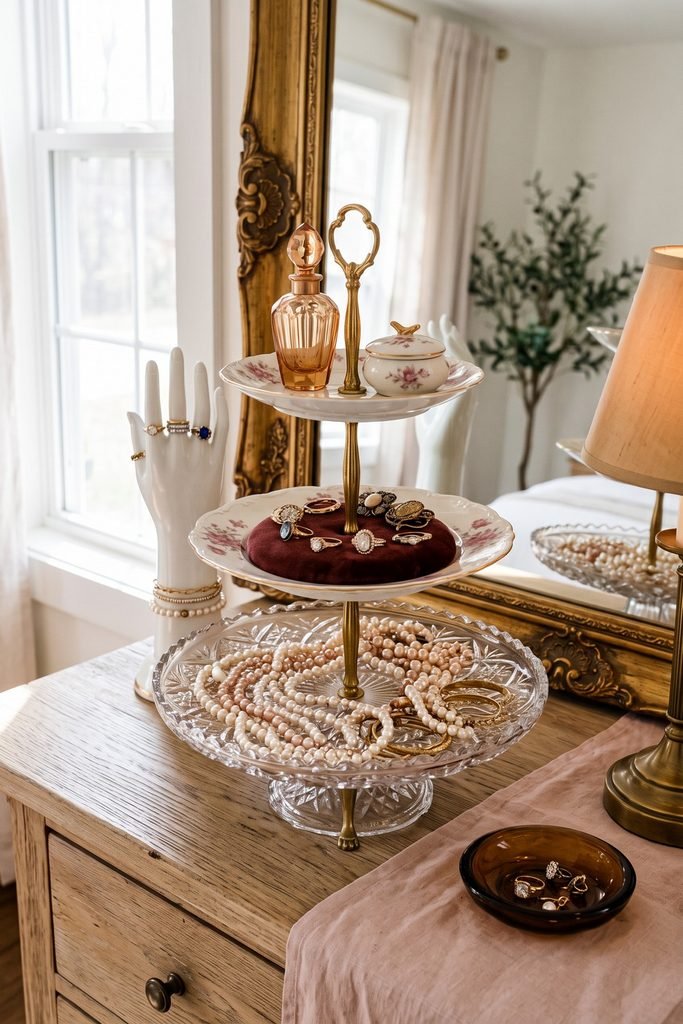
Keep one category on each level: bracelets and pearls below, rings and brooches in the middle, and a lidded box or perfume bottle on top. A porcelain hand may hold the day’s rings, while a mirror softly repeats the sparkle.
Choose a wide, stable base and secure any components that were assembled as a DIY project. Avoid crowding glass edges, set perfume upright, and keep the station away from heavy traffic. This gives vanity trays for a dresser more structure than a single catchall while retaining their decorative quality.
Build the Tiered Vanity Mix
Combine a clear tiered stand with a few pale porcelain pieces so reflections add sparkle without making the daily jewelry arrangement feel crowded.
Stack Bangles on Bottles and Boutique-Style Dowels
Bracelets create a satisfying pattern when their circular shapes repeat across horizontal dowels. Three smooth wood bars provide most of the capacity, while two heavy glass bottles at the sides can hold smaller bangle sets. The combination of horizontal and vertical storage keeps the display from looking like one long, overloaded rail.
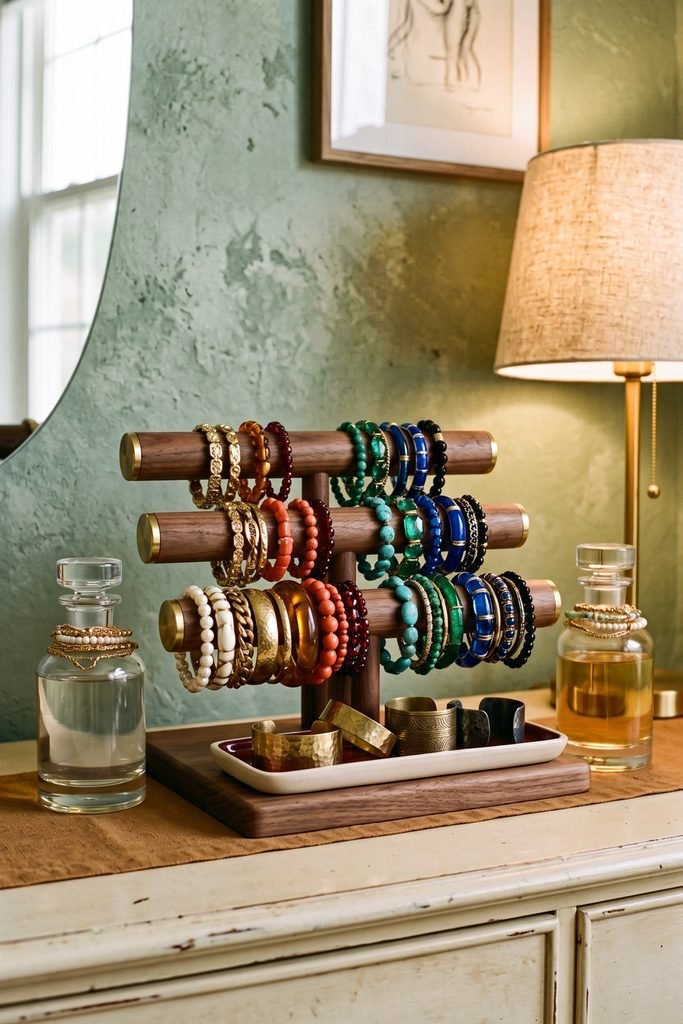
Arrange the collection from ivory and gold through amber, turquoise, coral, and black. Color order makes a dense group easier to scan. Keep everyday bangles on the front dowel, delicate sets on separate bottles, and wide cuffs in a shallow tray.
A DIY bangle organizer must be stable before it is decorative. Cap both ends of every dowel, use bottles with broad weighted bases, and never stack bracelets above a height where the bottle becomes top-heavy. Keep glass away from the dresser edge and test the base as pieces are removed from one side.
Turn a Vintage Grater into an Earring Tower
A box grater can become a compact four-sided earring organizer because its different perforations already suit different findings. Small openings hold studs, larger holes accept hooks, and one face can display a few brooches. Wrapping a pearl strand loosely around the handle adds a finishing detail without hiding the useful structure.
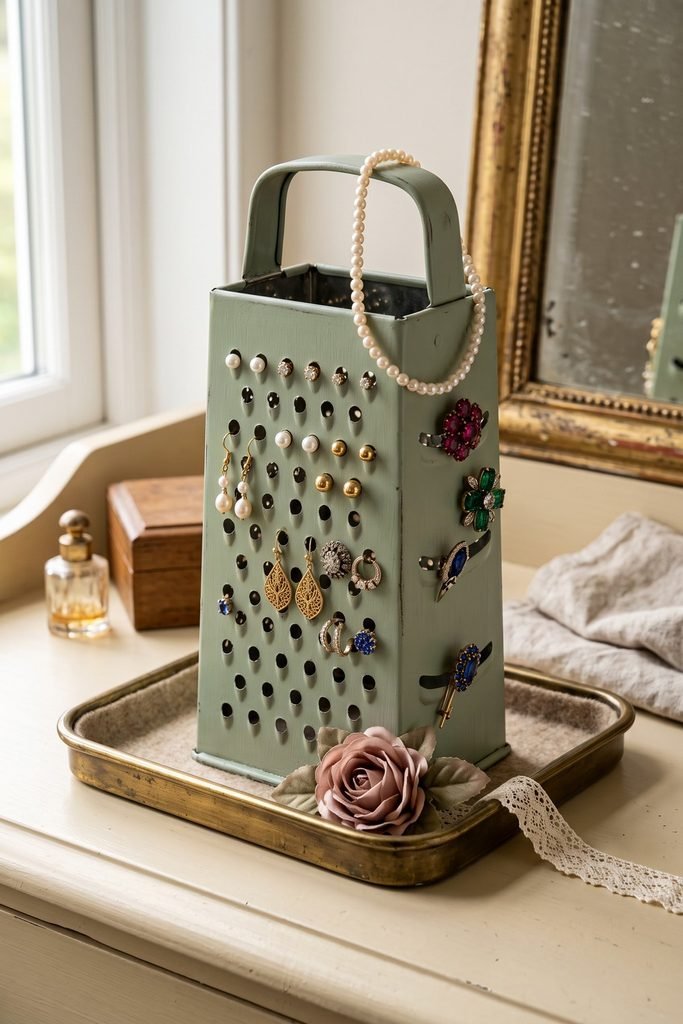
Brushed metal creates an industrial version, while muted sage feels cottage-vintage. Let the earrings supply most of the color and add only one soft accent. A felt-lined tray grounds the shape and protects the dresser.
Inspect the object closely before using it. A rusty or sharp grater should not go directly onto the vanity: rough edges need to be filed or securely covered, the base must be stabilized, and any applied metal finish should be used according to its instructions. Once those practical issues are resolved, this clever earring storage idea uses almost no drawer or wall space.
Jewelry Storage Questions
Should fine jewelry be displayed openly or stored in a closed box?
Separate, lined compartments or individual pouches are generally the more protective choice for fine, delicate, pearl, plated, scratch-prone, or occasional pieces. Open displays are better reserved for jewelry you wear frequently and can monitor, especially sturdy statement or costume pieces. Whatever the format, avoid direct sunlight and heat, and follow care guidance for the specific materials in your collection.
How do you keep necklaces from tangling in storage?
Give each necklace its own hook, slot, or pouch. When hanging chains, leave space between them and organize them by length so pendants and clasps do not overlap. Delicate chains that are not suitable for open display can lie separately in lined compartments rather than sharing one loose drawer section.
What is the best jewelry storage for a small bedroom?
The best choice depends on the collection and whether you can mount hardware. A slim shelf-and-rail system uses a narrow wall, closet-door rods work well for bracelets, and a mirror cabinet adds concealed capacity without separate floor furniture. If drilling is not appropriate, a divided dresser drawer or stable tabletop tree keeps the footprint small.
Jewelry storage works best when it follows your routine. Choose one zone based on the pieces you wear most, give delicate items the protection they need, and leave enough space to return everything without rearranging the whole collection. After living with the setup for a week, adjust the categories or spacing that slow you down; an organizer becomes useful when putting jewelry away feels as natural as taking it out.