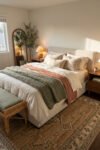





16 Cozy Bedroom Ideas for Couples to Create a Warm Shared Retreat
A bedroom shared by two people has to do more than look good. It needs to hold two routines, two sets of belongings, and often two different decorating instincts without feeling divided down the middle. The strongest cozy bedroom ideas for couples solve both sides of that equation: they give the room emotional warmth while making everyday use feel comfortable for both people.
- Quick Takeaways
- How to Make a Cozy Shared Bedroom Work for Two
- Start With Shared Function
- Give Each Partner a Different Bedside Zone
- Fit a Desk and Low Storage Into a Compact Shared Bedroom
- Pair Mustard and Ink Blue Around a Storage Bed
- Build a Blue Floral Bedroom With Bookshelves and a Window Nook
- Use Color to Build a Cozy Shared Mood
- Style Teal, Ivory, and Brass With Balanced Bedside Details
- Layer Plum, Blush, and Burgundy for Grown-Up Romance
- Mix Sage, Blush, Walnut, and a Persian-Style Rug
- Warm Ivory Bedding With Burnt Orange and Botanical Art
- Layer Texture and Romantic Character
- Layer Ivory Bedding With an Oversized Taupe Knit
- Set a Carved Walnut Bed Against a Soft Floral Mural
- Pair Blush Lace and Antique Ivory in a Romantic Canopy Bedroom
- Make the Bed Wall the Focal Point
- Use an Oversized Textile as the Headboard Wall
- Center a Black Channel Headboard Under a Backlit Mirror
- Drape Burgundy Fabric Overhead for a Dramatic Canopy
- Use Lighting to Shape Intimacy
- Create a Fairy-Light Canopy With Cream Knits and Greenery
- Create an Amber Movie-Night Bedroom With a Projector
- Cozy Bedroom Ideas for Couples: FAQs
- How can couples decorate a bedroom when they have different styles?
- How do you make a small bedroom comfortable for two people?
- Do bedside tables need to match in a couple’s bedroom?
- How can bedroom lighting feel romantic and still be practical?
- Create a Bedroom That Feels Like Both of You
- You May Also Like
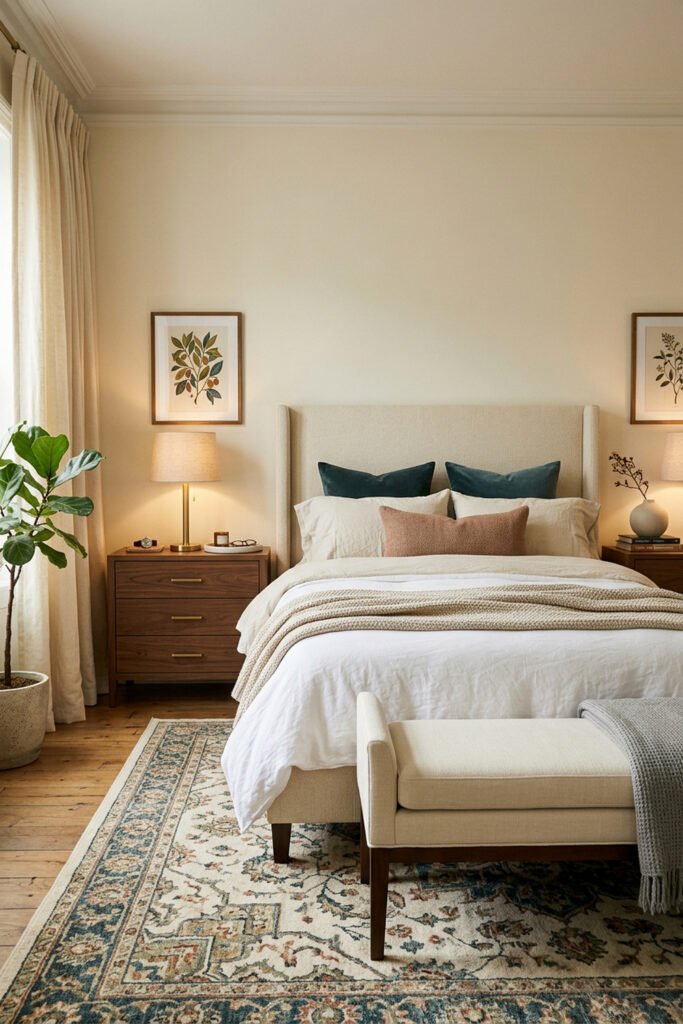
The ideas below move from practical layouts and bedside planning into color, texture, focal walls, and lighting. Some are calm and neutral; others lean romantic, collected, or dramatic. What connects them is a clear visual relationship between the major pieces, so the room feels designed as a whole rather than assembled one object at a time.
Quick Takeaways
- Decide what each person needs beside the bed before choosing matching furniture.
- Repeat a small palette or material family to unite different personal styles.
- Texture can make a neutral bedroom feel rich without adding more color.
- Let one feature lead, such as a headboard, rug, textile wall, canopy, or mirror.
- Layer lighting for different activities instead of relying on one bright overhead fixture.
How to Make a Cozy Shared Bedroom Work for Two
Before choosing a palette, decide how the room needs to work at night and in the morning. One person may want drawers, charging space, and a task lamp, while the other needs room for books or a glass of water. Those differences can shape the furniture instead of being hidden after the room is decorated.
Storage deserves the same early attention. If closet space is tight, a storage bed, dresser, low bookcase, or built-in-style shelving can become part of the visual plan rather than an afterthought. In a compact shared bedroom, keep the main walking route around the bed as clear as the room allows and avoid placing frequently used drawers where another piece blocks them.
Finally, agree on a few elements that will belong to both people. A shared rug, repeated wood tone, wall color, headboard, or lighting temperature can connect very different bedside choices. That common thread is often more useful than making every nightstand, lamp, and pillow match.
Start With Shared Function
Give Each Partner a Different Bedside Zone
Matching nightstands can look orderly, but they are not automatically the best answer for two different routines. A more useful setup gives each person the surface and storage they actually need, then connects both sides through color, scale, and material.
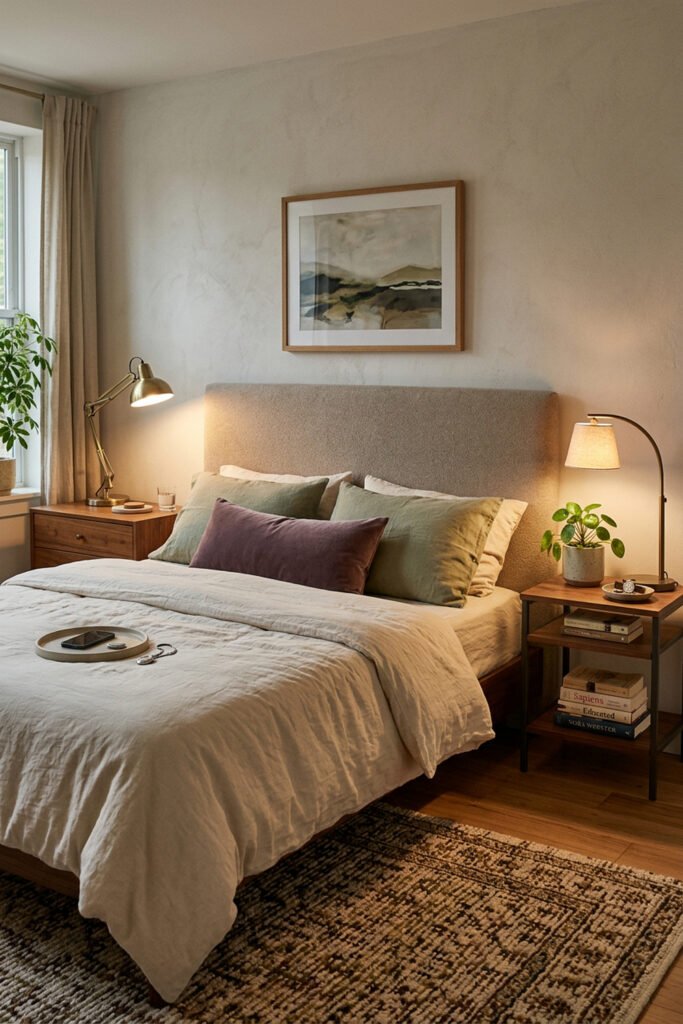
Picture an upholstered bed in warm ivory or mushroom with a walnut chest on one side and a slimmer table on the other. The chest can handle drawers and a charging tray; the lighter table can hold books, a plant, and a reading lamp. Keep the lamps in the same warm light family even if their shapes differ, and repeat one finish, such as aged brass, across both sides.
A rug spanning the bed area helps the two zones read as one composition. Shared artwork above the headboard does the same job vertically. This approach is especially useful when balancing two personal styles because the room can acknowledge difference without looking accidental. The goal is not perfect symmetry. It is comparable visual weight and equal usefulness.
Fit a Desk and Low Storage Into a Compact Shared Bedroom
When a bedroom also needs to function as a work or study space, the desk should feel like a defined zone rather than furniture squeezed into a leftover corner. Warm wood is especially useful here because it can repeat across a desk, bedside table, and low bookcase, giving separate functions one common material language.
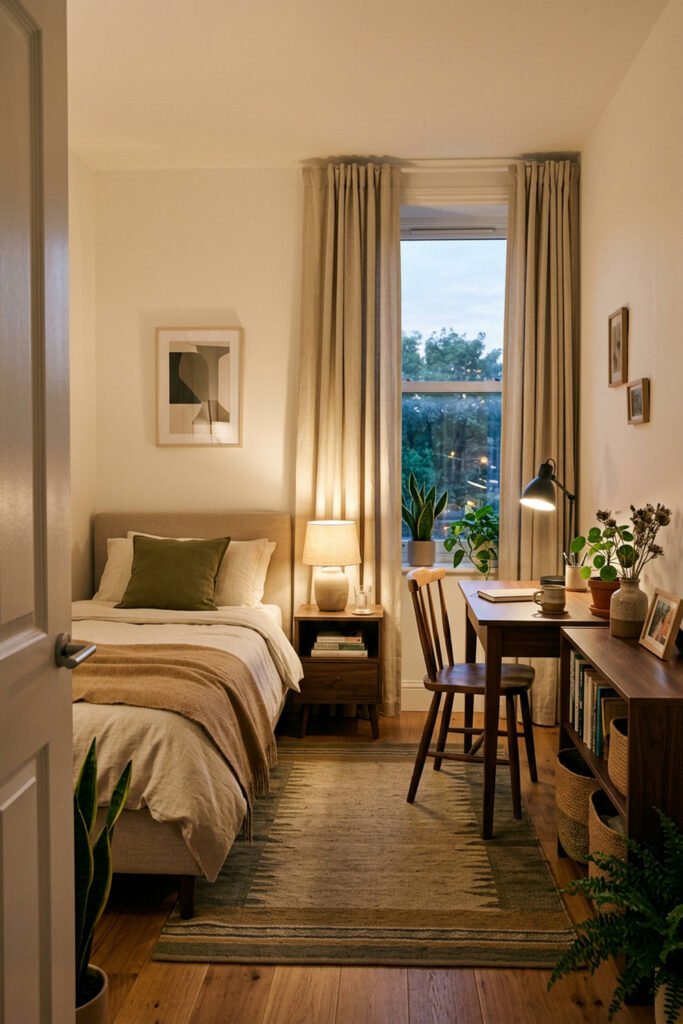
Keep the bed visually quieter with oatmeal, camel, cream, or muted olive bedding. Then let books, plants, and a patterned rug supply the lived-in detail. A low storage unit at the foot or side of the bed can hold books and baskets without creating the same visual wall as a tall cabinet.
Lighting helps separate activities. A focused desk lamp can serve work hours while shaded bedside lamps create a softer evening layer. If cords require an extension, do not hide it under a rug; the U.S. Consumer Product Safety Commission advises against running extension cords beneath carpets or rugs because trapped heat cannot dissipate properly. A room can feel richly layered while still keeping the walking route and electrical setup sensible.
Find the Functional Layers
For this compact setup, focus on smaller pieces that repeat the room’s warm materials while helping the desk and storage areas earn their space.
Pair Mustard and Ink Blue Around a Storage Bed
A storage bed does not have to look purely practical. Give it a strong color story and the drawers become part of a finished bedroom rather than the feature you are trying to disguise.
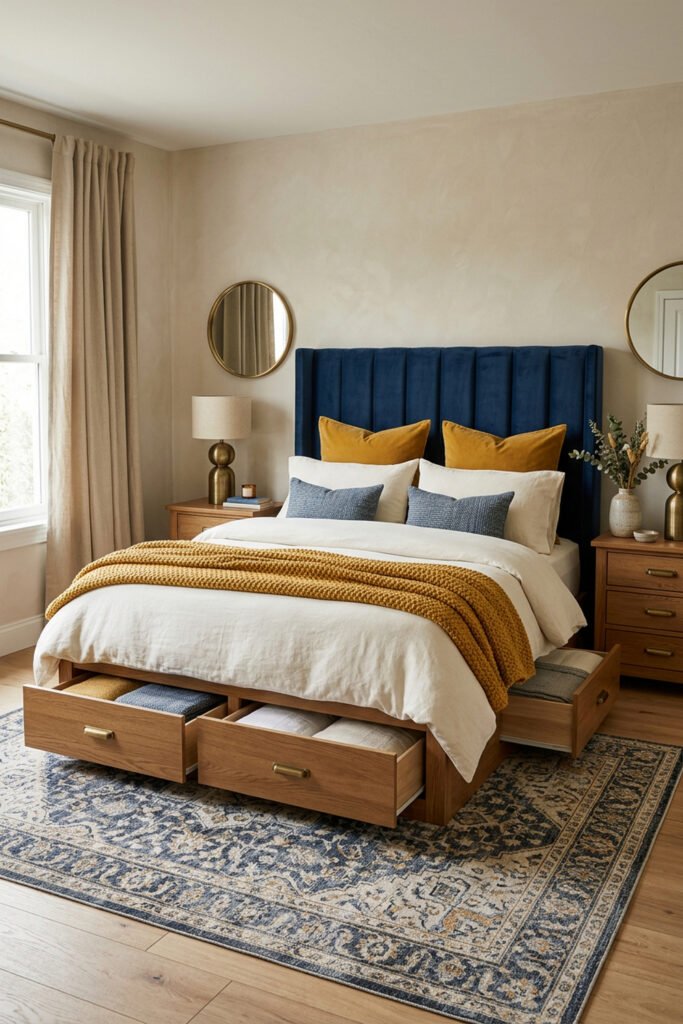
Mustard works well as the dominant warm accent because it carries enough saturation to stand up to an ink-blue or black headboard. Denim-blue patterned pillows can bridge the two extremes, while ivory sheets and duvet covers keep the center of the bed bright. Warm oak prevents the darker elements from becoming too severe, and small brass details echo mustard without adding another competing color.
Keep the palette in larger blocks: a mustard throw, two substantial pillows, a dark headboard, and one patterned rug are more controlled than many tiny accents scattered around the room. For couple bedroom storage, make sure the drawers you use most are on an accessible side of the bed rather than behind a bench or nightstand. The strongest version of this room feels bold first and practical second, even though both qualities are doing equal work.
Recreate the Mustard-and-Ink Palette
You can build most of this high-contrast color story through textiles and warm metal accents rather than replacing the room’s largest pieces.
Build a Blue Floral Bedroom With Bookshelves and a Window Nook
Blue florals can become sweeter than intended when every surface carries pattern. A stronger shared bedroom uses the flowers against large quiet areas: solid blue paneling or a substantial upholstered headboard, pale cabinetry, and simple window treatments.
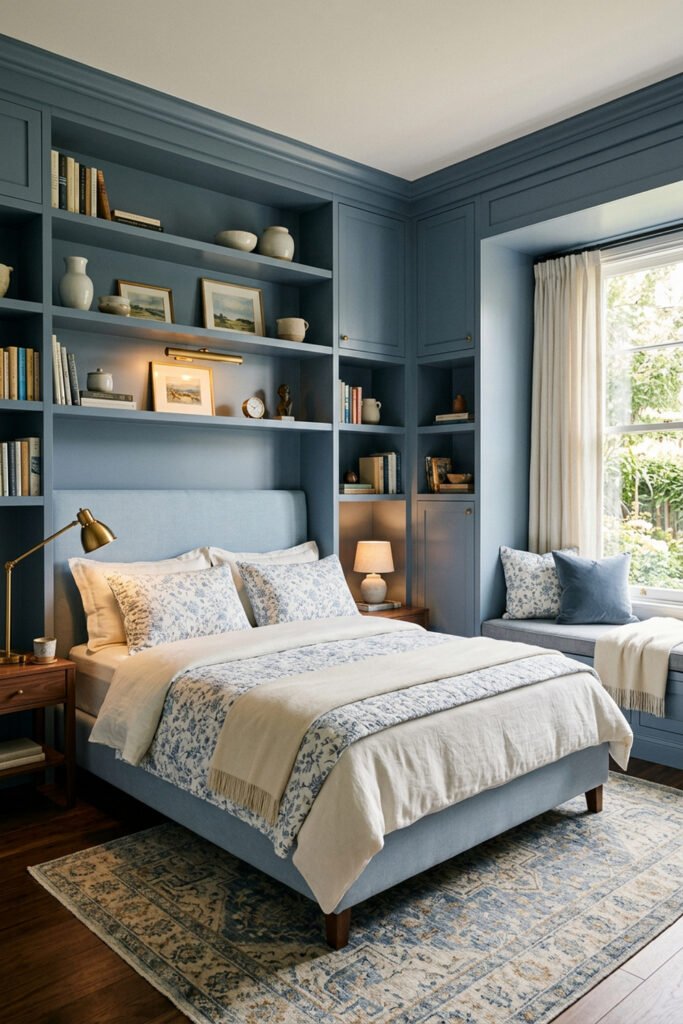
Built-in shelving or freestanding bookcases can frame the bed and give both partners space for books, closed baskets, or personal objects. A window nook adds a second place to sit, read, or unwind without requiring a full lounge area. Repeat the blue from the bed wall in a rug or a few pillows so the color travels through the room instead of stopping behind the headboard.
The useful contrast is dark structure against light pattern. Slate or powder blue makes white-and-blue floral bedding feel crisp, while warm lamps and natural wood keep the scheme from reading cold. Where tall bookcases or dressers are used in homes with children, CPSC recommends securing top-heavy furniture according to the manufacturer’s instructions to reduce tip-over risk.
Use Color to Build a Cozy Shared Mood
Style Teal, Ivory, and Brass With Balanced Bedside Details
Teal brings depth quickly, so it works best when the rest of the bedroom gives it room to breathe. Let ivory bedding and a pale upholstered headboard occupy the largest visual area, then concentrate teal in velvet pillows, a throw, curtains, or the rug.
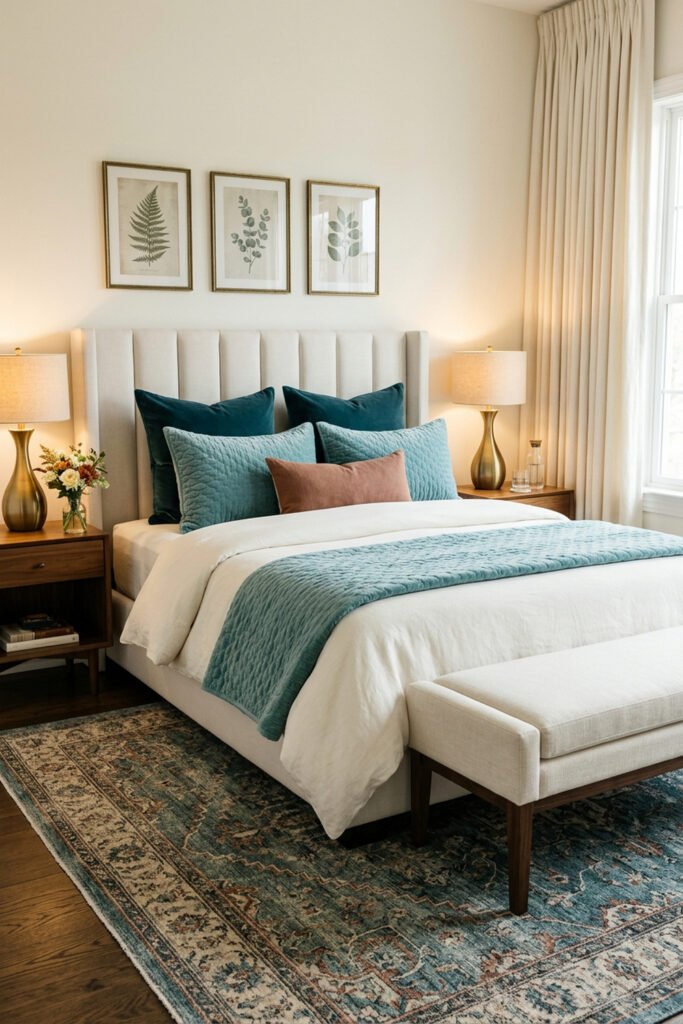
Brass is the bridge between the cool jewel tone and the warm side of the room. Lamp bases, picture frames, or slim furniture details add warmth without demanding another saturated color. A restrained rust or terracotta accent can deepen that relationship further, especially in artwork or one small textile.
For balanced bedside styling, both sides can share a similar rhythm without being exact duplicates. Comparable lamp heights, similar nightstand mass, and repeated finishes make the bed feel centered. A bench at the foot adds another pale surface and keeps the teal from becoming visually heavy. The appeal of this palette comes from contrast: crisp ivory makes teal look richer, while brass prevents the cool color from feeling detached from the rest of the room.
Build the Teal-and-Brass Layer
Keep ivory as the quiet foundation, then look for a few richer teal textiles and warm brass accents that carry the approved contrast.
Layer Plum, Blush, and Burgundy for Grown-Up Romance
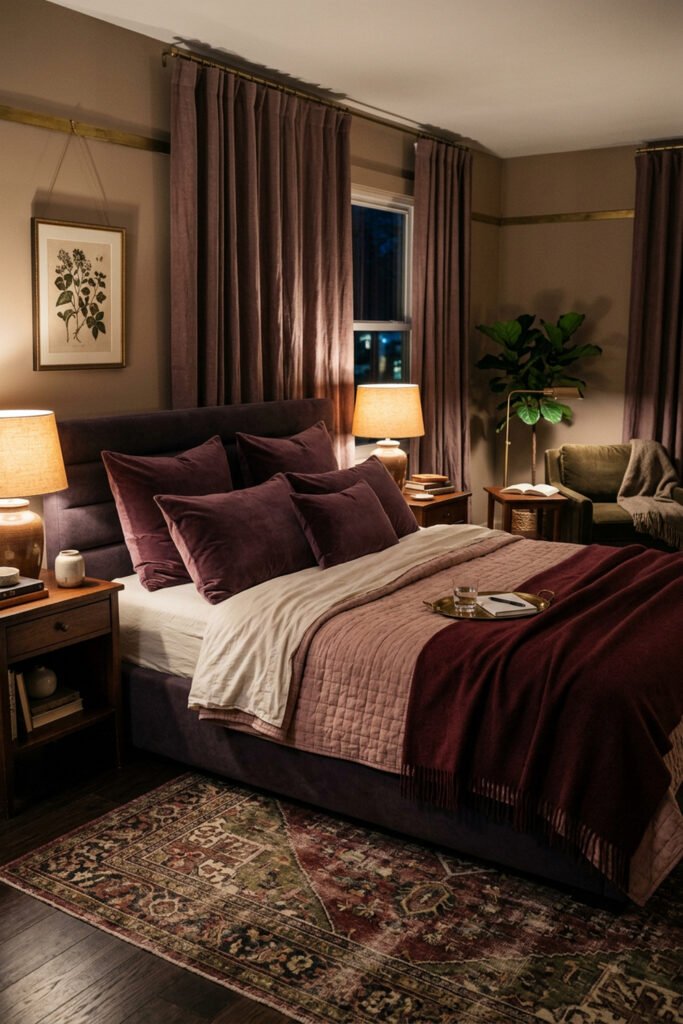
Blush becomes more complex when it sits beside deeper wine colors. Instead of filling the room with pale pink, use blush as the soft middle note between ivory bedding and a plum, burgundy, or charcoal anchor.
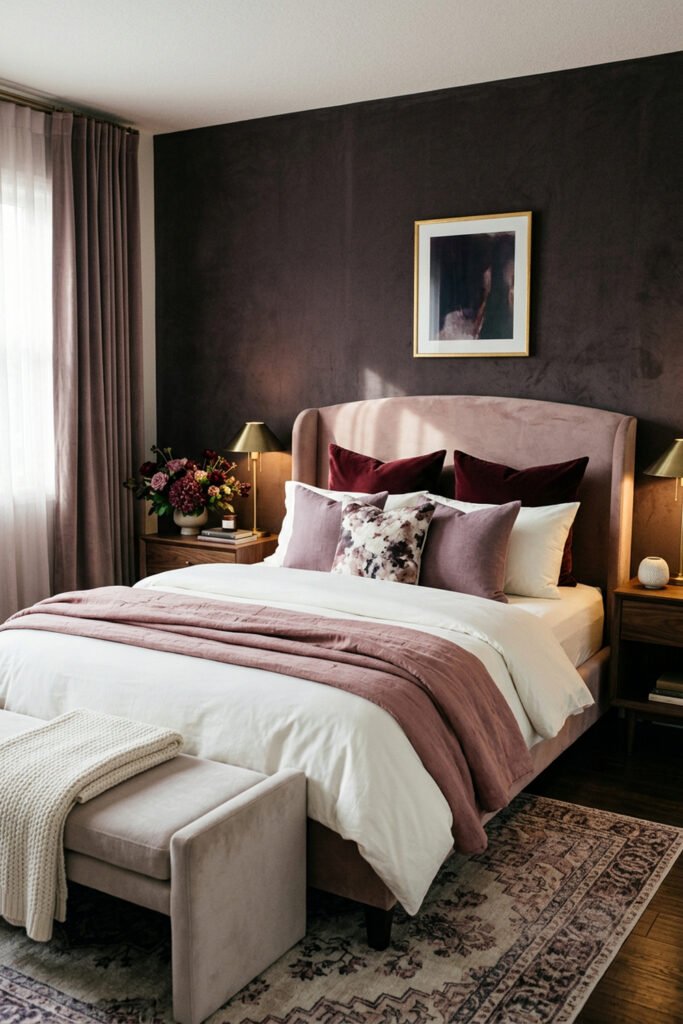
A deeper wall or headboard gives the composition weight. Burgundy velvet pillows can carry most of the saturated color, while dusty pink appears in a quilt, upholstered bench, or floral artwork. Ivory should remain visible in generous areas because it gives the darker reds space to register without turning the room into one continuous block of warm color.
Metallic details are strongest when they stay warm and muted. A gold-toned lamp base or picture frame is enough to catch evening light without competing with the textiles. Floral pattern can enter through one or two pillows, but the larger bedding should stay relatively calm. The result is romantic without being fragile: soft surfaces, strong color depth, and a clear contrast between pale bedding and darker surrounding tones.
Mix Sage, Blush, Walnut, and a Persian-Style Rug
A collected bedroom is easier to share when the pieces do not need to come from the same furniture set. Walnut furniture, muted sage, dusty blush, and a Persian-style rug can give mismatched pieces a common visual home.
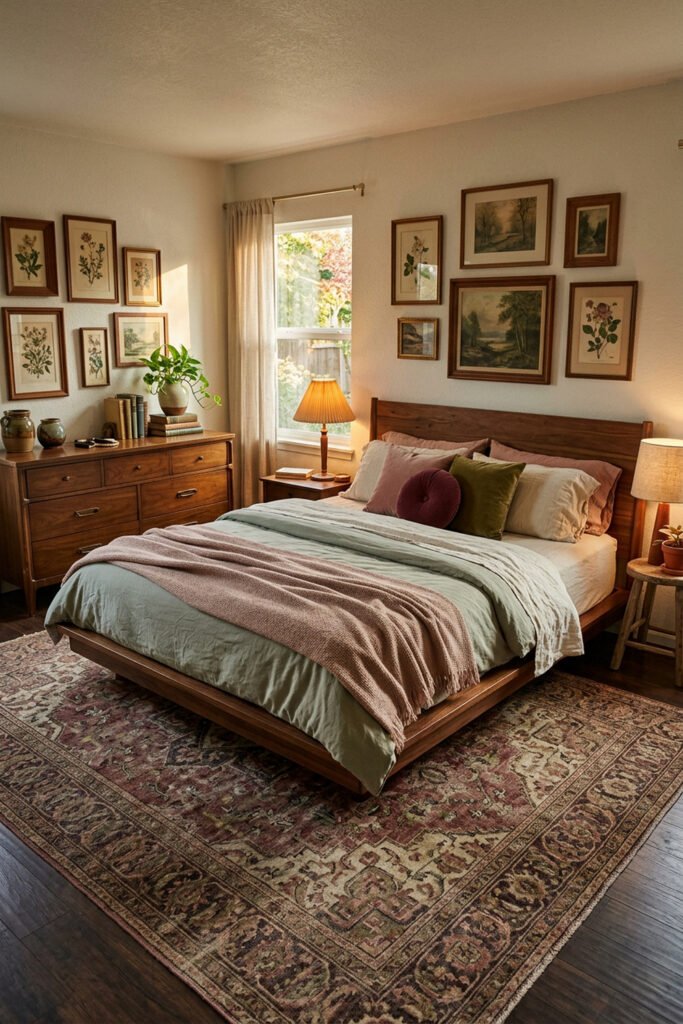
Here, the rug does more than fill the floor. Its burgundy, olive, cream, or faded rose notes can repeat colors from the bedding and artwork, distributing the palette across the room. That makes a dark wood dresser feel connected to a softer blush duvet instead of standing apart from it.
Plants strengthen the sage side of the scheme without requiring more green fabric. A round plum or olive pillow can add one concentrated accent among larger rectangular pillows, while vintage-style artwork reinforces the room’s collected character. Keep some surfaces lightly styled so the room still has breathing space. This is a useful direction for couples who like different eras or aesthetics: rather than choosing one person’s style, agree on a palette and wood family that lets varied pieces coexist.
Find the Collected Details
A patterned rug can distribute the room’s muted colors, while sage textiles and botanical art reinforce the collected character without requiring matching furniture.
Warm Ivory Bedding With Burnt Orange and Botanical Art
Burnt orange has enough presence to change the temperature of an otherwise neutral bedroom. The most flexible way to use it is through textiles, where the color can be substantial without becoming permanent.
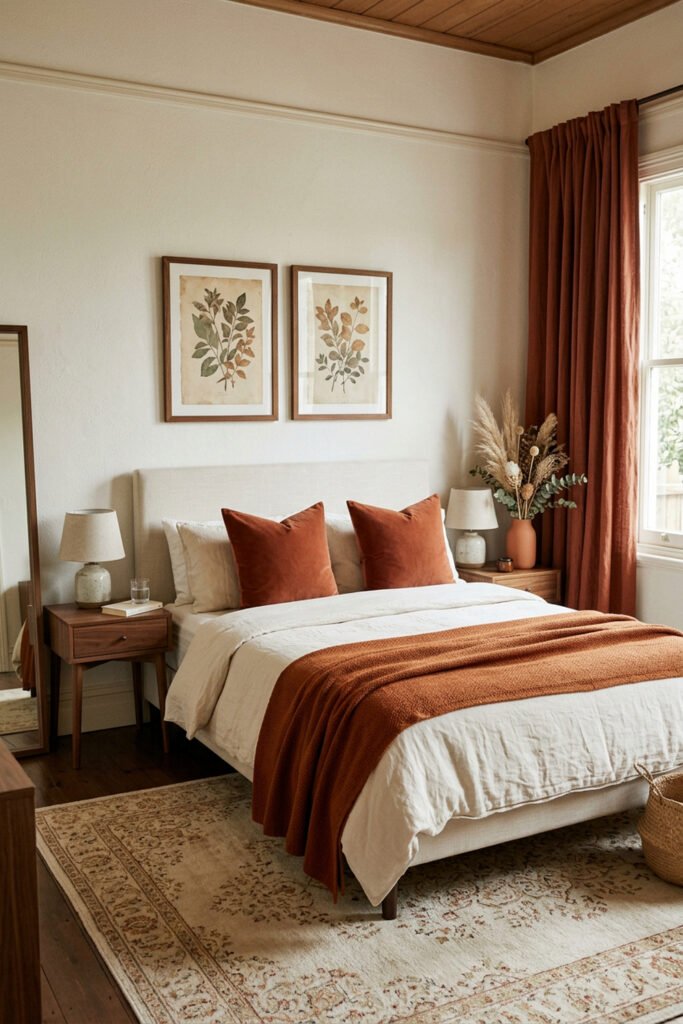
Keep the bed mostly ivory, then place rust or terracotta in a broad throw, a pair of pillows, or full-height curtains. Because the neutral field is large, those warm blocks look deliberate rather than scattered. Botanical art introduces green and brown in smaller amounts, giving the palette a natural counterpoint and keeping the room from becoming orange-on-cream only.
Warm wood reinforces the earthy side of the scheme, while pampas or dried branches can repeat the tan notes already present in the furniture. A rug with a small amount of rust below the bed extends the accent toward the floor. This is one of the easier warm cozy bedroom directions to adapt over time because the strongest color lives in changeable layers rather than in the bed frame or major case goods.
Layer Texture and Romantic Character
Layer Ivory Bedding With an Oversized Taupe Knit
A neutral bedroom needs enough difference between surfaces to keep the palette from flattening out. When the colors stay within ivory, mushroom, taupe, charcoal, and warm gray, texture becomes the main source of depth.
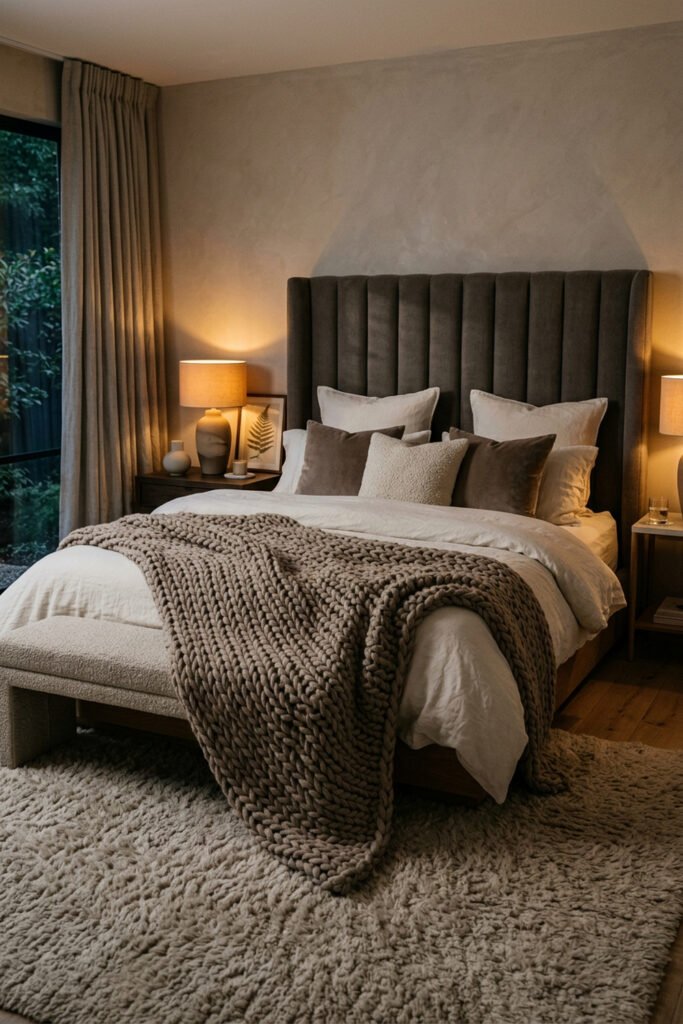
Use smooth or lightly crinkled white bedding as the base, then place an oversized chunky knit across it. The exaggerated weave creates shadow and dimension that a second flat blanket cannot. A tall charcoal or deep taupe headboard provides a structured backdrop, while a soft rug below the bed extends the tactile effect without adding another color family.
Keep the pillow arrangement generous but edited. Two or three larger pillows in slightly different textures often do more than a row of small decorative cushions. Warm bedside lamps are especially effective here because low light catches the knit, rug pile, and upholstery differently, making their surfaces more visible. Check the care instructions on heavy knits and plush textiles before buying them; laundering and seasonal storage needs vary considerably by product.
Build the Plush Neutral Texture
Here, the shopping value is almost entirely tactile: look for different weaves and pile depths within the same restrained ivory-and-taupe family.
Set a Carved Walnut Bed Against a Soft Floral Mural
A floral mural can dominate a bedroom, so it benefits from furniture with enough visual weight to hold its own. A carved walnut bed creates that anchor. The dark grain and substantial headboard give the painterly flowers structure rather than letting the wall treatment float behind pale bedding.
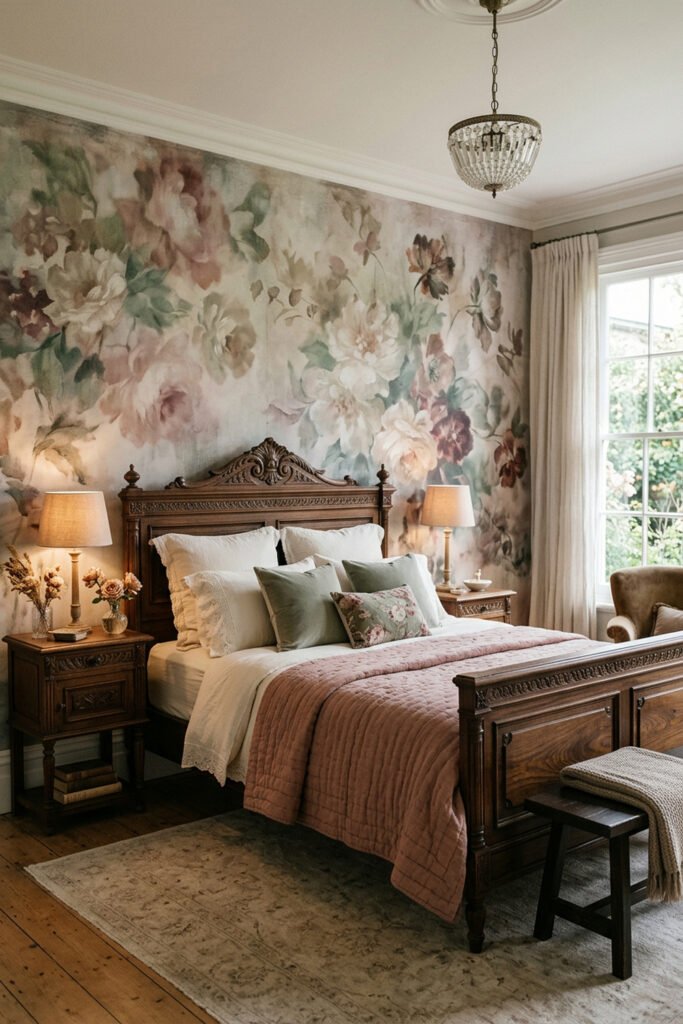
Choose a mural with faded rose, sage, cream, and muted burgundy instead of many bright colors at equal intensity. Then keep the duvet mostly white or cream and pull only one or two mural shades into the pillows. A dusty rose quilt and a few soft green details are enough.
This relationship works because the bed and wall play opposite roles: one is solid, architectural, and dark; the other is soft, atmospheric, and patterned. A neutral rug keeps the floor from introducing a third strong focal point. If you are considering a removable mural, check the specific manufacturer’s directions for your wall finish and substrate rather than assuming every peel-and-stick product will remove without affecting paint.
Pair Blush Lace and Antique Ivory in a Romantic Canopy Bedroom
Romantic rooms can carry a high level of detail when the palette stays disciplined. Blush, ivory, champagne, aged silver, and pale wood allow lace, embroidery, ornate mirrors, and crystal lighting to coexist without every element asking for attention through color.
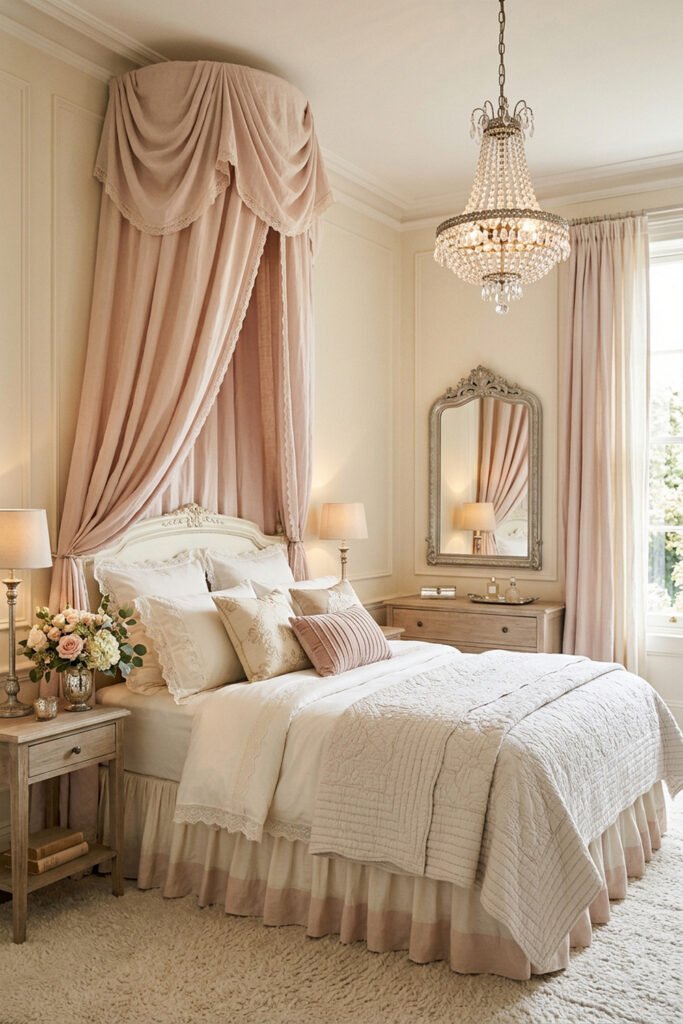
Let the canopy or drapery establish the soft architectural frame around the bed. Lace or embroidered edges can repeat on pillowcases or a bed skirt, while the central bedding remains mostly pale and calm. An antique-style mirror gives the eye a harder reflective surface among all that fabric, and washed wood keeps the scheme from becoming too glossy.
The important edit is scale. If the canopy is elaborate, smaller florals and trims should remain secondary. A crystal chandelier can provide the strongest sparkle, with bedside lighting kept simpler. For bedrooms with draped fabric, real candles are not a good styling partner near the canopy. CPSC advises keeping burning candles away from curtains, decorations, furniture, and other combustible items. Battery-operated candlelight can give a similar visual effect without placing an open flame beside fabric.
Make the Bed Wall the Focal Point
Use an Oversized Textile as the Headboard Wall
A large textile can give a plain wall the scale and richness of an architectural feature. The trick is to let one piece carry the pattern instead of surrounding it with several equally busy prints.
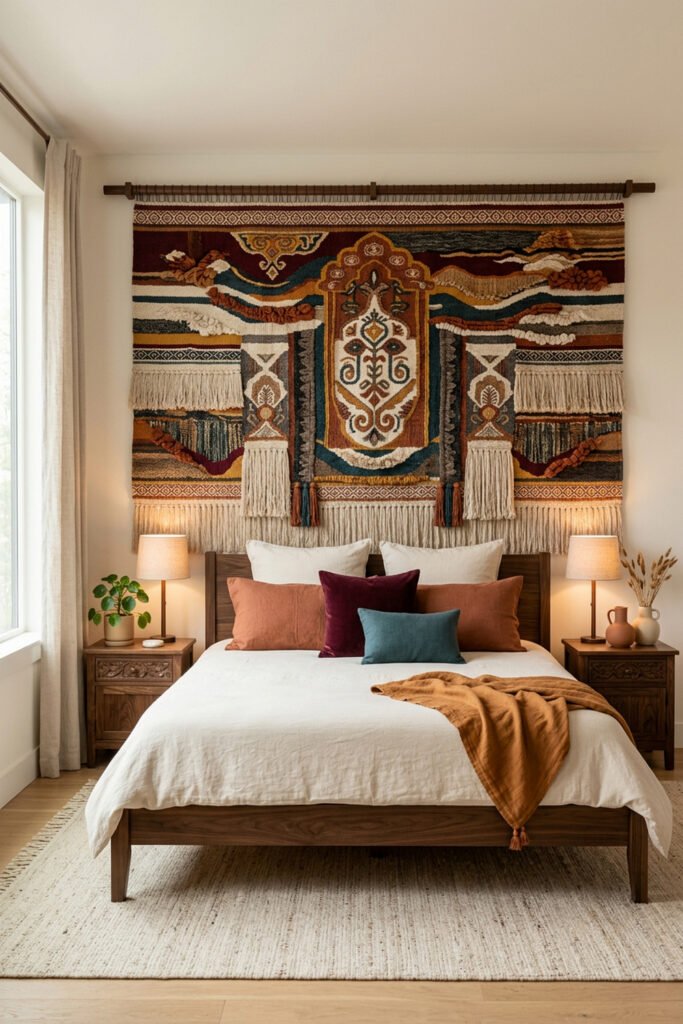
Choose a tapestry or woven textile large enough to occupy most of the zone behind the bed. Wine, rust, saffron, teal, and cream can all work together when the bedding repeats only a few of those colors. Keep the duvet simple, then echo one jewel tone in the pillows and one warm tone in the throw.
Warm wood nightstands and a carved bed frame suit the weight of the textile, while woven lamps or pottery add texture without introducing another graphic motif. If the wall hanging has tassels or decorative borders, let those details remain visible rather than covering the bottom edge with a very tall headboard.
Mounting needs to match the actual textile weight and wall construction. Follow the hardware and product instructions rather than guessing at load capacity. Visually, the payoff comes from scale: one dramatic pattern can feel calmer than a wall crowded with many smaller competing pieces.
Find the Statement Textile
Let one substantial wall textile carry most of the pattern, then repeat only a few of its deeper colors in smaller accents around the bed.
Center a Black Channel Headboard Under a Backlit Mirror
A dark channel-tufted headboard gives a pale bedroom a strong horizontal anchor. Placing a softly backlit organic mirror above it introduces the opposite geometry: curved, glowing, and light.
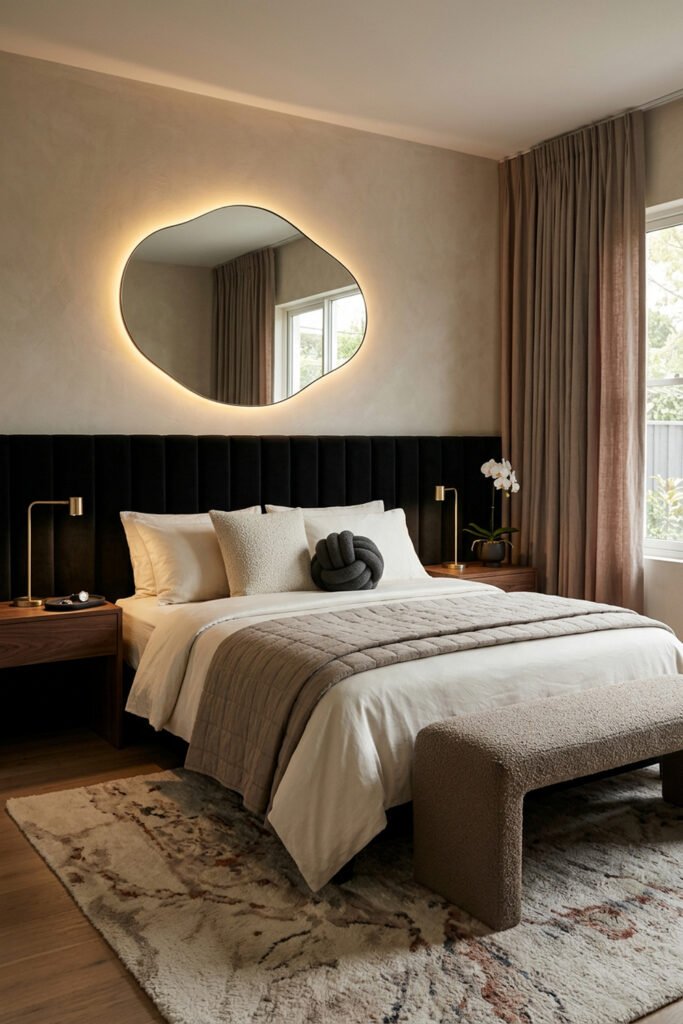
That contrast is what makes the composition memorable. Ivory bedding and a mushroom or taupe bench soften the black upholstery, while rust curtains can warm the outer edges of the room. Keep bedside surfaces restrained so the mirror remains the obvious focal point. A knot pillow, orchid, or small tray is enough detail when the architecture is already doing so much.
Use dimmable ambient light to keep the glow gentle rather than turning the mirror into a bright halo that competes with the bedside lamps. LEDs are efficient, but they still produce heat and depend on thermal management, so lighting should be installed and used according to the fixture manufacturer’s instructions. If the mirror or lighting requires hardwired electrical work, leave the installation details to the product instructions and qualified local help rather than improvising a concealed wiring setup.
Drape Burgundy Fabric Overhead for a Dramatic Canopy
For couples who want romance with more drama, burgundy overhead drapery creates a completely different mood from pale voile. Wine, aubergine, antique gold, and espresso make the bed feel enclosed and theatrical, especially in a room with dark wood furniture.
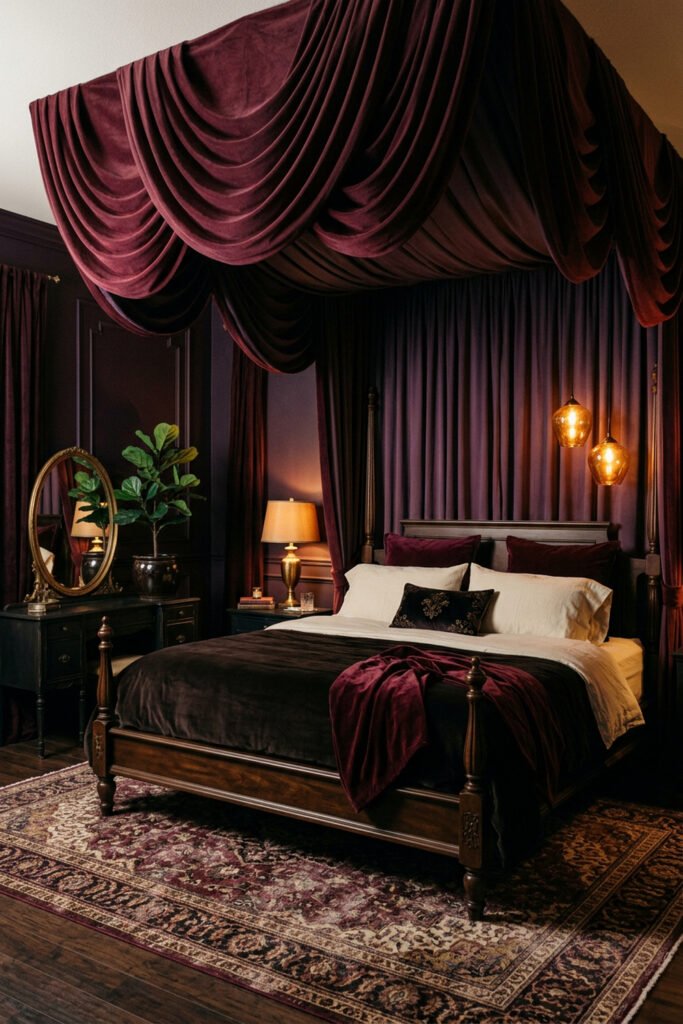
Because the ceiling treatment already carries enormous visual weight, keep the bed itself simpler. A solid burgundy coverlet, restrained pillows, and one controlled animal or Persian-inspired pattern can be enough. Jewel-toned lanterns or vintage-style lamps fit the palette, but several competing patterned fabrics will quickly blur the focal hierarchy.
The best version concentrates drama above the bed and lets surrounding furniture recede. An oval mirror or vanity can echo the old-world mood without trying to rival the canopy. Any draped fabric should remain well clear of open flames and unsuitable heat sources; CPSC specifically warns against placing burning candles near curtains and other items that can ignite. Use the canopy for visual enclosure, not as a place to tuck candles or hot fixtures.
Use Lighting to Shape Intimacy
Create a Fairy-Light Canopy With Cream Knits and Greenery
A fairy-light canopy works when the light is distributed through the room rather than bundled into one bright strand. Sheer fabric gives the glow a larger visual surface, while cream knits, woven baskets, and trailing greenery keep the bedroom from feeling like temporary party decor.
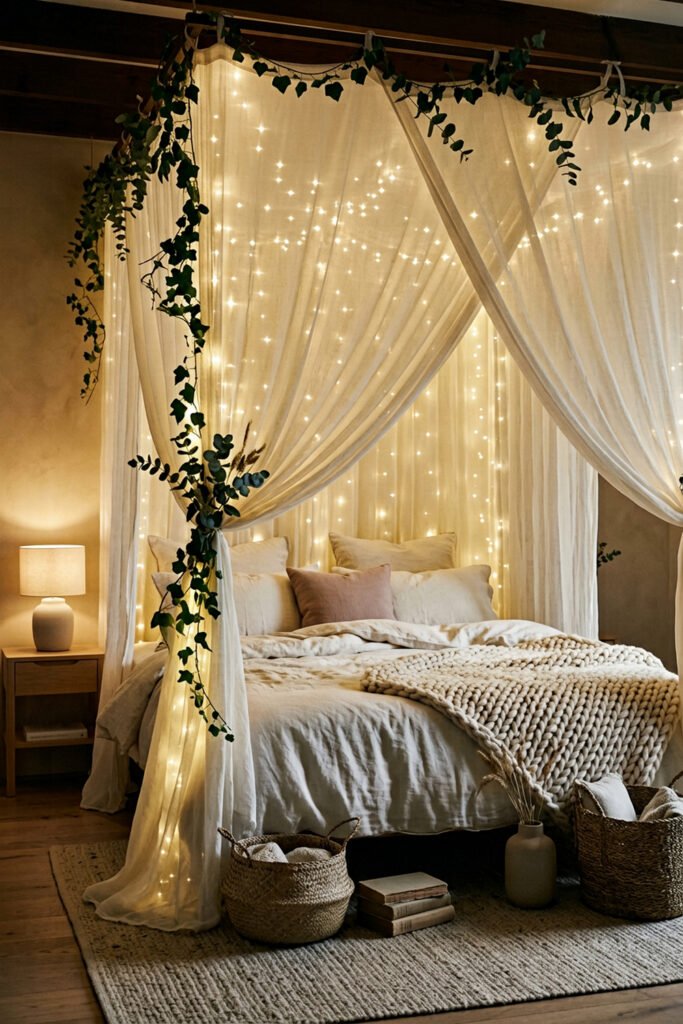
Stay close to warm white, cream, sand, muted blush, and leaf green. The lack of strong color shifts attention toward texture and illumination. A chunky throw adds weight beneath the airy canopy; plants break up the pale fabric with irregular shapes; a woven pendant or basket introduces a more structured natural texture.
Use decorative lighting products as the manufacturer directs, and inspect cords and connections rather than hiding damage inside fabric. CPSC notes that decorative light products with inadequate safety features can present shock or fire hazards, and damaged strands should not be used. LEDs still generate some heat, so “cool-running” should not be treated as “heat-free.” Keep real candles away from canopy fabric and greenery.
Recreate the Soft Canopy Layers
The look works best when sheer fabric, warm points of light, and greenery form one connected treatment rather than three unrelated decorations.
Create an Amber Movie-Night Bedroom With a Projector
A projector can become part of a shared evening ritual without making the bedroom look like a media room. Keep the technology visually secondary to the bed by building the scene around warm wood, layered bedding, soft seating, plants, and low amber light.
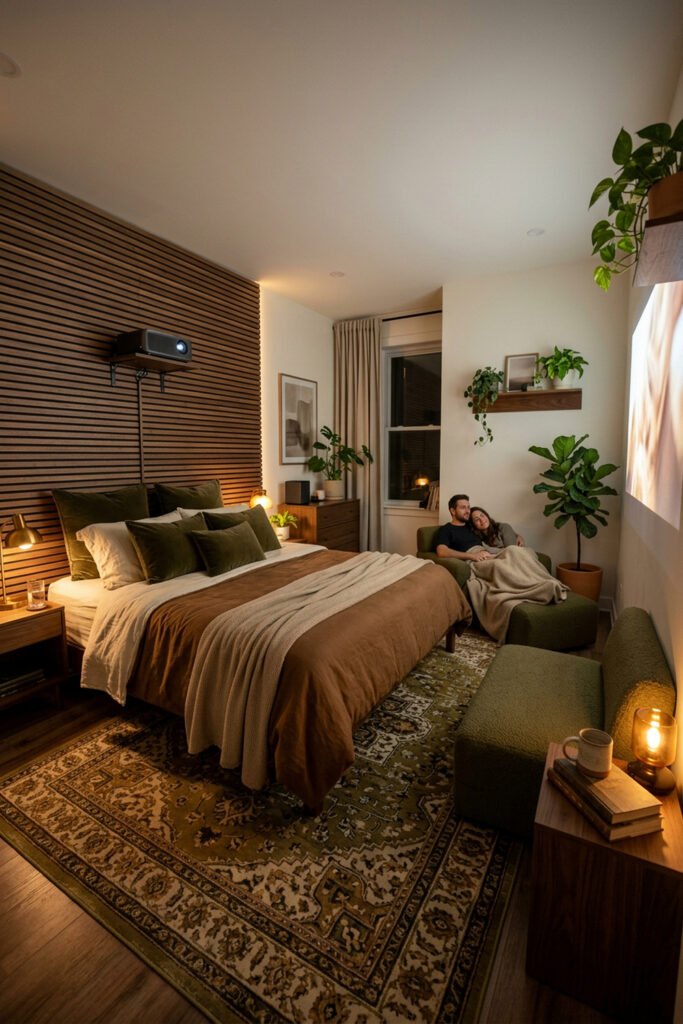
A slatted or wood-toned wall helps electronics disappear into a darker background. Tobacco, olive, cream, and warm brown textiles create enough depth that a black projector or speaker does not become the strongest object in the room. A low lounge chair or bench gives two people another place to sit without competing with the bed as the main anchor.
Cable planning matters because loose cords can undo both the look and the practicality. CPSC advises against routing extension cords under rugs. Projectors also need unobstructed air intake and exhaust; Epson’s installation guidance, for example, warns against placing a projector where air cannot circulate and specifies clearances by model. Follow the manual for your actual projector rather than borrowing measurements from a different model.
Cozy Bedroom Ideas for Couples: FAQs
How can couples decorate a bedroom when they have different styles?
Agree on a shared framework before negotiating individual objects. A common wall color, rug, wood tone, headboard, or limited palette can hold together different nightstands, art, or accessories. It often works better to coordinate the room’s visual weight and repeated materials than to make both sides identical. Give each person at least one area where their preferences can show clearly.
How do you make a small bedroom comfortable for two people?
Prioritize the circulation route around the bed, the storage each person actually uses, and surfaces that can do more than one job. A storage bed, low bookcase, wall-mounted light, or compact desk may be more valuable than extra decorative furniture. Keep the major palette controlled so useful objects do not automatically make the room feel crowded.
Do bedside tables need to match in a couple’s bedroom?
No. Different bedside tables can work beautifully when they share something visible, such as similar height, wood tone, hardware finish, lamp color, or overall scale. The two sides should feel related, not cloned. This is particularly helpful when one person needs drawers while the other prefers a lighter table with open space.
How can bedroom lighting feel romantic and still be practical?
Use layers with different jobs. Bedside lamps or sconces can support reading, while a dimmable ambient source provides softer general light. Decorative strands or backlighting can add atmosphere, but they should not replace the task lighting each person needs. Keeping the light temperature broadly consistent also helps mixed fixtures feel related.
Create a Bedroom That Feels Like Both of You
The most convincing shared bedroom is not the one where every choice is perfectly matched. It is the room where both people have a place in the design and the visual relationships are strong enough to hold those differences together.
Choose the idea that best fits how you want the room to feel, then adapt the bedside setup, storage, palette, and lighting to how you actually live. A repeated wood tone, one strong rug, a favorite color combination, or two well-planned pools of light can do more for the finished room than adding decoration simply to make it look fuller.
You May Also Like