





24 Cozy Bedroom Ideas That Feel Warm, Soft, and Inviting
A bedroom can be beautifully decorated and still feel a little flat. The difference usually comes from the relationships between the pieces: soft fabric against wood, warm light against a darker wall, a patterned rug beneath simple bedding, or one accent color repeated just enough to make the room feel connected.
- Quick Ways to Make a Bedroom Feel Cozier
- What Actually Makes a Bedroom Feel Cozy?
- Soft Neutrals and Canopy Layers
- Warm Up White Bedding With Wicker, Botanicals, and Chunky Knits
- Layer Warm Neutrals With Wood, Curved Mirrors, and Olive-Rust Accents
- Drape Sheer Curtains and Fairy Lights Behind the Bed
- Create a Draped Reading Nook With Linen, Tassels, and Greenery
- Wrap the Bed in a Sage Sheer Canopy
- Float White Drapes and String Lights Across the Ceiling
- Warm Color Stories and Romantic Bedrooms
- Soften Charcoal Walls With Blush Pink and Faux Fur
- Pair Dusty Pink Florals With Soft Sage Upholstery
- Use Sage Hearts and Pale Wood for a Soft Cottage Look
- Mix Olive Bedding, Terracotta Throws, and Rattan Lighting
- Let Terracotta Linen Glow in Afternoon Light
- Moody, Collected, and Maximalist Bedrooms
- Layer Jewel-Tone Textiles in a Global Boho Canopy Bedroom
- Go Dark Cottagecore With Black Florals
- Build a Moody Cosmic Bedroom With Books, Tapestries, and Rugs
- Turn Built-In Bookshelves Into a Cozy Bed Alcove
- Make a Burgundy Bed-and-Desk Room Feel Like a Cocoon
- Lighting-Led Cozy Bedroom Ideas
- Trace Sculptural Warm Light Around a Blush Bed
- Project Butterflies Above the Bed and Add Hanging Lanterns
- Create an Amber Hygge Corner With Velvet, Knits, and Plants
- Layer Fairy Lights, Gallery Art, and Floating Shelves Around the Bed
- Glow Floating Shelves Against a Sage Paneled Wall
- Small-Space and Plant-Filled Cozy Bedrooms
- Combine the Bed and Desk Into One Cozy Feature Wall
- Divide a Studio Bedroom With a Plant-Filled Bookcase
- Surround the Bed With Hanging Plants and Earthy Linen
- Cozy Bedroom Questions
- How Can I Make a Small Bedroom Cozy Without Making It Feel Cramped?
- Can a Dark Bedroom Still Feel Cozy Instead of Gloomy?
- How Do You Make a Cozy Bedroom Feel Layered Without Looking Cluttered?
- Are Fairy Lights Safe to Use Around Bedroom Curtains and Fabric?
- Make Cozy Feel Like You
- You May Also Like
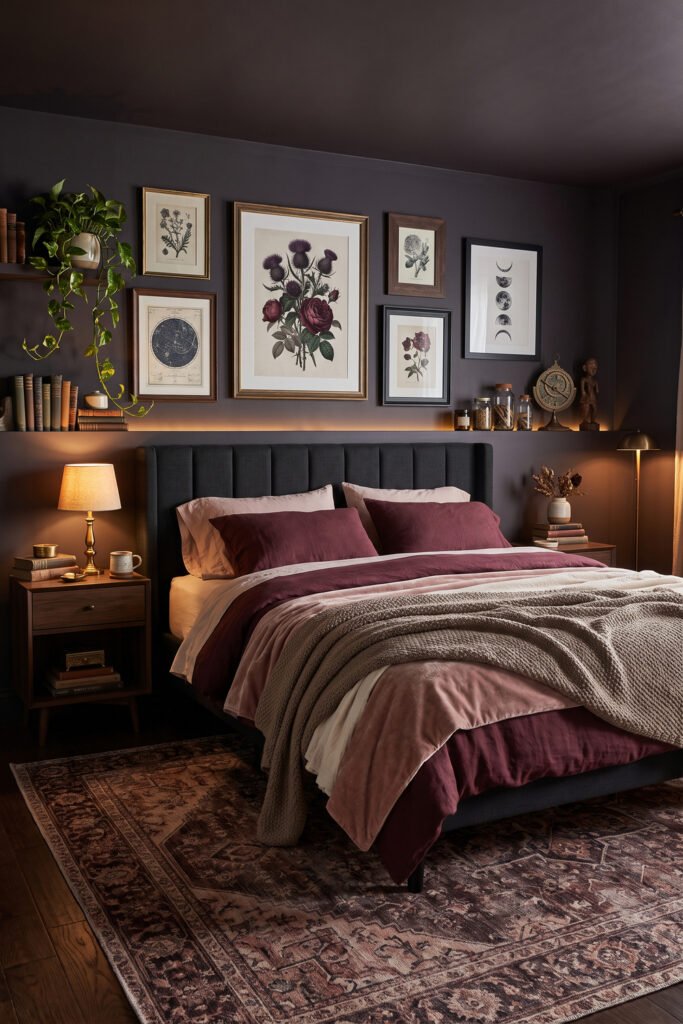
These cozy bedroom ideas explore that feeling through very different styles. Some are bright and natural, others lean romantic, earthy, moody, plant-filled, or almost cinematic after dark.
You do not need to copy one room from top to bottom. Pay attention to the combinations that draw you in, then borrow the color story, lighting treatment, texture mix, or focal idea that makes sense in your own space.
Quick Ways to Make a Bedroom Feel Cozier
- Give the room one clear visual anchor, such as the bed, headboard wall, canopy, window, or lighting feature.
- Add tactile contrast before adding more decor. Linen, knits, velvet, faux fur, wicker, and wood can create depth without filling every surface.
- Use several softer light sources rather than relying only on a bright ceiling fixture.
- Repeat an accent color in a few places so it travels through the room instead of appearing once.
- In compact bedrooms, use vertical surfaces and multifunctional furniture to create atmosphere without crowding the floor.
What Actually Makes a Bedroom Feel Cozy?
Cozy bedrooms are less about a particular decorating style and more about how the room is layered.
Texture is one of the easiest places to see this. Smooth cotton bedding feels richer when it sits beside a chunky knit, woven basket, velvet pillow, or wood nightstand. The contrast gives the eye more to notice without requiring an explosion of color.
Lighting changes the same materials again after sunset. A shaded bedside lamp, soft shelf light, or small string of warm decorative lights creates separate pools of brightness instead of washing the entire room in one flat layer. For more examples of this approach, Apartment Charm’s lighting ideas for cozy rooms explore everything from glowing shelves to layered lamps.
Color matters too, but cozy does not automatically mean beige. Sage, burgundy, charcoal, terracotta, blush, black, and olive can all work beautifully when there is enough softness or warmth around them.
Finally, the room needs something personal. A few books, plants, framed pieces, collected ceramics, or textiles with a pattern you genuinely like can give the bedroom character that a perfectly matched furniture set often cannot.
Soft Neutrals and Canopy Layers
Warm Up White Bedding With Wicker, Botanicals, and Chunky Knits
A predominantly white bedroom feels warmer when the materials do more of the decorating. Instead of adding several accent colors, let rattan, jute, pale wood, and thick woven textiles carry the variation.
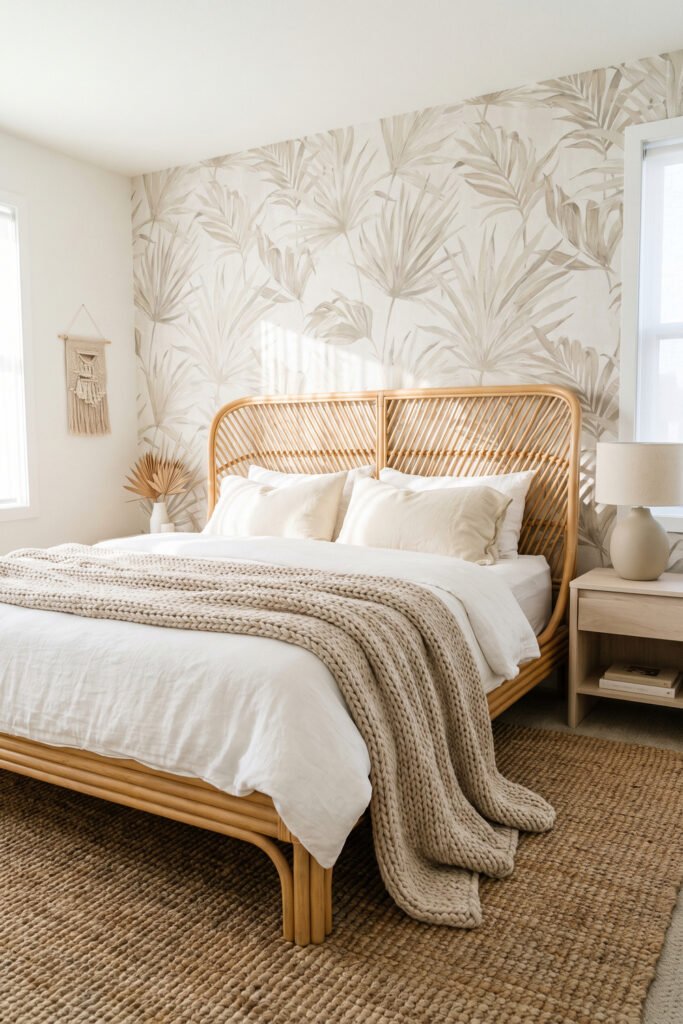
A wicker bed is especially effective because its woven surface has movement even when the color stays close to beige. Against crisp white bedding, that texture becomes much more noticeable. A chunky sand-colored throw adds another scale of texture, while a jute rug extends those natural fibers across the floor.
Keep the palette restrained enough for one larger botanical element to matter. Oversized neutral palm wallpaper, botanical artwork, or a woven wall piece can give the headboard area definition without pushing the room away from its airy character.
This is a useful formula when you love clean cozy bedroom aesthetics but do not want the room to look bare: keep the colors quiet and make the surfaces varied.
Build the Natural Texture Layer
To recreate this light, tactile look, focus on a few woven and chunky surfaces that add depth without introducing another strong color.
Layer Warm Neutrals With Wood, Curved Mirrors, and Olive-Rust Accents
A refined neutral bedroom does not need dozens of layers. The strongest version starts with a soft upholstered bed and warm white bedding, then introduces walnut or medium-toned wood through the dresser and nightstands.
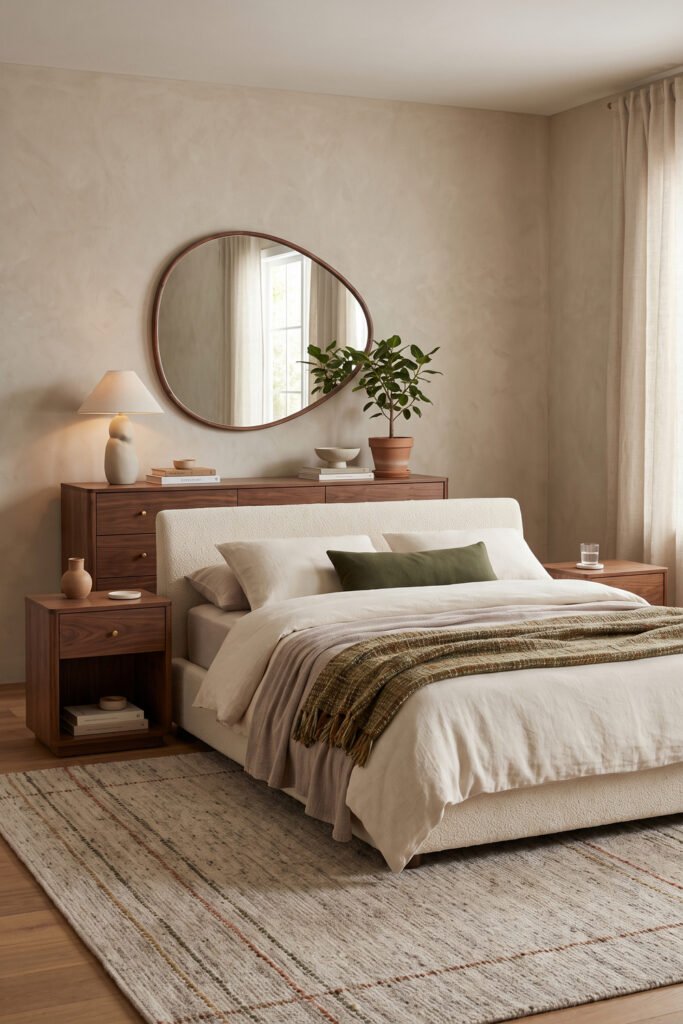
That wood is important because it separates the pale textiles from pale walls. Without it, the room can become one continuous field of cream. A taupe rug gives the bed a subtle boundary at floor level, while a curved mirror softens the straighter lines of drawers, wall molding, and framed art.
Restrained olive and rust accents can add another dimension without taking over the room. A single olive lumbar pillow or loosely folded throw may be enough. Rust works well in an equally small dose because it picks up the red-brown undertones already present in the wood.
The result feels edited rather than empty, with each darker element giving the lighter pieces a clearer outline.
Drape Sheer Curtains and Fairy Lights Behind the Bed
Instead of treating the headboard wall as a place that automatically needs artwork, turn the entire surface into a soft backdrop.
Full curtains behind the bed create long vertical folds that make the wall feel taller and visually soften the hard edges of the headboard. White or ivory fabric keeps the effect cloudlike rather than theatrical.
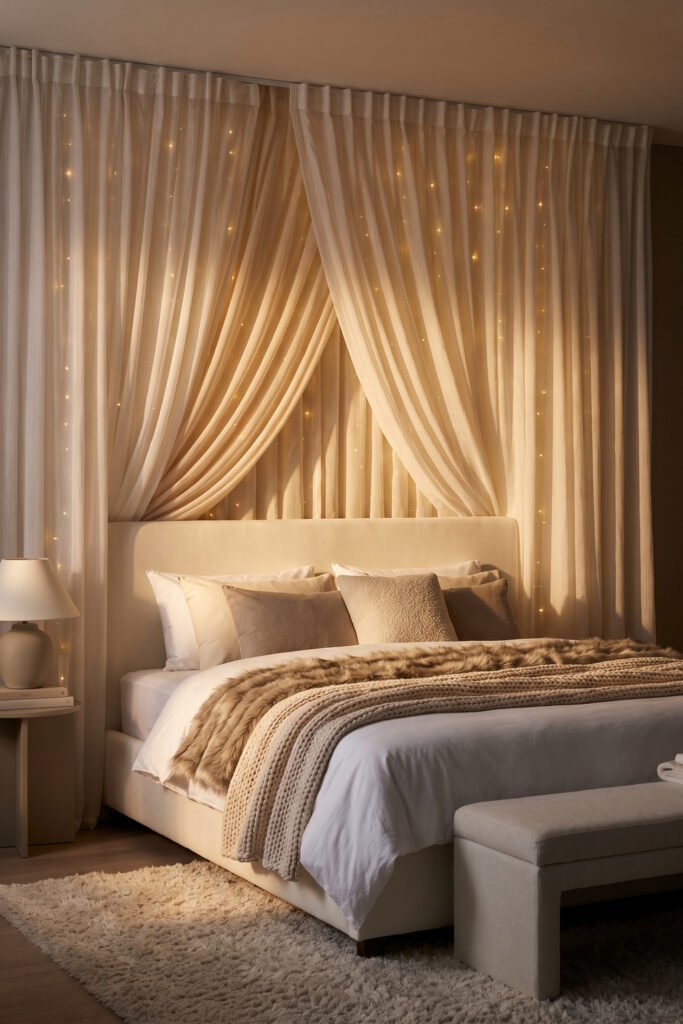
Tiny warm lights can sit within that draped composition so the fabric changes after dark. Rather than one obvious glowing strand, the goal is scattered points of light that reveal the folds and depth of the curtains.
The bed can then carry the heavier textures: smooth white bedding, plush pillows, faux fur, and perhaps a shaggy rug below. This contrast matters. The curtains provide lightness and movement, while the thicker textiles make the sleeping area feel substantial.
Use decorative lights that are appropriate for the intended indoor use, inspect strands for damaged wiring or connections, and follow the manufacturer’s instructions. CPSC guidance also recommends turning decorative lights off before going to bed or leaving the home.
Recreate the Soft Curtain Glow
The most useful pieces here are the ones that build the contrast between airy fabric, tiny warm lights, and one heavier plush texture on the bed.
Create a Draped Reading Nook With Linen, Tassels, and Greenery
A bedroom does not need a large lounge chair to gain a second comfortable zone. An underused corner can become a softer destination through fabric, cushions, plants, and one low seat or daybed.
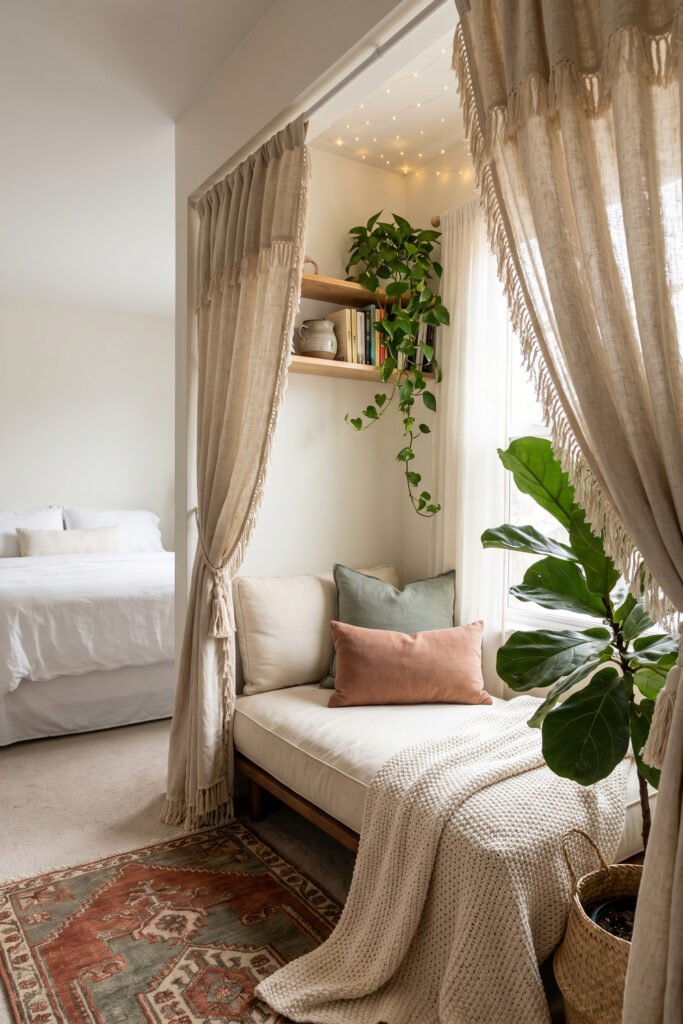
Draped linen or cotton creates the boundary. Let the material fall vertically rather than stretching it tightly, then use tassel or fringe details to give the edges a little definition.
Greenery breaks up a mostly cream palette especially well here. A trailing plant above the nook and a larger leaf shape near the floor create two different heights, so the plants frame the corner rather than looking like pots lined up on a shelf.
Keep the seating comparatively simple: one larger neutral cushion, two earthy accents in sage or terracotta, and a knitted throw are enough.
The nook should feel connected to the bedroom, but not identical to the bed. That small change in scale gives the room another place to settle visually.
Wrap the Bed in a Sage Sheer Canopy
A canopy becomes much more interesting when the fabric itself carries color.
Sheer sage curtains create a soft green envelope around a white or cream bed while still allowing light to travel through the material. Because the fabric is translucent, the color feels gentler than an opaque painted wall.
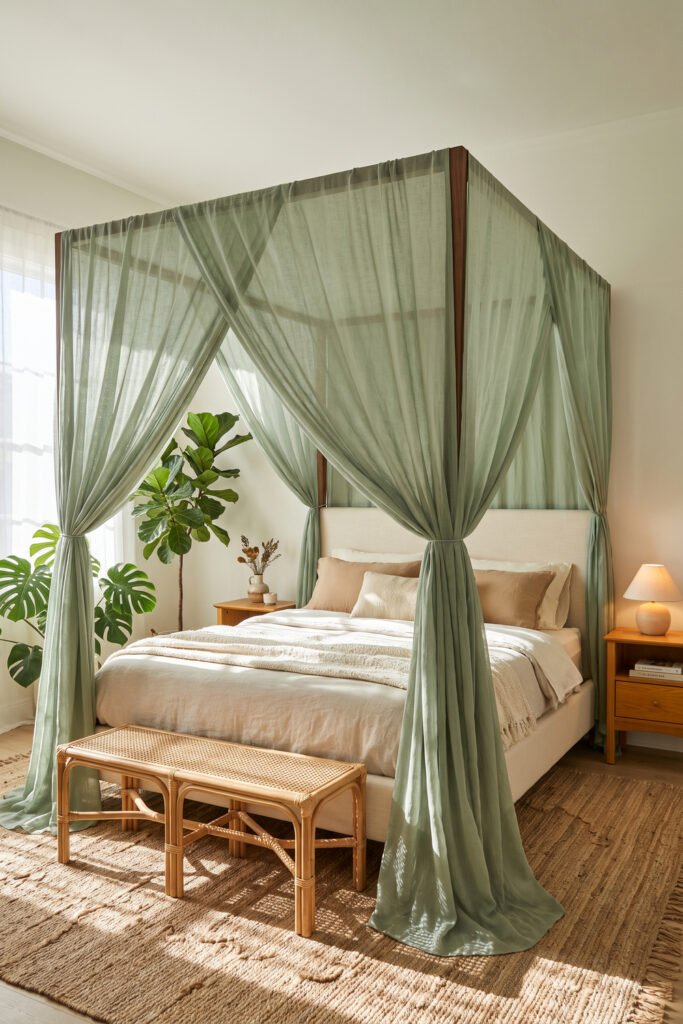
Natural textures keep the green grounded. A rattan bench, woven rug, warm timber nightstand, and a few substantial plants can repeat the earthy quality of the canopy without turning every surface green.
The strongest version leaves the bedding relatively calm. White sheets and beige or tan pillows provide breathing room inside the colored frame.
This balance is what keeps the canopy from feeling heavy. The green establishes the atmosphere, the pale bed gives the eye somewhere to rest, and woven textures create a bridge between them.
For any canopy attached to a ceiling or wall, choose hardware and installation methods suited to the actual surface and product rather than relying on a generic mounting method.
Float White Drapes and String Lights Across the Ceiling
Taking drapery overhead changes the entire silhouette of a bedroom. White fabric can sweep from the ceiling toward the bed, forming a loose tent-like enclosure without requiring a traditional four-poster frame.
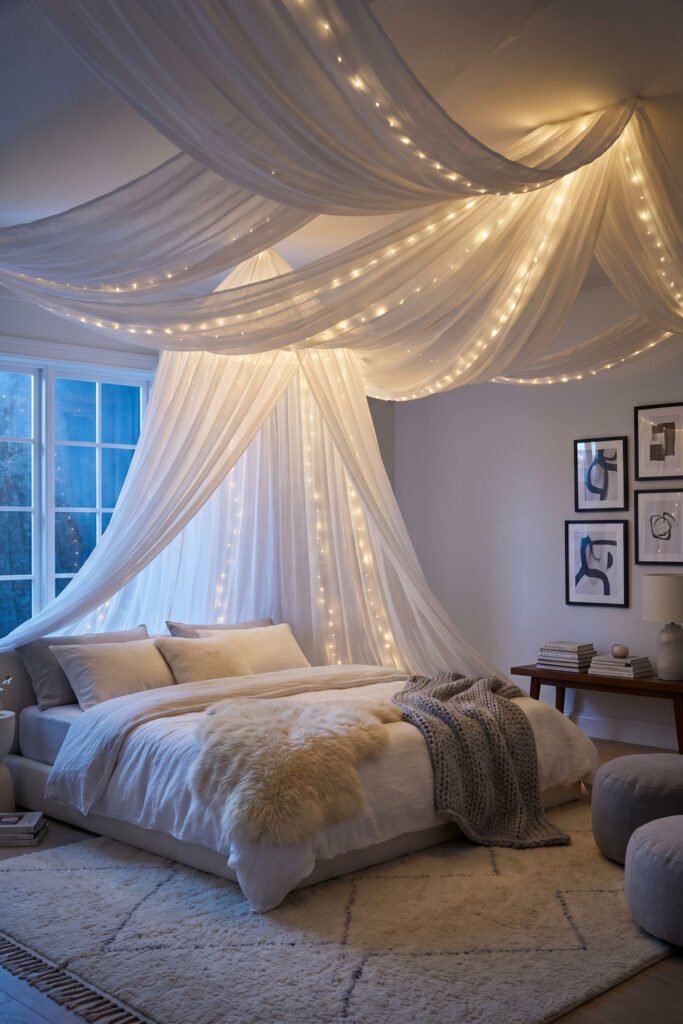
String lights following those folds add another layer of depth after sunset. The strongest arrangement lets the light reveal the architecture of the fabric rather than making the bulbs themselves the main attraction.
Keep the bed underneath mostly white, cream, and soft gray. Faux fur or thick knit adds weight below the airy canopy, while low poufs and a rug spread that softness outward onto the floor.
A gallery wall can work surprisingly well here too. The canopy is fluid and pale, so a controlled grid of dark frames gives the composition some structure.
If you love dramatic cozy bedroom inspo but prefer a neutral palette, this treatment creates plenty of atmosphere without introducing strong color.
Keep decorative lighting in good condition and use it according to its labeling and manufacturer guidance.
Warm Color Stories and Romantic Bedrooms
Soften Charcoal Walls With Blush Pink and Faux Fur
Charcoal can make a bedroom feel intimate, but it needs contrast if you want the room to stay soft.
Blush works beautifully because it is light enough to stand away from the dark walls without the sharper contrast of pure white. Use it across the largest textile accents, perhaps pillows and a faux-fur throw, rather than sprinkling tiny pink objects around the room.
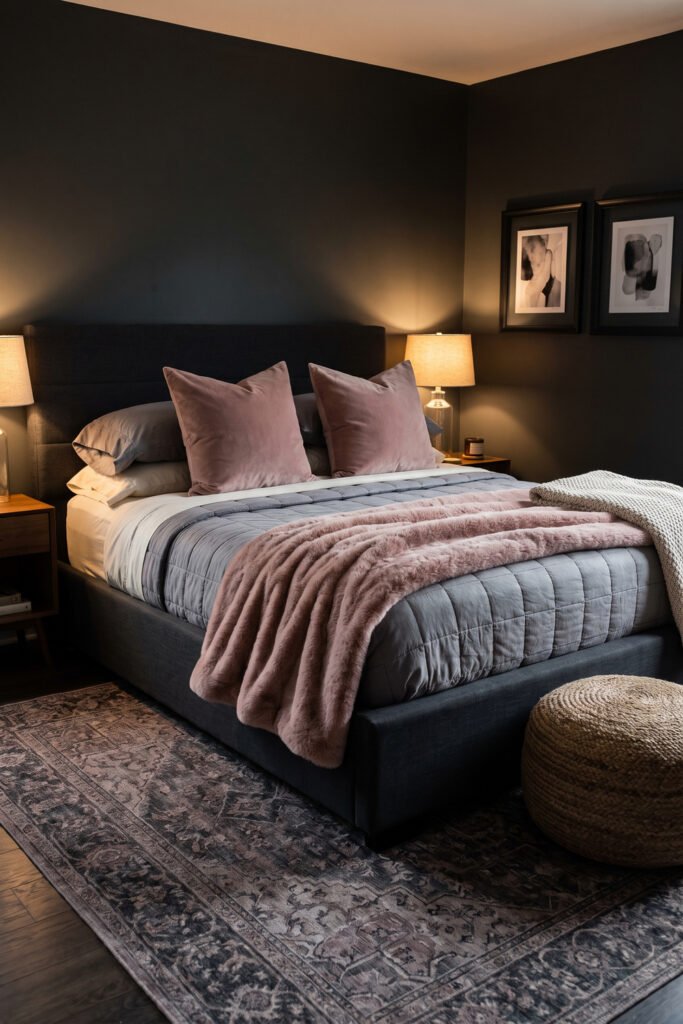
Gray bedding can sit between those two extremes. It connects with the charcoal wall while keeping the blush from looking disconnected.
Texture becomes especially useful in this palette. A fluffy pink throw catches light differently from smooth gray bedding, so even similar-value colors remain distinct. A knitted pouf or soft rug can carry that tactile language down to the floor.
Warm bedside lighting prevents the darker backdrop from becoming visually severe. What makes this room successful is not simply “pink and gray,” but the movement from dark structure to increasingly softer surfaces.
Find the Blush-and-Charcoal Textile Mix
Let gray stay dominant, then use blush in the softer textile layers so the contrast comes from both color and texture.
Pair Dusty Pink Florals With Soft Sage Upholstery
Pink florals become far more nuanced beside muted green.
A sage tufted headboard gives a romantic bedroom a cooler visual base, which keeps dusty rose wallpaper and blush textiles from dominating every surface. Because both colors are softened rather than highly saturated, they can repeat several times without becoming jarring.
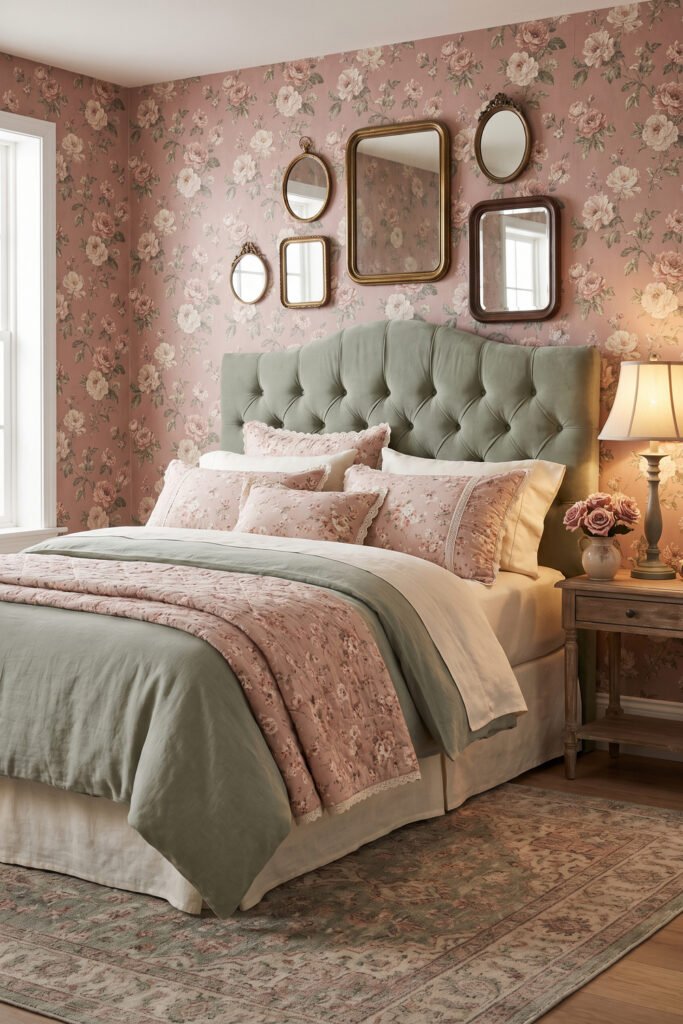
Pattern scale matters here. Let the wallpaper carry the busiest floral repeat, then use bedding with either a smaller motif or mostly solid fabrics. Lace edges and subtle stitched details can add delicacy without introducing another competing print.
Mirrors, vintage frames, and traditional lamps suit the mood because their shapes echo the nostalgia of the florals.
Keep at least some ivory or cream visible around the pillows and sheets. Those pale areas separate sage from pink and help individual patterns remain legible.
The room can feel richly romantic without relying on a single dominant color.
Use Sage Hearts and Pale Wood for a Soft Cottage Look
A small repeated motif can be more effective than one oversized statement.
Tiny sage hearts scattered across white bedding give this cottage-style bedroom rhythm, but the restrained palette prevents the pattern from becoming overly busy. Heart-shaped cushions can repeat the motif at a larger scale, while plain sage pillows keep the arrangement from feeling themed from top to bottom.
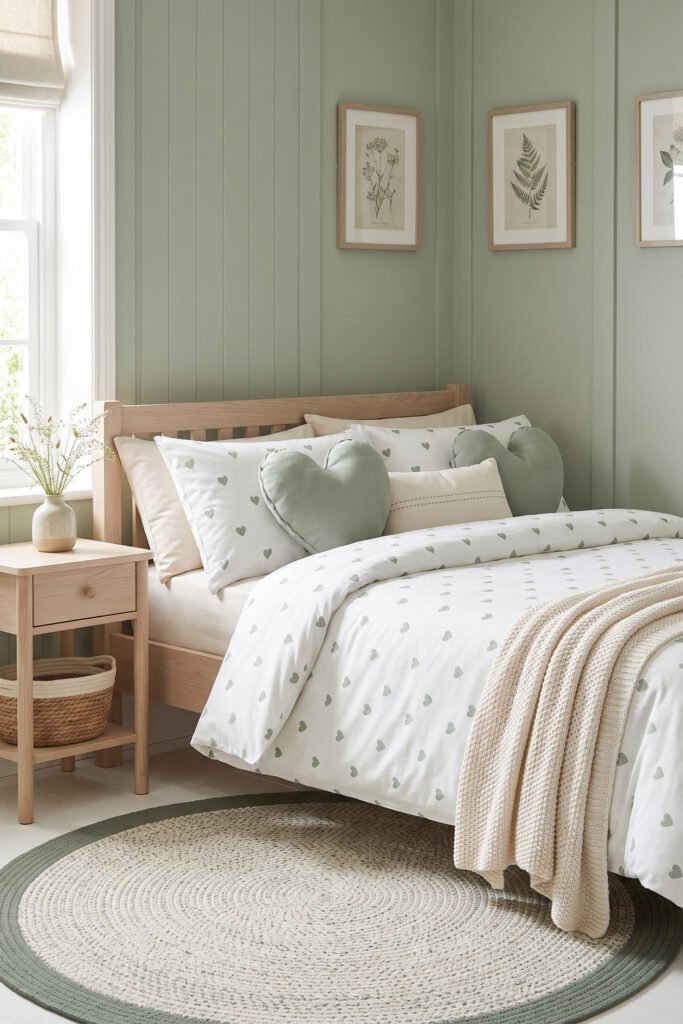
Pale wood is an ideal partner here. It stays close to the warmth of cream and white, so the furniture supports the room instead of becoming a darker visual interruption.
A sage-paneled wall or painted headboard area gives the bedding a clearer outline. Botanical prints above the bed reinforce the green without repeating the heart shape yet again.
This is one of the easiest cozy bedroom decor ideas to adapt through textiles. You can keep the furniture simple and let a recurring color plus one playful motif provide the character.
Mix Olive Bedding, Terracotta Throws, and Rattan Lighting
Olive and terracotta share an earthy quality, but they behave differently enough to make a bedroom feel layered.
Olive works well as the larger field because it is quieter and cooler. Let it appear across the duvet or a substantial portion of the bedding. Terracotta can then occupy smaller but stronger areas, such as a throw across the foot of the bed and a pair of accent pillows.
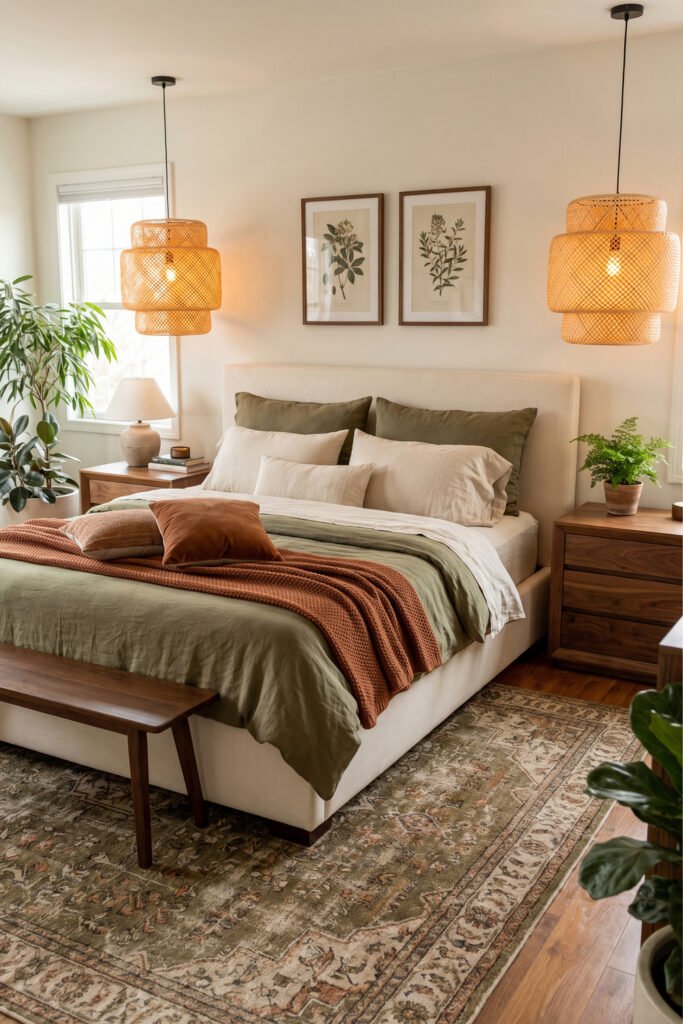
Cream is the useful mediator. White sheets, pale cushions, or an upholstered headboard prevent the two deeper colors from sitting directly against one another everywhere.
Rattan pendant lights continue the brown and rust family above the bed, while warm timber nightstands repeat it below. This creates a vertical color path rather than concentrating all of the warmth in the bedding.
A few botanical prints and leafy plants support the olive tones without requiring exact color matching.
Explore more earthy bedroom ideas if this green, clay, wood, and woven-fiber palette is the direction that pulls you in.
Recreate the Olive-and-Terracotta Palette
Keep olive as the quieter foundation, then bring terracotta and woven brown tones into smaller layers around it.
Let Terracotta Linen Glow in Afternoon Light
Terracotta bedding has enough presence to anchor a room almost by itself.
The color becomes especially rich in natural afternoon light because every wrinkle and fold in washed linen creates a slightly different tone. That variation is part of the appeal, so resist the temptation to make the bed look too smooth or formal.
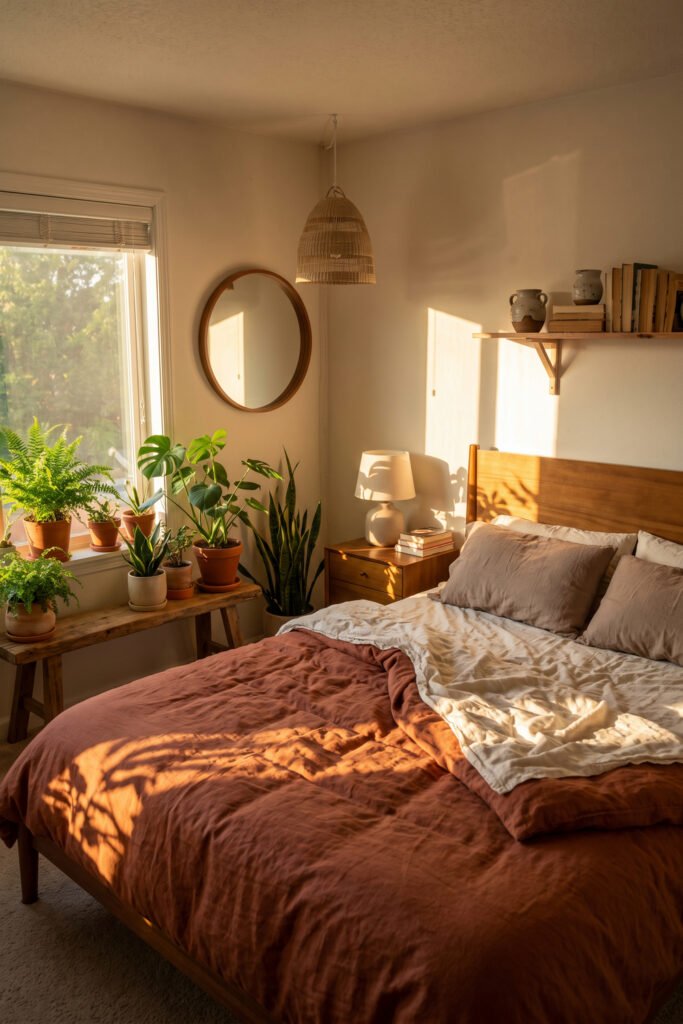
Pair the rust-colored duvet with warm brown wood, cream pillows, and plenty of green leaves. The plants provide a cooler counterpoint, which keeps the palette from becoming one continuous orange-brown field.
A curved wood-framed mirror works nicely nearby because it reflects daylight while repeating the furniture tone. Woven pendant lighting and simple floating shelves can extend the natural material story without competing with the bed.
The lesson here is useful beyond terracotta: when one textile carries most of the color, the surrounding decor can become quieter. The room still feels complete because light, texture, and greenery are supplying the secondary layers.
Moody, Collected, and Maximalist Bedrooms
Layer Jewel-Tone Textiles in a Global Boho Canopy Bedroom
Maximalist bedrooms work best when abundance has some underlying logic.
In a jewel-tone canopy room, deep red can become the repeating thread that moves from the bedding into curtains and rug details. Emerald, gold, purple, and warm orange can appear beside it, but the repeated red family helps the eye understand the composition.
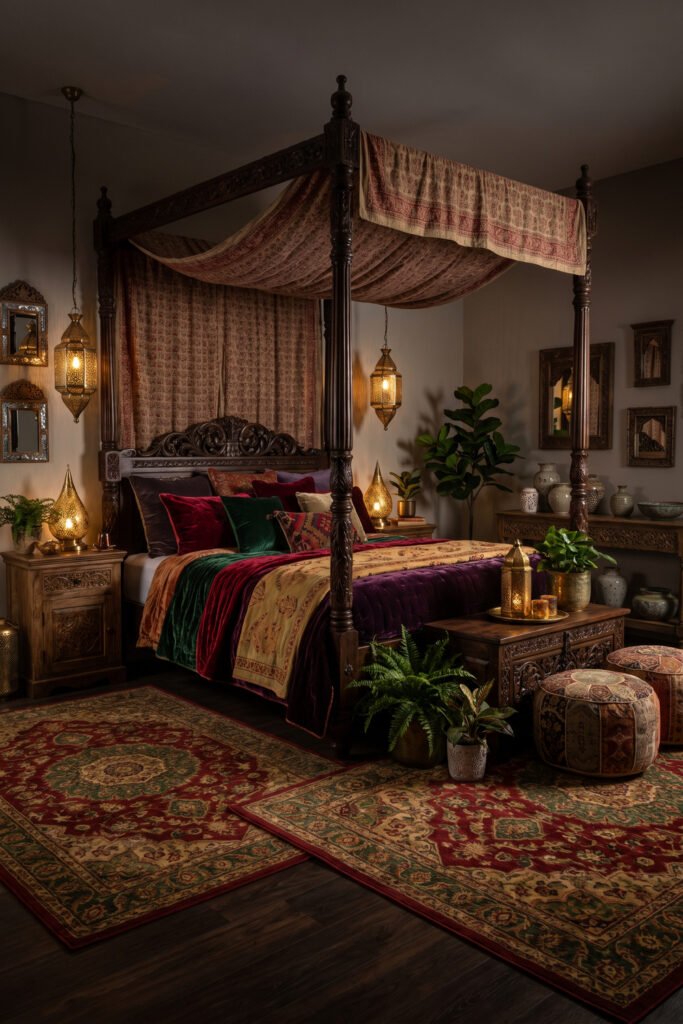
Dark wood is equally important. A substantial canopy bed gives the patterns a firm architectural center, while carved furniture and darker frames create pauses between textiles.
Rugs can be layered when their colors overlap rather than when every pattern is completely different. The same principle applies to pillows: varied motifs feel more collected when two or three colors recur across several pieces.
Plants, small mirrors, lanterns, and poufs can fill the room generously, but leave a clear path around the bed. The goal is immersive detail, not an obstacle course.
Build the Jewel-Tone Layers
Rather than shopping for generic boho decor, look for textiles and lighting that share the room’s deep reds, patterned surfaces, and warm handcrafted character.
Go Dark Cottagecore With Black Florals
Black does not have to make a bedroom stark. Paired with faded floral pattern, it can feel remarkably soft.
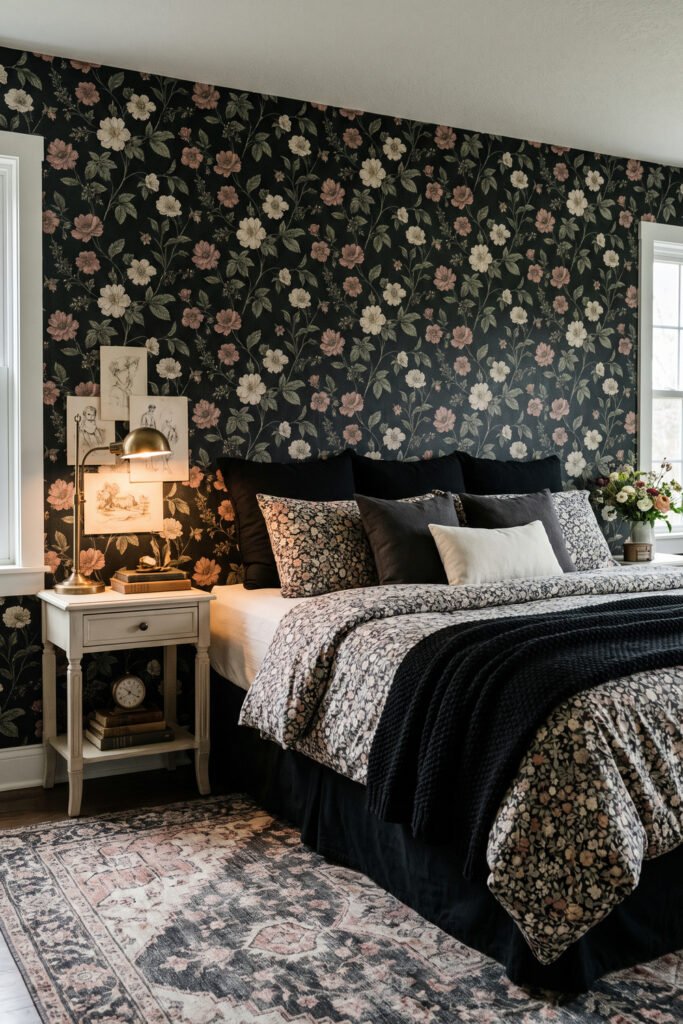
A dark botanical wallpaper is an effective starting point because the pale flowers interrupt the black field. Repeat those muted pinks, creams, and greens in the bedding, but change the scale of the pattern so the bed does not visually disappear into the wall.
Plain black or charcoal textiles provide useful breathing space between the florals. A knitted throw is particularly good here because its texture shows even when the color remains dark.
Vintage-style furniture and framed black-and-white drawings suit this palette without introducing a completely new aesthetic language. A small floral arrangement can repeat the wallpaper’s color in three dimensions.
If you are nervous about dark cozy bedrooms, notice that the warmth comes from contrast. The black creates depth, while ivory, muted flowers, light flooring, and soft textiles keep that depth from feeling severe.
Find the Dark Floral Details
Black floral surfaces do most of the visual work here, so concentrate shopping on one large pattern and a few botanical pieces that echo it.
Build a Moody Cosmic Bedroom With Books, Tapestries, and Rugs
Collected bedrooms become visually convincing when one large element organizes the smaller pieces.
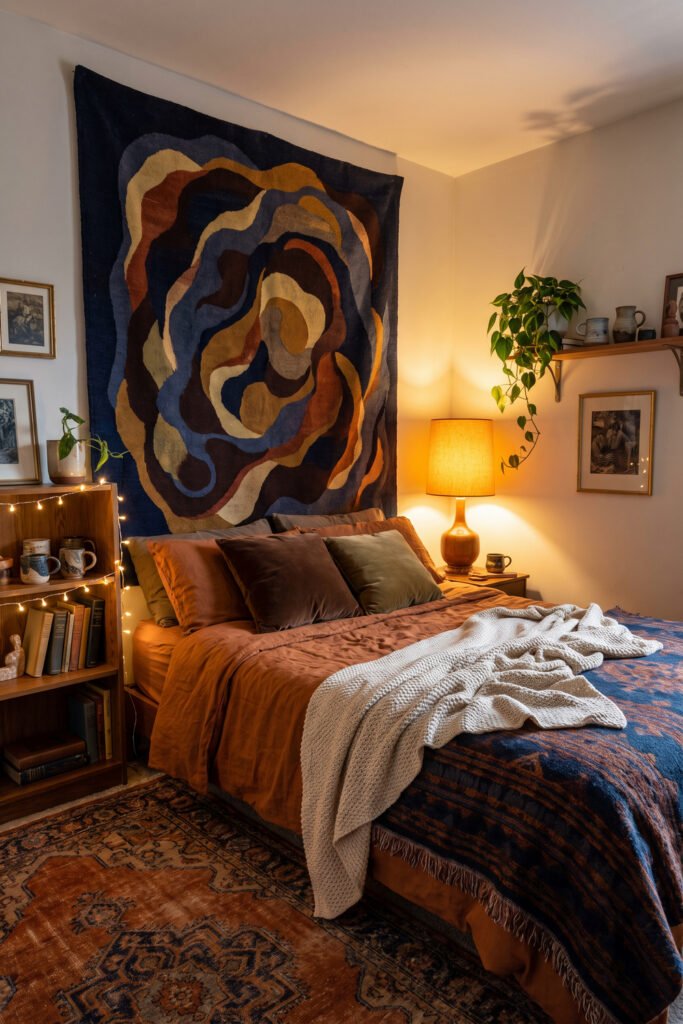
An oversized celestial or cosmic artwork above the bed can do that job. Once that focal point is established, postcards, prints, hanging plants, photographs, and shelves can occupy the surrounding walls without every item competing equally for attention.
Burnt orange and brown textiles are particularly useful under darker art. A patterned blanket can include several muted tones, while an olive or deep blue pillow echoes color from the wall above.
Vintage-style rugs extend the palette to the floor and make the bed zone feel visually wider. Books add another kind of pattern through their irregular spines, so they work best when they are grouped rather than scattered across every available surface.
This approach is ideal for anyone whose favorite cozy bedroom aesthetic feels personal and accumulated rather than perfectly coordinated. Edit the collection enough for the major shapes to remain visible, then let the individual objects tell the rest of the story.
Turn Built-In Bookshelves Into a Cozy Bed Alcove
Bookshelves on either side of a bed change more than the storage capacity. They give the sleeping area architectural boundaries.
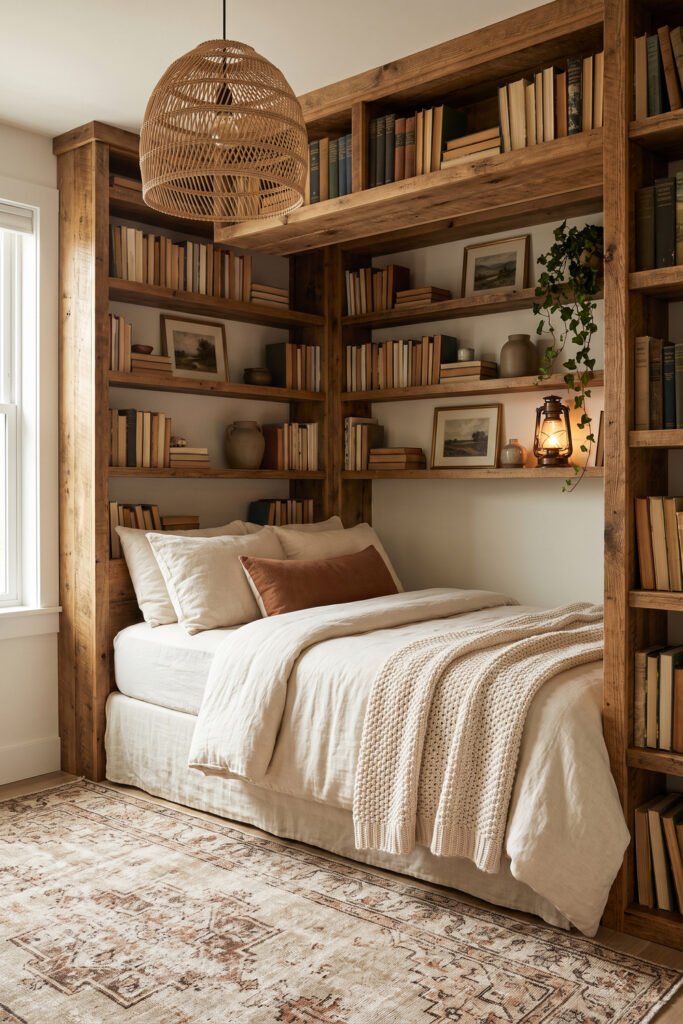
That enclosure becomes softer when the shelves contain a mix of books and open space rather than being packed edge to edge. A trailing plant, small ceramic piece, or framed landscape gives the eye an occasional break from book spines.
Cream linen bedding works as a calm center between the busier shelves. Add one rust pillow and a chunky ivory throw to bring in warmth and texture without competing with the books.
A woven pendant reinforces the natural tones of wood and linen above the bed, while a swing-arm or bedside lamp adds useful localized light lower down.
Tall bookcases and other substantial freestanding furniture should be secured appropriately. CPSC recommends anchoring furniture such as bookcases and dressers to the wall to reduce tip-over risk, with the manufacturer’s instructions used for proper securing.
Make a Burgundy Bed-and-Desk Room Feel Like a Cocoon
A compact room can carry a deep color beautifully when the functions are clearly organized.
Burgundy bedding establishes the sleep zone first. Rather than repeating the color everywhere, let cream pillows and a pale knit blanket break up the bed so its surface still has depth.
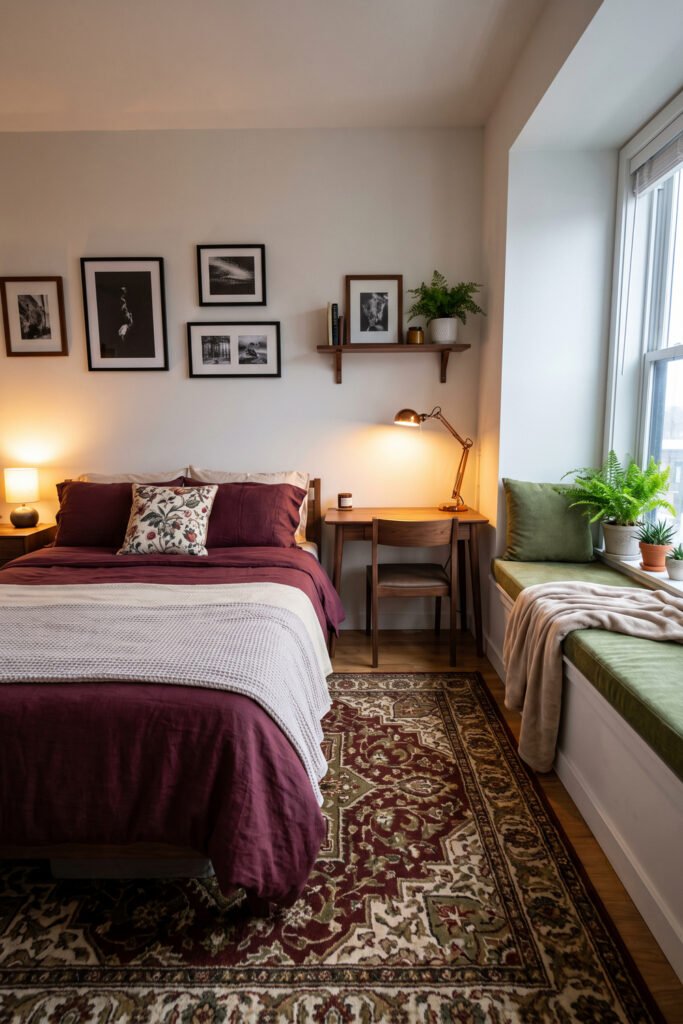
A dark walnut desk can occupy the next zone, using the same wood family as the bed frame or shelving. That repetition makes the workspace feel connected to the sleeping area instead of looking like furniture borrowed from another room.
At the window, a narrow bench or built-in ledge can create a third moment, especially when plants and warm light soften the transition to the glass.
A patterned rug spanning the central floor helps visually connect all three areas.
For more layout-focused inspiration, Apartment Charm’s bedroom ideas for small rooms offer additional ways to make limited square footage feel deliberate rather than crowded.
Lighting-Led Cozy Bedroom Ideas
Trace Sculptural Warm Light Around a Blush Bed
Lighting does not always have to disappear into a fixture. In a contemporary bedroom, it can become part of the room’s architecture.
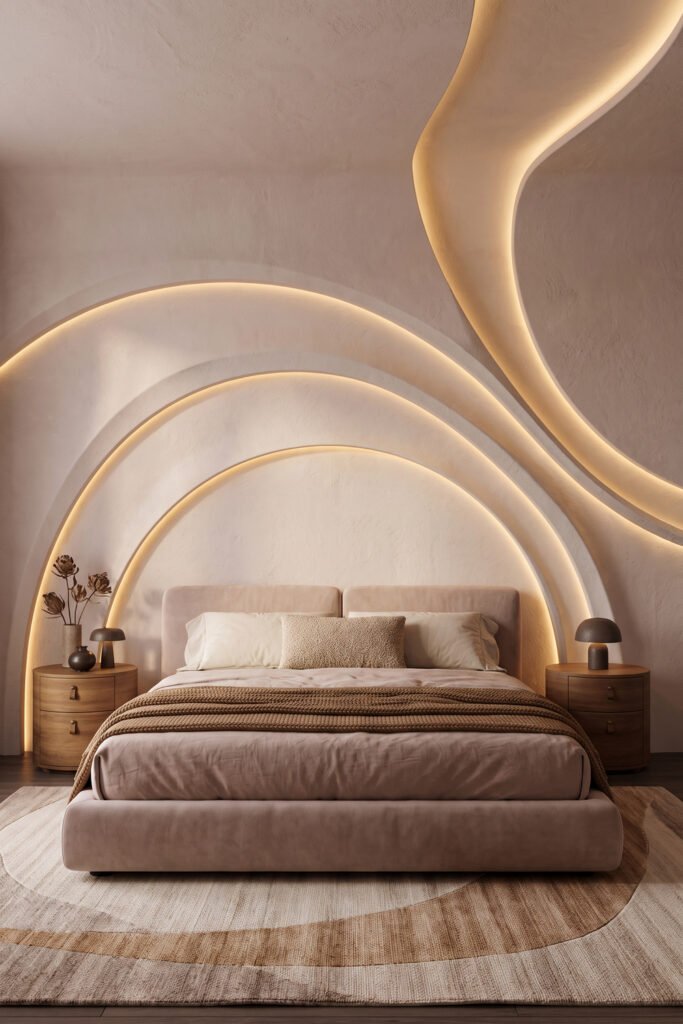
Curved lines of warm indirect light around a blush upholstered bed create a large visual gesture without requiring a gallery wall or patterned wallpaper. The strongest version keeps the surrounding wall relatively quiet so those curves remain readable.
Cream bedding softens the pink, while caramel or warm wood introduces enough darker tone to keep the palette from floating away. Round cushions and curved furniture can echo the light shapes without copying them exactly.
Plants work best as small accents here rather than a full indoor jungle. The room already has a strong architectural focal feature.
For permanently installed or concealed lighting systems, follow the instructions and ratings for the actual product and installation rather than improvising electrical details. The goal in the decor is the glow itself, not visible wiring.
Project Butterflies Above the Bed and Add Hanging Lanterns
A simple wooden bed becomes much more theatrical when the wall above it is animated with light.
Butterfly projections work because they occupy a large area without physically filling the wall. Keep the bedding comparatively quiet in dusty rose, cream, or warm beige so the illuminated shapes remain the focal point after dark.
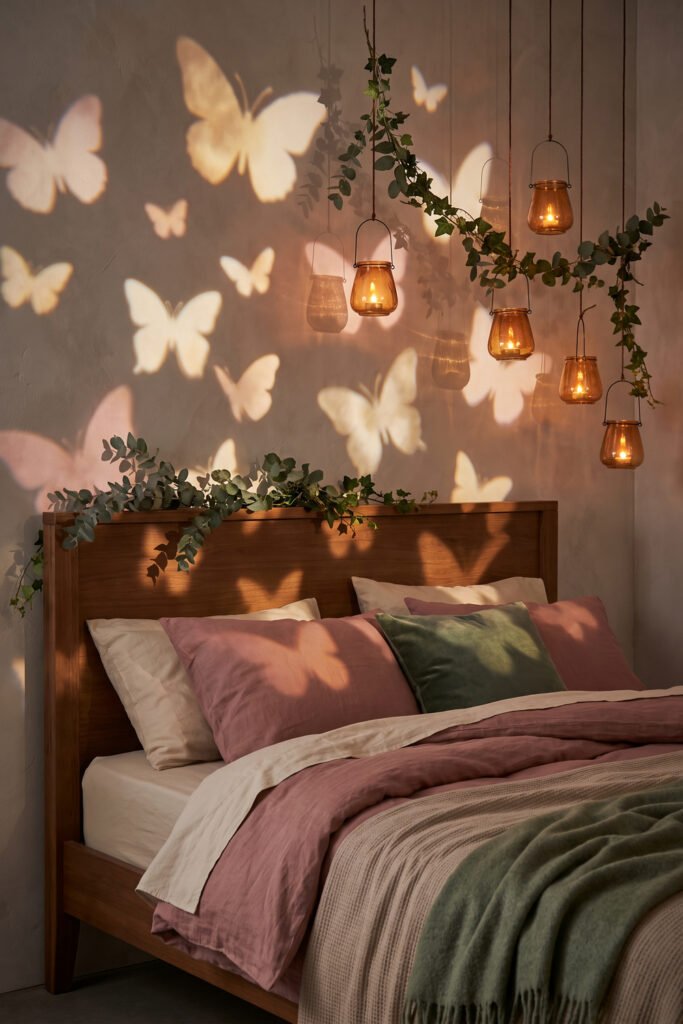
Suspended lanterns can create a second layer at different heights. Their glow gives the projection more depth, while a botanical garland overhead helps bridge the lanterns with the rest of the room during daylight hours.
This is a place where restraint matters. If the projected motif is active, avoid adding another complicated wall pattern underneath it.
Use projectors, hanging lights, and lanterns according to their product instructions, and mount suspended pieces with hardware appropriate for the actual ceiling or support.
The finished room feels imaginative because the light changes the space rather than simply illuminating furniture.
Create an Amber Hygge Corner With Velvet, Knits, and Plants
A bedroom corner can hold most of the room’s warmth without the entire bedroom using the same palette.
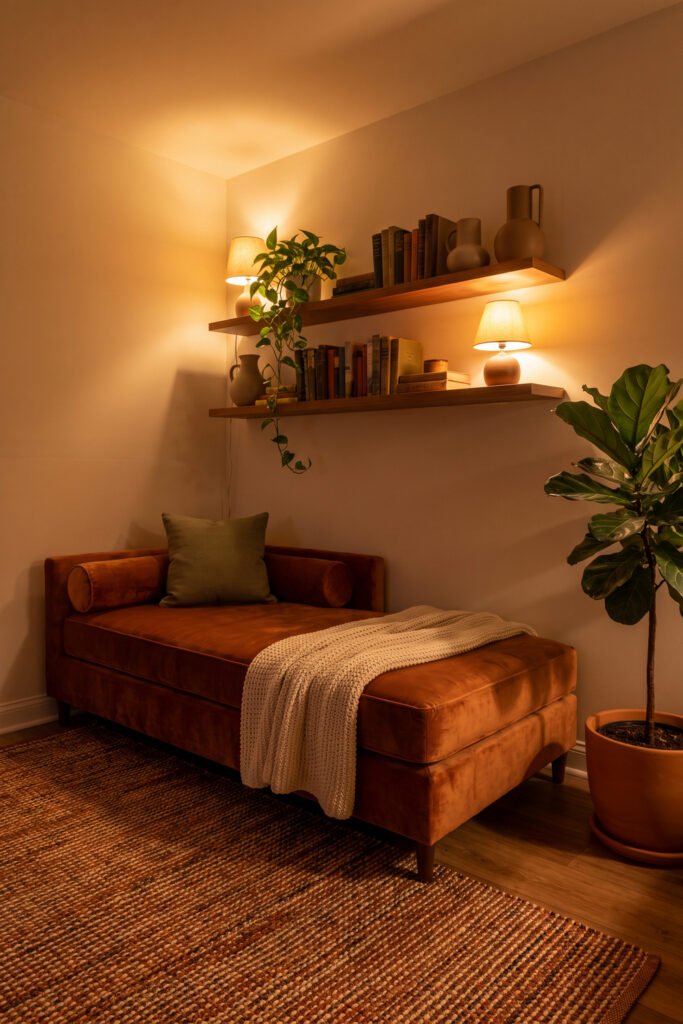
Terracotta velvet is a strong base because it has both color and a light-catching pile. Put it beside a chunky cream knit and the difference between the smooth sheen of velvet and irregular yarn becomes immediately visible.
Wooden floating shelves can continue the amber-brown family vertically. Plants break up those horizontal shelf lines and introduce cooler green tones among the orange light.
Small lamps and enclosed or flameless candle-style lighting work well at different heights, particularly when the brightest source stays below eye level.
If you use real candles anywhere in a bedroom, keep them away from curtains, bedding, decorations, and furniture, never leave them unattended, and extinguish them before leaving or sleeping. CPSC specifically identifies these combustible materials as items to keep away from burning candles.
Build the Amber Texture Mix
A few pieces can recreate the section’s strongest relationship: terracotta velvet, pale chunky texture, and a low source of amber-toned light.
Layer Fairy Lights, Gallery Art, and Floating Shelves Around the Bed
This is the classic layered cozy bedroom formula, but it looks strongest when the wall has hierarchy.
Begin with the bed as the largest soft shape. Cream or taupe bedding, a plush throw, and a few olive accents give the lower half of the composition plenty of tactile variation.
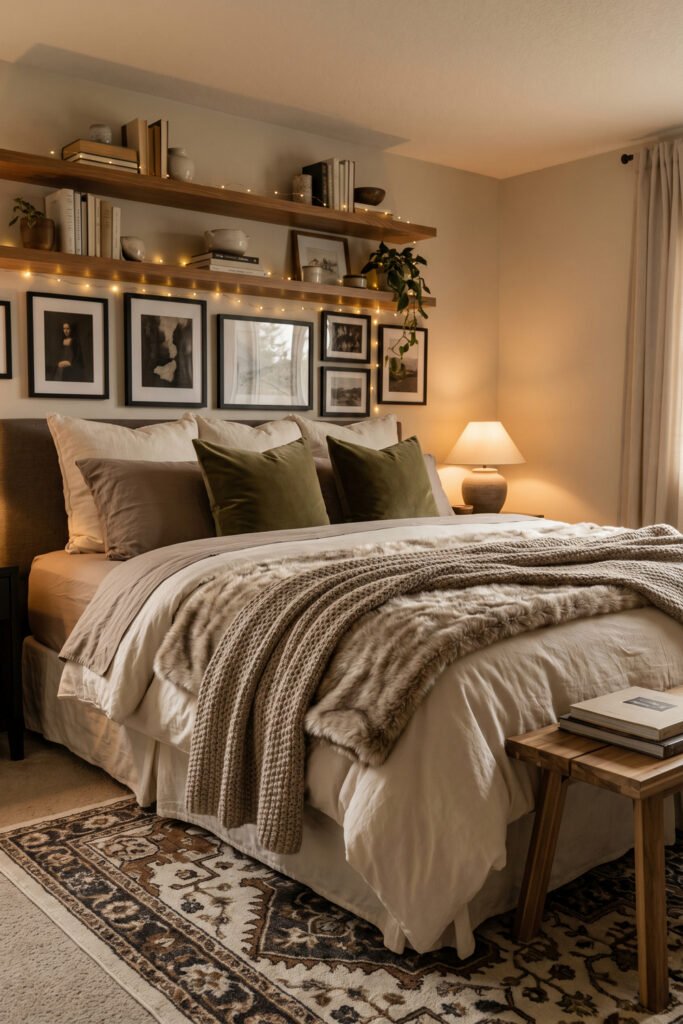
Above it, floating shelves can hold books, small plants, and a limited number of objects. Gallery frames occupy another part of the wall, while warm fairy lights travel around both instead of competing for their own zone.
That distribution matters. If shelves, frames, plants, and lights all pile into the same small rectangle, the wall becomes difficult to read.
The patterned rug below can repeat some of the warm brown and muted green found higher in the room, quietly extending the palette.
Decorative lights should be inspected for damaged wires or connections and used according to their labeling and manufacturer instructions.
Glow Floating Shelves Against a Sage Paneled Wall
Sage becomes much richer when light is allowed to skim across it.
A paneled or molded green wall gives the room subtle shadow lines during the day. Floating walnut shelves placed against that surface introduce a warmer material and make the green feel deeper by comparison.
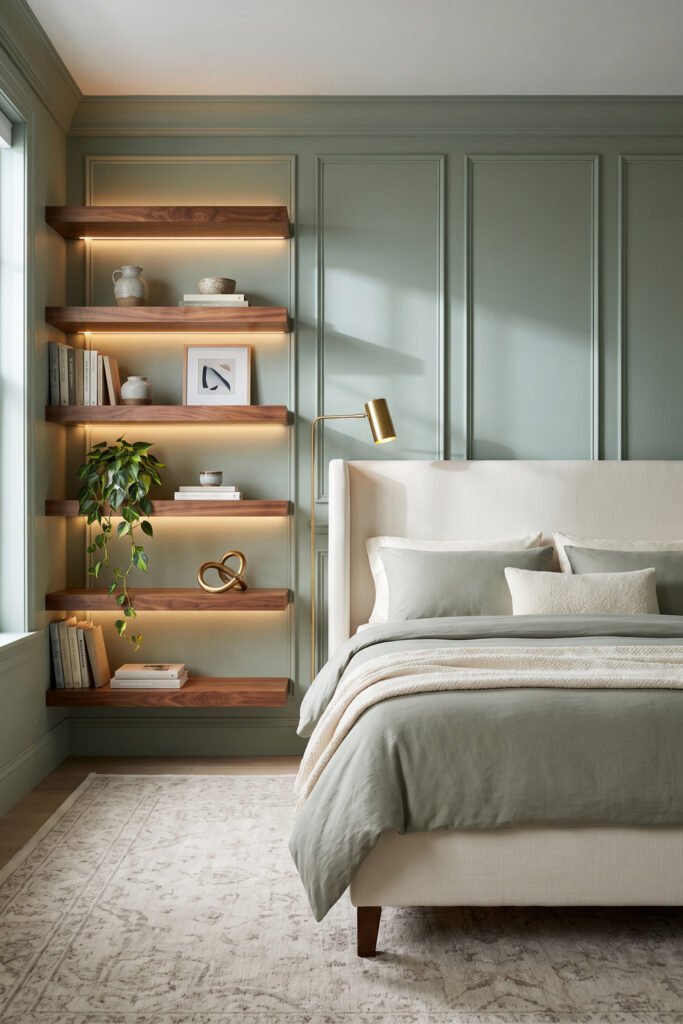
Concealed shelf lighting can emphasize both materials at night. The light catches pottery, picture frames, and trailing leaves while also illuminating the grain along the underside of the wood.
Keep the bed tailored so the shelves remain the main decorative detail. An upholstered headboard, white pillows, a sage duvet, and one textured cream throw are enough.
Because the shelving already provides several smaller objects, avoid duplicating that density across the nightstand.
This clean cozy bedroom aesthetic works especially well when you want atmosphere without fairy lights, abundant wall art, or a canopy. The lighting feels integrated into the furniture rather than added afterward.
Find the Shelf-and-Light Combination
The strongest shopping direction is the relationship between warm wood, soft illumination, and a restrained sage textile layer rather than extra shelf clutter.
Small-Space and Plant-Filled Cozy Bedrooms
Combine the Bed and Desk Into One Cozy Feature Wall
In a small bedroom, the bed and desk often have to sit close together. Treating them as one composition can make that limitation work in your favor.
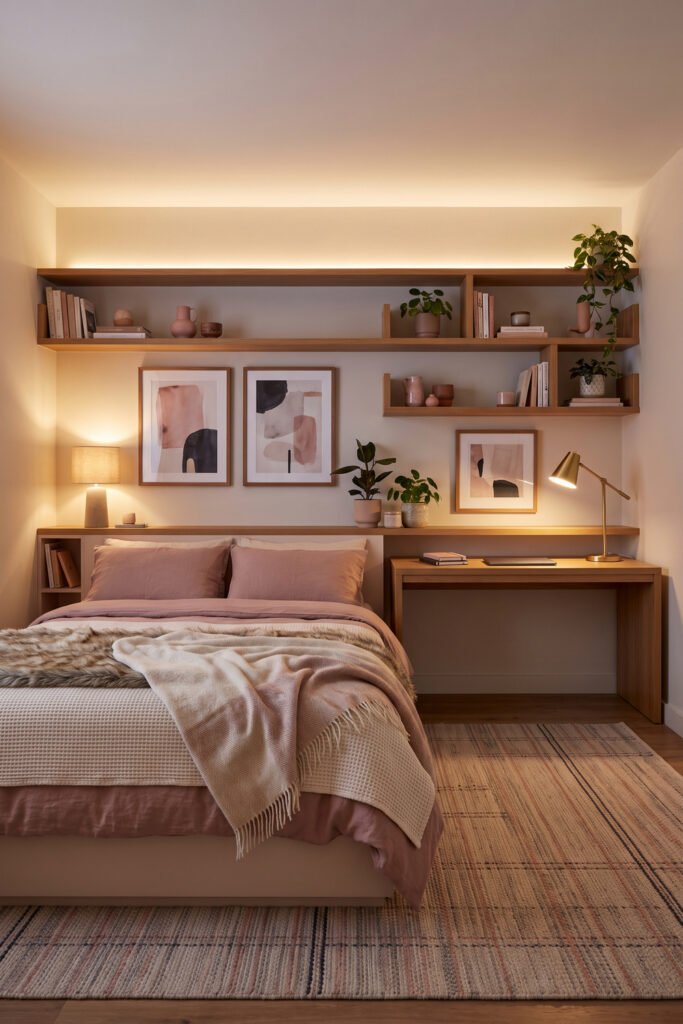
Use a shared palette across both zones. Blush bedding can be echoed in one print above the desk, while black frame details repeat the darker headboard or shelving.
A continuous picture ledge or coordinated group of shelves helps bridge the space between sleep and work. Add plants at different heights rather than placing several small pots across the desktop, where they compete with everyday necessities.
Warm decorative lighting can trace the upper wall so both functions sit inside the same visual frame.
Storage matters more than decorative abundance here. Give paperwork, chargers, and smaller objects somewhere to disappear so the wall art and textiles remain the pieces your eye notices first.
The room feels richer not because it contains more, but because the two halves speak the same visual language.
Divide a Studio Bedroom With a Plant-Filled Bookcase
An open bookcase can separate a sleeping area without making the room feel visually sealed.
Wood shelves create the structure, while books provide enough density to suggest a boundary. Leave some openings between them so light and sightlines can still travel through the unit.
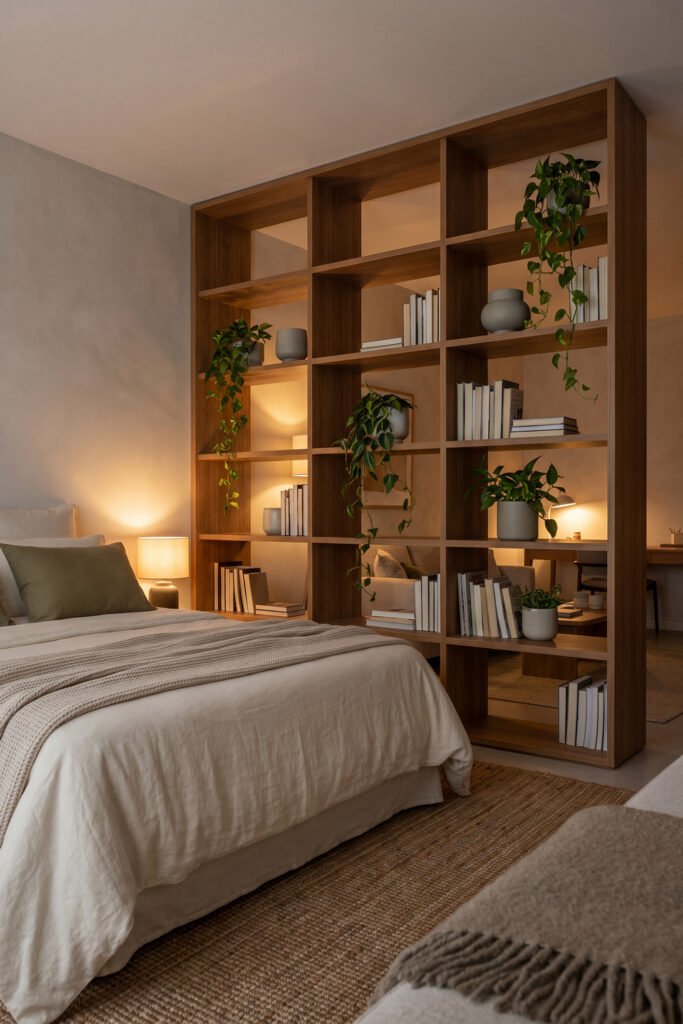
Trailing plants are particularly effective because their vines soften the rigid vertical and horizontal lines of the shelving. Cream bedding on one side and a simple lounge or work area on the other can then feel like two zones rather than two competing furniture arrangements.
Localized lamps reinforce that distinction after dark. A bedside lamp belongs to the sleeping zone, while a floor or desk lamp gives the adjacent area its own pool of light.
If you use a tall freestanding bookcase as a divider, address tip-over safety as part of the plan. CPSC recommends securing bookcases and other substantial furniture to the wall and following the manufacturer’s anchoring instructions.
Surround the Bed With Hanging Plants and Earthy Linen
A plant-filled bedroom feels most immersive when greenery appears at several heights.
Instead of placing every pot on a windowsill, combine a few larger floor plants with trailing vines above the bed or along shelving. This creates a loose botanical frame around the sleeping area.
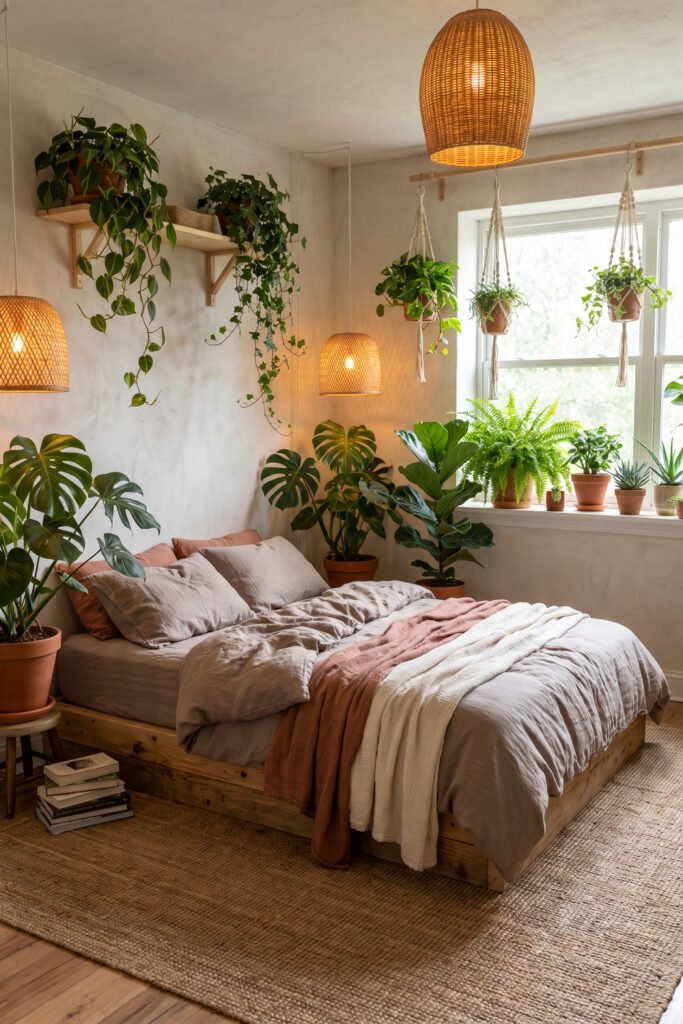
Keep the bedding understated so the leaves remain the dominant pattern. Taupe or clay-toned linen works beautifully because its slightly rumpled surface provides texture without introducing another print.
Raw or medium-toned wood makes a natural base for the bed and nightstands, while terracotta pots repeat the warmer tones in the bedding. Woven baskets can introduce one more texture without changing the palette.
Avoid choosing plants based only on how they look in a photograph. Light, watering requirements, placement, and pet safety vary by species, so those details should be checked for the exact plants you bring home.
The finished room should feel lush, but still usable enough to reach, water, and care for everything comfortably.
Bring Home the Earthy Layers
Keep the bedding quiet and let clay-colored planters and suspended greenery provide the stronger decorative rhythm around it.
Cozy Bedroom Questions
How Can I Make a Small Bedroom Cozy Without Making It Feel Cramped?
Concentrate the strongest decor in a few places instead of covering every surface. Let the bed carry most of the textile layering, use the walls for art or shelves, and keep circulation areas visually quieter.
Furniture that defines more than one function can also help. A bookcase can store items while zoning the room, and a desk can share the same wall composition as the bed.
The goal is not minimalism for its own sake. It is giving each layer enough space to register.
Can a Dark Bedroom Still Feel Cozy Instead of Gloomy?
Yes. Dark colors work especially well when they are paired with surfaces that reflect or soften light.
Black floral wallpaper can sit beside ivory pattern, charcoal walls can be softened with blush and faux fur, and burgundy can be balanced with cream bedding and warm timber.
Rather than automatically adding more white, look at texture and lighting too. Velvet, linen, woven fiber, warm wood, and low lamps can give darker colors more dimension.
How Do You Make a Cozy Bedroom Feel Layered Without Looking Cluttered?
Think in categories rather than object count.
Let one layer provide color, another provide texture, and another provide personal detail. For example, the bedding might carry the olive-and-terracotta palette, a rattan pendant can introduce woven texture, and two framed botanical prints can handle the wall decor.
Repeating a few materials and colors is usually more readable than adding a completely different style with every new object.
Are Fairy Lights Safe to Use Around Bedroom Curtains and Fabric?
Decorative lights need to be treated as electrical products, not simply as accessories. CPSC advises consumers to use tested decorative lighting, inspect sets for cracked sockets, frayed or bare wires, and loose connections, avoid overloaded extension cords, and turn decorative lights off before going to bed or leaving the house.
Keep the installation consistent with the product’s instructions rather than improvising around fabric, curtains, or mounting hardware. If a strand is damaged, replace it rather than hiding the damaged section behind drapery.
Make Cozy Feel Like You
The best cozy bedroom ideas do not all look alike. One room may depend on white linen and wicker, another on deep burgundy, layered books, and low amber lamps. What connects them is the way their elements support one another.
Choose a mood first. Then look for a palette, lighting treatment, and texture combination that reinforces it.
You might borrow the sage canopy from one room, the wood-and-rust palette from another, or simply the idea of giving a forgotten corner its own pool of light.
A bedroom starts to feel personal when those choices build on each other rather than competing for attention.
You May Also Like