Olive Green Decor Ideas For A Layered Living Room
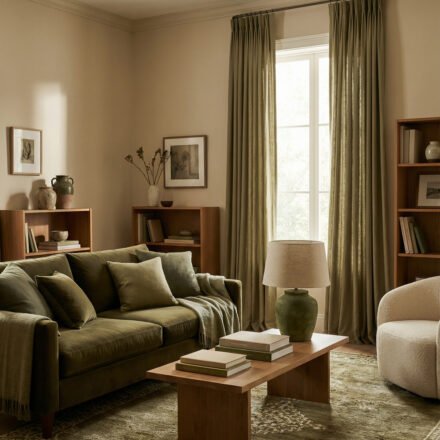
Olive green decor has a way of making a living room feel grounded, layered, and a little more interesting right away. It can lean earthy, polished, airy, or moody depending on how you style it.
Table Of Content
- Color-Drench The Room In Soft Olive Layers
- Anchor The Space With An Olive Velvet Sofa
- Frame The Seating Wall With Deep Olive Paneling
- Mix Olive With Rust And Walnut For Warmth
- Use Olive In A Romantic, Softly Curved Layout
- Build A Gallery Wall Around An Olive Sideboard
- Pair Olive With Travertine For Quiet Drama
- Turn An Olive Bookshelf Wall Into The Focal Point
- Layer Multiple Olive Tones For A Tonal Cocoon
- Warm Olive Up With Cognac And Aged Brass
- Go Modern With Olive, Black, And Fluted Wood
- Freshen Olive With Cream Stripes And Linen
- Olive Looks Good Here
If you’ve ever liked olive but weren’t sure whether to use it on a sofa, a wall, or just in smaller accents, you’re not alone. The ideas ahead make it feel much easier to picture.
So if you’re ready for a living room that feels fresh without trying too hard, you’re in the right place. Let’s get into the looks worth saving.
Color-Drench The Room In Soft Olive Layers
Want your living room to feel wrapped in color without going dark? Olive is perfect for that. It has a mellow depth that feels grounded right away.
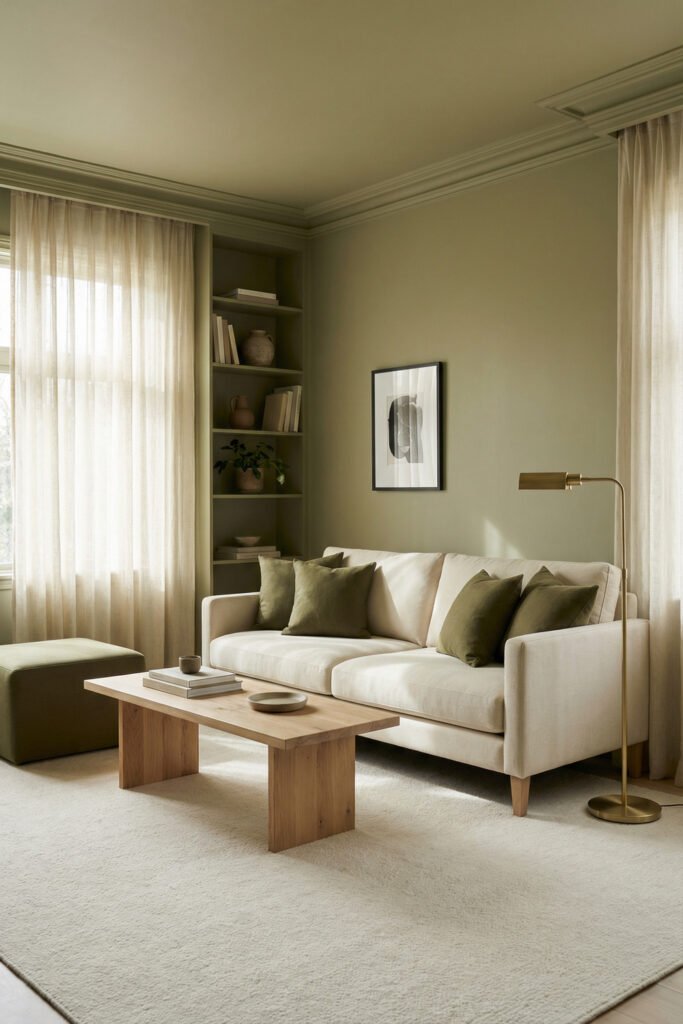
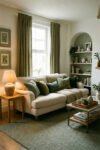
Brush olive across the walls, trim, and a slim bookshelf so the room reads as one calm envelope instead of a set of separate parts. Then lighten the center with a cream sofa, a pale wool rug, and airy linen curtains that catch the daylight. A low wood coffee table and brushed brass floor lamp keep the palette from feeling flat, while olive pillows and a tonal ottoman repeat the shade in a quiet way. The look feels pulled together because every finish is earthy, light-balanced, and slightly matte, with one black-framed artwork adding a crisp edge.
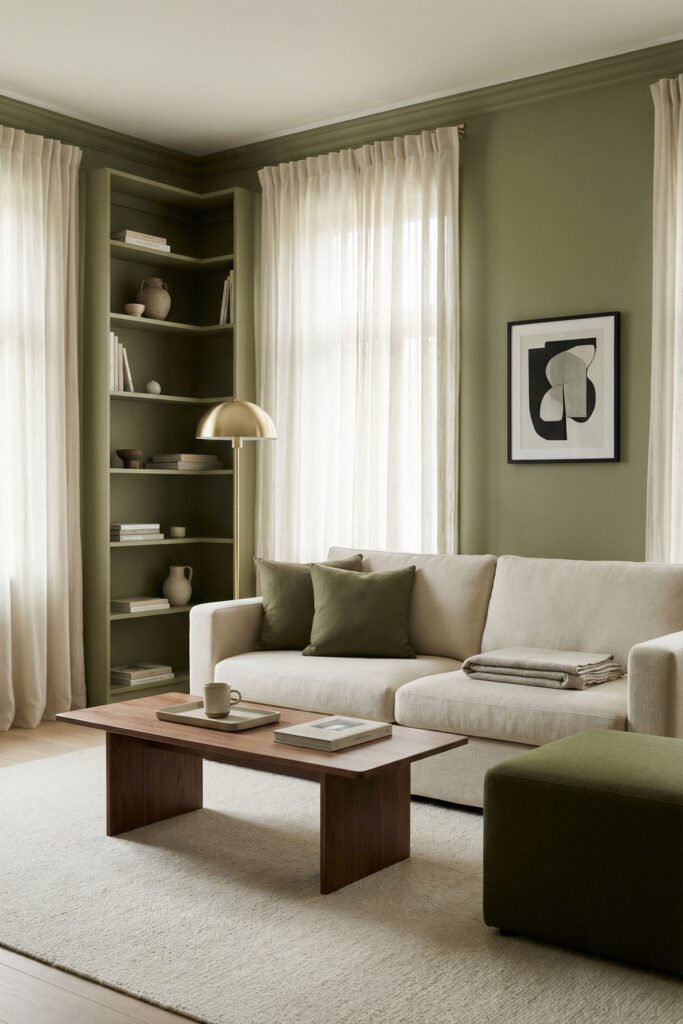
This setup feels especially good in a living room that needs softness without losing shape. It turns olive into the mood of the room, not just a single accent, and that makes the whole space feel more settled.
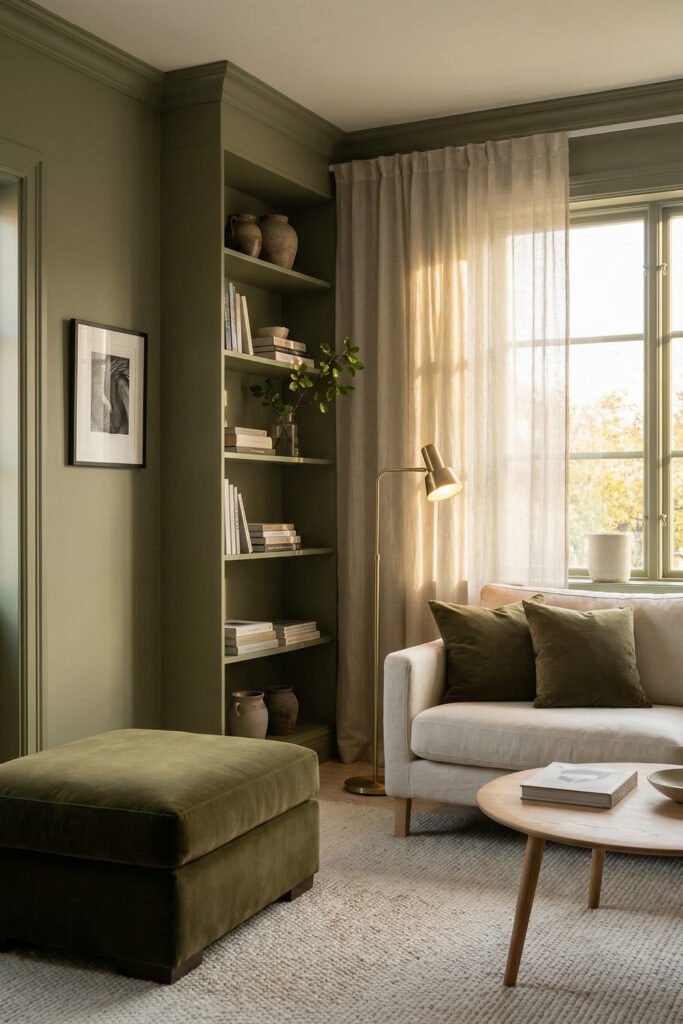
Color Note: Use two olive tones in the same room, one dustier and one deeper, so the walls and textiles feel layered instead of too matched.
It is the kind of room that makes everyday lounging feel more styled. Even a simple afternoon on the sofa feels a little more special here.
Anchor The Space With An Olive Velvet Sofa
Sometimes one piece does all the heavy lifting. An olive velvet sofa can do exactly that. It gives the room color, texture, and a strong point of view in one move.
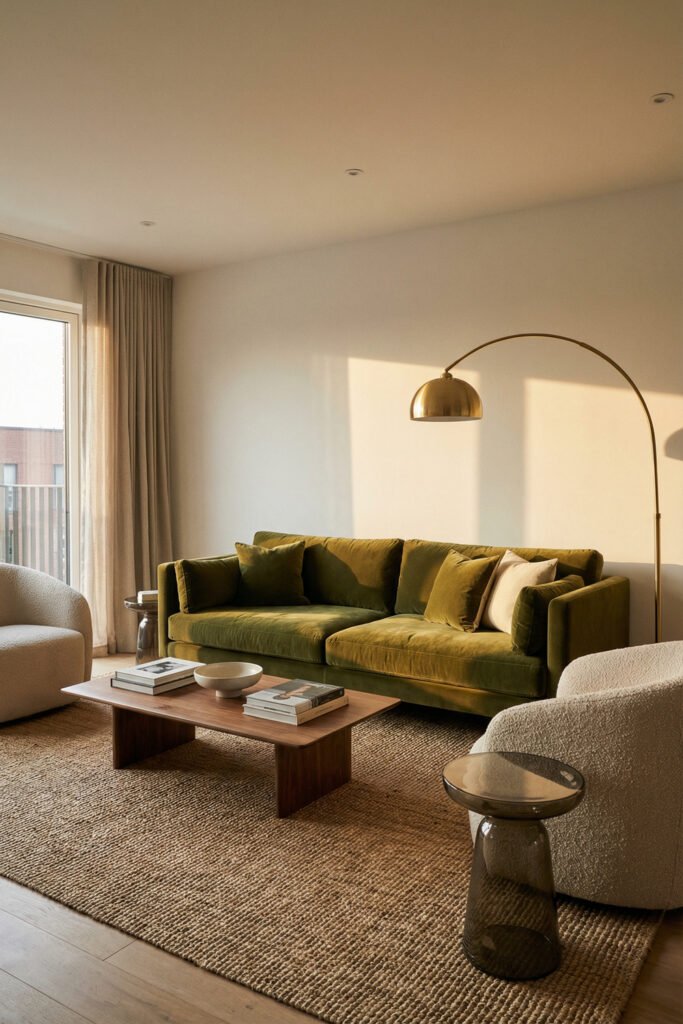
Set the sofa in the center of the room and let everything else support it with a lighter hand. A jute rug underfoot, a walnut coffee table, and a pair of oat boucle chairs keep the scene grounded and easy to live with. Velvet gives olive a rich, light-catching finish, so the color shifts gently through the day instead of looking flat. Add a curved brass floor lamp, a smoked glass side table, and a few olive-and-cream pillows to tie the edges together. The standout touch is the way the velvet catches warm evening light and turns the sofa into the room’s quiet star.
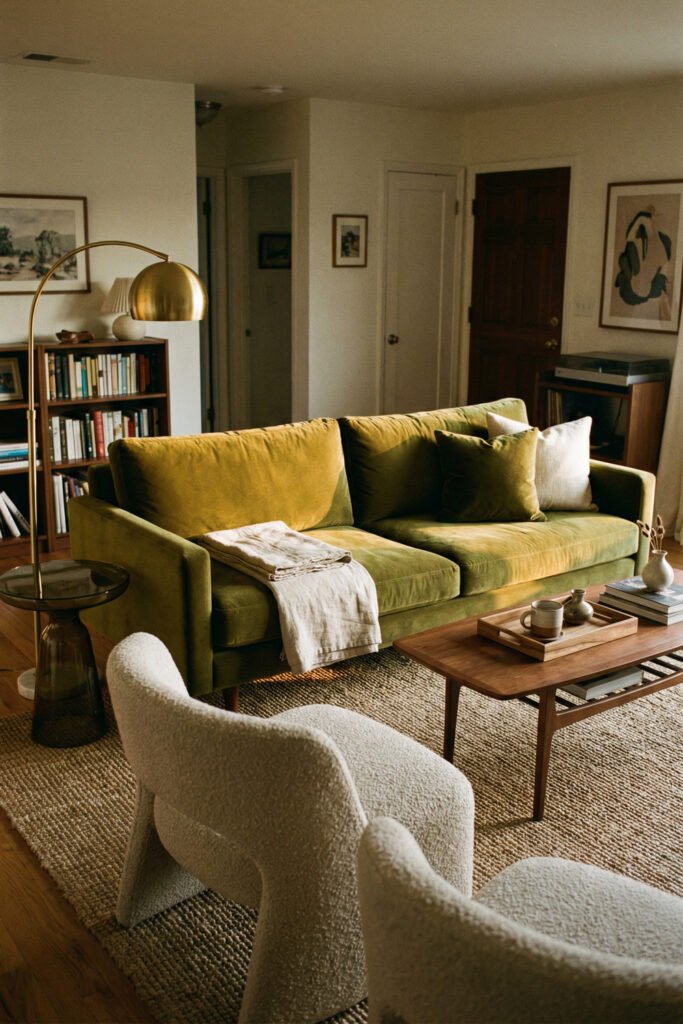
This look works well when you want a living room to feel polished fast. The sofa carries the color story, while the natural textures around it keep the whole scene easy and relaxed.
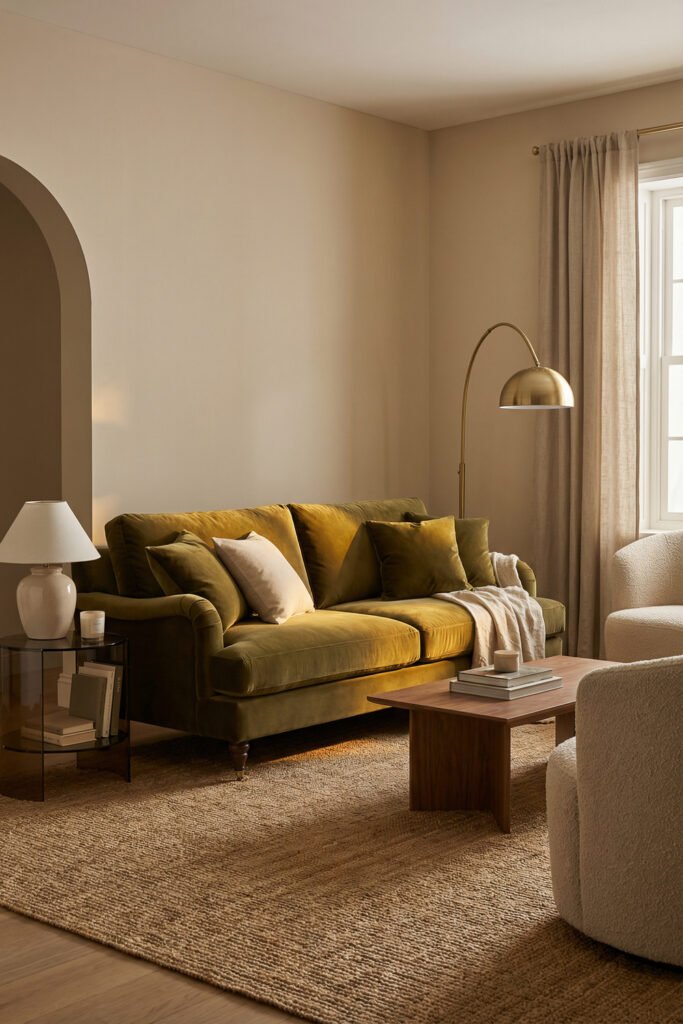
Texture Trick: Pair velvet with one rougher material, like jute, linen, or unfinished wood, so the sofa feels rich but not too formal.
It makes the room feel finished even before every last accessory is in place. That is part of its charm.
Frame The Seating Wall With Deep Olive Paneling
A sofa wall can do more than hold art. It can shape the whole room. Deep olive paneling gives that wall a stronger presence without making the space feel busy.
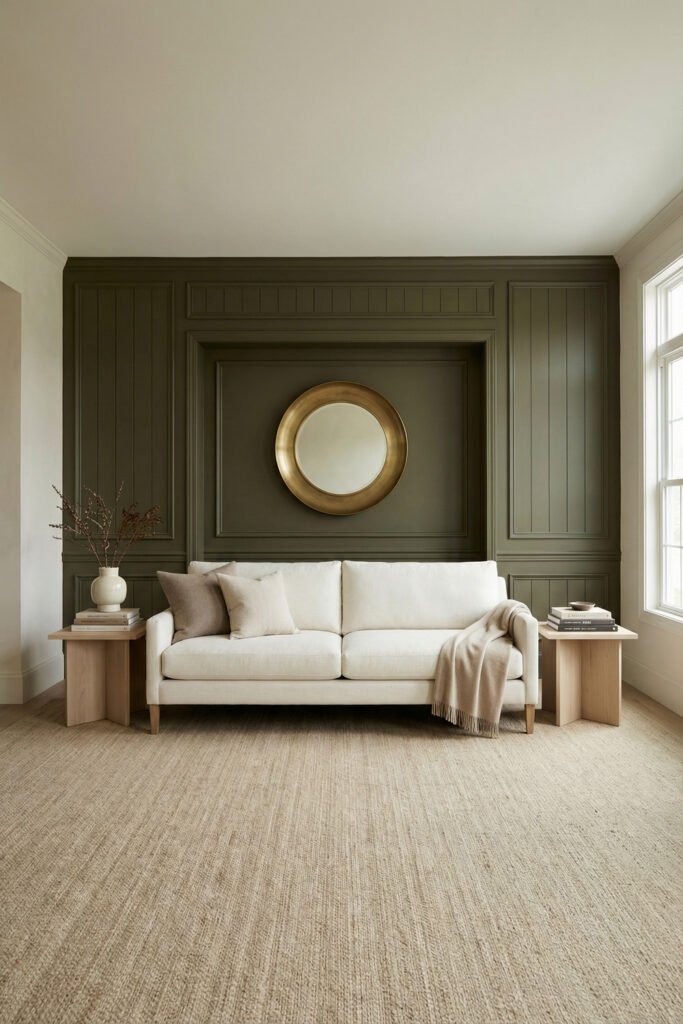
Paint wall molding or a paneled backdrop in a darker olive behind the sofa so the seating area feels framed and intentional. Keep the rest of the room lighter with ivory upholstery, pale oak side tables, and a sandy rug that softens the contrast. A round brass mirror or a large woven wall piece centered above the sofa breaks up the color and adds just enough shine. The wall becomes the visual anchor, while soft textiles and simple shapes stop it from feeling stiff. The signature detail is that deep olive backdrop, which makes even a plain sofa look custom and styled.
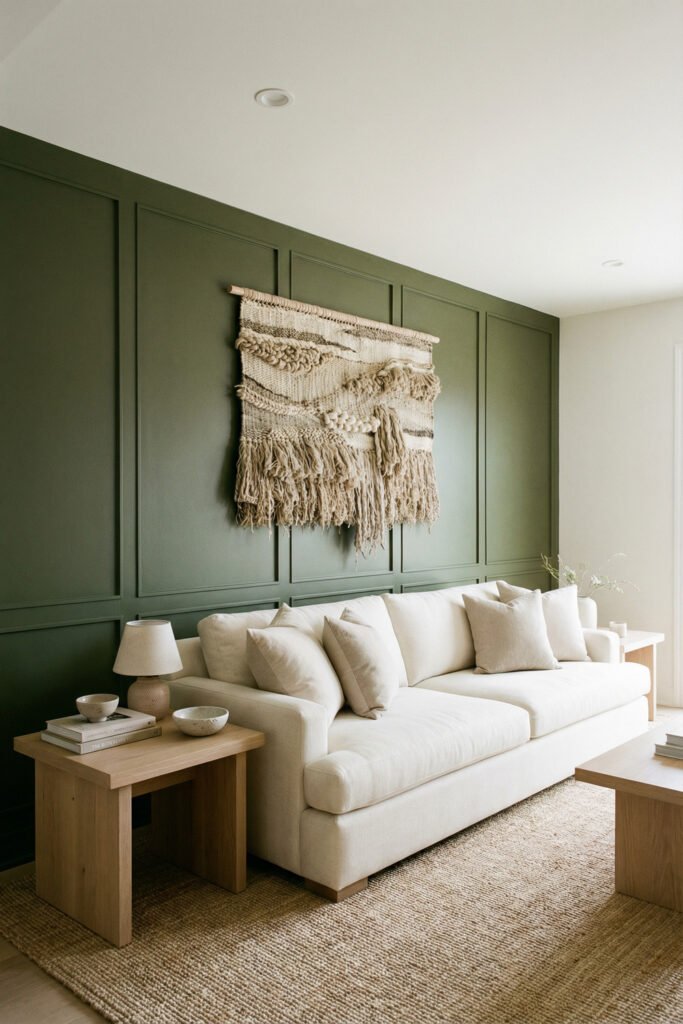
This idea has a little more drama, but it still feels calm. It is a smart way to give the living room depth when the furniture itself is fairly simple.
Wall Balance: Leave the side walls lighter so the paneled olive section reads as a feature and not a heavy box of color.
It gives the seating zone a real sense of place. That makes the room easier to settle into and easier to love every day.
Mix Olive With Rust And Walnut For Warmth
Olive can lean earthy in the best way when you pair it with the right colors. Rust and walnut bring out its mellow side. Together, they make a living room feel collected without looking too styled.
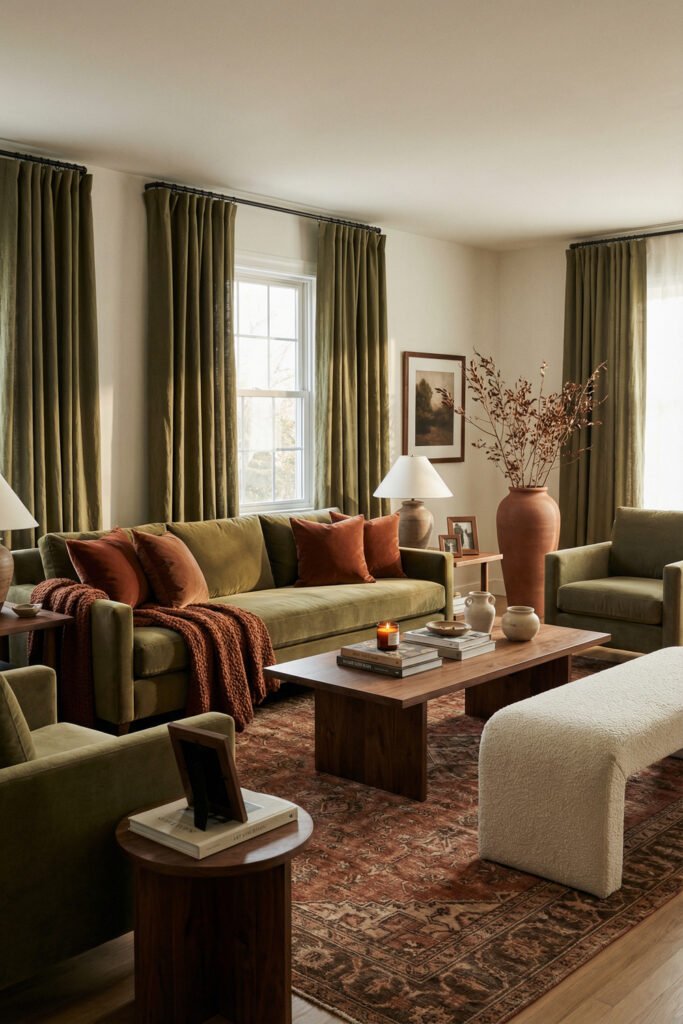
Start with olive in the main pieces, like an accent chair, drapes, or a sofa, then bring in rust through pillows, a throw, or a vintage-look rug washed with terracotta and brown. Walnut tables and frames add depth, while cream upholstery or a light boucle bench keeps the room from getting too dense. The palette feels natural because every shade has a little warmth in it, from the green to the wood to the clay tones. A tall ceramic vase in burnt clay beside an olive linen chair becomes the detail that makes the whole setup memorable.
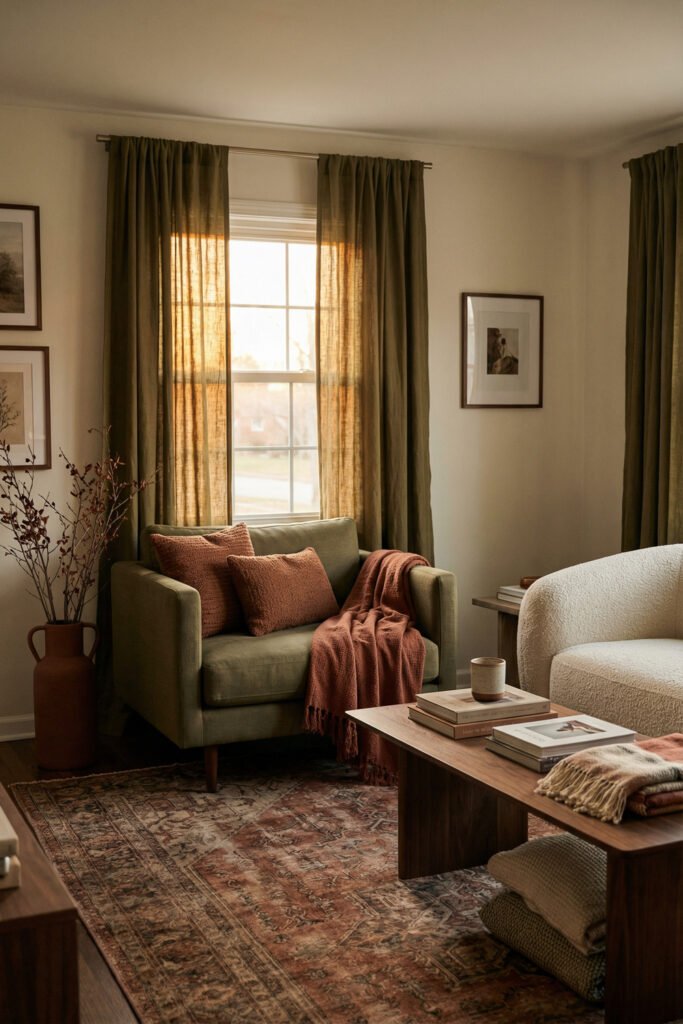
This mix feels grounded and a little moody, but not heavy. It is a great fit for living rooms that need color and still want to feel easy at night.
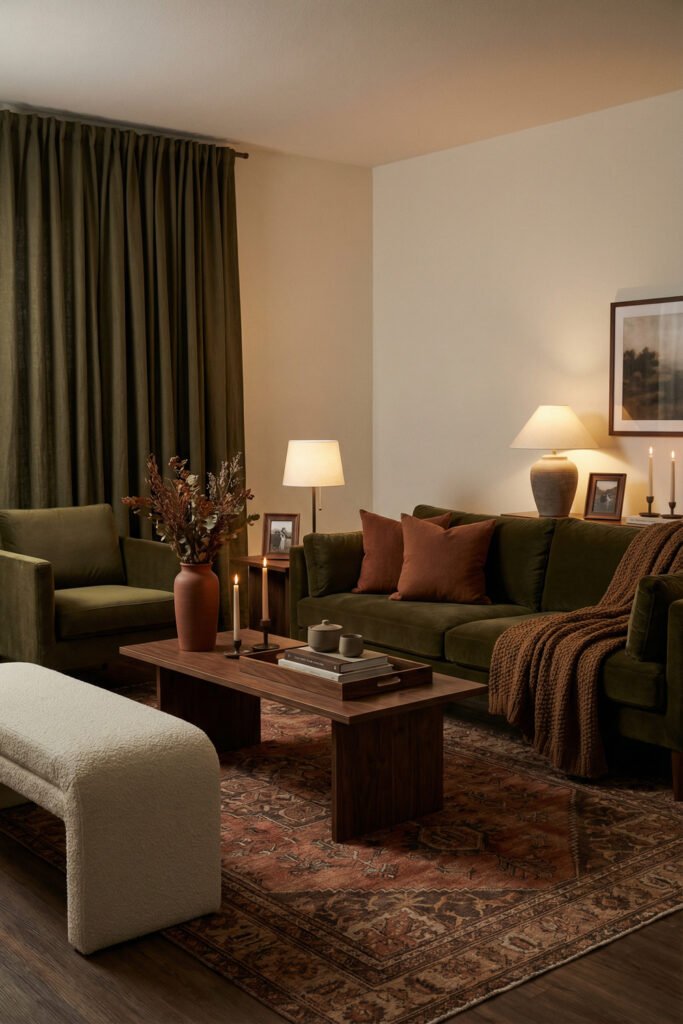
Palette Tip: Keep the rust in smaller doses than the olive so the green stays in charge and the warmer notes feel like a glow.
It is a room that looks good in daylight and even better after sunset. The deeper tones make quiet evenings feel especially relaxed.
Use Olive In A Romantic, Softly Curved Layout
Olive does not always have to feel tailored or earthy. It can be gentle too. Curved furniture and a few decorative details give it a softer, more graceful mood.
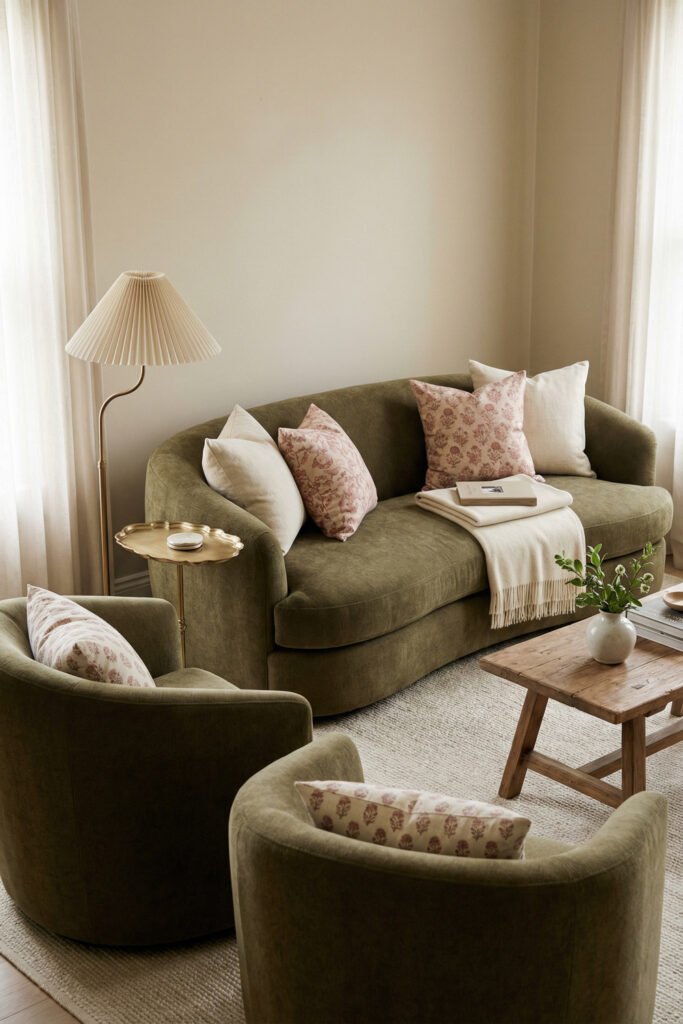
Choose a rounded sofa or a pair of curved accent chairs in olive chenille or a brushed woven fabric, then layer in floral or block-print pillows with hints of cream and faded rose. A pleated lampshade, a slim brass side table, and a scalloped tray keep the room feeling dressed without adding clutter. The shapes do most of the work here, with soft edges repeated from the seating to the lamp to the accessories. That makes the olive feel lighter and more expressive. The signature moment is a rounded olive chair beside a pleated lamp, creating a corner that feels almost like a little retreat.
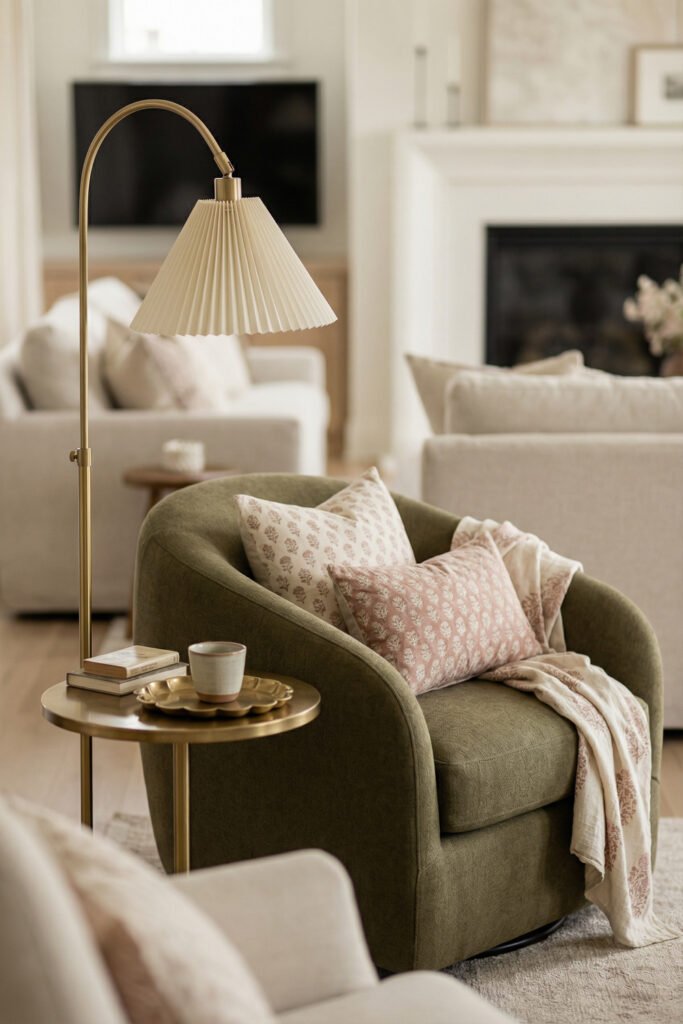
This version of olive works beautifully in living rooms that need softness more than contrast. It has color, but it also has movement, which keeps the room from feeling too square or flat.
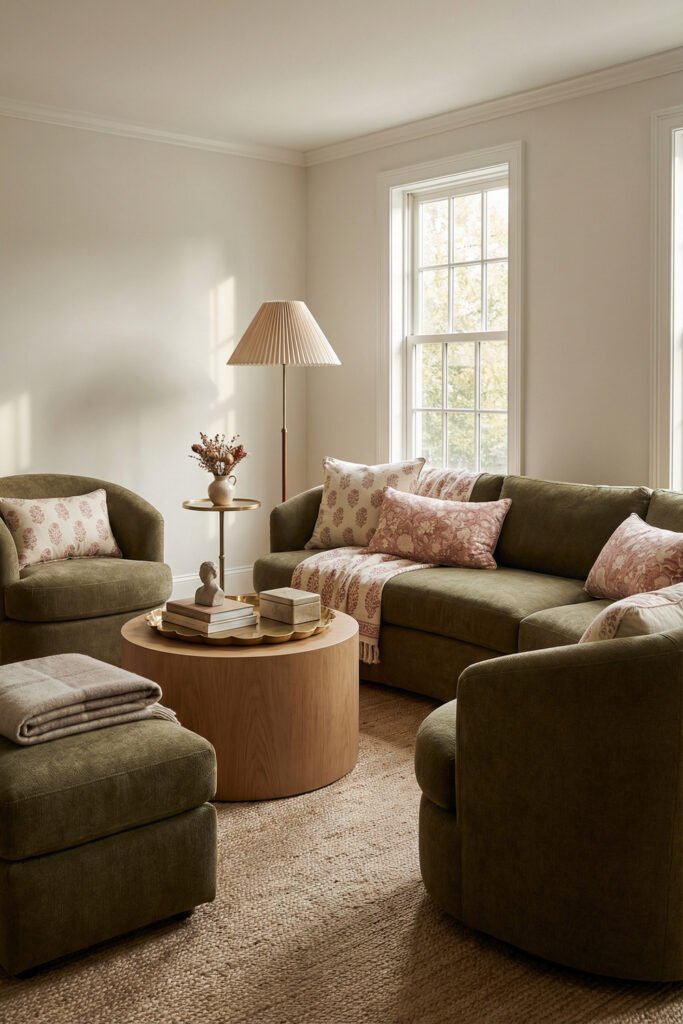
Shape Cue: Repeat one curved form at least three times, such as a rounded chair, arched lamp, and circular side table, for a smoother flow.
The space feels gentle in a way that is easy to enjoy every day. It invites you to sit down, settle in, and stay awhile.
Build A Gallery Wall Around An Olive Sideboard
Not every olive green idea needs to start with the sofa. Sometimes the strongest move is lower and quieter. An olive sideboard can become the base for a whole styled wall.
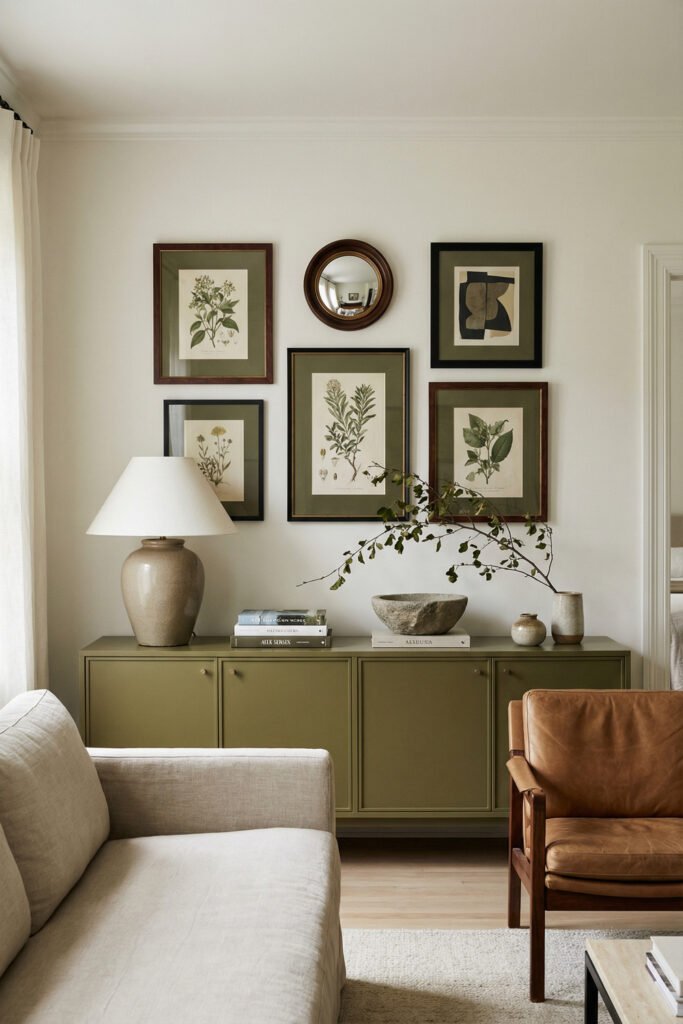
Place a low olive sideboard or media cabinet along one main wall, then build upward with a gallery arrangement of art in dark wood or black frames. Olive matting, botanical prints, and a small mirror help the color travel upward so it feels worked into the whole composition. On top, style a ceramic lamp, stacked books, and a stone bowl to give the cabinet some weight and texture. The room feels balanced because the sideboard holds the color low while the art lifts the eye. The best detail is the olive matting, which pulls the wall together without shouting.
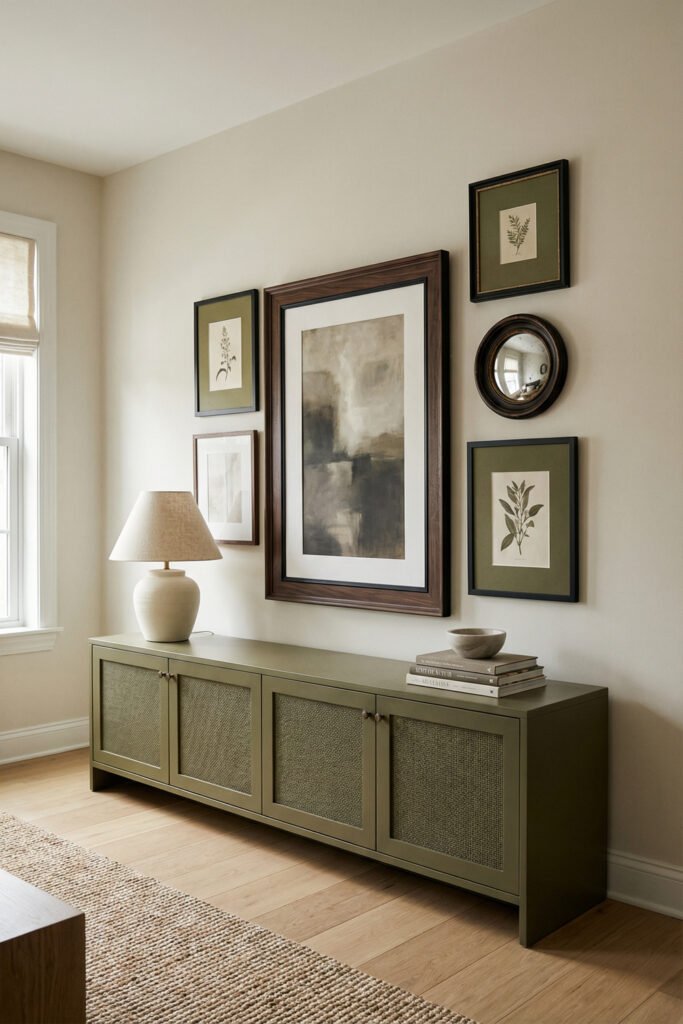
This idea is especially nice when you want color that feels intentional but not overwhelming. It gives the living room a strong focal point while leaving the seating area fairly simple.
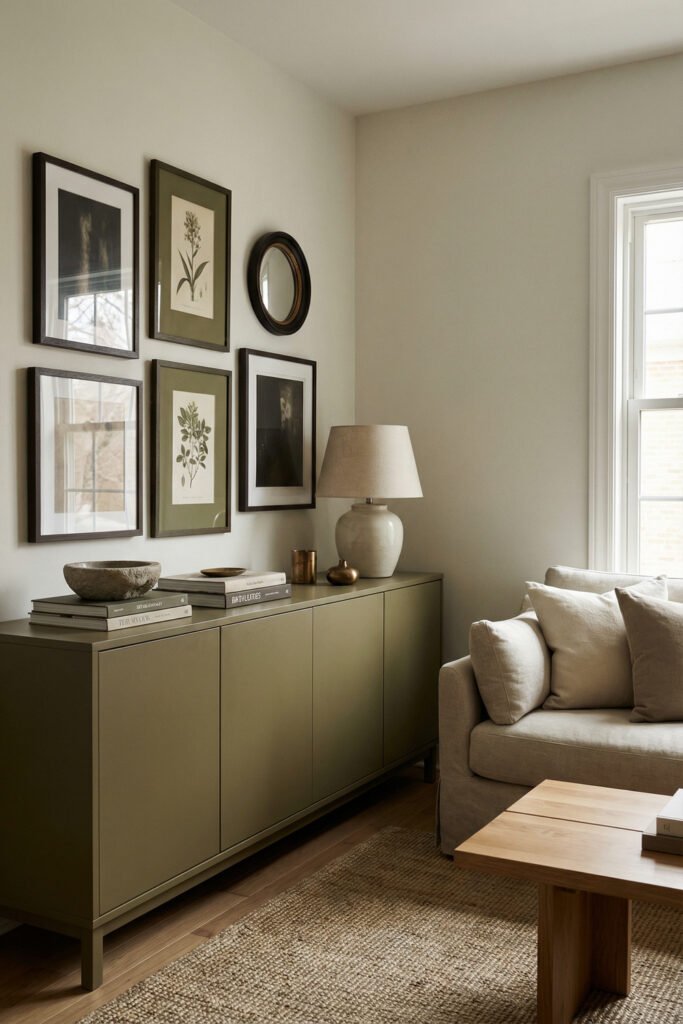
Display Move: Keep the heaviest frames near the center of the arrangement so the gallery wall feels grounded above the cabinet.
It makes a blank wall feel thoughtful fast. That kind of visual structure can change the mood of the whole room.
Pair Olive With Travertine For Quiet Drama
Some color pairings speak softly and still leave a big impression. Olive and travertine do that beautifully. One feels earthy and deep, while the other brings a dry, chalky lightness.
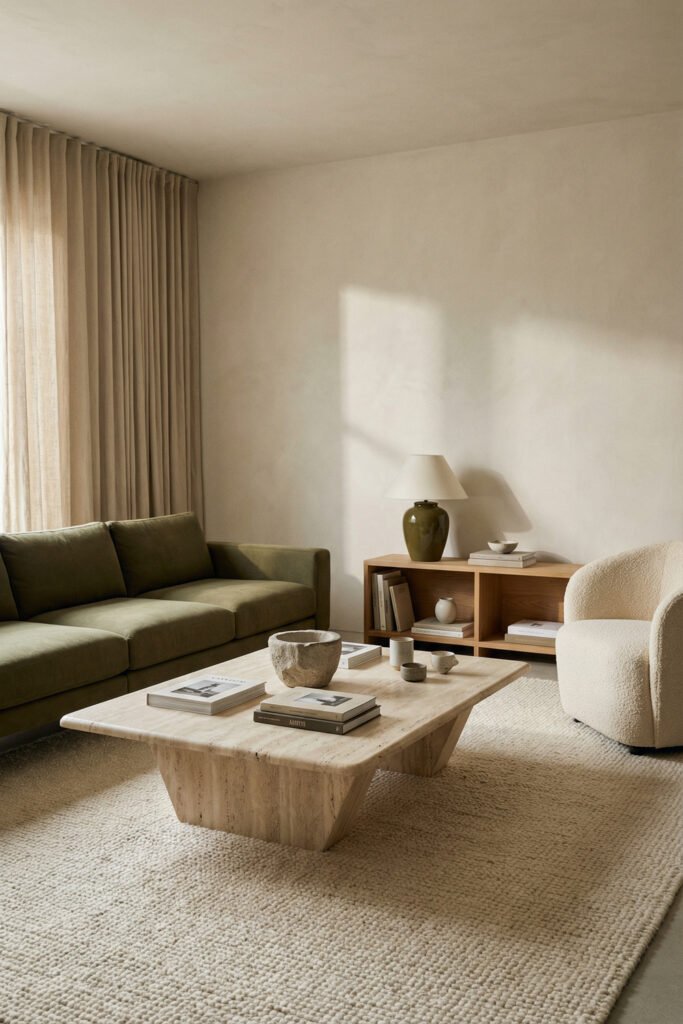
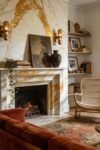
Picture an olive sofa facing a chunky travertine coffee table, with a cream boucle chair and a low oak shelf nearby. The stone keeps the green from feeling too heavy, and the green stops the stone from feeling cold. Add an olive ceramic lamp, linen drapes, and a textured rug in sand or putty so the room stays calm from wall to floor. The finishes all have a natural, almost dusty quality, which makes the space feel composed without looking too polished. The signature detail is that solid stone table, which gives the room weight and a sculptural center.
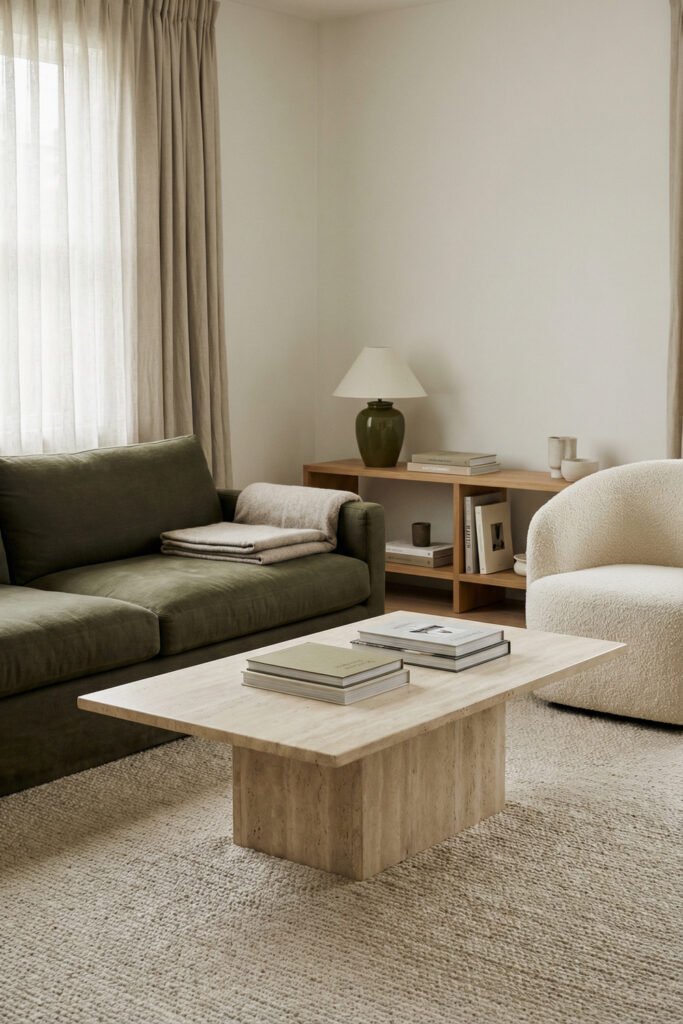
This look has a quieter kind of contrast. It feels refined, but still easy to live with, especially in a room that gets soft afternoon light.
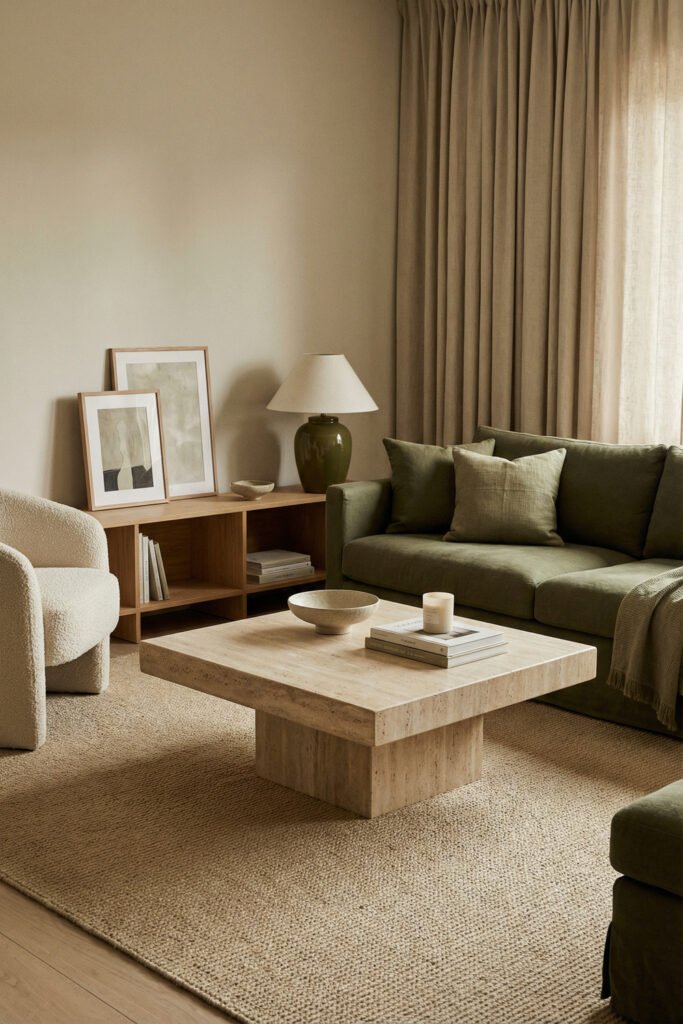
Material Mix: Choose matte or honed finishes over shiny ones so the olive and stone feel natural together instead of overly dressed.
It creates a living room that feels settled from the first glance. Even the still parts of the room seem to hold a little mood.
Turn An Olive Bookshelf Wall Into The Focal Point
A bookshelf wall can carry color in a smart, space-saving way. That makes olive especially useful in a living room where floor space is limited. The color rises upward and gives the room personality without crowding it.
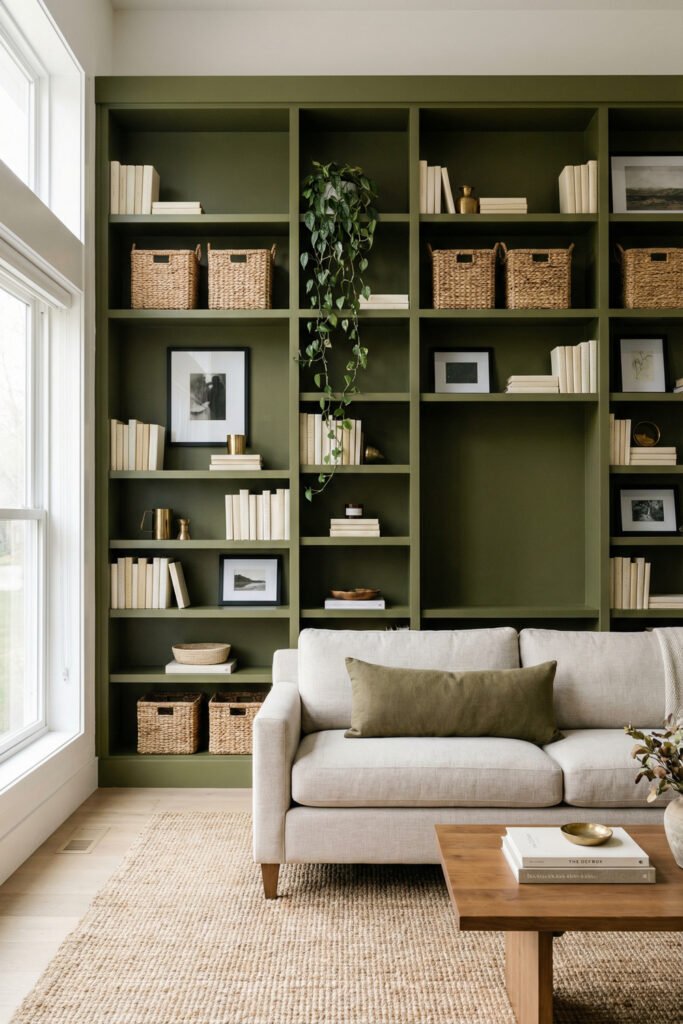
Paint built-ins or open shelves olive green, then fill them with cream books, woven baskets, framed art, and a few brass objects for contrast. Keep the seating simple with a neutral sofa and one olive lumbar pillow so the wall stays in focus. A trailing plant or two softens the edges, while black picture frames give the shelves some shape. The room feels complete because the storage becomes part of the decor instead of a separate practical element. The standout moment is the olive shelving itself, which turns everyday books and objects into a full visual backdrop.
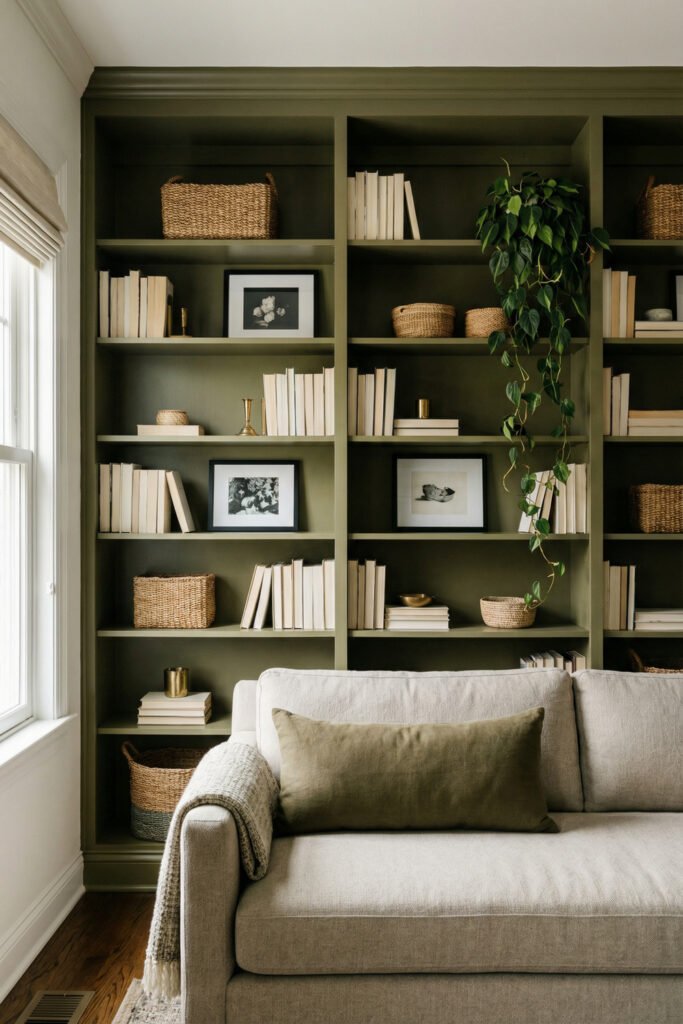
This idea feels fresh, useful, and easy to picture in a real home. It gives olive a strong place in the room while still letting the living area breathe.
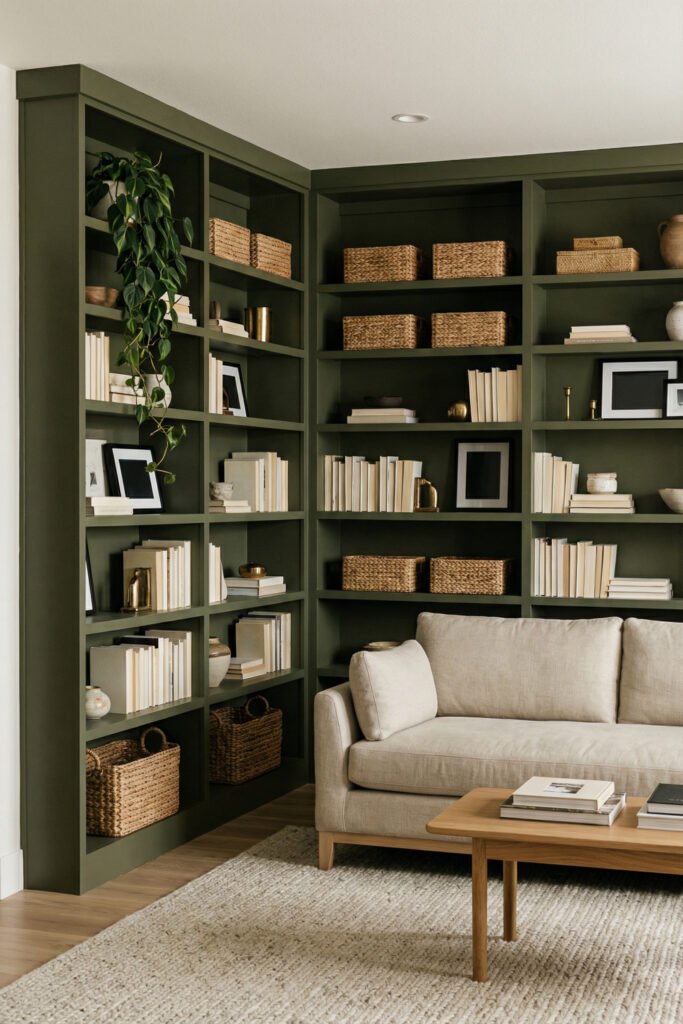
Shelf Styling: Mix books, baskets, and open space in uneven groups so the olive backdrop shows through and the shelves do not feel packed.
It is a simple way to make the room feel more personal. You get storage, color, and atmosphere all at once.
Layer Multiple Olive Tones For A Tonal Cocoon
One shade of olive is nice, but a whole range of it feels much more layered. This approach makes the room feel deeper without getting busy. It is a smart way to use color when you want the space to feel calm but still fully styled.
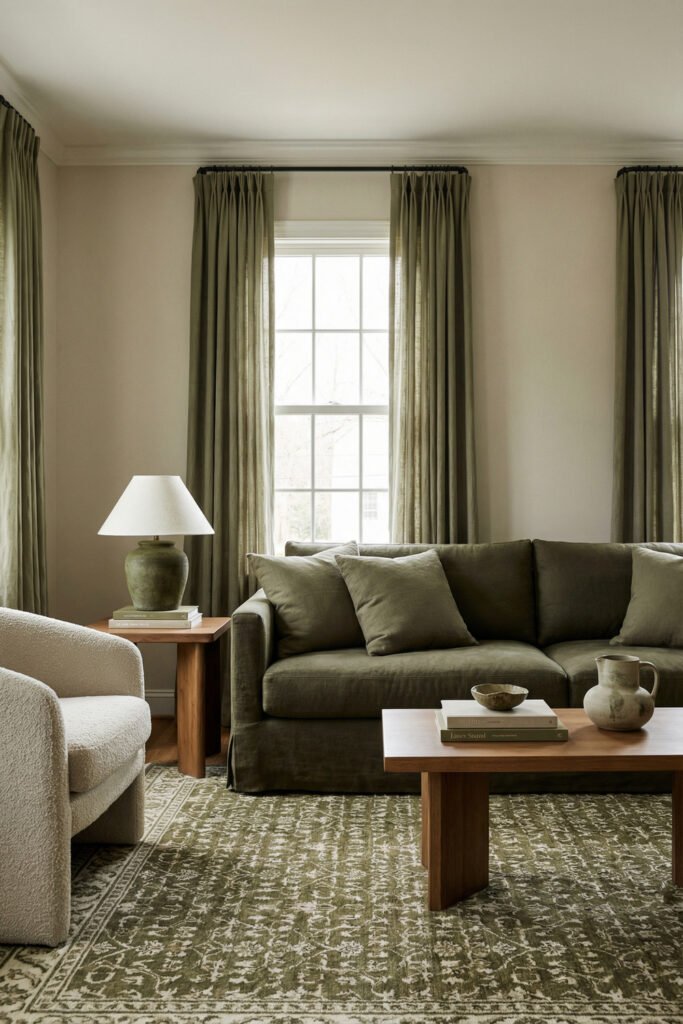
Start with a deeper olive sofa, then bring in softer versions through drapes, pillows, and an olive-and-cream rug that helps the shades blend instead of compete. Oatmeal walls and medium wood pieces keep the palette open, while a soft boucle chair adds a lighter break near the seating area. A ceramic lamp in mossy green and a stack of linen-bound books make the room feel collected rather than overly matched. The whole look works because each olive tone has a slightly different depth, and the long drapes create the signature moment.
This living room feels wrapped in color in a quiet, easy way. It is especially good for spaces that need richness without sharp contrast or too many competing accents.
Tone Trick: Keep one olive cool, one muted, and one deeper so the room feels layered instead of flat.
It gives the eye something to move through slowly. That makes the room feel restful from morning light to evening.
Warm Olive Up With Cognac And Aged Brass
Olive gets even better when it has something warm beside it. Cognac leather and aged brass bring out its earthy side in a way that feels grounded and a little storied. The mix is rich, but it still feels easy to live with.
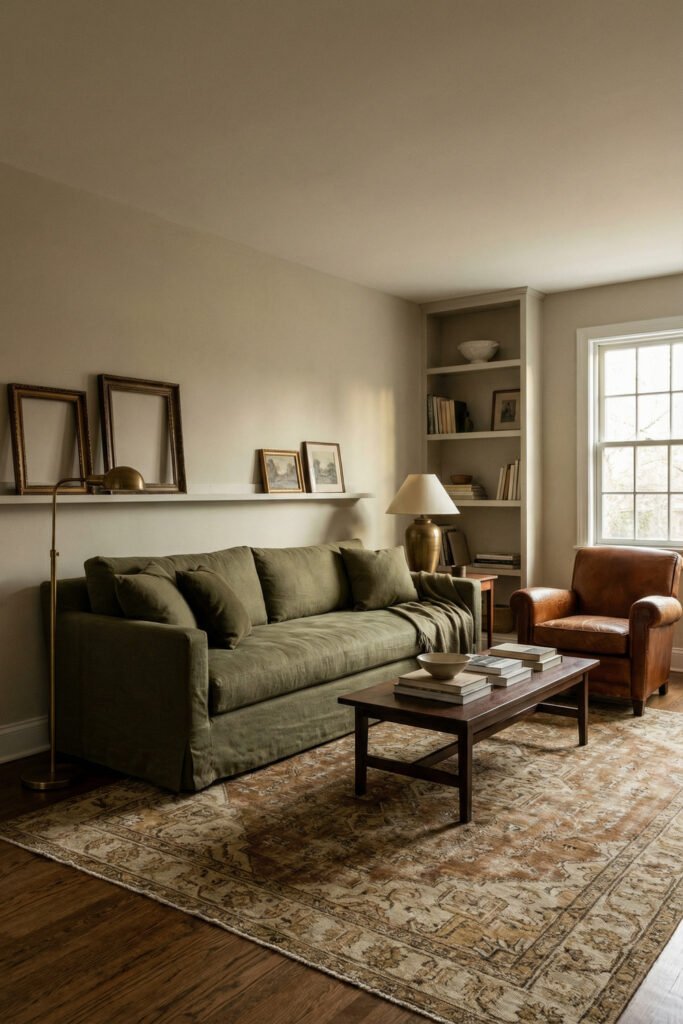
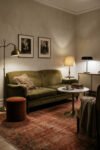
Place an olive sofa across from a cognac leather chair so the room has instant contrast without looking high-drama. Add a dark wood coffee table, a faded vintage-style rug with tobacco and muted gold tones, and brass lighting with a worn finish to give the palette more depth. A few olive pillows or a throw keep the green moving through the room, while antique-look frames and a ceramic bowl add a collected layer. The standout detail is the meeting of olive fabric and caramel leather, which makes the whole space feel fuller.
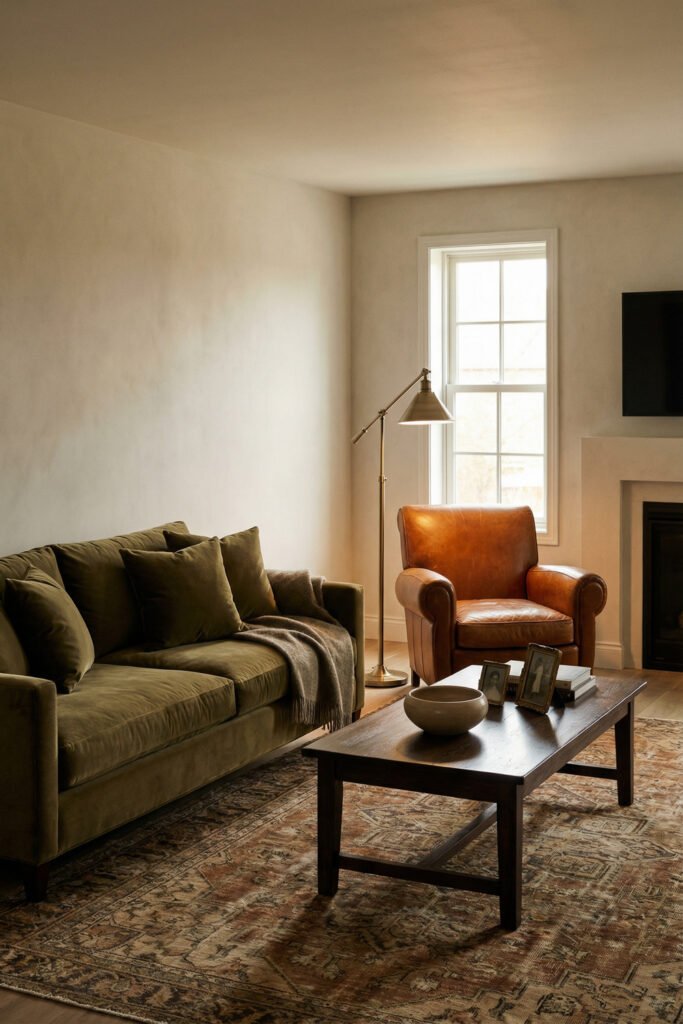
This look works beautifully in living rooms that need warmth and a stronger sense of character. It feels relaxed, but it still has weight and polish.
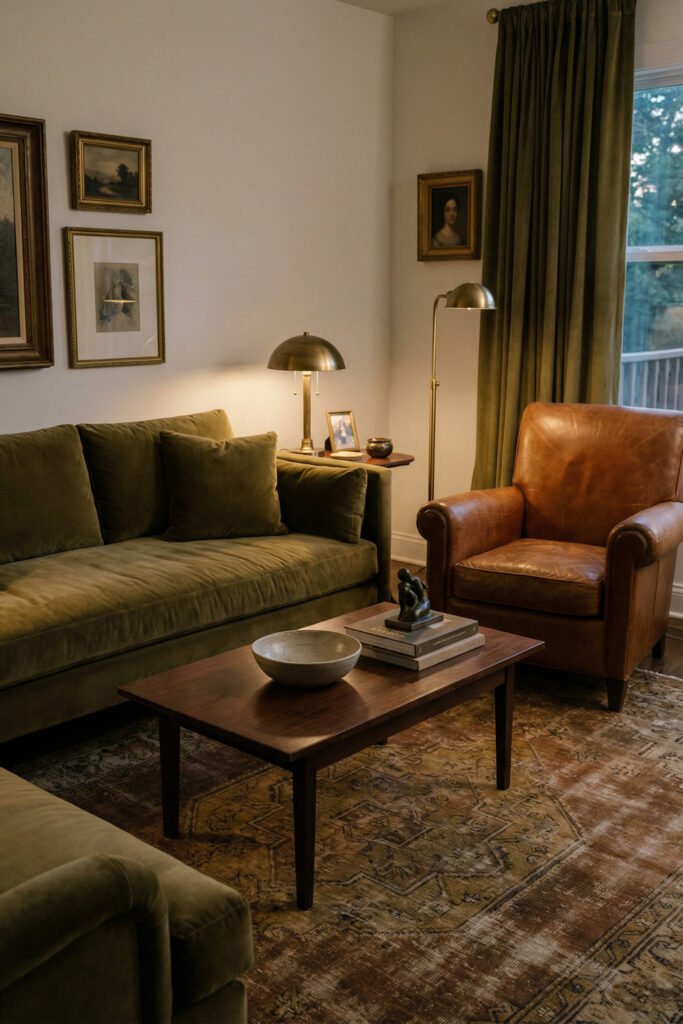
Finish Mix: Choose brass with a softened, brushed look so it blends with the leather and wood instead of stealing attention.
It is the kind of room that feels better the longer you sit in it. Everyday routines seem a little slower and nicer here.
Go Modern With Olive, Black, And Fluted Wood
Olive can look crisp and current when the lines around it are cleaner. Add black accents and fluted wood, and the whole room shifts into a sharper, more architectural mood. It feels fresh without losing warmth.
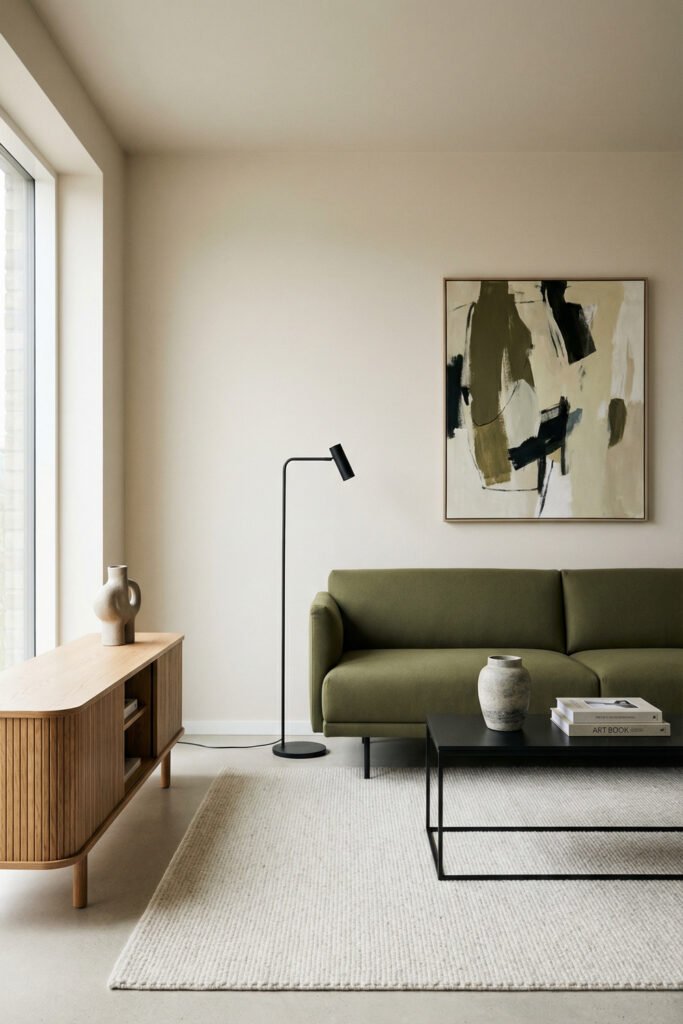
Use a streamlined olive sofa as the main anchor, then layer in a black floor lamp, a slim black-framed coffee table, and a fluted wood media unit that adds texture without extra bulk. Abstract art with olive brushstrokes helps repeat the color on the wall, while a pale rug softens the darker notes below. Keep accessories edited, with maybe one stone vase and a low stack of books, so the room stays clear and intentional. The signature detail is a ribbed olive cabinet or slatted wood feature that brings quiet texture to the setup.
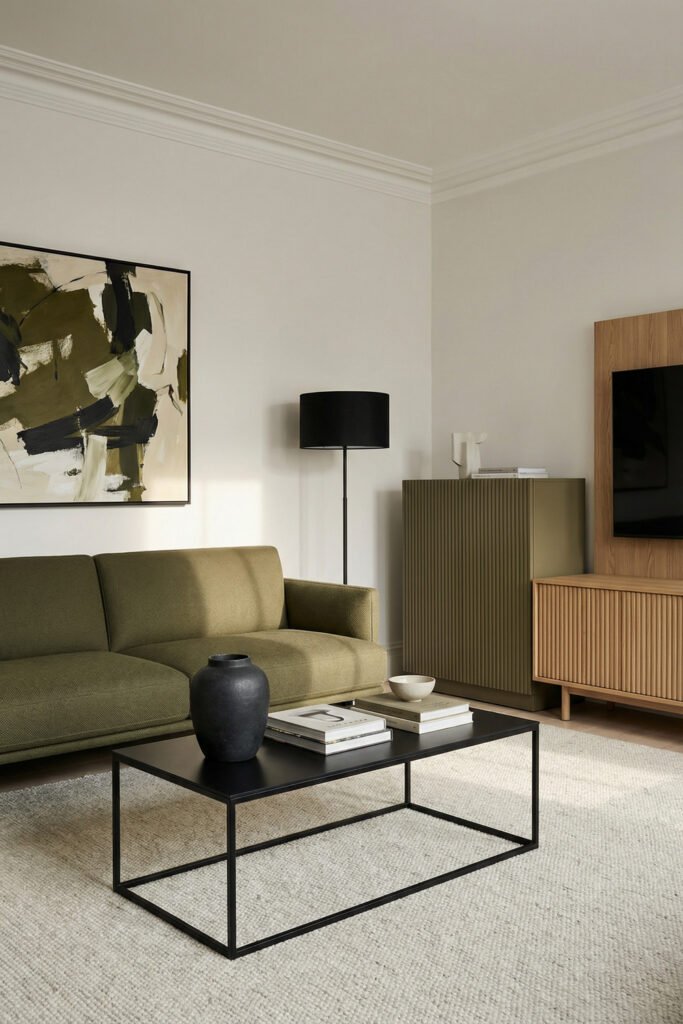
This version of olive feels smart and city-ready. It suits a living room that wants a modern edge but still needs comfort built into the layout.
Clean-Line Tip: Limit small accessories and let texture come from ribbing, wood grain, and fabric contrast instead.
It makes the room feel pulled together in a very effortless way. Even simple furniture looks more considered against this backdrop.
Freshen Olive With Cream Stripes And Linen
Olive does not always have to read deep or moody. Pair it with cream stripes and washed linen, and it suddenly feels lighter and more relaxed. The whole room starts to look brighter without losing its depth.
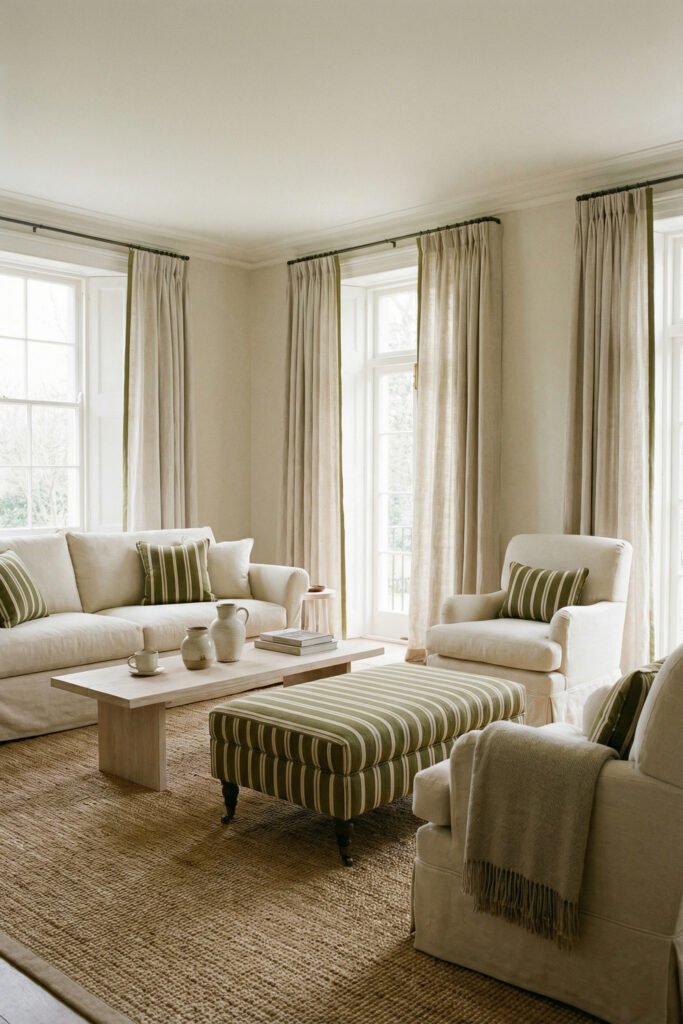
Bring olive in through striped pillows, a tailored ottoman, or even curtain trim, then balance it with cream slipcovered seating and pale wood tables. Linen curtains soften the windows, while a woven rug and a few ceramic pieces keep the room feeling natural and easy. The stripes help the green feel fresh and a little tailored, especially when they show up in more than one spot. What makes this version stand out is the striped olive accent, which adds pattern without making the room feel busy.
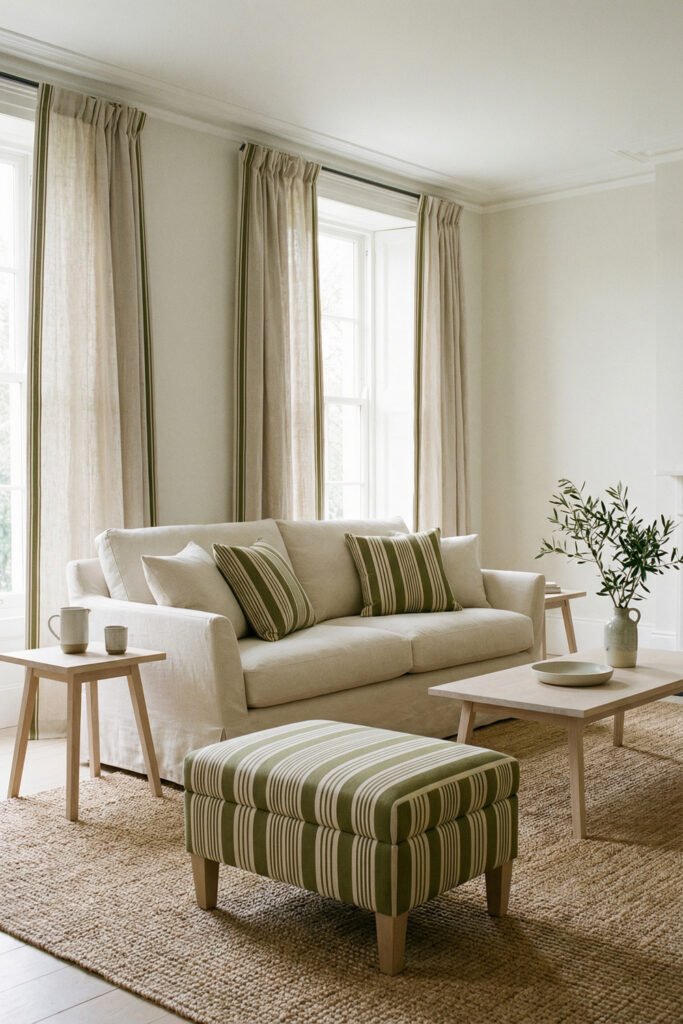
This look feels airy and settled at the same time. It is a lovely fit for living rooms that want color but still lean light and relaxed.
Pattern Note: Repeat the stripe only two or three times so it feels thoughtful and does not take over the room.
It gives the space a gentle lift that works all year. The room feels easy to live in and pleasant to come back to.
Olive Looks Good Here
Olive green decor really shines when the room feels layered, not overdone. A few strong pieces can shift the whole mood.
We saw that olive works beautifully with cream, walnut, brass, stone, and even soft stripes. It can feel deep and grounded or light and relaxed.
Try swapping in one olive anchor, like a pillow mix, drapes, or a statement chair, and build from there. Small changes can still make the room feel pulled together.
From tonal layers to cleaner modern pairings, there are plenty of directions to explore next. Olive is flexible like that.
Hope this gave you a few fresh ideas to play with. Explore more Green Living Room Ideas on our Pinterest board for even more inspiration.
You May Also Like