Green And Rust Living Room Ideas That Feel Rich And Relaxed
Green and rust are one of those color pairings that can make a living room feel layered, grounded, and a little more interesting right away. The mix has depth, but it still feels easy to live with.
- Let Olive Walls Make A Rust Sofa Glow
- Pair A Moss Sectional With Rust Boucle Chairs
- Use Sage Paneling With Terracotta Textiles
- Mix Forest Green Velvet With Worn Cognac Leather
- Let Rust Drapery Warm Up Dark Green Walls
- Try A Botanical Room With Clay-Orange Accents
- Go Vintage With Olive, Brick, And Brass
- Make It Soft With Sage And Cinnamon Boucle
- Add Plaid And Print To Deepen The Palette
- Build A Modern Room With Color-Blocked Seating
- Warm It Up With Western-Romantic Layers
- Center The Room On A Rust Statement Rug
- Style A Cozy Corner With Green Built-Ins
- A Color Pairing Worth Saving
- You May Also Like
If you’ve ever loved this palette in photos but felt unsure how to balance the two shades without making the room feel heavy, you’re not alone. It can be tricky to know where to start.
The ideas ahead make it much easier to picture, whether you like softer sage tones or moodier olive walls. Let’s get into some green and rust living room looks that feel fresh, styled, and very real.
Let Olive Walls Make A Rust Sofa Glow
There is something instantly grounded about olive and rust together. The mix feels earthy, a little moody, and still easy to live with every day.
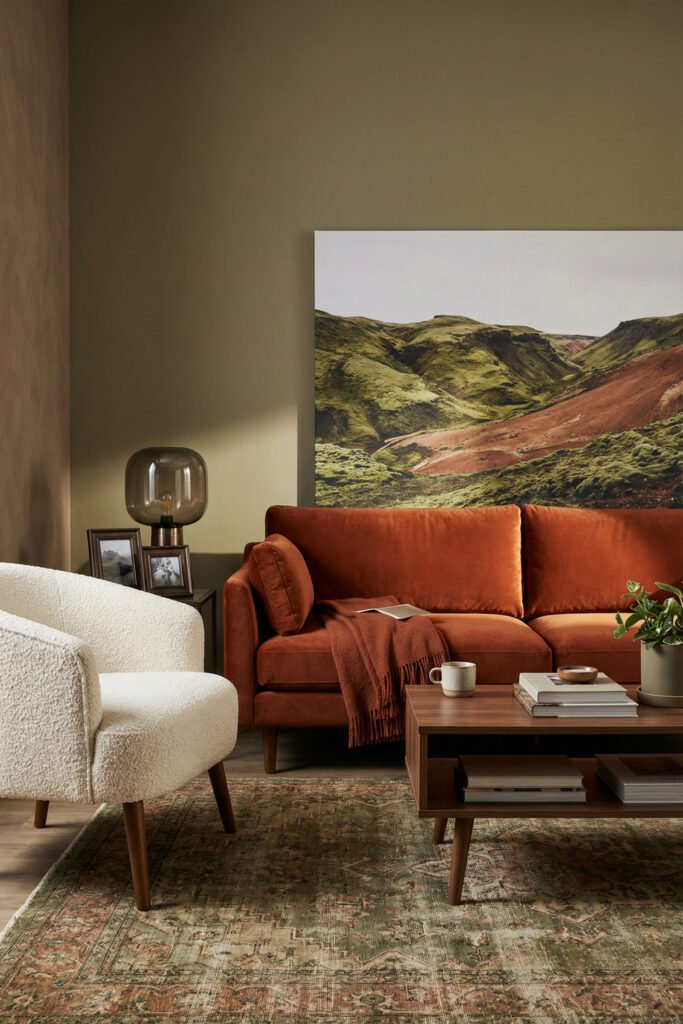
Start with olive walls that have a muted, velvety look rather than a bright grassy tone. Against that backdrop, a rust sofa becomes the clear star, especially in a plush fabric that catches light along the arms and seat cushions. Add an ivory boucle chair, a walnut coffee table, and a vintage-style rug washed with moss, clay, and faded tobacco. Those layers keep the room from feeling too flat or too dark. A smoked-glass lamp and dark bronze frames sharpen the edges just enough. The standout move is one oversized landscape print that stretches the palette across the whole seating area.
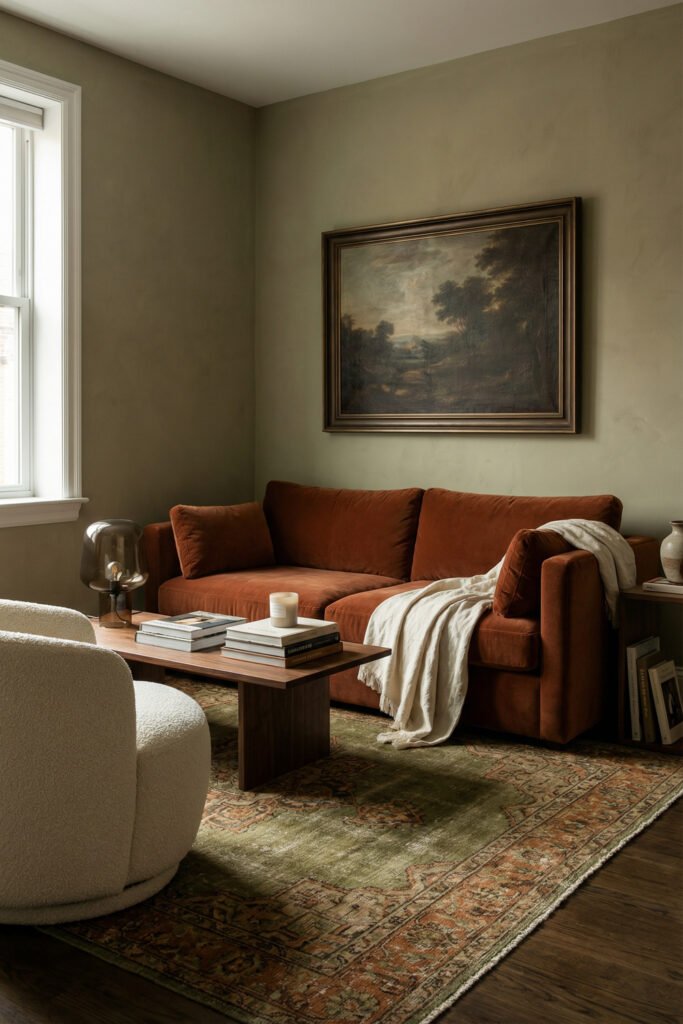
This setup feels settled and rich without looking heavy. It works especially well in a living room that gets soft afternoon light, where the rust upholstery seems to glow and the olive walls pull everything into one calm, pulled-together scene.
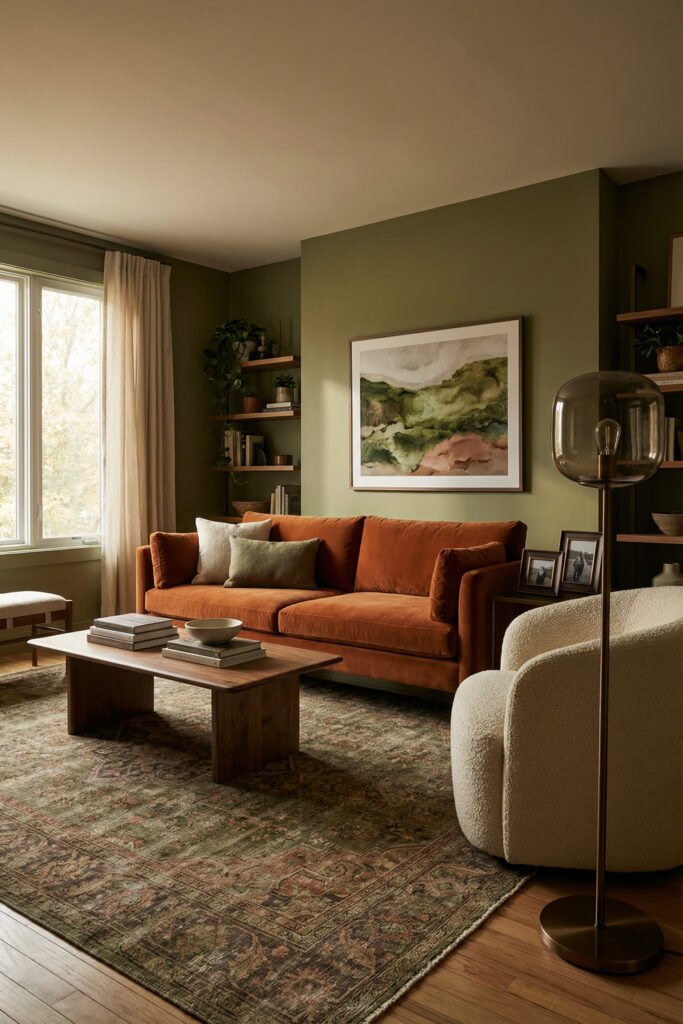
Wall Note: Choose olive with brown undertones, not yellow ones, so the rust sofa feels deeper and more balanced.
It is the kind of room that makes movie night, reading time, or slow weekend mornings feel a little more special. Nothing feels forced, but every piece looks like it belongs.
Pair A Moss Sectional With Rust Boucle Chairs
If you want the room to feel styled right away, let the seating do most of the work. This pairing has a strong point of view without needing a lot of extra fuss.
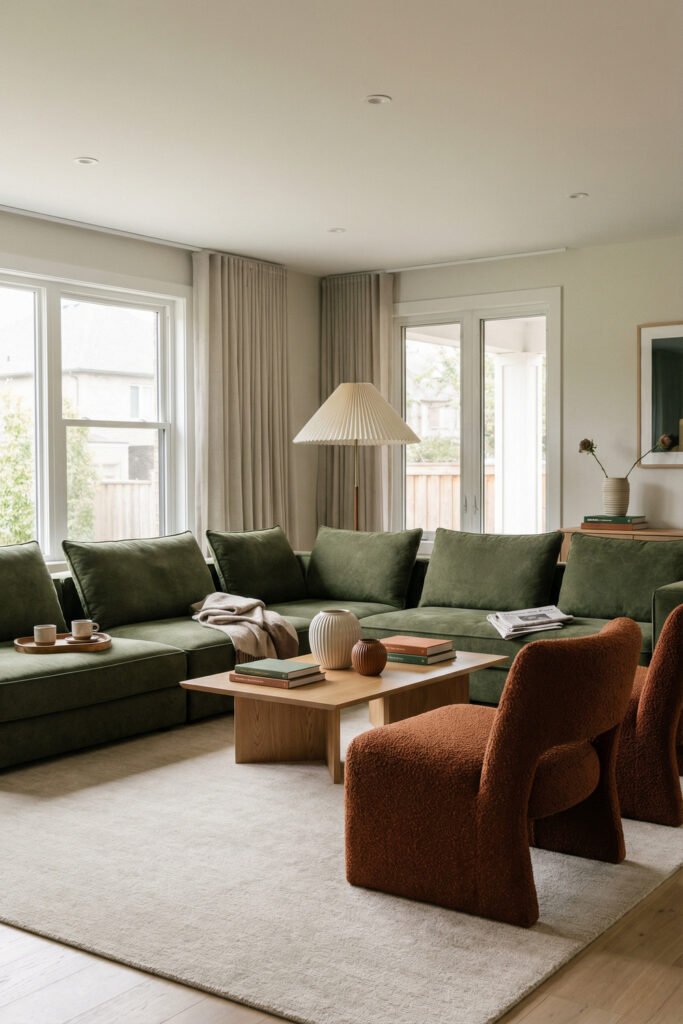
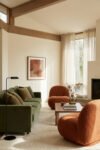
A moss sectional gives the room weight and shape, especially if it has broad cushions and a low, relaxed profile. Across from it, two rust boucle chairs add texture and a lighter, nubby finish that breaks up the deeper green. Keep the base simple with a pale oat rug and a low oak coffee table so the color story stays clear. Then bring in a pleated lamp, ribbed ceramic vases, and a few books in sienna and forest tones. The contrast between the blocky sectional and the rounded rust chairs is what makes the room feel styled instead of matchy.
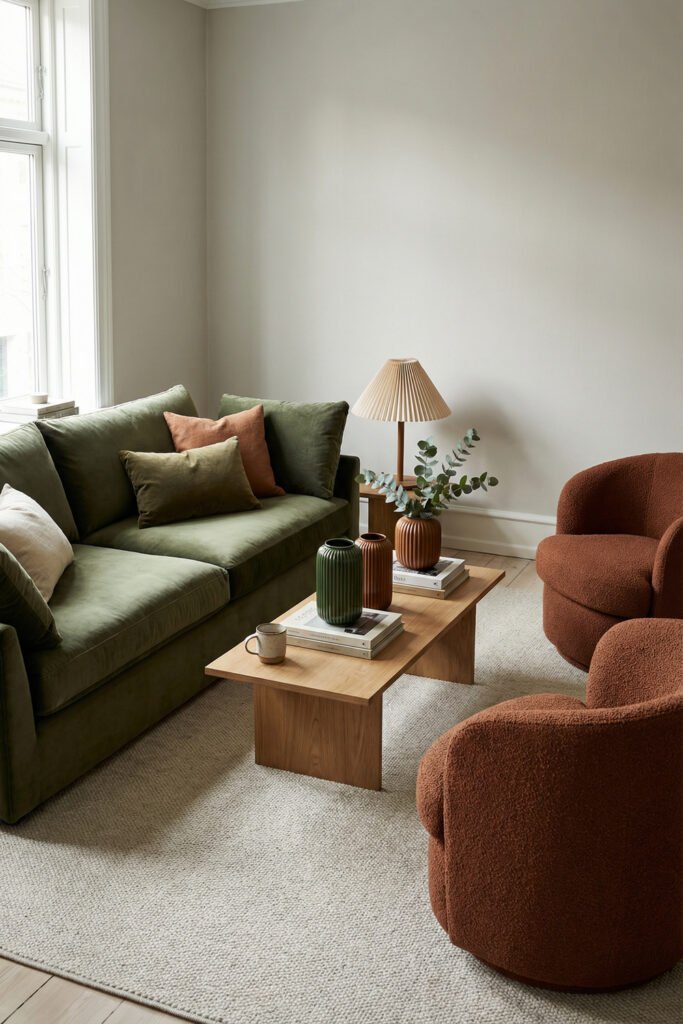
It has a social, gathered feel that suits family spaces and living rooms where people actually sit and talk. The mix of smooth and textured upholstery gives the palette more life and keeps the room from falling flat.
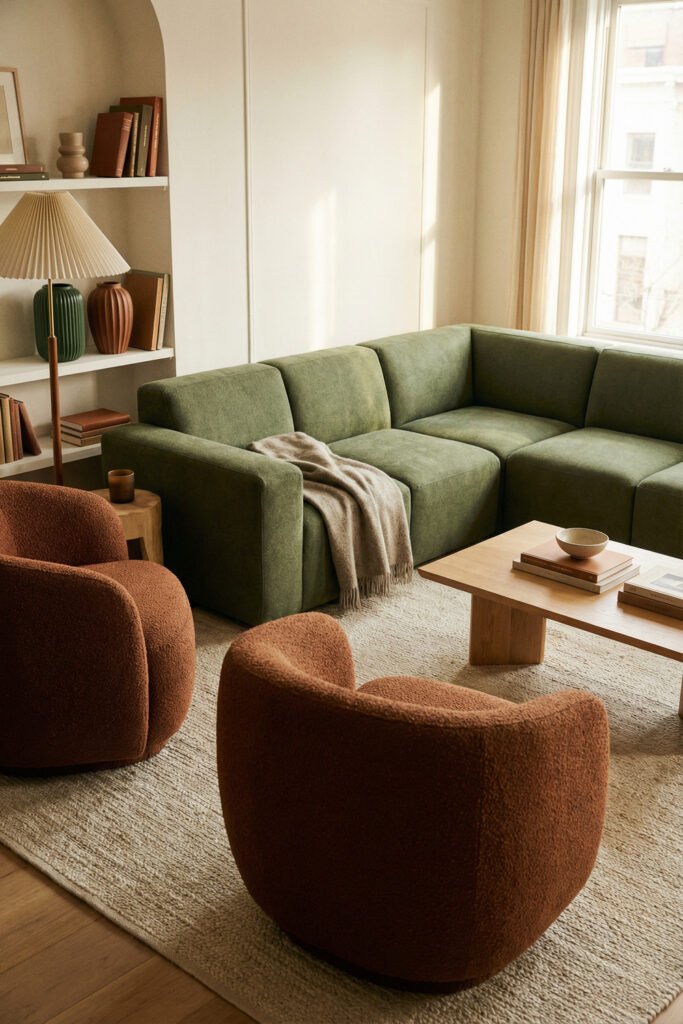
Seating Trick: Pull the rust chairs slightly off the rug edge so they feel airy and sculptural instead of packed in.
This is a strong layout for everyday life because it looks polished even before the small accessories go in. The room feels ready to use, not just ready to photograph.
Use Sage Paneling With Terracotta Textiles
This take feels fresher and lighter from the start. It brings in green and rust in a way that still leaves room for brightness.
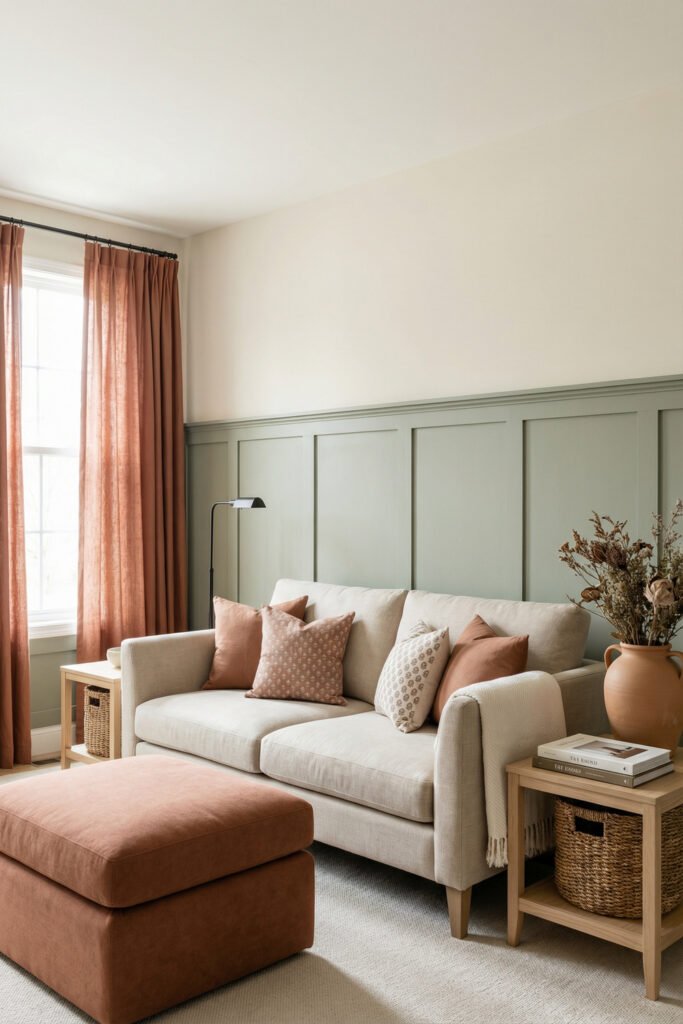
Paint the lower half of the walls in sage paneling and leave the upper half a creamy neutral so the room keeps some lift. A linen sofa in beige or oatmeal helps bridge the two colors, while terracotta curtains, clay-toned pillows, and a soft rust ottoman carry the warmer side of the palette through the seating zone. Light wood tables and woven baskets keep the room relaxed and lived-in. A slim black floor lamp adds a clean outline without stealing attention. The key detail is the contrast between the neat paneling and the loose, drapey textiles.
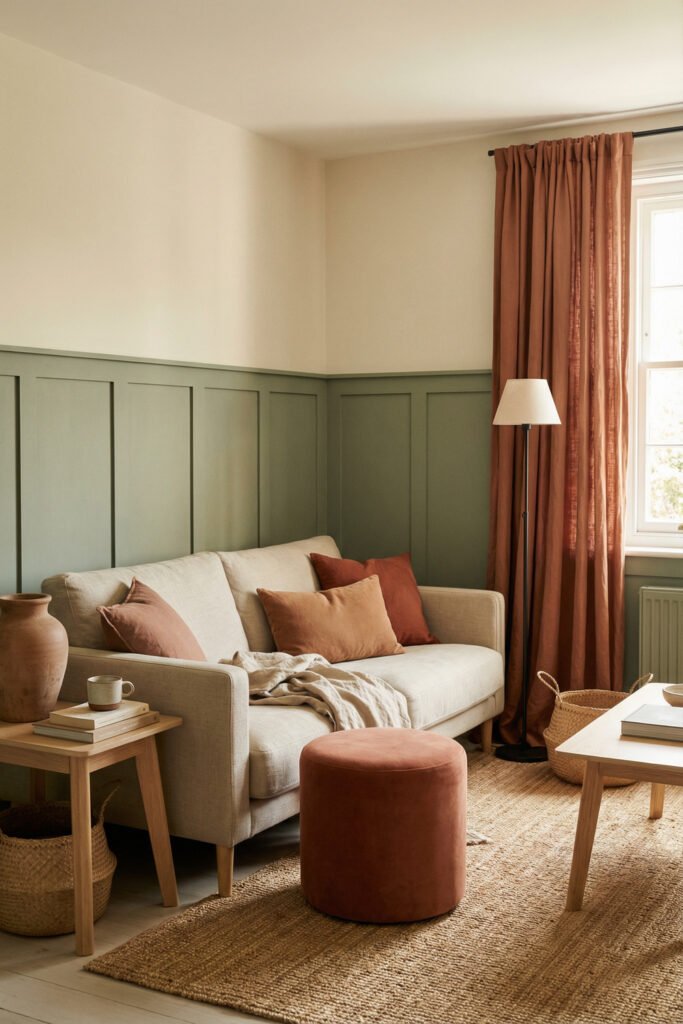
The effect feels tailored but never stiff. It is a smart choice for smaller living rooms because the color is present and memorable, yet the lighter upper walls stop the room from feeling boxed in.
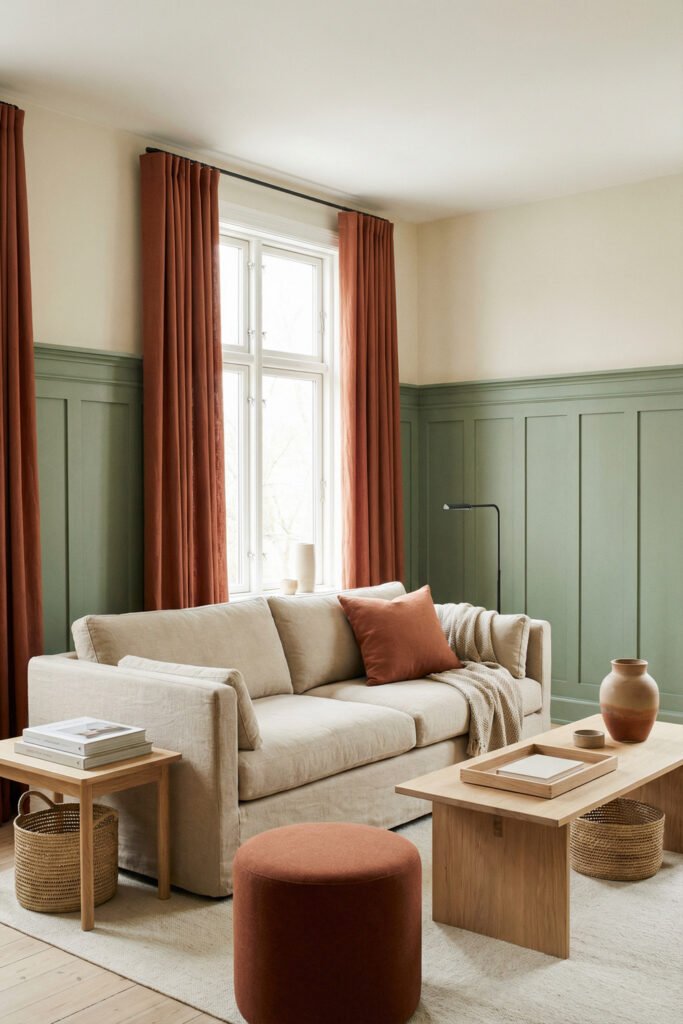
Balance Tip: Repeat terracotta at least three times, such as curtains, one pillow, and a ceramic piece, so it feels intentional.
This kind of room is easy to settle into. It has enough structure to look styled, but it still feels gentle and relaxed at the end of the day.
Mix Forest Green Velvet With Worn Cognac Leather
Some rooms feel better when the materials do the storytelling. This one leans into contrast, and that is exactly what makes it memorable.
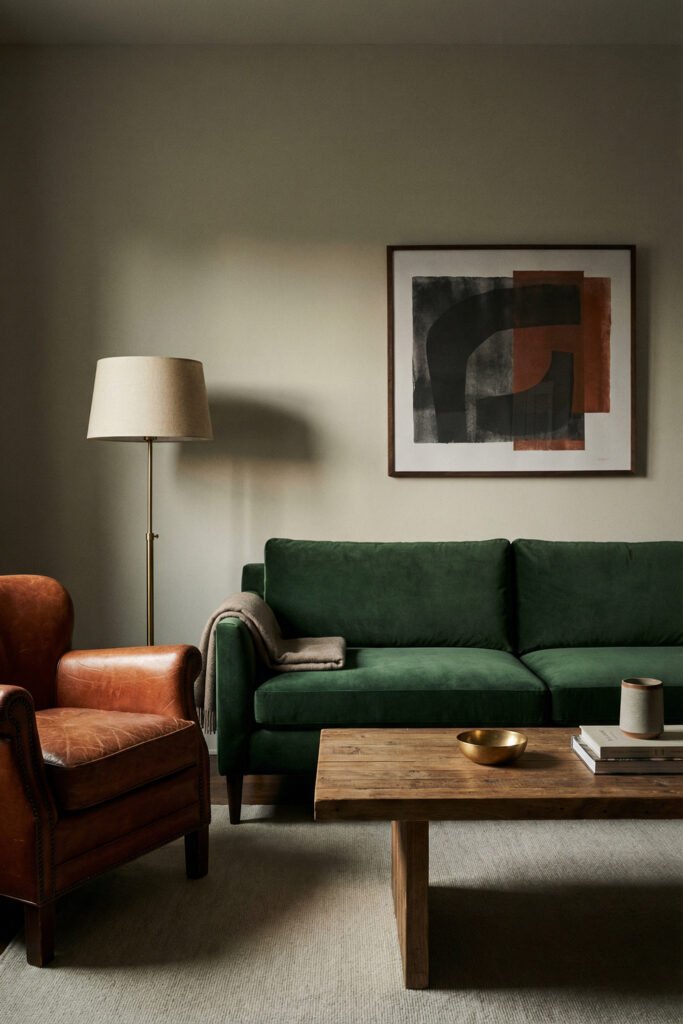
Use a forest green velvet sofa as the richest piece in the room, then balance it with a worn cognac leather chair that reads almost rust once the light hits it. The finish mix is the magic here: smooth velvet, weathered leather, reclaimed wood, and a hint of aged brass. A charcoal-and-rust abstract print above the sofa deepens the palette without making it busy. Keep the coffee table simple and sturdy so the seating stays in focus. What really makes the room land is the tension between polished velvet and leather with visible character.
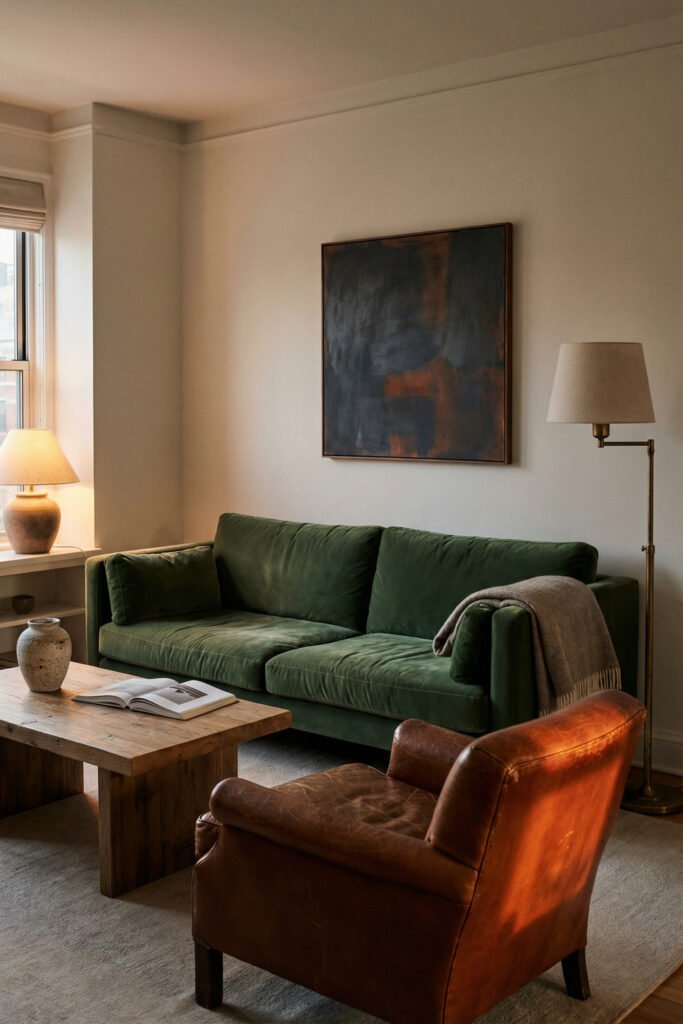
The mood feels collected and a little storied, like the room grew over time instead of arriving all at once. It is a strong fit for living rooms that need depth and personality without piling on too many decorative layers.
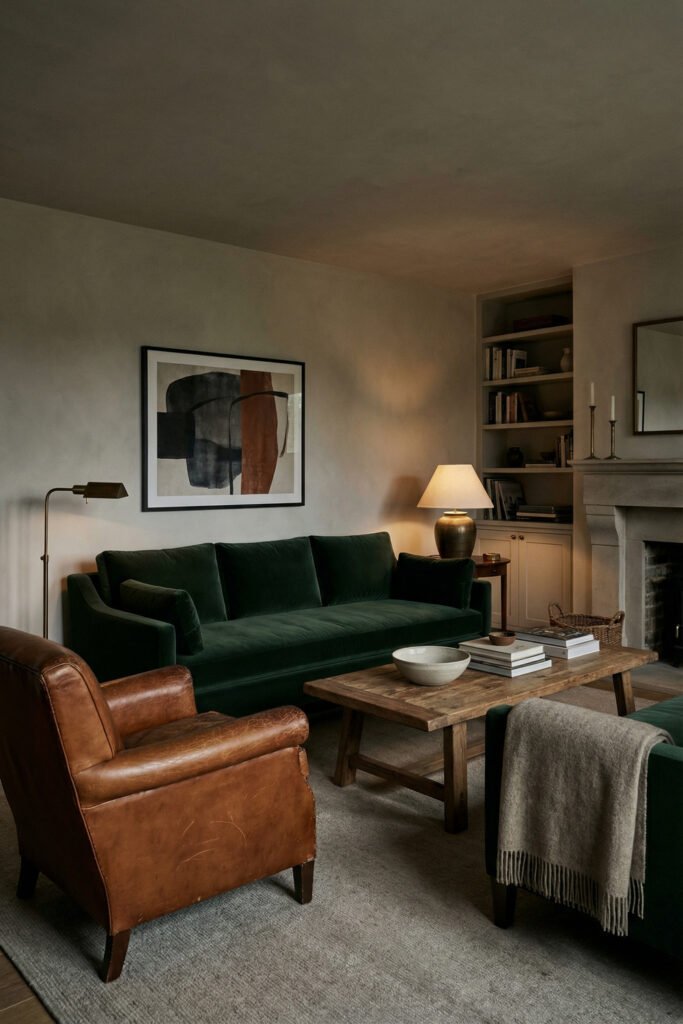
Texture Cue: Let one material look slightly worn or matte so the velvet does not make the room feel overly dressed.
It is a room that feels good in low light, with lamps on and the day winding down. The mix has substance, and that gives the whole space more presence.
Let Rust Drapery Warm Up Dark Green Walls
This idea starts with the walls, but the real drama hangs at the windows. Rust drapery against dark green has a way of making the whole room look richer in one move.
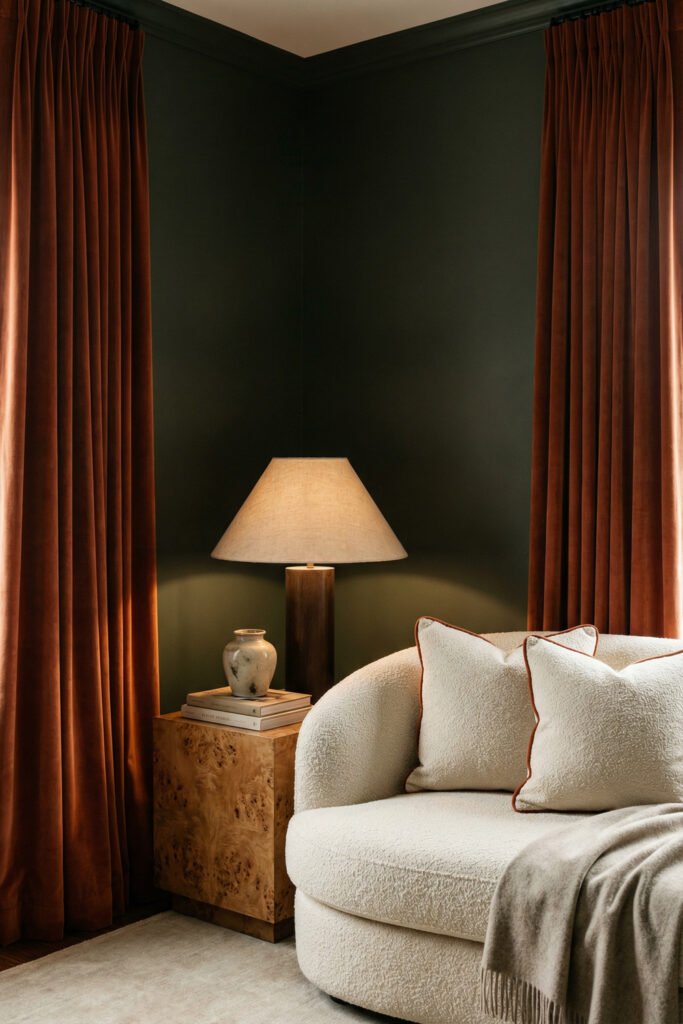
Paint the walls a muted deep green, then frame the room with full-length rust curtains that fall in soft, generous folds. That warm vertical line changes the mood right away, especially when the fabric catches daylight near the window and glows slightly. A creamy curved sofa keeps the center of the room from feeling dense, while a burlwood side table and a wide linen shade add lighter notes. Rust piping on the pillows quietly repeats the window treatment. The standout detail is how the curtains act like a glowing frame around everything else.
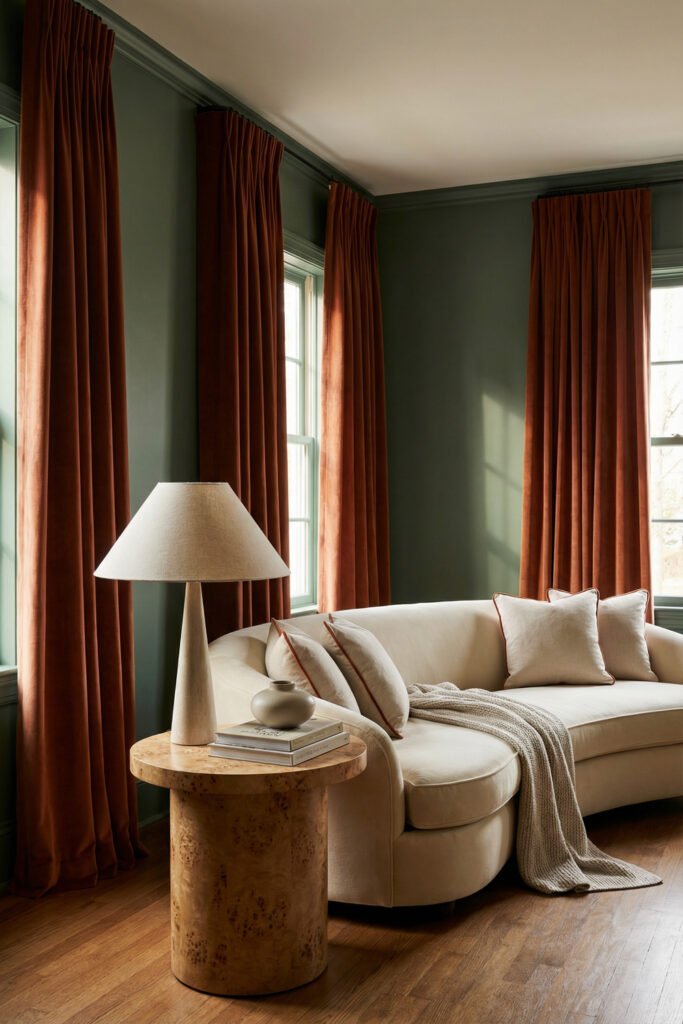
This look feels cocooning at night and layered during the day. It is a great option when you want the room to feel more finished without adding a lot of extra objects or busy styling.
Window Move: Hang the drapery close to the ceiling and let it skim the floor for the fullest, most polished effect.
Even a simple living room feels more complete with this setup. It turns the windows into part of the design instead of something you style around later.
Try A Botanical Room With Clay-Orange Accents
This version feels lighter on its feet and a little more relaxed. It brings green and rust into the room through living, natural-looking layers instead of heavy contrast.
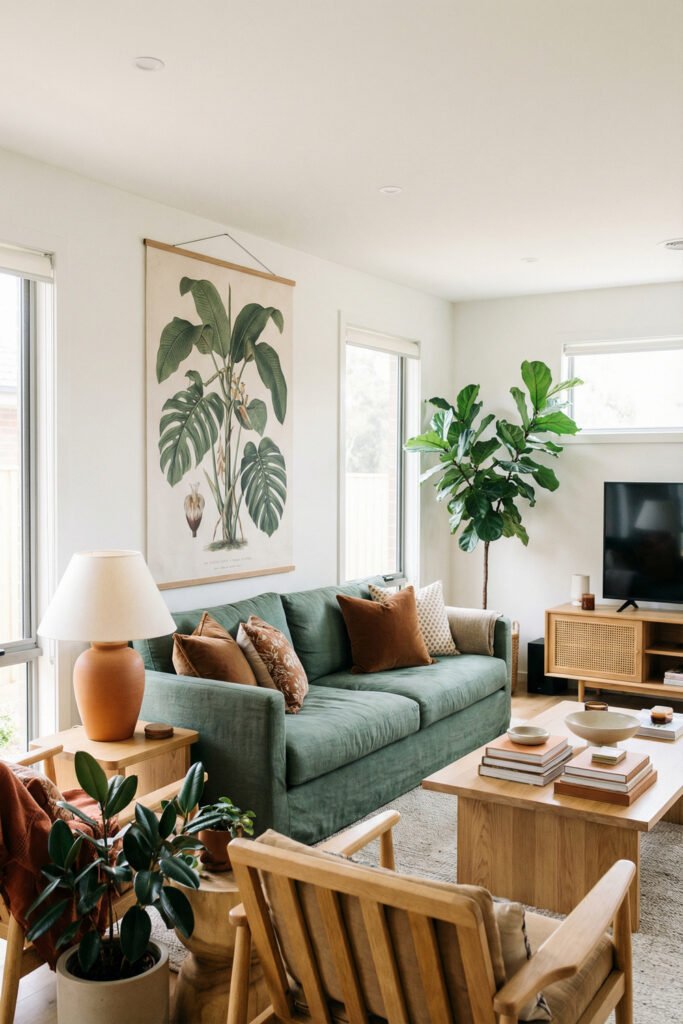
A eucalyptus-green sofa sets the tone, then clay-orange accents show up in all the right places: a rust ceramic lamp, cinnamon-toned pillows, and pots filled with leafy plants. Light oak furniture and cane-front storage keep the room open and easy, while a large botanical print gives the walls a sense of scale without adding visual noise. A tree in one corner and a stack of earthy books on the coffee table make the palette feel repeated, not random. The signature detail is the lamp in warm clay, which adds color without taking over.
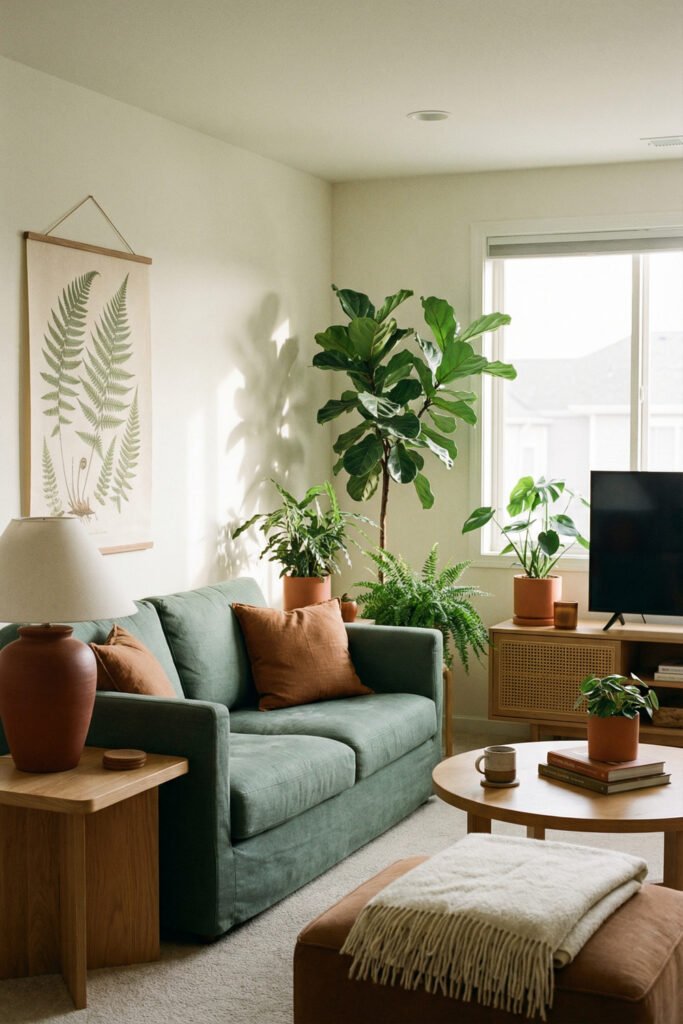
The whole room feels fresh, sunlit, and easy to settle into. It works beautifully in apartments or smaller homes where you want color, but still need the space to feel open and breathable.
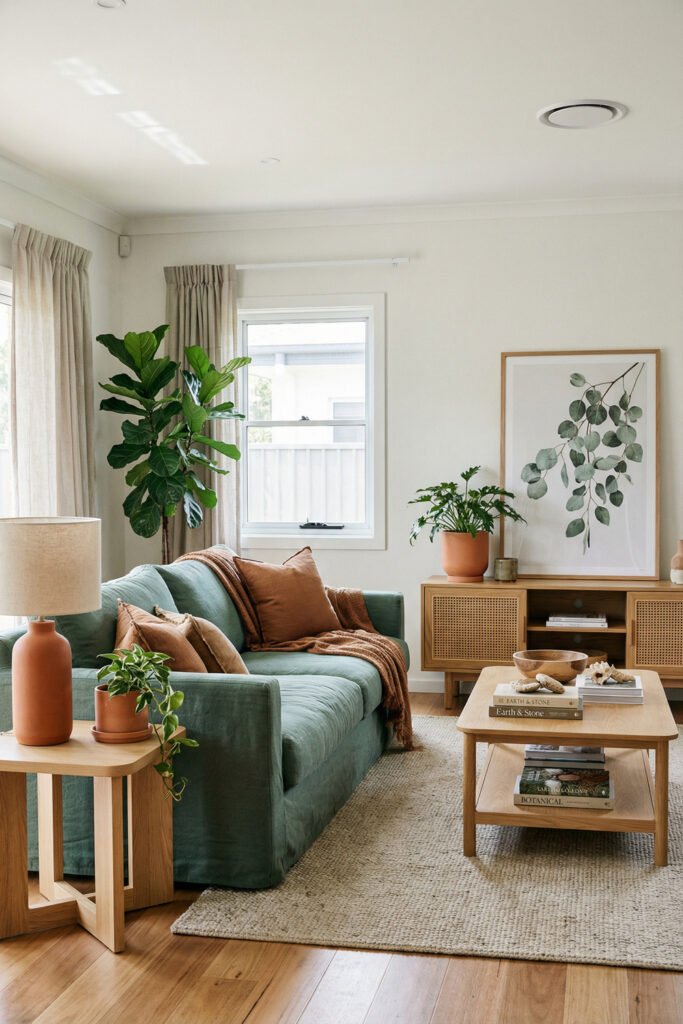
Plant Pairing: Use deeper green leaves near rust accents so the palette feels connected even before you add more decor.
This is the kind of living room that feels pleasant first thing in the morning and still pulled together at night. It has energy, but nothing feels loud.
Go Vintage With Olive, Brick, And Brass
Some color palettes feel better with a little age in them. Olive, brick, and brass have that worn-in depth that makes a room feel layered right away.
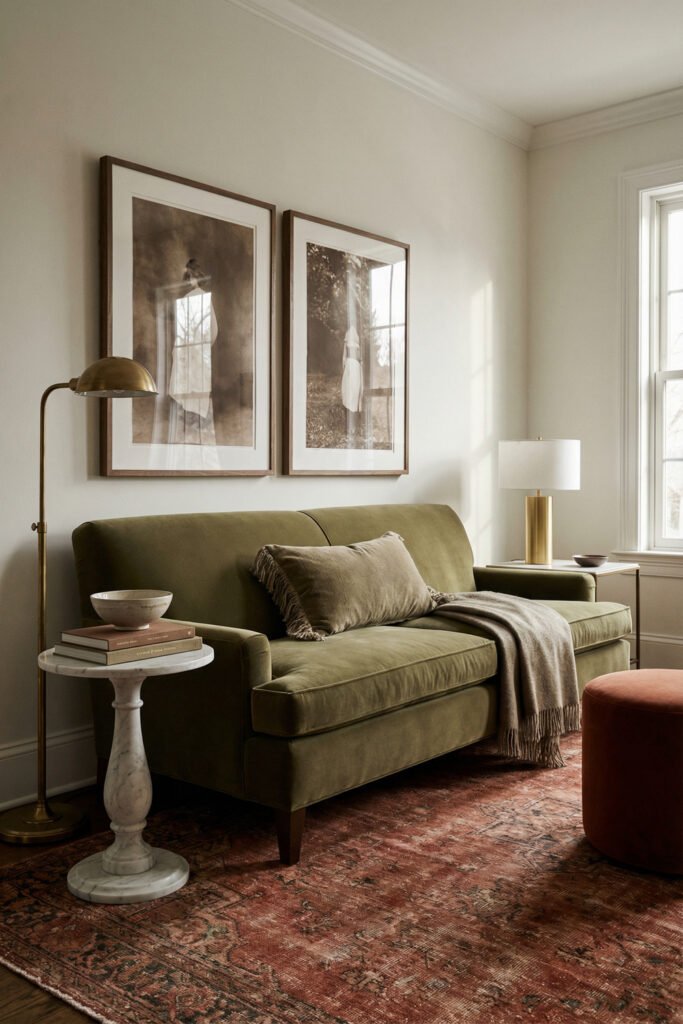
An olive sofa creates the base, but a brick-rust rug is what really spreads the palette across the floor and ties the room together. Add antique brass lighting, a marble-top pedestal table, and a couple of framed sepia prints for a collected feel that does not look staged. A fringe pillow or a small rust ottoman brings in one decorative touch without getting fussy. The rug should look slightly faded, as though the colors have softened over time. That worn finish is the detail that gives the room its depth.
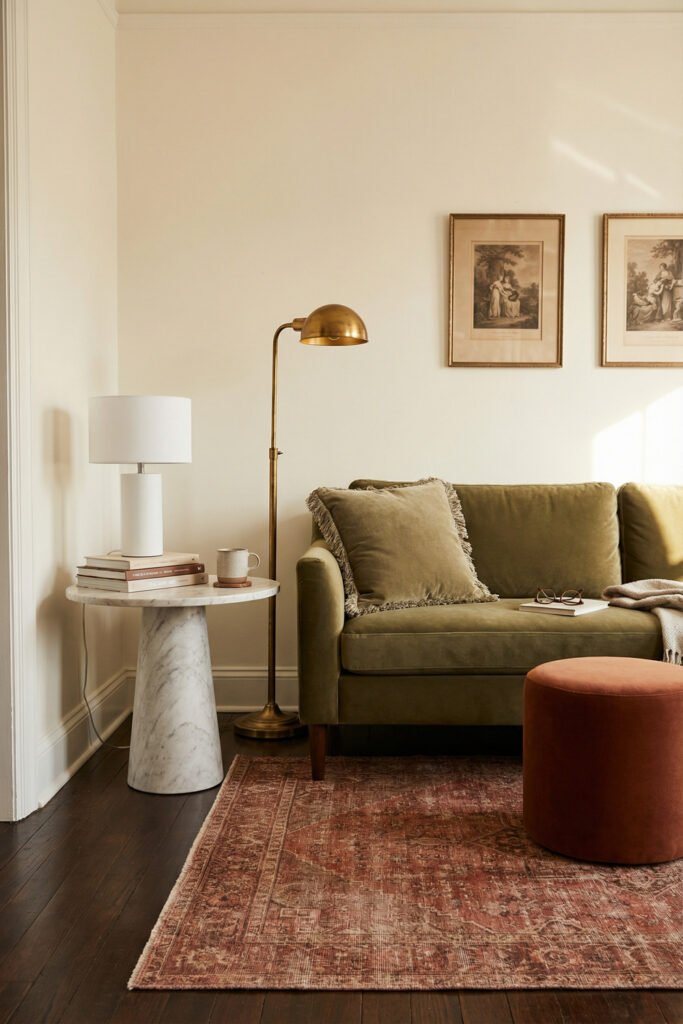
This look has a slower, more settled mood than a sharper modern palette. It is perfect for someone who wants color and personality without losing that sense of history and quiet richness.
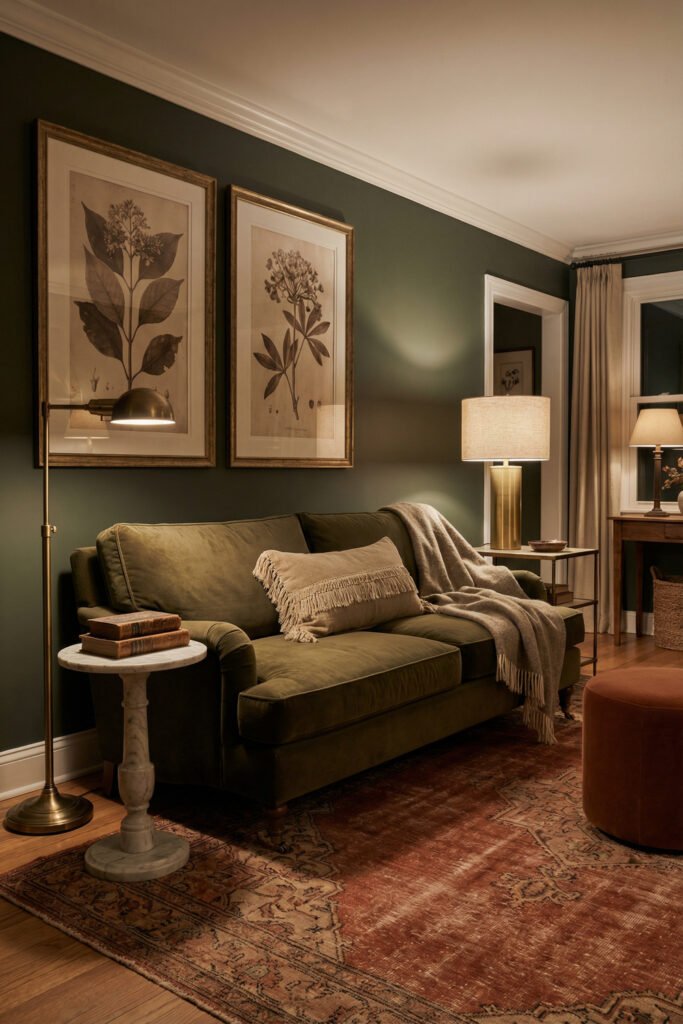
Vintage Touch: Mix one crisp element, like a clean-lined lamp, into the older pieces so the room does not feel too themed.
It is a lovely way to make a living room feel gathered and personal. The space looks styled, but it also feels like it has stories in it.
Make It Soft With Sage And Cinnamon Boucle
This one has a gentler mood from the start. The palette still has contrast, but the shapes and textures make it feel light and easy.
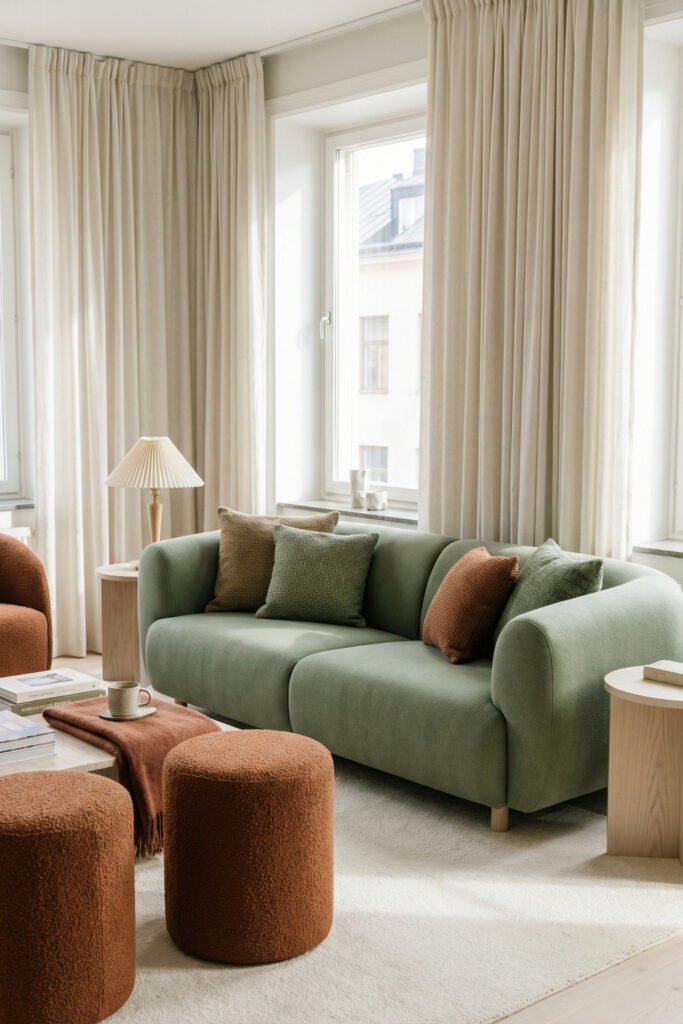
Choose a sage sofa with rounded arms or a curved back so the green feels mellow instead of sharp. Then bring in cinnamon-rust boucle stools or poufs that add warmth through texture rather than weight. Off-white curtains, pale wood accents, and a cream rug help the room stay open, while a pleated lamp or scalloped mirror adds one quiet decorative note. A few green and rust pillows in different weaves make the palette feel layered without becoming busy. The best detail is the boucle, which gives the rust tone a cloud-like softness.
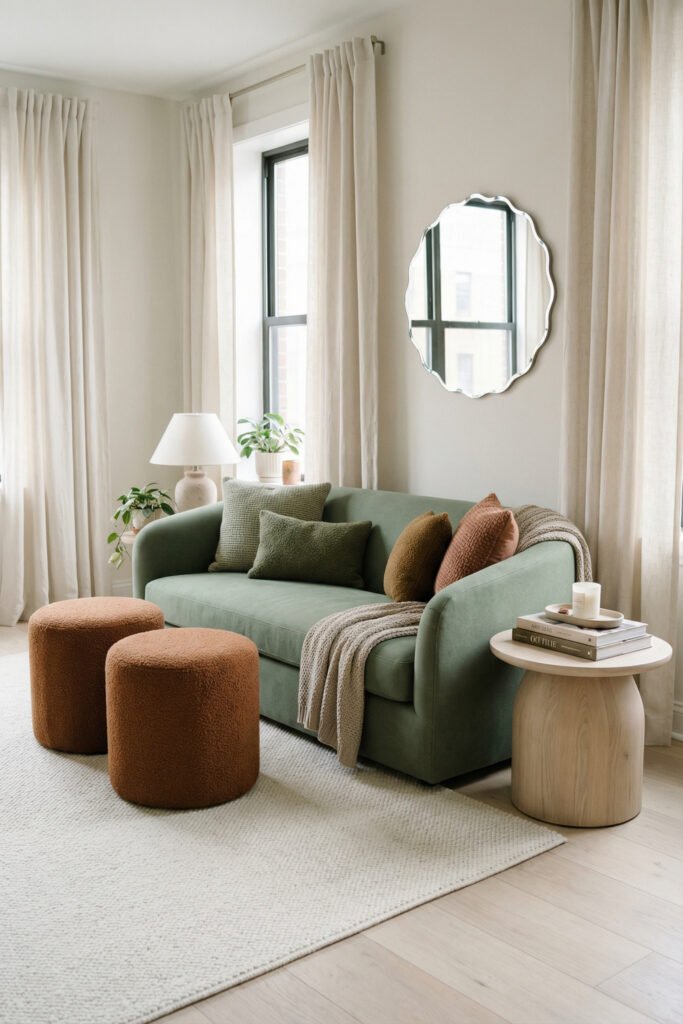
The room feels airy and styled in a way that suits small living spaces especially well. It is easy to picture this look in a corner apartment with good daylight and just enough room for a thoughtful mix of shapes.
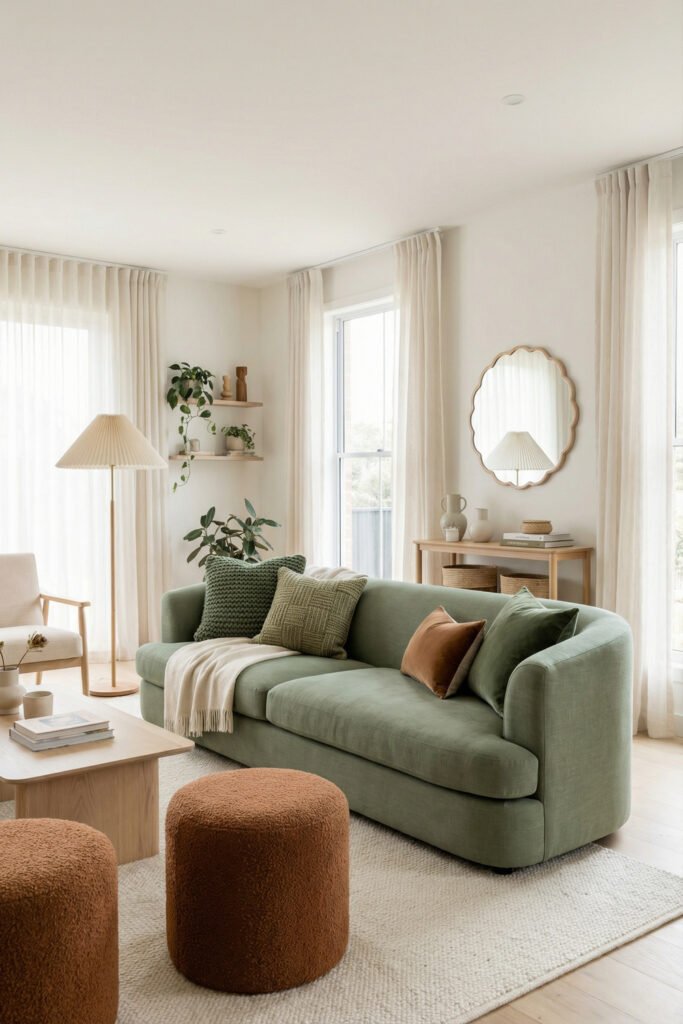
Shape Shift: Repeat at least one curved form in the mirror, lamp, or table so the sofa does not carry the whole softness alone.
This is the sort of room that feels easy to live in every day. It has color, texture, and a little personality, but it still leaves space to breathe.
Add Plaid And Print To Deepen The Palette
Patterns can make this color pairing feel more layered and a little more collected. Instead of relying on solids alone, let green and rust move across the room in different scales.
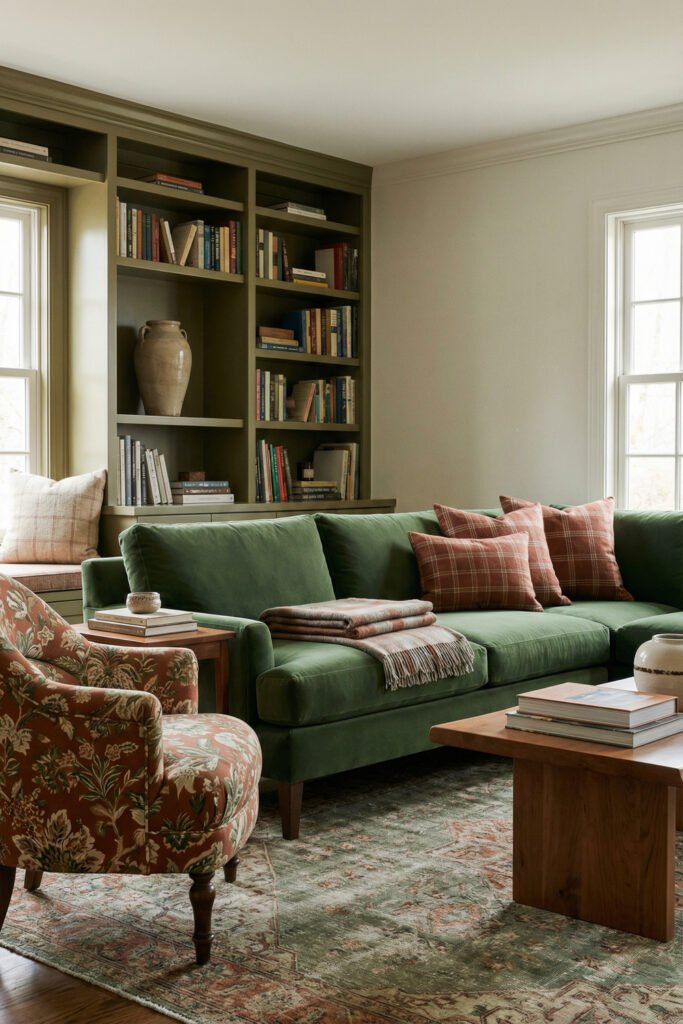
Start with a solid green sofa so the room has one calm anchor, then build around it with rust plaid pillows, a floral accent chair, and a faded rug that carries both tones in a washed, timeworn way. An olive-painted bookcase or media unit helps repeat the green on a larger surface, while simple wood tables keep the mix from feeling too busy. The real magic comes from balancing one tailored print with one softer, more organic one. A floral chair beside plaid cushions is the detail that makes the room feel thoughtful instead of predictable.
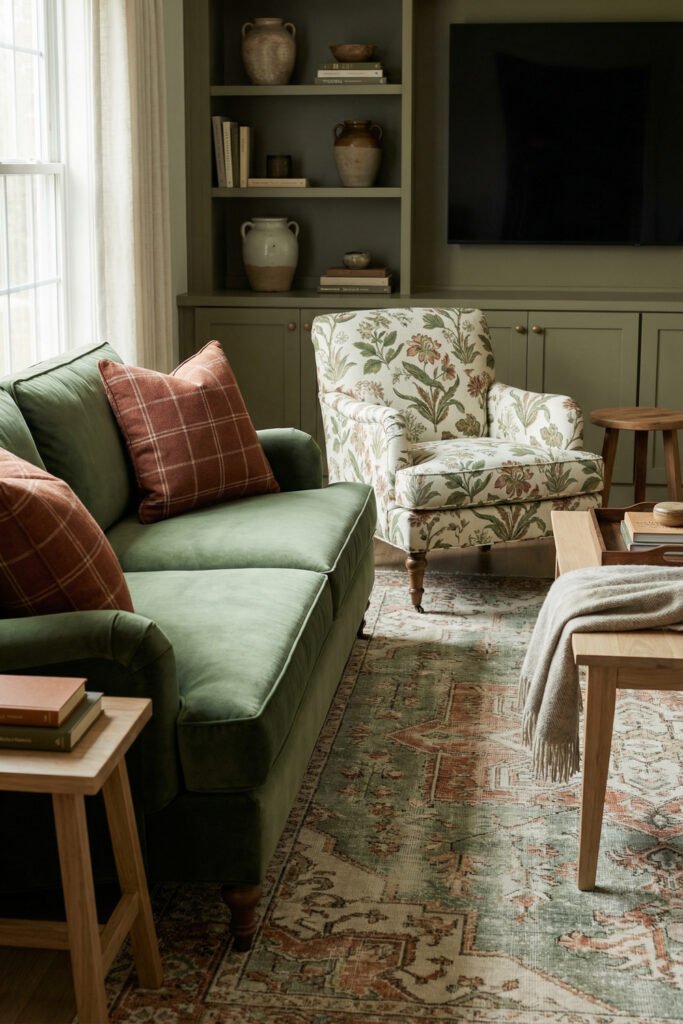
This look has a fuller, more dressed feel without becoming crowded. It is especially good for living rooms that need warmth and personality but still want a clear, edited palette.
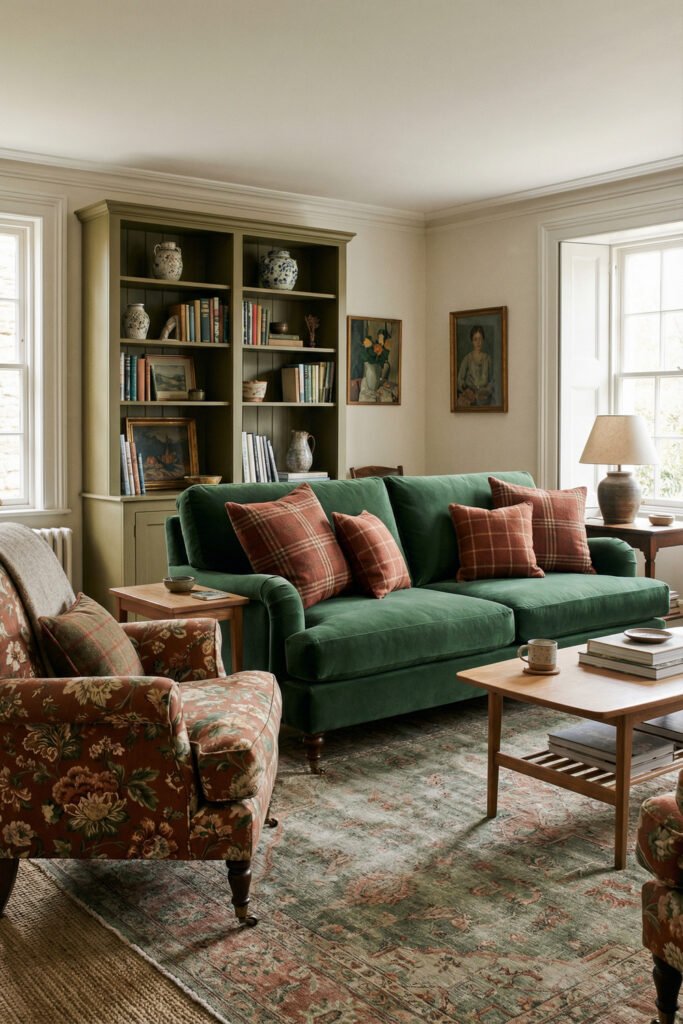
Pattern Mix: Keep the prints tied together with at least one shared color so the room feels layered, not scattered.
A space like this feels personal in the best way. It looks styled over time, which makes it easy to enjoy every day.
Build A Modern Room With Color-Blocked Seating
Sometimes the cleanest rooms make the strongest statement. This one lets the seating create the whole mood with barely any extra effort.
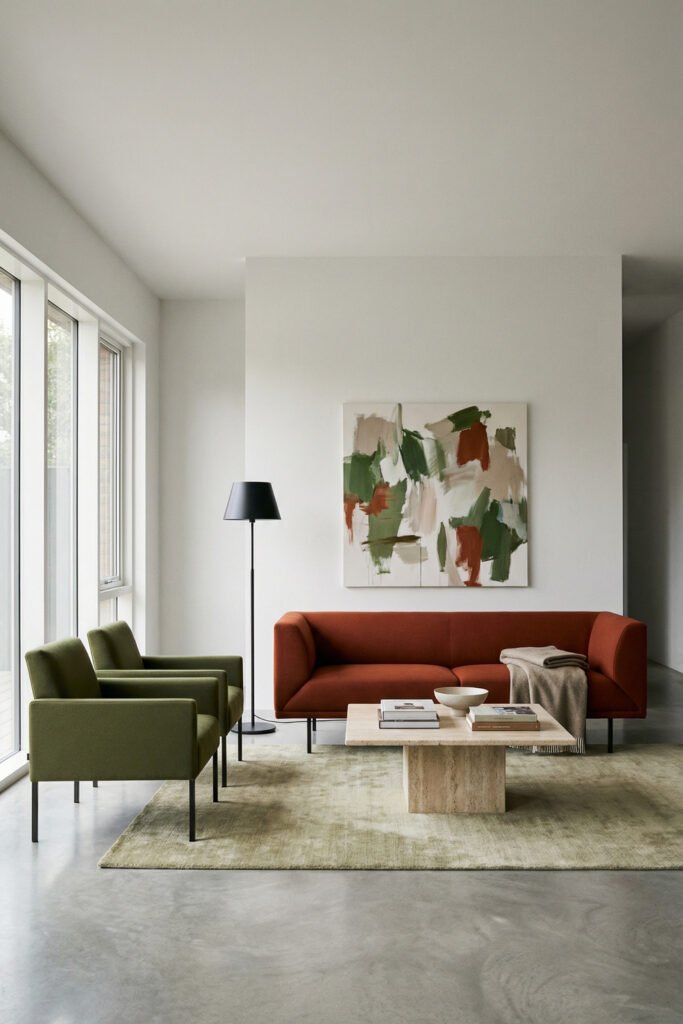
Use a rust sofa with crisp lines and place two slim olive chairs across from it so the room reads almost like a color-blocked composition. A travertine-style coffee table, a black metal floor lamp, and large abstract art keep the scene sharp and open rather than overly decorated. Choose a low-pile rug in faded green-beige to soften the geometry without muddying the palette. The shapes should feel simple, but not stiff. What makes it memorable is the way the rust and green sit across from each other like two bold brushstrokes in a calm room.
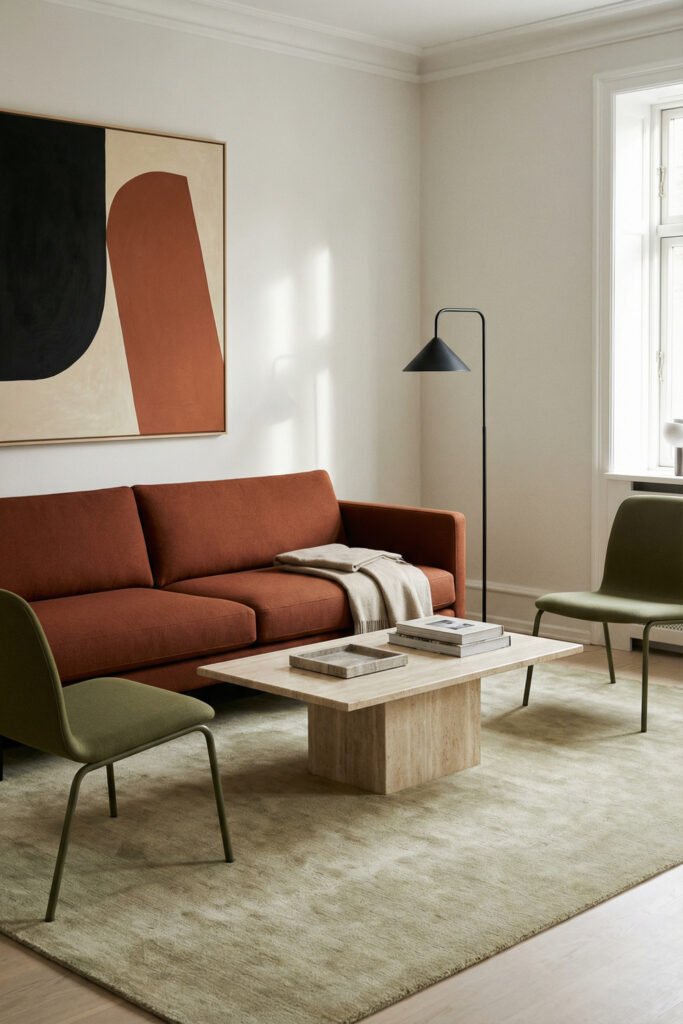
The payoff here is clarity. It suits a living room that wants color and presence, but still feels neat, breathable, and easy to move through.
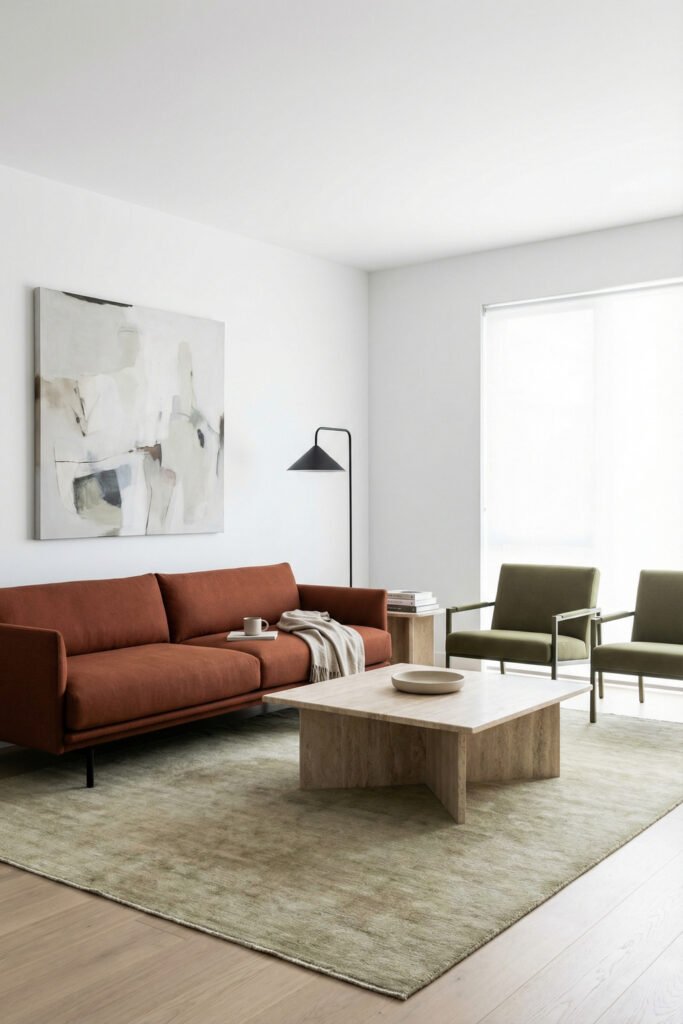
Modern Move: Let the biggest pieces carry the palette, then keep smaller accents neutral so the room stays crisp.
This kind of room feels fresh the minute you walk in. It is practical, polished, and easy to keep looking put together.
Warm It Up With Western-Romantic Layers
This version has a little more soul and a little more contrast. It blends rustic touches with softer details so the room feels textured rather than themed.
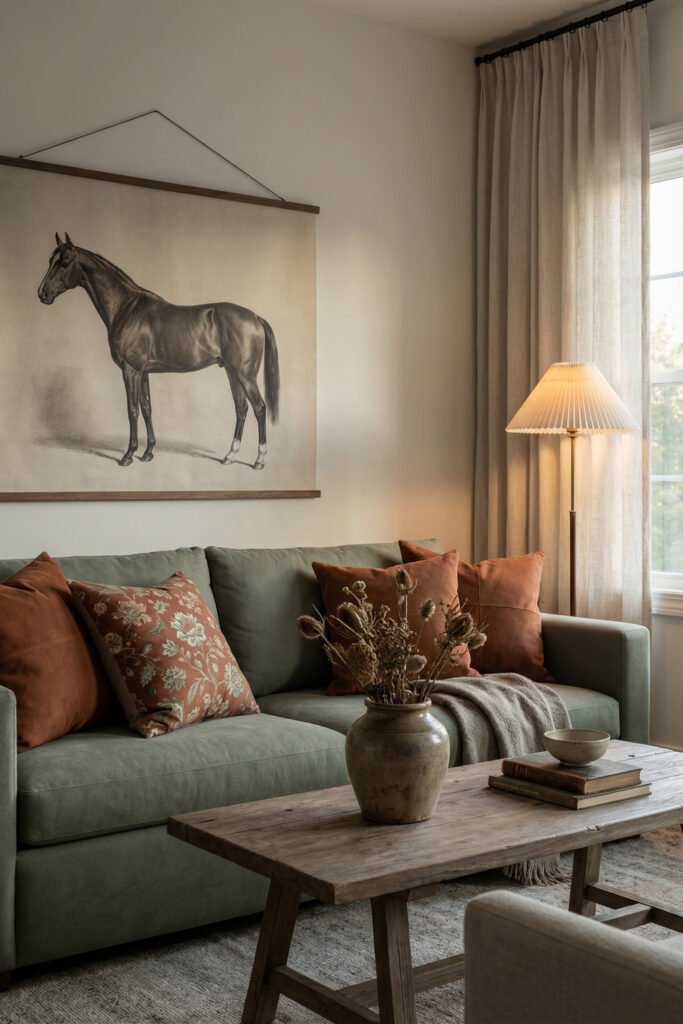
Begin with a muted green sofa, then layer in rust suede pillows, a weathered wood coffee table, and one vintage-inspired horse or landscape print above the seating. To soften the rougher edges, bring in a pleated lamp shade, light linen curtains, and a floral pillow in rust and sage. Those smaller details keep the room from feeling too rugged. A ceramic vase with an aged finish on the table adds one more grounded note. The standout moment is the mix of worn wood and suede against the gentler fabric layers.
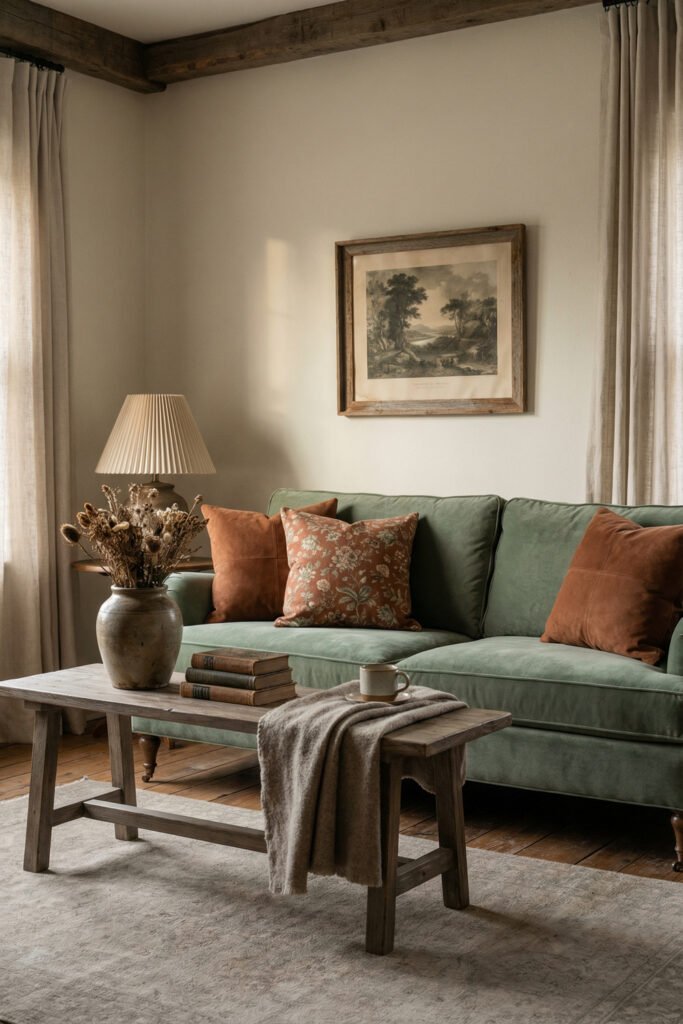
It creates a room that feels settled, expressive, and a little unexpected. This is a strong direction for anyone who likes earthy color but wants more character than a standard modern setup.
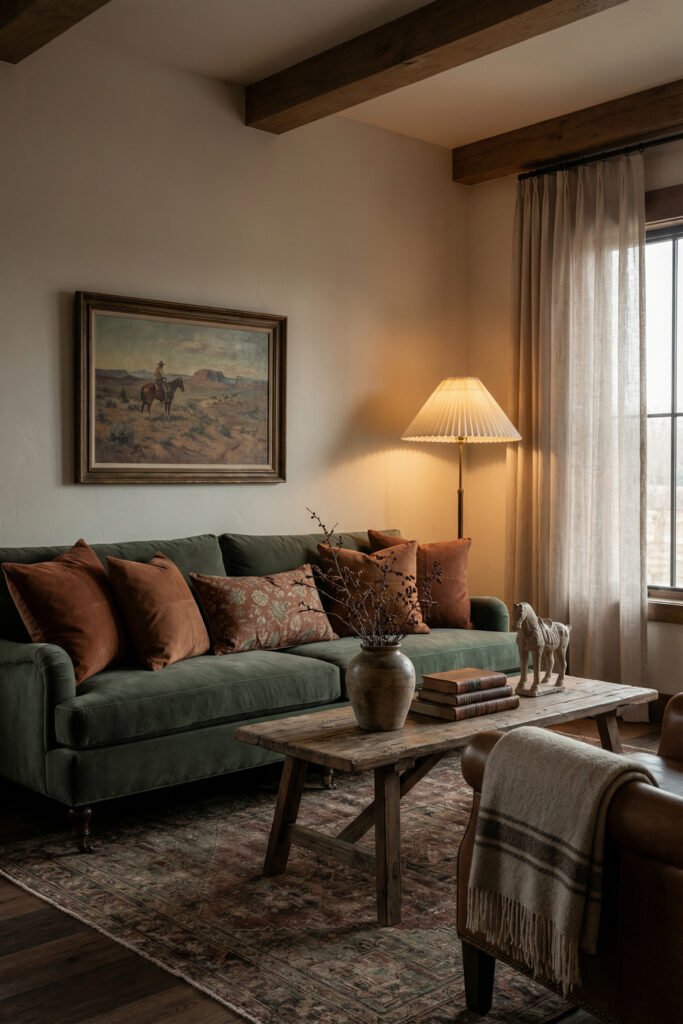
Layering Note: Use just one or two western-leaning pieces so the room keeps its polish and does not tip into costume.
There is a lived-in ease to this look that makes it especially pleasant in the evenings. The space feels gathered, useful, and full of quiet detail.
Center The Room On A Rust Statement Rug
Not every color story has to start with the sofa. Here, the rug does the heavy lifting and makes the whole room feel grounded from the floor up.
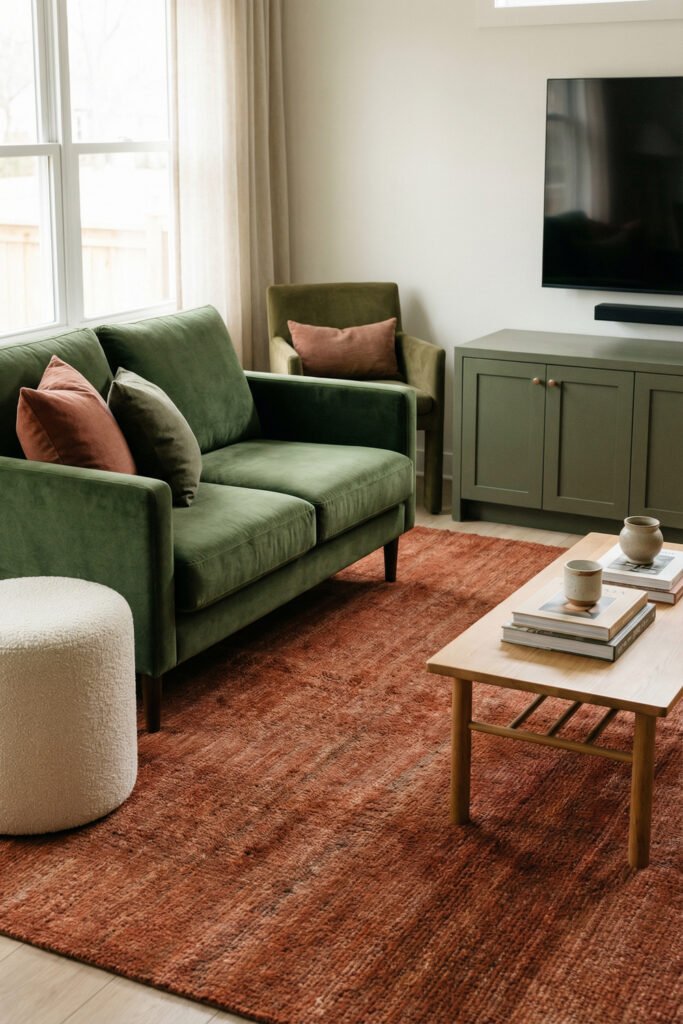
Choose a large rust-toned rug with enough variation to show clay, cinnamon, and a touch of faded brick. On top of it, place a green velvet loveseat and an olive side chair so the seating feels tied together without needing matching upholstery. A painted media console in earthy green helps repeat the color at eye level, while one cream accent chair or ottoman keeps the room from getting too dense. The layout feels especially strong in compact spaces because the rug defines everything at once. The key detail is letting the rust pattern stretch wider than the seating footprint.
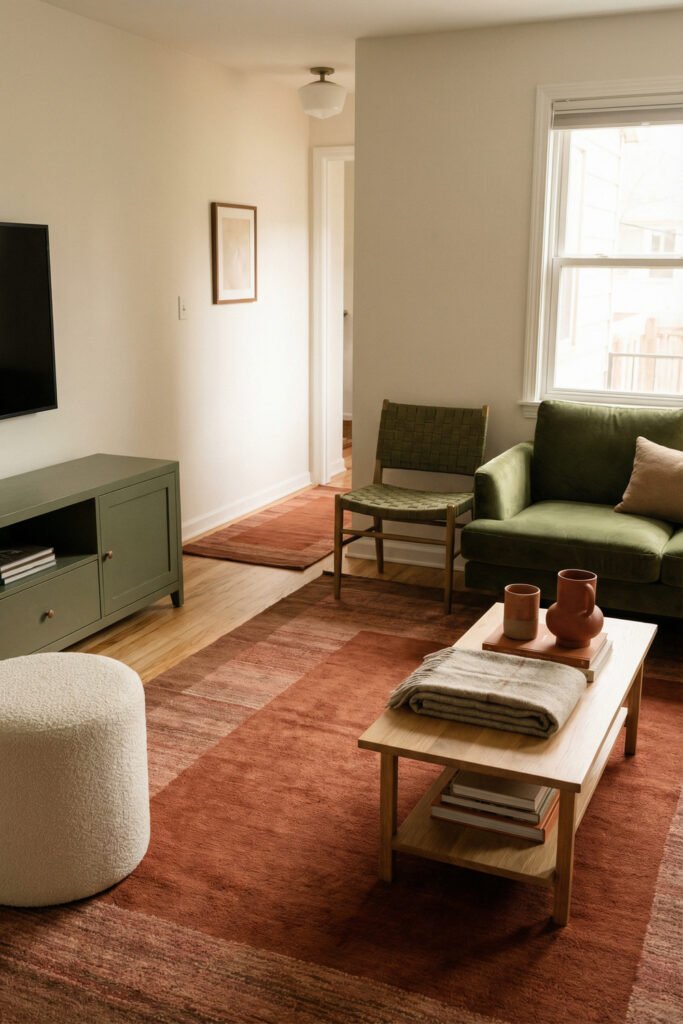
This approach feels balanced and smart, especially when the room needs color but not visual clutter. It gives the whole space a finished look with one strong move.
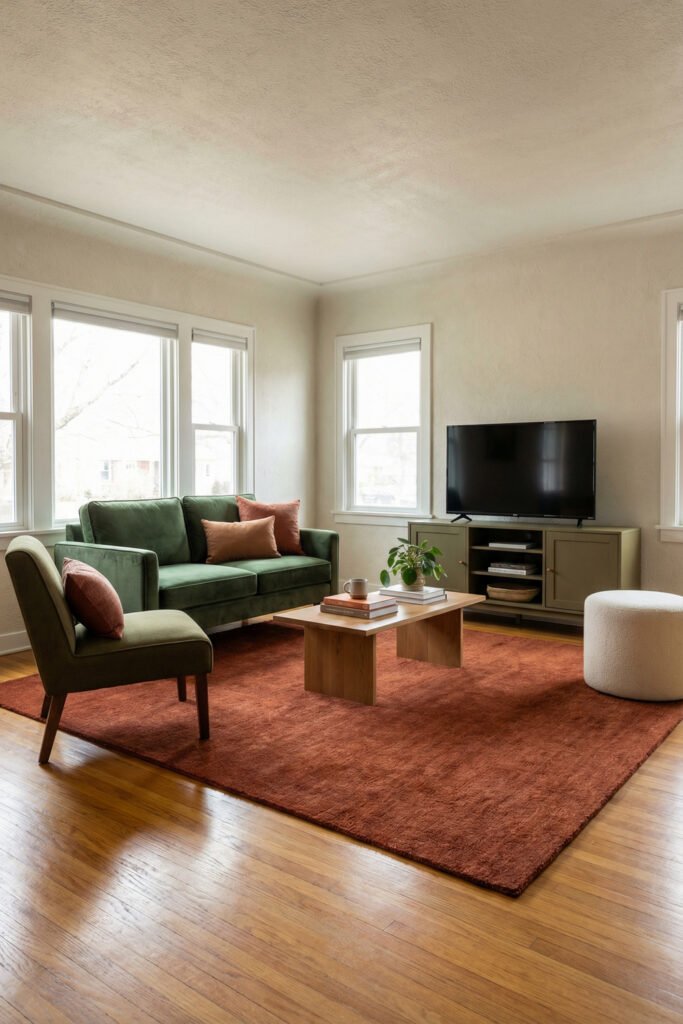
Floor First: Pick the rug before the pillows so the smaller accents can echo what is already working underfoot.
It is an easy way to make a room feel complete without overfilling it. The result feels grounded, polished, and comfortable to use.
Style A Cozy Corner With Green Built-Ins
A painted backdrop can change the whole room, even if the rest of the layout stays simple. Green built-ins bring structure, and a rust sofa makes that backdrop come alive.
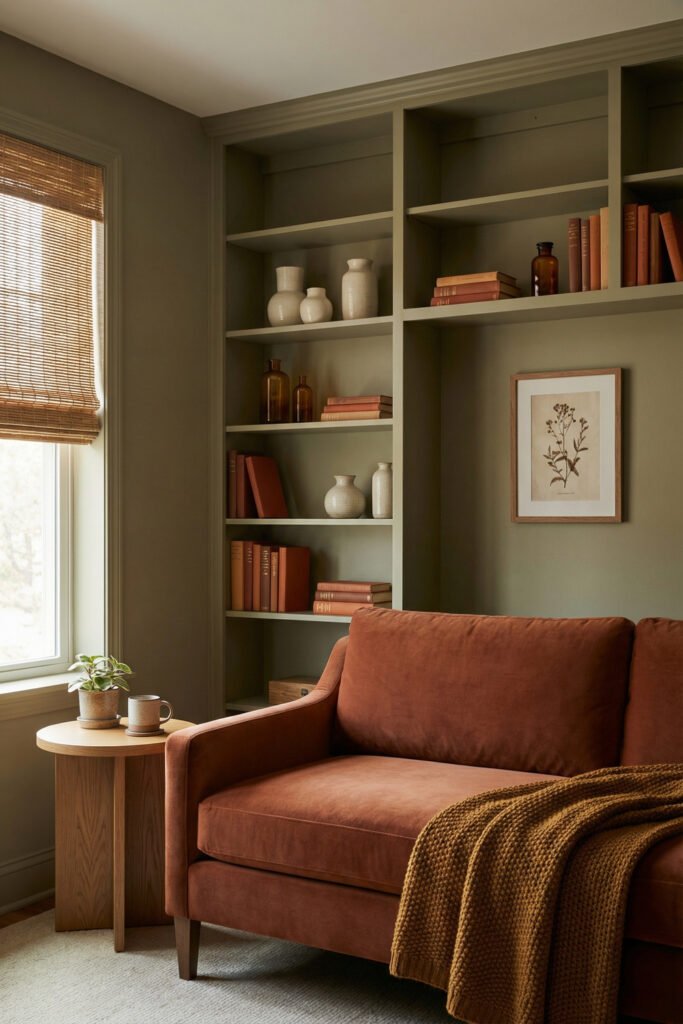
Paint the shelving or TV wall in an earthy green that feels rich but not too dark, then place a rust sofa in front so the contrast is clear the moment you enter the room. Style the shelves with cream ceramics, amber glass, and a few rust-spined books to quietly repeat the palette without turning the wall busy. A woven shade, a small oak side table, and one framed print keep the corner feeling finished. The best detail is the way the sofa reads brighter and fuller against the deeper green behind it.
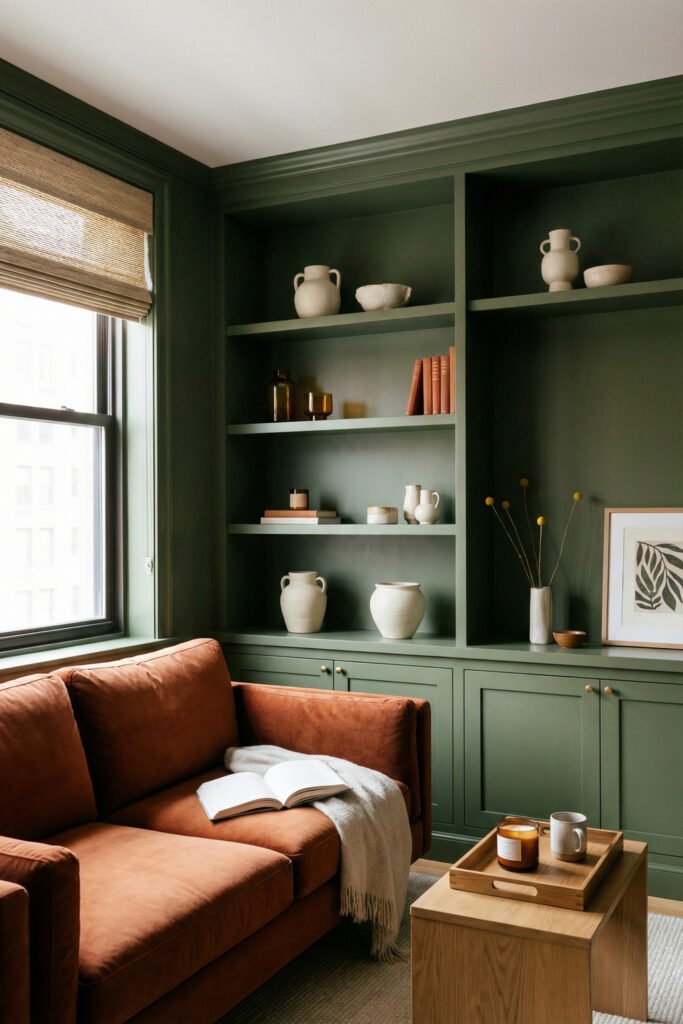
This setup feels custom, even in a simple apartment living room. It works well when you want one strong focal area that adds depth without filling the whole room with extra pieces.
Shelf Edit: Leave some open space between objects so the green backdrop still shows through and does part of the styling.
It is a smart way to add color and shape at the same time. The room feels more settled, and everyday lounging looks a little better too.
A Color Pairing Worth Saving
Green and rust really do have a special kind of balance. One brings depth, and the other brings that sun-baked warmth that makes a living room feel finished.
We saw that this palette works in lots of ways, from painted walls and bold seating to softer textiles, patterned rugs, and layered accents. It can feel moody, light, vintage, or modern depending on the mix.
Try swapping in one rust pillow pair or styling one green focal piece first. A small shift is often all it takes to see the room differently.
From here, you could lean into darker olive tones, softer sage layers, or even more pattern. Explore more inspiration for Green Living Room Ideas on our board in Pinterest.
You May Also Like
- Sage Green Lounge Ideas for a Calm, Collected Living Room
- Green Kitchen Cabinets: Stylish Ways to Elevate Style
- Beige and Green Living Room: Color Pairing Tips & Inspiration
- Rustic Luxury Living Room: Warm and Unique Living Area Themes
- Rustic‑Modern Kitchen Ideas for Warm, Sleek Style
- Olive Green Decor Ideas For A Layered Living Room