





25 Fall Home Decor Ideas to Make Every Room Feel Cozy
The most convincing fall home decor ideas do more than scatter pumpkins around the house. The rooms that really feel like autumn usually have a clear palette, a few tactile materials, and repeated seasonal details that connect one part of the space to another.
- Quick Takeaways
- How to Make Fall Decor Feel Layered, Not Cluttered
- Fall Porch and Entryway Decor Ideas
- 1. Frame a Black Front Door With Pumpkins and Crimson Mums
- 2. Wrap the Front Door in Autumn Leaves and Stacked Pumpkins
- 3. Try Jewel-Tone Pumpkins and Saturated Mums
- 4. Stack Crates, Lanterns, Pumpkins, and Hay in a Porch Corner
- 5. Make a Succulent-Topped Pumpkin Family
- 6. Hang a Navy Velvet Pumpkin Wreath With Burnt-Orange Flowers
- 7. Create a Natural Indian-Corn Wreath
- 8. Suspend Glowing Maple Leaves and Pinecones Overhead
- 9. Hang White Mini Pumpkins From a Branch Mobile
- 10. Style an Entry Console With a Wreath, Mums, and Stacked Pumpkins
- Cozy Fall Living Room and Fireplace Ideas
- 11. Layer a Vintage Sideboard With Plaid, Books, Pumpkins, and Florals
- 12. Drape a Stone Fireplace With Autumn Garland and Plaid Layers
- 13. Style a Neutral Mantel With Pampas, Mini Pumpkins, and Amber Lanterns
- 14. Create a Pumpkin-and-Pinecone Glow Around the Hearth
- 15. Warm a Black Sofa With Cognac Throws and Gray Knits
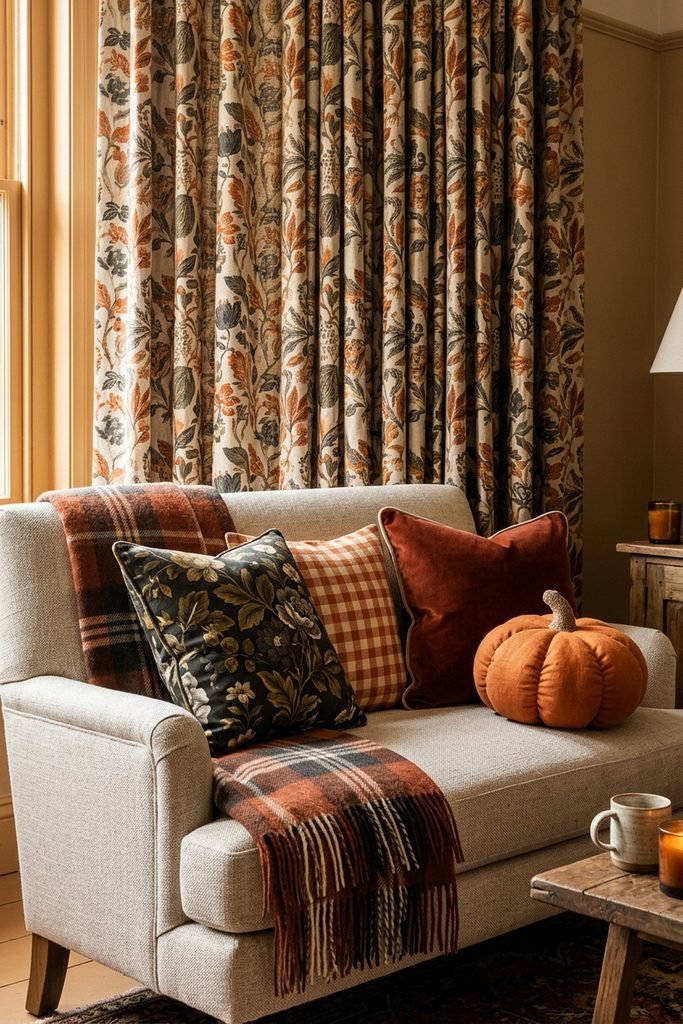
- 16. Layer Floral Curtains, Pumpkin Pillows, and Plaid for a Maximal Fall Room
- 17. Build a Harvest Coffee-Table Tray With Branches, Pumpkins, and Pinecones
- 18. Turn a Blanket Ladder Into a Vertical Fall Textile Display
- Fall Bedroom and Bathroom Ideas
- 19. Layer a White Bed With Rust Pillows and a Mustard Knit Throw
- 20. Use Rust Textiles and Leaf Patterns for Fall Bathroom Decor
- Fall Kitchen Decor Ideas
- 21. Dress Open Kitchen Shelves With Pumpkin Mugs and Copper Tones
- 22. Anchor the Kitchen Island With Amber Glass and Bare Branches
- 23. Create a Cozy Fall Tea or Coffee Station
- Fall Dining and Tablescape Ideas
- 24. Set a Golden-Hour Fall Table With Plaid, Candles, and Mini Pumpkins
- 25. Build a Harvest Floral Centerpiece With Corn and Autumn Flowers
- Fall Home Decor FAQ
- When should I start decorating my home for fall?
- What fall colors can I use besides orange?
- How can I transition fall decor into Halloween or Thanksgiving?
- Conclusion
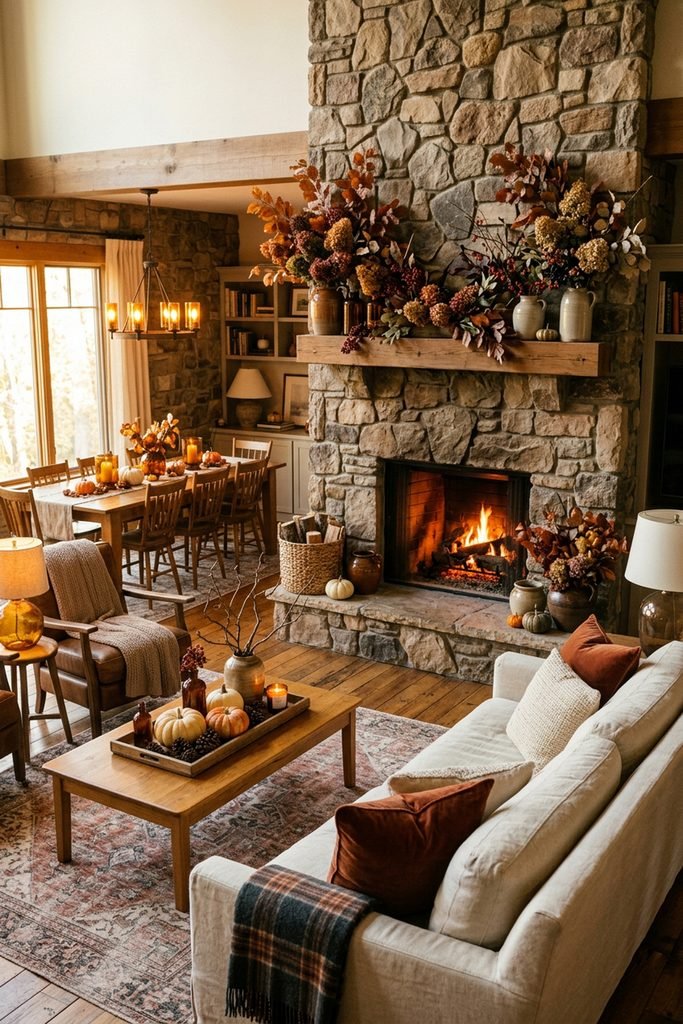
That might mean rust pillows against pale upholstery, mums framing a dark front door, plaid beside warm wood, or amber light reflecting through glass. Some homes can carry an abundant harvest display, while others look better with one tightly styled tray or a simple textile swap.
The 25 ideas below move from the porch through the main living areas, bedroom, bathroom, kitchen, and dining spaces. Use them as complete looks or borrow the combinations that fit your home best.
Quick Takeaways
- Repeat two or three fall colors instead of introducing a different shade with every accessory.
- Texture often creates more seasonal depth than adding more decorations. Think velvet, chunky knit, wicker, wood, dried leaves, and stone.
- Mix pumpkin and decor sizes so the arrangement has a clear focal point instead of a row of similarly sized objects.
- Warm lamps, fairy lights, and candle-style lighting can carry much of the autumn mood.
- Let highly decorative areas such as porches and fireplaces hold more layers while keeping working surfaces comparatively restrained.
How to Make Fall Decor Feel Layered, Not Cluttered
Fall decorating becomes much easier once you stop thinking about individual decorations and start thinking in relationships.
First, establish a small color family. Rust, cream, brown, and muted green might appear on completely different objects, but repeating those colors makes them read as one palette. A rust throw on the sofa can connect visually to dried foliage across the room; cream pumpkins can echo pale upholstery or walls.
Then vary scale. One large pumpkin, vase, wreath, or branch arrangement gives the eye somewhere to land. Medium pieces support it, while the smallest details fill gaps. Five tiny decorations with equal visual weight can feel scattered; one dominant piece surrounded by smaller accents usually feels more composed.
Texture does another large part of the work. Smooth ceramic beside woven wicker, velvet against matte upholstery, rough wood beside glass, or dried foliage next to soft knit gives the room depth even when the palette is restrained.
Finally, contain smaller decor when possible. A tray, basket, mantel, console, crate, or shelf creates a visual boundary. Instead of pumpkins and pinecones wandering across an entire room, they become a recognizable vignette.
Fall Porch and Entryway Decor Ideas
The porch and entry are natural places for stronger seasonal statements because they have fewer everyday objects competing for attention. Here, repetition and scale can be much more dramatic.
1. Frame a Black Front Door With Pumpkins and Crimson Mums
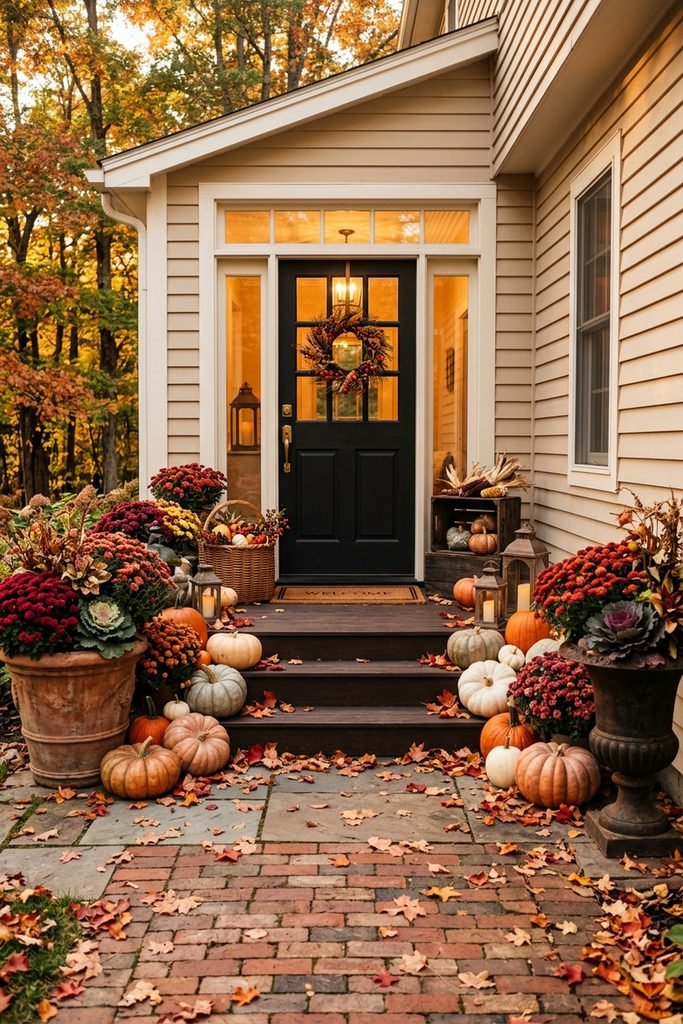
A black or very dark front door gives orange pumpkins and deep red mums a powerful background. Instead of distributing everything evenly across the porch, let the doorway act as the visual destination and build the decor toward it.
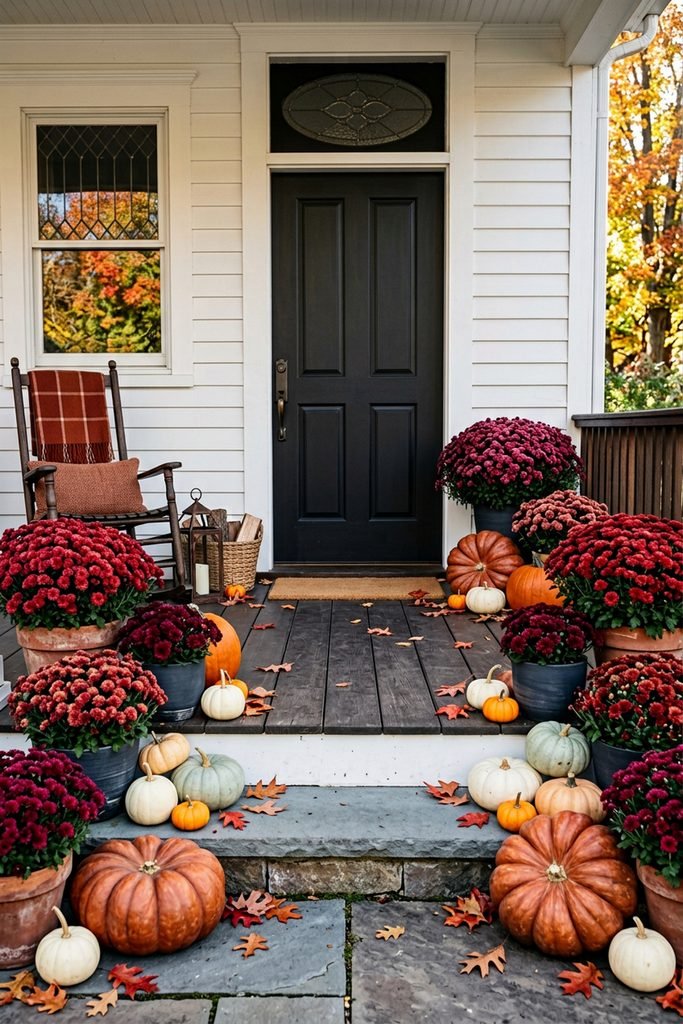
Place the largest flower masses closest to the entrance, then let medium and smaller pumpkins move outward along the path or steps. A few fallen-looking maple leaves soften the boundaries between the individual clusters.
The strength of this palette comes from contrast. Black makes the orange and cranberry tones appear richer, while natural wood, terracotta pots, and rust-colored leaves stop the scheme from looking too graphic.
Keep the actual walkway and door operation clear so the abundance remains decorative rather than becoming an obstacle.
Build the Porch Color Story
To recreate the strong dark-door contrast, concentrate the shopping around orange pumpkins, deep-red florals, and one layer of autumn foliage rather than collecting unrelated seasonal pieces.
2. Wrap the Front Door in Autumn Leaves and Stacked Pumpkins
For a more theatrical fall entrance, treat the doorway itself as the seasonal focal point. A dense surround of red, copper, and golden leaves can create a full autumn frame, while vertically stacked pumpkins draw the eye through the center.
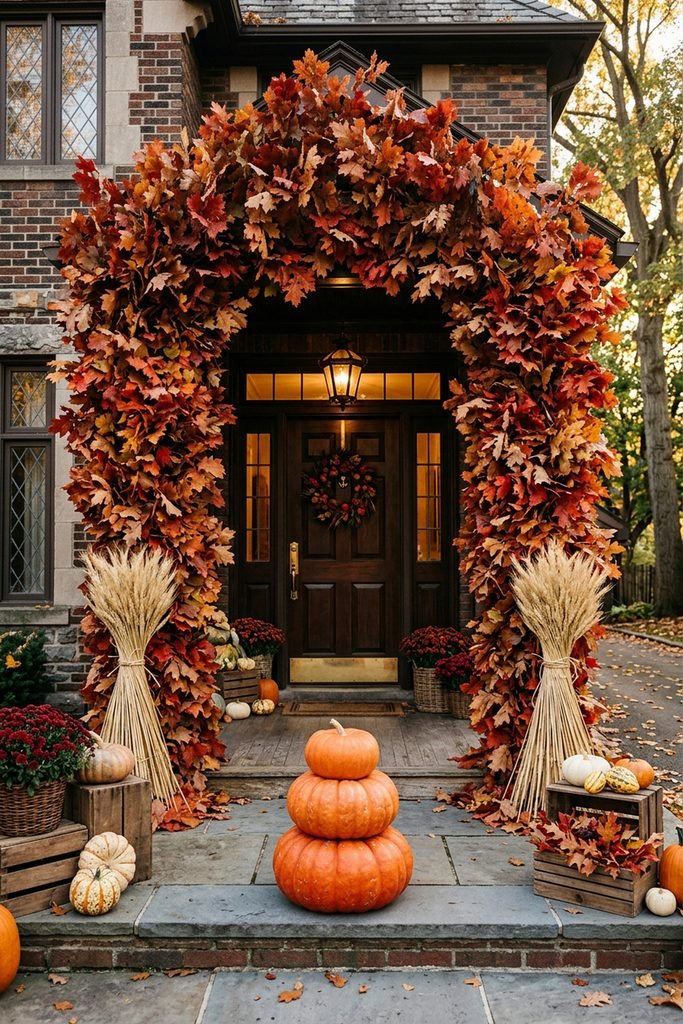
Tall bundles of wheat on either side help balance that central column without competing with it. Their pale straw color also gives the saturated foliage some relief.
This look succeeds because the layers follow a hierarchy: foliage creates the backdrop, pumpkins establish the focal rhythm, and wheat gives the edges height and structure.
If the door is functional, keep foliage, pumpkins, and fasteners away from the handle, threshold, and normal swing path.
3. Try Jewel-Tone Pumpkins and Saturated Mums
Orange does not have to carry every fall porch. A brighter combination of plum, raspberry, creamy white, and pumpkin orange can feel unmistakably autumnal while looking very different from the typical rust-and-beige palette.
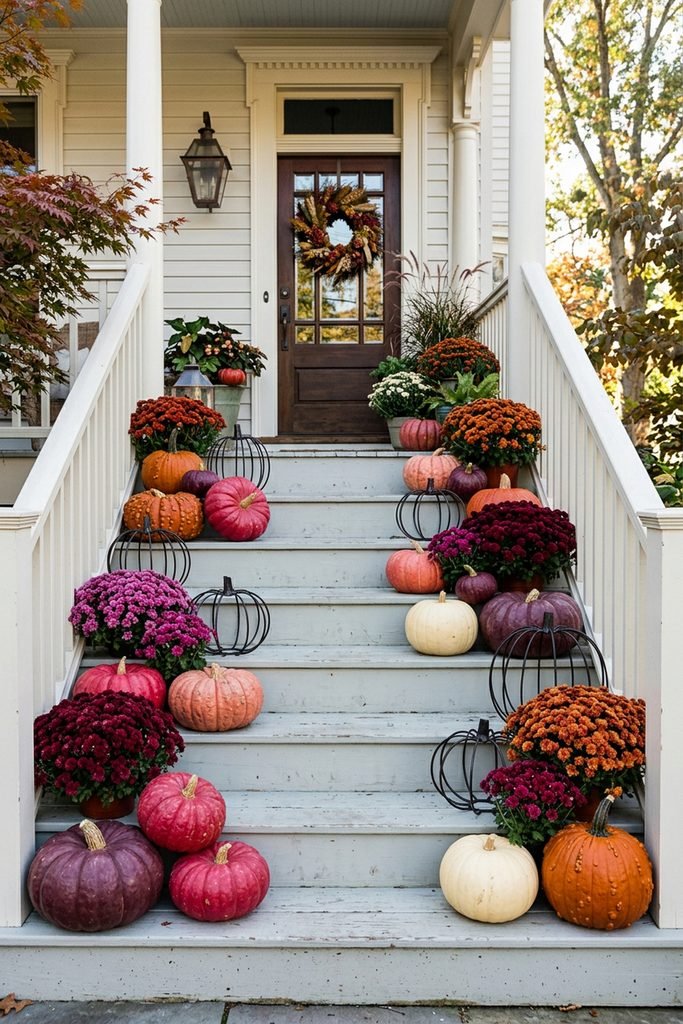
The trick is repetition. If one raspberry pumpkin appears by itself, it can feel random. Repeat the color on another step and connect it with burgundy or magenta mums. White pumpkins work particularly well between saturated colors because they give the eye a resting point.
Against pale steps or siding, this approach becomes especially striking. The architecture stays quiet while the seasonal color moves upward toward the entrance.
4. Stack Crates, Lanterns, Pumpkins, and Hay in a Porch Corner
A compact porch does not need decorations spread across every available inch. Building upward can produce far more impact.
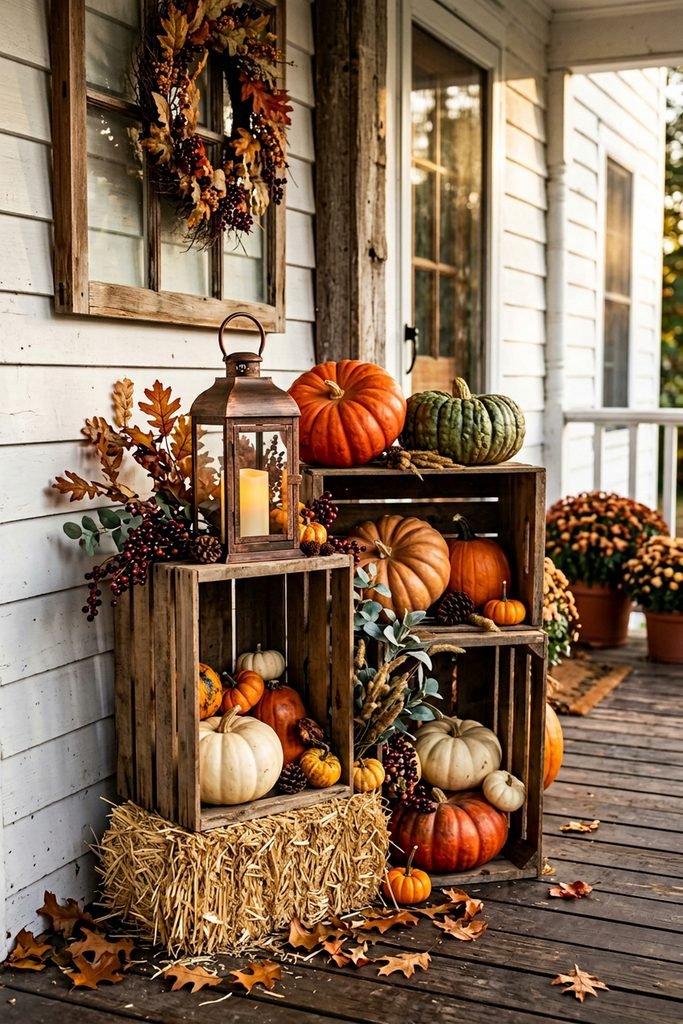
Use sturdy wooden crates at different heights and allow some pumpkins or foliage to sit inside them rather than placing everything on top. A lantern creates a strong vertical object, while a small bale of hay or another substantial natural element can visually anchor the bottom.
Orange pumpkins, burgundy leaves, pinecones, and raw wood already share enough earthy color that the arrangement can remain varied without becoming chaotic.
If you add candlelight to lanterns near dry leaves or hay, a flameless option avoids placing an open flame beside combustible seasonal material.
5. Make a Succulent-Topped Pumpkin Family
Not every fall display needs to be serious. Gourds and pumpkins with small painted faces and succulent or botanical “hair” can create a playful outdoor vignette without turning the entire porch into Halloween decor.
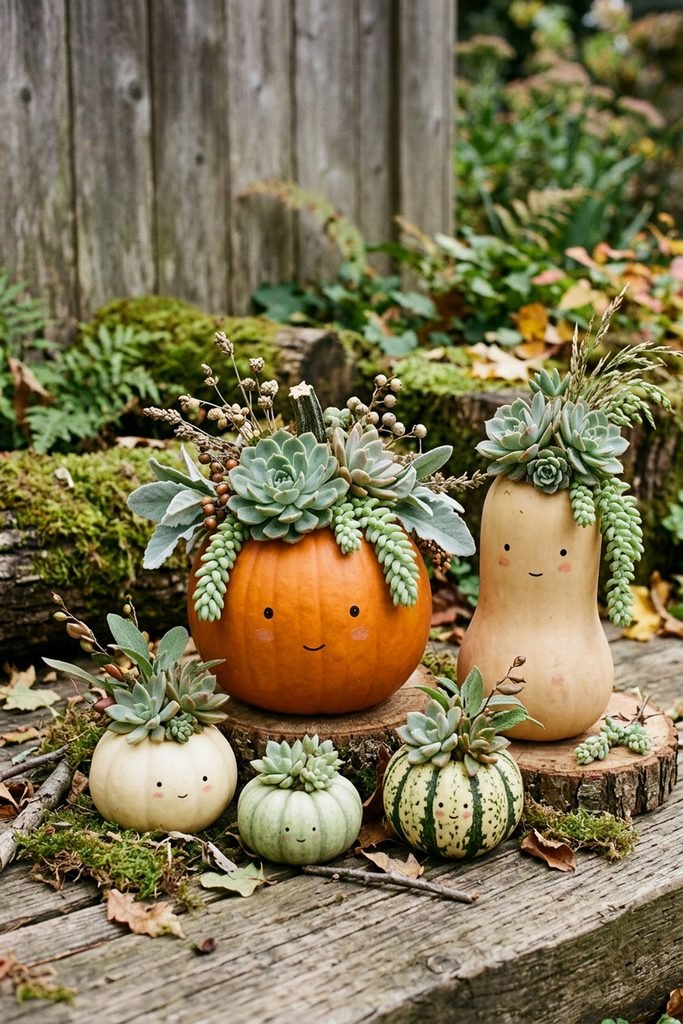
Variety is what makes the group charming. A tall butternut squash naturally becomes a different character from a round pumpkin, while trailing succulents, upright leaves, or silvery foliage give each one its own silhouette.
Keep the faces simple so the plants and unusual gourd shapes remain the strongest details. Clustering the characters at different heights against wood or another natural background helps them read as one little scene instead of separate craft projects.
6. Hang a Navy Velvet Pumpkin Wreath With Burnt-Orange Flowers
Deep navy is an unexpectedly strong partner for fall orange. On a wreath, navy velvet pumpkins can make burnt-orange flowers look richer while giving the arrangement a polished, almost jewel-box quality.
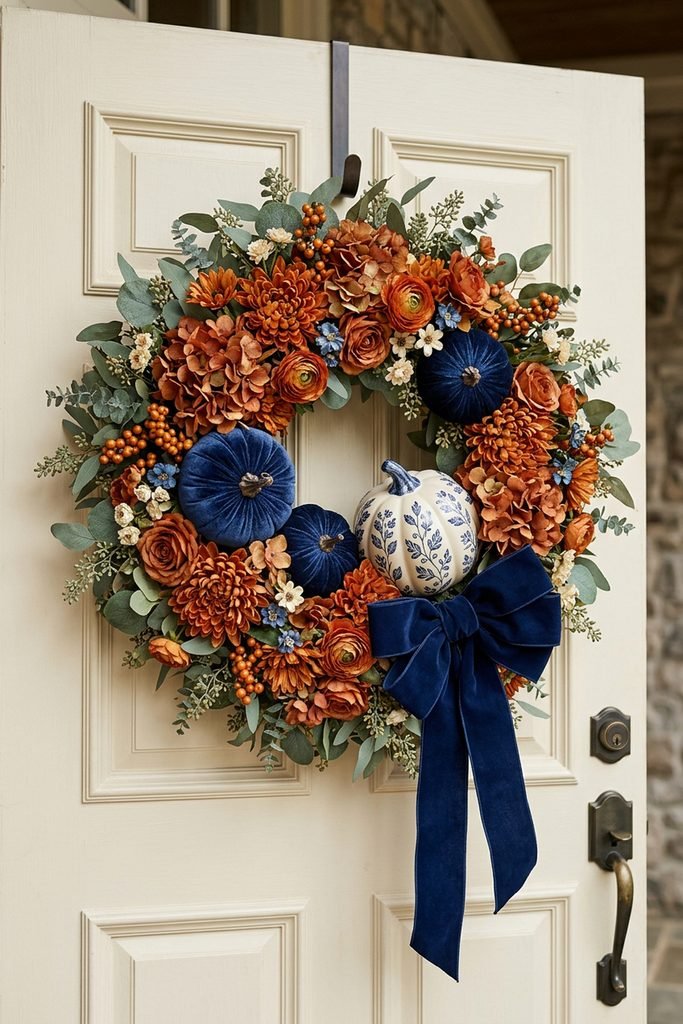
A white or pale door increases the contrast further. Add an oversized navy bow near the bottom and keep most supporting foliage muted so the blue-and-orange relationship stays dominant.
A patterned white-and-blue pumpkin can add another layer without introducing a completely new color family.
This is a useful direction when traditional farmhouse fall decor feels too rustic but you still want unmistakable seasonal color.
Recreate the Navy-and-Orange Palette
This wreath works because plush navy creates a dramatic cool base for saturated orange flowers, so focus on those two defining elements and one matching ribbon detail.
7. Create a Natural Indian-Corn Wreath
Decorative multicolored corn already contains much of fall’s best palette: burgundy, brown, rust, mustard, cream, and almost-black.
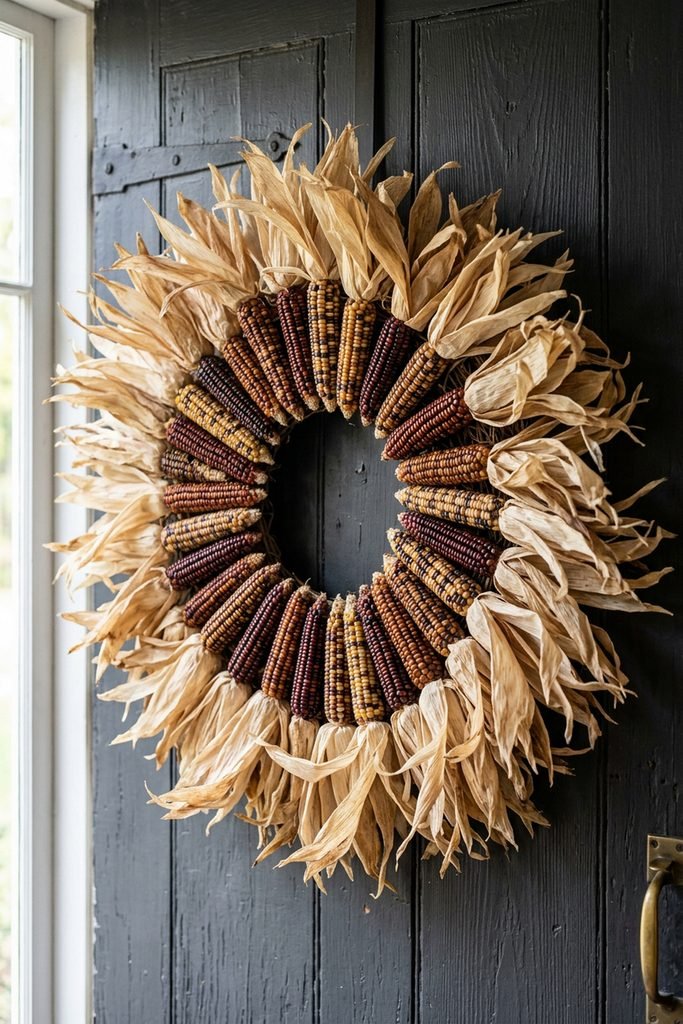
Arranged radially, the cobs create a strong graphic wreath shape, while pale papery husks soften the edges. That contrast between dense kernels and feathery husks keeps the wreath from looking heavy.
Because the material itself supplies so much variation, extra embellishment is rarely necessary. A simple door lets the kernel colors become the decorative feature.
As with other dried natural decorations, keep the finished wreath away from open flames or other ignition sources.
8. Suspend Glowing Maple Leaves and Pinecones Overhead
Fall decor does not have to live exclusively on tables and mantels. A hanging installation of maple leaves, pinecones, and tiny warm lights can bring the season into unused vertical space.
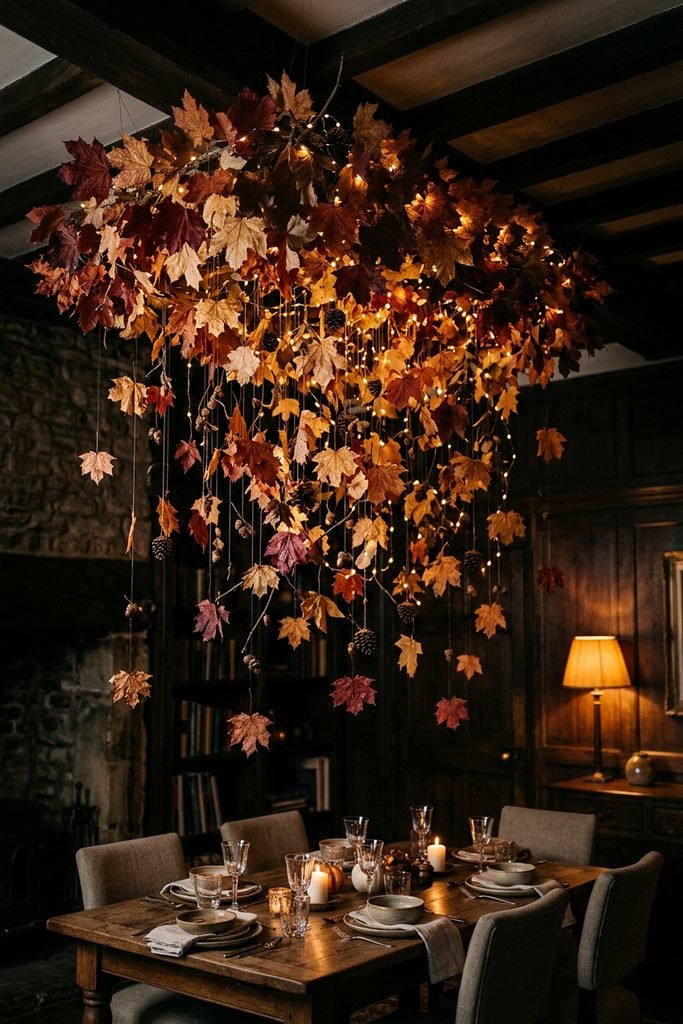
Different hanging lengths matter here. If every pinecone and leaf ends at the same level, the arrangement can resemble a flat curtain. A loose cascade creates movement and allows individual lights to glow between the natural forms.
Warm pinpoints of light shining through orange leaves can make a relatively simple collection of materials feel much more atmospheric after dark.
For any overhead installation, use mounting hardware appropriate to the actual surface and weight rather than assuming a generic hook can support it. Decorative light sets should also be inspected for damaged wires or sockets before use. CPSC recommends discarding damaged sets and using lights rated for their intended location.
9. Hang White Mini Pumpkins From a Branch Mobile
A pale hanging installation creates a completely different fall mood. Suspend small white pumpkins from a branch or twig structure and keep generous space between them.
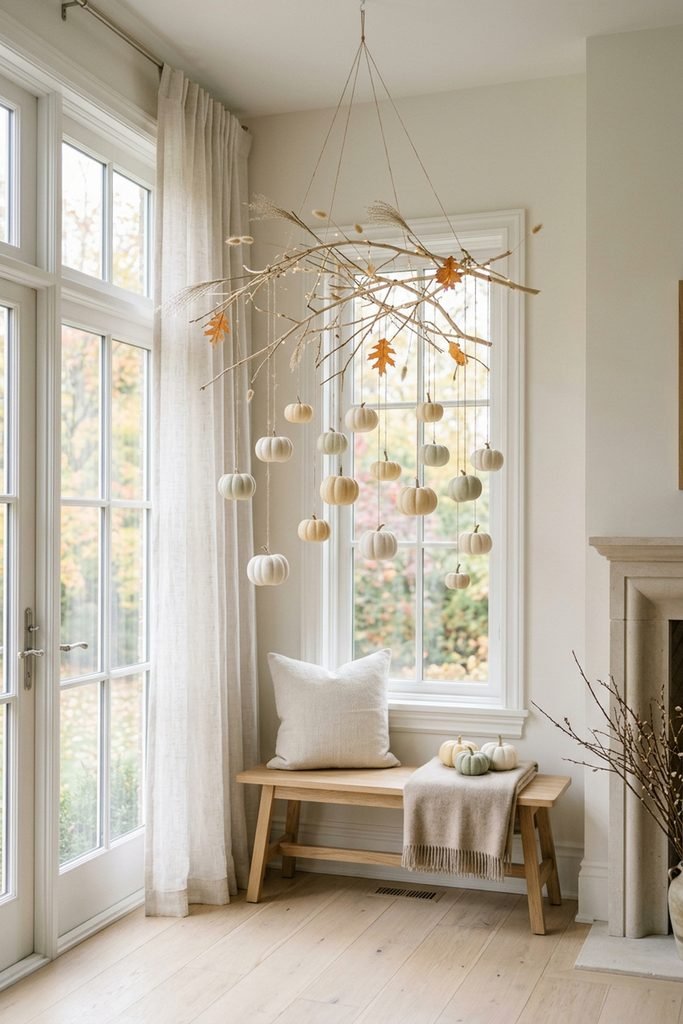
The white and cream palette allows the silhouettes to do most of the work. A little muted foliage or soft orange prevents the arrangement from feeling wintry, while small warm lights can give it a gentle evening glow.
Negative space is crucial. The beauty comes from seeing each pumpkin floating independently rather than filling every gap.
Lightweight faux pumpkins are a sensible choice for an overhead installation. Any exact mounting method or load limit should follow the specific hardware and ceiling or wall construction being used.
10. Style an Entry Console With a Wreath, Mums, and Stacked Pumpkins
Symmetry can make a busy seasonal collection surprisingly calm.
Place a fall wreath above the console, then use two similarly sized mums or foliage arrangements as visual bookends. A vertical stack of pumpkins in the middle becomes the central accent.
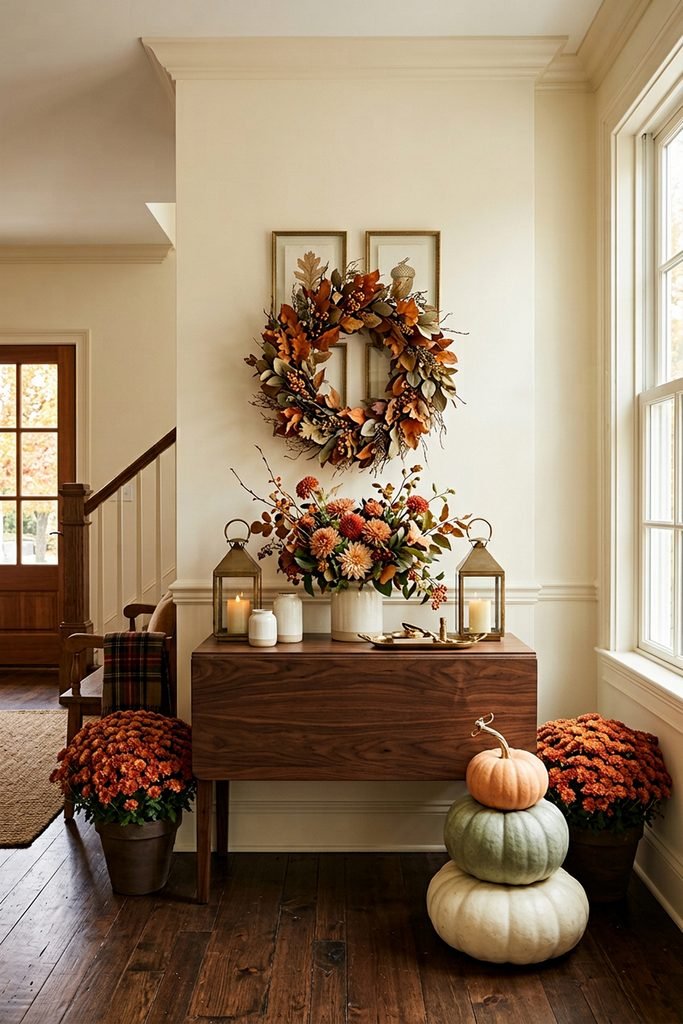
The pumpkins do not need to match. In fact, alternating orange, pale cream, and muted green adds subtle variation while the symmetrical overall layout keeps everything ordered.
Smaller lanterns or framed botanical pieces can sit closer to the console surface, but let them remain supporting details. The wreath, flowers, and pumpkin stack should still read first.
Explore more fall outdoor decor ideas
Cozy Fall Living Room and Fireplace Ideas
Inside the main living areas, texture becomes especially important. Upholstery, rugs, throws, stone, wood, baskets, and lighting can create fall atmosphere even when the number of overtly seasonal objects is fairly small.
11. Layer a Vintage Sideboard With Plaid, Books, Pumpkins, and Florals
A vintage sideboard already brings warm wood and age into the room, so fall decor can build on those qualities instead of covering them.
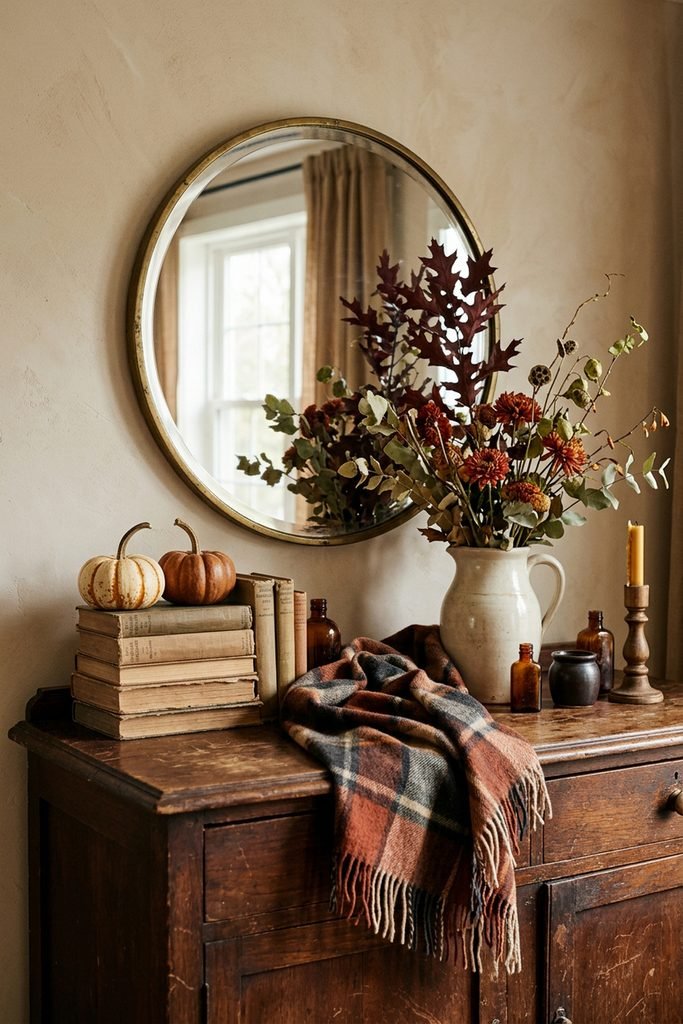
Stack a few old books to create height for small pumpkins, then allow a plaid textile to cross part of the surface rather than centering it perfectly. A tall pitcher of burgundy, rust, and cream flowers gives the composition enough vertical weight to balance a mirror or framed art above.
The most useful relationship here is between collected objects and seasonal color. Books and wood establish the permanent base; pumpkins, flowers, and plaid shift it toward autumn.
It feels seasonal without requiring the furniture itself to change.
Find the Collected Fall Layers
A rust plaid textile, one vintage-shaped vessel, and loose autumn florals can shift an existing console toward fall without replacing the furniture underneath.
12. Drape a Stone Fireplace With Autumn Garland and Plaid Layers
A stone fireplace can support much more visual density than a small console. Its rough surface and large scale give abundant foliage, baskets, textiles, and pumpkins something substantial to push against.
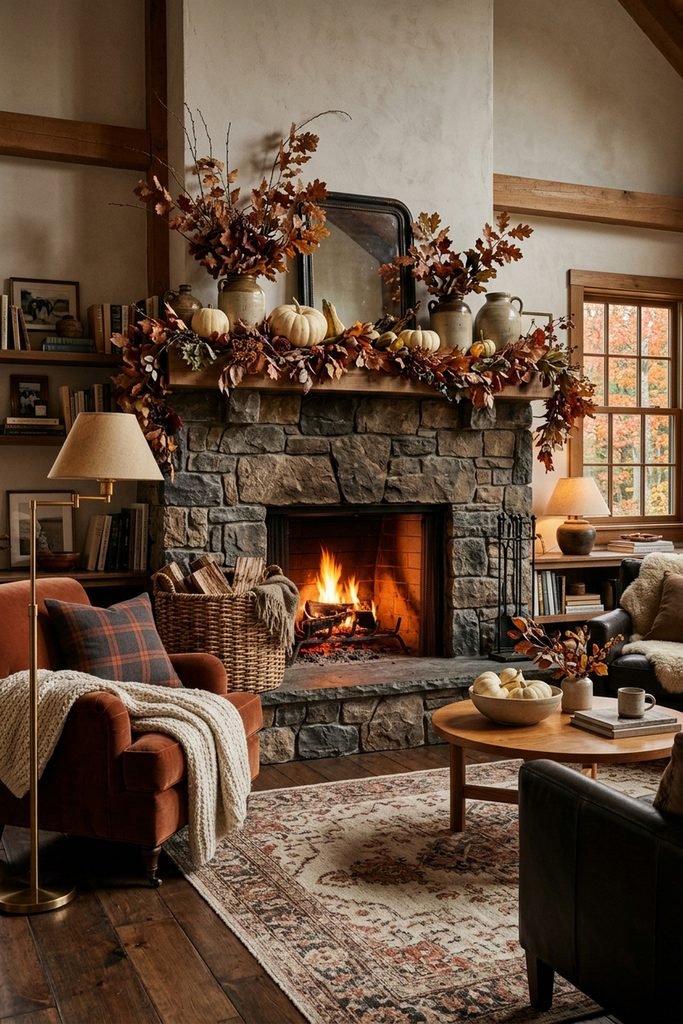
Let the mantel carry an overflowing run of rust and orange leaves, then repeat those tones in a plaid throw or nearby cushion. Wicker baskets introduce another natural texture without adding a new dominant color.
The strongest version extends the palette beyond the mantel. A rust throw on a nearby chair or a pumpkin on the coffee table allows the fireplace to influence the entire room rather than becoming a separate decorated island.
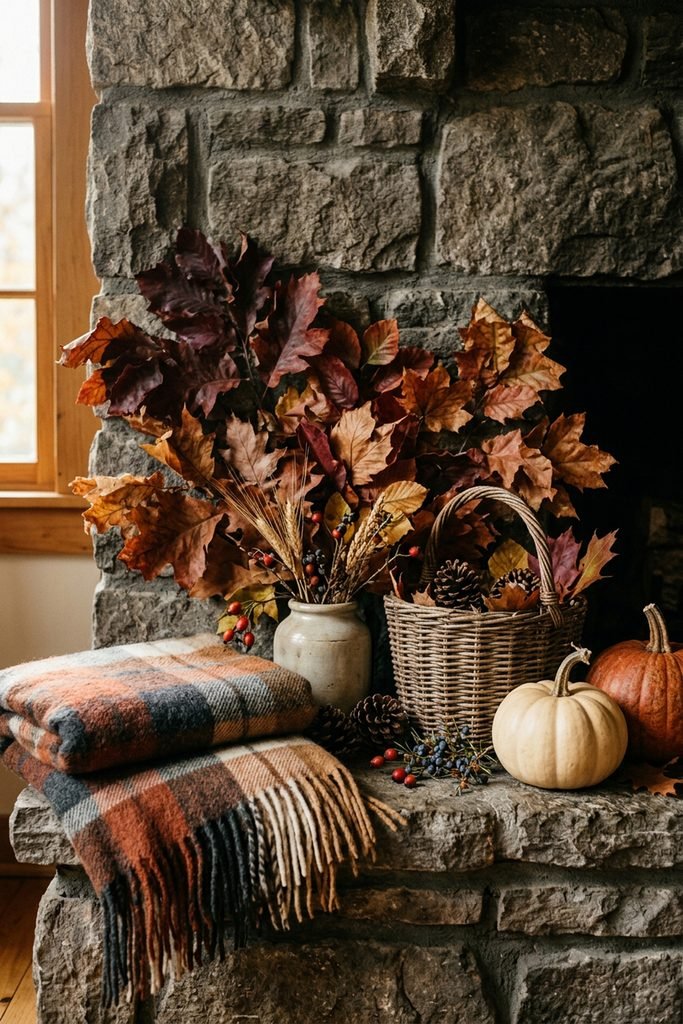
If the fireplace is used, keep combustible decor away from the fire and heat source. The U.S. Fire Administration recommends keeping anything that can burn at least 3 feet from fireplaces and other heat sources.
13. Style a Neutral Mantel With Pampas, Mini Pumpkins, and Amber Lanterns
For a lighter room, fall decor can remain almost entirely cream, muted rust, and amber.
A pale mantel benefits from a low foliage garland that follows its horizontal line. Above it, an airy pampas or dried-grass wreath adds softness without becoming visually heavy. Small cream and brown pumpkins can fill a few gaps, while lanterns and candle-style lights add warmer notes.
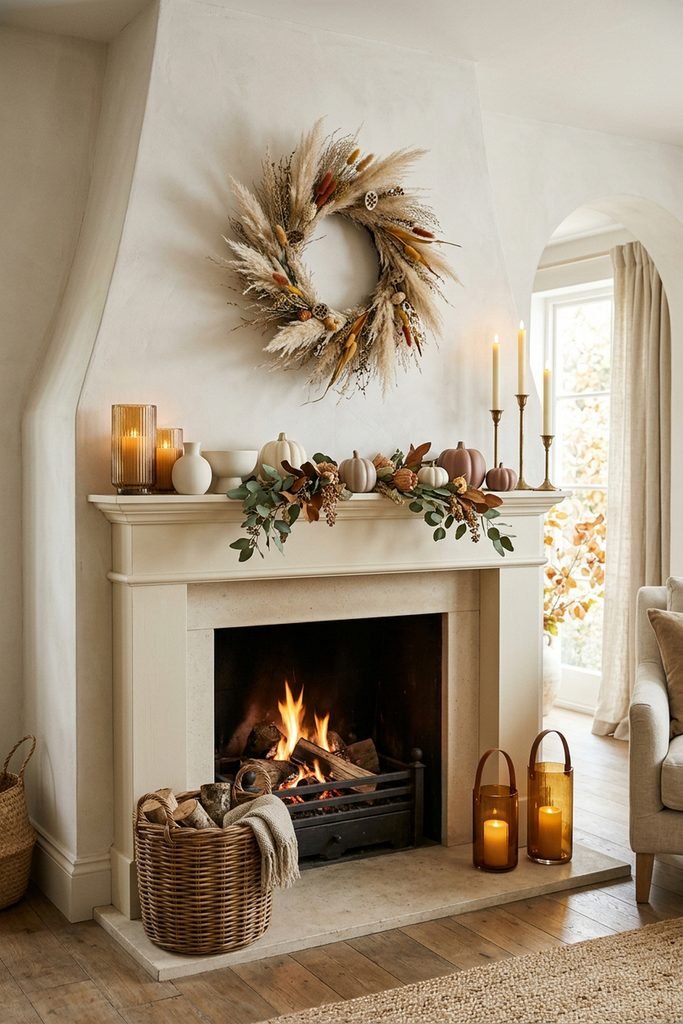
Height variation replaces excessive color here. A tall candleholder beside a tiny pumpkin creates dimension even when both are neutral.
Dry foliage and open flames are not a good combination, so flameless candles are the safer choice when the display includes pampas, leaves, or other combustible materials.
14. Create a Pumpkin-and-Pinecone Glow Around the Hearth
The hearth itself can carry fall decor even when the mantel stays relatively simple.
Cluster medium pumpkins, smaller gourds, and pinecones along the floor rather than creating a straight row. Their rounded forms soften the hard geometry of a stone or brick fireplace, while brown pinecones bridge orange and cream pumpkins back to the natural fireplace material.
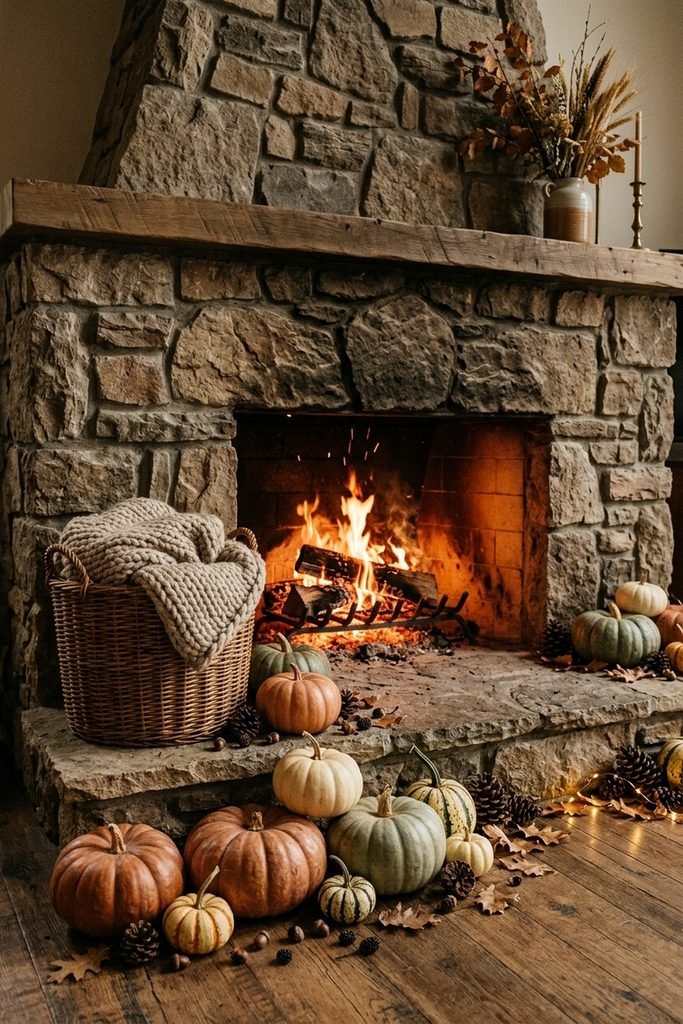
A textured basket or knitted piece nearby adds softness at floor level.
If the fireplace is active, the decorative arrangement needs to stay outside the recommended clearance around the heat source. USFA’s guidance is to keep combustible items at least 3 feet from fireplaces.
15. Warm a Black Sofa With Cognac Throws and Gray Knits
A fall living room does not need a single pumpkin to feel seasonal.
Against a black or charcoal sofa, cognac and burnt-orange textiles become especially vivid. Gray and cream knits bridge that contrast so the room does not turn into a harsh black-and-orange scheme.
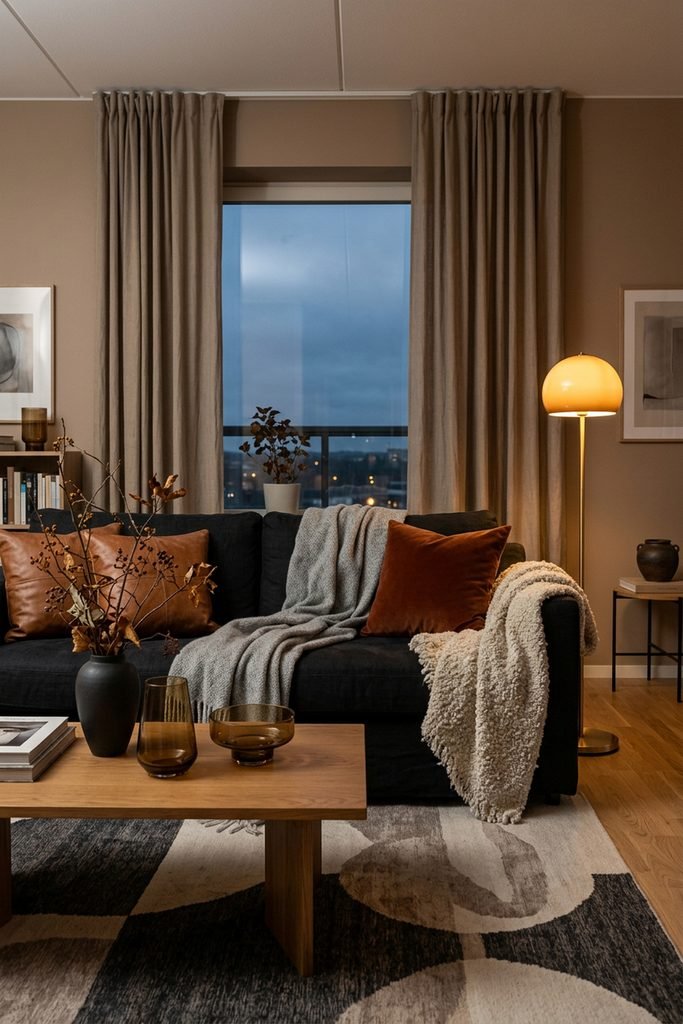
Pattern can stay limited. A graphic black-and-cream rug already provides strong movement, so the sofa works better with mostly solid or lightly textured cushions. Warm wood on the coffee table extends the brown-orange family beyond the upholstery.
This is a useful fall room decor strategy when you prefer a darker, more contemporary interior and want seasonal color to come through textiles rather than themed objects.
Build the Dark-and-Warm Textile Mix
The sofa needs only a few connected textile layers: cognac or rust for the strongest seasonal color, gray for a softer bridge, and tactile fabric to keep the dark upholstery from feeling flat.
16. Layer Floral Curtains, Pumpkin Pillows, and Plaid for a Maximal Fall Room
Maximal fall decorating works best when the patterns share colors even when their motifs differ.
Large floral curtains can establish burnt orange, brown, black, and muted green. A buffalo-check or tartan throw repeats some of those colors at a different scale, while pumpkin-shaped or checked pillows concentrate the warm tones on the sofa.
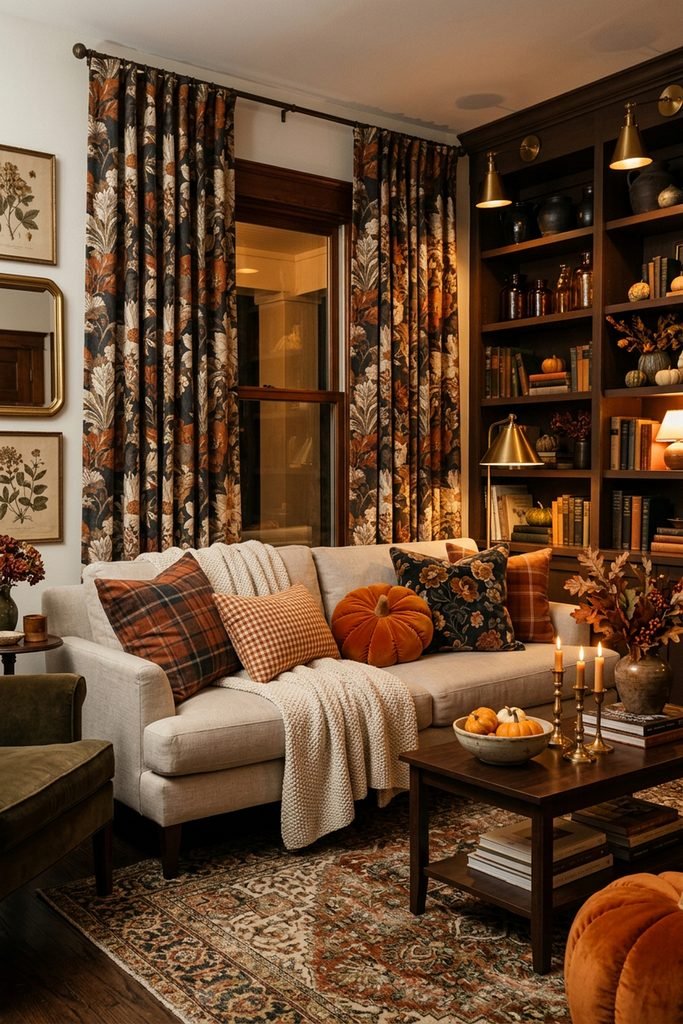
Because the room already contains strong pattern, plain upholstery provides essential relief. Every surface does not need its own print.
Low amber lighting and illuminated shelves deepen the darker colors at night, turning the floral and plaid layers into a much richer room than the same textiles would create under cool, flat light.
17. Build a Harvest Coffee-Table Tray With Branches, Pumpkins, and Pinecones
A tray solves one of the most common seasonal styling problems: lots of charming small objects with nowhere obvious to belong.
Give the arrangement one tall anchor, such as a vase of autumn branches or sunflowers. Around it, group lower pumpkins, pinecones, a small candle-style light, or a few pieces of greenery.
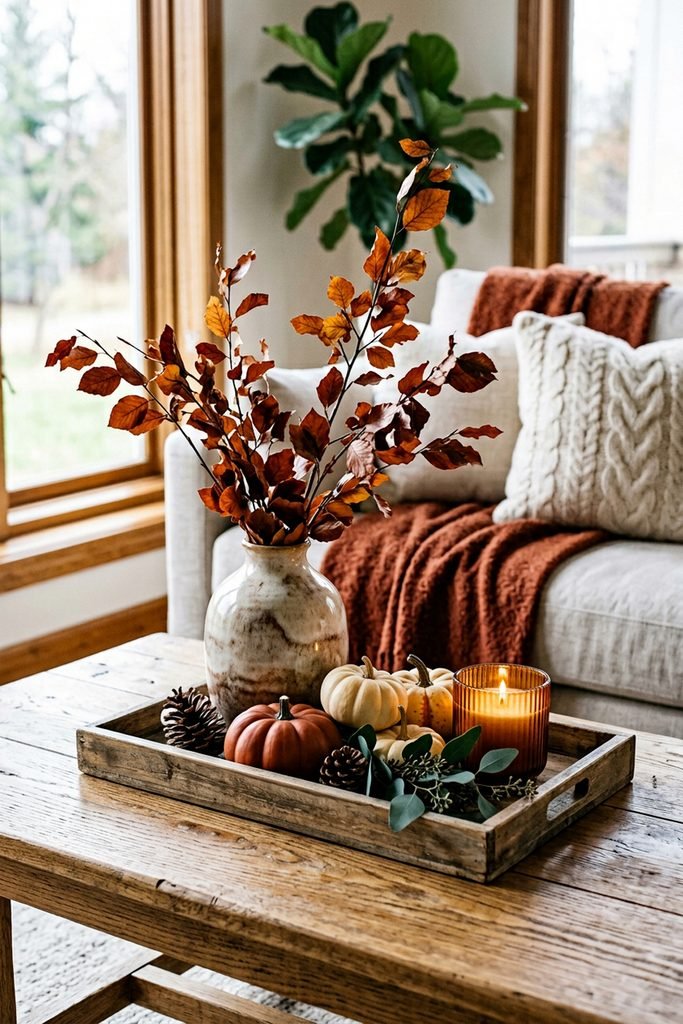
The height difference creates depth, while the tray’s edge gives the entire collection a clear boundary. That means you can use several textures without making the whole coffee table look scattered.
Leave some open tabletop around the tray. The contrast between a styled zone and an empty zone is part of what makes the vignette readable.
Find the Coffee-Table Anchors
The tray arrangement is easiest to reproduce when you shop for one contained base, one tall seasonal element, and one low cluster rather than a large collection of small accessories.
18. Turn a Blanket Ladder Into a Vertical Fall Textile Display
A blanket ladder moves seasonal color onto the wall instead of consuming another table or shelf.
Layer two or three plaids with different pattern scales: perhaps a larger rust-and-black check, a softer cream-and-brown plaid, and one mostly neutral blanket. Because the colors repeat, the patterns can differ without fighting one another.
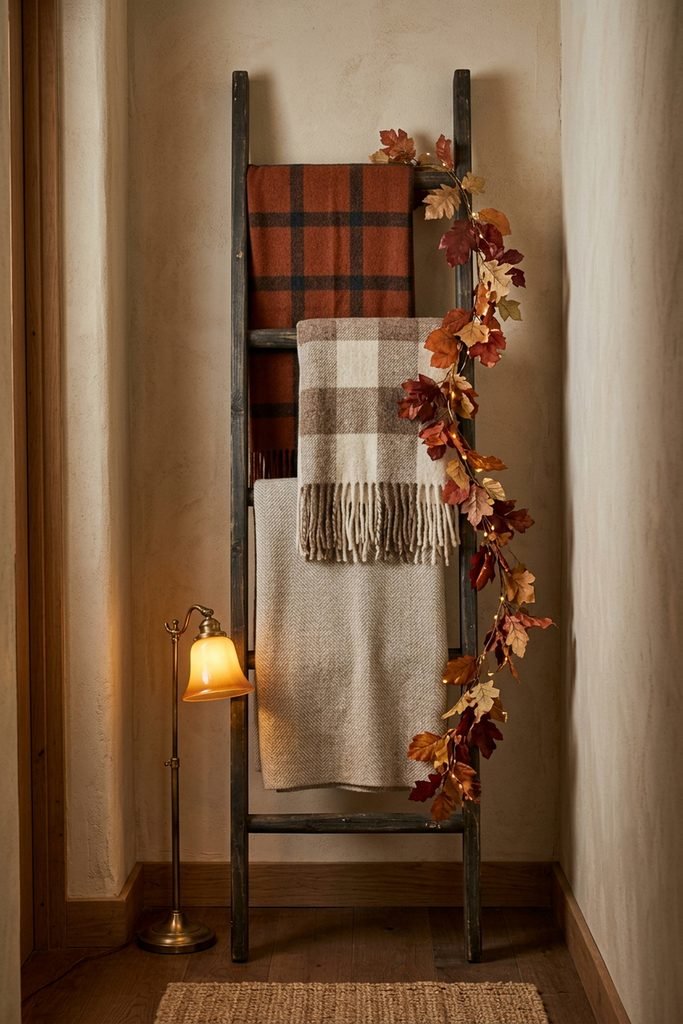
A trailing leaf garland running down one side adds organic movement and keeps the ladder from looking like simple blanket storage.
Tiny lights can deepen the effect at night, but cords should stay secured and out of walking paths. Inspect decorative light strings before using them and discard sets with damaged wiring or connections.
More fall living room decor ideas
Fall Bedroom and Bathroom Ideas
Bedrooms and bathrooms usually need less decor than living areas. Large textile surfaces already provide enough room for fall color to make an obvious difference.
19. Layer a White Bed With Rust Pillows and a Mustard Knit Throw
White bedding gives rust and mustard an almost effortless stage.
Instead of replacing everything, concentrate the strongest seasonal color in a few large pieces: two rust pillows and a chunky mustard or caramel throw can be enough to change the entire bed. The white quilt remains dominant, keeping the warmer tones from becoming visually heavy.
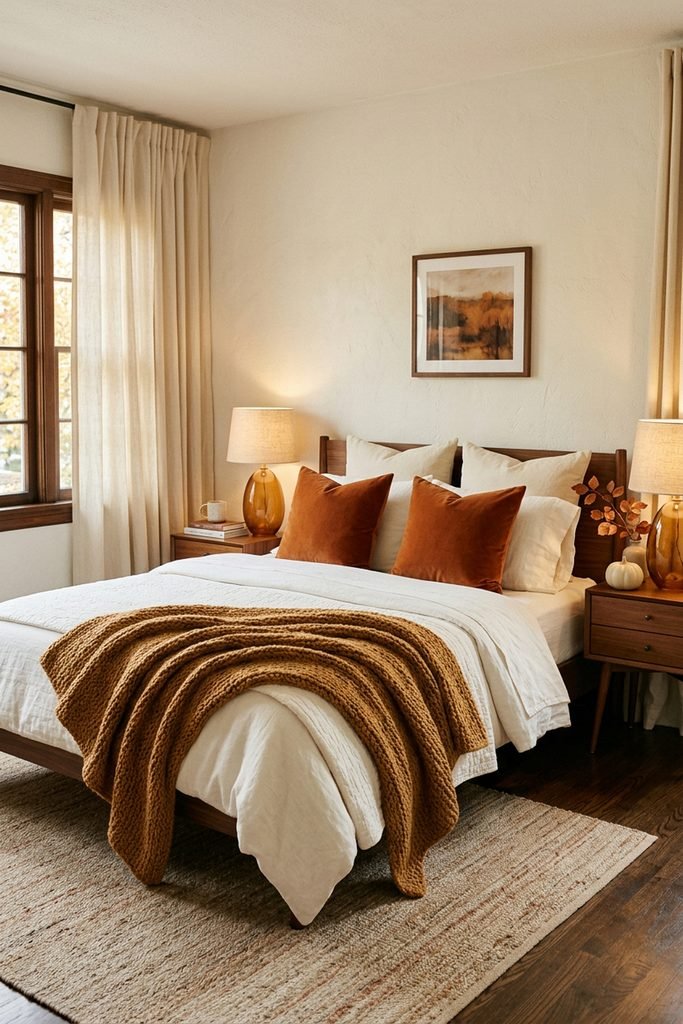
Wood nightstands and amber lamps extend the warmth outside the bedding. A small pale pumpkin or simple branch arrangement beside the bed can reinforce the season without turning the nightstand into a display shelf.
The effect comes primarily from proportion. Large textile areas carry the color, while tiny seasonal objects stay secondary.
Recreate the Rust-and-Mustard Bedding
Because white bedding already provides the quiet base, a few larger textile pieces can carry nearly all of the autumn color.
20. Use Rust Textiles and Leaf Patterns for Fall Bathroom Decor
Bathrooms are another place where textiles can do most of the decorating.
A rust shower curtain immediately introduces a large warm color block. Repeat that shade in towels, then let leaf-patterned bath mats bring in cream, brown, mustard, and terracotta on a smaller scale.
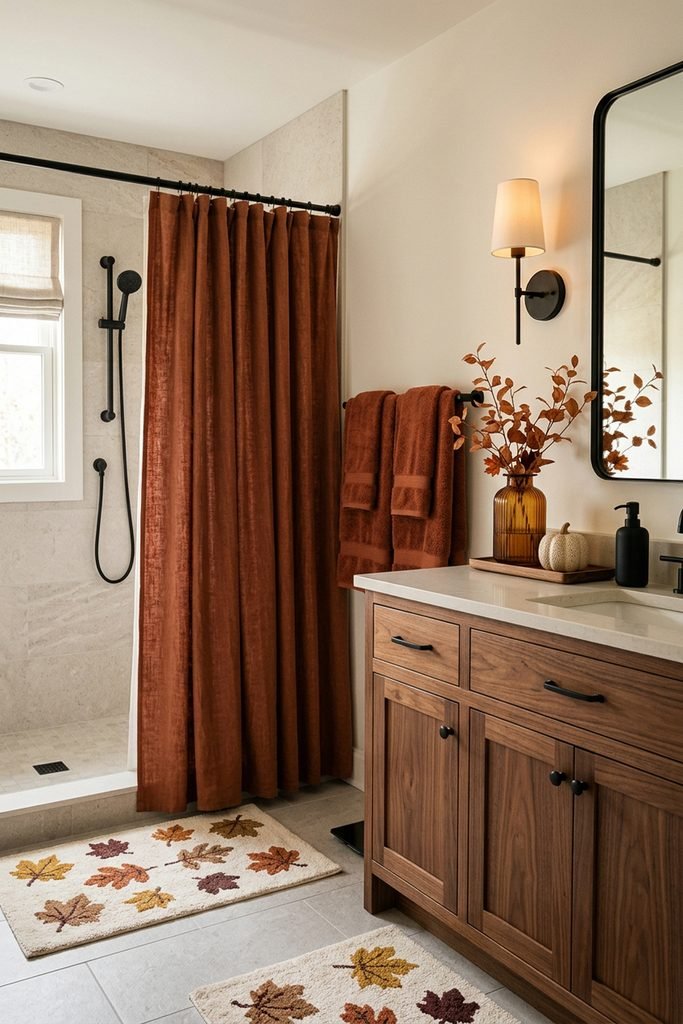
Because those large surfaces already establish the theme, the vanity needs very little. A small pumpkin, one vase of orange-brown foliage, or a seasonal soap accessory may be enough.
This approach also protects useful counter space. Rather than surrounding the sink with decorations, allow the curtain, towels, and rugs to carry most of the visual change.
Avoid describing decorative bathroom items as moisture-resistant unless their manufacturer specifically rates them that way.
Other fall bedroom decor ideas
Fall Kitchen Decor Ideas
A kitchen has to remain a working room. The strongest fall kitchen decor usually uses shelves, trays, textiles, and existing functional objects rather than occupying every section of countertop.
21. Dress Open Kitchen Shelves With Pumpkin Mugs and Copper Tones
Open shelves give fall color somewhere to live above the work surface.
Pumpkin-shaped mugs, copper-toned cups, orange cookware, and cream ceramics can build a seasonal palette while still functioning as kitchenware. A short garland near the top shelf adds foliage, while one patterned tea towel can repeat the orange closer to counter level.
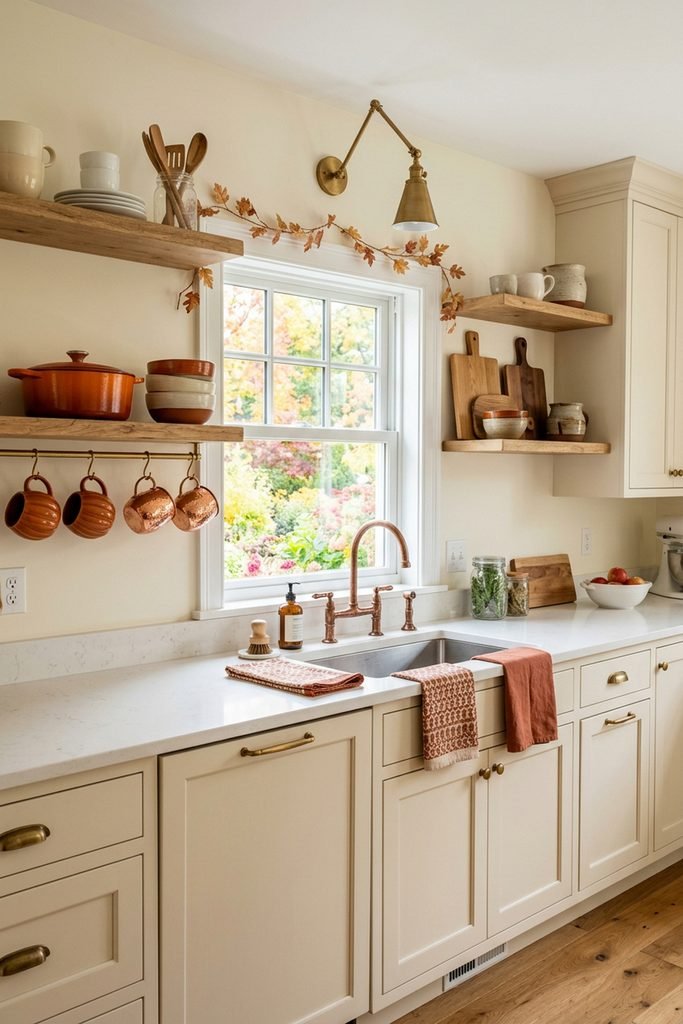
The repetition matters more than quantity. Three warm copper or orange details spread vertically through the shelving usually feel more connected than ten unrelated fall ornaments.
Around active cooking areas, keep towels, foliage, paper, wood decor, and other combustible objects away from the stovetop. USFA specifically advises keeping items such as towels, wooden utensils, curtains, and paper products away from cooking surfaces.
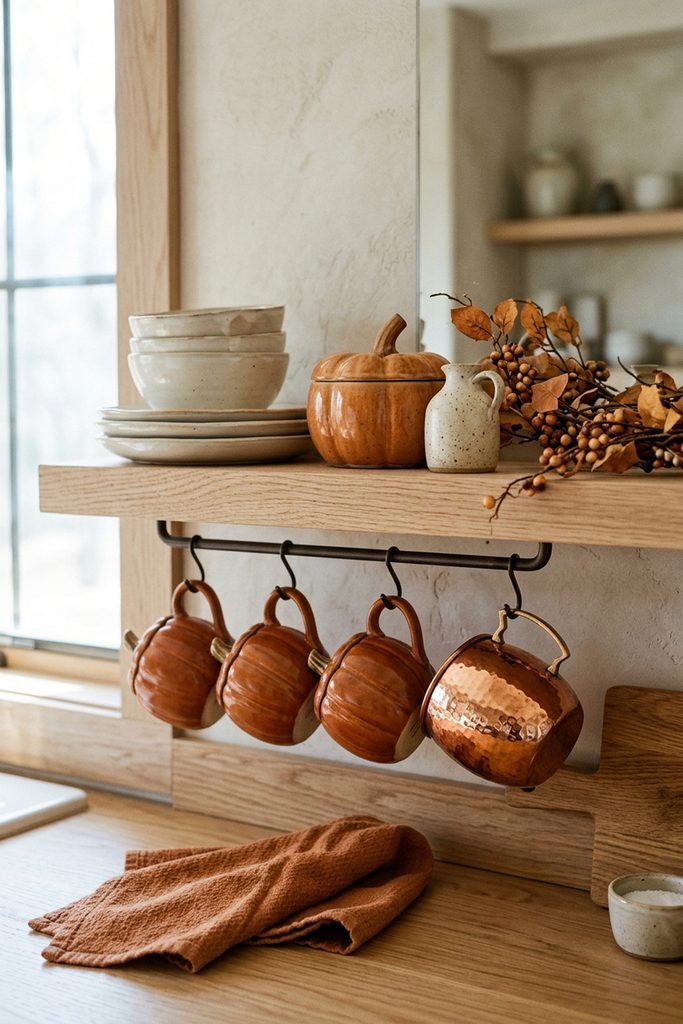
Add Functional Fall Pieces
For kitchen shelves, prioritize pieces that reinforce the pumpkin-and-copper palette while still earning their place as usable kitchenware.
22. Anchor the Kitchen Island With Amber Glass and Bare Branches
A large kitchen island often looks stronger with one tall focal arrangement than with a collection of small decorations.
An amber glass bottle or vase filled with dark bare branches creates a strong vertical silhouette. Add a low grouping of orange pumpkins beside it and contain everything on a wood tray.
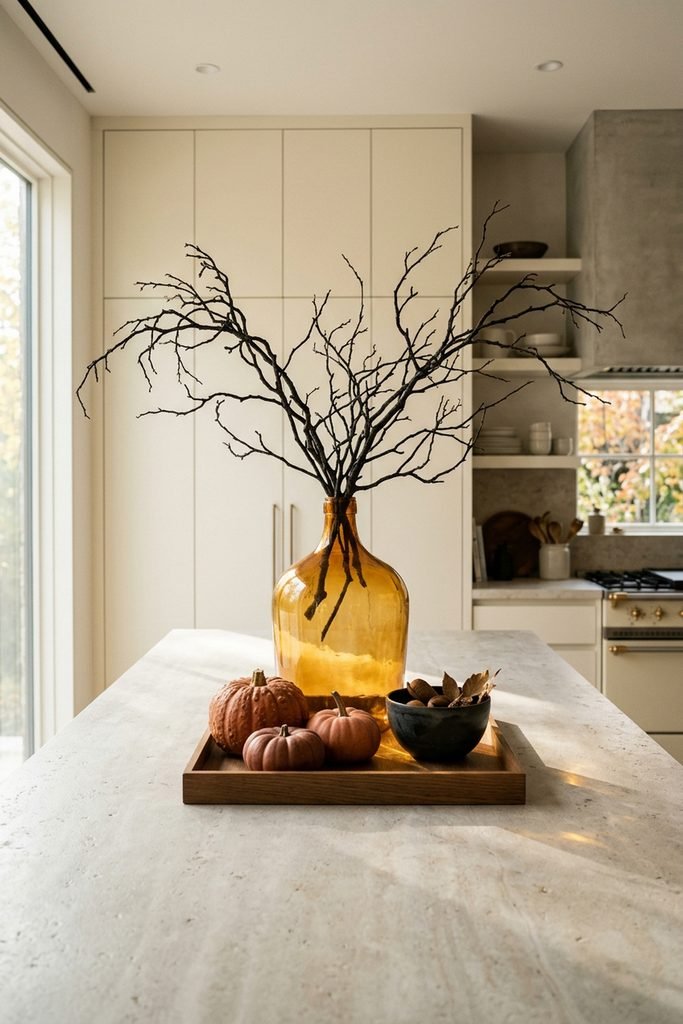
The high branches and low pumpkins create enough contrast in scale that additional objects are unnecessary. Amber glass also interacts beautifully with daylight, carrying an autumn tone without introducing another literal fall motif.
Leave generous empty counter around the vignette. In a working kitchen, negative space is not unfinished decor; it is what allows the seasonal centerpiece to remain practical.
23. Create a Cozy Fall Tea or Coffee Station
A beverage station works best when the everyday objects remain the foundation.
Begin with the teapot, coffee maker, mugs, or serving pieces you actually use. Then introduce a woven tray, a miniature pumpkin, pinecones, or a compact autumn bouquet around them.
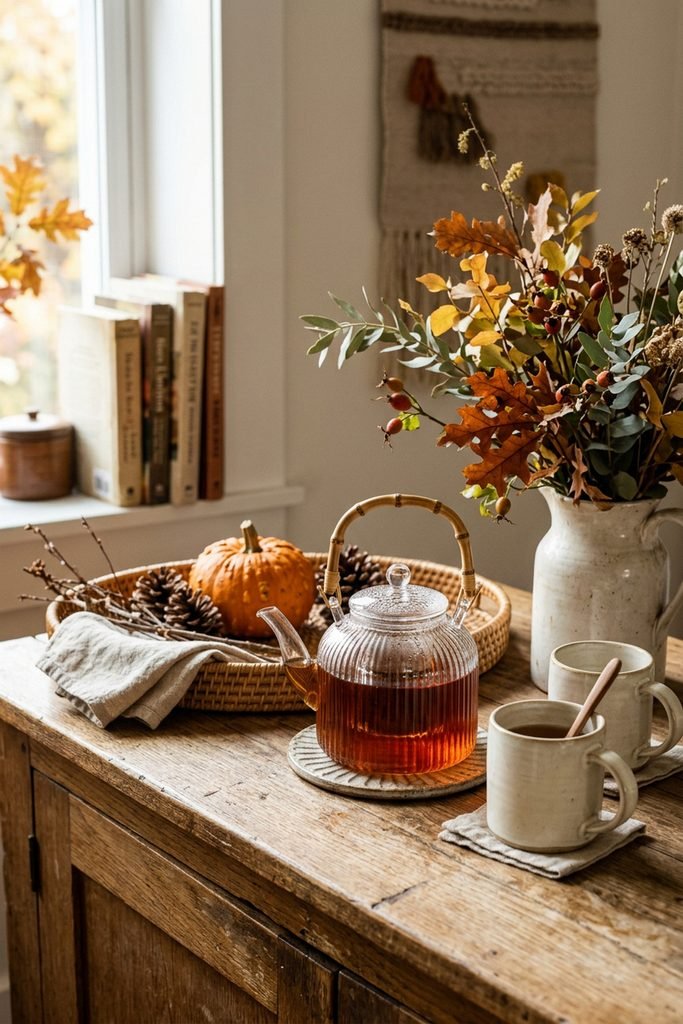
A darker tea-filled glass pot and orange pumpkin naturally echo one another, while cream ceramic and green foliage prevent the palette from becoming uniformly brown.
The useful rule is to leave the pouring and serving path clear. Seasonal decor should sit beside the activity rather than forcing you to move five decorations every time you make a drink.
If candles appear in the station, keep open flames away from paper, dry foliage, towels, and other combustible materials.
More fall kitchen decor inspiration
Fall Dining and Tablescape Ideas
Dining areas can carry some of the richest seasonal styling because the tabletop naturally gives repeated objects a strong linear structure.
24. Set a Golden-Hour Fall Table With Plaid, Candles, and Mini Pumpkins
A long dining table gains rhythm when a simple element repeats from one place setting to the next.
Mini pumpkins work beautifully for this because their shapes are consistent while their colors and sizes can vary slightly. Add slim candleholders between them rather than building one enormous centerpiece in the middle.
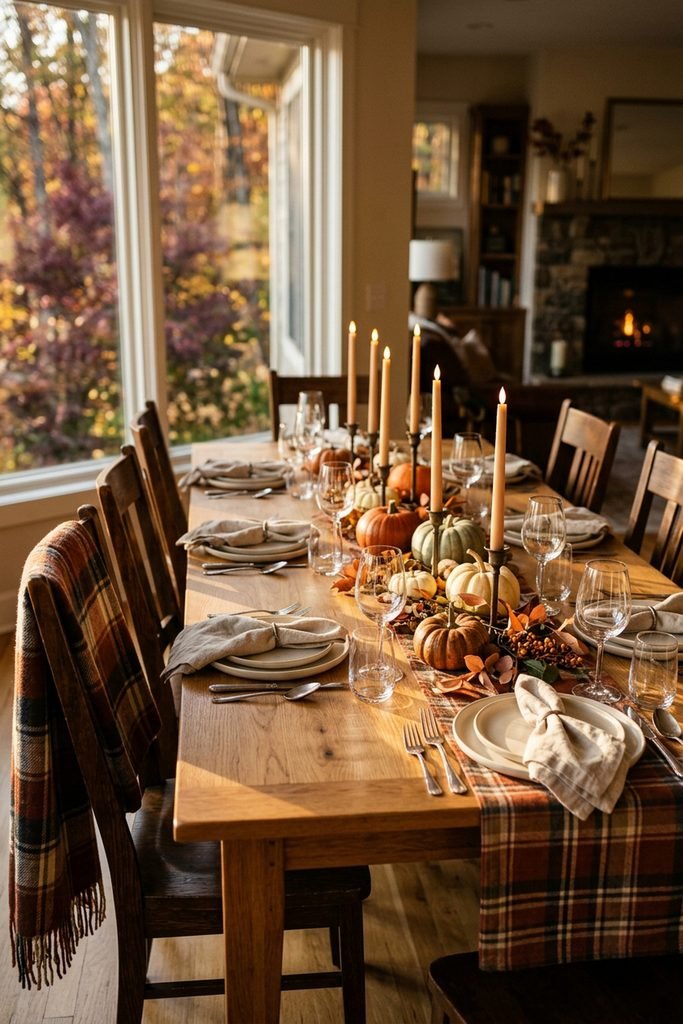
Plaid can appear on a runner, napkin, or even a throw draped over a nearby chair. That distributes pattern beyond the center of the table and makes the dining area feel connected to the rest of the room.
Late-afternoon light makes rust, cream, burgundy, and warm wood especially rich. If real candles are used, keep flames well separated from fabric, foliage, and other combustible decorations; flameless versions are useful when the table is densely styled.
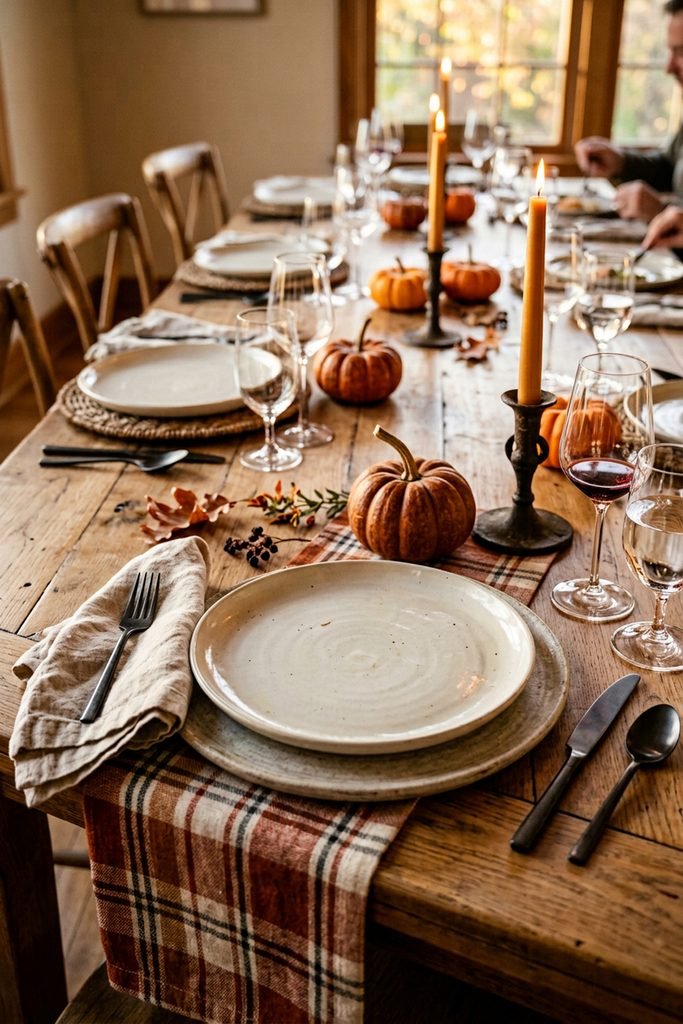
Build the Fall Table Rhythm
A plaid textile establishes the palette, while repeated candleholders and miniature pumpkins carry that color and shape down the length of the table.
25. Build a Harvest Floral Centerpiece With Corn and Autumn Flowers
One of the most tactile fall centerpieces combines cultivated flowers with rough harvest materials.
Deep red and cream dahlias, yellow blooms, berries, and leafy branches provide softness and color. Decorative corn introduces a much denser surface, with kernels repeating burgundy, orange, yellow, brown, and cream in miniature.
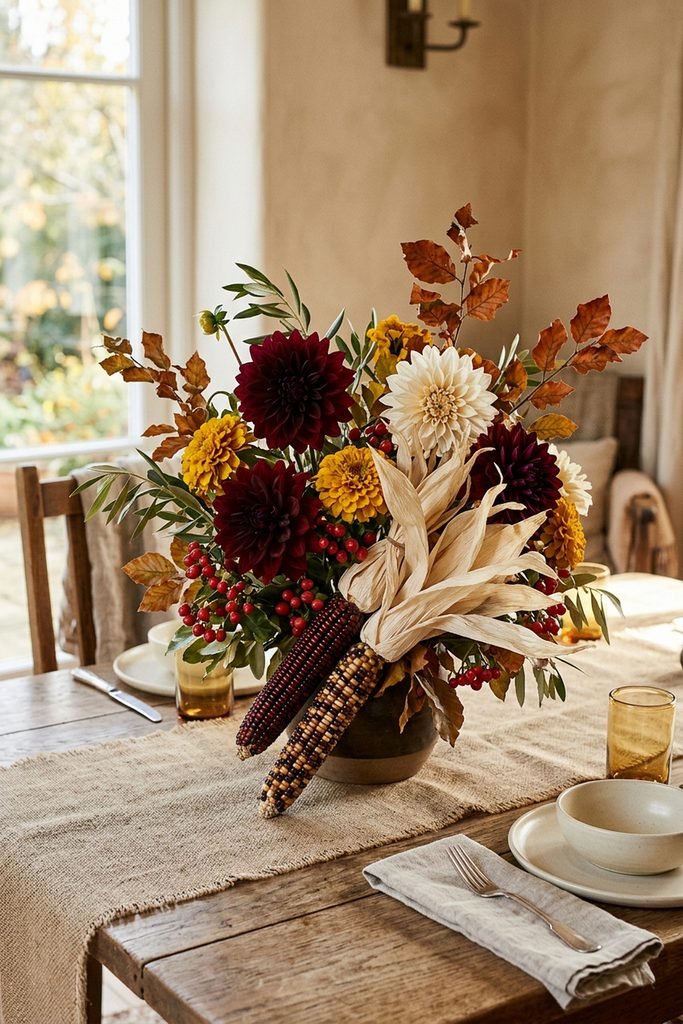
Set the arrangement over a coarse burlap runner edged with autumn leaves and the material contrast becomes even clearer: soft petals against dry husks, shiny kernels against woven fiber.
The centerpiece can be abundant, but dining still needs to function. Keep sight lines and serving space in mind, especially if the arrangement will remain on the table during meals.
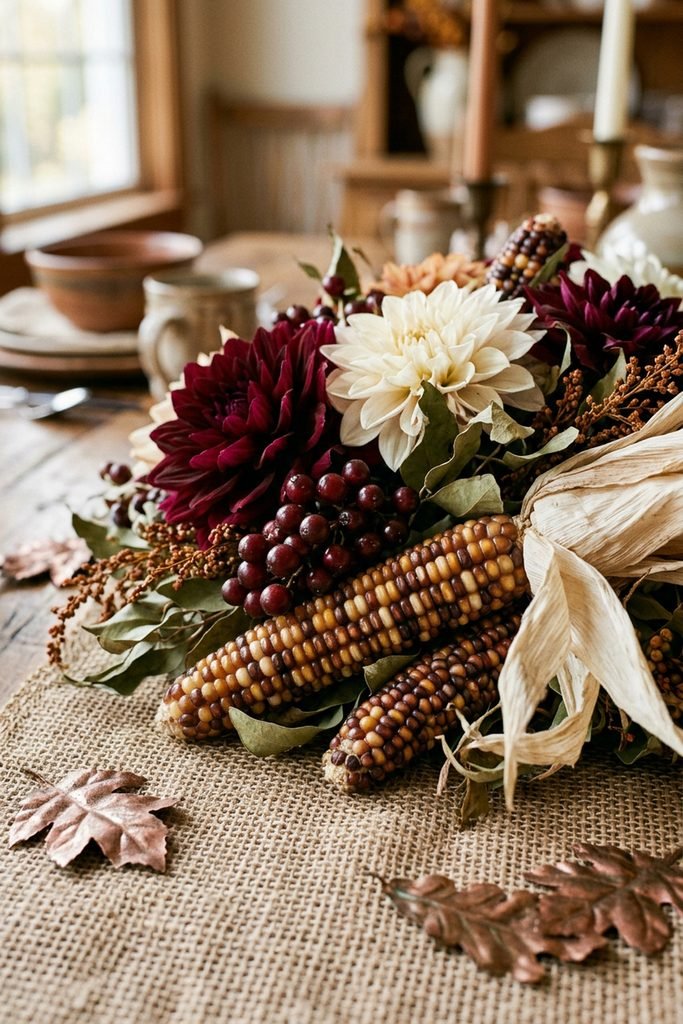
Gather the Harvest Textures
The richness of this centerpiece comes from combining softer flowers with rougher corn husks and woven table texture, so those three categories do most of the visual work.
Fall Home Decor FAQ
When should I start decorating my home for fall?
There is no single required date. Many people begin with subtle seasonal changes in late August or September, such as warmer textiles, branches, earthier colors, and early foliage, then introduce more obvious pumpkins or harvest elements as the season progresses.
A gradual transition often feels more natural than replacing the entire home’s decor in one weekend.
What fall colors can I use besides orange?
Plenty. Rust and terracotta are close relatives of orange, but autumn palettes can also include burgundy, cranberry, chocolate brown, cream, mustard, muted green, navy, charcoal, and warm natural wood.
The most useful approach is to choose a dominant neutral or existing room color, then add two or three seasonal accents that relate to it. A navy-and-orange wreath, for example, creates a completely different mood from a cream-and-rust mantel while still reading clearly as fall.
How can I transition fall decor into Halloween or Thanksgiving?
Build the base from items that can stay for most of the season: plaid or rust textiles, foliage, natural branches, baskets, neutral pumpkins, pinecones, amber glass, and warm lighting.
For Halloween, add temporary black details, ghosts, darker pumpkins, or other spooky accents. For Thanksgiving, remove those and emphasize natural gourds, wheat, leaves, candles, and table decor.
Keeping the underlying palette consistent means the room does not need to be redecorated from zero for each holiday.
Conclusion
The strongest fall home decor usually comes from repeating a few good decisions rather than filling every room with seasonal objects.
Choose a fall palette that already works with your home’s permanent colors, then build depth with texture, natural materials, and warm light. Give larger areas such as the porch or fireplace permission to be abundant, while letting kitchens, bathrooms, and smaller surfaces breathe.
You do not need all 25 ideas. Pick the ones that suit your rooms, repeat their colors or materials elsewhere, and let those connections carry autumn through the house.