





22 Fall Bedroom Ideas for a Cozy, Beautiful Autumn Retreat
A fall bedroom does not have to be filled with orange pumpkins to feel ready for the season. The shift can come from a camel plaid beside warm oak, forest velvet against ivory linen, a branch of amber leaves glowing on a purple wall, or an extra-deep knit pooled across the foot of the bed.
- Quick Takeaways
- How to Build a Fall Bedroom Without Overdecorating
- Start with Soft Neutrals and Easy Textile Changes
- Layer Ivory Linen, Camel Plaid, and Wheat Against Warm Oak
- Let One Autumn Bouquet Warm an All-Ivory Bed
- Build a Tactile Autumn Pillow Story with Leaves, Acorns, and Bouclé Pumpkins
- Frame Leaf-Print Bedding with a Warm Autumn Gallery Wall
- Explore Earthy Greens and Unexpected Warm-Cool Palettes
- Frame Ivory Bedding with Forest Green Velvet and Burnt Orange
- Layer Olive Linen, Rust Quilts, Rattan, and Trailing Greenery
- Cool Burnt Orange with Powder-Blue Bedding and a Vintage Rug
- Color-Drench the Bedroom in Terracotta, Then Scatter Sunlight with a Mirror Ball
- Move into Plum, Wine, and Deep Purple Bedrooms
- Style a Charcoal-and-Plum Bed with Ivory Linen and One White Pumpkin
- Glow Amber Leaves Against an Amethyst Bedroom Wall
- Wrap a Reclaimed-Wood Bed in Wine Florals and Antique Lantern Light
- Match Eggplant Bedding to a Dark Floral Mural
- Add Cottage, Boho, and Rustic Texture
- Coordinate Pumpkin-Print Bedding with a Curated Harvest Shelf
- Build a Maximal Boho Fall Nest with Macramé, Pampas, and Layered Jute
- Set a Tartan Bed Behind an Antique Trunk Tea Tray
- Soften a Rustic Fireplace Bedroom with Oversized Taupe Knits
- Use Architecture and Lighting as the Seasonal Focal Point
- Trace a Black Four-Poster with One Cascading Leaf Garland
- Drape an Ivory Canopy Around a Crescent-and-Sun Wall Mobile
- Turn a Window Wall into a Glowing Maple-Leaf Canopy
- Create a Candlelit Window-Nook Bed for Slow Autumn Mornings
- Bring in Playful or Moody Halloween Details
- Build a Friendly Halloween Headboard with Lanterns, Leaves, and One Ghost
- Stage a Moody Halloween Bed Around One Glowing Jack-o’-Lantern
- A Short Safety Check for Lights, Candles, and Fireplace Styling
- Fall Bedroom FAQs
- How do you decorate a small bedroom for fall without making it cluttered?
- What fall colors work if you do not want orange?
- How can you make a bed look cozy for fall without buying new bedding?
- Are string lights and candles safe around a bed?
- Bring Fall Warmth Home, Your Way
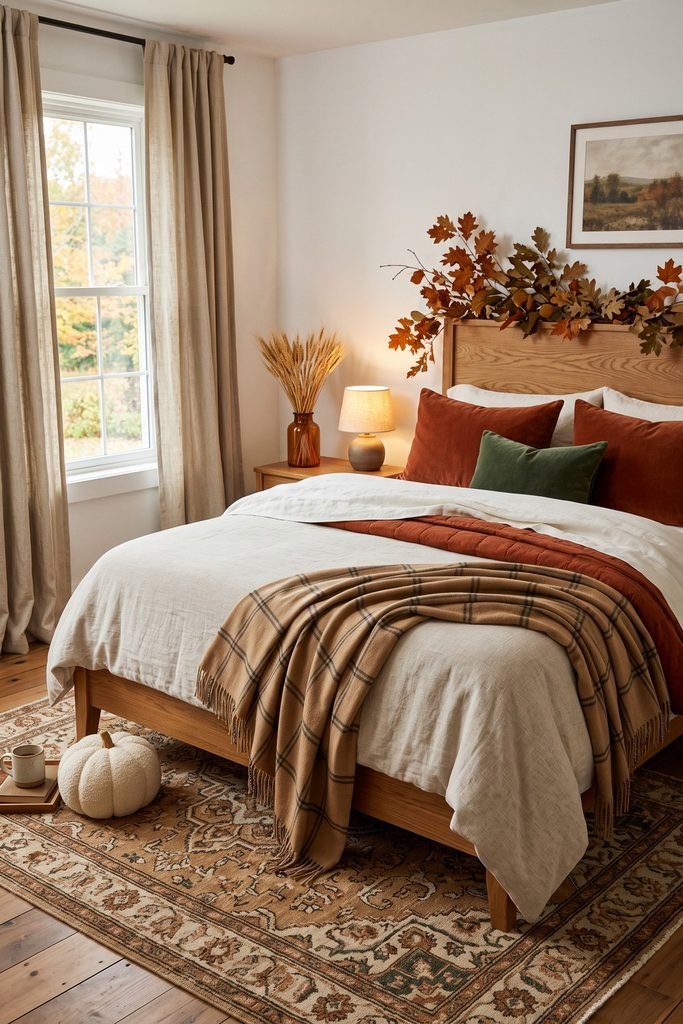
These fall bedroom ideas move from light, quiet layers to richer jewel tones, rustic textures, architectural garlands, and two carefully edited Halloween looks. Each one offers more than a list of objects: it shows how the palette, materials, pattern, and light work together, so you can recreate the feeling in a room with its own furniture and proportions.
Quick Takeaways
- Begin with one clear palette anchor, then choose a seasonal accent that strengthens it.
- Two or three contrasting textures usually create more depth than a large collection of small decorations.
- Repeat the main accent in the bed and one nearby area, such as a rug, wall, shelf, or nightstand.
- Treat the headboard, window, canopy, or fireplace as a focal point instead of decorating every surface.
- Decide whether the room should feel edited or richly layered, and keep that density consistent.
- Use decorative lighting carefully, with suitable products, clear cord routes, and distance from bedding and other flammable materials.
How to Build a Fall Bedroom Without Overdecorating
The most convincing seasonal rooms usually have a visible order. First comes the permanent base: the bed, wall color, headboard, rug, or strongest piece of furniture. Next comes the textile layer that establishes autumn—perhaps rust velvet, tartan wool, plum quilting, camel plaid, or an oversized oatmeal knit. The final layer is the smallest: wheat stems, a garland, a lantern, or one sculptural pumpkin.
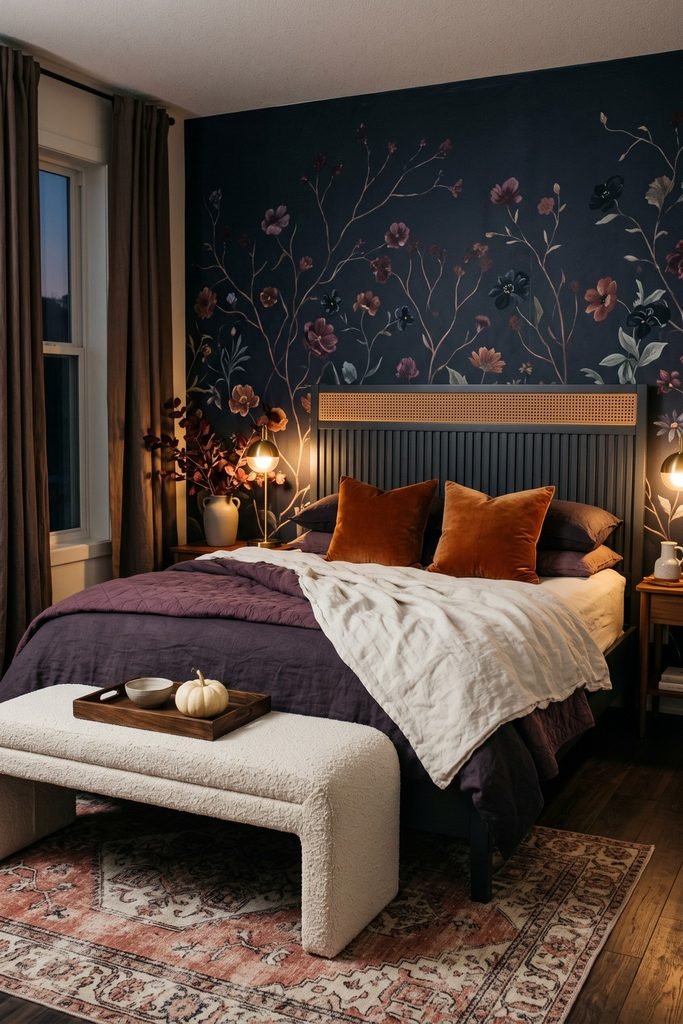
Keeping those roles separate helps prevent seasonal decor from becoming a collection of unrelated accents. If the bedding already carries a pumpkin or leaf print, let the shelf or wall repeat that subject only once or twice. If the room is neutral, a single concentrated bouquet may have more impact than small orange objects scattered throughout it.
Texture can also do work that color often gets asked to do. Linen beside velvet, smooth cotton beneath chunky wool, or soft bedding against rattan gives the eye several surfaces to explore even when the palette stays narrow. For more guidance on building a quiet foundation, the principles in these relaxing bedroom ideas can be adapted before the seasonal layers go on.
It also helps to choose the room’s decorating density before you begin. An edited scheme might stop after a throw, a branch, and one bedside accent. A maximal room can hold layered art, pillows, foliage, and patterned rugs, but those pieces still need a repeated palette or material. Deciding between those approaches is often more useful than adding one object at a time and hoping the room eventually feels finished.
Start with Soft Neutrals and Easy Textile Changes
Neutral rooms make autumn details especially legible. Rather than adding many colors at once, these first ideas rely on warm wood, concentrated botanicals, touchable pillow shapes, and repeated leaf patterns.
Layer Ivory Linen, Camel Plaid, and Wheat Against Warm Oak
Warm oak gives an ivory bed enough color to feel autumnal before any obvious seasonal decor arrives. Keep the largest areas pale—ivory sheets, an oatmeal coverlet, and a loosely folded linen duvet—then run a camel plaid across the lower third of the bed. The charcoal lines in the plaid add structure, while a restrained brick-red stripe can supply the smallest, strongest accent.
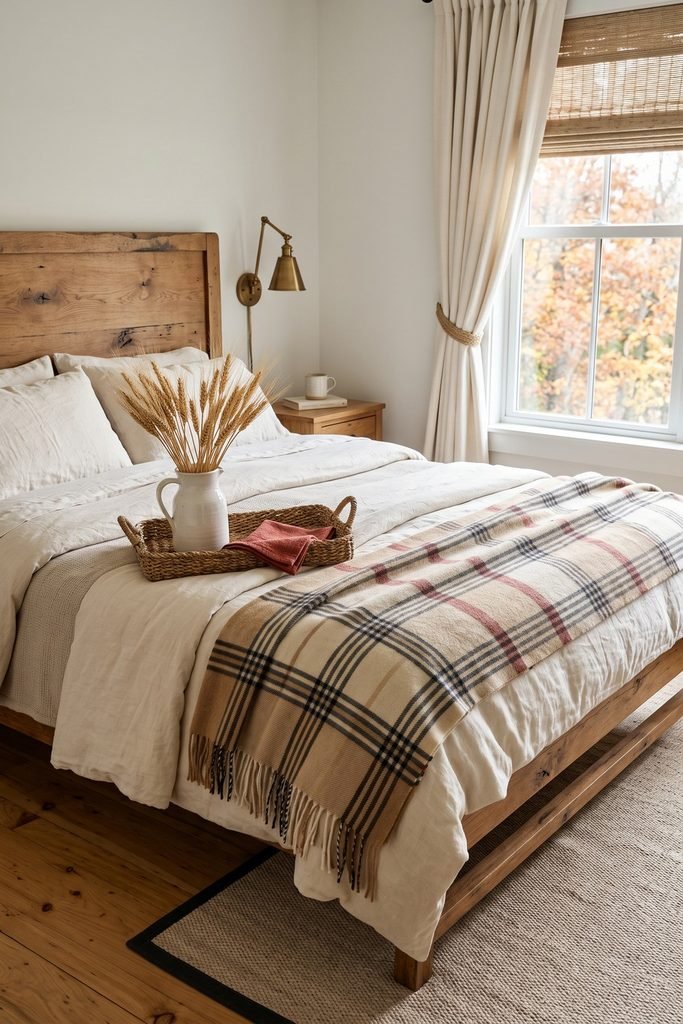
A low seagrass tray makes the final layer feel contained rather than scattered. A simple ceramic vessel of wheat is enough; its dry gold tone sits naturally between camel fabric and oak grain. This relationship is what keeps the scene from looking themed: the season appears through materials and color temperature instead of printed slogans or a bed full of pumpkins. If the tray will stay on the bed, keep it stable and move it before sleeping.
Find the Ivory, Camel, and Oak Layers
To reproduce this quiet autumn palette, focus on one structured plaid, relaxed ivory bedding, and a contained warm-wood accent.
Let One Autumn Bouquet Warm an All-Ivory Bed
An almost-white room can handle a surprisingly saturated bouquet because the surrounding space gives it room to register. Let ivory bedding, a cream rug, and pale walls occupy most of the view. Then place one loose arrangement of rust, mustard, and muted brown foliage on a warm-oak nightstand.
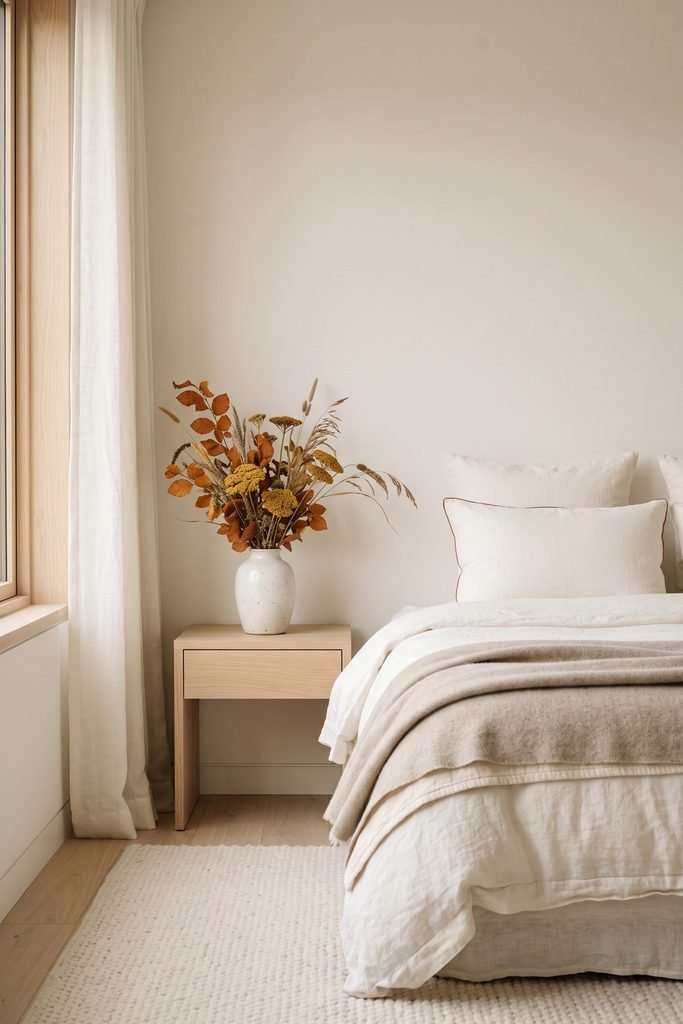
The strongest version of this idea does not distribute flowers around the room. It repeats one bouquet color in a much smaller place—a narrow pillow edge, a folded throw, or a tiny ceramic detail—and stops there. That small echo keeps the arrangement connected to the bed while preserving the calm that makes the color feel special. Choose a vase with a secure base, and protect the nightstand if the arrangement uses water rather than dried stems.
Build a Tactile Autumn Pillow Story with Leaves, Acorns, and Bouclé Pumpkins
Seasonal pillows become more compelling when their silhouettes and surfaces vary but their colors stay related. On a quiet cream or oatmeal bed, begin with one oversized leaf pillow in cinnamon or caramel. Its broad shape creates an anchor for smaller acorns, pinecones, pumpkins, or woodland figures in mushroom, muted orange, and soft sage.
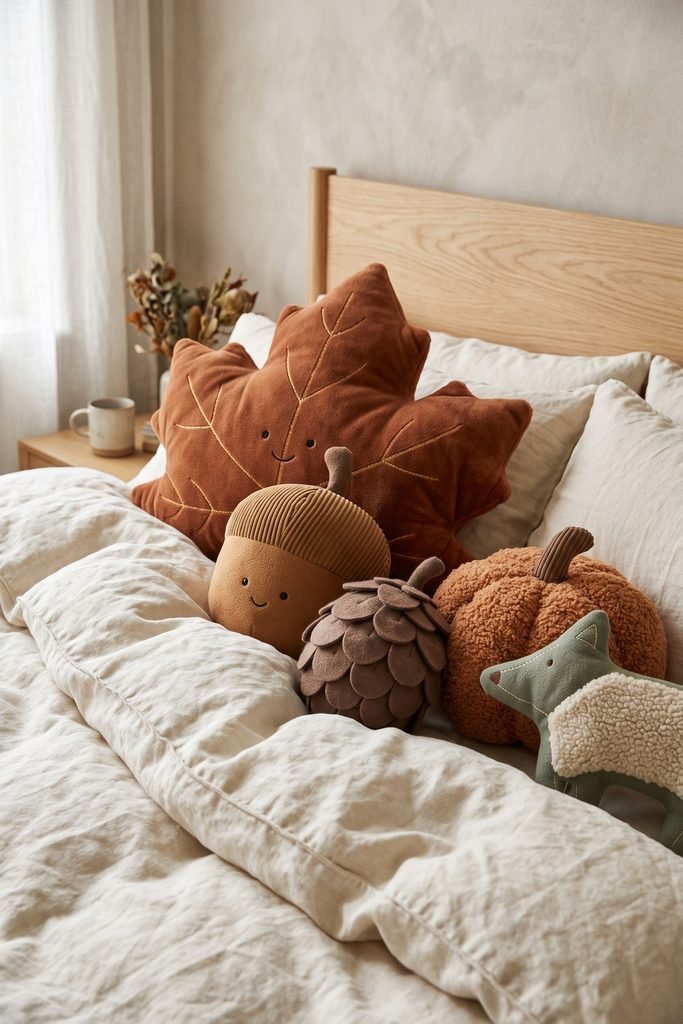
The interest comes from bouclé loops, sherpa pile, corduroy ribs, plush nap, and embroidered leaf veins—not from introducing a new hue with every piece. Varying the scale keeps the group readable: one large leaf, two medium rounded forms, and perhaps one smaller character will feel more composed than a row of equally sized novelties. Leave some plain bedding visible around the arrangement. For any plush piece used in a child’s room, follow the specific product’s age, care, and placement information rather than treating decorative pillows as sleep products.
Build the Tactile Autumn Pillow Mix
Look for related woodland shapes in visibly different fabric piles, keeping the colors muted enough for the textures to remain the focus.
Frame Leaf-Print Bedding with a Warm Autumn Gallery Wall
When both the bed and wall carry pattern, a shared subject can create order. A cream duvet scattered with rust or camel leaves establishes the motif at the largest scale. Above it, a gallery of five to seven prints can repeat botanical shapes through pressed leaves, small landscapes, or simple line drawings without matching the bedding exactly.
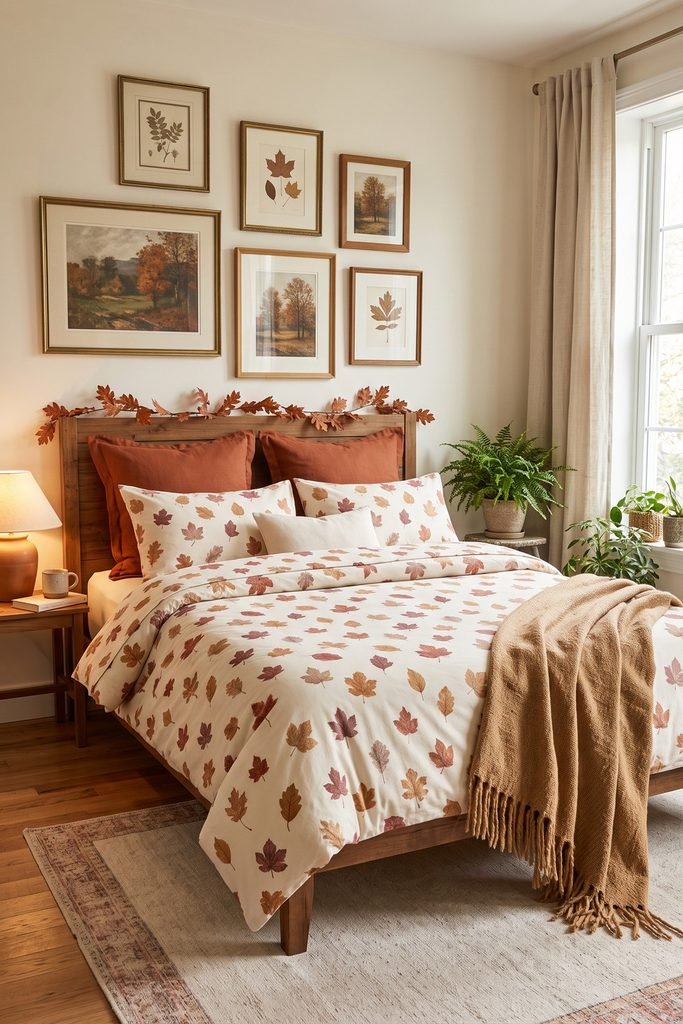
Solid areas are essential here. Rust pillow shams or a camel blanket give the eye a pause between the printed duvet and the frames, while natural-wood borders keep the wall connected to the headboard. A slim garland can trace the bed rather than surrounding every frame, and living greenery near a window adds a fresher counterpoint to the dried autumn colors. Maintain visible wall around the gallery so the group reads as one feature, and select mounting hardware for the actual frame weight and wall construction.
The frames do not need to match, but they should share a visual thread. Repeating warm wood, aged brass, or the same cream mat around several pieces makes varied art feel collected rather than random. Let the largest print sit close to the bed’s centerline, then balance it with smaller work instead of building a rigid grid.
Explore Earthy Greens and Unexpected Warm-Cool Palettes
Orange becomes more nuanced when it sits beside green or blue, while terracotta can envelop a room when it is broken by a cooler jewel tone. These palettes feel seasonal without repeating the same cream-and-rust formula.
Frame Ivory Bedding with Forest Green Velvet and Burnt Orange
A forest-green upholstered bed can carry the room through every season, but burnt-orange velvet changes its emphasis for fall. Keep ivory sheets and a pale coverlet visible through the center, then place rust in a few substantial blocks—perhaps two square pillows and a folded blanket—rather than sprinkling tiny orange accents everywhere.
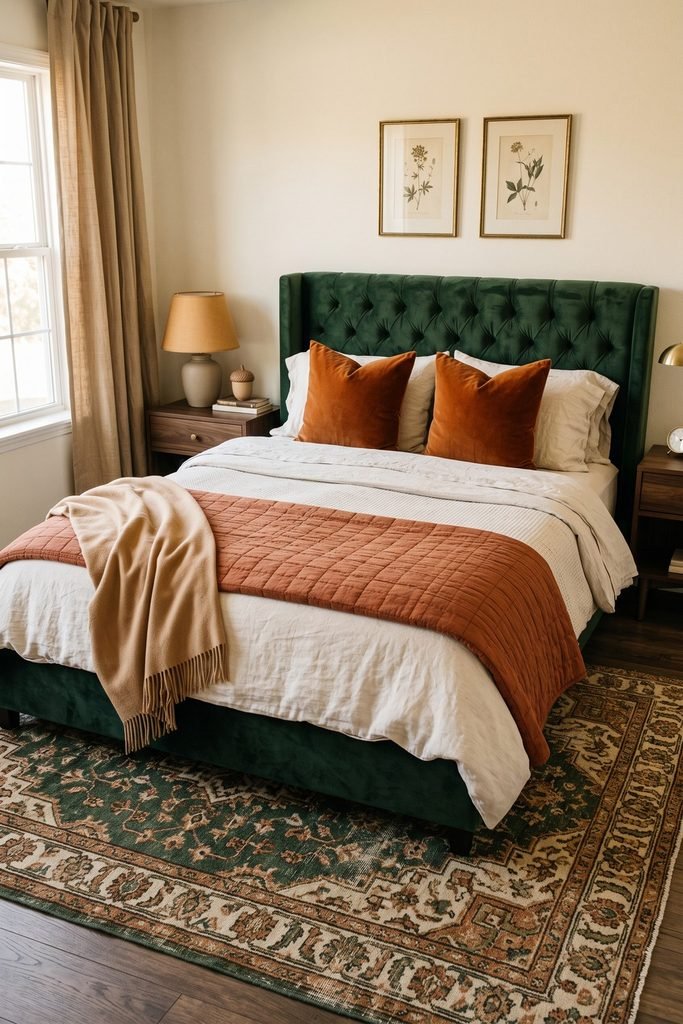
Ivory is the mediator between the two saturated colors. It gives green and orange clean edges and prevents their contrast from becoming visually heavy. Velvet also matters: its soft nap deepens both colors, while plain linen keeps the arrangement from feeling overly formal. A rug that includes camel, green, or rust can distribute the palette below the bed, and restrained brass details pick up the warm side without competing with it. The result is unmistakably autumnal even with no more than one small harvest object.
If the headboard is already green, the seasonal switch can be limited to textiles. Keep the largest rust pieces close to the bed and let the rug carry only smaller traces of the color. That change in scale makes the palette feel developed across the room without turning every accent into an exact match.
Recreate the Forest Green and Rust Contrast
Preserve plenty of ivory between the saturated accents, then use the rug to carry smaller traces of green and rust below the bed.
Layer Olive Linen, Rust Quilts, Rattan, and Trailing Greenery
Olive and rust share an earthy quality, yet they behave differently enough to keep a bed layered and lively. Olive linen makes a muted background; a rust quilt folded generously across it becomes the warmer foreground. A rattan headboard, jute rug, and woven lampshade connect the two colors through sandy browns rather than adding a third dominant accent.
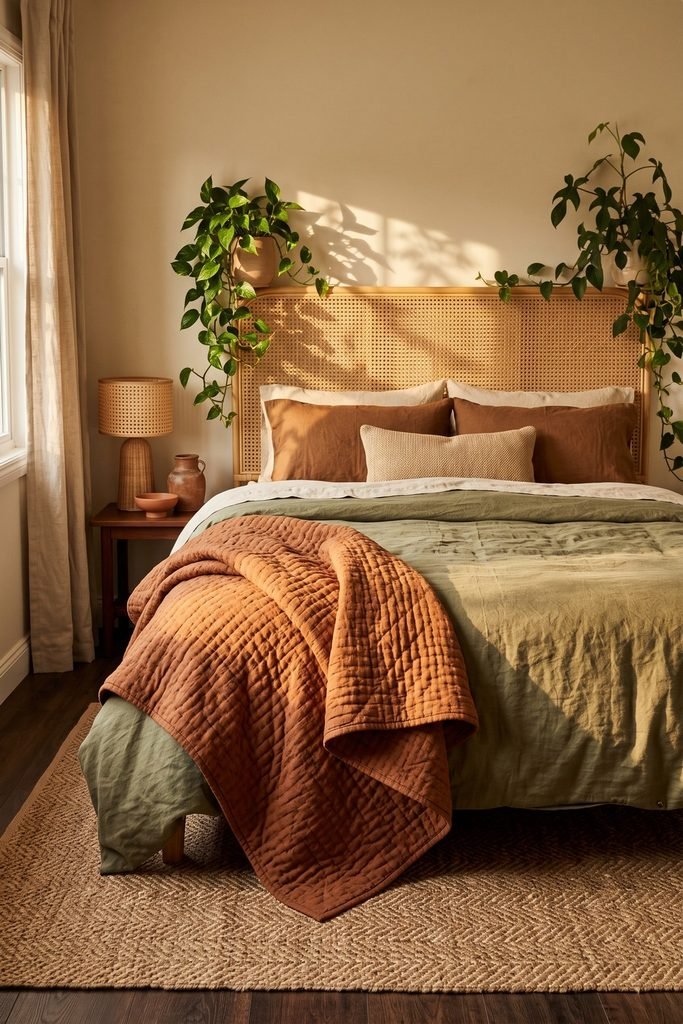
Trailing plants deepen the green side of the palette and make literal pumpkins unnecessary. Position them high enough to frame the bed, but leave some open wall so their shapes remain distinct. A few terracotta pieces can appear near the plants, where they look connected to pots and natural fibers rather than like isolated orange decorations. Keep saucers secure and watering activity away from lamps, outlets, and cords.
Cool Burnt Orange with Powder-Blue Bedding and a Vintage Rug
Powder blue gives burnt orange a fresher setting than the expected beige or brown. Let blue-and-white bedding stay dominant, using orange as a narrow line: piping on a pillow, a slim lumbar cushion, or a folded accent across the foot. Because the warm color is limited, it looks deliberate rather than like a temporary layer placed over an unrelated blue room.
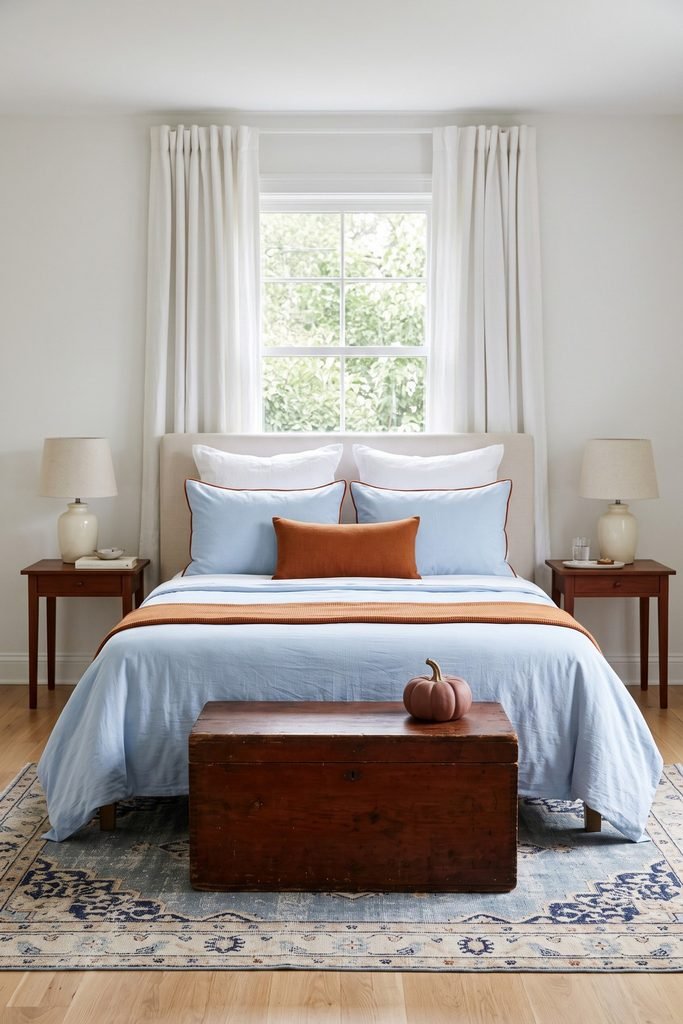
A dark cherry trunk adds the weight the pale palette needs, while a faded navy rug carries blue down to the floor. The trunk also provides a visual bridge between orange textiles and deeper wood tones. Preserve the clear symmetry of the bed and nightstands so the unusual color pairing remains the main event. If the trunk is functional, keep its lid accessible and avoid styling it with anything unstable or difficult to move.
Color-Drench the Bedroom in Terracotta, Then Scatter Sunlight with a Mirror Ball
Terracotta becomes immersive when it travels across walls, ceiling, and bedding rather than appearing as a lone accent. Small tonal shifts keep the envelope from looking flat: matte clay walls, rumpled rust linen, a slightly deeper velvet chair, and dark wood frames can all occupy the same color family while reflecting light differently.
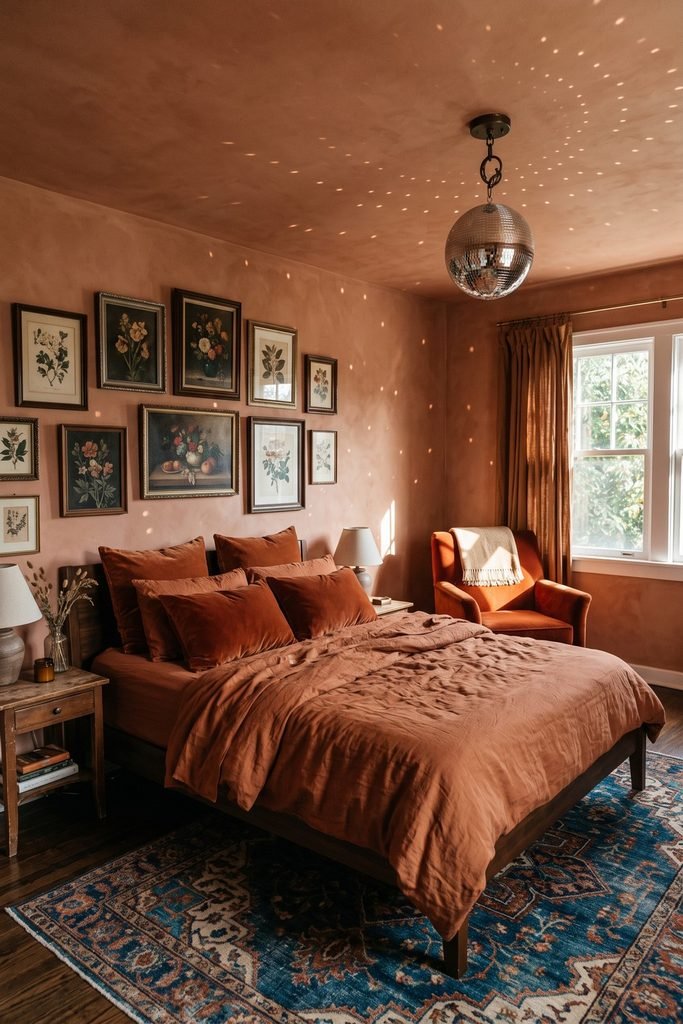
The counterpoint should be decisive. A vintage rug with teal or cobalt introduces a cool note at floor level, giving the eye relief from the surrounding orange-red tones. Above, a mirror ball can scatter afternoon light across the walls and turn a static monochromatic room into something more animated. Secure it according to its weight and mounting instructions, and test the location to avoid uncomfortable glare. If you want to develop the paint and textile palette further, these terracotta bedroom ideas explore the color in greater depth.
Bring Home the Terracotta Color Story
Tonal clay bedding establishes the main color field, while a blue-green rug and one reflective accent keep the room from feeling visually static.
Move into Plum, Wine, and Deep Purple Bedrooms
Fall color does not end at orange and brown. Plum, burgundy, amethyst, and eggplant create a quieter kind of drama, especially when linen, raw wood, rattan, and amber light keep them grounded.
Style a Charcoal-and-Plum Bed with Ivory Linen and One White Pumpkin
A charcoal or black fluted bed establishes a strong outline, allowing softer materials to look even more generous. Fill the center with wrinkled ivory linen, then wrap plum around it through quilted shams and a deep folded coverlet. Burgundy branches extend that color upward without introducing another busy pattern.
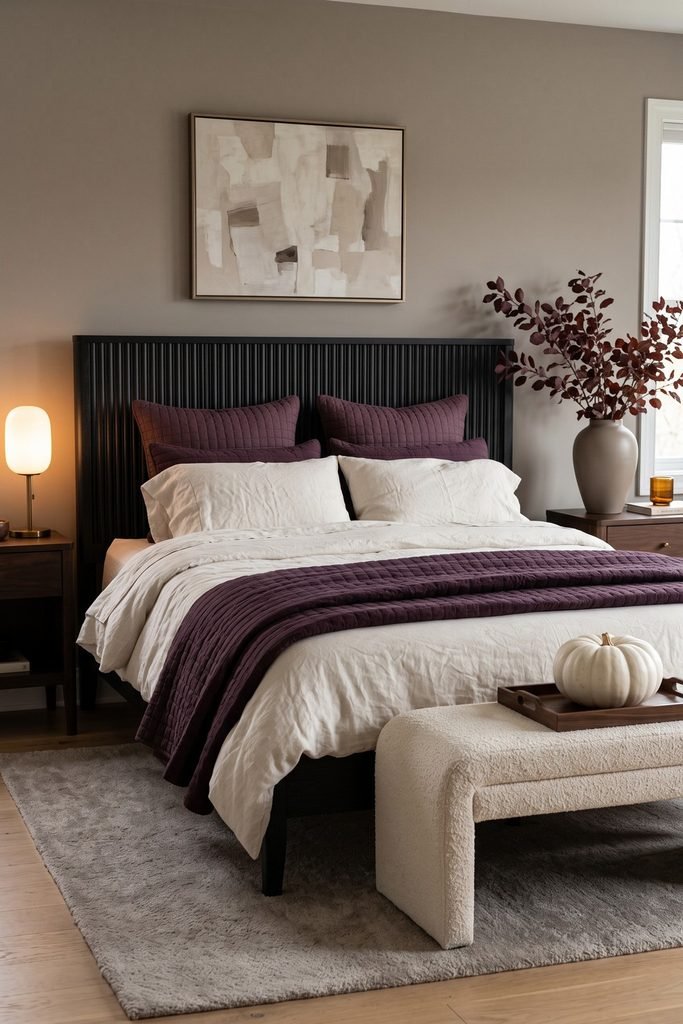
One white pumpkin is more effective than a collection because it echoes the pale bedding while still reading as seasonal. Set it on a dark tray over a cream bouclé bench, where the rounded form contrasts with the headboard’s narrow vertical channels. A large, quiet abstract above the bed maintains the modern hotel-like restraint. Preserve enough passage around the bench for the room to remain comfortable in daily use.
Glow Amber Leaves Against an Amethyst Bedroom Wall
Against an amethyst wall, amber leaves appear almost illuminated even before tiny lights are introduced. A raw-wood headboard keeps the combination connected to the natural landscape, while a deep-purple chunky blanket builds texture without adding another major color. Ochre can appear in one pillow, with dusky blue providing a cooler pause.
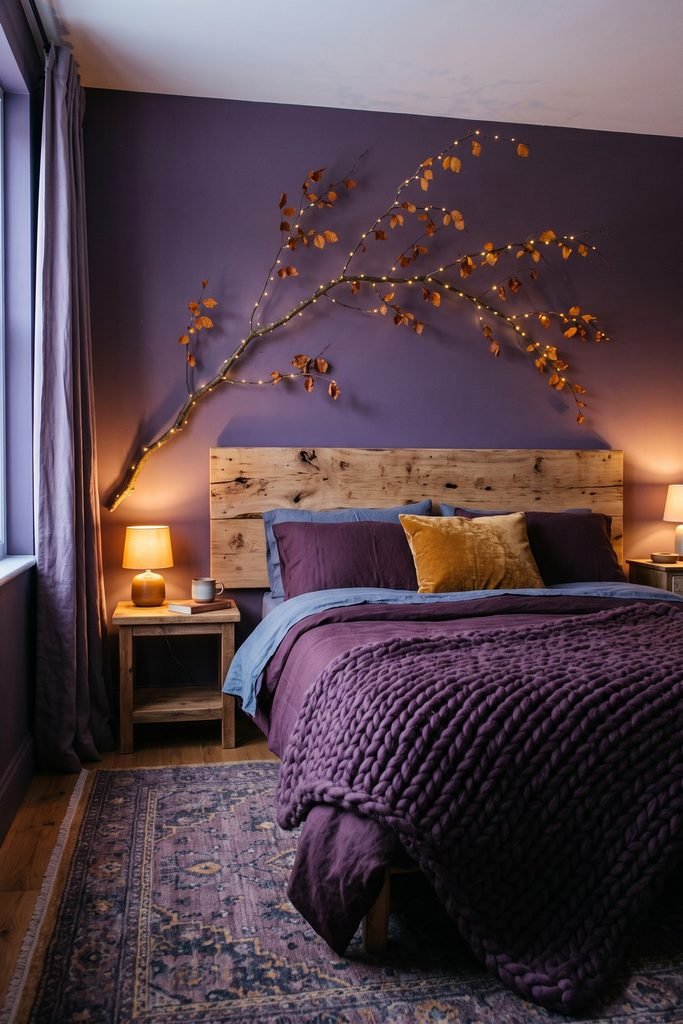
The branch should make one confident diagonal movement above the bed instead of becoming a dense, symmetrical arch. That angle interrupts the horizontal line of the headboard and leads the eye through the wall. Sparse points of amber light clarify the leaf edges after sunset, but the branch itself remains the focal shape. Mount it independently with hardware suited to its size and weight, then route the light cord where it will not cross bedding or become pinched.
Wrap a Reclaimed-Wood Bed in Wine Florals and Antique Lantern Light
Weathered wood and wine-colored florals share a sense of age, which makes them feel natural together rather than artificially matched. Use oatmeal linen across most of the bed to separate the dark timber from burgundy pillows. This quiet middle layer allows floral pattern to appear rich without disappearing into the wood.
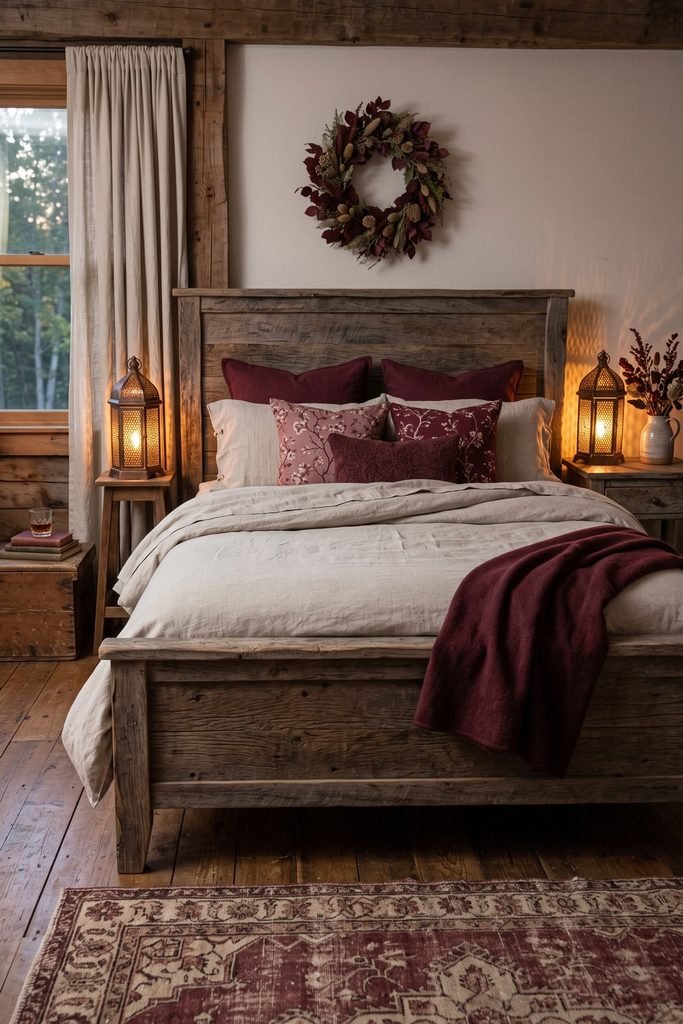
A compact wreath repeats the wine and muted-rose notes above the headboard, while antique-style pierced lanterns cast smaller patterns at the sides. The lantern effect contributes detail through light instead of requiring more ornaments. Keep dried stems limited and let the floral fabric carry most of the decoration. Electric or battery-operated lanterns are better suited to this textile-heavy bedroom setting than open flames, and both the fixtures and wreath should be secured appropriately.
Match Eggplant Bedding to a Dark Floral Mural
A midnight floral mural can easily dominate a bedroom. Tonal eggplant bedding lets it remain the feature instead of competing with a second large pattern. Vary the surfaces within that narrow palette—smooth linen, plush velvet, and a deeply textured purple throw—so the bed does not dissolve into one dark block.
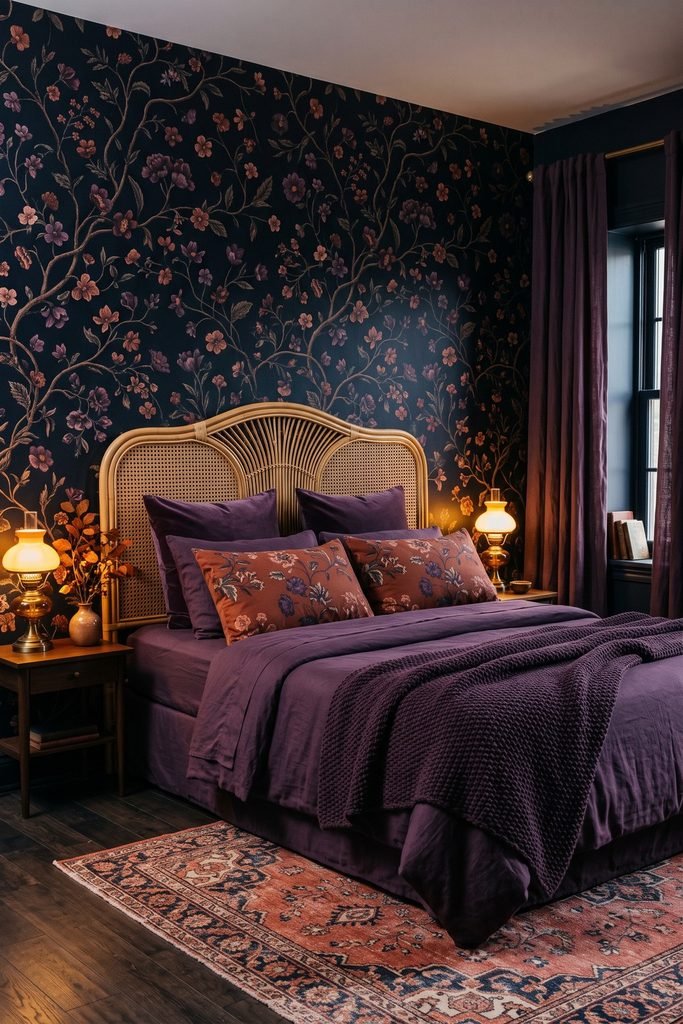
Rust pillows pick up the warm notes hidden among the mural’s flowers, while a rattan headboard creates a lighter boundary between wall and bedding. A vintage rug can repeat muted coral and blue below, and amber bedside lamps reveal the warmer tones after dark. Keep the bedding mostly solid because the wall already supplies movement. Before using removable wallpaper, check the manufacturer’s instructions for surface compatibility and removal, as well as any applicable lease terms.
Add Cottage, Boho, and Rustic Texture
The next rooms carry more objects and stronger material contrasts. Their success depends on hierarchy: one dominant pattern or architectural feature, repeated fibers, and enough solid color to let the layers remain legible.
Coordinate Pumpkin-Print Bedding with a Curated Harvest Shelf
Pumpkin-print bedding already makes a clear seasonal statement, so the surrounding decor should reinforce it selectively. A solid rust quilt or corduroy blanket across the middle of the bed interrupts the repeated motif and gives the eye a place to rest. Cream and cinnamon can then reappear in gingham pillows or a single bouclé pumpkin.
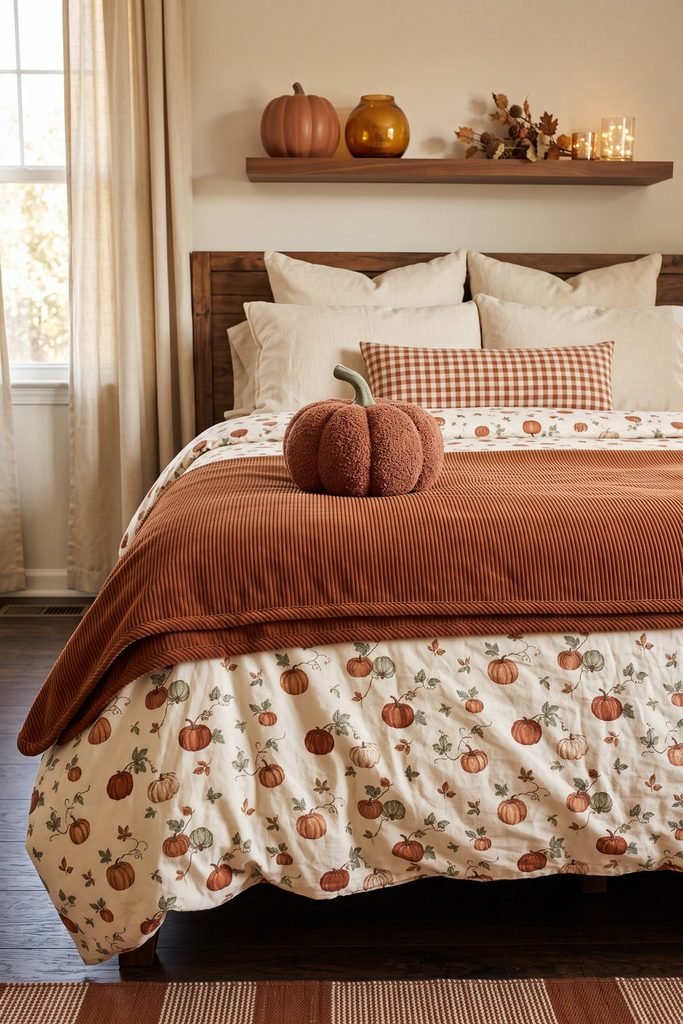
On the floating shelf, repeat the subject at a larger scale with one sculptural pumpkin, an amber vessel, and a short run of foliage. Empty stretches of wood are as important as the objects; they allow the shelf to read as a composed line rather than storage. A few points of decorative light can define the silhouette after dark. Confirm the shelf’s installation and load guidance, and inspect any light strand before arranging it above the bed.
Find the Pumpkin Print and Amber Accents
Let the printed bedding make the seasonal statement, then interrupt it with solid rust texture and one translucent amber detail.
Build a Maximal Boho Fall Nest with Macramé, Pampas, and Layered Jute
Maximalism feels calmer when the materials belong to the same family. An oversized cream macramé hanging establishes woven fiber as the room’s main language. Rust and burgundy bedding can then carry the strongest color, while mustard pillows, pampas, jute rugs, and a knitted pouf repeat the dry, tactile quality at different scales.
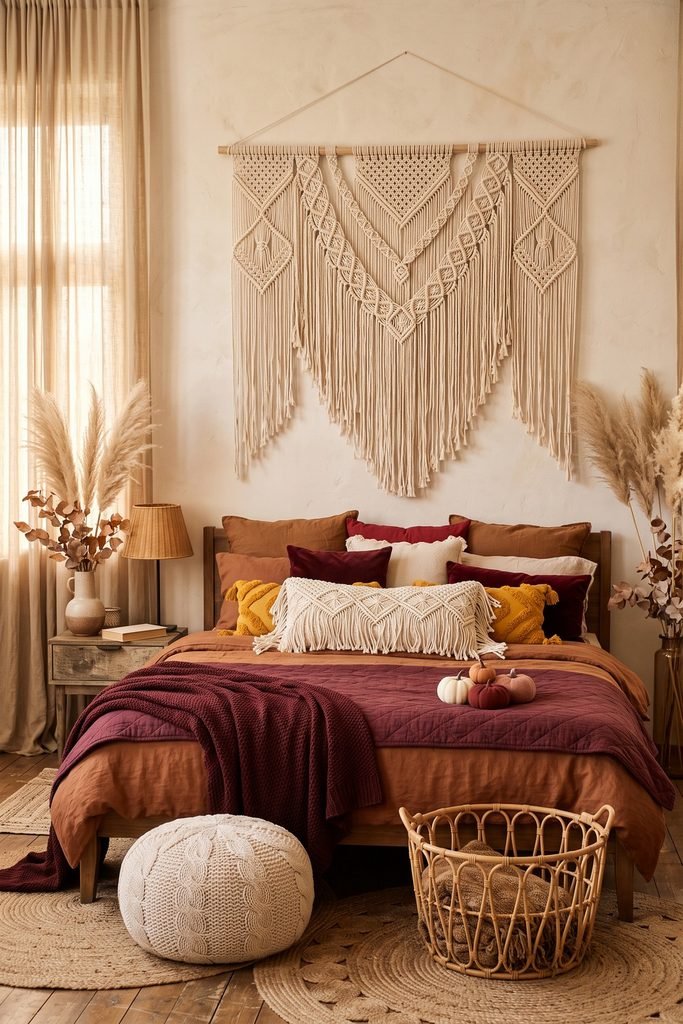
Scale keeps this abundance from turning into a collection of equal-size distractions. The wall hanging should remain the largest decorative shape; tall grasses frame it; pillows create a dense middle layer; overlapping circular rugs and the pouf finish the lower plane. Cream sections in the macramé and bedding provide breaks between saturated tones. Mount the hanging for its actual weight and wall type, keep loose fibers away from heat, and preserve a clear route around the bed.
Set a Tartan Bed Behind an Antique Trunk Tea Tray
Tartan can organize a traditional fall palette because its intersecting lines already contain several related colors. Choose a pattern that combines rust, oxblood, camel, cream, and perhaps forest green, then repeat only two of those tones in solid pillows. This keeps the bed layered without multiplying unrelated prints.
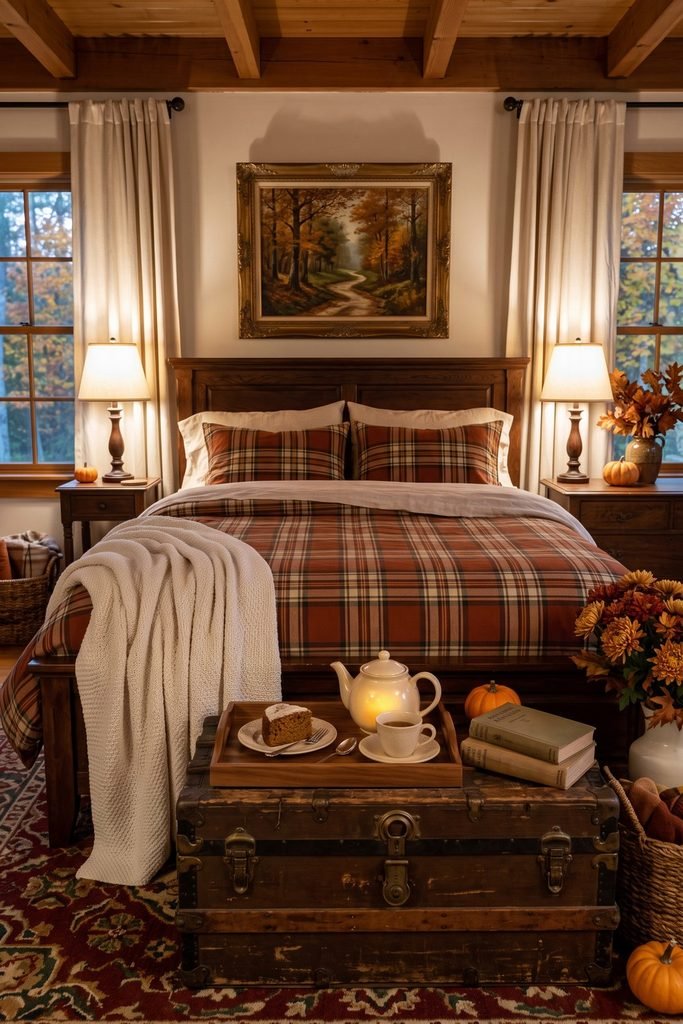
The antique trunk at the foot gives the room a story-rich foreground. A contained tea tray, a small stack of books, and one pumpkin can suggest a slow autumn afternoon, while paired lamps maintain the room’s formal symmetry. Above the bed, an autumn landscape extends the colors into the wall; baskets or mums can sit lower and farther to the sides. Keep the trunk accessible, stabilize the tray, secure heavier artwork correctly, and use flameless light if candle glow is part of the arrangement.
Because tartan is already a dense pattern, neighboring florals or checks should be smaller, quieter, or omitted. A plain cream knit between the patterned bedding and trunk creates useful separation. It also allows the landscape and tea vignette to contribute narrative detail without asking them to compete with another bold textile.
Build the Tartan Bedroom Layers
Choose one tartan that carries several autumn tones, then support it with a contained tray vignette and softly reflective lamp finishes.
Soften a Rustic Fireplace Bedroom with Oversized Taupe Knits
Raw timber and a stone or brick fireplace can make a bedroom feel visually hard unless the bedding has enough scale to answer them. An oversized taupe knit does that job: its heavy loops soften the bed’s outline and hold their own against beams, masonry, and dark wood. Oatmeal linen beneath it prevents the taupe from becoming a single dense mass.
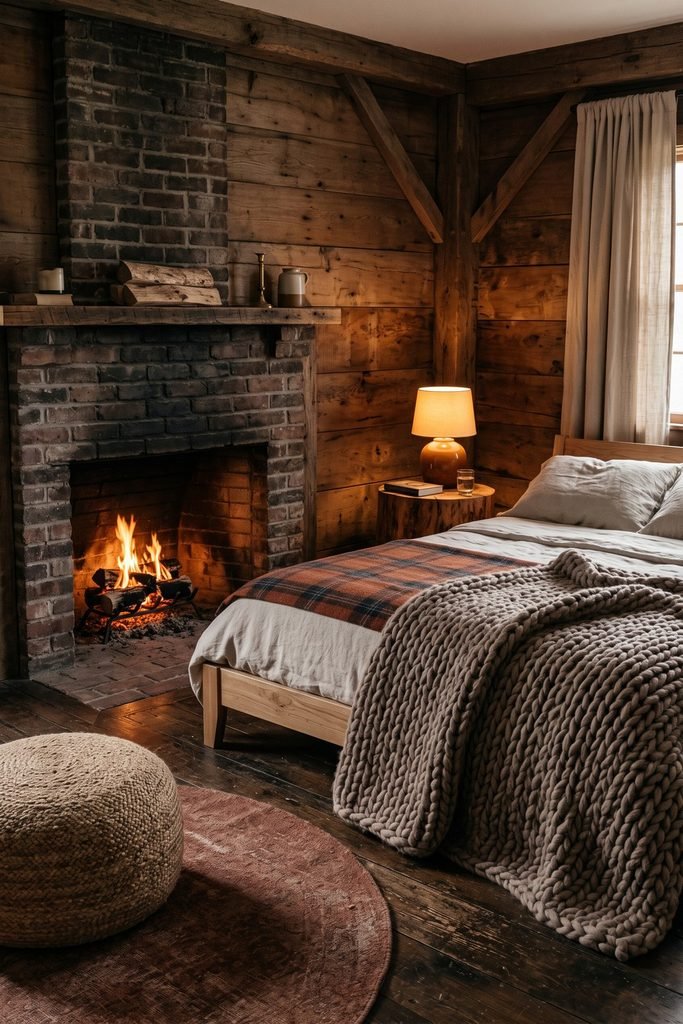
A restrained plaid introduces rust and charcoal in smaller lines, while a woven pouf, stump table, and round rust rug bring curved forms into a room dominated by straight architectural edges. Keep the area around the hearth deliberately sparse; firelight is already a powerful seasonal focal point. The U.S. Fire Administration advises keeping combustible materials at least three feet from heat sources, using a glass or metal fireplace screen, and putting the fire out before sleeping or leaving home.
Use Architecture and Lighting as the Seasonal Focal Point
Some of the most memorable fall bedrooms ask the room’s existing structure to do more. A four-poster, canopy, broad window, or deep sill can hold the seasonal layer while the rest of the space stays relatively quiet.
Trace a Black Four-Poster with One Cascading Leaf Garland
A black four-poster creates a ready-made frame around pale bedding. Rather than wrapping every rail, let one garland travel across the top and fall loosely down a single corner. The asymmetry adds movement, while the remaining black lines stay visible enough to give the room its crisp outline.
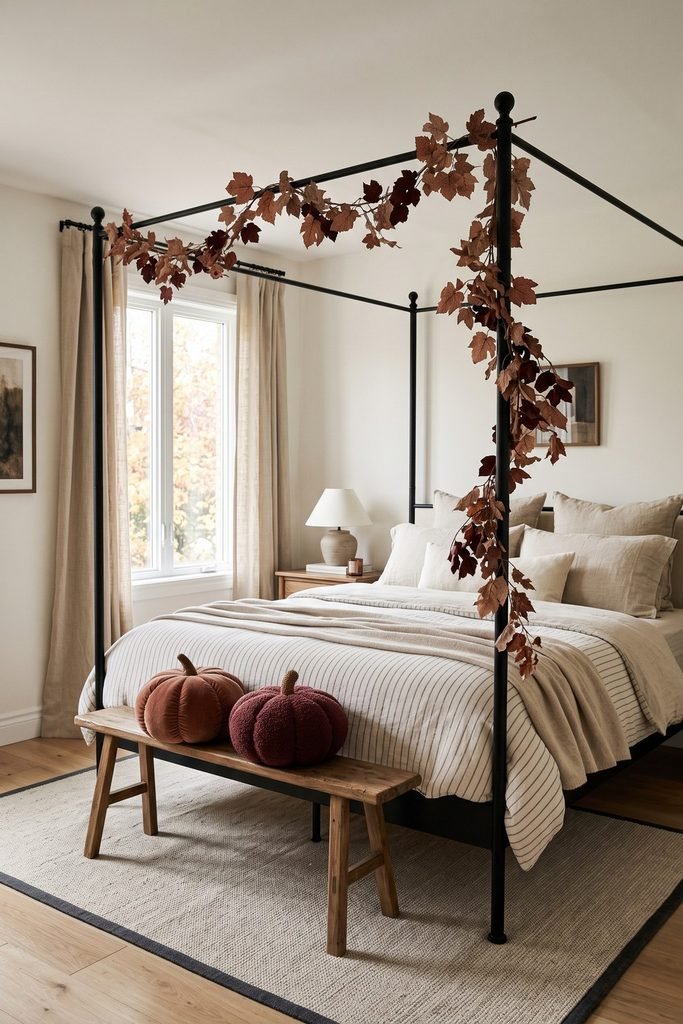
Ivory and oatmeal bedding should remain simple, with a fine stripe supplying just enough structure to answer the bed frame. At the foot, two faded-rust or burgundy pumpkin-shaped cushions can sit on a bench without spreading the motif across the mattress. This limited placement makes the garland feel architectural rather than ornamental clutter. Secure it without damaging or destabilizing the frame, and keep foliage separated from bulbs or other heat sources.
Drape an Ivory Canopy Around a Crescent-and-Sun Wall Mobile
An ivory canopy changes the bed through enclosure rather than color. Let the fabric fall in open panels so it frames a crescent-and-sun mobile above the headboard without closing off the sleeping area. Rust pillows and a leaf-patterned throw provide enough weight at mattress level to keep the pale fabric from looking summery.
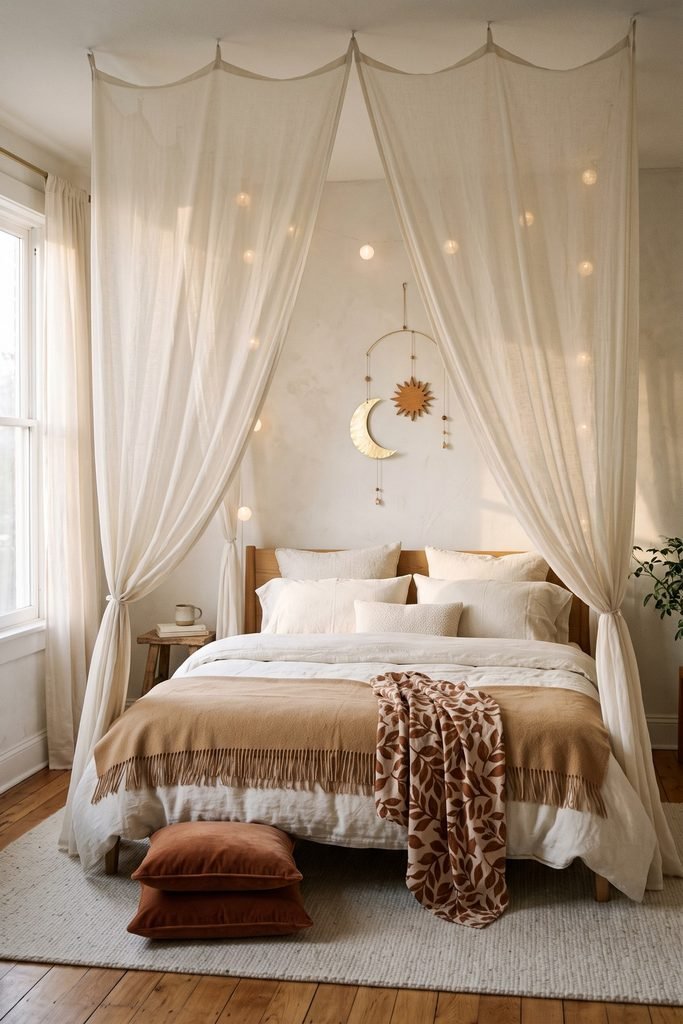
Small globe lights can sit behind or beyond the folds, where they read as a gentle background rather than a bright outline. The celestial forms supply one clear center, and the canopy directs attention toward them. Mount both canopy and mobile with hardware appropriate to the wall or ceiling and the items’ weights. Keep fabric away from bulbs, vents, heaters, and other heat sources, and follow the lighting manufacturer’s placement instructions.
The rust layer should remain low on the bed, where it gives the floating canopy a visual foundation. If warm color climbs the fabric panels as well, the airy framing effect weakens. A pale-gold mobile can provide the only reflective note, changing subtly from daylight to lamplight.
Turn a Window Wall into a Glowing Maple-Leaf Canopy
A gridded window wall already has enough structure to support a dramatic seasonal gesture. Keep the bed low so the panes remain visible, then suspend maple leaves and small lights across the upper portion of the view. Varying the leaf height creates a canopy effect without covering the glass in one opaque band.
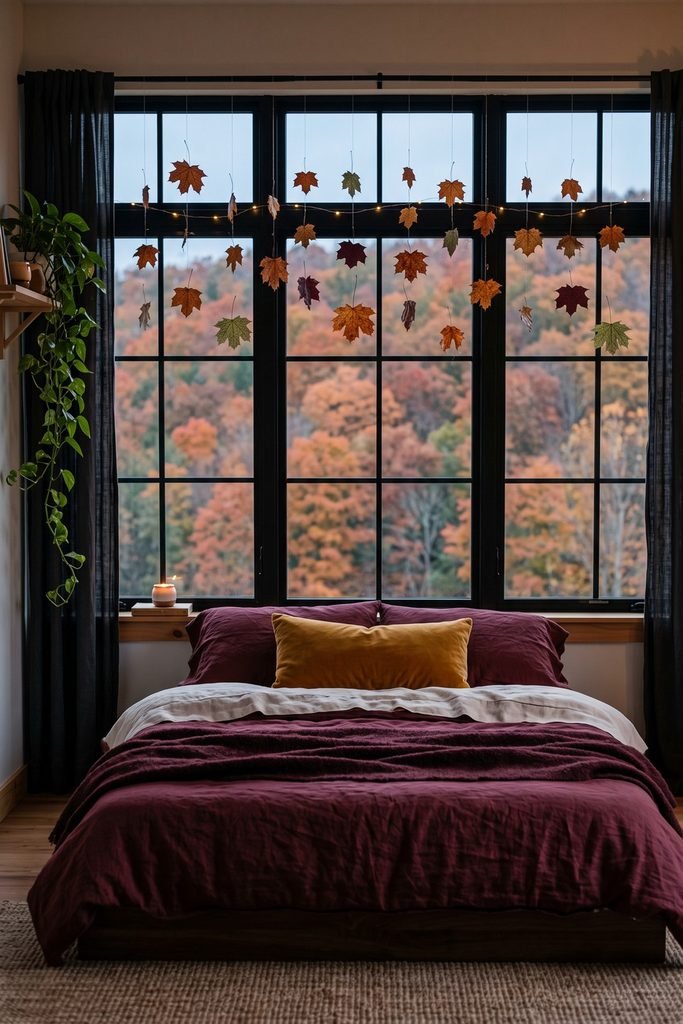
Burgundy bedding gives the bright leaves a darker landing place, while one mustard accent catches their golden notes. A trailing plant near the edge adds a cooler green that keeps the palette from becoming uniformly red-orange. At twilight, the outdoor light outlines the leaves before the interior glow takes over. Use tested decorative lights, inspect the sockets, wires, and connections, avoid trapping cords in a window, and maintain normal access to the window and any required exit route. More approaches to layering ambient and accent light appear in these lighting ideas for cozy rooms.
Create the Glowing Maple Window
The leaf garland supplies the overhead focal point, while burgundy and mustard repeat its deeper tones at mattress level.
Create a Candlelit Window-Nook Bed for Slow Autumn Mornings
When a bed sits beside an autumn-facing window, the view can provide most of the decoration. Ivory linen keeps the interior bright enough to receive that color, while a tobacco-brown throw repeats the deeper tones outside. A faux-fur layer adds shadow and softness, preventing the limited palette from looking flat.
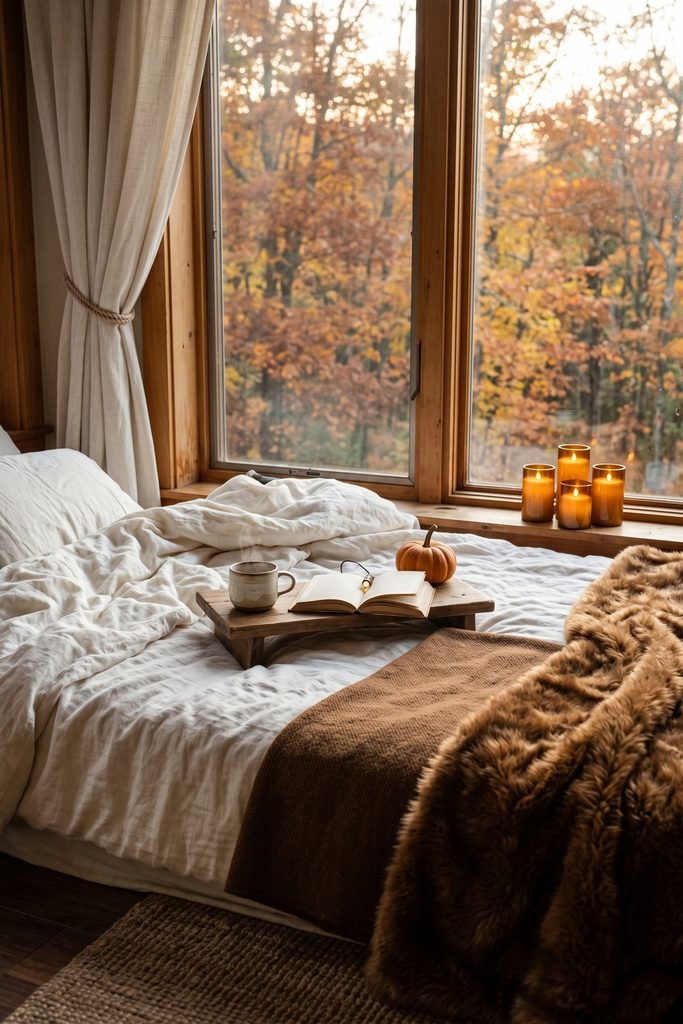
Keep the morning details within one usable zone: a stable tray with coffee and a book, one small pumpkin, and candlelike LED lights on a clear ledge. The scene feels restful because the bedding is relaxed and the accessories are contained, not because the bed is crowded. Preserve access to the window, move the tray before sleeping, and keep all textiles and decor at the required distance from radiators, space heaters, or other heat sources.
Bring in Playful or Moody Halloween Details
Halloween can lean friendly or theatrical while still belonging to the same fall bedroom. Both versions work by concentrating novelty around one focal point and allowing textiles to carry the broader color story.
Build a Friendly Halloween Headboard with Lanterns, Leaves, and One Ghost
A cream-and-rust bed gives friendly Halloween decor a soft setting. Concentrate the themed layer along one shelf or headboard line with autumn leaves, two or three pumpkins, and warm lantern-style lights. One white ghost pillow becomes the character of the room; limiting it to a single figure preserves its impact.
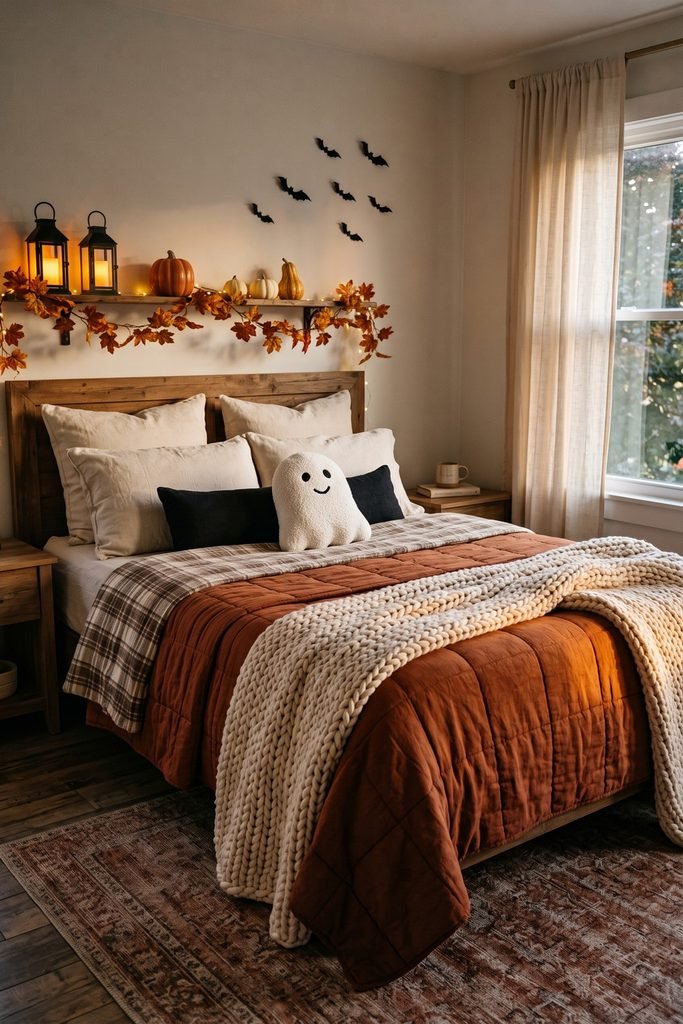
Small black details—perhaps a few bats or one narrow pillow—work as punctuation rather than a competing color field. Plaid and chunky knit keep the lower half grounded in autumn, while open stretches on the shelf stop the arrangement from reading like storage. Verify the shelf installation and stated load, use flameless lanterns, and keep lights and cords clear of bedding.
Stage a Moody Halloween Bed Around One Glowing Jack-o’-Lantern
For a darker interpretation, let charcoal and rust cover most of the room and make one glowing jack-o’-lantern the unmistakable focal point. Orange repeated through a heavy knit or duvet carries that light across the bed, while a cream sheet and lace curtain reveal folds and edges that might otherwise disappear into shadow.
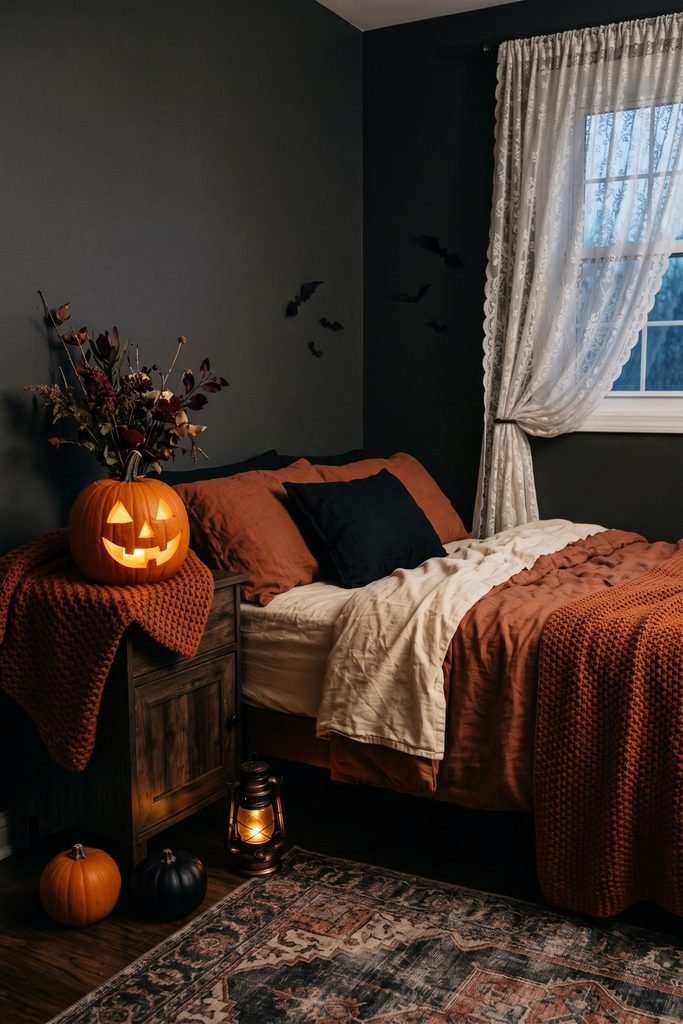
Dried foliage, a black pillow, and a sparse group of bats can frame the scene, but none should compete with the pumpkin’s face. Localized battery-powered light is more effective here than illuminating every shelf and corner; the surrounding darkness is part of the composition. Secure wall decorations, use LED illumination inside the pumpkin, and keep cords, dried materials, and textiles away from heat.
Recreate the Moody Halloween Palette
Keep the glow concentrated in one pumpkin, then extend its rust color through a tactile throw and a sparse set of black silhouettes.
A Short Safety Check for Lights, Candles, and Fireplace Styling
Bedrooms contain abundant fabric, so decorative glow deserves the same care as the styling around it. The U.S. Consumer Product Safety Commission recommends using decorative lights tested by a nationally recognized testing laboratory and checking sets for cracked sockets, frayed or bare wires, and loose connections. Damaged sets should not be used, and decorative lights should be turned off before bed or when leaving home.
Open flames do not belong beside bedding, garlands, curtains, or dried foliage. If a candle is used elsewhere, the CPSC advises keeping it in sight on a stable, heat-resistant surface, away from items that can burn, and extinguishing it before leaving the room or sleeping. Flameless candles and electric lanterns are the more practical choice for the bedroom scenes in this article.
For fireplaces, radiators, and portable heaters, preserve clearance rather than using the surrounding floor or mantel edge as overflow decor. The U.S. Fire Administration recommends keeping anything that can burn at least three feet from heat sources. Product instructions and the conditions in the individual room should always take priority over a purely decorative arrangement.
Garlands, branches, mobiles, shelves, and canopies also need hardware selected for the item’s weight and the wall or ceiling material. Avoid promising that a mounting method is universally damage-free. Where a manufacturer specifies placement, fasteners, load limits, or indoor-use conditions, follow that guidance rather than relying on the appearance of a styled photograph.
Fall Bedroom FAQs
How do you decorate a small bedroom for fall without making it cluttered?
Concentrate the seasonal change in one main zone, usually the bed, then repeat its strongest accent once elsewhere. A rust blanket and a small bouquet, for example, can communicate the season without filling the nightstand, walls, and floor. Favor textile swaps and one wall or headboard feature over numerous small freestanding objects.
What fall colors work if you do not want orange?
Forest and olive green, burgundy, plum, eggplant, charcoal, camel, and chocolate all suit an autumn bedroom. Powder blue can also work when paired with a narrow burnt-orange accent and dark wood. The palette feels seasonal through depth, texture, and warm light—not through one required color.
How can you make a bed look cozy for fall without buying new bedding?
Rework the visible proportions of what you already own. Fold a textured blanket across the lower third, bring the duvet slightly forward so its layers show, and borrow one pillow or throw from another room to establish the accent. A nearby arrangement of branches or foliage can extend that color beyond the mattress without replacing the complete bedding set.
Are string lights and candles safe around a bed?
Decorative light sets should be tested by a recognized laboratory, inspected for damage, used according to their labels, and turned off before sleeping or leaving. Keep cords from becoming pinched and separate lights from bedding and other combustible decor. Open candles require active supervision and safe clearance, so flameless candles are the better fit for a bed, canopy, shelf, or window vignette.
Bring Fall Warmth Home, Your Way
The best fall bedroom is not the one with the most seasonal objects. Choose the visual direction that fits the room you already have—quiet ivory and oak, forest velvet, powder blue, saturated terracotta, plum, rustic timber, or playful Halloween—and repeat its strongest color and material relationships with restraint. A well-placed textile, focal feature, and source of amber light can carry the season through the entire space.