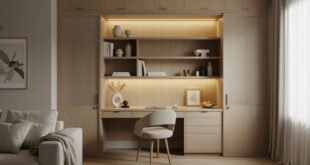
If you’ve ever wished your space could channel those cool city loft vibes but still feel calming and cozy, you’re going to love the world of the modern Japandi industrial kitchen. Seriously, imagine a kitchen that blends raw concrete and sleek steel with warm woods—all while staying stylish and super functional.
In this article, I’ll walk you through three awesome things: how to perfectly mix natural and industrial materials (so your counters and cabinets actually feel like you), clever layout tricks for small or urban kitchens (goodbye, cramped corners!), and the secret sauce—those finishing touches and lighting ideas that tie it all together. It’s like getting the best of both worlds without having to choose a side.
Foundational Elements of Japandi-Industrial Fusion
Alright, so let’s talk about what makes a modern Japandi industrial kitchen so cool (and yes, that’s a mouthful, but we’re rolling with it). Basically, this style is where soft and warm vibes from nature mix with that almost gritty, city-life edge. Think of it like a handshake between a peaceful Zen garden and a trendy downtown loft.
Material Alchemy: Combining Warm Woods and Raw Metals
Let’s dive into the heart of it—mixing materials that shouldn’t work together but totally do.


- Oak cabinets with a matte finish and steel frames. Wooden cabinets vibe with a steel skeleton running through, kind of like your kitchen’s own urban spine.
- Live-edge walnut bars hanging from iron brackets. This is just a fancy way of saying the countertop isn’t perfectly straight along the edge—it’s got “nature’s squiggle”—and it hangs from some solid, no-nonsense iron.
- Reclaimed teak shelves on cement walls. Old wood gets a new life up against cold, textured concrete, which is honestly, a match made in heaven if you’re into details.
I love how these combos make each material pop. The wood feels warmer next to the chill of metal or cement. Everything’s a bit rough around the edges, but in the good way—like a favorite old sweater. It’s all about embracing imperfections on purpose.
Tip for styling: Play with contrast! If you’ve got some warm wood going, try sticking a steel vase on it. It keeps things interesting and a little bit quirky.
Neutral Palette Strategy With Bold Industrial Accents
Okay, let’s chat about color. You don’t have to paint everything black or grey for that modern industrial feel. The trick is starting with calm and cozy colors and then hitting it with a few strong, industrial touches.

- Soft whites, warm greys, earthy beiges as your base. That’s your big, cozy blanket of color—very Japandi and totally zen.
- Blackened steel accents like pipes or pendant lights. Imagine a pop of black hardware, a little bit of grit showing through the smooth.
- Muted sage green tiles or dark graphite handles. A splash of color doesn’t have to be loud. Imagine soft green tiles, quietly picking up the veining from a marble counter.
When you keep things neutral, the little bits of metal and edgy texture stand out more. And don’t forget—matte black fixtures or brushed brass handles? They’re like jewelry for your kitchen.
How to style: If you want to try this look, start small with your handles or light fixtures. See how you like that “pop” before going all-in with bigger changes.
Spatial Flow for Compact Urban Living
Tiny city apartment? You’ve got this. A modern Japandi industrial kitchen loves making every square inch count and keeping things feeling open and breezy.

- Open layouts using materials to define zones, not walls. Instead of walls, you might have a metal-and-glass divider or a floor change to say, “Hey, now you’re in the kitchen.”
- Space-saving tricks like magnetic pan racks or retractable hoods. Turn your utensils and appliances into art you actually use.
- Sliding shoji doors with metal frames. Classic Japanese look blended with modern metal—when you open or close these, it feels like you’re slicing through space.
The secret is letting stuff “breathe.” Don’t crowd every corner. Leave a stretch of countertop empty or have shelves that almost float on the wall.
Practical hack: Try adding open shelves above the sink and magnet strips for knives or pans. It saves space and shows your style—even your favorite mug becomes part of the display.
Material Contrasts Defining the Aesthetic
Let’s get into the nitty-gritty. The fun of a modern Japandi industrial kitchen is in mixing things that are totally different so they lift each other up.
Oak Cabinetry Meets Steel Framework Accents
Here’s where the magic happens with wood and metal.

- White oak cabinets framed by sleek steel. It’s wood telling the story of forests, held up by metal that screams city life.
- Real-life inspiration: oak veneer paired with stainless steel countertops. This isn’t just a Pinterest thing—designers actually do this mix because it never feels old.
You’ll notice little cracks and knots in the oak, and then—bam—next to it is this strong, smooth steel. It feels grounded but modern.
Pros & cons: Oak and steel last forever and look awesome together. But steel can get smudgy, and wood needs a bit of care, so be ready for a little upkeep.
Concrete Countertops Paired With Bamboo Textures
Concrete and bamboo? Sounds wild, but trust me—this is where you get those “ooh, cool!” comments.


- Matte concrete countertop with bamboo cutting boards. A tough, cold top with a cozy wooden accent brings the best of both worlds.
- Bamboo fronts on kitchen drawers with thick concrete tops. The natural shimmer of bamboo warms up the stony look of concrete.
Sometimes you’ll see bamboo as just a liner in a drawer or a placemat—these little touches really make the concrete less harsh and more homey.
Quick how-to: Not ready for a whole concrete counter? Start with bamboo trays and a concrete-look vase. You’ll get the feel without the commitment.
Glass-and-Iron Partitions as Functional Sculpture
Walls can be boring—but glass-and-iron partitions? Now we’re talking statement.


- Steel-framed glass partitions instead of solid walls. They let in light but still separate your kitchen zone from everything else.
- Sliding doors or upcycled glass panels as affordable alternatives. You don’t have to drop big bucks on something custom; there are DIY ways to get the look.
Frame the glass with dark metal, maybe go for fluted or frosted glass to keep it interesting. Every time you walk by, it’s like moving through a piece of art.
How to incorporate: If you’re a renter or on a tight budget, look into adhesive window film or use shower panels with some black tape for the grid. It’s a low-commitment way to get that “loft” feel.
Urban-Adapted Layout Innovations
This is for all my apartment-dwellers or anyone trying to squeeze a little extra “wow” out of their kitchen.
Open-Concept Cooking Zones With Social Connectivity
Nobody likes being stuck behind a wall while everyone else is having fun. Open-concept kitchens let you be part of the action.

- Zoned spaces by switching up the flooring or materials. Concrete or tile tells you you’re in the kitchen, while wood signals you’ve stepped into the living room.
- Partial enclosures like sliding doors with metal frames. Want some privacy sometimes? Slide a door—easy.
- Sink and prep stations facing out. The cook isn’t stuck with their back to the fun; you’re part of the hangout.
It’s all about blending togetherness and function. You get cozy, but without feeling boxed in.
Tips for testing the layout: Try moving your dining table or small prep island to see how it changes the flow. Sometimes just spinning your cutting board to face the room makes everything feel more open.
Multi-Purpose Islands Featuring Mixed Material Surfaces
Let’s talk kitchen islands—they don’t just have to look good; they should work hard, too.


- Concrete slab with a live-edge wood overhang. Your kitchen island hugs both sides: two materials, two vibes, one great hangout spot.
- Hideaway appliances inside the island. Keeps things looking sleek and makes cleaning up easy.
- There are dual-level islands for eating and prepping. One side is for the chef, and the other is a breakfast bar for, you know, actual breakfast.
Small apartment? Look for an island on wheels. Now it’s a prep area, now it’s a serving station—it’s like magic.
Practical hack: Add hooks or a small shelf to the end of your island for hanging towels or stashing cookbooks. Little touches, big convenience.
Vertical Storage Walls With Hidden Appliance Integration
Tiny kitchen doesn’t mean tiny dreams! Vertical storage has your back (and your pots and pans).


- Full wall of matte black cabinets, hiding appliances inside. Clutter disappears, and everything looks super sleek.
- Magnetic steel backsplashes. Suddenly, your knives, spices, or even small pans live right on the wall—easier to grab, too.
- Shoji-inspired cabinets with glass or sliding fronts. Pull a panel aside, and your prettiest mugs or dishes peek out.
The more you stack up, the more counter space you get for all your foodie experiments.
Pros & cons: You’ll love how much room you save and how neat it looks. The downside? You might need a step stool—seriously, those top shelves are high!
Industrial Edge Through Tactile Details
Here’s the part where you get to touch everything. A modern Japandi industrial kitchen is made to be enjoyed, not just stared at.
Exposed Pipework as Artistic Linear Elements
Don’t hide pipes—make ‘em the star!


- Blackened steel pipes as geometric patterns. Pipes double as art and sometimes even as a pot rack.
- Pops of copper or brass in the joints Cozy up the harsh steel just a bit for balance.
- Pipe rails for hanging utensils or planters. Function meets form in the best way.
It’s about working with what you’ve got, even if that’s “just” the plumbing.
Security and safety tips: Secure pipes and rails properly! Hanging heavy pans? Make sure those supports hit a stud, or you’ll have a real mess on your hands.
Forged Iron Hardware on Minimalist Cabinetry
Tiny hardware, big attitude. Swapping out drawer pulls can majorly change your kitchen’s feel.


- Matte black or hand-hammered iron pulls. Each one’s a little different—that’s part of the charm!
- Oval or angular handles inspired by steel beams. Edgy but in a “friendly punk rock” sort of way.
- Recycled machine parts as cabinet knobs Upcycling is so on-brand for this style.
A little bit of imperfection here brings so much personality to plain cabinets.
Quick how-to: Want that wabi-sabi look? Don’t stress about matching each handle perfectly. Mixing styles keeps things informal and inviting.
Textured Cement Backsplashes With Wood Inlay
Let’s talk backsplash—this is where you can really play.


- Cement with ribbed, textured patterns. It hides splatters and just looks awesome.
- A strip of wood (like charred cedar or herringbone teak) running through. Breaks up the coldness of the cement and feels handcrafted.
- Gold or epoxy “kintsugi” cracks for extra detail. Fixing cracks with gold? Now that’s next-level kitchen art.
Mix hard and soft. It brings a cool energy and makes cleaning up soup splashes a little more fun.
How to incorporate: Start small—maybe a mini-section above your stove. If you move or get tired of it, you haven’t committed the whole wall.
Lighting as Architectural Statement
You’re not going to want boring old overhead lights after this. Lighting is your kitchen’s jewelry.
Geometric Blackened Steel Pendant Clusters
Why have one lonely pendant? Groups (or “clusters”) are the way to go.


- Different shapes and heights of steel pendant lights are like an urban chandelier, but way cooler.
- Mix of matte and brushed metal finishes. It jazzes things up without being wild.
- Dimmable bulbs for day and night. Set the mood, whether you’re chopping veggies or hosting game night.
Bonus: Shadows from these lights look amazing on walls and counters.
Styling tip: Play with the height and number of pendants above your island. Odd numbers (like three) tend to feel more relaxed and natural.
Paper Lanterns With Industrial Cage Enclosures
Lanterns aren’t just for outdoor parties—they’re welcome in the kitchen, too!


- Washi paper shades inside steel cages. The softest light, wrapped in the toughest frame.
- Hang above the table or in the window, spotlights with a little glow.
- Floating lantern “installations” using clever hardware. Stack two or three at different heights for extra style points.
The gentle light bounces off your cabinets, fighting back any harsh “factory” vibes.
How to integrate: Try just one or two lanterns in a reading nook or hanging over your favorite prep spot. You could even layer them for that extra-cozy look.
Adjustable Track Lighting on Exposed Beams
If you’ve already got exposed beams or pipes, why not turn them into a light show?


- Slim track lights mounted to reclaimed wood or steel. Spot those herbs or your stunning backsplash.
- Heads that pivot and rotate for flexible lighting. You get the perfect light whether you’re making coffee at 7 am or cocktails at midnight.
- Combine with hidden LEDs for a layered look. No shadows where you don’t want them.
Track lighting is perfect if you love rearranging or just want stuff to be easy to use.
Quick how-to: Keep your track lights in line with the beams—they’ll blend in better. Try magnetic heads if you want to move them around without tools.
Biophilic Industrial Accents
Even the most “urban” kitchen needs a little nature. Biophilic (which just means “nature-lovin’”) touches calm things down and looks pretty awesome.
Live-Edge Wood Counters Contrasting Polished Concrete
If you want “nature meets city,” this is it.


- Live-edge walnut or oak counters. Every slab is unique, with bumps and swirls.
- Polished concrete island or counter beside it. The natural, funky line of the wood plays off the perfect finish of the concrete.
- Thin wood slabs for apartments keep things airy and not too heavy.
It’s the art of celebrating flaws, and honestly, chips or dings just make it better.
Tips for testing: Try a live-edge cutting board on your concrete counter before jumping into a permanent install—if you love it, you’ll want more!
Hanging Terrariums in Wrought Iron Cradles
Not just another potted plant! These little guys bring the outside in and look super playful.


- Glass terrariums hung in iron frames like tiny gardens hanging from the ceiling.
- Fill with air plants, moss, or succulents. They’re low-maintenance and hard to kill (thank goodness).
- Group different heights for a dynamic feel. Makes your kitchen look like an art gallery and a forest rolled into one.
A splash of green totally softens all that metal and stone, plus it’s hard not to smile when you see a floating plant.
Practical hack: No green thumb? Use preserved moss so you don’t have to water (and can’t accidentally murder your new plants).
Moss Wall Art Panels Beside Steel Appliances
If you think moss belongs outside, wait until you see it next to stainless steel.


- Preserved moss panels around fridges or hoods. Soft, velvety texture where you least expect it.
- Earthy greens or burnt clay tones to match your vibe. Moss isn’t just one boring green!
- Framed with black steel for a modern look, keeps your moss artwork looking intentional, not like you just glued a patch of the backyard to the wall.
If you’re worried about maintenance, these panels mostly just need a little dusting every so often.
How to incorporate: Use modular tiles so you can swap or move panels anytime. Try it as a frame around your stove or behind floating shelves for extra wow.
Urban Apartment Adaptations
Apartment kitchens are small but mighty—and totally ready for these hacks.
Convertible Breakfast Bars With Metal Flip-Up Extensions
Small space? No problem. Fold-up counters to the rescue!


- Matte black steel countertop that folds out when you need it. Seating for two, then it disappears!
- Wall-mounted oak base or a flip-out ledge from your island. Takes up almost zero space when not in use.
- Slim stools that push underneath. Every bit counts in a smaller kitchen.
You’ll feel like a magician pulling out a surprise table from the wall.
Pros & cons: Super handy and space-saving, but keep screws tight—nobody likes a wobbly breakfast bar.
Magnetic Wall Systems for Utensil Display Storage
If you’ve got a free patch of wall, you’ve got storage.

- Blackened steel backsplashes that hold magnets. Hang your knives, spice jars, or even pans—no more messy drawers.
- Turn your utensils into art. Everything’s on show, but in the “I planned this” way.
- Magnetic panels inside cabinets for the reeeally organized.
It’s practical and makes you look like you actually cook, even if you mostly order takeout.
Quick how-to: Start with a magnetic strip near the stove for knives. Want to go big? Cover a larger area for all your kitchen tools.
Retractable Range Hoods in Matte Black Finishes
Who wants a big hood blocking the view? Not me, not you.

- Downdraft hoods that pop up only when you need them. Cooking? The hood appears! Done? It disappears behind the counter.
- Matte black to blend in or add some drama. Sleek, modern, and easy to wipe down.
- Works perfectly with induction stoves for a super-smooth look. Everything matches, and nothing blocks your style.
Makes the kitchen feel huge, even when it’s not.
Styling tip: Measure your range and hood carefully—oversized looks clunky, and undersized doesn’t work as well.
Seamless Style Integration Techniques
Let’s make sure this all ties together into one cozy, urban, totally-you kitchen.
Burnished Copper Accents Against Ash Wood Tones
Copper is the friendliest metal—it warms up anything.


- Add copper handles, planters, or lamps. Just a few, so it doesn’t turn into Willy Wonka’s factory.
- Pair with pale ash or oak cabinets. The contrast is gentle, not in-your-face.
- Use thin copper edging on shelves or around counters. Subtle, but feels lux.
The trick is restraint—too much copper and it’s 1970 all over again. Just enough and it’s magic.
Tips for testing: DIY a copper lamp or try copper adhesive tape on a shelf edge before calling the electrician.
Fluted Glass Cabinet Fronts With Iron Grid Backing
Cabinets get fancy in the best way.


- Fluted glass hides clutter but still lets light in. Win-win if you’re not the world’s neatest.
- Framed with black iron grids. Looks like an artsy window, not storage.
- Hack it with frosted film or recycled glass if you’re on a budget.
- Insta-upgrade, no major reno needed.
It creates depth and keeps kitchen clutter from stealing the spotlight.
Practical hack: Use fluted glass on just a few focal cabinets—like where you keep your prettiest coffee mugs or wine glasses.
Textured Plaster Walls Complementing Exposed Ductwork
Your walls deserve a little more than just paint.

- Hand-troweled plaster or lime-wash paint adds depth and hides dings.
- Keep ductwork or pipes exposed, painted matte black. Turns “ugly bits” into graphic art.
- For renters—textured wallpaper does the trick. Peel and stick for a commitment-free upgrade.
This mix brings a sense of age and softness, tames the harsh lines of all that metal above.
How to incorporate: Try a plaster-look accent wall behind your open shelves, or stick-on textured panels above the stove.
Evolving the Hybrid Aesthetic
This kitchen style isn’t one-and-done. It’s meant to grow with you.
Modular Furniture Systems for Flexible Reconfiguration
Everything’s better when you can change it up.

- Modular cabinets and islands that move around. Today it’s a breakfast bar; tomorrow, maybe a baking station.
- Pull-out shelves and adjustable wall units. Goes high for storage and low when you need to reach things.
- Recycled materials that look new. More eco-friendly, and you won’t see it in every neighbor’s kitchen.
Change the layout as your needs (and mood) change, and your kitchen keeps feeling fresh.
Practical hack: If you rent, consider lightweight shelving or tables that move with you—easy to rearrange, easy to haul to your next place.
Patinated Brass Fixtures Against Whitewashed Brick
Brass gets better with age—like jeans, but for your kitchen.

- Unlacquered, aged brass hardware and fixtures. They’ll get little marks over time, and that’s the charm.
- Put them against a whitewashed brick wall. The contrast is sharp but friendly.
- For renters, try fake-brick wallpaper and stick-on brass handles. No tools required.
Let your fixtures develop personality—scratches and all.
Pros & cons: Brass is unique and warms things up, but expect it to develop a “lived-in” look with time. If you’re not into patina, maybe skip this one.
Slatted Wood Screens Softening Industrial Structural Elements
Don’t fight the beams and pipes—hug them with wood.


- Vertical or horizontal wood slats add rhythm. Makes pipes and ducts feel intentional.
- Use slats as utensil racks or shelves. Practical storage and style in one.
- Go for lighter woods like ash or oak, sealed for durability. Keeps things Japandi-chill.
Screen off messy areas or hide not-so-cute stuff, and the whole space feels cozier.
Quick how-to: Try a DIY slatted panel using pine boards from the hardware store. A coat of wood stain and you’re in business!
If you’re dreaming of a modern Japandi industrial kitchen, it doesn’t have to cost a fortune or require a giant space. Start small, mix and match materials, and don’t be afraid to leave a little room for imperfection. Your kitchen—no matter the size—can feel like your own little corner of city-meets-serenity. And remember, the best designs are the ones that make you smile every single morning.
Conclusion
So, let’s look back at what we’ve just explored. First up, you saw how to mix materials like concrete and wood (trust me, it’s way easier than those fancy design shows make it look). Next, we chatted about how to make your modern Japandi industrial kitchen actually fit—no matter how tiny your apartment is. And finally, you got the lowdown on creative details and lighting that’ll have everyone saying, “Wait—you did this yourself?”
If you’re feeling inspired, don’t stop here! Try out a simple update, like swapping in some matte black hardware or adding a touch of greenery. Or hey, just play around with open shelves or cool pendant lights to give things a test run before going all-in. You don’t need a full remodel to make your kitchen feel new.
And this is your turn—what ideas jumped out at you? What would you try first? Hit me up in the comments or let me know what gave you that “aha!” moment. We all have kitchen dreams (and kitchen fails, let’s be real). Let’s swap some stories.
Want more inspiration? Check out our Pinterest board on Japanese Kitchen for endless practical and dreamy ideas!