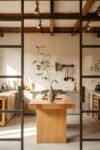





Small Japanese Kitchen Design: Space-Saving Ideas for Tiny Apartments
Small Japanese kitchen design is kind of a game-changer if you’re dealing with a tiny kitchen and still want it to look cool and work like a dream. If you’ve got almost no space, but every little thing has its spot, and it somehow feels both calm and stylish. Sounds good, right?
- Minimalist Foundations of Small Japanese Kitchen Design
- Wabi-Sabi Aesthetics Embracing Imperfect Beauty
- Horizontal Lines and Visual Expansion
- Danshari Decluttering for Spiritual and Spatial Clarity
- Natural Material Integration in Compact Culinary Spaces
- Light Pine with Visible Grain for Warmth and Earthquake Resilience
- Bamboo Organizers and Stone-Textured Backsplashes
- Neutral Earth Tones Enhancing Natural Light Diffusion
- Vertical and Concealed Storage Innovations
- Ceiling-Height Cabinetry with Pull-Down Shelving
- Sliding Shōji-Inspired Pantry Door Systems
- Magnetic Spice Racks and Utensil Walls
- Adaptive Multi-Functional Furniture Solutions
- Fold-Out Breakfast Bars with Integrated Sink Covers
- Mobile Island Carts Doubling as Dish-Drying Stations
- Under-Counter Retractable Prep Surface Extensions
- Strategic Lighting for Spatial Enhancement
- Layered Ambient Glow from Paper Lantern Pendants
- Task Lighting Hidden Beneath Floating Shelves
- LED Strips Mimicking Traditional Andon Lantern Effects
- Compact and Efficient Appliance Selection
- Slimline Refrigerators with Frost-Free Technology
- Built-In Induction Cooktops with Downdraft Ventilation
- Combination Microwave-Steamer-Rice Cookers
- Blending Traditional Elements with Modern Lifestyles
- Contemporary Takes on Tansu Storage Chest Designs
- Washable Tatami Mats for Floor Texture Contrast
- Miniature Ikebana Arrangements on Open Shelving
- Conclusion
- You May Also Like
Stick around and I’ll spill three big secrets—like how to use natural materials so your kitchen feels warm, hacks for squeezing every inch of storage out of your walls (think kitchen Tetris!), and the best ways to blend Japanese tradition with your own modern life. Ready to give your kitchen a total glow-up? Let’s dig in!
Minimalist Foundations of Small Japanese Kitchen Design
Alright, let’s talk about small Japanese kitchen design. If you’re working with a tiny kitchen (hello, city apartment life!), the Japanese have really mastered the art of making the most out of every inch. The style is all about keeping things simple and kinda peaceful. There’s a sense of calm, and everything has its place.
Wabi-Sabi Aesthetics Embracing Imperfect Beauty
So, have you ever heard of “wabi-sabi”? It basically means finding beauty in stuff that’s a little imperfect or worn-in. It’s a huge deal in small Japanese kitchen design—think kitchens that actually want their countertops to show a little age instead of always looking brand new.

- Reclaimed wood counters and hand-thrown sinks are celebrated for their quirks. Picture a reclaimed cedar counter with some cool knots, or a ceramic sink that isn’t exactly symmetrical. Those little “flaws” tell the story of your kitchen.
Letting things age naturally means less stress trying to keep everything perfect. Maybe your cutting board isn’t brand new anymore, or you’ve got some water spots on wood. Instead of worrying, just treat them like memories—each one’s like a little badge from family dinners or late-night snacks.
If you ever feel like your kitchen is too “lived-in,” just remember: that’s part of its charm! Wabi-sabi lets you skip the showroom vibes and create a space that feels real and comfy.
Pros & Cons: Wabi-sabi takes the pressure off; you don’t need everything flawless. But if you really need your kitchen Instagram-perfect at all times, it might not be your thing. Still, letting go of perfection is super freeing!
Horizontal Lines and Visual Expansion
Tiny kitchen feel a bit like a shoe box? Japanese designers have a secret move—they use horizontal lines to make your space feel wider.

- Cabinets and shelves that run side-to-side draw your eyes across the room. Long, low cabinets and shelves trick your brain into thinking your kitchen is much bigger than it actually is. Installing floating shelves all at the same height stretches out the space, visually speaking.
- Even the drawer handles and tile patterns boost the effect. Horizontal pulls and subway tiles set sideways help keep everything feeling chill and wide, not cramped and tall.
Line everything up and watch your kitchen expand (okay, not literally, but it’ll look that way!). Next time you’re picking out tiles or cabinet hardware, go horizontal. Your eyes—and your space—will thank you.
Quick How-To: Step back from your sketch or mood board and double-check: do your shelves/handles/tiles run side-to-side? If not, try moving stuff around, even if it’s just for fun. Sometimes, sparkling a new illusion just means changing a drawer pull direction!
Danshari Decluttering for Spiritual and Spatial Clarity
If you’ve ever Marie Kondo-ed your closet, you’ll get this: danshari is all about letting go of clutter for good vibes and more space.

- Keep only the essentials; everything should earn its spot. Maybe swap that massive knife block for just one good chef’s knife, and pick a rice cooker that also steams and slow-cooks. Ditch spices you never reach for and keep only your flavor MVPs in simple jars.
- Make everyday items part of the decor. That favorite clay pot? Put it on display. Drawer dividers in fragrant wood? Yes, please—organization that smells good and looks fancy!
When you clear out the junk, your kitchen feels huge—even if it’s actually tiny. Plus, everything you keep is something you truly use (and probably love).
Practical Hack: If you’re struggling to let go, try this: every time you use something, give it a star (like, on a sticky note). After a month, anything starless gets the boot. It’s a game—and your reward is a breezier, neater kitchen.
Natural Material Integration in Compact Culinary Spaces
Moving on to one of my favorite parts: using natural materials in your small Japanese kitchen design. It’s not just about looks—wood, bamboo, and stone bring good vibes and hold up pretty well, especially when every inch counts.
Light Pine with Visible Grain for Warmth and Earthquake Resilience
There’s a reason you see so much light wood like pine and cedar in Japanese kitchens. It’s not just pretty; it’s practical!

- Light woods stay bright and flexible—good for light and in case of earthquakes. Pine and cedar can bend a bit without snapping—handy in places where the ground likes to wiggle!
- Easy upgrades for renters. Love this look but can’t renovate? Pine peel-and-stick veneers or a few lattice drawer fronts can totally work magic without being permanent.
You don’t have to own your place to bring in these cozy, natural touches. And landlords love when you don’t demolish their cabinets (trust me).
Tip on Testing: Try one peel-and-stick wood panel on a small drawer or shelf first. If you like it, go wild! Just don’t forget to peel it off gently when you move.
Bamboo Organizers and Stone-Textured Backsplashes
Bamboo is basically the superhero of kitchen organizing. It’s strong and grows fast, so eco-friendly points too.

- Drawer trays, dividers, and hanging organizers keep things tidy. From bamboo trays for utensils to pole systems for your pots or produce, everything’s close at hand (and looking great).
- Stone-look or hammered metal backsplashes add texture without the bulk. Stone touches ground your kitchen—try a slate panel behind the stove, or tsuchime tiles near your sink for that high-end look, minus the weight.
Mixing bamboo and stone keeps things feeling fresh and natural, and hey, it’s way easier to keep clean than tons of grout lines.
Practical Hack: Not sure where to start? Buy a $10 bamboo cutlery tray and see if you like it. If it passes the “does this make my life easier?” test, roll out more bamboo organizers.
Neutral Earth Tones Enhancing Natural Light Diffusion
If all these wood and bamboo things have you worried your kitchen’s going to look like a cabin, don’t stress. Japanese kitchens love easy, nature-inspired colors like white, gray, and beige.


- These colors bounce light and keep things looking bright. Paint your walls a soft rice white or bring in a beige rug—small changes have a big impact.
- Use textures to add some zing (so it’s not boring!). Break things up with textured plaster or a straw mat here and there. Even a little contrast between smooth and rough makes everything feel less flat.
Earth tones basically work as a blank canvas, so your favorite mug or a bright bowl of fruit gets to be the star.
Tip for Styling: Try holding up color swatches on your phone against your counter or cabinets (or just improvise with napkins, sweaters, whatever). If it makes the room look lighter, it’s a winner!
Vertical and Concealed Storage Innovations
Okay, let’s get vertical! Japanese kitchens seriously make use of every bit of wall and ceiling. It’s kinda like kitchen Tetris—there’s always another way to use the space.
Ceiling-Height Cabinetry with Pull-Down Shelving
Regular cabinets end above your head? Not here! Japanese kitchens go straight up to the ceiling.

- Tall cabinets = way more storage. These bad boys give you a streamlined look, plus all the room for your stuff. Even better? They often come with pull-down shelves that glide down easily.
- Made from lightweight stuff, with clever dividers. Think hinoki wood doors that are light, or even aluminum frames with glass for a breezier style. Inside, you can have all sorts of organizers that move to fit whatever weird-shaped kitchen thing you have.
You don’t need to be tall or own a ladder just to get to that funky waffle maker you use twice a year. It’s all about smooth, easy access.
How to Incorporate: Start with an over-the-fridge organizer or a pull-down shelf kit for an upper cabinet—no need to redesign the whole kitchen to see the magic.
Sliding Shōji-Inspired Pantry Door Systems
Swinging pantry doors are basically a luxury in small kitchens (who has the space?!), so sliding doors come to the rescue.

- Sliding doors save floor space, and look gorgeous. Swap that bulky regular door for a sliding shoji-inspired panel, and you instantly free up a chunk of floor.
- Clever storage behind the scenes. Think pull-out racks for spices, skinny slots for cutting boards, and a calm wall when everything’s tucked away.
Sliding panels can be made from modern stuff like ribbed glass or acrylic if paper isn’t your thing. And they’re a game changer for galley-style or super-tight kitchens!
Tip for Testing: Tape a curtain up where you’d put a sliding door and slide it back and forth for a week to see how it feels. If you’re not tripping over it, you’ll love a real one.
Magnetic Spice Racks and Utensil Walls
Who knew your wall could do so much? In a small Japanese kitchen, the wall is prime time.


- Magnetic strips hold spices, utensils, and more. Stick up a metal strip and suddenly, your spices are within arm’s reach and not hogging a whole shelf.
- Hanging hooks let you display and grab your favorite tools. Copper ladles, bamboo paddles—hang ’em up! It’s like kitchen jewelry, and it’s so handy.
Don’t be shy about showing off your gear—even if it’s your grandma’s old knife or a weird-shaped spatula you love.
Practical Hack: Try a magnetic knife rack first—if you don’t love it, it works great for scissors or other metal stuff in your junk drawer!
Adaptive Multi-Functional Furniture Solutions
And now, for the fun part—furniture that does more than one job. In small Japanese kitchen design, everything works double or even triple duty.
Fold-Out Breakfast Bars with Integrated Sink Covers
It’s a sink… it’s a counter… surprise, it’s both!

- Sink covers that flip into breakfast bars. When you’re prepping, it’s a regular counter. Need a place for your cereal bowl? Flip up the sink cover—instant table.
- Details that actually matter. Little grooves for chopsticks, silicone mats so bowls don’t do the slip-n-slide—all the stuff you didn’t know you needed.
If you rent (and your landlord’s a little picky), there are even peel-and-stick bamboo options to fake a custom look.
How to Style: Decorate your fold-out bar with cute placemats or napkins. It’ll look super intentional, even if you really just wanted your sink hidden after a wild dinner party.
Mobile Island Carts Doubling as Dish-Drying Stations
Wheels on your kitchen cart are a huge win. These carts aren’t just for moving snacks around… but yeah, it’s great for that.


- Easy-to-move carts hold dishes, dry them, and more. Charred cedar, pretty casters, flip-out racks for dishes—it’s all so neat and compact.
- Storage that adapts and sneaks in some greenery. Hydroponic herb pods, storage for cleaning stuff, and soft-rolling wheels that won’t mark up your floor.
These mobile islands can park anywhere you need, and they look awesome doing it. Plus, silent wheels mean no “bumps in the night” if you drag it around when roommates are sleeping.
Tip for Testing: Borrow a friend’s rolling cart or even a suitcase and park it somewhere weird in your kitchen for a day. If you find yourself loading it up, yeah, you’ll love an island cart.
Under-Counter Retractable Prep Surface Extensions
You know that gap under your counter? It’s like hidden treasure in a Japanese kitchen—pull out a cutting board, gain half a kitchen.

- Slide-out prep boards expand your workspace. Whisper-quiet rails and boards that lock in place give you way more space for chopping or stacking dishes.
- Clever touches keep things grippy and blade-safe. Bamboo mats or textured bottoms mean your board doesn’t slip, and your knives don’t dull.
Slide it out when you need it, then tuck it away and pretend it was never there. It’s like kitchen magic, but totally real.
Practical Hack: Try a simple over-the-sink cutting board. If you wish it slid further out or locked in place, you’re ready for the upgrade!
Strategic Lighting for Spatial Enhancement
Lighting is a big deal in any kitchen, but in a tiny one? It’s everything. Japanese kitchens use light to set a mood, show off ceramics, and make small spots feel way bigger.
Layered Ambient Glow from Paper Lantern Pendants
Paper lanterns are classic Japanese style, and they work like a charm for gentle, cozy light.

- Washi paper or modern versions create soft, glowy pools.
- Hang one big lantern over the sink, or a line of small ones over your dining spot—each glows with warm, friendly light.
- Lanterns can define zones and add personality.
- A single lantern can anchor a busy corner, or a few together make a cozy breakfast spot.
You don’t need a ton—sometimes clipped-on lantern shades do the trick if you rent.
Styling Tip: Don’t be afraid of mixing shapes! Lanterns are fun, and you can swap them out depending on the season or your mood.
Task Lighting Hidden Beneath Floating Shelves
You know that dark spot under your cabinets? LED strip lights to the rescue!


- Hidden LEDs light up countertops and show off your best stuff
- With lights under shelves, you get a clear workspace and your favorite tea cups start to look like collectibles.
- Adjustable color settings fit your vibe
- Cool white wakes you up in the morning tea rush—warm amber chills things out at night.
LED strips can be easily stuck on, so renters, rejoice! And the transformation is instant.
Tip on Testing: Stick a flashlight under your shelf one night to see how it changes the mood. If it helps, a cheap under-cabinet light could be your next impulse buy.
LED Strips Mimicking Traditional Andon Lantern Effects
Let’s take lighting one step cooler. Andon lamps used to be oil-lit, but now, LED strips create the same “floating” glow.

- LEDs behind cabinet toe-kicks and panels make cabinets float
- Your kitchen goes from “meh” to “woah” with just a little bit of light near the floor or behind translucent doors.
- Smart strips can even mimic natural lighting
- Set your LEDs to wake you up gently or glow soft in the evening—it’s a little bit old Japan, a little bit new tech.
It’s a sneaky trick, but it totally works for opening up the feel of a small kitchen.
Security and Safety Tip: LEDs don’t get super hot, and they can help you find your midnight snack without flipping on the big light. Win-win!
Compact and Efficient Appliance Selection
This is where Japanese design really flexes: appliances that are small, sleek, and can usually do more than one thing.
Slimline Refrigerators with Frost-Free Technology
Forget those chunky fridges. Japanese slimline refrigerators are the MVPs!

- Tall and skinny, they fit tight spaces and keep things organized
- Pull-out drawers act like library shelves, so you’re not losing random leftovers behind a milk jug.
- Zones for specific foods and customizable exteriors
- Think little baskets for pickling or miso, and doors that blend in with your cabinets or stand out with glass.
No more wrestling with mystery smells from the back of your fridge.
Pros & Cons: Slim fridges are space savers and keep things organized, but if you shop in bulk a lot, you might need to rearrange your grocery routine. Totally worth it if your kitchen is the size of a closet!
Built-In Induction Cooktops with Downdraft Ventilation
These cooktops are like having a secret weapon. They cook super fast and keep things nice and cool to the touch.

- Induction burners heat up in no time and stay cool for safety It’s safer (especially if you’re clumsy like me) and great for small kitchens packed with people or pets.
- Downdraft venting means no ugly range hood . Smoke or steam goes down, not up—leaving room above for cute pots or extra shelves.
And yes, plenty of these work perfectly with clay donabe pots, so you can keep on making those cozy rice dishes.
Security and Safety Tip: Induction won’t burn your hand if you accidentally tap the burner. Just remember, you’ll need cookware that’s induction-friendly!
Combination Microwave-Steamer-Rice Cookers
Who has space for three appliances? Not me.

- One compact appliance does it all—steam, microwave, and cook rice
- Whip up miso soup, heat leftovers, or perfect your sushi rice without crowding your counter.
- Stylish controls and easy-slide designs
- Many have cool, Japanese-inspired buttons and hide away when you don’t need them.
It’s the kitchen workhorse you didn’t know you needed, trust me.
Tip for Testing: Try searching online for “multi-cooker recipes” and see if your meals suddenly get way easier (and taste better). If you love a gadget that does it all, this is gonna be your new best friend.
Blending Traditional Elements with Modern Lifestyles
Okay, last bit! The coolest thing about small Japanese kitchen design? It mixes old-school awesome with new-school smart.
Contemporary Takes on Tansu Storage Chest Designs
Tansu chests used to move samurai gear—now they hide your kitchen mess.

- Modern tansu-inspired chests have secret compartments and modular designs. They stack up, fit tight spots, and give you a TON of storage in a tiny footprint.
- New materials and details for today’s kitchens. Think laser-cut steel or magnetic closures on what looks like old wood boxes.
If you love reconfiguring things on the fly, tansu-inspired pieces are basically kitchen LEGOs.
How to Incorporate: Stack tansu units as you need ‘em—and if you move, they come with you. Try one as a tea station, then add more as you go, like a grown-up puzzle.
Washable Tatami Mats for Floor Texture Contrast
Tatami mats just got an upgrade—they’re now kitchen-friendly!

- Modern versions use cork and PET fibers instead of rice straw. These new mats add comfort and color without trapping spills or grease. Super easy to clean.
- Use them to zone out parts of the kitchen or just get a cushy spot to stand. Mix and match colors or use a whole set to make your kitchen a little softer underfoot.
They pop apart for washing, so no stress about what you dropped on them during that late-night snack attack.
Tip for Testing: Buy a single tatami mat tile for near your sink. If you absolutely love it (your back definitely will), add more—no need to commit right away!
Miniature Ikebana Arrangements on Open Shelving
Last (but seriously not least), Japanese kitchens are big on bringing nature into the mix—even if it’s just a sprig or bloom in a tiny vase.


- Tiny flower arrangements (ikebana) add a personal, lively touch. Even a single wildflower or herb clipping can turn a shelf into a little piece of art.
- Vessels can be as simple as a shot glass or as fancy as a magnetic tube. Rotate them with the seasons or whenever you’re at the park and see something pretty.
It’s a fun, low-commitment way to celebrate what’s around you (and show off your foraging skills).
Practical Hack: Next grocery trip, grab an extra herb bouquet. Stick a sprig in a bottle on your shelf. It’s basically the easiest way to look fancy—no green thumb required!
Conclusion
So, let’s hit pause and rewind real quick. First, we learned how small Japanese kitchen design uses smart layouts and hidden storage to make even the tiniest apartment kitchen feel open and organized. Next, natural materials like wood and bamboo add warmth (plus, they’re actually practical—who knew?). And of course, Japan’s unbeatable ability to mix old traditions with clever, modern tricks makes each kitchen feel unique and personal.
Thinking about a makeover now? Try one change at a time—maybe swap your handles for some horizontal pulls, add a roll-out prep surface, or even just start with a mini ikebana bouquet on the shelf. You don’t have to do it all at once (unless you love chaos, then go wild).
Now it’s your turn! What idea jumped out at you, or do you have a tiny-kitchen hack we didn’t cover? Share your thoughts or disasters (we’ve all had them) below—I’d love to hear how you’re surviving or thriving in your little space.
And hey, if you want even more drool-worthy inspiration, check out our Pinterest board all about Japanese Kitchen ideas. It’s where I go when I want to daydream about my next kitchen upgrade (or, let’s be honest, procrastinate on doing the dishes).
You May Also Like