




Sage Green Lounge Ideas for a Calm, Collected Living Room
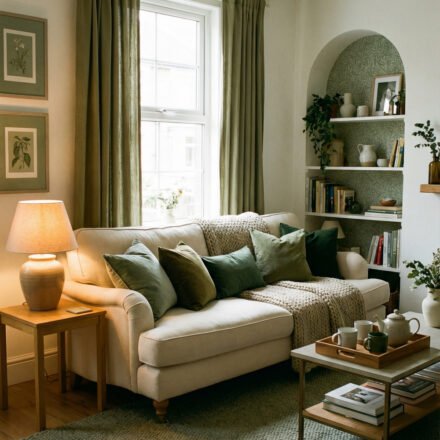
Sage green has a way of making a lounge feel settled, fresh, and easy to sink into. It can look airy and light or a little moodier, depending on what you pair with it.
Table Of Content
- Wrap The Room In Tonal Sage Paneling
- Let A Sage Sofa Anchor A Creamy Lounge
- Try A Cottage Sage Lounge With Beams
- Use Sage Wall Trim For A Modern Frame
- Pair Sage With Blush For Soft Contrast
- Ground Sage With Charcoal And Black
- Layer Botanicals Into A Sage Lounge
- Mix Sage With Burl Wood And Brass
- Soften Sage With Curves And Fringe
- Warm Sage Up With Suede And Patina
- Build A Renter-Friendly Sage Lounge
- A Fresh Take On Sage
If you love the color but are not sure whether to start with walls, seating, or smaller layers, that is where things can get stuck. The good news is it does not have to feel complicated.
These ideas make sage feel easier to picture in real life, from soft tonal rooms to richer, more grounded spaces. Let’s get into the looks worth saving.
Wrap The Room In Tonal Sage Paneling
There is something instantly calming about a lounge that feels washed in one quiet green. When sage shows up across the walls, drapes, and rug, the room starts to feel settled before you even add the furniture.
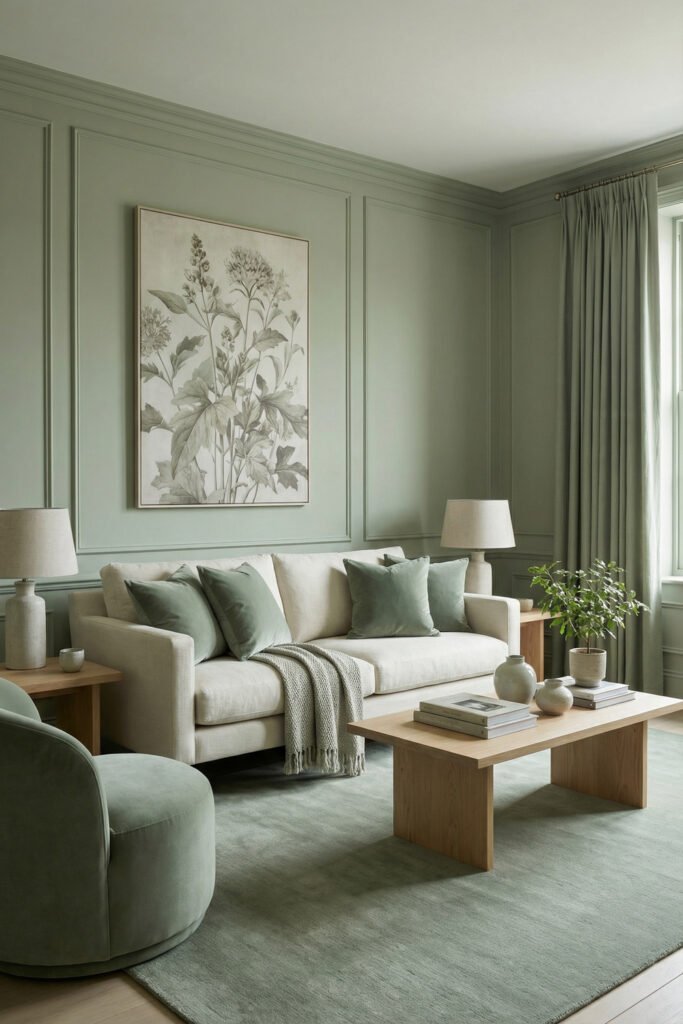
Tonal sage paneling gives the whole lounge a gentle envelope, especially when the molding is painted the same muted green as the walls. A cream sofa keeps the space from feeling heavy, while velvet pillows, a knitted throw, and one rounded sage chair repeat the color in softer ways. Light oak tables and pale linen shades bring in a dry, natural contrast that stops the room from looking too polished. A large botanical print over the sofa ties the whole palette together, but the real standout is the way the trim creates quiet depth as daylight moves across it.
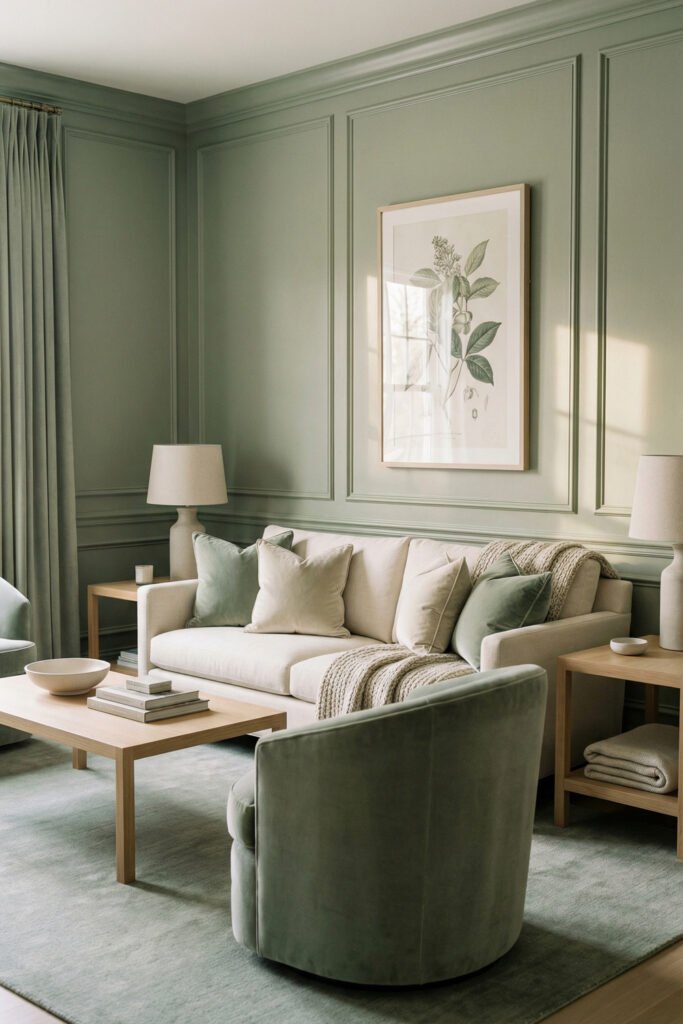
This look feels especially good in a lounge that needs a little structure without losing its easy mood. It has that pulled-together feeling that still works for naps, movie nights, and slow mornings.
Paneling Tip: Keep the trim slim and paint the baseboards sage too, so the color reads seamless instead of chopped up.
It is a lovely way to make a room feel finished without adding clutter. Even simple furniture looks more considered against that soft green backdrop.
Let A Sage Sofa Anchor A Creamy Lounge
Sometimes one strong piece does all the work. A sage green sofa can carry the whole room, especially when everything around it stays light and relaxed.
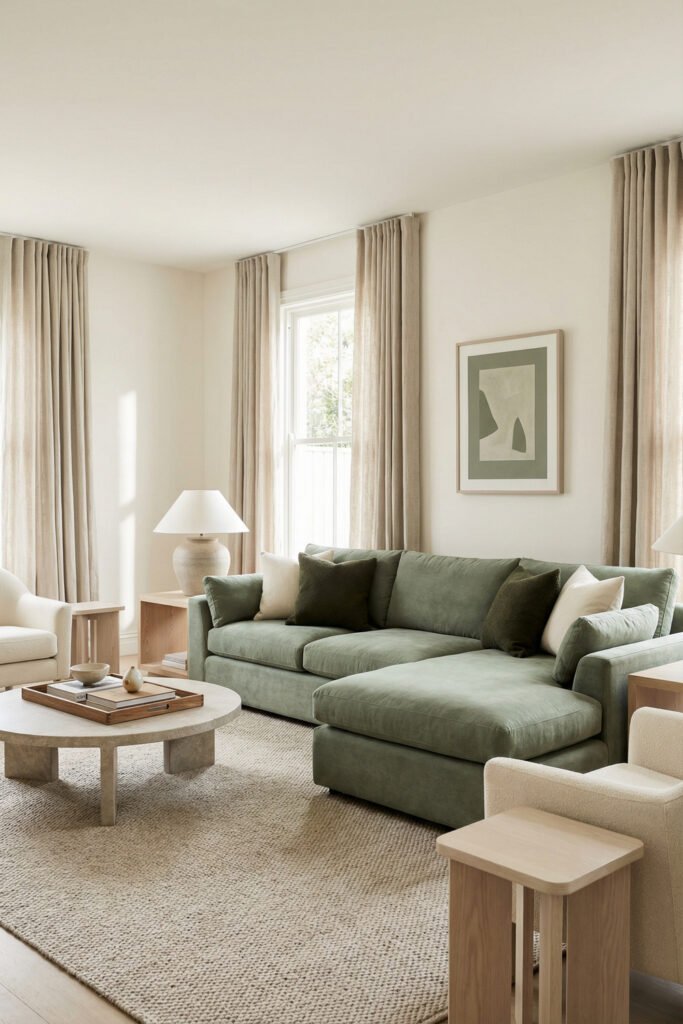
Start with a roomy sage sectional or chaise as the clear focal point, then build outward with ivory walls, flax-toned curtains, and a stone-look coffee table. The green feels richer when it is surrounded by creamy upholstery, pale wood, and a few darker moss cushions for depth. A soft rug underfoot keeps the lounge area grounded, while a ceramic lamp and low side table make the seating zone feel complete without stealing attention. The detail that really sharpens the look is a matching sage ottoman or art mat nearby, which quietly repeats the color and makes the sofa feel intentional.
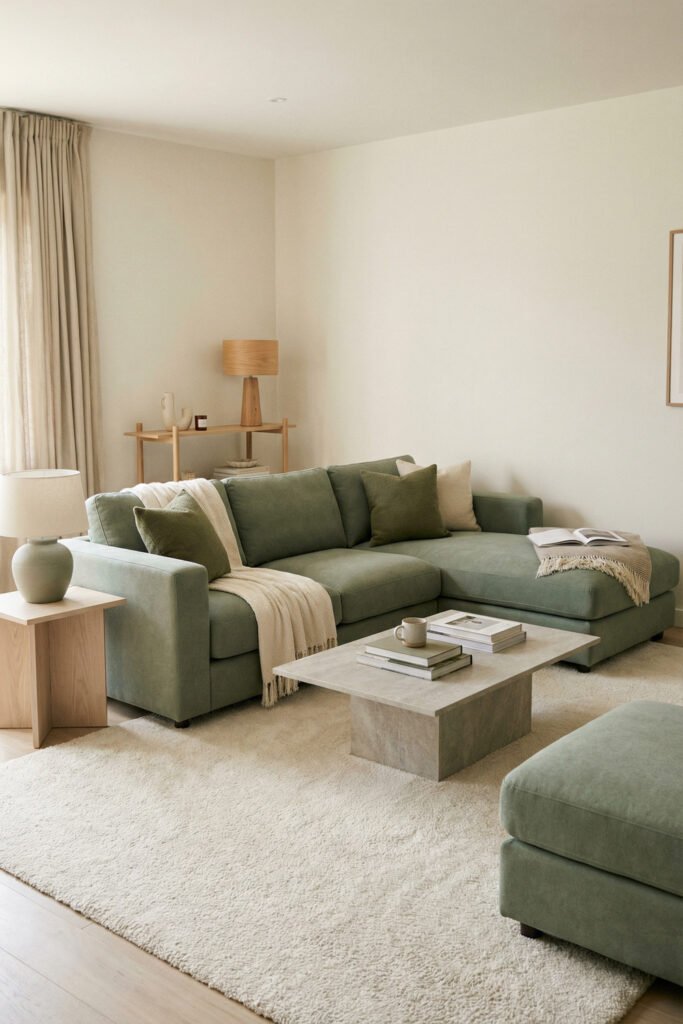
This is the kind of setup that feels polished right away but still easy to live with. It works beautifully in open-plan rooms where the sofa needs to define the whole seating area.
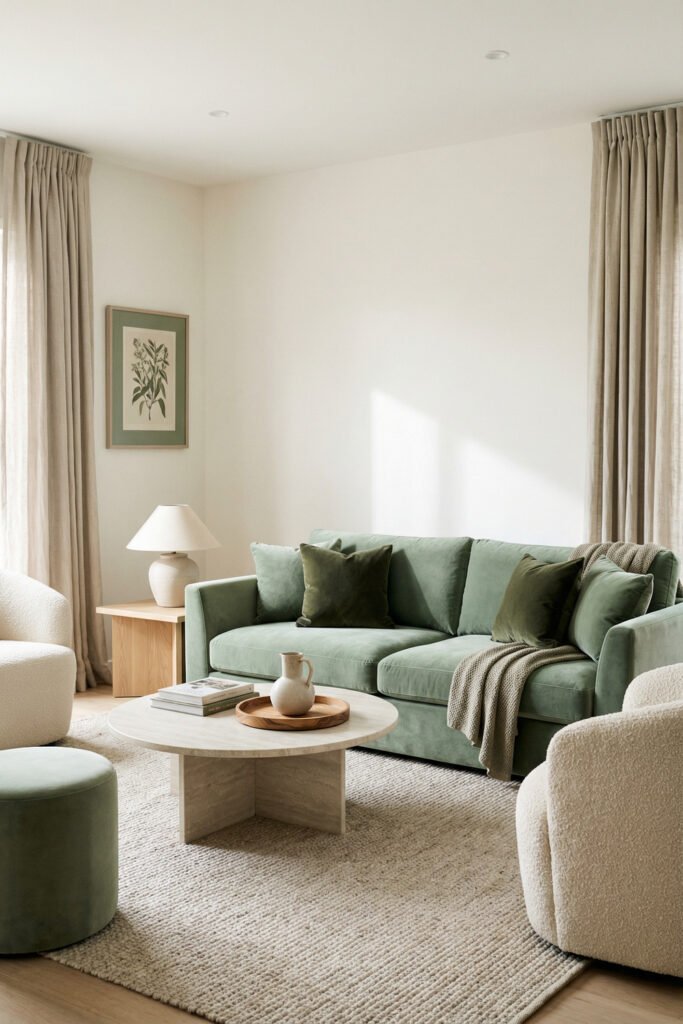
Color Echo: Repeat the sofa shade in one small nearby accent so the green feels placed, not isolated.
A hero sofa like this makes decorating feel simpler. Once that anchor is in place, the rest of the room almost falls into line on its own.
Try A Cottage Sage Lounge With Beams
This version of sage feels a little more lived-in and a little more rustic. It has the kind of easy character that makes a lounge feel like it has been gathered over time.
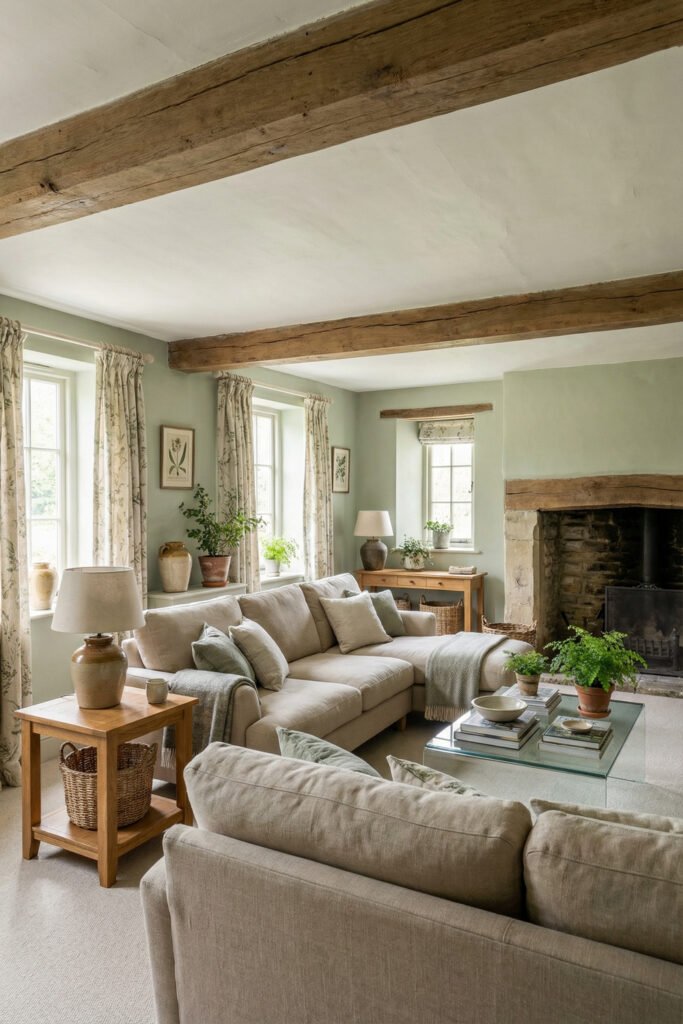
Sage-painted walls set the tone, but the real depth comes from mixing them with exposed wood beams, a beige sectional, and a fireplace wall in brick or stone. Botanical drapes soften the harder surfaces, while woven baskets, old-look pottery, and warm oak side tables make the room feel grounded and collected. A low glass coffee table keeps all that texture from feeling too heavy and lets the eye move around the room more easily. The signature moment is that mix of country texture and fresh green, which makes the space feel relaxed instead of formal.
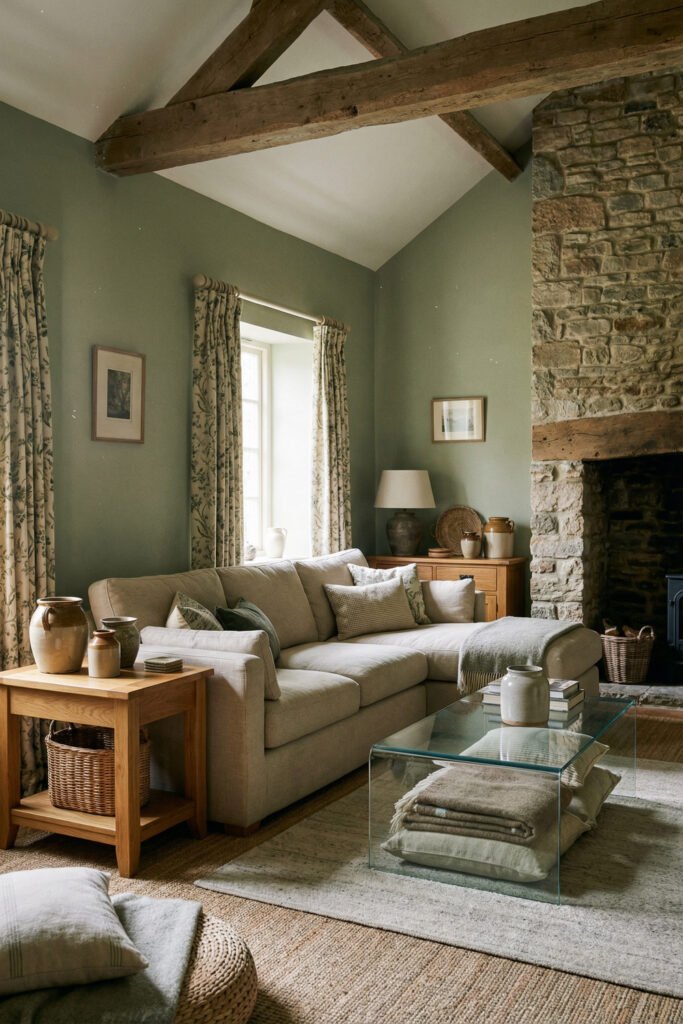
It is a strong choice for anyone who wants a lounge that feels settled, layered, and slightly nostalgic without going full farmhouse. The room feels best when natural light catches the wood grain and the green walls at the same time.
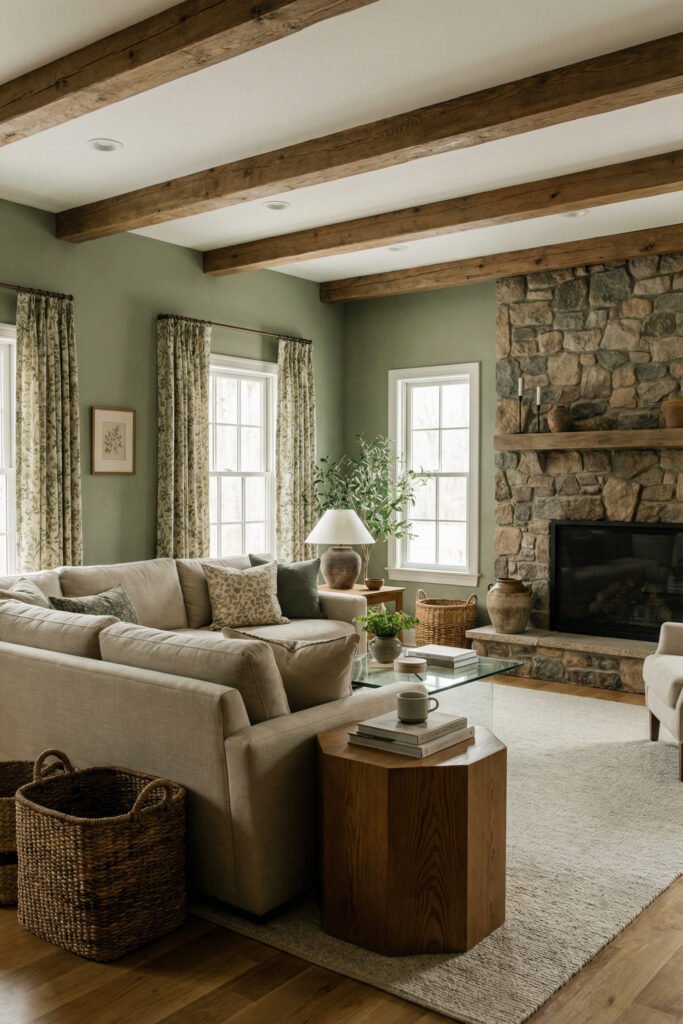
Rustic Balance: Add one lighter, smoother surface like glass or linen to keep the beams and masonry from taking over.
This kind of room invites people to stay awhile. It feels thoughtful without looking overly decorated, which is often the sweet spot.
Use Sage Wall Trim For A Modern Frame
A little wall detail can completely change the mood of a lounge. Sage trim gives the room shape, but it still feels calm and clean.
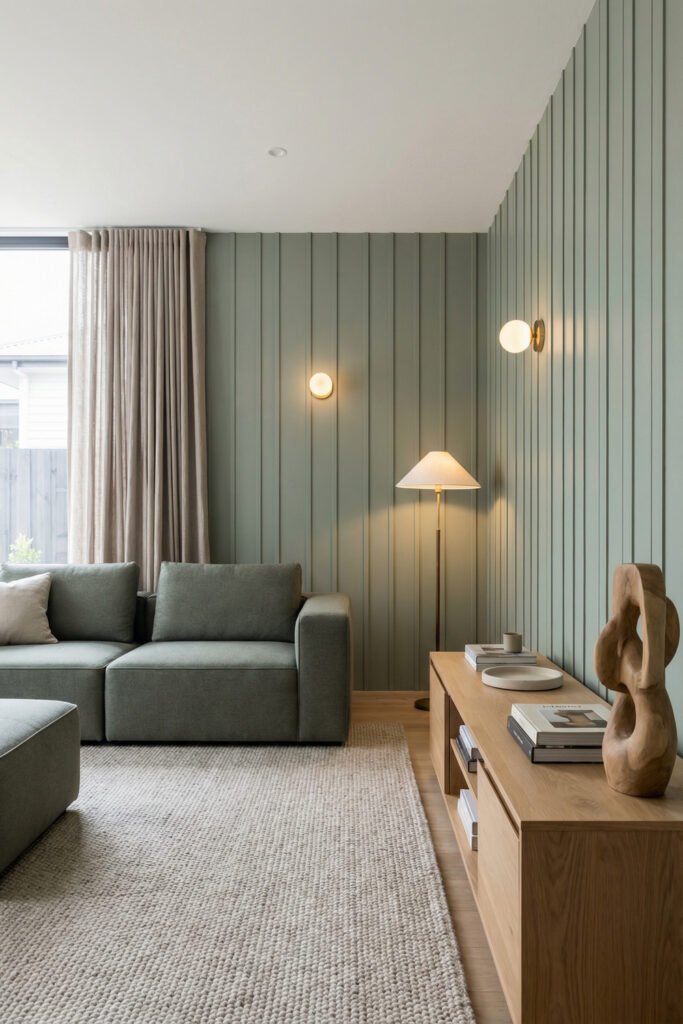
Paint the wall behind the sofa in a muted sage, then add narrow battens or slim box trim to create a simple framed effect. A low oak media console, mushroom-toned drapes, and a boxy green-gray sectional keep the look crisp, while globe lighting or brass sconces add a little glow after dark. Because the wall treatment stays tonal, it reads more like quiet architecture than decoration. The most striking part is the vertical rhythm from the trim, which subtly draws the eye up and makes the seating area feel taller and more finished.
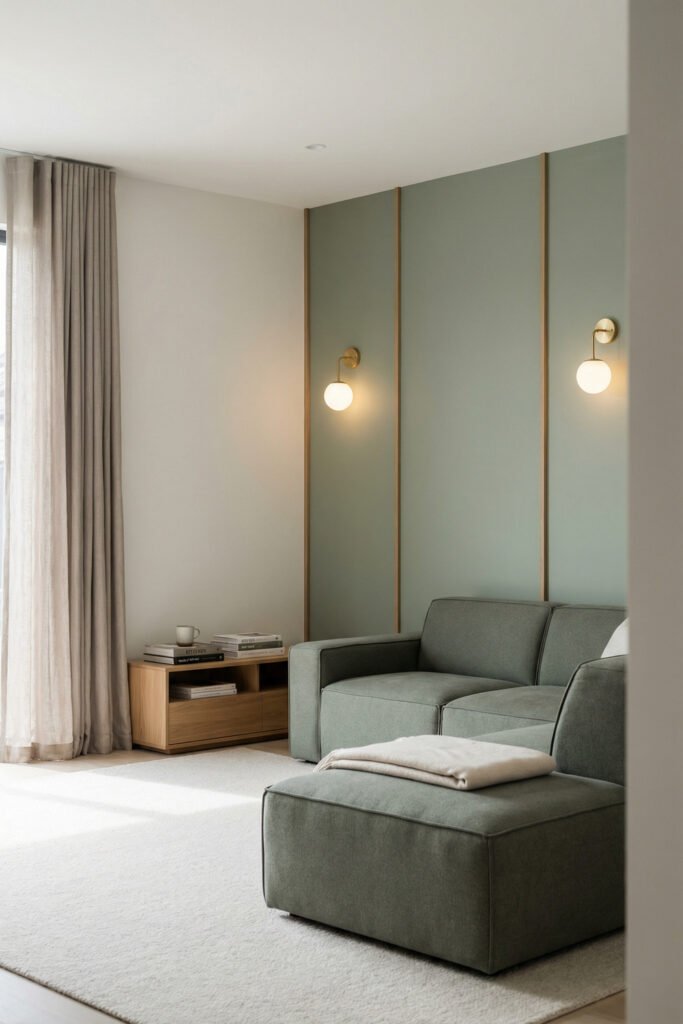
This look is especially smart in smaller lounges that need polish without extra furniture. It feels neat, current, and visually calm from every angle.
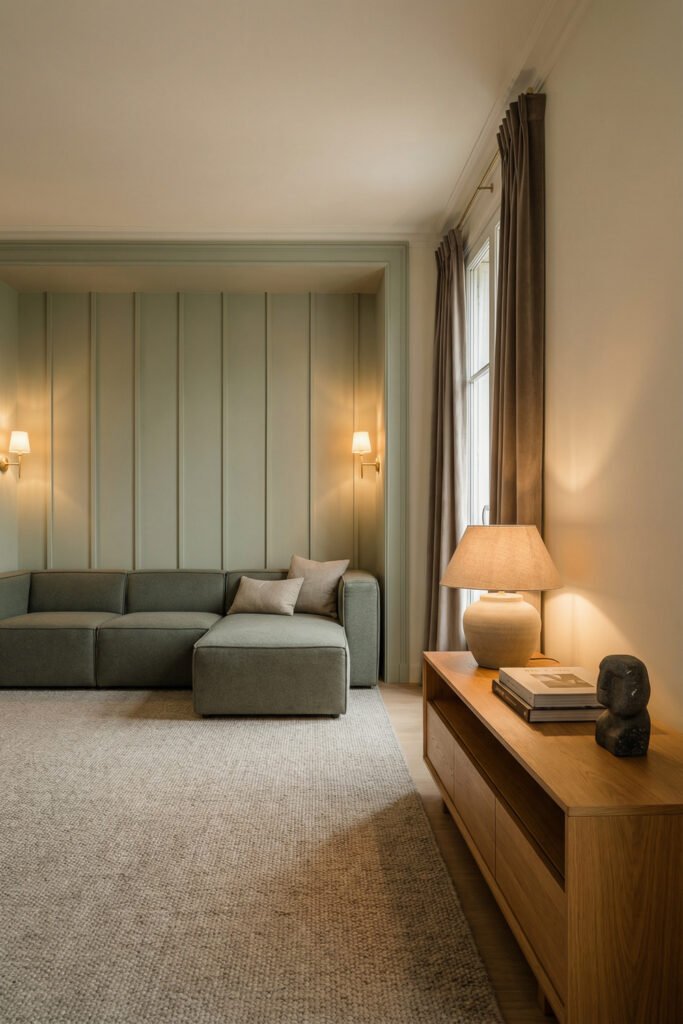
Trim Trick: Leave the surrounding walls neutral so the sage feature wall has room to breathe.
It is an easy way to create a focal point without making the room feel busy. The result feels fresh in daylight and especially sharp in the evening.
Pair Sage With Blush For Soft Contrast
Sage can feel airy on its own, but blush gives it a sweeter edge without making the room look sugary. The pairing feels fresh, relaxed, and a little dressed up.
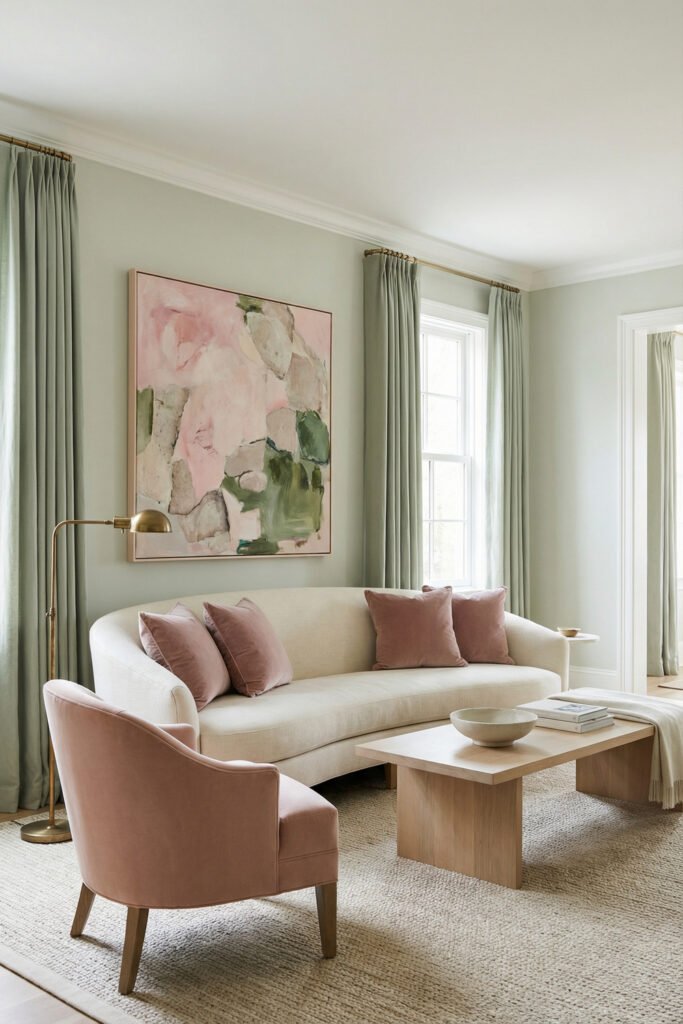
Use pale sage on the walls or in full drapes, then layer in a curved cream sofa with dusty blush pillows that look velvety and a little faded. An antique-style brass floor lamp, a light wood coffee table, and an abstract artwork that blends pink, stone, and green help the palette feel connected instead of split into two camps. A woven neutral rug under everything keeps the room grounded and stops the color story from floating away. The prettiest touch is often a single blush accent chair or throw that catches the eye from across the room.
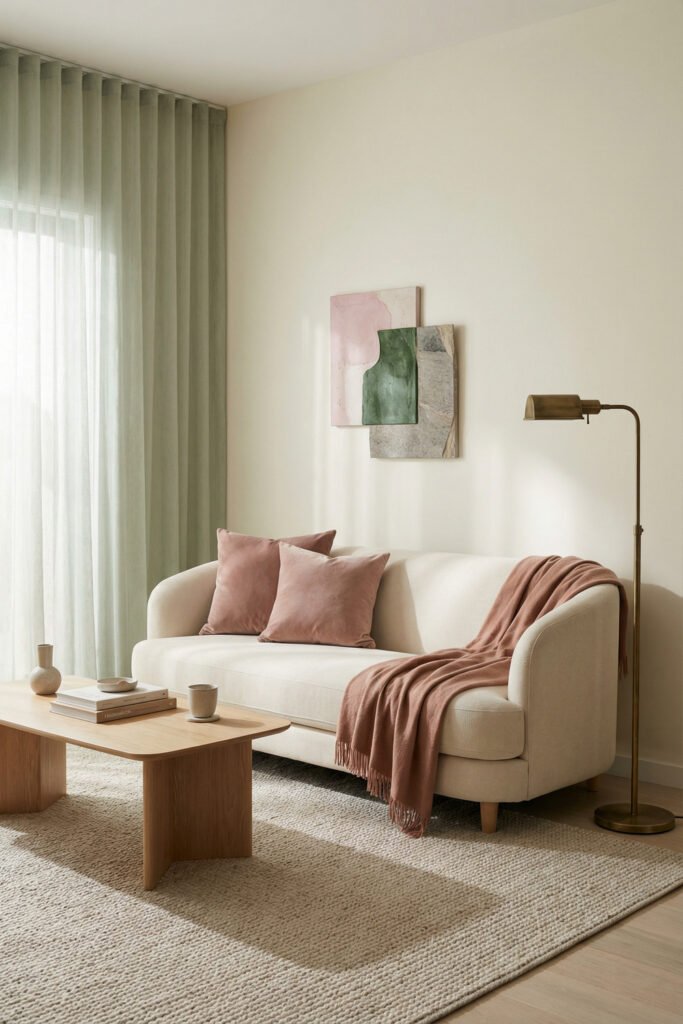
The effect feels airy but not cold, which makes it a lovely fit for lounging, reading, or hosting a few friends. It is soft in mood, yet still clear and styled.
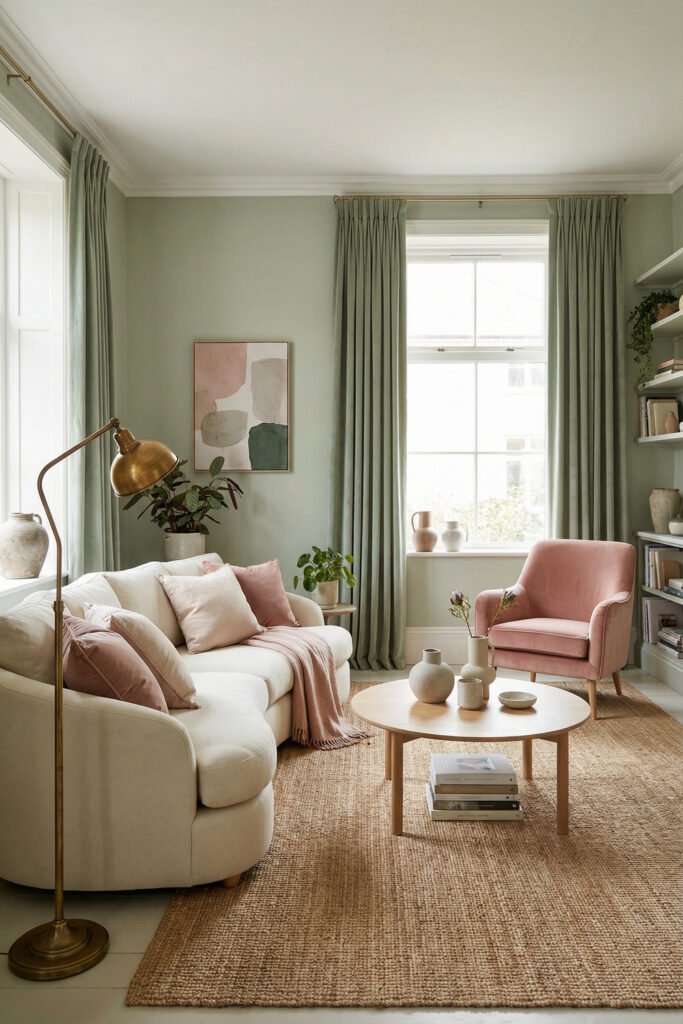
Palette Note: Choose blush with a dusty or clay undertone so it sits naturally beside sage.
This pairing brings in color without making the room feel loud. It gives the lounge a little romance while still keeping everyday comfort front and center.
Ground Sage With Charcoal And Black
If you want sage to feel sharper, darker accents can take it in a whole new direction. The room still feels relaxed, but it carries more edge and contrast.
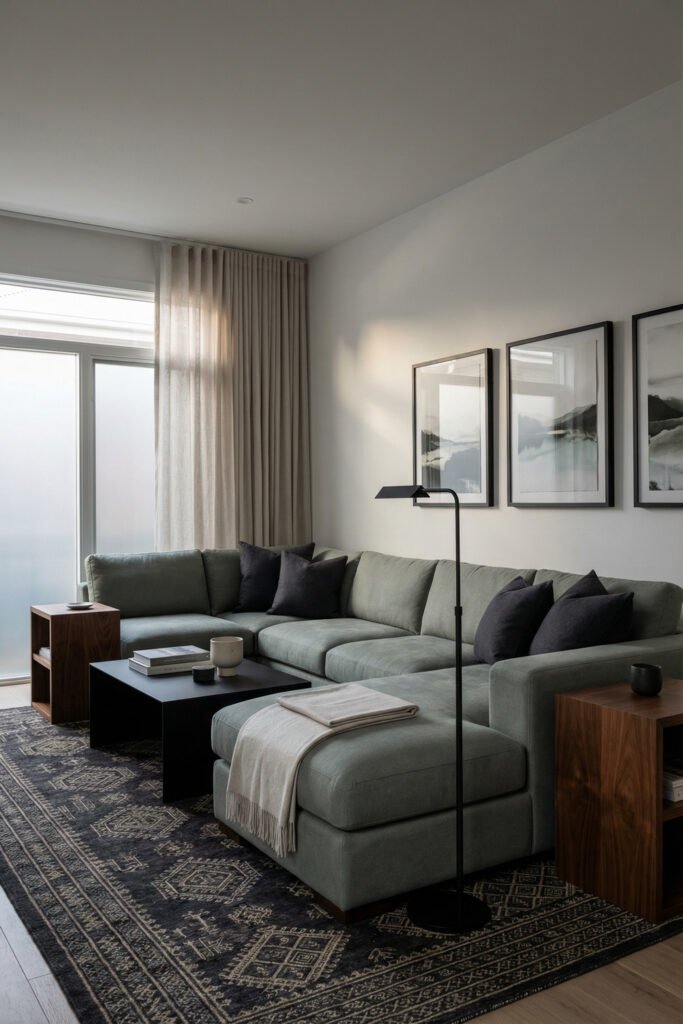
A gray-sage sectional sets the tone, then charcoal pillows, a patterned dark rug, and black-framed art bring in weight around it. A matte black coffee table or floor lamp adds structure, while deep walnut side tables keep the room from feeling too stark. Frosted glass or linen shades soften the mood just enough, so the darker pieces do not flatten the space. The strongest detail is the way black outlines the green, making the sage read cooler, cleaner, and more intentional.
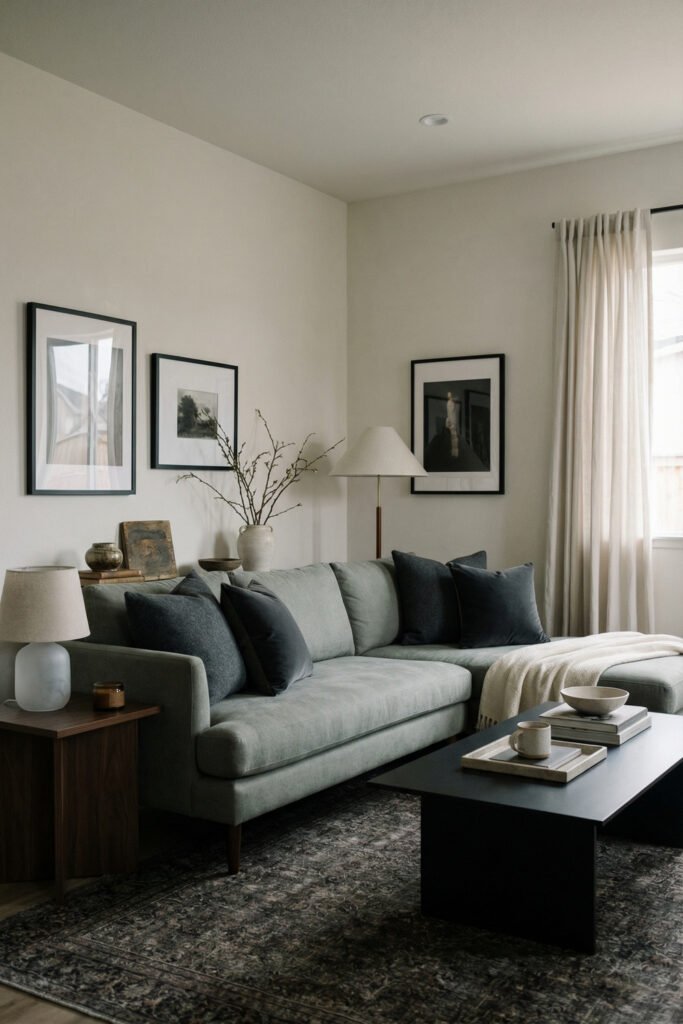
This look suits a lounge that needs depth without losing its easy feel. It is especially good for evening light, when the darker notes make everything feel settled and close.
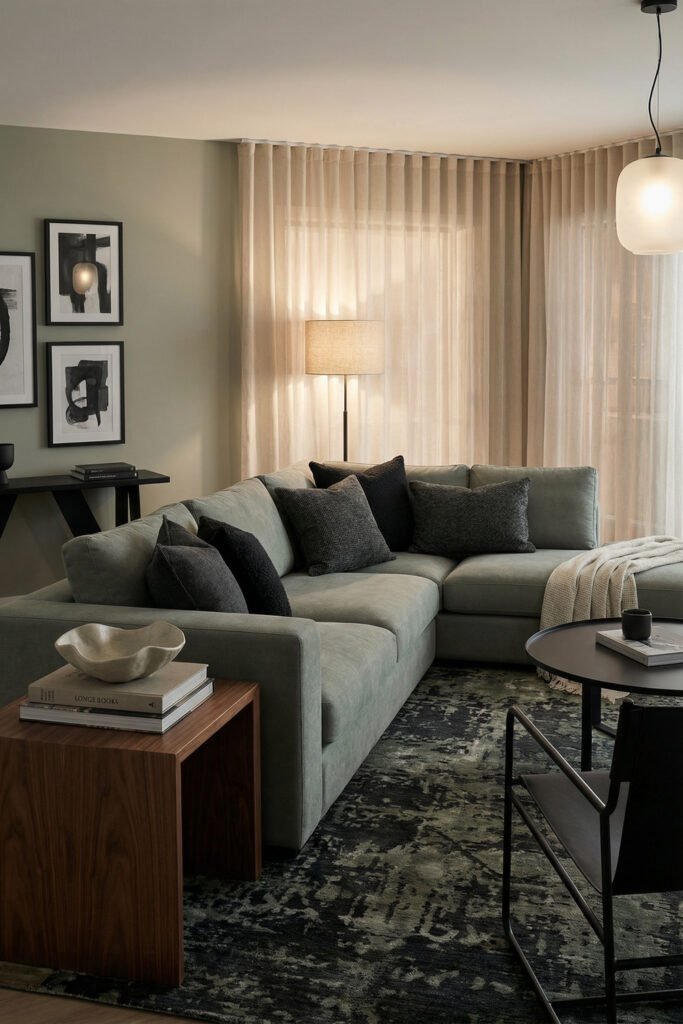
Contrast Move: Keep at least one pale element, like curtains or a throw, so the room still has breathing room.
It is a strong choice for anyone who likes green but wants it to feel more modern than sweet. The room ends up looking calm, grounded, and a little dramatic in the best way.
Layer Botanicals Into A Sage Lounge
This take on sage leans into a garden mood without turning the room into a theme. It feels fresh, leafy, and full of quiet movement.
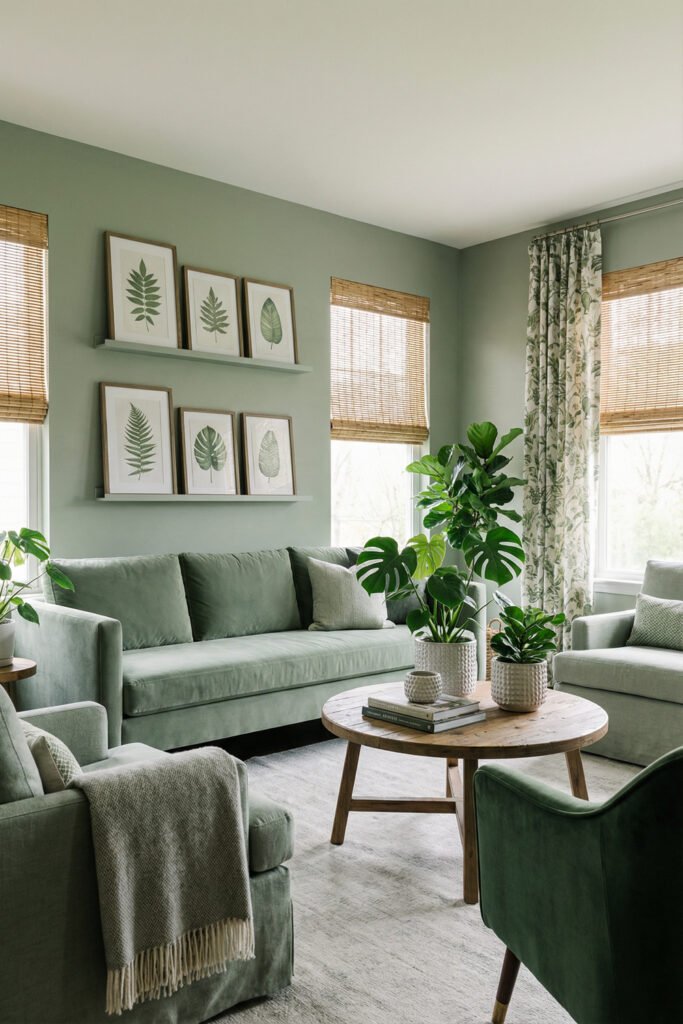
A sage sofa or sage-painted wall gives you the base, then the rest of the lounge builds out through picture ledges with framed leaf prints, woven shades, ceramic planters, and one controlled botanical pattern on a pillow or curtain panel. A round wood coffee table keeps the center of the room feeling soft and organic, while linen upholstery and textured ceramics add natural variety. Bringing in green through velvet, washed cotton, glossy leaves, and matte pottery gives the palette more life than one flat shade ever could. The standout detail is that texture mix, which makes the room feel layered instead of matchy.
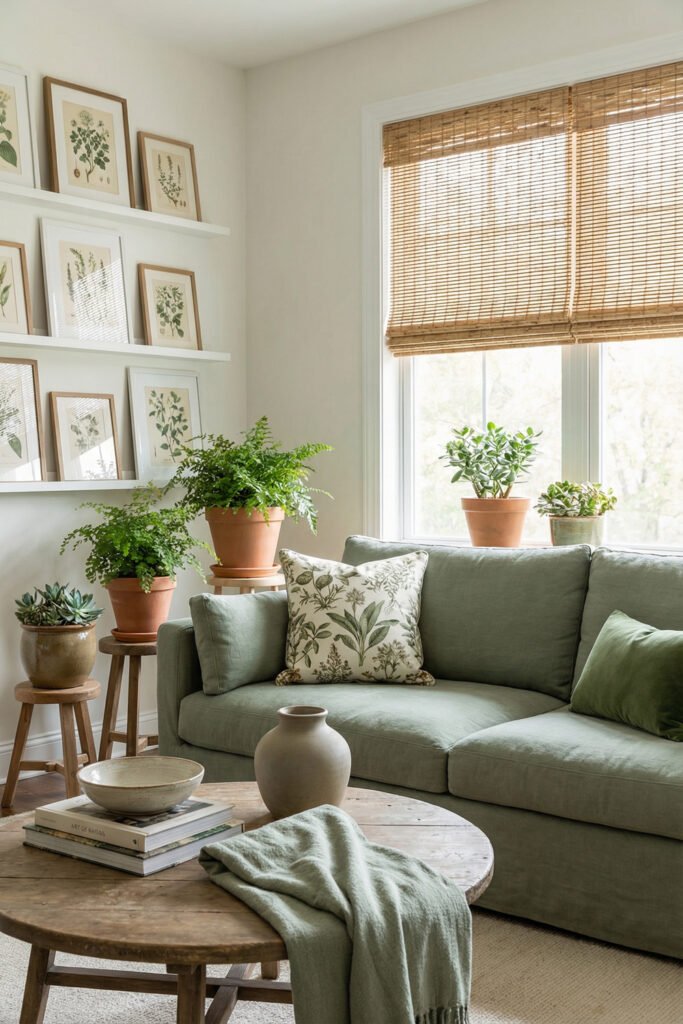
It works beautifully in spaces that get good daylight and need a little lift. The whole lounge feels fresh and easy, like opening a window after the rain.
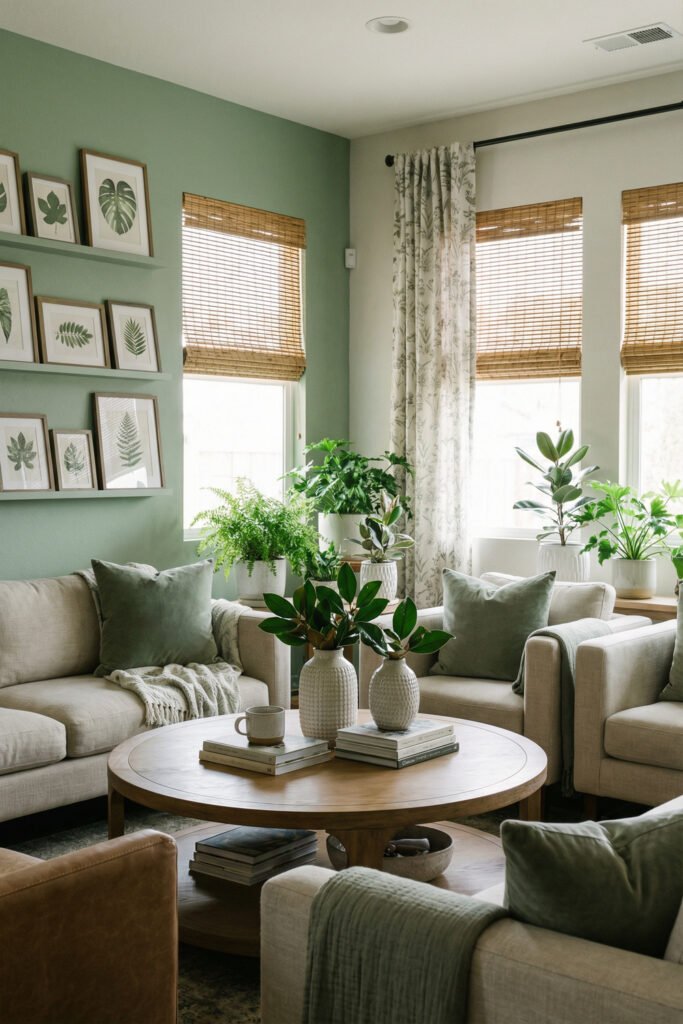
Green Layering: Use at least three different textures in the same color family so the sage palette feels rich, not repetitive.
This kind of room has a nice everyday ease to it. It feels styled, but still relaxed enough for real life.
Mix Sage With Burl Wood And Brass
Sage can also look polished and slightly vintage when paired with richer materials. This version feels collected, glossy in the right spots, and full of small details that catch the eye.
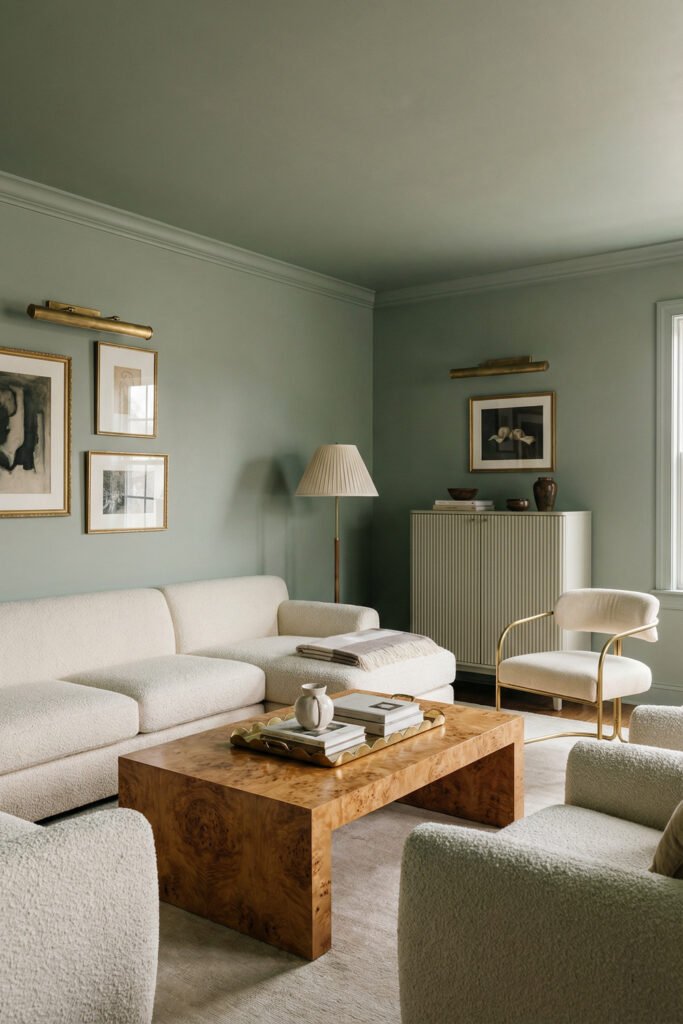
Start with a muted sage backdrop, then bring in a burl wood coffee table or side cabinet that adds swirling grain and warm depth. Cream boucle seating keeps the room from feeling too formal, while aged brass picture lights, a ribbed cabinet front, and a sculptural chair give the lounge shape and shine. A pleated lampshade or scalloped tray adds one decorative flourish that makes the setup feel edited instead of plain. The room comes alive through the contrast between matte green, nubby upholstery, and those smoother reflective accents.
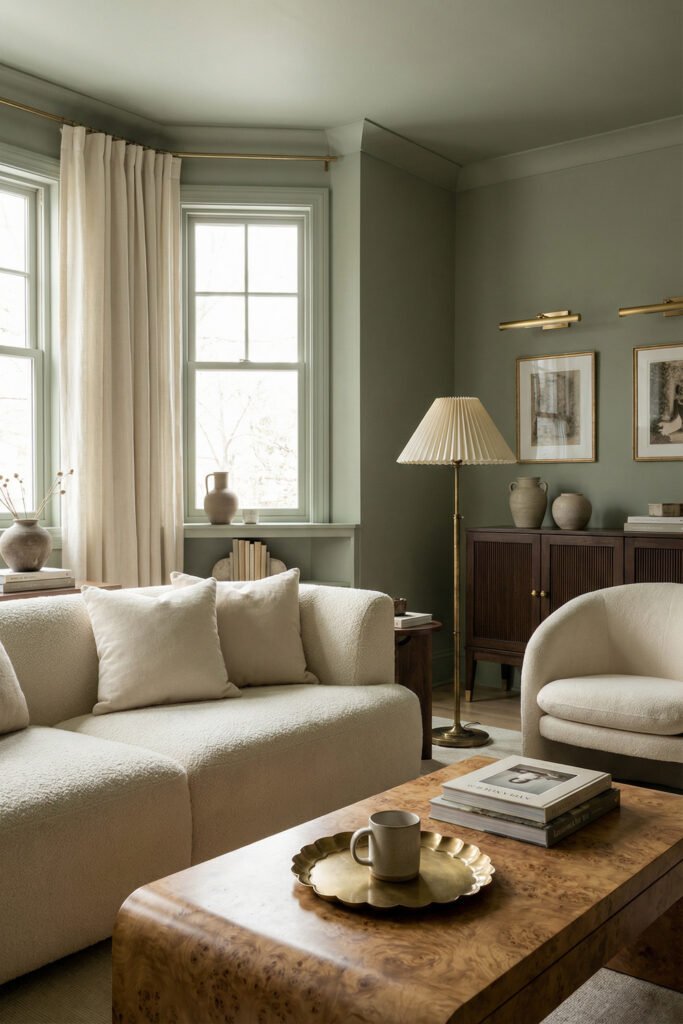
This look feels especially good in a lounge that needs a little polish without losing comfort. It has just enough drama to feel memorable, but it still reads easy and livable.
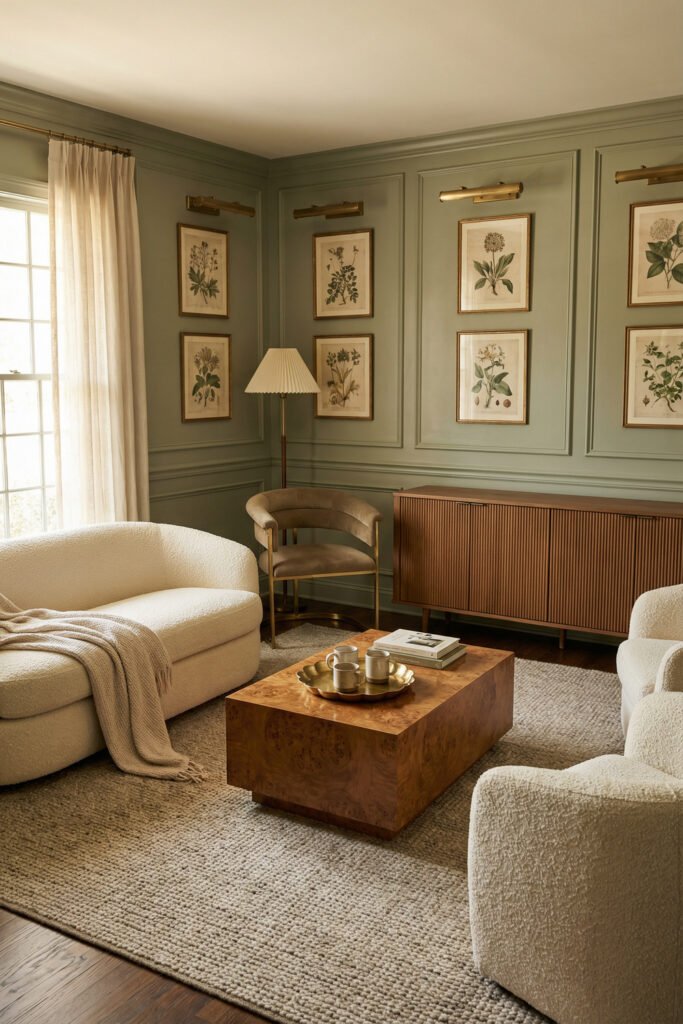
Finish Mix: Keep the wood tones warm and the brass slightly aged so the room feels layered rather than shiny.
It is a lovely direction for anyone who wants sage to feel grown-up and a bit dressed. The details do the work, but the room still feels easy to sink into.
Soften Sage With Curves And Fringe
Some sage lounges feel crisp, but this one leans gentle and a little dressed up. It is all about rounded shapes, quiet movement, and details that make the seating area feel a touch more personal.
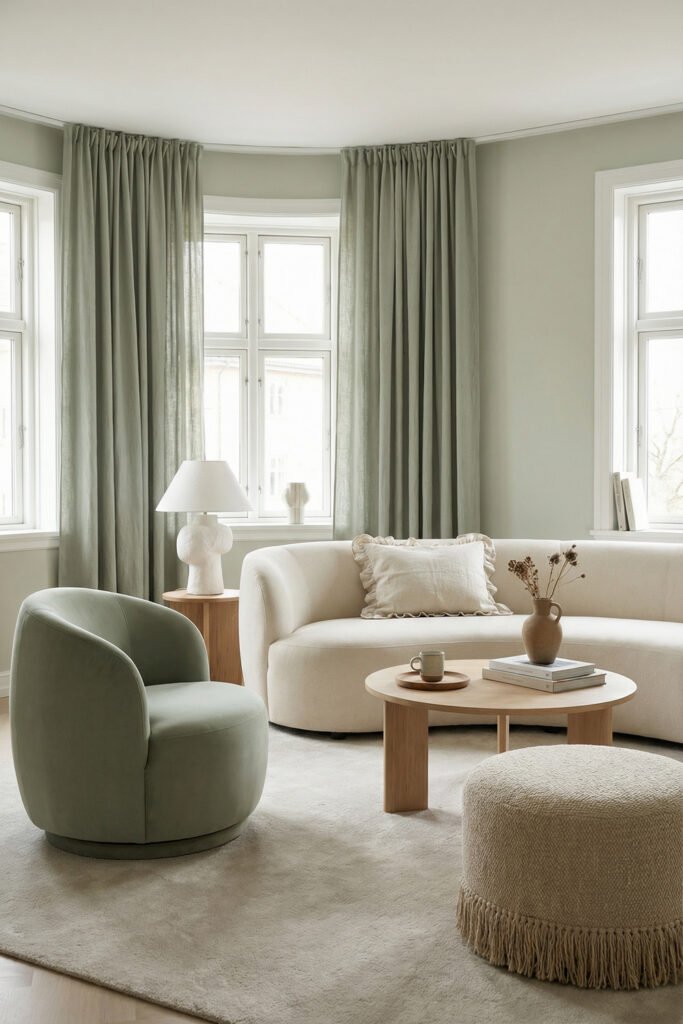
Start with pale sage on the walls or in long drapes, then bring in a curved cream sofa and a sage swivel chair with a shape that feels smooth from every angle. A fringed ottoman adds motion at floor level, while a ruffled linen pillow and a plaster lamp keep the room from looking too plain. Choose a circular or scalloped coffee table so the shape language stays soft all the way through the center of the room. The look feels cohesive because every piece echoes that gentle curve, but the fringe gives it one playful finish.
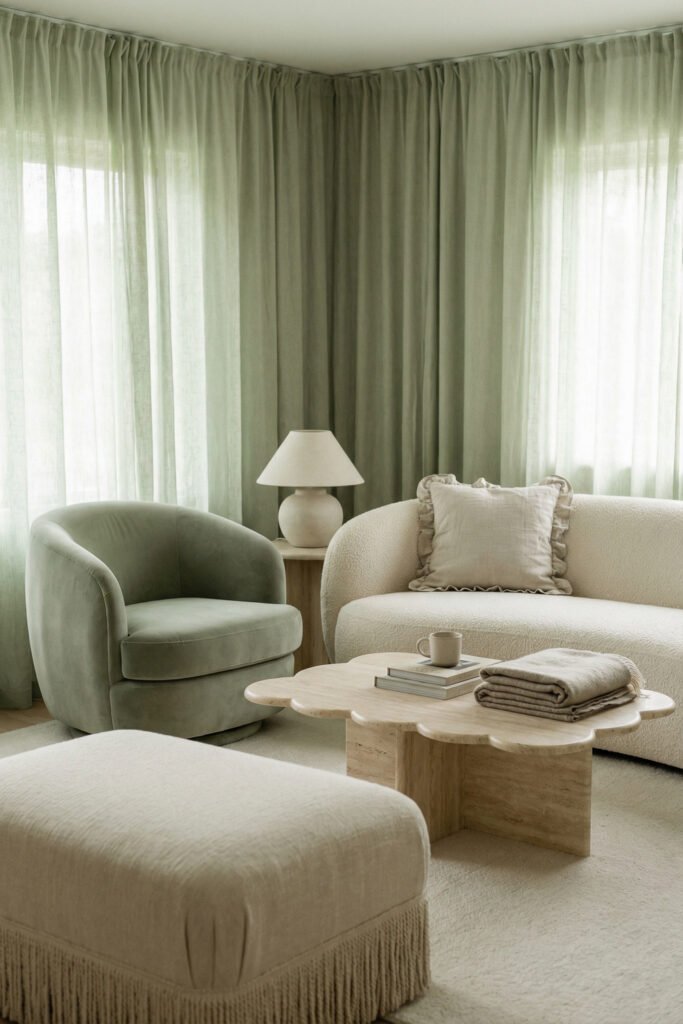
This style works beautifully in a lounge that needs a little softness without turning fussy. It feels relaxed enough for daily use, yet the layered trim and rounded silhouettes make the whole room feel more considered.
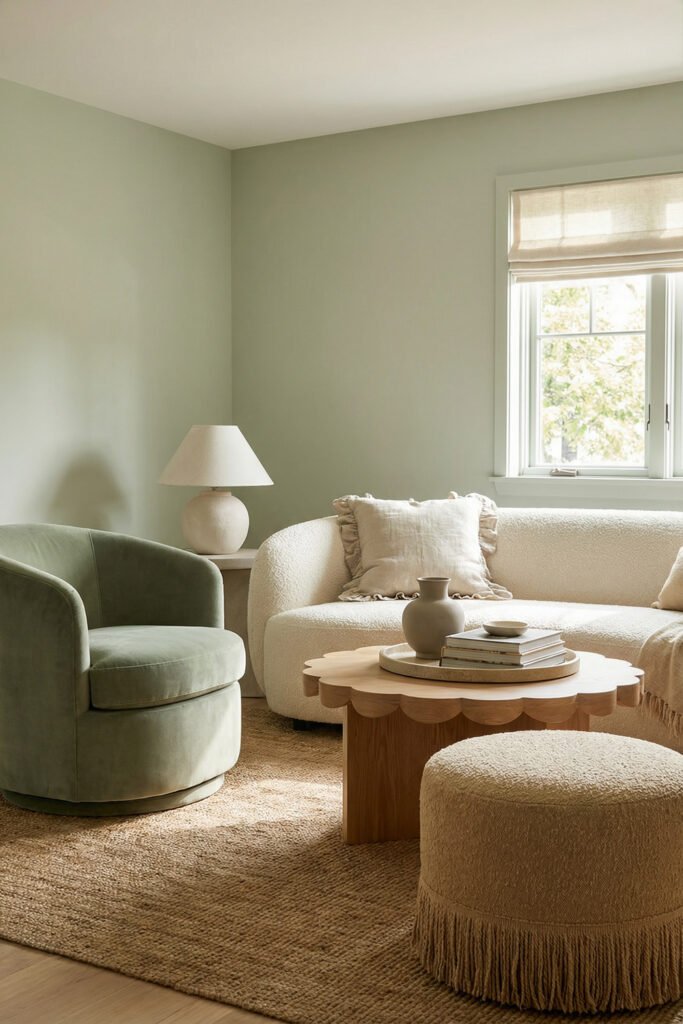
Shape Cue: Repeat curved lines in at least three places, like the sofa, table, and lamp, so the room feels linked together.
The result is easy on the eyes and easy to live with. It brings a calm rhythm to the room that makes even simple evenings feel a little nicer.
Warm Sage Up With Suede And Patina
Sage gets a whole new mood when you pair it with pieces that look touched by time. Instead of feeling airy and fresh, it starts to feel grounded, earthy, and quietly storied.
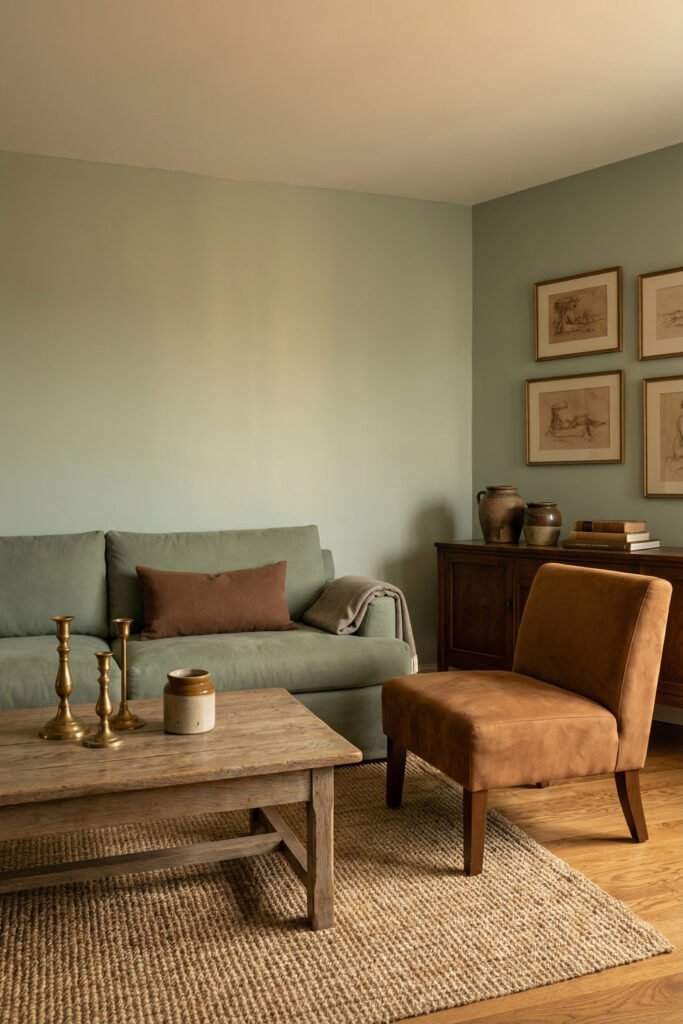
Use sage on the sofa or walls, then layer in a cognac suede chair, a weathered oak table, and antique-look brass that catches light in a softer way. A rust-brown lumbar pillow and old pottery on a sideboard deepen the palette without making it feel dark, while a woven rug keeps the lounge area from looking too heavy. Sepia-toned sketches or heritage-style art help the room feel settled and collected. The strongest detail is the contrast between that calm green base and the richer leather, wood, and aged metal around it.
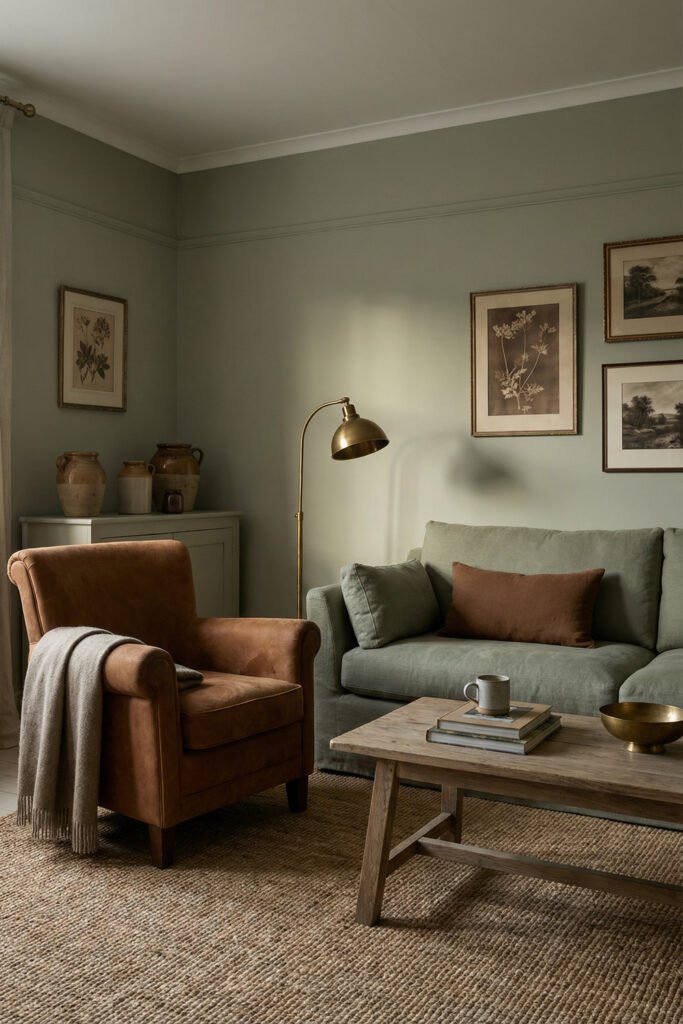
This look fits a lounge that wants more depth and texture without losing its easy feel. It is especially good for rooms that need warmth after sunset, when the suede and brass start to glow.
Patina Tip: Mix one smooth surface with one worn one, like a clean sage wall beside a weathered wood table.
It is a lovely way to make sage feel less delicate and more rooted. The room ends up feeling relaxed, layered, and full of quiet character.
Build A Renter-Friendly Sage Lounge
You do not need paint or big changes to make a lounge feel wrapped in sage. This version uses layers you can move, swap, and restyle whenever you want.
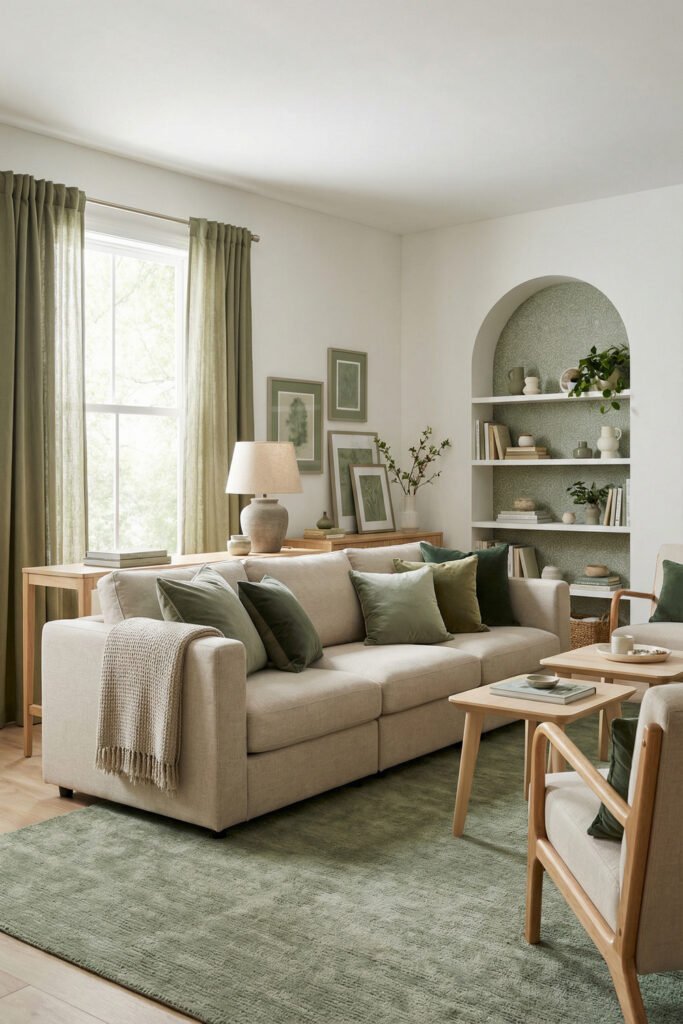
Begin with a neutral sofa, then build the color through a sage area rug, olive-sage curtains, and a mix of velvet and linen pillows in slightly different green tones. A soft throw over one arm, a ceramic table lamp, and framed art with green mats help spread the color around the room without locking you into one finish. For a stronger moment, line the back of a bookcase or an arched shelf niche with removable sage paper. That one small feature makes the whole setup feel planned instead of pieced together.
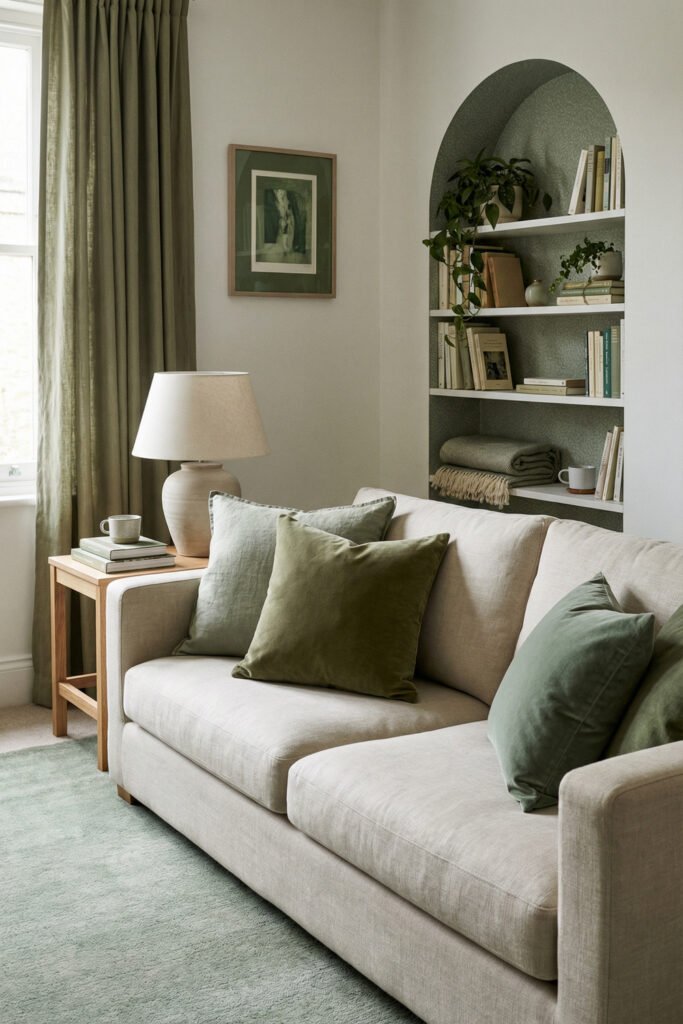
This approach is perfect for apartments, first homes, or any lounge that needs flexibility. It still gives you a strong visual mood, but every piece can shift with the season or move with you later.
Rental Move: Keep the biggest furniture neutral and let sage show up in layers you can easily change or take along.
That makes the room feel styled without feeling permanent. It is a smart way to get color, comfort, and personality into everyday life.
A Fresh Take On Sage
Sage green works because it can feel calm, grounded, or slightly polished depending on the mix around it. In a lounge, it looks especially good with layered texture, warm wood, soft neutrals, and a few darker accents.
The best part is that you do not need to redo the whole room to make it work. A sage sofa, a framed wall treatment, or even a few well-placed textiles can shift the mood fast.
Try one simple move first, like layering a sage rug and pillows into your main seating zone. That small change can give the whole room a clearer point of view.
From here, you could lean softer with curves and blush, or moodier with charcoal and patina. And if you want more green living room ideas, explore more inspiration on our Pinterest board.
You May Also Like