

A kitchen dining room combo can be the heart of the home—where coffee happens, friends linger, and life feels a little easier.
Table Of Content
- Float A Café-Style Island That Seats Six
- Wrap The Corner In A Curved Banquette Moment
- Hang A Sculptural Pendant Cloud Over Both Zones
- Paint The Ceiling To Stitch Kitchen And Dining Together
- Use A Slim Fluted-Glass Divider For Soft Separation
- Go Monochrome: Cabinetry And Dining Set In One Tone
- Build A Library Wall That Frames The Dining Nook
- Set A Bar-Height Ledge That Doubles As A Buffet
- Create A “Gallery Rail” Wall For Rotating Art + Plates
- Layer Two Rugs: One Runner, One Dining Statement Rug
- Add A Plant-Laden Trellis To Define The Dining Edge
- Try A Vintage Room Screen As A Movable Boundary
- Install A Statement Mirror To Bounce Light Into Dining
- A Combo Space You’ll Actually Love
I love how one open space can do it all. Cook, eat, chat, repeat. It’s simple, and it keeps you connected.
But let’s be real: sometimes it ends up feeling like “everything everywhere.” The table fights the island, the lighting feels off, and the whole room looks a bit… confused.
That’s the good news, though—this is totally fixable without making it complicated.
So if you’re craving a kitchen dining room combo that feels pulled together and still comfy, you’re in the right place.
Here are my favorite kitchen dining room combo ideas to try next:
Float A Café-Style Island That Seats Six
Ever wish your kitchen dining room combo had that “meet me here” energy? This is how you get it. It’s social, simple, and quietly chic.
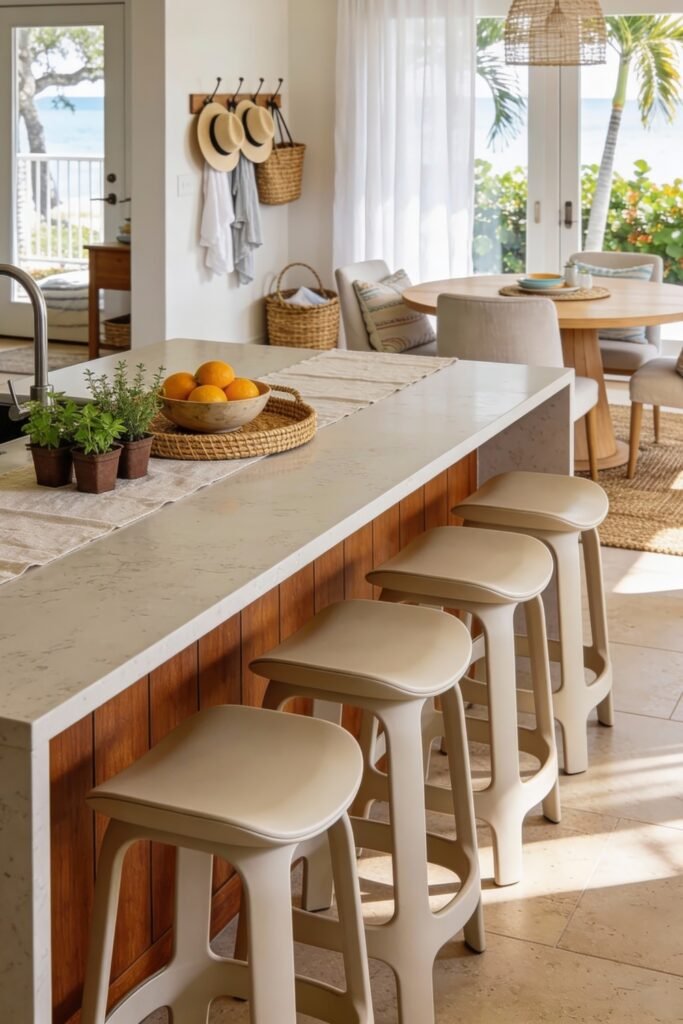
Picture a kitchen dining room combo where the island feels like a tiny European café table—only smarter. Choose a long, slim island with warm wood or a matte stone top, then tuck in backless stools that glide in quietly. The look is crisp but welcoming: smooth surfaces, soft rounded edges, and a little clink of cups on a tray. Balance it with blackened-metal legs, a linen runner, and one oversized bowl of citrus for color. Finish with a low vase of herbs so the whole space smells fresh and alive.
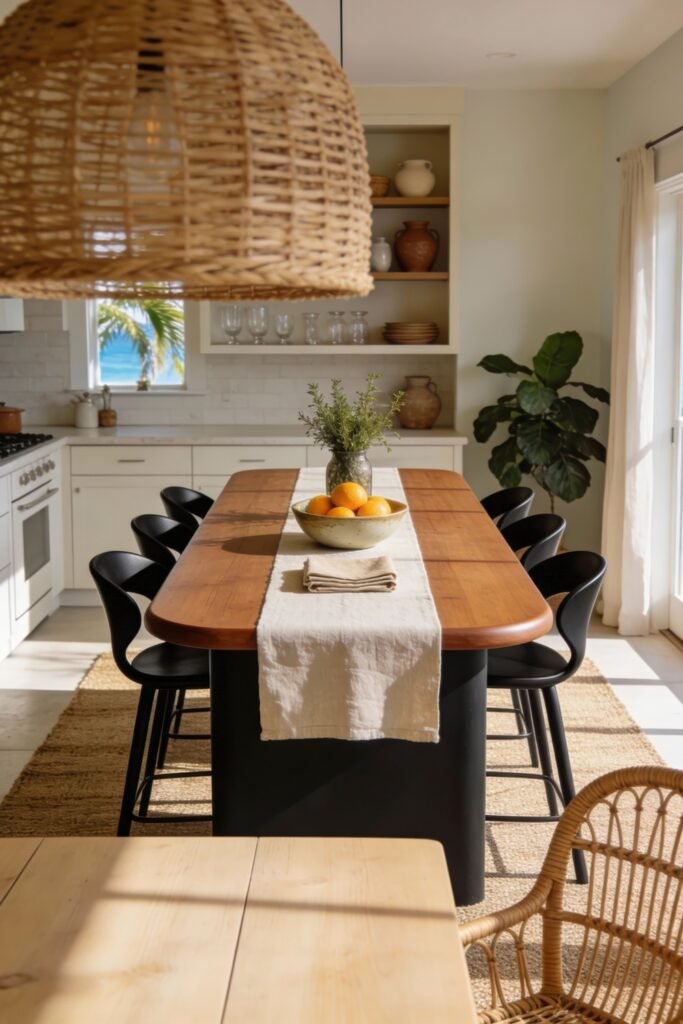
Now you’ve got a spot that works for breakfast, homework, and late-night chats—without breaking the flow. It keeps the kitchen social and the dining area flexible, so the whole room feels bigger and more fun.
Quick tip: Pick stools with a curved seat and no arms; they tuck in cleanly and keep sightlines open.
In a kitchen dining room combo, this café island makes everyday life feel easy. We gather, eat, and work in the same sweet spot. And when friends drop by, the conversation naturally lands right here.
Wrap The Corner In A Curved Banquette Moment
Corners can feel like wasted space… unless we turn them into a hug. This idea makes your dining area feel inviting without trying too hard.
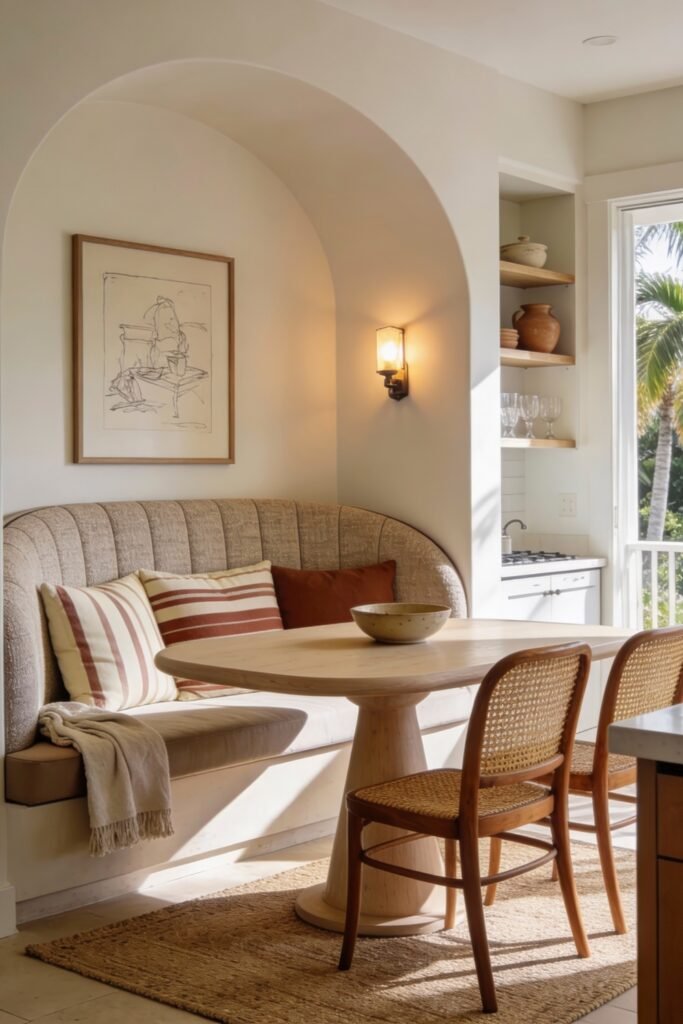
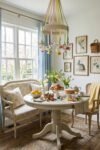
A curved banquette turns an awkward corner into the coziest seat in your kitchen dining room combo. Imagine plush cushions wrapped in textured fabric, a rounded back that hugs you quietly, and a table with a soft edge that keeps the vibe gentle. Go for calm colors—creamy oatmeal, muted clay, or smoky green—then pop in a few striped pillows for energy. Pair it with a pedestal table, a pair of airy chairs opposite, and a small wall sconce that casts a warm glow. Add one framed sketch above for polish.
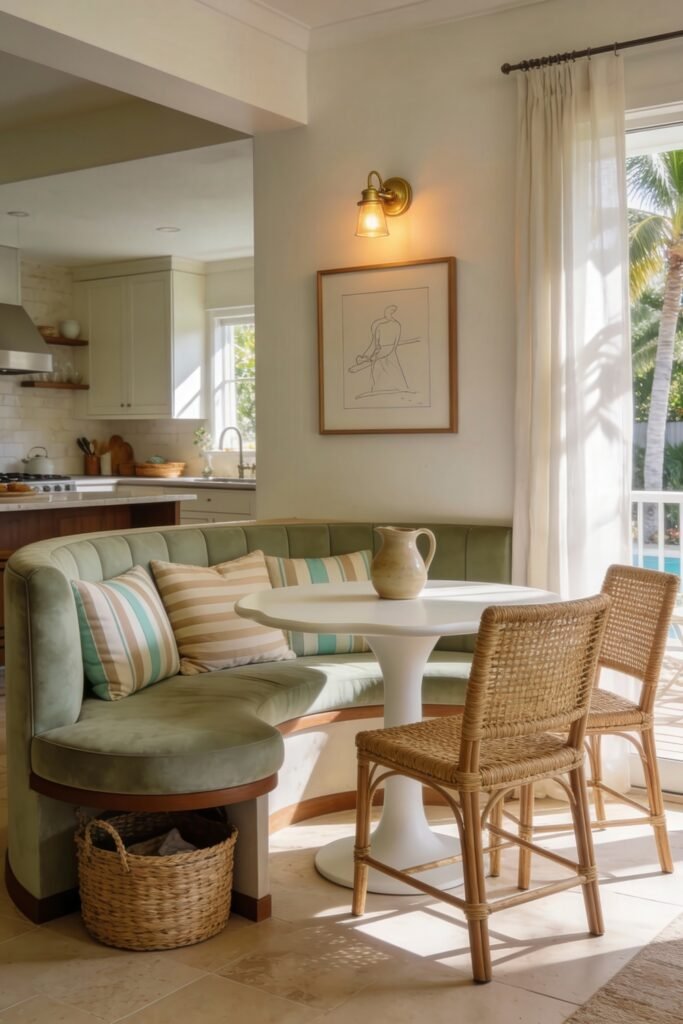
The payoff is instant: meals feel slower, conversations last longer, and the room gets a built-in ‘favorite spot.’ It also finally makes your kitchen dining room combo feel designed on purpose, not just pushed together.
Pros & Cons: Cozy seating wins, but keep the table size modest so the curve stays graceful and easy to move around.
This is where we sip coffee, open mail, and linger after dinner. In a busy week, that softness matters. Your combo space feels calmer, even when the sink isn’t perfect.
Hang A Sculptural Pendant Cloud Over Both Zones
Want one “wow” moment that ties everything together? Look up. Lighting can do more than you think.
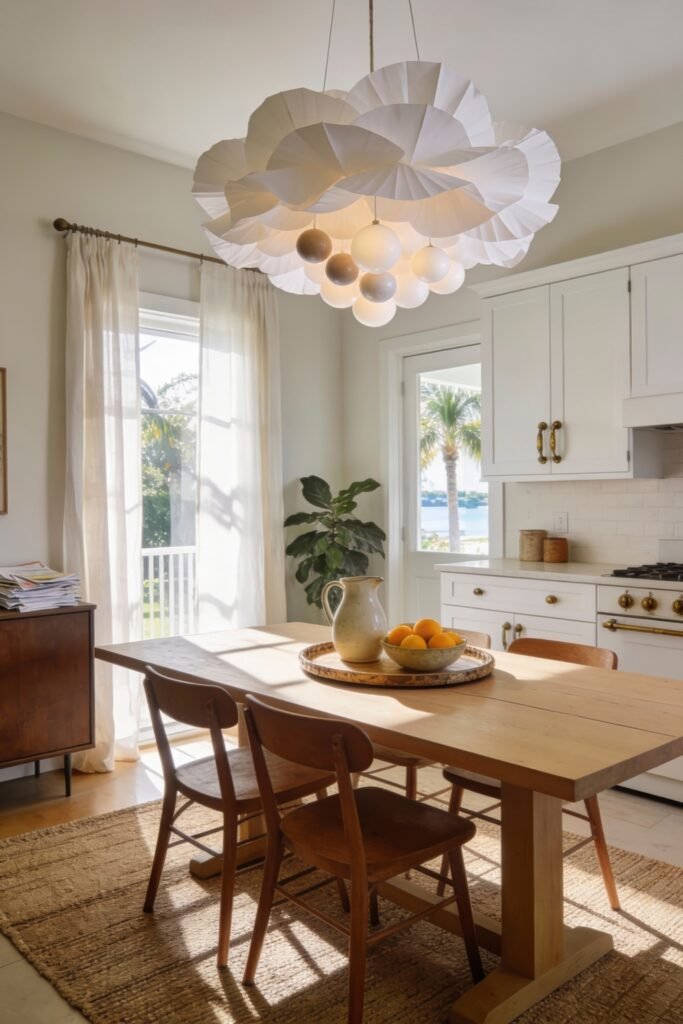
In a kitchen dining room combo, one dramatic light can act like a ceiling centerpiece for the whole space. Picture a pendant “cloud”: soft globes, paper-like shades, or milky glass forms hung at slightly different heights. The glow feels creamy and calm, and you hear that cozy little clink of plates under it. Keep nearby finishes quiet—a matte tabletop and simple cabinetry—so the light stays the star. Balance it with warm brass or aged nickel touches, a wood table, and a round tray that repeats the shapes. Add a gentle dimmer setting for instant dinner mood.
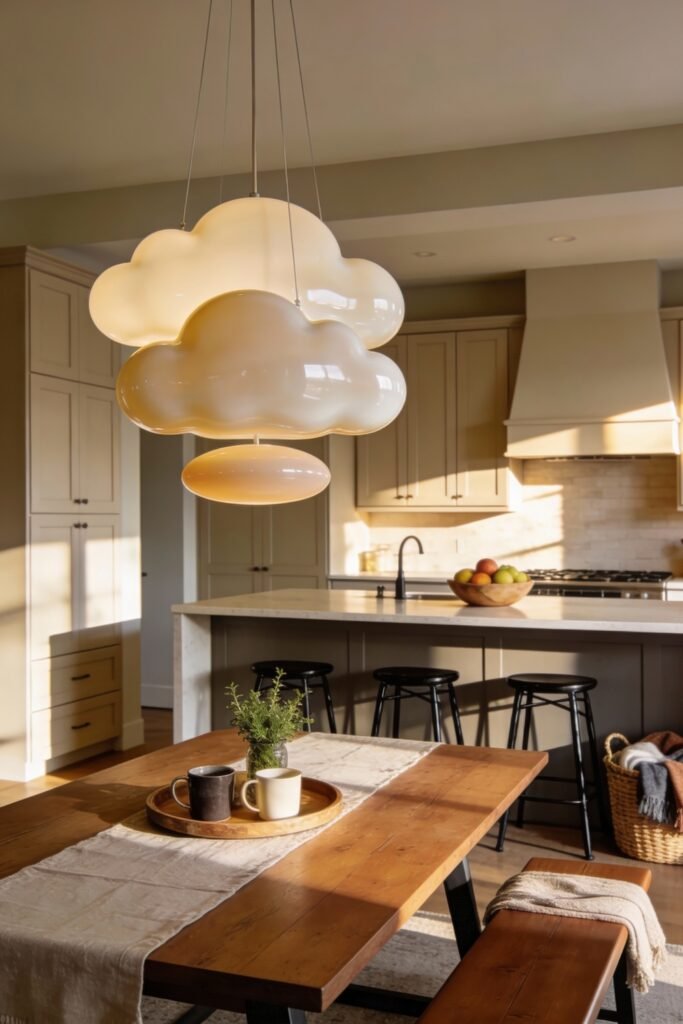
This kind of statement lighting pulls both areas together, so the combo space feels like one styled room, not two zones competing. It’s also a mood booster—bright for brunch, softer for wind-down nights, even when the kitchen is busy.
How to: Keep the shades the same color family, but mix shapes—round plus oval—so it feels curated, not matchy.
We get one ‘wow’ moment without adding clutter. The room feels special from every angle. And your kitchen dining room combo suddenly looks finished, even on an ordinary Tuesday.
Paint The Ceiling To Stitch Kitchen And Dining Together
If walls are the outfit, the ceiling is the accessory that makes it feel styled. And yes, it can change the whole mood. Ready for something unexpected?
Want a kitchen dining room combo that feels wrapped together like a gift? Treat the ceiling like a fifth wall and give it a soft wash of color—dusty blue, warm mushroom, or terracotta tint. When light hits it, the whole space feels warmer and more intentional, like a café at golden hour. Keep the walls lighter so the ceiling floats, and echo the ceiling color in small touches: a vase, a chair seat, or artwork. Pair with natural textures—wood, woven fiber, and matte ceramics—to keep it grounded. Finish with crisp trim so the color looks clean and confident.
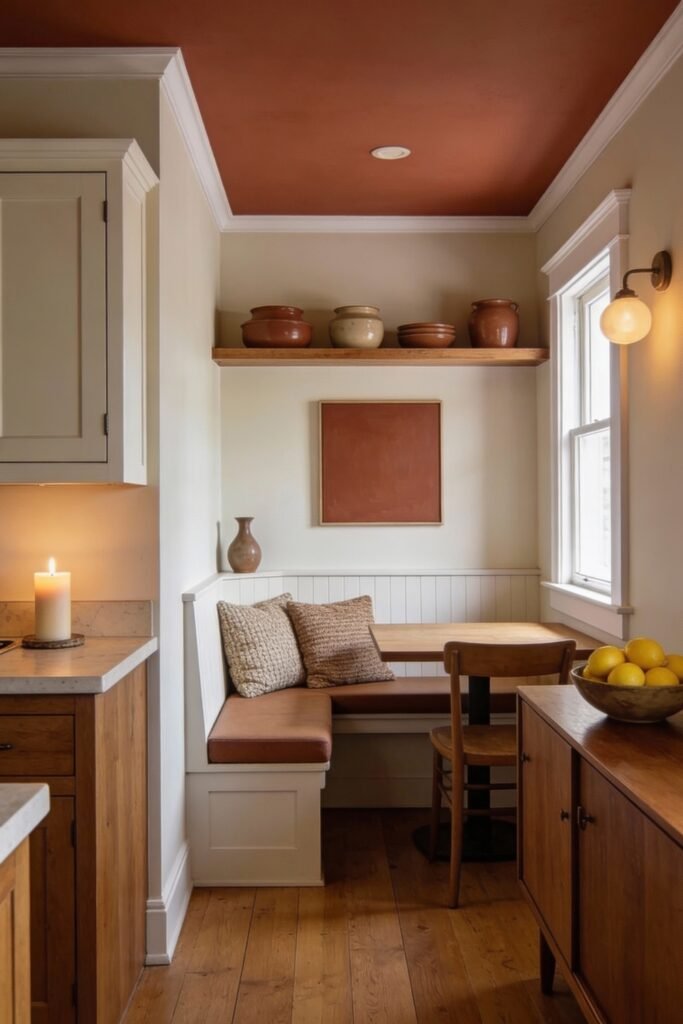
The magic is how calm it feels. Your eyes move smoothly from cooking to dining, so the room reads as one. It’s a simple change that delivers a big ‘designer’ payoff. No extra furniture needed.
Quick tip: Choose a color that already appears in your space, just two shades deeper for a subtle, pulled-together look.
This helps a combo space feel intentional without feeling busy. We get a soft, collected vibe that’s easy to live with. And it makes everyday meals feel a little more special.
Use A Slim Fluted-Glass Divider For Soft Separation
Sometimes we want “open concept”… with a little breathing room. This is the in-between move that feels modern and light. No heaviness, no drama.
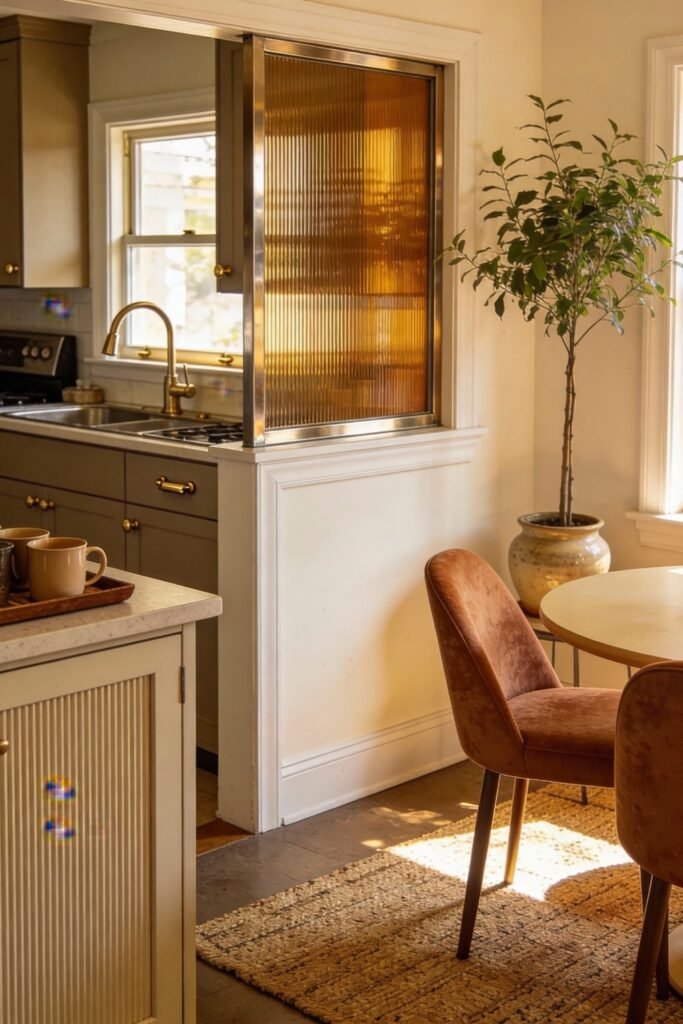
A slim fluted-glass divider is like a whisper between zones in a kitchen dining room combo. The ribbed texture blurs the view just enough, catching light in thin stripes and making everything feel brighter. Choose clear or smoky glass with a simple frame so it feels airy, not heavy. The effect is sleek and modern, but still warm when you add soft elements nearby. Balance it with a rounded dining table, textured upholstery, and one tall plant that leans toward the light. For a final touch, repeat the vertical lines with reeded details or a pleated shade.
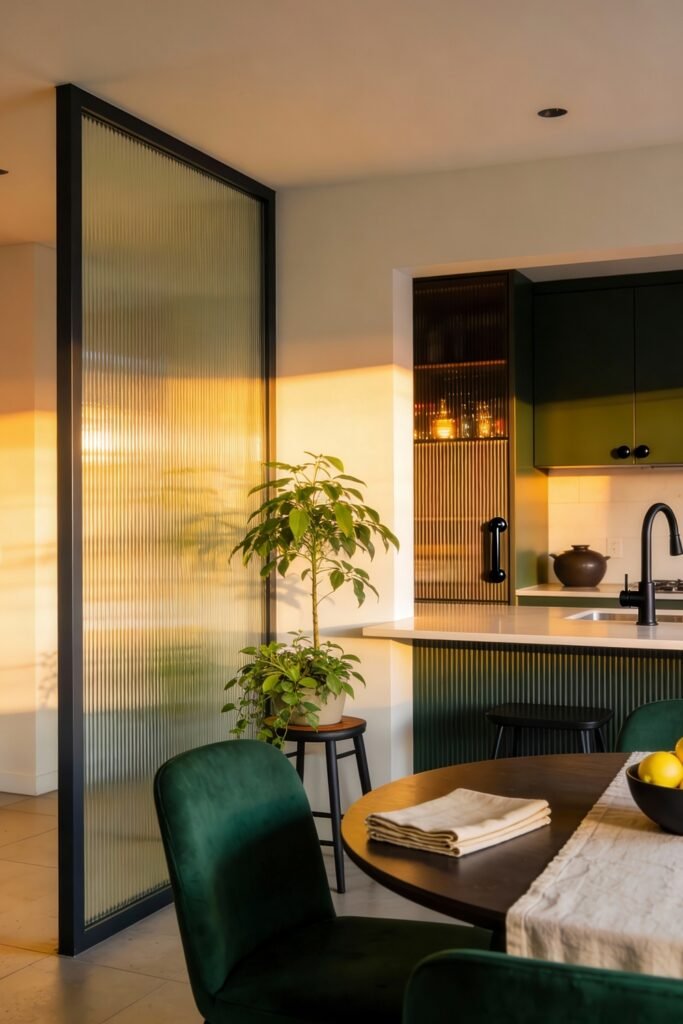
You get separation without shutting anything down. Cooking mess stays a little more private, while the dining area still feels connected. It’s that perfect ‘open, but not too open’ feeling. Plus, the light keeps traveling.
Style move: Let the divider finish match your faucet or cabinet pulls so the whole combo space feels coordinated.
This is a smart way to guide the eye without adding visual weight. We keep the airy, social vibe people love in a kitchen dining room combo. And the space feels calmer when life gets loud.
Go Monochrome: Cabinetry And Dining Set In One Tone
Monochrome is a confidence move. It’s clean, it’s calm, and it photographs like a dream. But it also feels good to live with—promise.
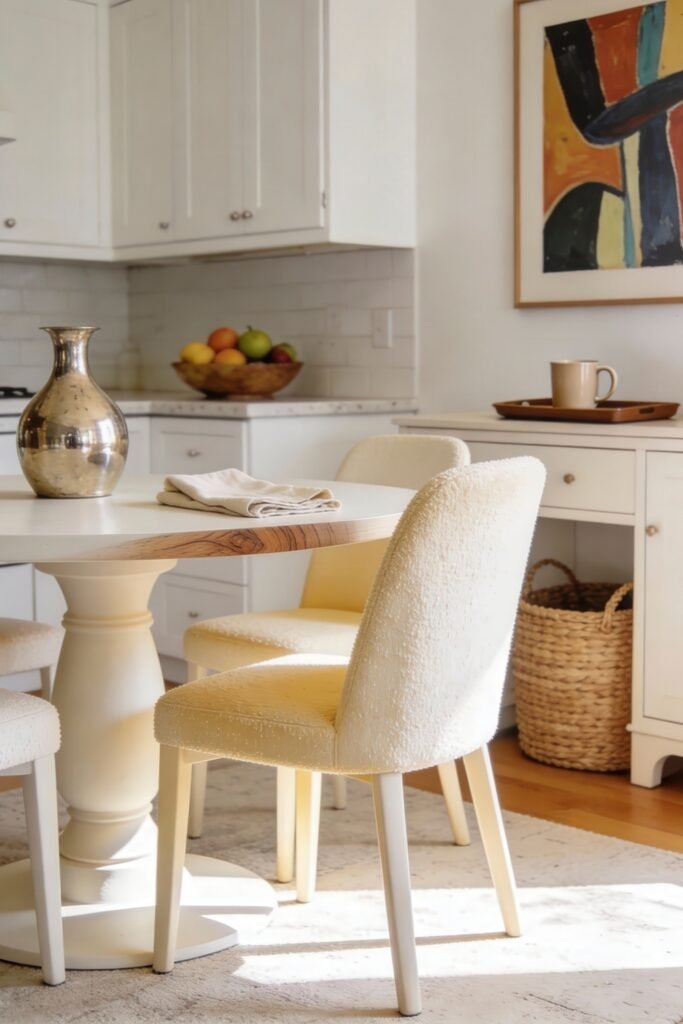
Monochrome doesn’t mean boring—it means confident. In a kitchen dining room combo, try keeping cabinetry, dining chairs, and even the table base in the same color family, like creamy white, deep olive, or inky charcoal. The room instantly feels calmer because your eye stops hopping around. The secret is texture: matte paint, a slightly nubby fabric, and a wood grain that shows through. Add contrast with one shiny accent (a vase or candlesticks) and one soft accent (a woven basket or linen napkins). Finish with a single bold art piece so the look feels intentional, not flat.
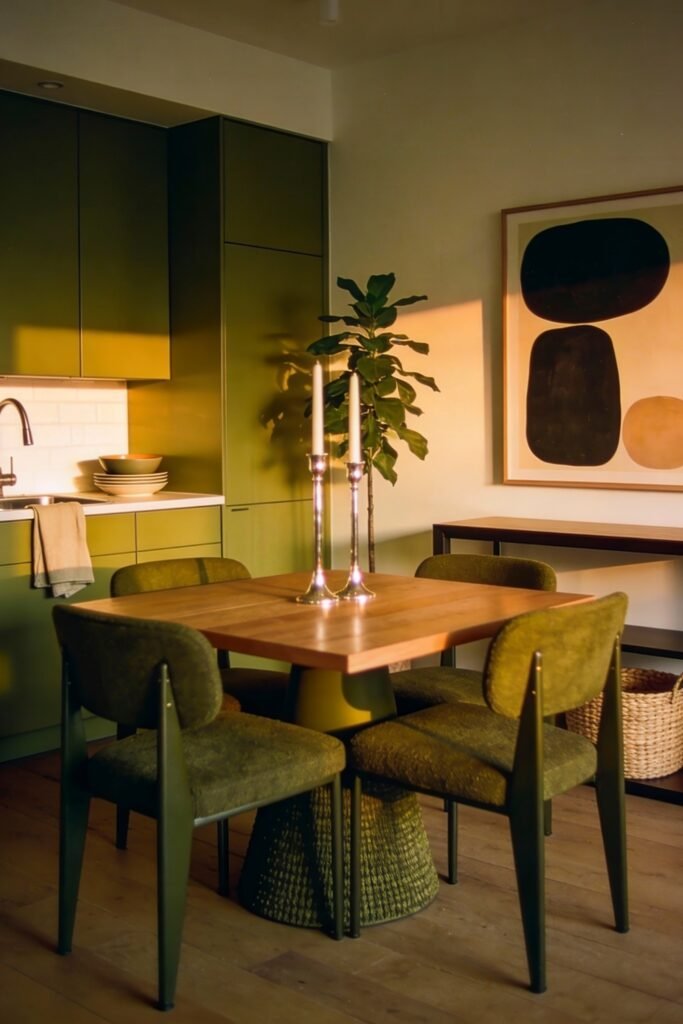
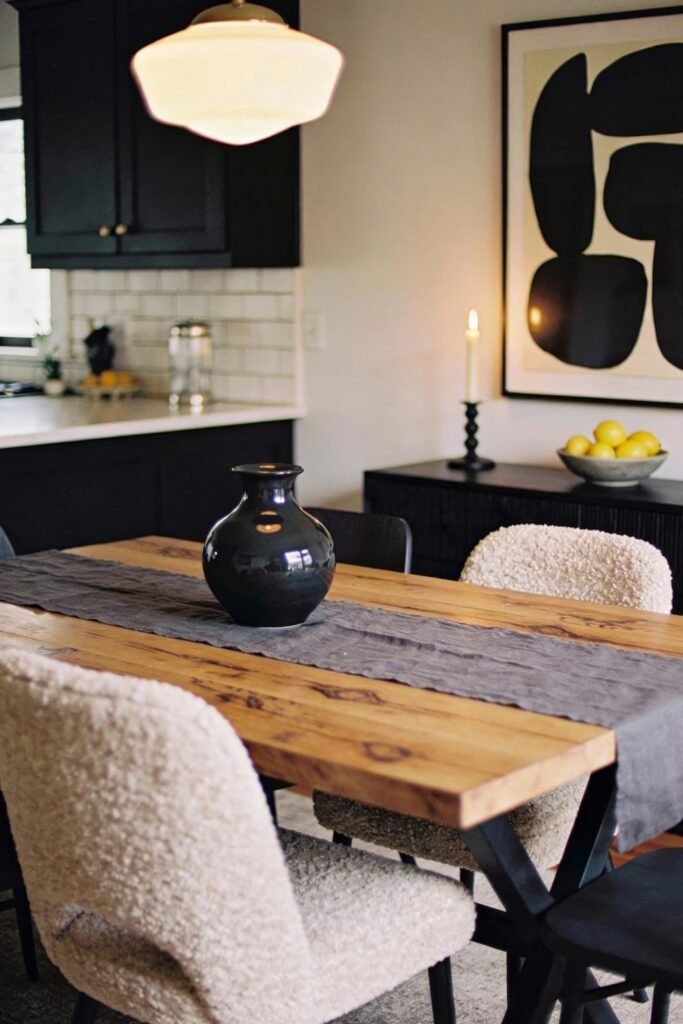
The payoff is a space that looks grown-up and polished with almost no effort. Everything feels connected, so your kitchen dining room combo reads as one stylish scene—perfect for photos and real life, even in the morning rush.
Quick tip: Keep one element a shade lighter or darker for depth—think chairs one step deeper than the cabinets.
Monochrome helps us feel less scattered. It’s easier to keep the room looking tidy, because the visuals are already quiet. That’s a win for everyday living.
Build A Library Wall That Frames The Dining Nook
What if your dining area felt like a little destination? Like a spot you’d choose on purpose, not just “where the table fits”? This does that.
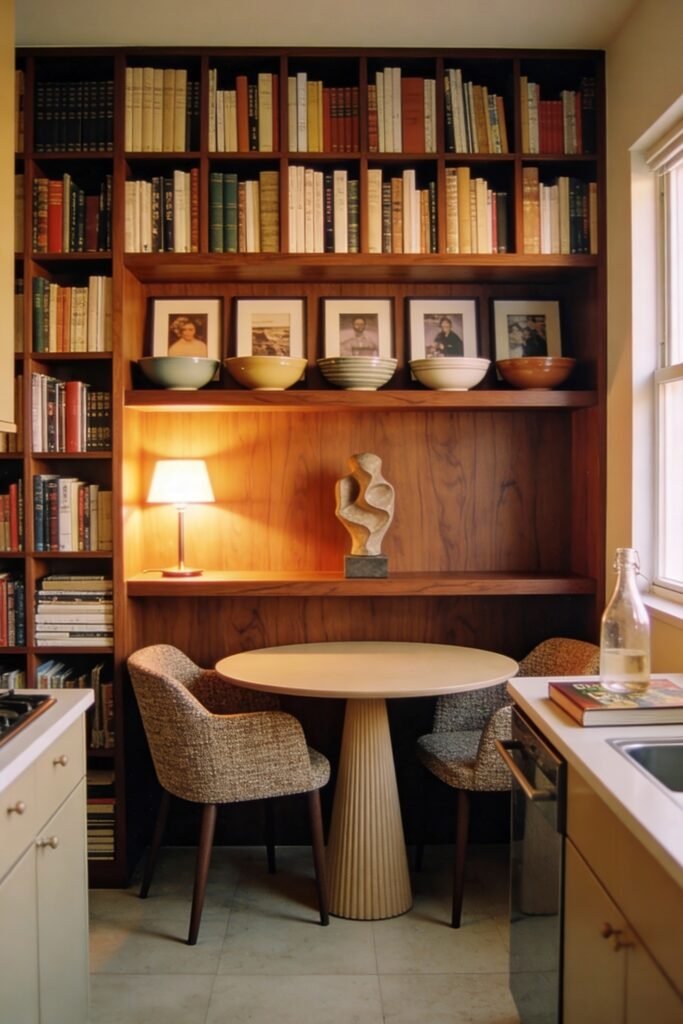
A library wall around the dining nook turns your kitchen dining room combo into a story, not just a layout. Picture shelves in a soft, cozy color, stacked with cookbooks, pottery, and a few framed photos that make you smile. The look feels layered and personal, like you’ve collected pieces over time. Keep the shelf styling relaxed: mix tall books with low bowls, and leave a little breathing room so it doesn’t feel crowded. Pair it with a simple table, woven chairs, and a small lamp for a warm evening glow. Add one sculptural object to anchor the whole wall.
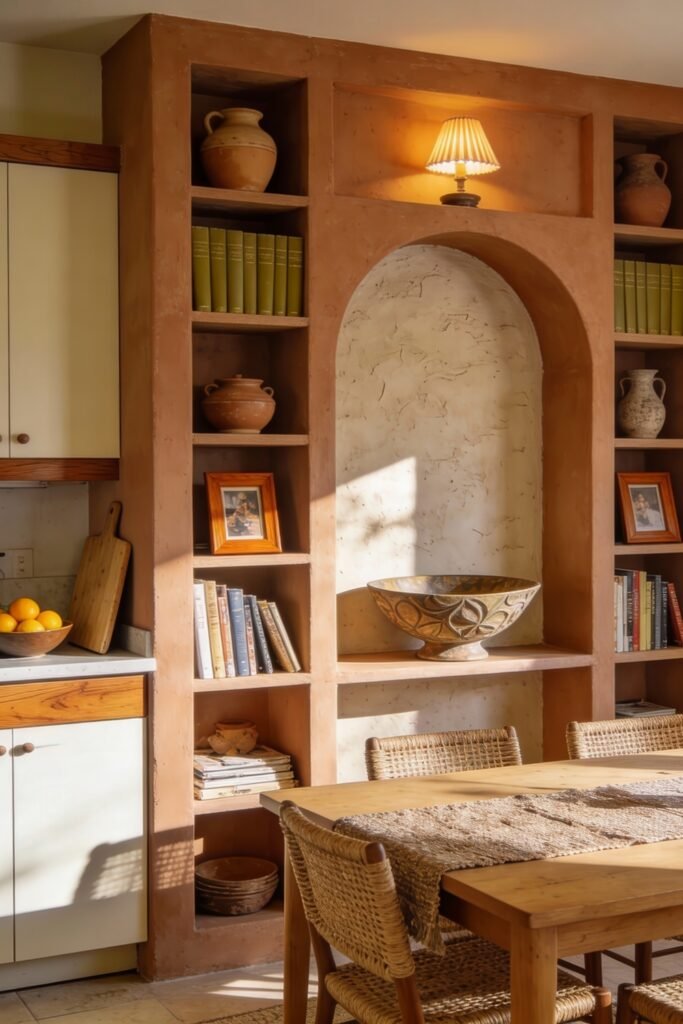
This idea makes dinner feel less like a task and more like a ritual. You get a built-in backdrop that’s cozy and creative, and the dining area feels clearly “claimed” inside the combo space, just for you.
How to: Repeat two or three colors on the shelves, then let everything else be neutral so it looks collected, not chaotic.
When we love what we see, we use the space more. Morning coffee feels nicer. And your kitchen dining room combo becomes a place you actually want to sit, not just pass through.
Set A Bar-Height Ledge That Doubles As A Buffet
This one is for the “we’re always multitasking” days. It’s a serving zone, a perch, and a style moment all at once. And it keeps everything moving.
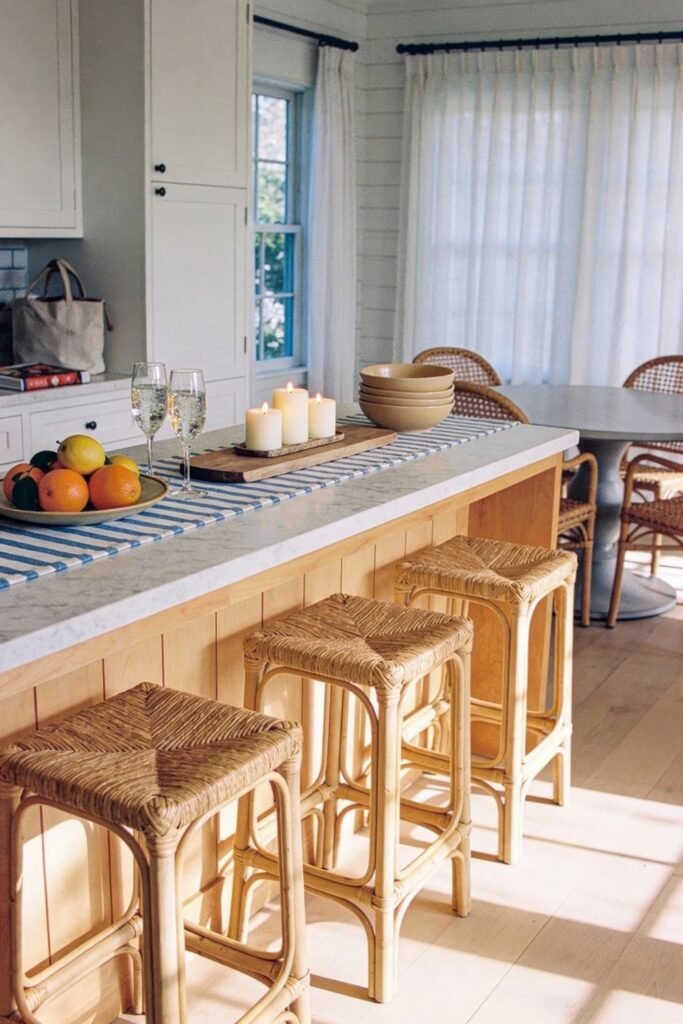
A bar-height ledge is a hero move in a kitchen dining room combo. It acts like a slim landing strip for plates, drinks, and snacks when people gather. Visually, it’s crisp: a clean wood or stone top with tall stools that feel light, not bulky. Balance it with a lower dining table nearby so the heights play nicely. Add a textured runner, a small candle cluster, and one oversized serving board for warmth. Finish with a neat stack of pretty bowls so the setup looks styled, even on regular days.
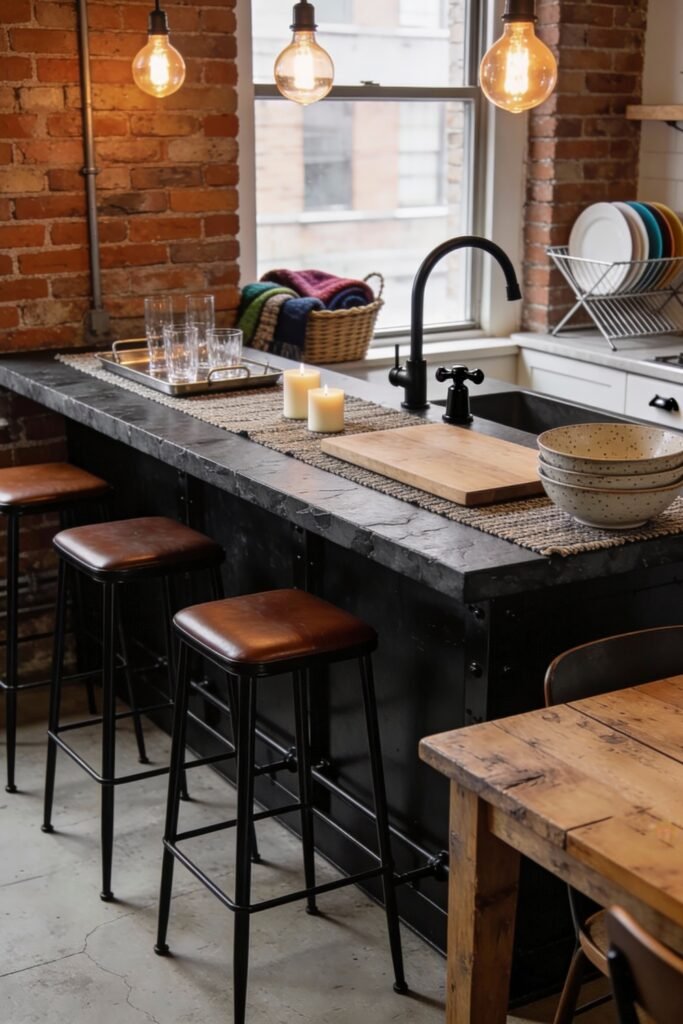
The payoff is flow. You can serve, snack, and hang out without crowding the cooking zone, and your dining area still feels special. It’s a simple way to make hosting feel easy, on weeknights too.
Quick tip: Keep the ledge mostly clear; one tray can hold the “stuff” and still look intentional.
In a kitchen dining room combo, this creates a natural ‘pause point’ between tasks and together time. We get more breathing room. And daily meals feel smoother, even when the schedule is packed.
Create A “Gallery Rail” Wall For Rotating Art + Plates
If your kitchen dining room combo ever feels a little plain, this is the quickest way to add personality. It’s playful, stylish, and easy to refresh when your mood changes.
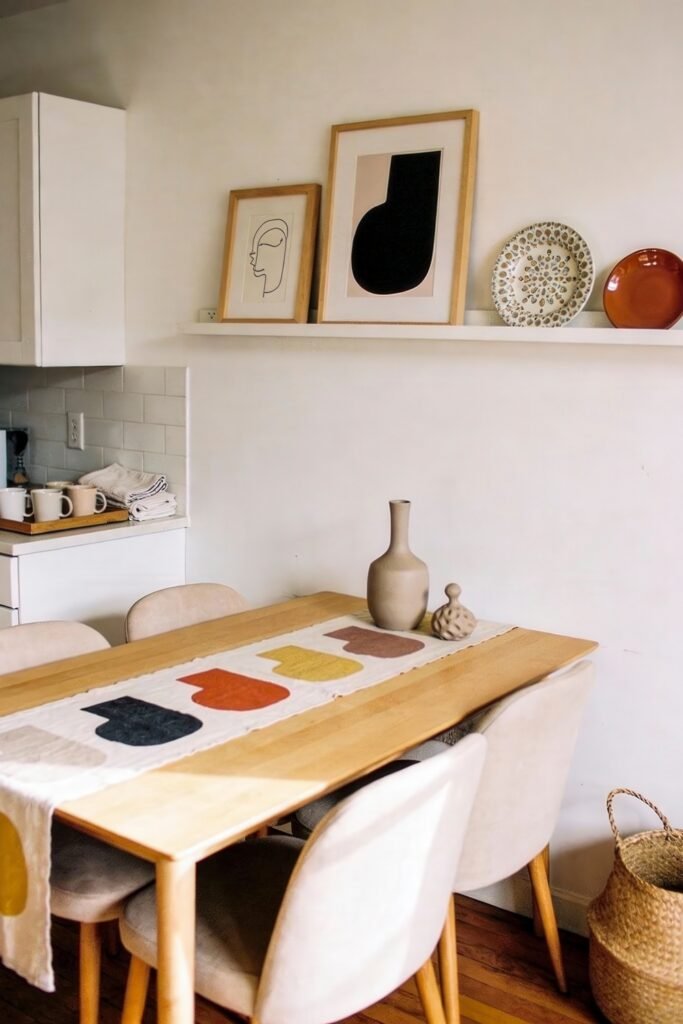
Imagine one long ledge or rail along the dining wall, holding leaning frames and a few decorative plates like a mini art exhibit. The vibe is collected and creative—soft paper textures, glossy ceramic shine, and pops of color that feel intentional. Keep the background calm (warm white or a gentle neutral), then mix a few art pieces with simple line drawings and one bold shape. Add two or three complementary elements to balance it out: a matte vase, a small sculptural object, and a woven basket nearby. One extra detail that ties it together? Repeat one color from the art in your table linens or chair cushions.
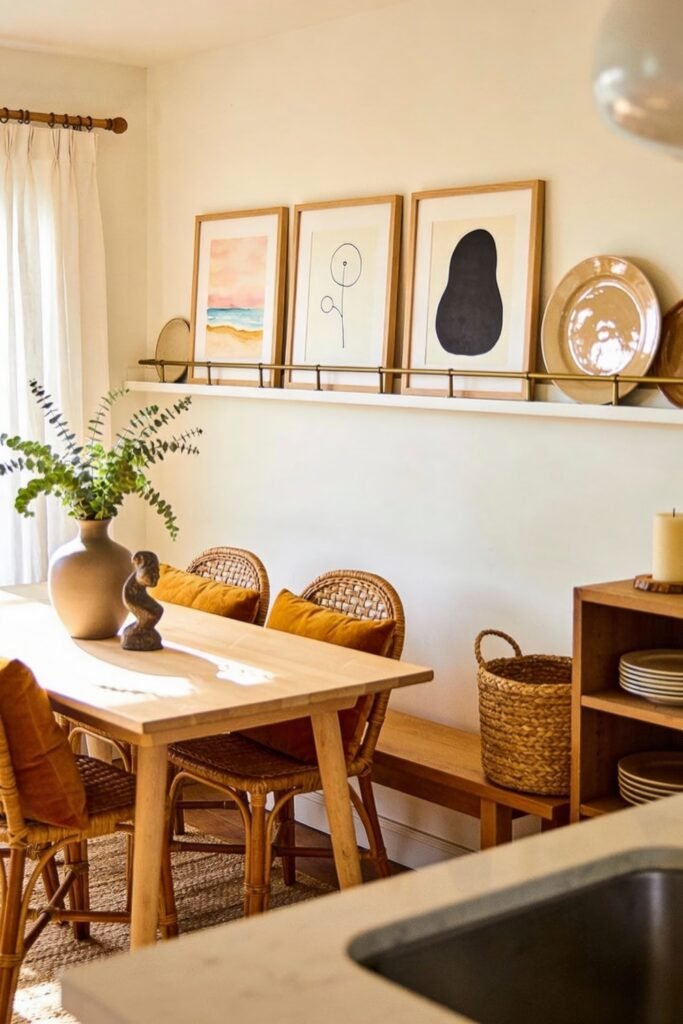
This gives your space a “designed” payoff without feeling fussy. The wall becomes a mood board you can live with, and your kitchen dining room combo feels more like you every time you glance over.
Quick tip: Stick to one frame finish (all light wood or all black) so the mix still feels calm.
We get a dining area that feels warm and personal, not generic. It makes meals feel more special. And it keeps the combo space visually connected, even when life is busy.
Layer Two Rugs: One Runner, One Dining Statement Rug
Rugs are like makeup for a room—they add softness, shape, and instant polish. In a kitchen dining room combo, they can quietly define each zone without adding walls.
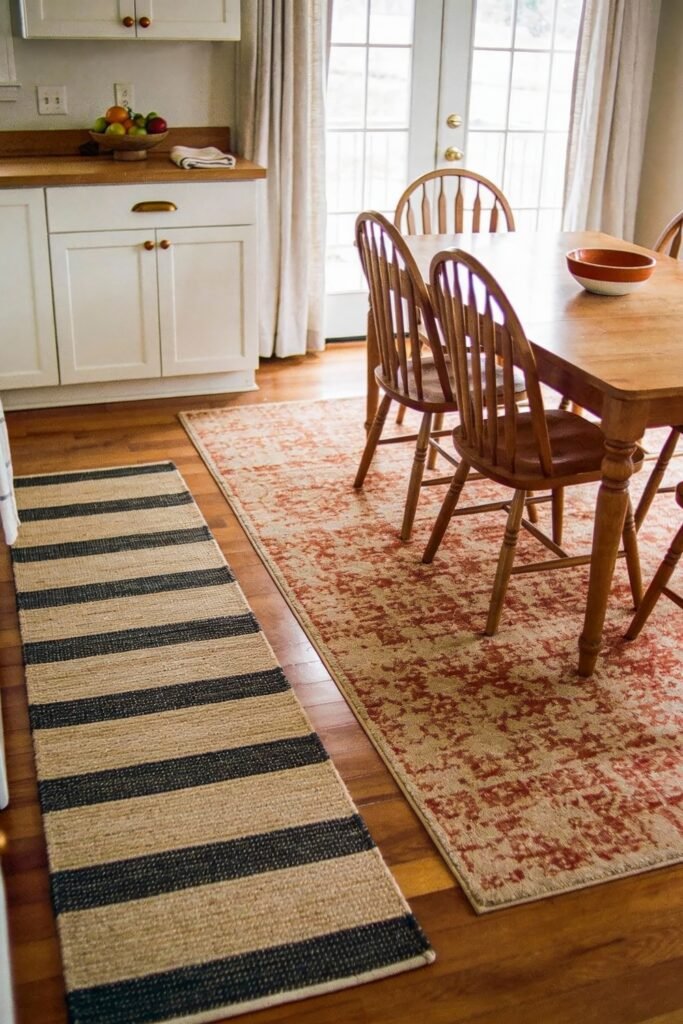
Start with a slim runner that leads through the kitchen path, then anchor the dining table with a larger rug that feels like a statement. The magic is in contrast: a flatter weave runner paired with a dining rug that has more texture or pattern. Picture cozy underfoot softness, muted colors, and a gentle “whoosh” of fabric when you pull out a chair. To keep it balanced, choose two or three shared tones—like sand, charcoal, and warm rust—so the rugs feel related. Add a wood table and simple chairs to avoid visual overload, then finish with one extra detail: a small tabletop centerpiece that repeats the rug’s accent color.
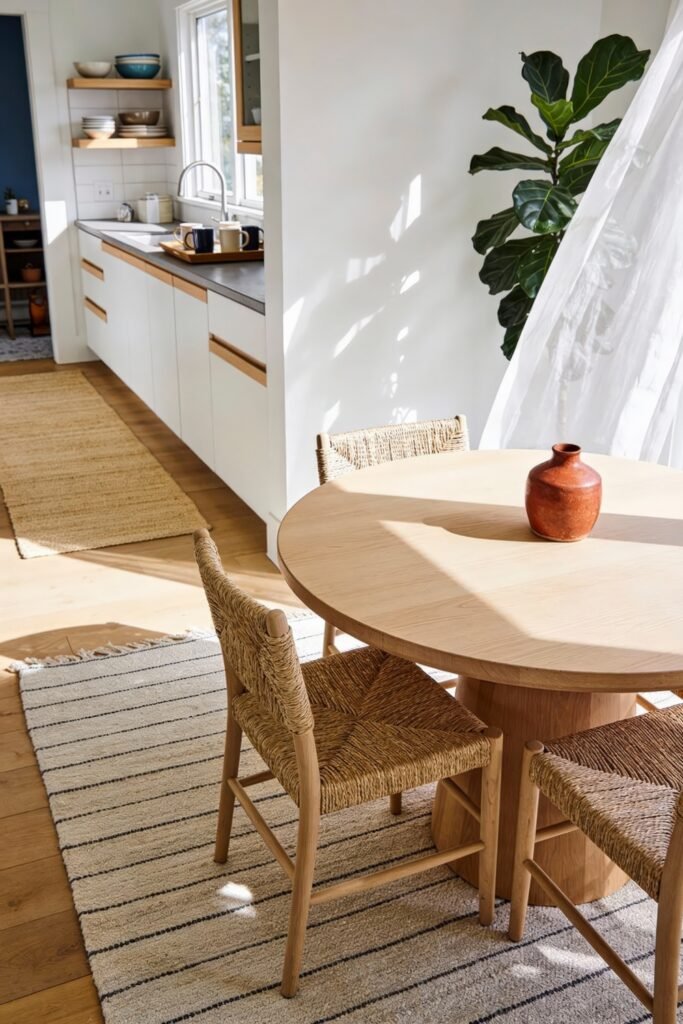
The payoff is clear zones that still feel united. Your kitchen dining room combo looks more intentional, and the room feels warmer and quieter—like it absorbs the day’s noise.
Pros & Cons: Layering adds depth and style, but keep patterns simple so the space doesn’t feel too “busy.”
We get softness where we stand and sit the most. The room feels more comfortable for everyday living. And the combo layout finally reads as one cohesive, styled space.
Add A Plant-Laden Trellis To Define The Dining Edge
Want a little drama that still feels fresh and airy? This is a green, garden-inspired way to frame your dining area. It feels alive in the best way.
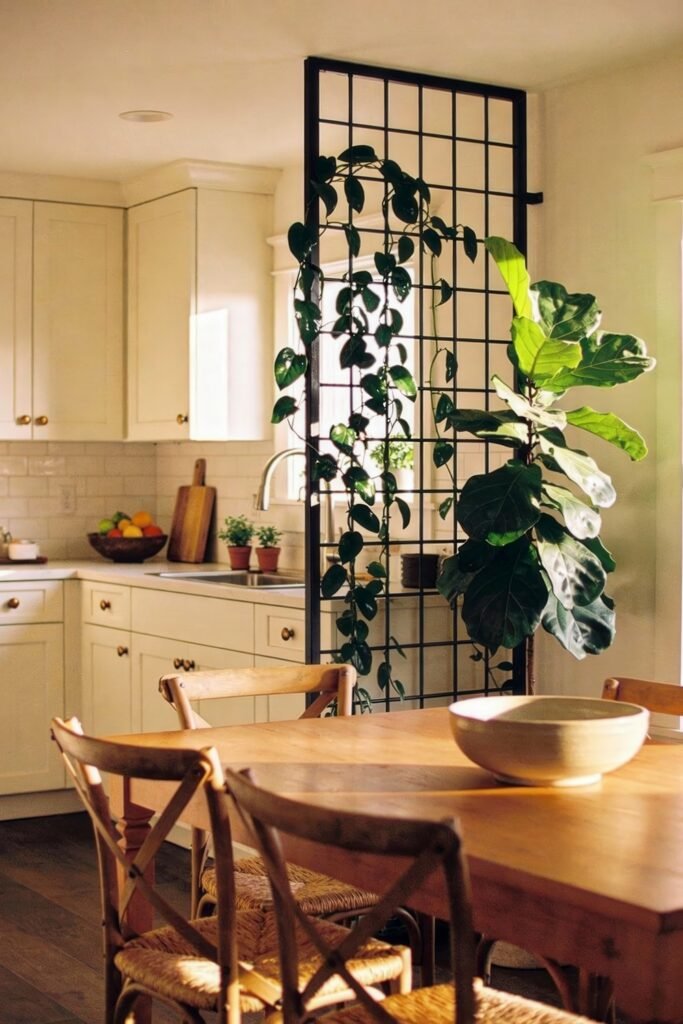
Picture a slim trellis or open framework near the edge of your dining zone, dotted with trailing greenery and a few sculptural leaves. The texture is so satisfying: glossy leaves, thin stems, and a soft filtered light effect that makes the space feel calmer. Keep the structure simple—light wood or matte metal—so the plants do the talking. For balance, pair it with warm natural materials like a wood dining table, woven chair seats, and a ceramic bowl in a grounded neutral. One extra detail that ties it all together? Add a small herb cluster near the kitchen side so the green story feels continuous.
This creates gentle separation without blocking sightlines. Your kitchen dining room combo stays open and social, but the dining area feels clearly “its own” place—like a little destination inside the room.
Quick tip: Mix leaf shapes—one trailing, one upright—for a fuller look that feels intentional.
We get a space that feels lighter, calmer, and more welcoming. It’s easy to linger here. And the greenery makes the whole combo room feel brighter and more relaxed.
Try A Vintage Room Screen As A Movable Boundary
Some days you want everything open. Other days you’d love a little “hide the chaos” moment. A room screen gives you that flexibility—plus major style.
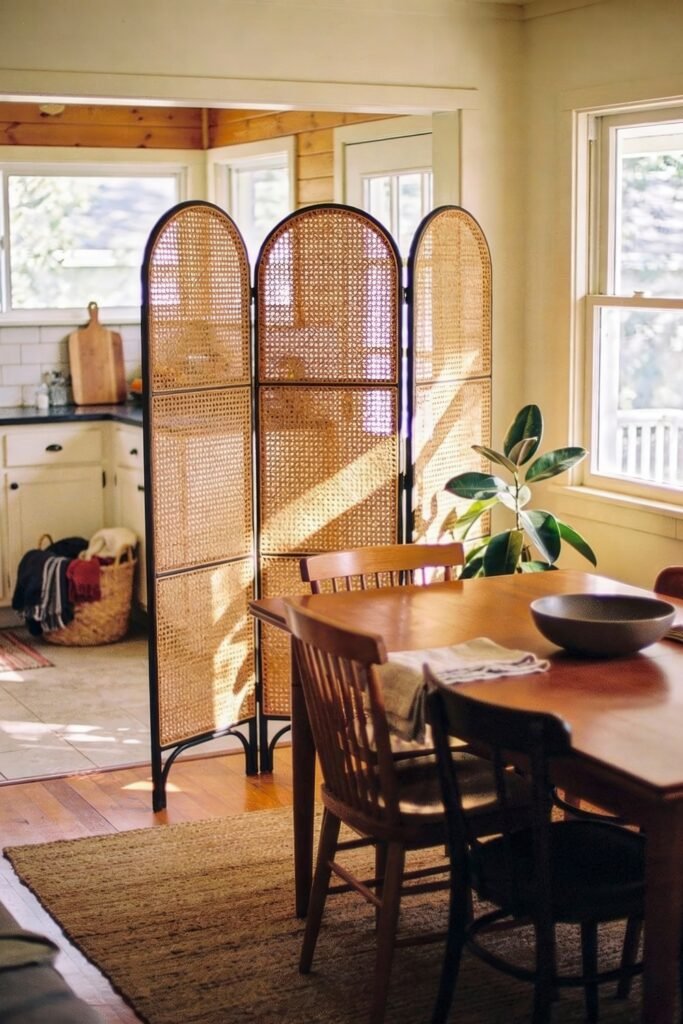
In a kitchen dining room combo, a vintage-style screen adds instant character while softly separating zones. Think warm wood tones, a woven texture, or a subtly patterned panel that catches the light. It creates a cozy backdrop behind the dining table, almost like a set for everyday life. Balance it with simple dining furniture so the screen can shine: a clean-lined table, neutral chairs, and a soft pendant above. Add two or three complementary touches—like a textured table runner, a ceramic vase, and a simple bowl—to keep the look grounded. One extra detail to tie it together? Echo the screen’s material (wood or weave) in a small accent, like a tray or wall hook nearby.
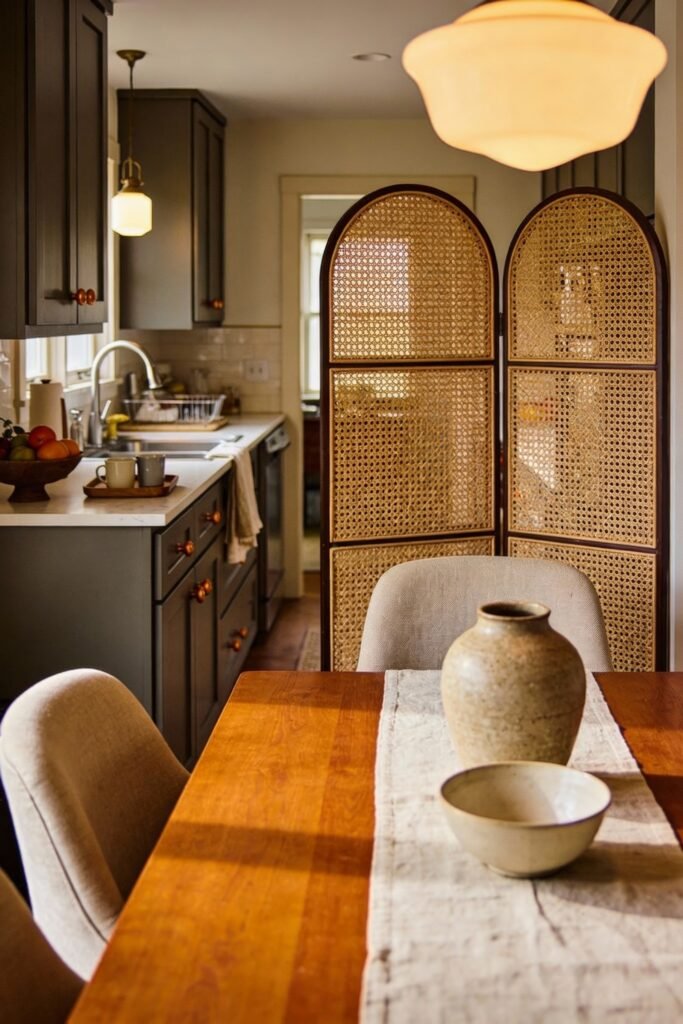
The payoff is control: you decide how open or defined the space feels. It makes the combo layout feel intentional, and the dining zone feels more intimate, even in a larger room.
How to: Angle the screen slightly instead of placing it flat—those soft diagonals look more natural and styled.
We get privacy without shutting the room down. It’s easier to host, relax, and reset. And your kitchen dining room combo stays flexible for real life.
Install A Statement Mirror To Bounce Light Into Dining
If your dining side ever feels a little dim, this is the glow-up. Mirrors can make a combo space feel brighter, bigger, and more polished—without adding clutter.
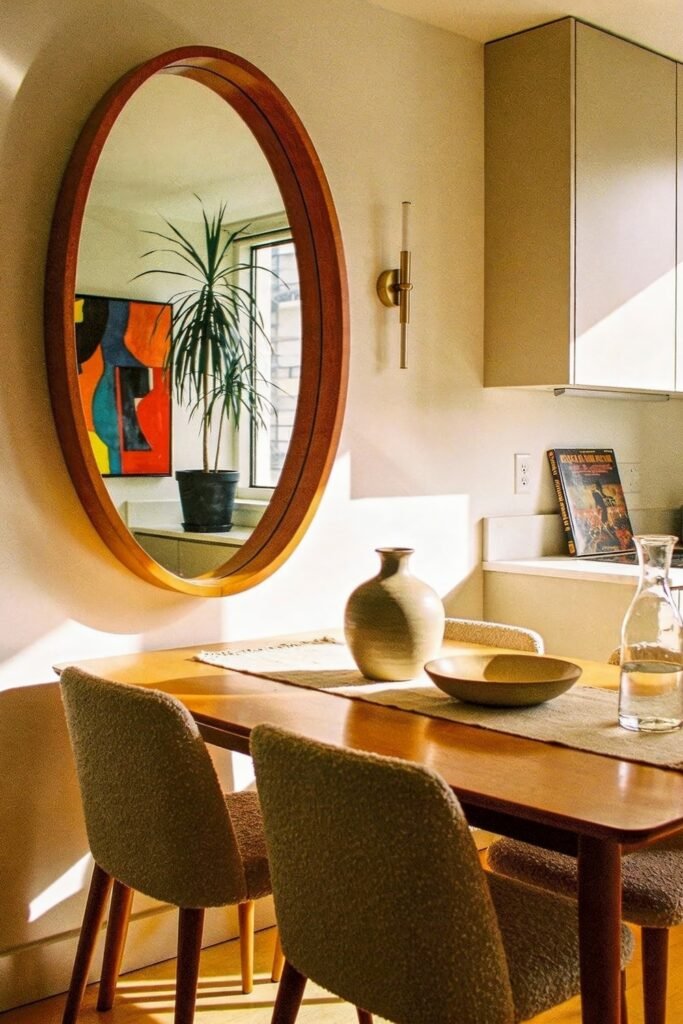
Picture a large mirror placed where it can catch daylight and toss it back across the dining area. The effect is instant: more sparkle, more depth, and a clean “lift” to the whole kitchen dining room combo. Choose a shape that adds personality—arched, softly rounded, or a thin-framed rectangle—and keep the frame finish warm and simple. For balance, pair it with textures that feel cozy: a wood table, linen napkins, and matte ceramics. Add two or three complementary elements like a small wall sconce, a low centerpiece, and a neutral runner. One extra detail that ties the look together? Let the mirror reflect something pretty on purpose, like a plant or a piece of art.
The payoff is a dining area that feels brighter and more inviting, even on cloudy days. It also helps the whole combo layout feel more “designed,” because the mirror acts like a focal point.
Quick tip: Hang the mirror so its center hits around eye level when you’re seated—then it feels connected to the dining moment.
We get a space that feels lighter and happier. Meals feel more relaxed when the room has good glow. And your kitchen dining room combo looks pulled together from every angle.
A Combo Space You’ll Actually Love
We’ve got this—your kitchen dining room combo can feel stylish, easy, and totally you.
The big wins: create one clear focal point, use soft “in-between” dividers, and repeat a few finishes so everything feels connected.
Choose one idea that makes you smile and try it first; even a small change can make the whole room feel calmer.
Next, we can play with lighting mood, wall moments, or a cozy seating nook that invites people to stay.
What vibe are you going for—warm café, modern calm, or cozy corner energy?
For even more inspo about kitchen dining room combo, hop over to our Pinterest board on Combo Spaces and start pinning!
You May Also Like